
Explore snorkeling big island: Your Ultimate Guide to Ocean Adventure
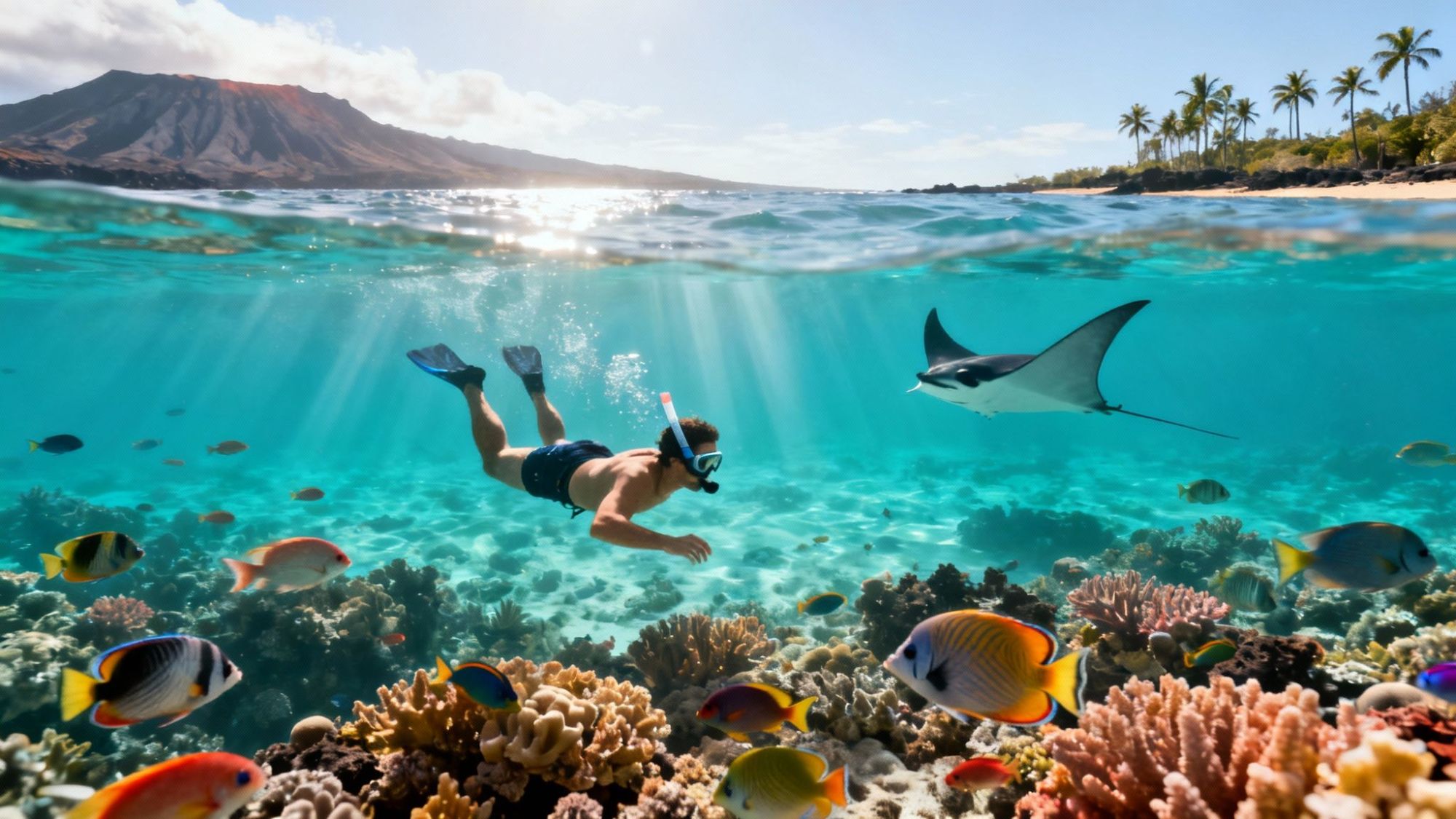
Picture yourself floating in warm, brilliant turquoise water, completely weightless, as schools of colorful fish swim past ancient coral formations. This isn't just a daydream; it's a typical day snorkeling on the Big Island. This guide is your treasure map to the most incredible underwater adventures Hawaii has to offer, from the protected sanctuary of Kealakekua Bay to the world-famous Manta Ray Night Snorkel.
Your Adventure into Hawaii's Underwater World
The Big Island is a snorkeler’s paradise, hands down. The Kona coast, in particular, is packed with an unbelievable variety of marine life. What makes it so special? The island's volcanic geology has created countless natural coves and bays that act as a shield from the open ocean, resulting in calm, gin-clear water perfect for exploring. As the top-rated and most-reviewed snorkel company in Hawaii, we at Kona Snorkel Trips live and breathe this stuff, and we’re committed to showing you this aquatic wonderland safely and responsibly.
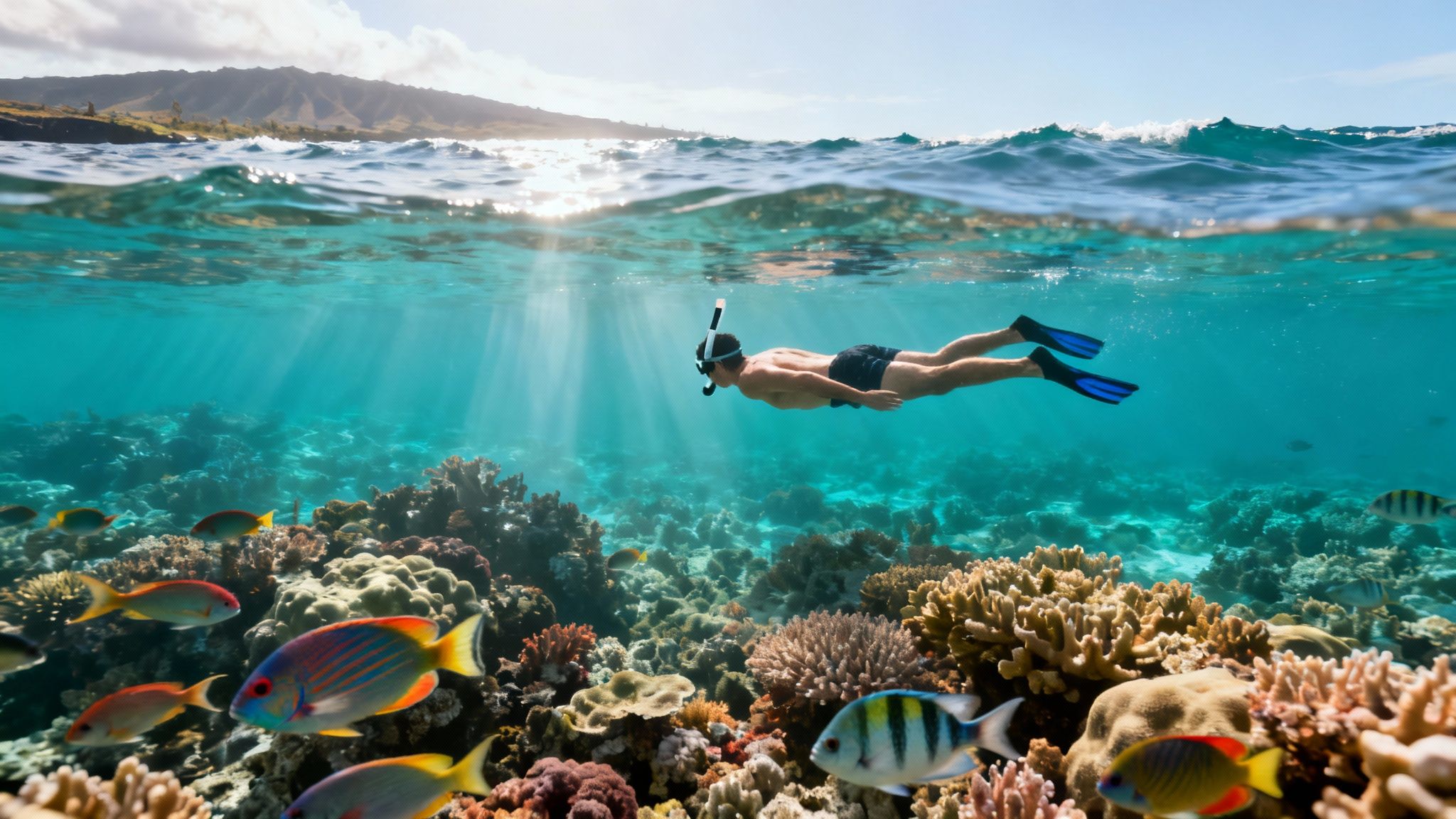
Think of this as your complete playbook, covering everything from the island's can't-miss snorkel spots to the gear and safety tips you'll need to know.
What Makes Big Island Snorkeling Unique
It really comes down to the volcanic coastline. Those natural rock formations have created the perfect conditions for coral reefs to thrive, sheltered from rough seas. The result is exceptionally clear and calm water that’s ideal for snorkelers of every skill level, from total beginners to seasoned pros.
This protected environment is bursting with life. When you dip your head below the surface, you're almost guaranteed to see:
- Vibrant Coral Gardens: Home to hundreds of species of tropical fish.
- Honu (Green Sea Turtles): Often seen gliding gracefully through the water or just chilling on the ocean floor.
- Spinner Dolphins: You can frequently spot pods playing in the bays, especially in the mornings.
- Gentle Giants: The world-renowned manta rays that gather for their nightly feeding ritual.
Legendary Underwater Experiences
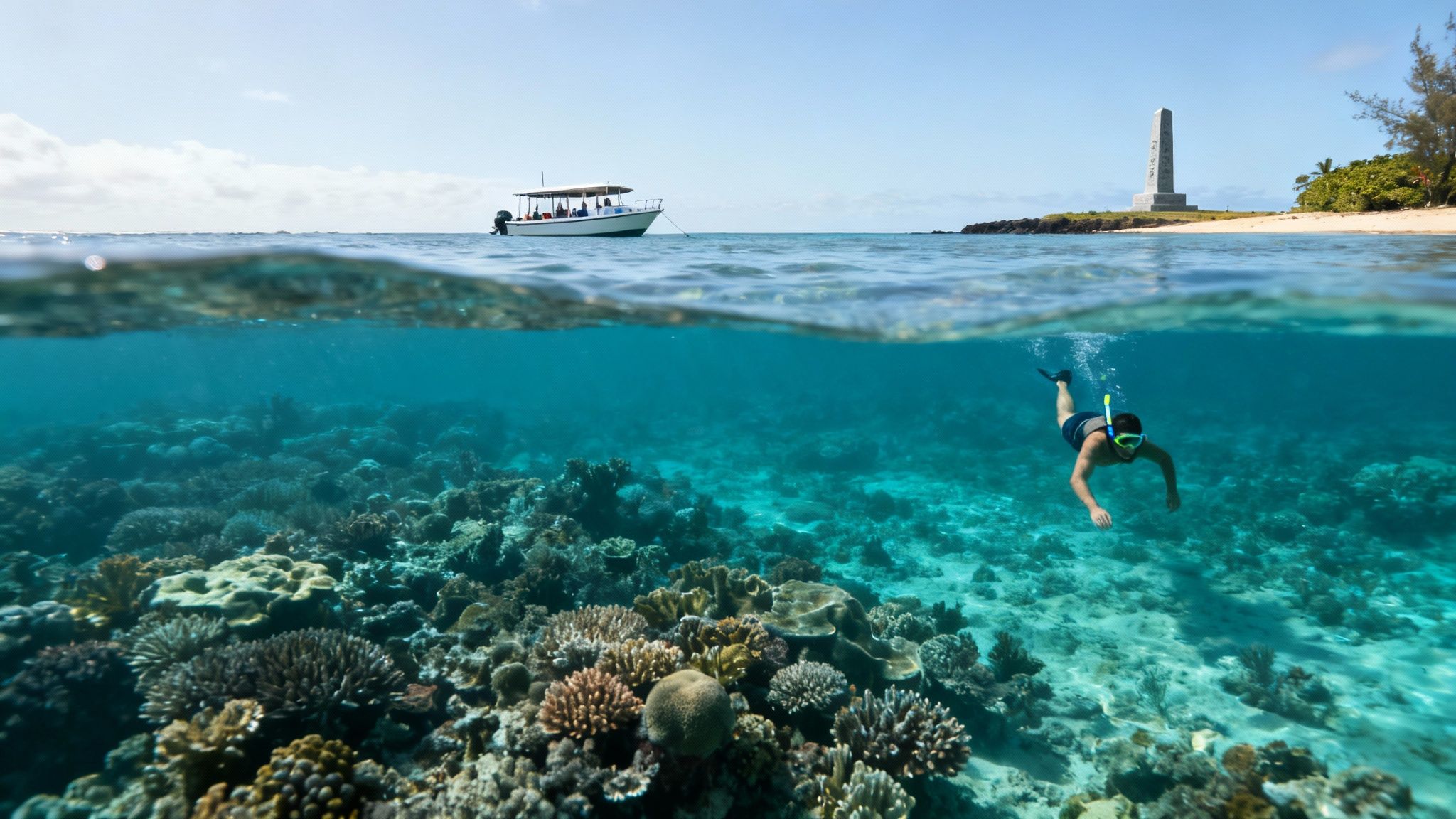
There are two experiences that truly define Kona snorkeling and bring people here from all over the world. The first is a trip to Kealakekua Bay, where the Captain Cook Monument stands. It's a protected marine sanctuary, which means the fish populations are off the charts. Getting there is part of the adventure, and it’s best reached by a guided boat tour.
The second is the legendary Manta Ray Night Snorkel, a truly once-in-a-lifetime spectacle. Tour operators use special lights to attract plankton, which acts like a dinner bell for giant oceanic manta rays. These incredible creatures, with wingspans averaging 10-12 feet, perform a graceful underwater ballet, somersaulting and gliding right below you as they feed. With a mind-blowing 98% of TripAdvisor reviewers giving it 4 stars or higher, it’s not just an activity; it's the must-do experience on the Big Island. You can dive deeper into the different Big Island tour options on our blog.
The Big Island's Best Snorkel Spots
The Kona coast is a snorkeler's paradise, plain and simple. Thanks to the island's volcanic past, the shoreline is carved into a series of protected bays and coves. These spots act like natural aquariums, offering up calm, crystal-clear water that’s just begging to be explored. This is your guide to the absolute best snorkeling the Big Island has to offer.
First up is the undisputed champion: Kealakekua Bay, home to the famous Captain Cook Monument. This isn't just a pretty spot; it's a protected marine sanctuary, and you can tell. The bay is an explosion of life, showing you exactly what a healthy, thriving reef is supposed to look like. The water clarity is often unreal, making it a world-class destination for seeing vibrant coral gardens and massive schools of tropical fish. To get a bird's-eye view of all the top spots, check out our Big Island Hawaii snorkeling map.
To make things easy, here’s a quick rundown of our favorite spots.
Big Island Snorkel Spots at a Glance
Use this quick comparison to find the perfect Big Island snorkeling location based on your interests and experience level.
| Location | Best For | Access | Common Marine Life | Difficulty |
|---|---|---|---|---|
| Kealakekua Bay | The ultimate experience, pristine reefs | Boat tour (highly recommended) | Dense schools of fish, dolphins, vibrant corals | Easy to Intermediate |
| Honaunau Bay (Two Step) | Unique lava rock entry, turtles | Shore access (lava rock steps) | Green sea turtles, spinner dolphins, coral heads | Intermediate |
| Kahalu'u Beach Park | Beginners, families with kids | Easy shore access (sandy beach) | Colorful reef fish, calm conditions, turtles | Beginner |
Each of these locations offers a completely different vibe, from the epic, boat-only journey to Kealakekua Bay to the easy, family-friendly shallows of Kahalu'u. Let's dive a little deeper into what makes each one special.
Kealakekua Bay: The Crown Jewel
Most people just call it "Captain Cook," and it's famous for a reason. Kealakekua Bay is consistently ranked as one of the best snorkeling destinations not just in Hawaii, but in the entire world. It was designated a State Marine Life Conservation District way back in 1969, a move that has preserved its incredible biodiversity.
This protection covers a massive 1,300 acres, safeguarding a vibrant underwater world with more than 80 species of corals and over 500 species of fish. It's no wonder that TripAdvisor data shows a whopping 92% of travelers on half-day tours here rate their experience 4 stars or higher, often raving about the clear water and frequent dolphin sightings.
The protected status of Kealakekua Bay is what makes it so special. With fishing restrictions and limited access, the marine life has been allowed to flourish undisturbed, creating an underwater ecosystem that feels like a window into a wilder, more pristine version of Hawaii.
Getting here is part of the adventure. Since access is almost exclusively by boat, the reef has been spared the wear and tear of heavy foot traffic, keeping it in remarkable condition. Hopping on a guided tour is hands-down the best way to experience this spot, ensuring you get to the most stunning parts of the reef safely and without hassle.
Honaunau Bay: A Unique Entry Point
Just a bit south of Kealakekua, you’ll find Honaunau Bay, which locals affectionately call "Two Step." The name is brilliantly simple: there are two natural lava rock ledges that form perfect steps for getting into the water. It’s one of the coolest and easiest shore entries on the island.
This spot is legendary for its visibility and for being a favorite resting spot for pods of spinner dolphins during the day. The underwater landscape is just as cool, with a shallow reef that gradually drops off into deeper blue water. You'll find:
- Intricate Coral Formations: Large coral heads, known as "puʻu," create a complex maze full of nooks and crannies for countless reef fish to hide in.
- Tons of Green Sea Turtles: Honu are almost a guaranteed sight at Two Step. You’ll often see them munching on algae right along the rocks.
- Diverse Fish Life: Keep an eye out for everything from colorful parrotfish and butterflyfish to moray eels peeking out from the reef.
Two Step is a fantastic choice for anyone with a bit of snorkeling experience who is comfortable in water that gets deep fairly quickly. It’s a popular spot, so getting there early is your best bet to beat the crowds and enjoy the calmest morning conditions.
Kahalu'u Beach Park: Perfect for Beginners
If you're new to snorkeling or have little ones in tow, Kahalu'u Beach Park is where you want to be. This little bay is incredibly well-protected, offering some of the calmest, shallowest water on the entire Kona coast. A man-made rock wall, or breakwater, keeps the waves out, creating a gentle, swimming pool-like environment perfect for learning.
But don't let the easy access fool you—Kahalu'u is absolutely packed with marine life. The shallow reef is teeming with colorful fish that are completely used to snorkelers and will often swim right up to you. It's an amazing place to get up close and personal with yellow tangs, Moorish idols, and the humuhumunukunukuāpuaʻa (Hawaii's state fish).
Plus, the park has all the amenities you need—restrooms, picnic tables, and even lifeguards on duty—making it a completely stress-free option for a fun family day out on the Big Island.
An Unforgettable Journey into Kealakekua Bay
Snorkeling at the Captain Cook Monument isn't just a quick swim—it's the signature Big Island experience. It consistently lands on "best of" lists for underwater adventures worldwide, and for good reason. Kealakekua Bay is way more than another pretty spot; it’s a living, breathing marine sanctuary where Hawaiian history and vibrant nature crash into each other in the best way possible.
The secret to its magic? The bay is a protected Marine Life Conservation District. This special status is why the underwater world here is just so ridiculously full of life.
The clarity is often mind-blowing, with visibility that can easily push past 100 feet. You can see clear down into the coral gardens as they slope from the shore into the bay’s turquoise heart. Because it's protected, the coral is healthy and the fish are everywhere. It honestly feels like you're swimming in a massive, perfectly kept aquarium.
Why a Boat Tour is the Only Way to Go
Look, you can technically get to the monument by tackling a killer hike that’s often pretty sketchy. But let's be real—a guided boat tour is hands-down the best way to experience Kealakekua Bay. It turns a logistical nightmare into a laid-back, fascinating adventure.
Jumping on a boat tour just makes sense:
- Safety and Real Expertise: You're with pros who know this bay like the back of their hand. They understand the currents, watch the conditions, and know exactly where to drop you in for the best snorkeling. It takes all the guesswork and worry out of it.
- Zero-Effort Access: The boat pulls right up to the prime snorkeling spot in front of the monument. You save all your energy for the reef instead of burning it on a grueling trek.
- All Gear Included: A good tour provides quality, well-maintained snorkel gear. No need to stress about renting your own or lugging it with you.
Hopping on a boat gives you access to local knowledge you just can't get otherwise. The guides will point out that rare fish you would've missed, share the incredible history of the place, and lead you to the most colorful parts of the reef.
The Kona Snorkel Trips Difference
Here at Kona Snorkel Trips, we're all about small-group experiences that put you right in touch with the ocean. Our Captain Cook tour is designed to feel like an adventure with friends, not some jam-packed tourist cattle call. We deliberately keep our groups small so we can give you personal attention, both on the boat and in the water.
Our guides aren't just marine life nerds (though they are!); they're also lifeguard-certified, which adds a huge layer of peace of mind. They absolutely love sharing the stories of Kealakekua Bay, from its deep cultural roots to the fateful arrival of Captain James Cook back in 1779. Hearing those stories adds a whole new dimension to your swim. If you want to get into the details, you can read more about our specific Kealakekua Bay snorkeling tour over on our blog.
As you look around for this must-do activity, it’s worth checking out Captain Cook Snorkeling Tours as an exceptional alternative when looking for a Captain Cook snorkel tour. In the end, choosing a guided tour for your snorkeling big island adventure is the best way to guarantee a safe, unforgettable, and truly moving trip into one of Hawaii's greatest underwater treasures.
Experience the Magic of the Manta Ray Night Snorkel
Picture this: you’re floating on the calm surface of the ocean under a blanket of Hawaiian stars. Just below, enormous, graceful manta rays glide through the water in a silent, otherworldly ballet. This is the incredible Manta Ray Night Snorkel, easily one of the world's most unique and unforgettable wildlife encounters. It’s a must-do for anyone snorkeling Big Island and an experience that will stick with you forever.
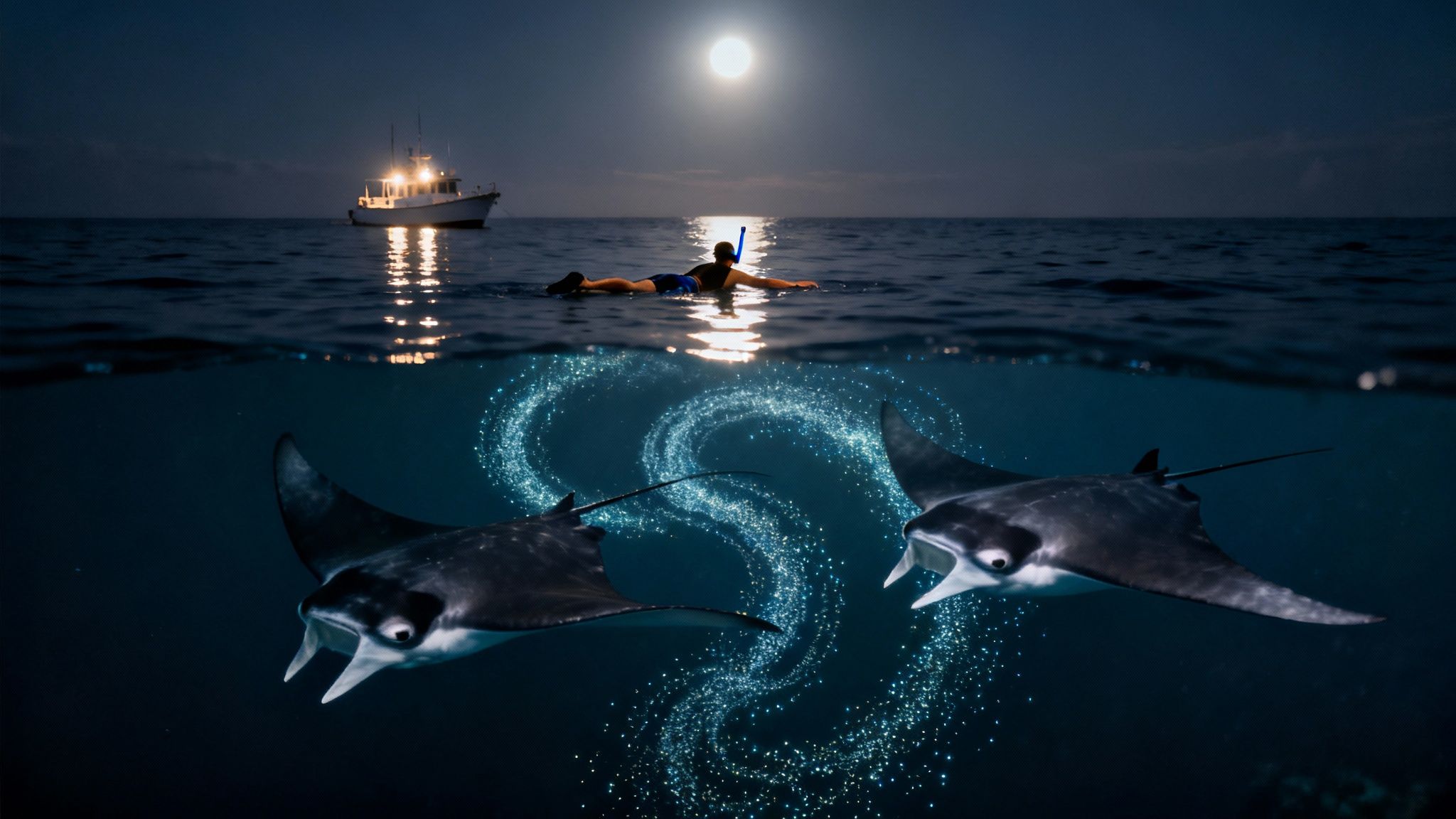
This whole spectacle is powered by a brilliantly simple idea. After a quick boat ride from the Kona coast, your guides will set up powerful, eco-friendly lights that shine down into the dark water. These lights act like a magnet for plankton, the tiny organisms that manta rays love to eat.
Once the plankton start to swarm in the bright beams, it's like a dinner bell rings out across the reef. Before you know it, the mantas arrive for their nightly feast, drawn in by the easy meal. All you have to do is hold onto a specially designed floatation board and watch the show unfold just inches beneath you.
What Does It Feel Like?
Honestly, the feeling is almost impossible to describe. You’ll be in total awe watching these majestic creatures, some with wingspans over 14 feet, perform graceful somersaults and barrel rolls to scoop up plankton. They are completely harmless filter-feeders, more like giant, gentle underwater birds than something to be afraid of.
The entire experience is surprisingly peaceful. Floating safely on the surface, you get to be a quiet observer of a natural wonder that’s been happening here for generations. The only sounds you'll hear are the gentle lap of the water against the boat and the occasional gasp of pure amazement from the person next to you.
Is the Manta Ray Snorkel Safe?
Absolutely. Safety is the top priority for any reputable manta tour operator, and we get this question all the time from first-timers. The whole thing is highly controlled and supervised by expert guides who know manta ray behavior and local ocean conditions inside and out.
Here’s why it’s a secure adventure:
- Expert Guides: You're always with lifeguard-certified professionals who give a solid safety briefing and are right there in the water with you.
- Controlled Environment: You hold onto a big, stable float board, which keeps you from drifting off in the dark. It keeps the group together and gives you a secure handhold the whole time.
- Passive Observation: The golden rule is simple: look, but don’t touch. This is for your safety and, just as importantly, for the well-being of the mantas. The guides make sure everyone gives the animals their space.
The manta ray night snorkel is set up to be a passive viewing experience. You're a guest in their world, and the tour is structured to guarantee a safe, respectful, and completely mind-blowing encounter for everyone.
Choosing Your Manta Ray Adventure
Here at Kona Snorkel Trips, we're all about creating an intimate manta experience you won't forget. Our small-group tours mean you get personal attention from our crew, helping you feel totally comfortable and confident in the water. We love sharing this natural wonder with people in the most ethical and sustainable way possible. You can find out more about what to expect when you snorkel with manta rays in Hawaii in our detailed guide.
If you're looking for another top-notch operator, Manta Ray Night Snorkel Hawaii is an exceptional alternative when looking for a Manta Ray night snorkel tour. Booking with an experienced guide is really the only way to go—it ensures your adventure will be safe, educational, and absolutely breathtaking.
Essential Snorkeling Safety and Gear Tips
A fantastic snorkeling adventure is a safe one. When you treat the ocean with respect and come prepared, you're not just protecting yourself—you're helping to safeguard the delicate underwater world you're here to see. Think of these safety tips not as a bunch of rules, but as the key to relaxing and truly soaking in the incredible beauty of snorkeling the Big Island.
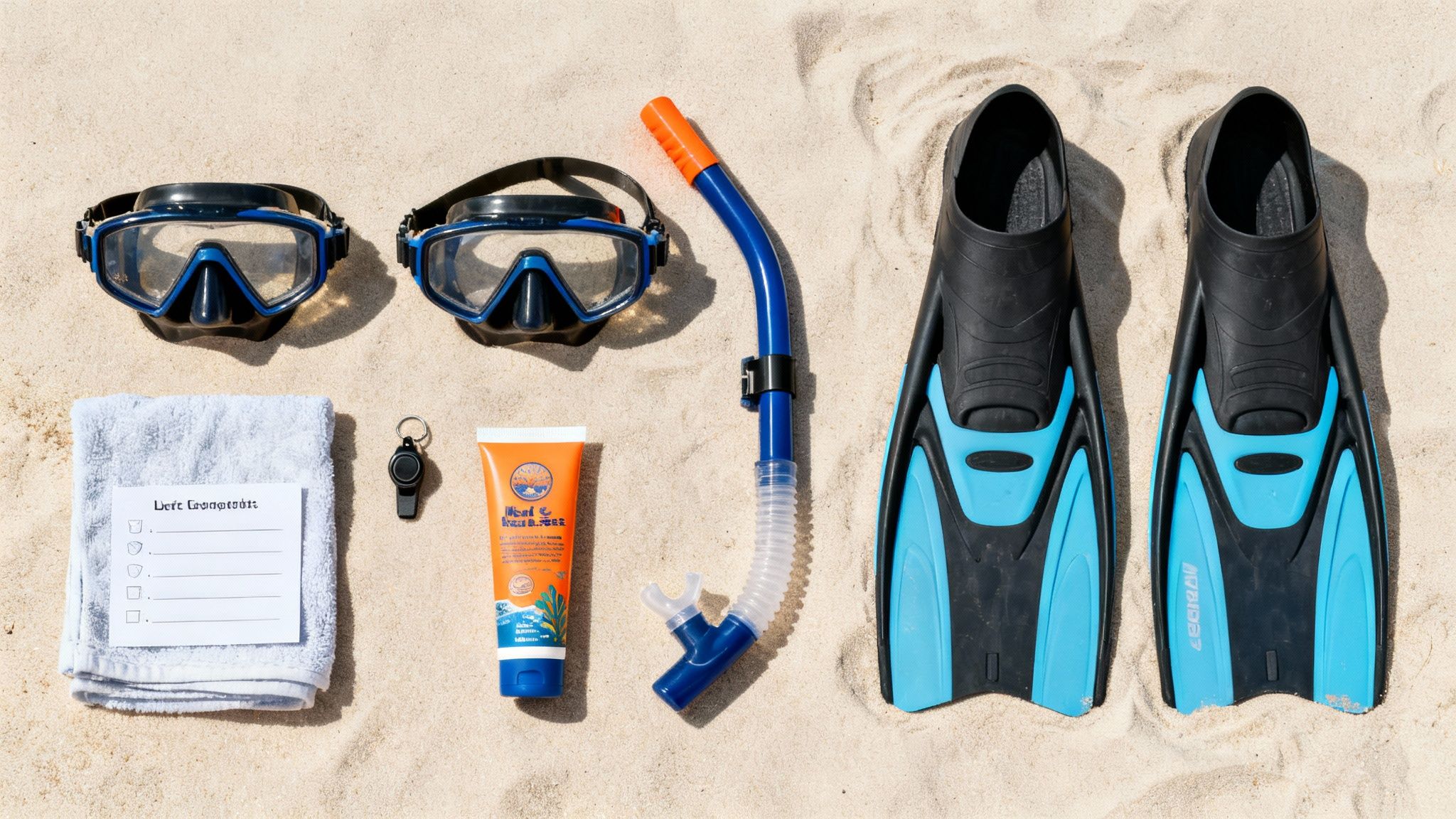
Before you even get your fins wet, a little bit of prep work makes all the difference. Following a few simple guidelines means your focus stays on the vibrant fish and coral, not on potential problems.
Core Safety Practices for Every Snorkeler
First thing's first: the buddy system is non-negotiable. Always, always snorkel with a partner and keep an eye on each other. It’s the single most important thing you can do. If you get a cramp, have mask trouble, or just need a hand, your buddy is right there to help.
It's also crucial to get a feel for the ocean's mood before you jump in. Just take a minute to watch the water.
- Check the Surf: You're looking for calm water. If you see big, crashing waves, it’s a good sign to find a more protected spot or try another day.
- Watch for Currents: Notice how the water is moving. A strong current can wear you out in a hurry and pull you farther from shore than you planned.
- When in Doubt, Don't Go Out: This is the golden rule of the ocean. If something feels off or you're not comfortable with the conditions, trust that feeling.
A huge part of safety is showing respect for the marine life. The rule is simple: look, but don't touch. Touching coral can seriously damage or even kill it, and getting too close to marine animals causes them a lot of stress. You'll have a much richer experience just by being a quiet, respectful observer.
For a deeper dive into ocean readiness, check out our comprehensive guide to snorkeling safety tips on the blog.
Your Essential Snorkeling Gear Checklist
Having the right gear—and making sure it fits—is everything. A leaky mask or fins that pinch can turn a great day into a frustrating one pretty quickly. While you're at it, looking into options like the best inflatable life jackets can add an extra layer of confidence, especially for less-experienced swimmers.
Here’s a quick rundown of the gear that really matters:
- A Well-Fitting Mask: Your mask needs to create a good seal on your face without feeling like it's squeezing your head. A solid, leak-free fit is what you're after.
- Snorkel: Find one that’s comfortable in your mouth. A lot of newer snorkels come with a "dry top" or splash guard, which does a great job of keeping water out.
- Fins: Your fins should be snug, but they shouldn't hurt. They're your engine in the water, helping you move around easily without using up all your energy.
- Reef-Safe Sunscreen: This is an absolute must-have. Regular sunscreens have chemicals like oxybenzone that are incredibly toxic to our coral reefs. Always go for a mineral-based, reef-safe formula to protect both your skin and the ocean.
Planning Your Perfect Big Island Snorkel Trip
Alright, you know the what and the where for some incredible Big Island snorkeling. Now it's time to put the final pieces of the puzzle together. This is where a good trip becomes a truly unforgettable one—turning those daydreams of colorful fish and clear blue water into your perfect Hawaiian reality.
Finding the Best Time to Visit
The truth is, the Big Island is a fantastic, year-round snorkeling destination. But depending on what you're looking for, some times are better than others.
For the calmest, glassiest water and phenomenal visibility, the summer months from April through October are your best bet. We always tell people to get out on the water early. Mornings, especially between 8 am and 10 am, almost always have the smoothest seas before the afternoon trade winds decide to show up.
But don't count out the winter! From November through March, things get a little more exciting. While the ocean can be a bit more unpredictable, this is peak season for humpback whales. There's nothing quite like spotting those gentle giants from the boat on your way out to the snorkel site.
What to Pack for Your Day on the Water
Getting your bag right means you can just relax and enjoy the adventure. We'll handle all the essential snorkel gear, but a few personal items will make your day so much more comfortable out on the ocean.
Here's our go-to checklist:
- Reef-Safe Sunscreen: This is an absolute must. Mineral-based sunscreens (look for zinc oxide or titanium dioxide) are the only way to go. They protect your skin without poisoning the delicate coral we're all here to see.
- Towel and a Change of Clothes: Simple, but you'll be glad you have them when it's time to head back to shore.
- Reusable Water Bottle: The Hawaiian sun is no joke. Staying hydrated is critical, and bringing your own bottle helps us keep plastic out of our beautiful ocean.
- Waterproof Camera: Trust us, you’re going to want proof of the incredible things you'll see down there.
Choosing the Right Snorkel Tour
Picking a tour that fits your crew is one of the most important decisions you'll make. Are you a family with little ones just learning to swim? A couple looking for a quiet, romantic day? Or a seasoned snorkeler ready to explore?
Look for operators that focus on small groups. It completely changes the experience. Instead of feeling like you're lost in a crowd, you get a personalized day on the water. It means our lifeguard-certified guides can give you one-on-one attention, which is a game-changer for first-timers or kids.
If you're exploring all your options for getting out on the water, you might also want to check out some of the other Big Island boat tours available.
Beyond group size, look for a company with a real commitment to sustainability. Choosing an operator that actively respects and protects the marine environment ensures these amazing places are still here for our kids and grandkids to enjoy.
Looking for the perfect gift? A gift card for a snorkeling tour is an incredible way to share the magic of the Big Island with someone special. It's not just a present; it's an experience they will cherish forever.
With this final bit of planning, you're all set. You're ready to dive into the ultimate Big Island snorkeling adventure.
A Few More Things You Might Be Wondering
Even the most seasoned travelers have questions before jumping into a new adventure. We get it! Here are the answers to some of the most common things people ask us before their Big Island snorkeling trip.
Do I Need to Be a Strong Swimmer to Snorkel?
Not at all! You don't need to be Michael Phelps to have an incredible time. What's most important is simply being comfortable in the water. On our guided tours, we provide everyone with flotation devices like pool noodles or life vests, which give you plenty of extra buoyancy so you can just relax.
The real key is to stay calm and let the gear do the work. Panicked, jerky movements just waste energy. The best approach? Just float, breathe easy through your snorkel, and let your fins gently propel you. It’s surprisingly low-effort.
What Is the Best Time of Day to Snorkel?
Mornings are almost always your best bet. The ocean is typically at its absolute calmest between 8 am and 10 am, giving you that beautiful, glass-like water and amazing clarity. After that, the afternoon trade winds tend to kick up, making the surface a bit choppier.
Plus, the underwater world is way more active in the morning. All sorts of colorful reef fish and even playful spinner dolphins are out and about. Getting an early start also means you beat the biggest crowds and see the reef when it’s truly buzzing with life.
Can I Snorkel if I Wear Glasses?
Yes, you absolutely can, and you've got a couple of great options. The easiest solution is to rent or buy a prescription snorkel mask. Lots of local dive shops and tour operators (including us!) have them available. It's just like wearing your glasses, but underwater.
Another option, if your prescription isn’t too strong, is to wear soft contact lenses under a standard mask. Just a quick tip from experience: if you need to clear water out of your mask, make sure to keep your eyes closed so you don't accidentally wash a lens away.
Are There Sharks in the Water?
Sharks are a vital part of a healthy ocean, so yes, they live in Hawaiian waters. But—and this is a big but—bumping into one while snorkeling in the shallow, protected bays we visit is incredibly rare. If you're lucky, you might spot a small, harmless whitetip reef shark chilling on the sandy bottom, but they’re quite shy and usually want nothing to do with people.
Our guided tours stick to locations with a long, proven history of safety. Just listen to your guide, be respectful of the wildlife, and you can float on with total peace of mind. Your safety is always, always our number one priority.
Ready to explore the vibrant underwater world of Kona? Kona Snorkel Trips offers small-group tours led by lifeguard-certified guides to ensure your adventure is safe, personal, and unforgettable. Book your tour today!