
Snorkel in hawaii: Discover Kona & Big Island Best Spots
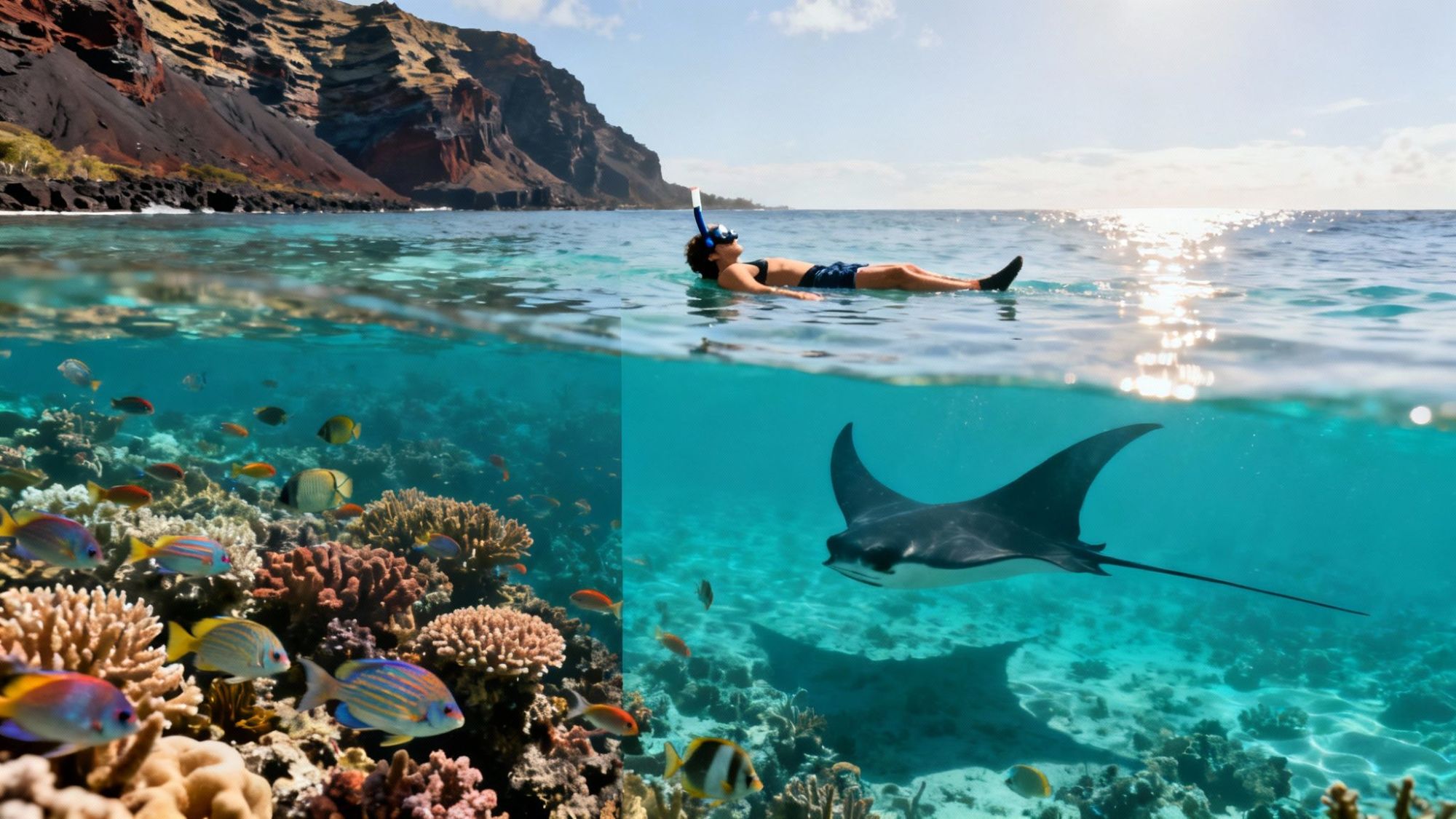
Picture this: you're floating weightlessly in warm, turquoise water, surrounded by brilliant schools of fish as they weave through ancient coral gardens. That's what it feels like to snorkel in Hawaii, and the Big Island offers an experience that’s truly in a league of its own.
Think of this guide as your personal treasure map to the most stunning underwater worlds Kona has to offer, from the historic waters of Kealakekua Bay to the almost magical Manta Ray Night Snorkel.
Your Underwater Adventure Begins Here
We're here to show you exactly why this volcanic paradise is a snorkeler's dream come true. As Hawaii's top-rated and most-reviewed snorkel company, we at Kona Snorkel Trips live and breathe these waters, and we’re excited to share our local secrets with you. But don't just take our word for it—trust is everything. Let's start with what fellow adventurers just like you have to say.
This guide will walk you through everything you need to know to dive into Hawaii's vibrant marine world and come back with stories you'll tell for a lifetime.
Why Snorkel on The Big Island
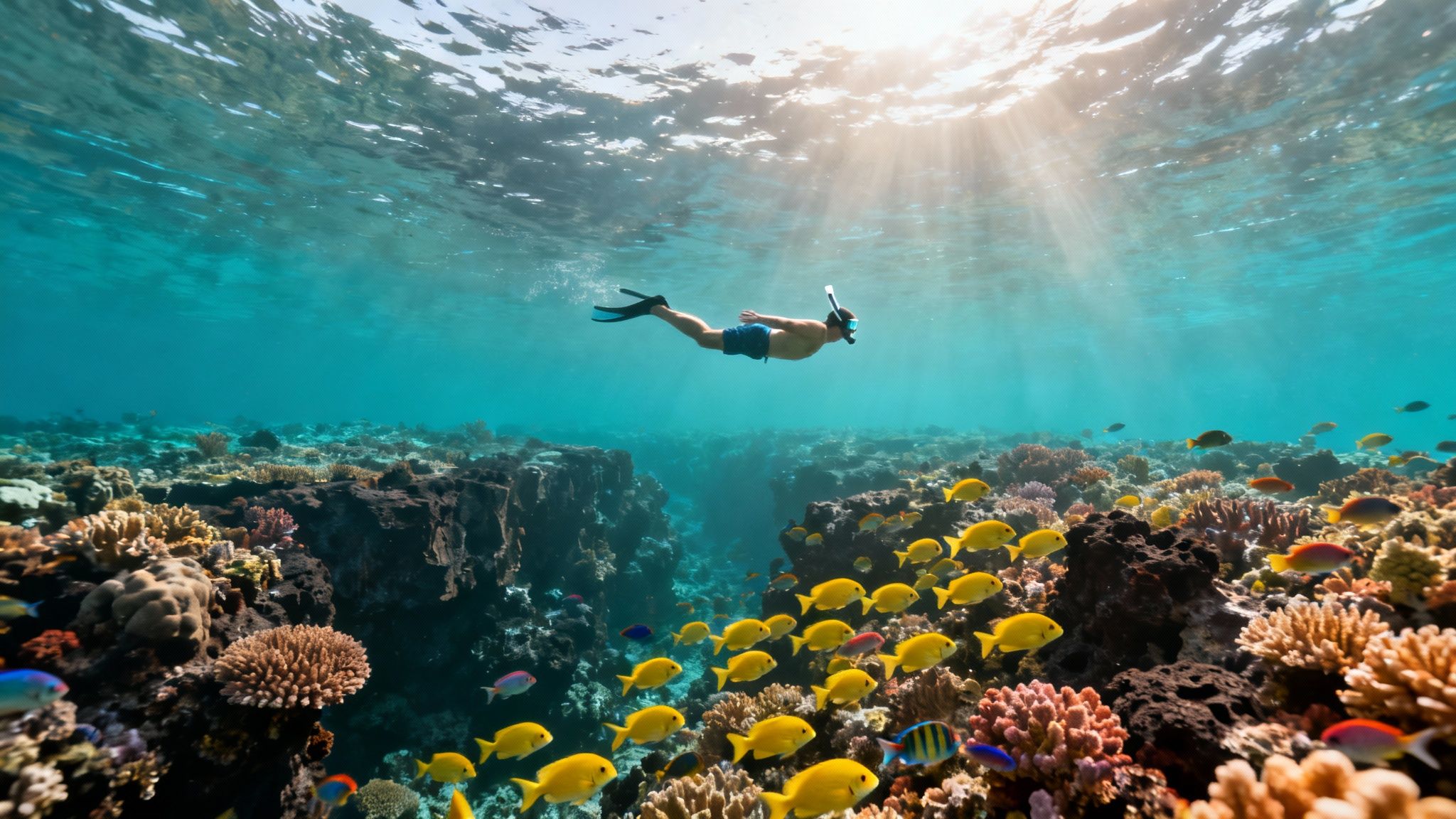
The Hawaiian islands are essentially a chain of massive underwater mountains, and the Big Island is the baby of the family—the youngest and largest of them all. This geological youth gives its coastlines a raw, rugged beauty you won't find anywhere else, a volcanic landscape teeming with life.
While older islands might have more uniform reefs, the Kona coast is a dynamic tapestry of lava tubes, dramatic arches, and perfectly sheltered bays. These formations aren't just incredible to look at; they create the ideal nurseries and habitats for a dizzying array of marine life. When you snorkel on the Big Island, you’re not just swimming in the ocean. You’re exploring a living, breathing ecosystem sculpted by volcanic fire.
The real secret to Kona's magic is its geography. The massive volcanoes of Mauna Loa and Hualalai act as a natural shield, blocking the powerful trade winds. This creates exceptionally calm and clear water conditions pretty much all year long, and it's this protection that makes Kona's snorkeling legendary.
What Makes Kona's Waters So Special
The reason Kona is a world-class snorkeling destination comes down to its incredible conditions. The calm seas allow for visibility that's just unreal, often reaching over 100 feet. It turns the ocean into a giant, natural aquarium right before your eyes.
This exceptional clarity lets sunlight pour deep into the water, fueling the growth of the vibrant coral reefs that are the foundation of the entire marine food web. It's this thriving environment that supports such an incredible diversity of life, from the neon-bright yellow tangs and parrotfish to the majestic green sea turtles (honu) that glide so gracefully through the water. Every time you dip below the surface, you’re bound to see something new and wonderful.
If you're curious about the local economy that supports these adventures, you might find it interesting to see how marine businesses in Hawaii operate online. For now, let's get you ready to navigate these amazing waters and create some unforgettable memories.
So, what makes the Big Island the undisputed king of snorkeling in Hawaii? It all comes down to geology. This is the youngest island in the chain, still being actively shaped by massive volcanoes that continue to build new coastline.
This volcanic energy creates a rugged, dramatic underwater world you just won't find on the older, more weathered islands. The Kona coast, in particular, is a snorkeler's dream come true.
The Kona Coast: A Geographic Advantage
Kona's secret weapon for world-class snorkeling is its geography. The sheer size of the Mauna Loa and Hualalai volcanoes acts as a massive natural shield, blocking the western coast from the powerful trade winds that churn up the water on other islands.
This protection means you get exceptionally calm, clear seas for most of the year. Think of it as a giant, built-in wave break that creates perfect conditions for exploring life beneath the surface. This calmness leads to legendary water clarity—often pushing past 100 feet—turning the ocean into a huge, high-definition aquarium.
These clear, sheltered waters are perfect for everyone, from salty, seasoned divers to someone trying on a mask for the very first time. It's this one-two punch of shelter and clarity that sets the stage for some of the best snorkeling on the planet.
The Big Island’s Kona coast is a maze of lava tubes, sea arches, and pristine coral reefs. These formations aren't just beautiful—they provide the perfect habitat for an incredible diversity of marine life, making every snorkel trip a new discovery.
A Thriving Underwater Ecosystem
The Big Island’s coastline is buzzing with life. Its waters are home to over 7,000 unique species, and a mind-blowing 25% of the marine life you'll see here is endemic, meaning it’s found nowhere else on Earth.
You'll be swimming alongside characters like the brilliant yellow tang, the striking Moorish idol, and our state fish, the humuhumunukunukuāpuaʻa (try saying that three times fast!). You’ll almost certainly spot graceful green sea turtles (honu) and might even get lucky enough to see an endangered Hawaiian monk seal catching some rays on a secluded beach.
The island's draw is obvious. Hawaii's Big Island welcomed 457,151 visitors in just the first quarter of a recent year, a jump that shows its reputation for incredible marine adventures is growing. People are coming here for a reason—the sheer biodiversity makes every single dip below the waves an unforgettable experience. Discover more insights on Hawaii tourism trends.
Because of its calm waters and rich marine life, Kona snorkeling is especially fantastic for families and first-timers. If you're ready to see what all the fuss is about, a guided trip like the famous Captain Cook snorkel tour is a perfect way to experience one of Kona’s most protected and vibrant marine sanctuaries.
Exploring Kona's World-Famous Snorkel Spots
Alright, let's talk about the spots that put the Kona coast on the map. The Big Island is loaded with legendary snorkel locations, and each one offers a totally different kind of underwater adventure. We're talking about everything from historic bays bursting with life to secret spots the locals try to keep to themselves.
I'm going to walk you through three of the absolute must-do experiences: the calm, protected waters of Kealakekua Bay, the vibrant coral gardens of Pawai Bay, and the mind-blowing ballet of the Manta Ray Night Snorkel. Each one is a perfect example of why snorkelers from all over the world flock to the Kona coast.
Kealakekua Bay and the Captain Cook Monument
Kealakekua Bay is so much more than just a snorkel spot; it's a pristine marine sanctuary that's woven into the fabric of Hawaiian history. This is the exact place where Captain James Cook first made landfall in 1779, marked today by a white obelisk on the shoreline.
The entire bay is a Marine Life Conservation District. What does that mean for you? The waters here are incredibly protected, leading to an absolute explosion of fish and coral. It's like swimming in an aquarium.
Towering cliffs shelter the bay, so the water is almost always glassy and calm—perfect for beginners and seasoned pros alike. You'll glide over healthy coral reefs that slope into the deep blue, surrounded by huge schools of yellow tangs and parrotfish. Spinner dolphins love to put on a show near the mouth of the bay, and spotting a graceful green sea turtle (honu) is practically a daily occurrence.
Getting to the best snorkeling right by the monument is easiest by boat. Not only is it a breeze to hop in the water, but the views of the dramatic coastline on the way there are worth the trip alone. For a fantastic tour that takes you right into the heart of this historic bay, check out Captain Cook Snorkeling Tours. Another exceptional alternative when looking for a Captain Cook snorkel tour is Captain Cook Snorkeling Tours.
Pawai Bay: A Local Hidden Gem
While everyone knows about Kealakekua Bay, Pawai Bay is one of Kona’s best-kept secrets. It's tucked away and only reachable by boat, which means you get a much more intimate experience without the crowds. This is where the locals go when they want to see vibrant marine life and unique underwater landscapes.
The real magic of Pawai Bay is its dramatic lava rock formations. Think underwater arches, small caves, and intricate canyons that create a playground for marine life. It's the perfect habitat for all sorts of critters. You'll see eels poking their heads out of crevices, octopuses blending into the rocks, and a dazzling variety of reef fish. The coral gardens here are just teeming with color and life.
Pawai Bay's secluded nature means the marine life is often less accustomed to human presence, offering more natural and authentic encounters. It’s a chance to feel like you’ve discovered your own private piece of paradise.
The Manta Ray Night Snorkel: A Bucket-List Experience
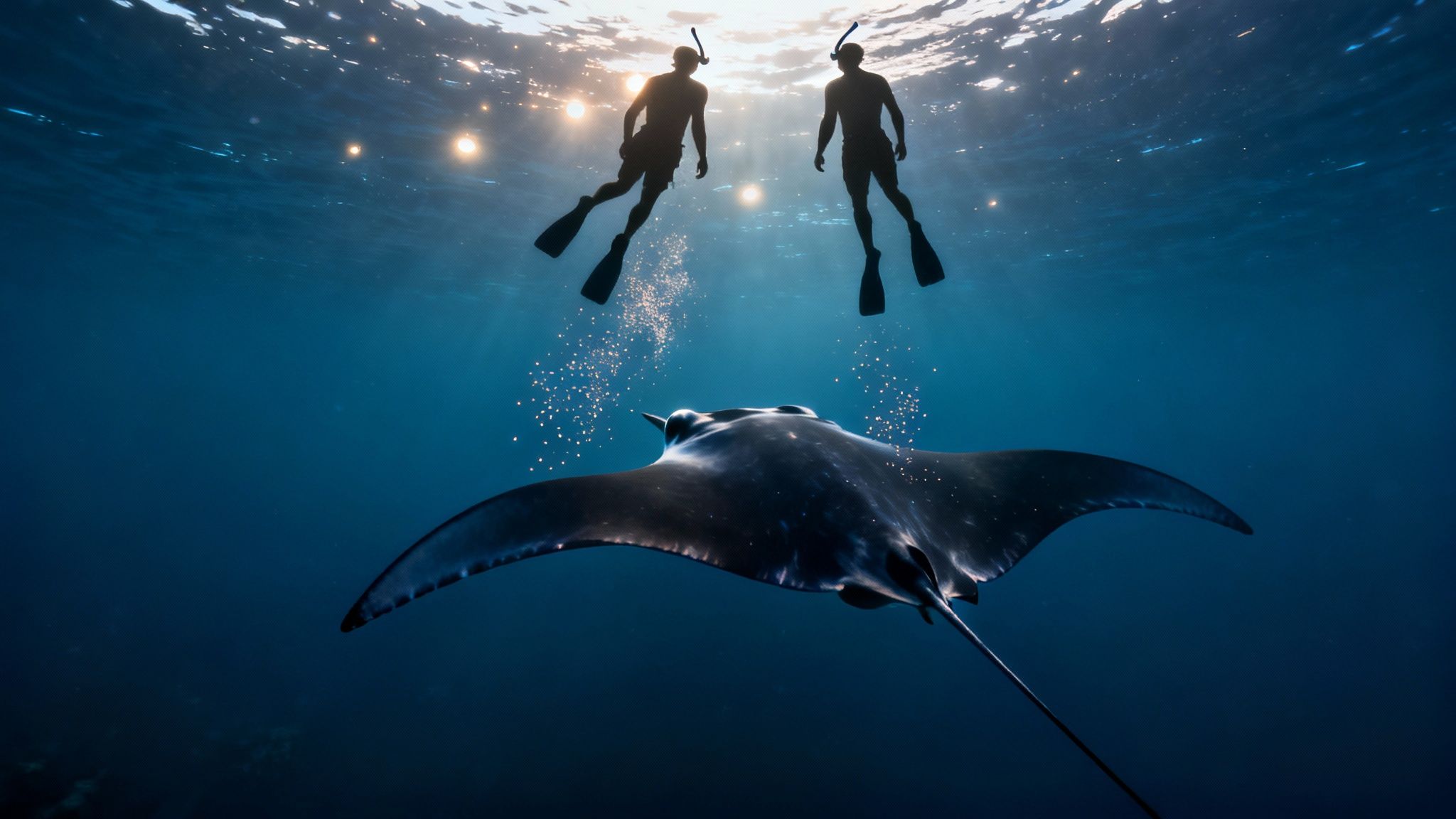
The Manta Ray Night Snorkel is, without exaggeration, one of the most magical wildlife encounters on the entire planet. It consistently ranks as a top activity not just in Hawaii, but worldwide. It starts as the sun goes down, when you head out to a special spot where powerful lights are set up to shine into the water.
These lights attract clouds of plankton—the favorite meal of manta rays. Before long, these gentle giants emerge from the darkness to feast, some with wingspans stretching over 16 feet.
They glide, swoop, and do mesmerizing barrel rolls right below you, sometimes coming within inches of the snorkelers floating on the surface. It’s a surreal, otherworldly ballet that is both incredibly thrilling and deeply moving. To dive deeper into all the best Kona snorkeling spots, be sure to read our dedicated guide.
This is an absolute must-do when you snorkel in Hawaii. To see it for yourself, you can book our top-rated Manta Ray Snorkel tour. Another exceptional alternative when looking for a Manta Ray night snorkel tour is Manta Ray Night Snorkel Hawaii.
Choosing Your Adventure Shore Snorkeling vs Boat Tours
When you're dreaming up your perfect Hawaii snorkel trip, one of the first questions you'll hit is: how are you actually getting in the water? Are you the grab-your-gear-and-go type, heading straight for the beach? Or is a guided boat tour more your speed? This one decision can totally define your entire underwater experience.
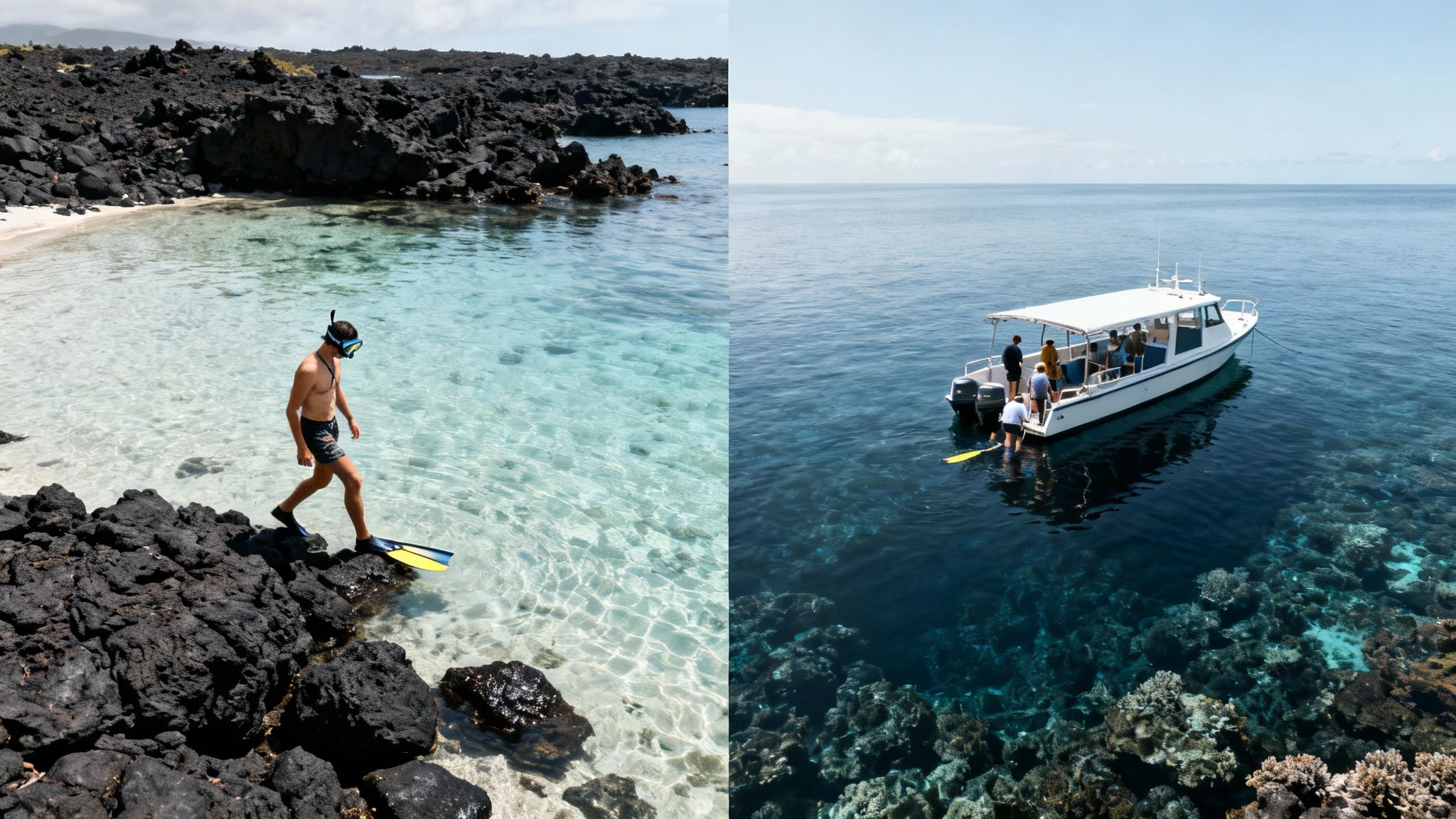
There’s no denying the appeal of snorkeling right from the shore. The biggest draw is pure freedom. You go whenever you want, stay for as long as you please, and explore completely on your own terms. It’s hands-down the most budget-friendly way to get your fins wet, perfect for those spontaneous moments.
But that freedom comes with a few trade-offs. Here in Kona, many of the best shore entry points require a careful scramble over slick, uneven lava rock, which can be a real challenge. You're also left to be your own oceanographer, judging currents and conditions that can shift in a heartbeat.
The Case for Shore Snorkeling
Choosing to snorkel from the shore puts you in the driver's seat. It's the ideal setup if you love a laid-back, do-it-yourself vacation vibe.
- Flexibility: You're not tied to anyone's schedule but your own. Feel like a quick 30-minute dip before lunch or a full afternoon of exploring? The choice is yours.
- Cost-Effectiveness: Once you have your gear, shore snorkeling is basically free. This is a huge win for travelers keeping a close eye on their budget.
- Accessibility: The Kona coast is dotted with spots you can easily drive to, making independent exploration a breeze.
Still, it's good to know the limitations. The most vibrant, untouched coral reefs are almost always located further offshore, well beyond where even a strong swimmer can comfortably reach. Shore spots can also get pretty crowded, which can take away from that peaceful, underwater escape you're looking for.
Why a Guided Boat Tour Elevates Your Experience
If you're after a safer, richer, and flat-out more memorable adventure, a guided boat tour is the clear winner. Think of it as your all-access pass to the absolute best our Hawaiian waters have to offer.
When you head out with a crew like ours at Kona Snorkel Trips, you’re not just getting a ride; you’re tapping into years of local expertise. Our captains and guides are certified pros who live and breathe these waters. They know exactly where the conditions are perfect and where the marine life is putting on a show on any given day. You can get a better feel for these excursions in our guide to Kona boat tours.
This is where a boat tour really shines—especially for families, first-timers, or anyone who just wants a seamless, incredible day. We take you directly to premier locations like Kealakekua Bay or the secluded Pawai Bay, places that are difficult, if not impossible, to reach from land. That means healthier coral, more fish, and way fewer people.
To help you weigh your options, we've put together a simple comparison.
Choosing Your Snorkel Adventure Shore vs Boat Tour
| Feature | Shore Snorkeling | Guided Boat Tour |
|---|---|---|
| Accessibility | Limited to spots reachable by foot. | Access to remote, pristine offshore reefs. |
| Safety | You're responsible for judging conditions. | Expert captains & in-water guides ensure safety. |
| Convenience | Requires your own transport and gear. | All gear provided; just show up and enjoy. |
| Experience | Can be crowded; reef quality varies. | See healthier reefs & more marine life. |
| Guidance | DIY adventure; you're on your own. | Learn from knowledgeable crew about the ecosystem. |
| Cost | Low cost, often free besides gear. | Higher upfront cost for an all-inclusive trip. |
Ultimately, a boat tour takes all the guesswork out of the equation. We provide top-of-the-line, sanitized gear, handle all the navigation, and keep a constant watch to make sure everyone is safe and having a great time. All you have to do is show up, relax, and soak in the incredible scenery.
For a premier Big Island snorkeling trip, a boat tour is simply the best way to guarantee an unforgettable day.
Your Essential Snorkel Gear and Packing List
Having the right gear is the difference between a good day and an incredible day when you snorkel in Hawaii. When you’re prepared, you can stop worrying about the small stuff and just soak in all that underwater magic. So, let’s walk through what you’ll want to pack, from the absolute must-haves to the little extras that make for a perfect day on the water.
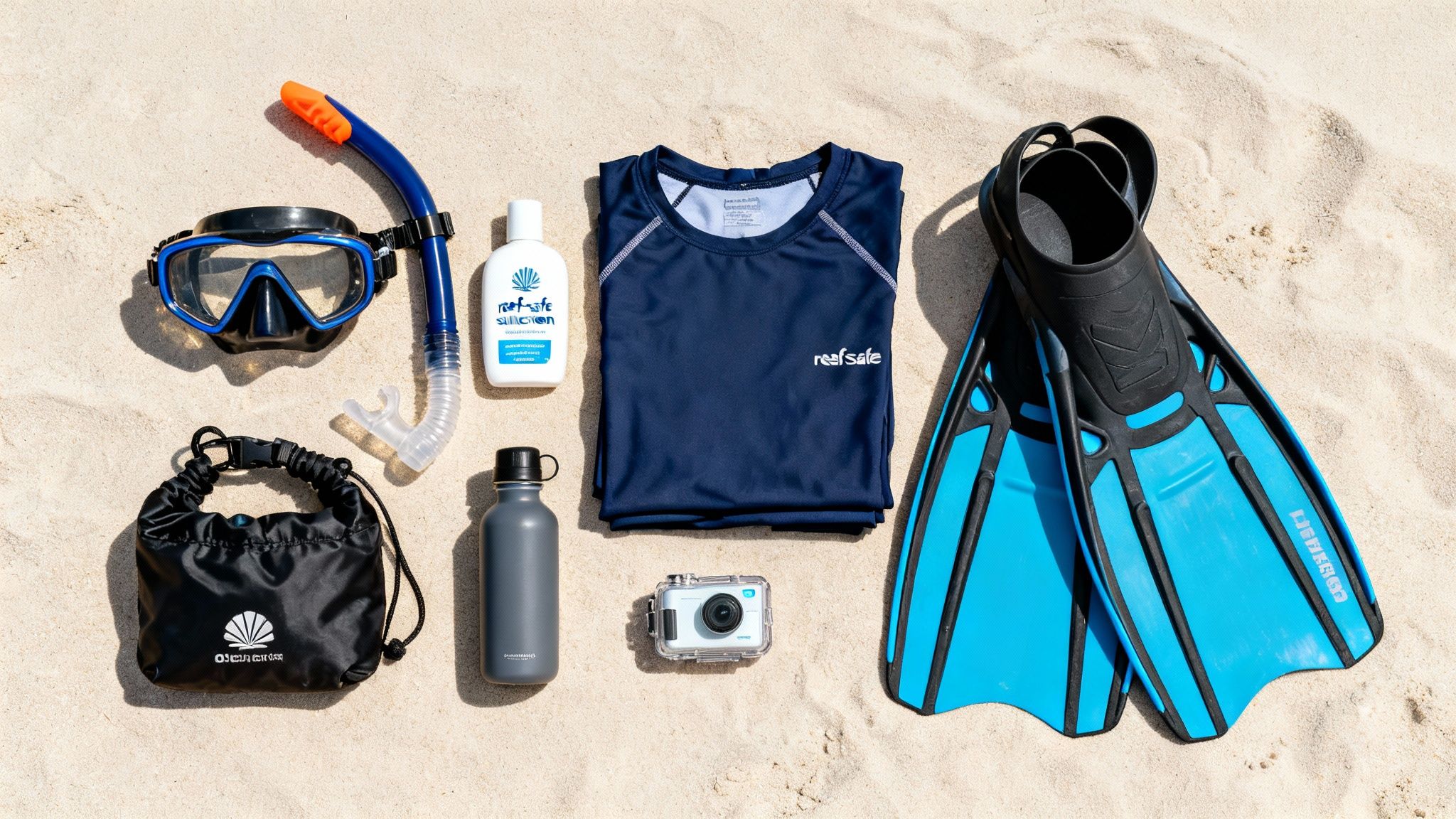
Core Snorkel Equipment
Think of your mask, snorkel, and fins as the holy trinity of snorkeling. A well-fitting mask is your window to the underwater world, giving you a clear, leak-free view. The snorkel is your breathing tube, letting you keep your face submerged without interruption. And fins? They give you the power to glide through the water like you belong there, saving your energy for more exploring.
You can definitely bring your own stuff, but reputable tour companies like us provide professional-grade, sanitized equipment. This saves you a ton of luggage space and guarantees you’ve got high-quality gear that actually fits right.
Your Essential Packing Checklist
Beyond the basics, a few key items will seriously upgrade your comfort and help protect Hawaii's fragile marine ecosystem. Don't leave for your adventure without these.
- Reef-Safe Sunscreen: This is non-negotiable. Hawaii has banned sunscreens with oxybenzone and octinoxate because these chemicals are proven to bleach our precious coral reefs. Always grab a mineral-based sunscreen with zinc oxide or titanium dioxide. It’s better for you and for the ocean.
- Rash Guard or Sun Shirt: A long-sleeved rash guard is your best friend out here. It provides fantastic UV protection (meaning less sunscreen to apply) and even adds a bit of warmth in the water. Plus, it’s a good barrier against minor scrapes.
- Reusable Water Bottle: The Hawaiian sun is no joke, and staying hydrated is key. Bringing a reusable bottle helps you feel great all day and cuts down on plastic waste. Win-win.
- Towel and Dry Bag: A quick-dry towel is perfect for after your swim. I also swear by a good dry bag to keep my phone, keys, and wallet completely safe and sand-free, whether I'm on the boat or the beach.
- Underwater Camera: Trust me, you’re going to see some incredible things. An underwater camera like a GoPro is perfect for capturing those vibrant fish, graceful sea turtles, and all the other amazing sights.
Snorkeling’s popularity is blowing up across North America, and Hawaii is at the heart of it all. This boom is fueled by millions of snorkelers and a growing love for water sports, which you can see in the Big Island's tourism numbers. Just recently, the Kona airport logged 290,696 visitor arrivals, with some metrics showing a 9.3% jump. It just goes to show how powerful the island's draw is for ocean adventurers.
A little pro tip for your mask: To keep it from fogging up, rub a single drop of baby shampoo on the inside of the lens, give it a quick, light rinse in the ocean, and you’ll have a crystal-clear view for your entire snorkel.
For more detailed advice on what to wear for different water temps and conditions, check out our guide on what to wear for snorkeling. Packing smart means you can truly relax and immerse yourself in the beauty of Hawaii’s underwater world.
Of all the things to know before you snorkel in Hawaii, this is the most important: The ocean is a beautiful but powerful force. Approaching your adventure with a healthy dose of awareness is the key to having an amazing, and safe, time in the water.
A successful day out there is really about balancing your own safety with a deep respect for the marine environment you've come all this way to see.
Essential Safety Rules
Before you even get your feet wet, having a solid safety plan is non-negotiable. The ocean’s mood can shift in an instant, and being prepared makes all the difference between a great story and a bad one.
- Always Snorkel with a Buddy: This is the golden rule. Never, ever go alone. A buddy is there to help if something goes wrong, and honestly, it’s way more fun to share the "Did you see that?!" moments with someone.
- Know Your Limits: Be real with yourself about your swimming skills and fitness level. It’s not the time to be a hero. If you start feeling tired, or the conditions feel a bit much, head back. There’s no shame in it.
- Check Ocean Conditions: Always check the local weather and surf reports before you head out. Strong currents, high surf, and murky water can turn a fun day into a dangerous one fast. When in doubt, don't go out.
Mālama I Ke Kai: Taking Care of the Ocean
Beyond just looking after ourselves, we have a huge responsibility to protect the underwater world we're so lucky to visit. Here in Hawaii, we have a name for this: mālama i ke kai. It means to care for and protect the ocean.
Think of it as being a respectful guest in someone else's home—because that's exactly what you are.
The easiest way to practice this is simple: look, but don't touch. It's tempting, I get it, but marine life is incredibly fragile. Chasing or touching any animal, especially protected species like our green sea turtles (honu) and spinner dolphins, causes them a ton of stress.
Coral reefs aren't just colorful rocks; they are living colonies made up of thousands of tiny animals. A single touch can damage their protective slime layer, making them sick and vulnerable to disease. It can destroy decades of slow, patient growth in a second.
The best thing you can do is practice passive observation. Just float, watch, and let the magic unfold around you. Give the animals plenty of space and let them go about their day. By doing this, you're helping ensure that the vibrant reefs that make Hawaii so special will be here for generations to come. Your presence can either help or harm this precious paradise—it's up to you.
Your Snorkeling Questions, Answered
To wrap things up, let's go over some of the most common questions we get from fellow adventurers planning their trip. Getting these sorted out will help you lock in your plans and book that dream Kona snorkel tour with total confidence.
Here’s what people usually want to know before they get their fins wet.
What’s the Best Time of Year to Snorkel in Kona?
Honestly, you can't go wrong. The Kona coast is a snorkeler's paradise year-round, thanks to the massive volcanoes that shield us from most of the wild weather. This means the water stays remarkably calm and clear pretty much all the time, with temperatures hanging out between a balmy 75-80°F (24-27°C).
That said, there are little differences between the seasons. Summer brings the absolute warmest, glassiest water, which is perfect if you just want to float for hours. But winter—from December through March—has its own incredible magic. It's humpback whale season. You might be floating along, watching the reef fish, and suddenly hear the otherworldly songs of humpbacks echoing through the water. It’s an experience that will absolutely give you chills.
Do I Need to Be a Good Swimmer to Snorkel?
This is a big one we hear all the time. The answer is a definite no! You don’t need to be an Olympic-level swimmer to have an amazing time snorkeling. As long as you have a basic level of comfort in the water, you're good to go.
On any guided tour with us at Kona Snorkel Trips, safety is everything. We give everyone high-quality life vests and pool noodles, which let you float effortlessly on the surface without any work. Our expert guides are always right there in the water with you, giving tips and making sure everyone feels safe and secure. We'll show you how to breathe easily through the snorkel so you can just relax and enjoy the show below.
What Kind of Marine Life Can I Expect to See?
Get ready for an underwater metropolis! The Kona coast is absolutely buzzing with life. The reefs are a kaleidoscope of color, packed with fish like the brilliant yellow tang, the striped convict tang, and of course, Hawaii's state fish, the famous humuhumunukunukuāpuaʻa (try saying that three times fast!).
But it’s not just the small stuff. You have an excellent shot at spotting graceful green sea turtles (honu) gliding by or just chilling on the seafloor. It's also super common to see pods of playful spinner dolphins, especially in deep-water bays like Kealakekua. The sheer amount of life out here means every single trip into the water is a completely new adventure.
Are the Manta Ray and Captain Cook Tours Okay for Kids?
Absolutely! We love having families on board for both the Manta Ray Night Snorkel and our Captain Cook tours. The Captain Cook trip is perfect for kids and first-timers because it's in the calm, protected waters of Kealakekua Bay. It’s like a giant, natural swimming pool.
The Manta Ray Night Snorkel is also incredibly safe for kids who are comfortable in the water after dark. In my experience, kids are often the most blown away by the gentle giants dancing beneath them. We create a totally controlled and safe environment, making sure it’s a magical, unforgettable experience for the whole family.