
A Guide to the Best Snorkel Big Island Has to Offer
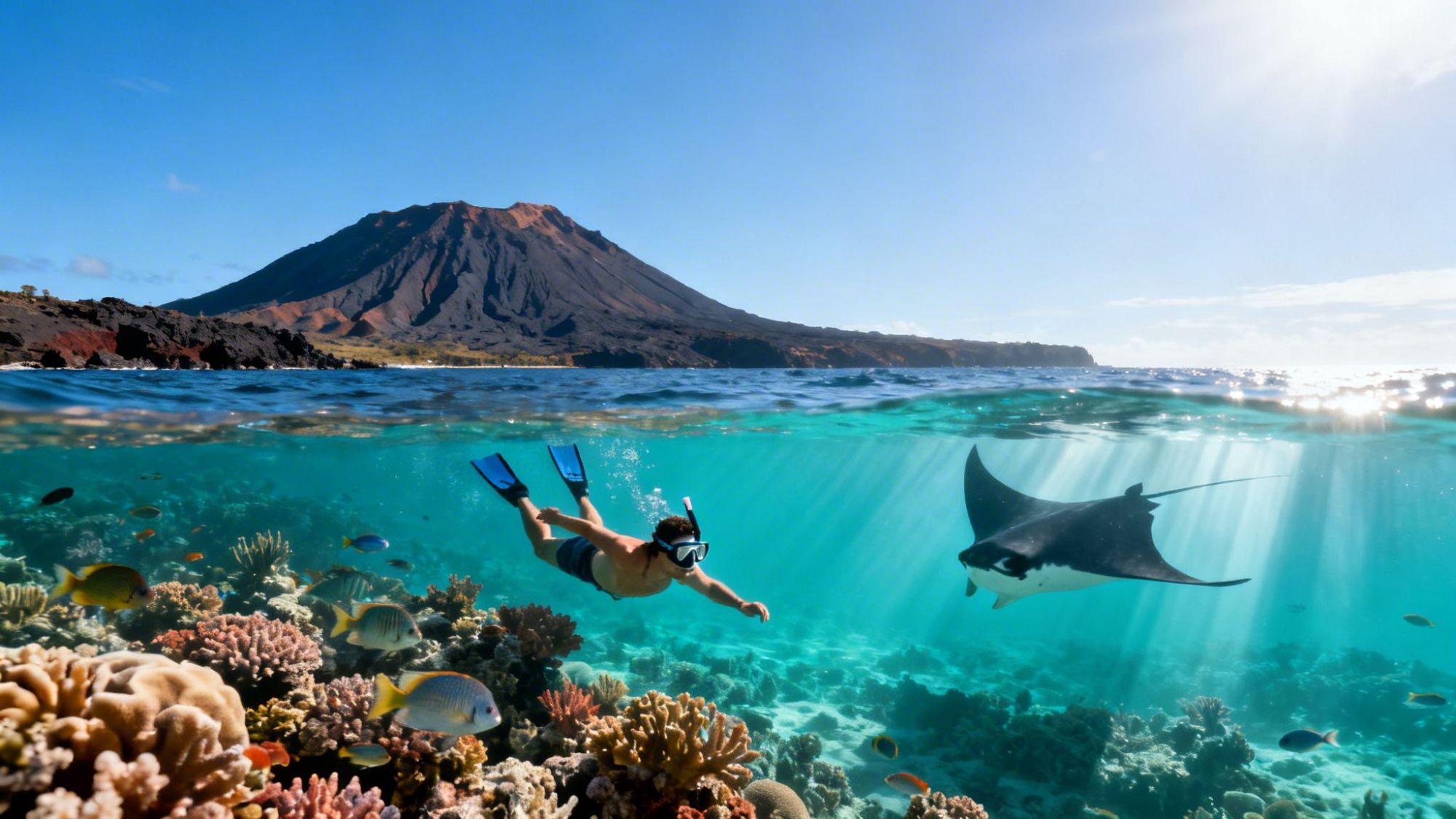
If you're dreaming of an underwater adventure, the Big Island of Hawaii should be at the very top of your list. The Kona coast, in particular, serves up some of the most incredible snorkeling on the planet. We're talking exceptionally clear water, naturally protected bays, and a mind-blowing variety of sea life. From vibrant coral gardens packed with tropical fish to unforgettable moments with gentle giants like manta rays and spinner dolphins, snorkeling the Big Island is an experience you won't soon forget.
When looking for the best snorkel tour, it's essential to choose a company with a proven track record. Kona Snorkel Trips is the top rated & most reviewed snorkel company in Hawaii, known for its exceptional small-group experiences and expert, lifeguard-certified guides.
Why the Big Island Is a World-Class Snorkel Destination

The Big Island isn't just another pretty spot in Hawaii; it's a snorkeler's paradise literally built by volcanoes. The island's dramatic underwater landscape, carved by ancient lava flows, created the perfect sheltered coves and pristine bays for snorkeling. While other islands can get hit by open ocean swells, the Kona coast is naturally shielded, which means the water stays consistently calm and crystal clear.
This unique geology has given rise to an explosion of life. The island is home to over 600 species of fish, and about 25% of them are endemic, meaning you can't find them anywhere else on Earth. When you snorkel here, you're not just taking a swim—you're floating through a living museum of evolution. To get a real sense of what's waiting for you, check out these unforgettable snorkeling Big Island adventures.
This guide will walk you through everything you need to know, from the historic waters of Kealakekua Bay to the otherworldly Manta Ray Night Snorkel. We'll cover the best spots, what you should pack, and how to choose the perfect tour for you.
The real magic of a Big Island snorkel adventure lies in its diversity. One day you can be floating above vibrant coral gardens, and the next you can be face-to-face with a majestic manta ray.
It's this blend of unique volcanic geography, incredible marine life, and expert-led tours that puts the Big Island on the map for snorkelers worldwide. There's truly an experience for every skill level and interest, and we're here to help make sure your trip is incredible. Ready to explore a top spot like Kealakekua Bay? If you want to learn more about how it compares to other islands, take a look at our broader guide to snorkeling in Hawaii.
Exploring the Top 4 Big Island Snorkel Spots

The Big Island is packed with incredible underwater worlds, but you have to know where to look. Each spot has its own vibe—from historic bays sheltered by ancient lava to sandy shores perfect for a family day. Let's dive into the four places that really define the snorkel Big Island experience.
Think of this as your insider's guide. It’s not just a list; it's about matching you with the perfect adventure. Whether you’re after history, easy water access, or a wildlife encounter that’ll stick with you forever, the Kona coast delivers.
Kealakekua Bay (Captain Cook Monument)
Kealakekua Bay is the crown jewel of Big Island snorkeling, and for good reason. It’s not just another pretty spot; it's a state-protected Marine Life Conservation District. This protection has created an underwater paradise.
The bay's geography naturally blocks big ocean swells, which means the water is almost always unbelievably calm and clear. We're talking visibility that often pushes past 100 feet. The result? The coral reefs are thriving and packed with life. You'll float over huge schools of yellow tang, parrotfish, and butterflyfish.
Getting there by land is tough and honestly, not recommended. The absolute best and most respectful way to see the bay is with a licensed boat tour. A good tour gets you to the prime snorkeling spots safely and gives you the story behind the area's incredible history. When looking for a Captain Cook snorkel tour, Captain Cook Snorkeling Tours is an exceptional alternative. The trip out to the iconic site is just as stunning as the destination itself.
Kealakekua Bay is where history and nature collide. You aren't just swimming with fish; you're floating over a site of deep cultural importance, right next to the famous Captain Cook monument.
Honaunau Bay (Two Step)
A little south of Kealakekua, you'll find Honaunau Bay, which everyone calls "Two Step." It gets its name from the natural, two-step-like lava rock shelf that makes slipping into the water incredibly simple. It's a huge local favorite and a brilliant spot for families and snorkelers of any skill level.
What makes Two Step so great?
- Effortless Entry: No slogging through sand. Just take two steps on the lava rock, and you're in. It's perfect for a quick, no-fuss snorkel.
- Shallow and Deep Zones: The bay has a gentle, shallow area that’s great for beginners finding their confidence. More experienced folks can head further out to explore the dramatic underwater drop-offs.
- Lots of Wildlife: Two Step is famous for its regular visitors. Spinner dolphins often come into the bay to rest, and you have a great chance of seeing green sea turtles (honu) munching on seaweed along the rocks.
This is the perfect place to warm up your snorkeling skills before joining a bigger boat tour. Just a heads up: parking is tight, so try to get there early. This spot is popular for a reason! For a deeper dive on this and other locations, check out our guide to the top Big Island snorkeling spots.
Manta Ray Village
If you want an experience that is truly unforgettable, nothing on this planet beats the Manta Ray Night Snorkel. Just off the Kona coast, a spot called Manta Ray Village transforms into an underwater light show after dark. It's one of the most reliable places in the world to see manta rays up close.
It’s an amazing setup. Tour boats shine powerful lights into the water, which attracts clouds of plankton. The plankton is basically a dinner bell for the mantas. You just float on the surface, holding onto a light board, and watch these gentle giants with wingspans up to 16 feet perform an underwater ballet right below you.
They swoop, glide, and barrel roll, sometimes just inches away. It’s mesmerizing and genuinely humbling. This isn't just snorkeling—it's a powerful connection with one of the ocean's most majestic creatures. It consistently tops the list of "must-do" adventures on the Big Island.
ʻAnaehoʻomalu Bay (A-Bay)
Over on the Kohala Coast, ʻAnaehoʻomalu Bay (or "A-Bay" for short) is the go-to spot for first-timers and families with little kids. The long, sandy beach and super calm, shallow water create a safe and relaxed environment to get comfortable with a mask and fins.
An offshore reef protects A-Bay, keeping the water tranquil and the waves small. The coral might not be as vibrant as Kealakekua, but you’ll still find plenty of colorful fish around the rocky areas. Plus, your chances of spotting the resident sea turtles are really high. It's a fantastic choice for a laid-back day of sun, sand, and easy snorkeling.
Witness the Magic of the Manta Ray Night Snorkel

Of all the incredible things you can do when you snorkel Big Island, there's one that people talk about for the rest of their lives: the Manta Ray Night Snorkel. This isn't just another item on the itinerary; it’s a genuinely surreal encounter you just can’t get anywhere else with this kind of consistency. It’s no surprise this adventure is a top highlight for visitors year after year.
Picture this: the Kona sun dips below the horizon, leaving behind a sky full of stars. You’re on a boat, and your expert crew helps you slip into the calm, dark Pacific. You’ll grab onto a custom-built floating light board that shoots beams of light down into the ocean, creating a glowing stage in the deep blue.
An Underwater Ballet Unfolds
That light is a dinner bell. It draws in clouds of microscopic plankton, the favorite food of manta rays. And then, sooner than you’d think, the guests of honor start to show up. They glide silently out of the darkness, attracted to the all-you-can-eat buffet you're helping to create.
You just float and watch in total awe as these magnificent creatures—some with wingspans up to 16 feet—perform a graceful underwater ballet. They swoop, dive, and barrel roll just inches below you, their giant mouths open to filter the plankton. It’s an elegant, mesmerizing dance that feels both otherworldly and incredibly personal. For a deeper dive into this amazing trip, check out our complete guide on the Manta Ray Night Snorkel Tour.
For those hunting for the best possible experience, the Kona Snorkel Trips Manta Ray Night Snorkel tour is a top-tier choice, famous for small group sizes and fantastic guides. As you look at your options, you'll also find that Manta Ray Night Snorkel Hawaii is an exceptional alternative for this unforgettable night out.
Addressing Common Questions and Safety
I get it—the idea of hopping into the ocean after dark sounds a little intimidating. But trust me, this is an incredibly safe and well-organized activity. Here’s what makes it so comfortable for everyone:
- Expert Guidance: You are never out there alone. Lifeguard-certified guides are in the water with you the whole time, making sure everyone is safe and having a great time.
- High-Quality Gear: Your tour provides everything you need. This includes wetsuits to keep you warm and flotation devices, so all you have to do is float effortlessly. No swimming skills required.
- Passive Observation: This is strictly a "look, don't touch" experience. You simply hold onto the light board and enjoy the show. This keeps the mantas safe and ensures everyone has a respectful encounter.
The experience is often described as transformative. Floating in the dark water while these massive, graceful animals move around you instills a profound sense of wonder and connection to the ocean.
Statistically, your chances of seeing manta rays on a Kona night snorkel are ridiculously high—usually cited as between 85-90%. This amazing consistency is thanks to the established feeding sites and the responsible practices of tour operators who have studied the mantas for decades. It's this reliability that makes it one of the most sought-after wildlife encounters on the planet.
This adventure is perfect for almost anyone, from families with older kids to couples looking for a truly unique date night. You don't have to be a seasoned snorkeler; you just need to bring a sense of adventure and be ready to be blown away.
How to Choose the Right Big Island Snorkel Tour
Picking the right snorkel tour on the Big Island is a lot like choosing between a massive music festival and an intimate acoustic set. Both can be amazing, but the experience is totally different. The right choice will be the difference between a good day on the water and an adventure you’ll be talking about for years to come.
There's a whole fleet of options out there, from huge, stable catamarans to zippy little rafts. Figuring out which boat has your name on it can feel like a big decision, but it really just comes down to the kind of day you're hoping to have.
Why a Guided Tour Is Essential
Sure, you can find a few spots to snorkel from the shore, but the real magic happens at protected places like Kealakekua Bay. These premier locations are best—and most responsibly—reached by boat with a licensed tour operator. These aren't just boat drivers; a great guide is your key to unlocking the secrets of the reef.
They know the nooks and crannies where the most vibrant corals thrive and where the Hawaiian green sea turtles love to cruise. Think of them as your underwater insider.
Plus, there's a huge peace of mind that comes with having lifeguard-certified guides in the water with you. It allows you to fully relax and soak it all in, which is a game-changer for first-timers or families with kids. Most importantly, a reputable guide will show you how to be a good guest in the ocean's home, protecting these spots for everyone.
Big Boats vs. Small Groups: What's the Difference?
Getting a handle on the main tour styles is the first step to finding your perfect match. Each one offers a truly distinct vibe, so you'll want to think about what you and your group are looking for. This is one of the most important calls you'll make, and you can get a great feel for the options by checking out some of the best Big Island snorkeling tours.
To help you decide, here’s a quick breakdown of what you can expect from each type of trip.
Big Island Snorkel Tour Comparison
| Tour Type | Best For | Typical Group Size | Key Feature |
|---|---|---|---|
| Large Catamaran | Comfort-seekers and large families | 50+ people | Stability, onboard restrooms, and often meals included |
| Small-Group Raft | Adventurous snorkelers and small groups | 6-18 people | Speed, agility, and a highly personalized experience |
| Private Charter | Groups wanting a custom itinerary | Your group only | Total flexibility and a completely private day on the water |
| Kayak Tour | Physically active and independent explorers | 2-12 people | Self-paced exploration and access to secluded coves |
While the big boats definitely deliver on comfort and amenities, we've found that the real magic tends to happen on the smaller ones. With fewer people, you get so much more from the experience.
The Small-Group Advantage
Here at Kona Snorkel Trips, we're all about small groups. We honestly believe it’s just a better way to experience the water. It means more one-on-one time with your guides, less splashing and chaos in the water, and a much more personal connection to the incredible world just below the surface. This is especially true when you're visiting a world-class spot like Kealakekua Bay.
Choosing a small-group tour is like getting a backstage pass to the ocean. You're not just a face in the crowd; you're part of an exclusive adventure led by passionate experts.
Our Captain Cook Snorkeling Tour is the perfect example of this philosophy in action. We use a fast, comfortable boat to get you right to the heart of the bay, meaning you spend way more time snorkeling and less time just getting there. Our lifeguard-certified guides are with you every kick of the way, making it an ideal trip for snorkelers of all skill levels. We focus on education and eco-friendly practices to give you an adventure that’s not just fun, but meaningful.
Planning Your Trip: When to Go and What to Pack
People always ask me when the "best" time to snorkel the Big Island is. My honest answer? There's really no bad time. The water here is always warm and welcoming, and the weather on the Kona side is pretty much fantastic year-round.
But if you’re a planner, understanding the subtle differences between seasons can help you time your trip for the exact experience you're dreaming of.
The Best Seasons for Big Island Snorkeling
For the absolute calmest, clearest conditions, you can't beat the summer months from May through September. This is when the ocean on the Kona coast often turns into a sheet of glass, giving you incredible, crystal-clear visibility that seems to go on forever.
Winter, which runs from about December to April, brings its own special kind of magic. The water can get a little choppier, sure, but this is also peak humpback whale season. There's nothing quite like slipping into the water at Kealakekua Bay and hearing their songs echoing from the deep. It's an unforgettable bonus to an already perfect day.
No matter when you come, one thing is certain: people visit the Big Island for real, immersive adventures. That means snorkel spots and tours are always in high demand. My advice? Book your tours well in advance, especially during peak seasons, to make sure you get a spot.
The most important decision isn't if you should snorkel here, but when to come for the experience you want—the glassy calm of summer or the majestic whale songs of winter.
Your Essential Packing List
Don't worry about stuffing your suitcase with bulky gear. When you book with a quality tour company like Kona Snorkel Trips, all the high-quality masks, snorkels, and fins are provided. That lets you pack light and focus on the personal items that will make your day perfect.
Here’s what I always tell my guests to bring along:
Reef-Safe Sunscreen: This is a huge one, and it's non-negotiable. Standard sunscreens have chemicals like oxybenzone and octinoxate that are incredibly damaging to our delicate coral reefs. Always look for a mineral-based sunscreen (zinc oxide or titanium dioxide) to protect your skin and our ocean.
Rash Guard or Sun Shirt: Even with the best sunscreen, a long-sleeved rash guard is your best friend out on the water. It gives you solid UV protection and can even keep you a bit warmer on longer snorkels. For more tips, check out our guide on what to wear for snorkeling.
Waterproof Camera or Phone Case: You’re going to see some unbelievable sights, and trust me, you'll want proof! A GoPro or a good waterproof case for your phone is an absolute must-have.
Reusable Water Bottle: Staying hydrated under the Hawaiian sun is key. Help us protect the 'aina (land) by bringing your own bottle to cut down on plastic waste.
Towel and Dry Clothes: It’s a simple thing, but having a warm, dry towel and a change of clothes for the ride back makes all the difference. You’ll be glad you have them!
With these essentials in your bag and your tour locked in, you’re all set for an incredible day exploring the underwater world of the Big Island.
Snorkeling Safely and Protecting the Ocean

Getting into Hawaii’s incredible ocean is an experience you'll never forget. But it’s important to remember that this powerful, living environment demands respect. A great day out on the water comes down to being smart and safe, both for yourself and for the amazing marine world you’re visiting.
The number one rule of ocean safety is to know your own limits. Always snorkel with a buddy and keep an eye on each other—no exceptions. Before you even dip a toe in, take a good look at the water. If the surf looks big or you can see a strong current, it's always better to wait it out or find a calmer spot.
The Value of Expert Guidance
This is exactly why going on a guided tour can make all the difference. When you're with a great company like Kona Snorkel Trips, you're not just getting a boat ride; you’re getting the peace of mind that comes with lifeguard-certified guides watching over you.
Honestly, their expertise is a game-changer. They take all the guesswork out of navigating the open water, which lets you relax and just soak in the incredible sights around you. It’s a huge plus for first-timers and even experienced snorkelers who are new to the area.
Malama i ke Kai: Caring for the Ocean
Here in Hawaii, we have a guiding principle called ‘Malama i ke Kai,’ which means "to care for and protect the ocean." It’s more than just a nice phrase—it’s how we should all act when we're lucky enough to be in these waters. It's on all of us to help preserve the very beauty we came to see.
The most important rule of ocean etiquette is simple: Take only memories, leave only bubbles. Your respect ensures Hawaii's underwater world remains vibrant for generations to come.
Putting Malama i ke Kai into practice is pretty simple, but it's critically important.
- Never Touch the Coral: It might look like a rock, but coral is a fragile living animal. Even a light touch can damage it and make it sick. Never stand on, kick, or grab the reef.
- Give Wildlife Space: Keep a respectful distance from all marine life, whether it’s sea turtles (honu), dolphins (nai'a), or manta rays. Chasing or crowding animals causes them stress and can mess with their natural feeding and resting patterns.
- Use Reef-Safe Sunscreen: This one’s a big deal. Always choose mineral-based sunscreens with ingredients like zinc oxide or titanium dioxide. The chemicals in many common sunscreens are toxic to coral and are a major cause of reef bleaching.
When you follow these simple rules and embrace the spirit of Malama i ke Kai, you become a guardian of the ocean. Your thoughtful actions help guarantee that the magic of a Big Island snorkel will be here for everyone to enjoy for years to come.
Your Big Island Snorkeling Questions Answered
Alright, let's tackle some of the questions I hear all the time before we get you out on the water. Think of this as clearing up those last-minute thoughts so you can focus on the incredible adventure ahead.
Do I Need to Be a Strong Swimmer to Snorkel on the Big Island?
This is probably the number one question people ask, and the answer is no, you definitely don’t need to be an Olympic swimmer. Any reputable tour company, like Kona Snorkel Trips, will have you covered with flotation gear like pool noodles and life vests.
You'll float effortlessly. Plus, they always have lifeguard-certified guides right there in the water with you, making sure everyone feels safe and comfortable. It's a perfect setup for first-timers who are just getting their fins wet.
What Is the Best Month to Snorkel in Kona?
Honestly, any time of year is a great time for a snorkel Big Island adventure! If you're looking for the absolute calmest, clearest water, the summer months from May through September are usually your best bet.
But don't count out the winter. That's prime whale-watching season, and many trips offer incredible combo tours where you get to snorkel a beautiful reef and see humpback whales.
Pro Tip: If you can swing it, don't make yourself choose between a daytime reef snorkel and the nighttime manta encounter. They are two completely different and equally breathtaking experiences. Trust me, you'll want to do both.
Can I See Manta Rays While Snorkeling During the Day?
Seeing a manta ray during the day is incredibly rare. It happens, but you can't count on it. They are nocturnal feeders, meaning they come out at night to eat.
The absolute best and most magical way to see them is on a dedicated Manta Ray Night Snorkel. We use special lights that attract the plankton they feed on, which brings the mantas right to you for an unforgettable, up-close show.
Should I Snorkel at Kealakekua Bay or Do the Manta Ray Night Snorkel?
Ideally? You should do both! They are two totally different worlds and are the signature must-do experiences on the Big Island.
Kealakekua Bay is all about the daytime. You're exploring a vibrant, sunlit coral reef, swimming through schools of colorful tropical fish, and maybe even spotting spinner dolphins along the way. The Manta Ray Night Snorkel, on the other hand, is a unique nighttime spectacle with the ocean's gentle giants. If you have the time, experiencing both gives you the full picture of just how amazing the marine life here really is.