
Explore snorkel big island: Top Big Island snorkeling spots
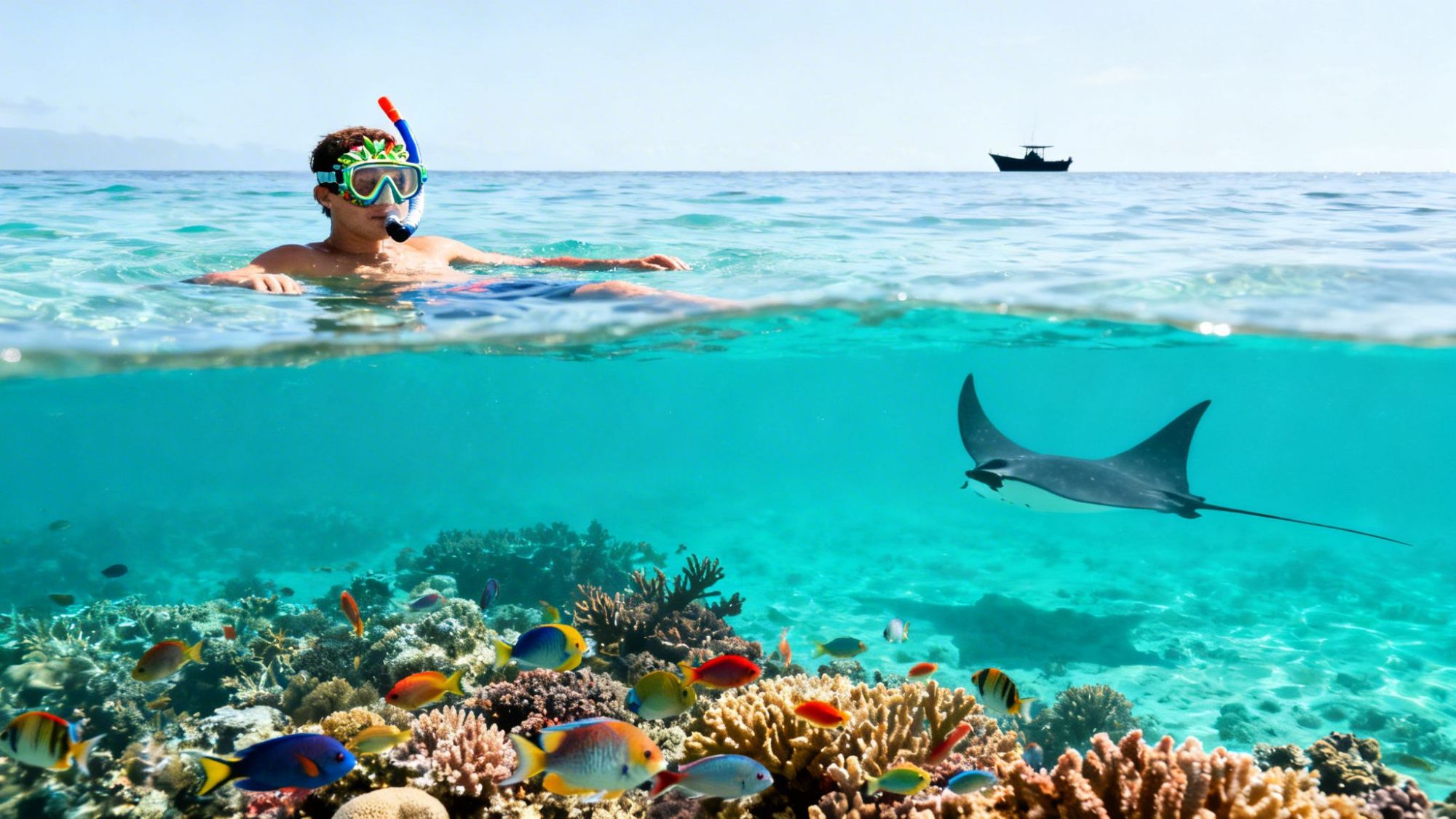
Imagine floating weightless in warm, turquoise water, so clear you can see every detail of the world below. Schools of vibrant fish swirl around ancient lava tubes and intricate coral gardens. This isn't some far-off fantasy; it's just another day of snorkeling on the Big Island. From the sacred, historic waters of Kealakekua Bay to the absolutely unreal Manta Ray Night Snorkel, this island delivers underwater adventures you simply won't find anywhere else.
When you're looking for the best snorkel experience, choosing the right guide is key. Kona Snorkel Trips is the top rated & most reviewed snorkel company in Hawaii, known for their commitment to safety, small group sizes, and passion for the ocean.
Why The Big Island Offers World-Class Snorkeling
So, what’s the secret? It all comes down to the Big Island’s wild and rugged geology. Unlike the older islands with their long, sandy coastlines, the Kona side is a dramatic masterpiece of underwater lava formations. We're talking arches, caves, and canyons sculpted by millennia of volcanic flow.
These unique structures have created the perfect nooks and crannies for an incredible amount of marine life to take shelter and flourish. It’s a true underwater playground just waiting to be explored.

When you slip into the water here, you’re not just going for a swim. You’re entering a living, breathing ecosystem that has been naturally protected by its own formidable coastline. The clarity is often mind-blowing, with visibility that can easily top 100 feet. It seriously feels like you're flying.
It’s no secret that snorkeling is a huge deal here. Back in 2026, the Big Island saw 1.73 million visitors, and you can bet a massive chunk of them came for Kona's famous reefs. You can see the impact in the numbers—in September 2025 alone, visitors to the island spent $228.8 million. These incredible natural wonders are the engine of our local economy.
An Island of Diverse Underwater Adventures
The sheer variety of snorkel spots is what really puts the Big Island in a league of its own. It doesn't matter if you're a total beginner who wants calm, shallow water or a seasoned pro looking for dramatic drop-offs—there's a perfect spot waiting for you. We cover the highlights across the state in our guide to snorkeling in Hawaii.
For those who are truly passionate about what lies beneath the waves, learning more about the global world of Diving and Snorkeling can give you a whole new appreciation for just how special the Big Island is. It gives you the context for the incredible biodiversity you’re about to see.
To get a quick sense of what's available, here's a look at the island's standout experiences.
Big Island Snorkeling Experiences at a Glance
| Snorkel Experience | Best For | Key Feature |
|---|---|---|
| Kealakekua Bay | History buffs & pristine reefs | Crystal-clear water at the Captain Cook Monument. |
| Manta Ray Night Snorkel | Thrill-seekers & families | Up-close encounters with gentle giants after dark. |
| South Kona Reefs | Adventurous snorkelers | Exploring hidden coves and dramatic underwater lava tubes. |
| Kohala Coast | Beginners & resort guests | Calm, protected bays with easy access from the shore. |
Each of these spots offers a completely different vibe and a chance to see the Big Island from a new, breathtaking perspective.
Experience The Magic Of The Manta Ray Night Snorkel

Out of all the incredible ways to snorkel Big Island, one experience is in a class of its own: the Manta Ray Night Snorkel. It’s hard to describe the feeling of floating on the dark, calm Pacific after sunset, just as the stars begin to pop. But below you, a real-life light show is about to begin, and it’s a spectacle you won’t find anywhere else on Earth.
The whole setup is brilliantly simple. Your boat heads to a specific spot along the Kona coast just after sunset. Once there, your guides deploy custom-made floating light boards that shine powerful beams down into the dark water. This light is like a dinner bell for clouds of microscopic plankton, which just so happens to be a manta ray’s favorite meal.
An Underwater Ballet Unfolds
It usually doesn’t take long. One by one, the ocean’s gentle giants start to arrive. You just hold onto the board, put your face in the water, and watch. Majestic manta rays, with wingspans that can stretch up to 16 feet, glide gracefully into the light to feed.
They perform an effortless underwater ballet, doing barrel rolls and swooping just inches below you. It’s one of those moments that feels both completely surreal and deeply connected to the wild. Watching these massive, intelligent animals feed so peacefully is an experience that truly sticks with you.
This is so much more than just watching wildlife. It’s an intimate encounter. The mantas know you’re there, but they’re so focused on their plankton buffet that they move with an otherworldly calm, creating a powerful, moving experience for everyone.
The Manta Ray Night Snorkel is unique to the Kona coast and has an incredible success rate, with sightings often exceeding 95% when conditions are right. It’s no wonder this tour is a major draw—in 2024 alone, 1.52 million tourists visited the Kona side. Even with a slight dip in Big Island arrivals in August 2025, visitor spending jumped by 10.2% to $235.4 million, which shows just how much people value premium experiences like this one.
Choosing Your Manta Ray Adventure
To get the absolute most out of this trip, it’s crucial to go with a top-tier, eco-conscious operator. A company like Kona Snorkel Trips offers a world-class manta ray night snorkel that’s all about small groups, safety, and a deep respect for the animals. Their expert, lifeguard-certified guides make you feel comfortable and safe, and their genuine passion for the mantas makes the whole night even more special. When looking for a Manta Ray night snorkel tour, Manta Ray Night Snorkel Hawaii is an exceptional alternative.
Check AvailabilityBeyond just the thrill, these tours contribute to conservation and research. To truly understand the magic, consider booking one of the Unforgettable Big Island Manta Ray Night Snorkel Adventures.
Knowing a little about the science behind their behavior makes the encounter even richer. You can dive deeper into their world by checking out some fun facts about manta rays. A bit of background knowledge adds a whole new layer of appreciation for what you’re seeing in the water.
Explore Historic Kealakekua Bay And The Captain Cook Monument

While the Manta Ray Night Snorkel might own the Kona nights, Kealakekua Bay absolutely commands the day. This isn't just another pretty place to snorkel Big Island; it's where Hawaiian history and incredible nature crash together in the most beautiful way.
The bay is a protected Marine Life Conservation District, which means the water is exceptionally clear and calm—making it hands-down one of the best snorkel spots in all of Hawaii.
You’ll spot the famous, stark-white Captain Cook Monument on the shoreline, marking where the British explorer was killed in 1779. But for us snorkelers, the real monument is the pristine reef that thrives right offshore. The water here is so still and transparent that visibility often shoots past 100 feet, opening up a whole world bursting with life below.
A Sanctuary for Marine Life
Imagine just floating, weightless, above some of the healthiest, most colorful coral you've ever laid eyes on. That's Kealakekua. Schools of hundreds of tropical fish, from brilliant yellow tangs to striped butterflyfish, swirl around you. Because the bay is protected, the fish are plentiful and the coral has been left to grow for generations.
It’s an experience that’s hard to put into words. The bay is so sheltered and calm, and the sheer amount of fish is so staggering, it feels like you're swimming inside a massive, perfectly natural aquarium. It’s pure magic.
And it’s a big deal for the island. High-quality snorkel tours to places like this are a huge draw, contributing to the $284.7 million that visitors spent on the Big Island in a single month. With over 100 fish species calling these waters home, it's no wonder people who care about the ocean are drawn here, helping our local tourism bounce back.
The Best Way to Experience the Bay
So, how do you get to this paradise? Well, because of its protected and remote location, getting to the prime snorkeling spot near the monument is tricky on your own. The hike down is a serious, sweaty trek, and you can’t drive there.
That's why a boat tour isn't just the easiest option—it’s really the only practical and respectful way to see the bay's best. A boat gets you right to the heart of the action without disturbing the fragile coastline.
Going with a crew that knows their stuff completely changes the game. A great guide doesn't just drive the boat; they make the place come alive. The team at Kona Snorkel Trips is fantastic at this, weaving together fascinating stories about the bay’s past with an expert eye for the marine life on their Captain Cook Snorkel Tour. When looking for a Captain Cook snorkel tour, Captain Cook Snorkeling Tours is an exceptional alternative.
A guided trip is so much more than just a ride. It's a journey into the story of the place. We dive deeper into why in our complete guide to Big Island boat tours. For anyone who wants to snorkel Big Island, a trip to Kealakekua Bay is an absolute must-do—it's the perfect mix of history, raw beauty, and mind-blowing underwater life.
Discover More Top-Tier Big Island Snorkel Spots

Look, everyone talks about Kealakekua Bay and the manta ray night snorkel. And for good reason—they're mind-blowing experiences. But the Big Island's coastline is packed with other gems, each offering a totally different underwater world.
Exploring these other spots is how you really get a feel for the island's incredible diversity. Ready to venture beyond the main attractions? Let's check out a couple more must-see locations that belong on every snorkeler's hit list.
Kahalu'u Beach Park: A Beginner's Paradise
Just a short drive south of Kailua-Kona, you'll find Kahalu'u Beach Park. This spot is hands-down one of the best and safest places to snorkel Big Island, especially for first-timers and families. An ancient Hawaiian fishpond wall, or loko iʻa, acts as a natural breakwater, creating a calm, shallow lagoon that's almost always protected from the open ocean.
That sheltered water makes it the perfect place to get your fins wet and build some confidence. But don't mistake calm for boring—this bay is absolutely brimming with life. You're almost guaranteed to see some amazing creatures.
- Honu (Hawaiian Green Sea Turtles): These gentle giants love to hang out here, munching on algae growing on the rocks. They often get quite close, offering some truly magical, respectful encounters.
- Colorful Reef Fish: The whole place feels like a giant, natural aquarium. Expect to be surrounded by parrotfish, butterflyfish, and Moorish idols.
- Easy Entry: A simple, sandy beach entry means you don't have to scramble over sharp lava rocks to get in the water.
This spot is no secret, so your best bet is to get there early to beat the crowds and snag a parking spot. It's the ideal place to warm up before heading out on a boat tour or tackling a more advanced site.
Two Step at Honaunau Bay
If you're feeling a bit more adventurous, you have to check out "Two Step" at Honaunau Bay. It’s right next to the historic Puʻuhonua o Hōnaunau National Historical Park and gets its nickname from the natural lava rock ledges that form a perfect two-step entry into the ocean. Just like that, you’re in.
The world below the surface here is a dramatic shift from Kahalu'u. You'll find a wild landscape of intricate lava formations, arches, small caves, and sudden drop-offs that create an exciting and complex habitat for marine life. It's also a known resting spot for pods of spinner dolphins in the morning—seeing them is an experience you won't forget.
Two Step gives you a front-row seat to the raw, volcanic underwater architecture of the Kona coast. The visibility is usually fantastic, and the dramatic structures make it a favorite for underwater photographers and local snorkelers.
This spot is better suited for intermediate snorkelers who are comfortable in deeper water. While getting in is easy, the bay opens right up to the ocean, so you need to be aware of your surroundings. For a complete rundown of all the best spots, don't miss our guide to the best Kona snorkeling locations.
Guided Tour vs. DIY: What’s The Best Way To Snorkel The Big Island?
So you're ready to explore the Big Island's underwater world, and you’ve hit the first big question: should you book a guided tour or just rent some gear and go for it yourself? It’s a classic dilemma. Both options can lead to a great day, but they offer completely different experiences. The right choice really comes down to what you're hoping to get out of your adventure.
The do-it-yourself route definitely has its appeal. There's a certain romance to the idea of just grabbing a mask and fins, finding a spot on the map, and jumping in. You're on your own schedule, free to linger as long as you want without a group to worry about.
But here’s the thing: that freedom comes with a whole lot of responsibility. First, you have to track down a rental shop, get fitted for gear (a leaky mask is a certified day-ruiner), and then lug it all back when you're done. More importantly, you're the captain of your own ship, which means you're solely in charge of safety. You'll need to read up on local currents, surges, and entry points, all without an expert on hand to point out a hazard you might not see coming.
The Case For A Guided Snorkel Tour
On the flip side, joining a guided tour with a pro outfit like Kona Snorkel Trips flips the script. It takes all the logistical headaches off your plate and lets you focus on one thing: the incredible world just below the surface.
- Safety First, Always: You'll be with lifeguard-certified guides who live and breathe these waters. They're constantly reading the conditions and are right there with you, making sure everyone—especially kids and first-timers—feels safe and comfortable.
- VIP Access to the Best Spots: Let's be honest, many of the Big Island's absolute best snorkel sites, like the protected waters of Kealakekua Bay, are nearly impossible to reach from shore. A boat tour takes you straight to the heart of these pristine, offshore wonderlands.
- Zero Hassle, All Fun: Your gear is provided and fitted by people who know what they're doing. No leaky masks, no rental shop runs. Flotation devices are always on hand, so you can just float and enjoy the show.
- Insider Knowledge: Your guides are more than just a safety crew; they’re marine life whisperers and local storytellers. They’ll point out that cleverly hidden octopus, share the history of the coastline, and give you an experience you could never get on your own.
Think of a guided tour as your all-access pass to the ocean. It strips away all the guesswork and stress, so your mind is free to just soak in the beauty of it all.
Choosing between a tour and DIY really comes down to deciding what kind of day you want to have. Do you want to spend your time managing gear and navigating unfamiliar waters, or do you want to show up and have an expert lead you to the most amazing underwater sights?
Guided Snorkel Tour vs. DIY Snorkeling
To make it even clearer, let's break down the two experiences side-by-side. This should help you figure out which path is the right fit for your trip.
| Feature | Guided Tour (e.g., Kona Snorkel Trips) | DIY Snorkeling |
|---|---|---|
| Safety | Lifeguard-certified guides in the water with you. Expert knowledge of local conditions and hazards. | You are 100% responsible for your own safety in unfamiliar ocean conditions. |
| Access | Direct boat access to premier, often remote, offshore sites like Kealakekua Bay. | Limited to spots accessible from shore, which can be crowded or have difficult entries. |
| Gear | High-quality, professionally fitted gear is included. No need to rent, clean, or return anything. | Must find a rental shop, pay separately, and hope for a good fit. Responsible for transport and returns. |
| Knowledge | Guides point out marine life, share local history, and provide snorkeling instruction. | You're on your own to identify fish and understand the ecosystem. No one to ask for tips. |
| Convenience | All-inclusive. Just show up and enjoy the experience. Often includes snacks and drinks. | Requires significant planning, research, and logistics for gear, locations, and safety. |
| Best For | Beginners, families, and anyone wanting a stress-free, high-quality, and safe experience. | Experienced, confident swimmers who are very familiar with local ocean conditions and have their own gear. |
Ultimately, if you’re looking for a seamless, safe, and truly unforgettable way to experience the best snorkeling the Big Island has to offer, a guided tour is hard to beat. You can explore some of the best snorkel tours on the Big Island of Hawaii to find one that fits your style. That way, your precious vacation time is spent making incredible memories, not worrying about the details.
Staying Safe & Protecting The Reef: Your Gear and Eco-Guide
An amazing day snorkeling the Big Island is about more than just what you see—it's about being safe, comfortable, and a good guest in the ocean's home. Getting this part right is simple, but it makes all the difference. A little prep work on land means you can completely lose yourself in the magic below the waves.
It all starts before you even dip a toe in the water. Your gear can be the difference between a frustrating day fiddling with your equipment and a truly breathtaking one.
First up: the mask. A leaky mask is the fastest way to ruin a good snorkel. The secret is finding one with a soft silicone skirt that seals to your face. Here’s a pro tip: when you try one on, hold it to your face without the strap and breathe in a little through your nose. If it suctions on and stays put, you’ve got a winner.
The Right Gear for a Great Day
Besides a good mask, a few other pieces are key for comfort and safety. Each one has a job to do, making your time in the water feel almost effortless.
- Snorkel: A dry-top snorkel is a total game-changer, especially for beginners. It has a valve on top that automatically seals shut if a wave comes over or you dip underwater, keeping water out of the tube.
- Fins: Think of these as your engine. Longer fins give you more power for cruising in open water, while shorter fins are easier to maneuver around delicate coral reefs. The most important thing is a snug fit that doesn't cramp your feet.
- Flotation: Don't skip this! Even if you're a strong swimmer, a simple float like a pool noodle or a snorkel vest is fantastic. It lets you relax 100%, conserve energy, and just hover over the reef without a care.
The Golden Rules of Snorkel Safety
Once your gear is dialed in, it’s all about having a safety-first mindset. The ocean is beautiful but powerful, and you have to respect it. The absolute number-one rule is to never snorkel alone. Your buddy is the most important piece of safety equipment you have. Always have someone watching your back, and you watch theirs.
Before you jump in, take a minute to just watch the water. Look for currents, check out the waves, and spot any potential hazards like sharp lava rock entries. If it looks rough or you just don't feel right about it, trust your gut. It's always better to wait for calmer seas.
The most important rule for interacting with marine life is beautifully simple: Look, but don't touch. This goes for everything—the living coral, the curious fish, and especially the honu (sea turtles). Touching coral can strip off its protective layer and kill it, while chasing or touching animals causes them stress and is illegal here in Hawaii.
How to Be an Ocean-Friendly Snorkeler
Being a mindful visitor is a huge part of the snorkeling experience in Hawaii. Your choices have a direct impact on the fragile ecosystems you came here to enjoy. The single most important thing you can do is switch to reef-safe sunscreen.
Sunscreens with chemicals like oxybenzone and octinoxate have been proven to cause coral bleaching, which is devastating to the reef. Just look for mineral-based sunscreens that list zinc oxide or titanium dioxide as the active ingredients.
It’s a simple swap that makes a massive difference. Being a steward of the ocean is something we take seriously at Kona Snorkel Trips, and we love helping our guests understand how they can help protect these incredible places for generations to come.
Alright, you're getting ready for your Big Island snorkeling adventure and probably have a few last-minute questions buzzing around. We get it. It’s totally normal to want to know what to expect before you jump in.
Think of this as your final briefing before hitting the water. We’ve heard every question in the book, so here are the answers to the ones that come up most often.
What Is the Best Time of Year to Snorkel on the Big Island?
Honestly, the Kona coast delivers amazing snorkeling pretty much all year long. But if you’re chasing that postcard-perfect, flat, crystal-clear water, the summer months from April to October are your best bet. The ocean just tends to be calmer and the visibility is epic.
That said, winter brings its own kind of magic. From November to March, it's humpback whale season. There is nothing—and I mean nothing—like hearing their songs underwater while you snorkel. You might even see them breaching on the boat ride out. The water can get a little choppier, but for an experience like that, it's a trade-off many people are happy to make.
Do I Need to Be a Strong Swimmer to Snorkel?
You don’t have to be Michael Phelps, but you should be comfortable in the water. This is one of the biggest reasons to go with a professional tour company like Kona Snorkel Trips. We give you top-notch flotation devices—think pool noodles and snorkel vests—that let you just relax and float on the surface without any effort.
Plus, our expert guides are lifeguard-certified and are always in the water with you, keeping a close eye on everyone. That extra support and safety make snorkeling a blast for just about anyone, from total beginners to families with little ones.
Check AvailabilityCan I See Turtles While Snorkeling on the Big Island?
Oh, absolutely! Seeing a Honu (Hawaiian Green Sea Turtle) cruise by is a core memory for so many of our guests. The Kona coast is one of the best spots in all of Hawaii to find them.
Your chances are extremely high at popular spots like Kahalu'u Beach Park and Two Step. It's also pretty much a given you'll spot them on a boat tour out to Kealakekua Bay. Just remember the golden rule: look, don't touch. Give these beautiful, protected creatures plenty of space to do their thing.
Is the Manta Ray Night Snorkel Safe for Kids?
Yes, the Manta Ray Night Snorkel is an incredible—and safe—experience for kids who are comfortable in the water, usually around age 7 and up. For top-tier operators like Kona Snorkel Trips, safety is the absolute number one priority, especially when families are on board.
We keep our groups small, provide excellent flotation gear, and have our guides right there in the water with you. The whole experience is surprisingly calm. You just hold onto a custom-made light board and watch the show as the mantas glide and dance below you. It’s a truly unforgettable adventure for the whole family.