
Snorkel Big Island: Your Ultimate Guide to Unforgettable Reef Adventures
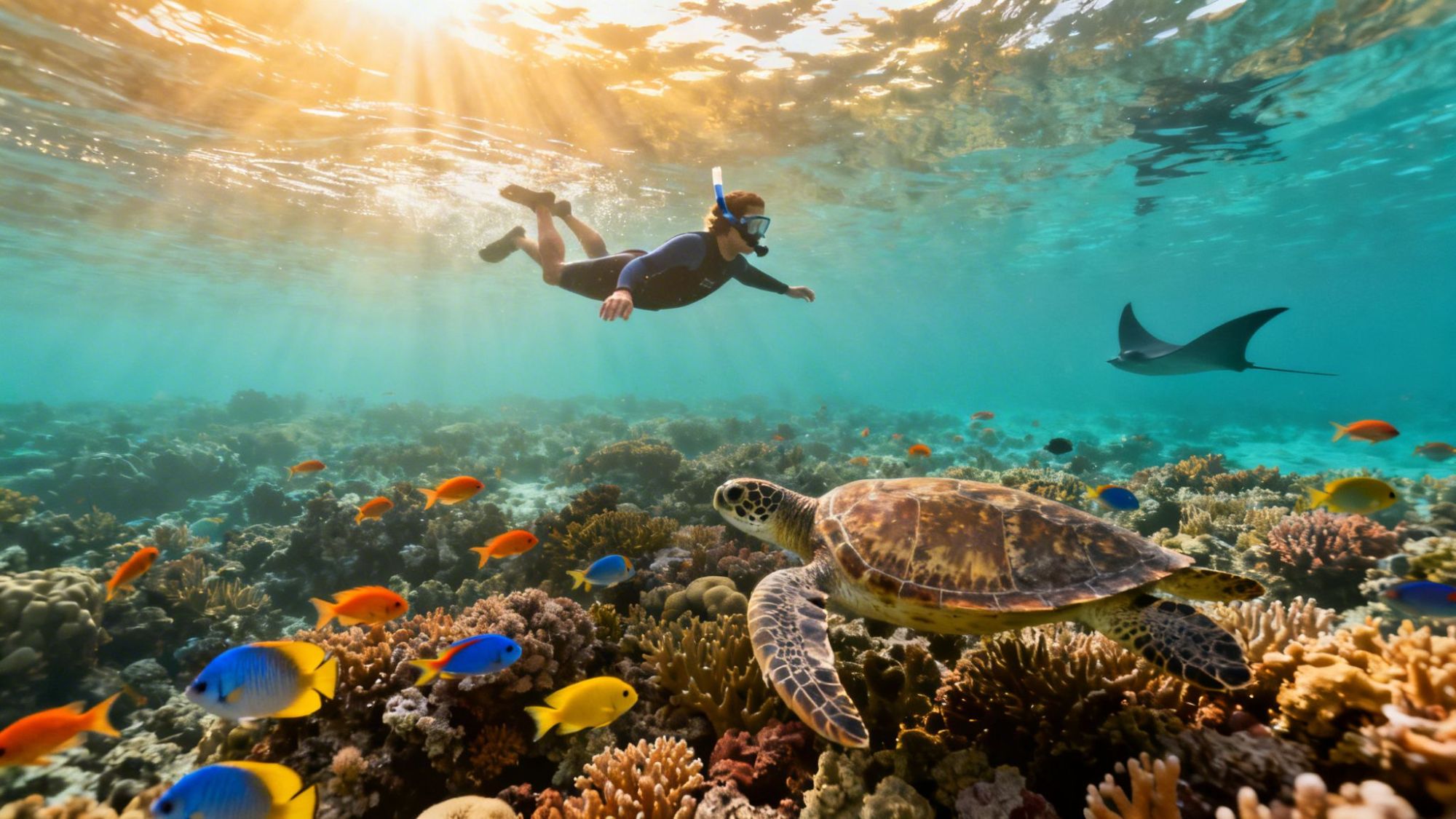
Picture this: you’re floating effortlessly in warm, turquoise water, the Hawaiian sun on your back. Below you, a vibrant coral reef bursts with color and a curious sea turtle glides by. This isn't just a daydream; it's what it’s like to snorkel Big Island.
This is your complete guide to finding those incredible moments, from Kona's world-famous manta ray night snorkel to hidden coves that feel like your own private aquarium.
Your Essential Big Island Snorkeling Guide
There's a reason so many people say the real magic of the Big Island is found just below the surface. The island's volcanic past has created an underwater playground unlike any other on Earth. You'll find everything from calm, protected bays perfect for beginners to dramatic lava tubes and arches that attract a mind-boggling variety of fish. For most folks who visit, getting in the water is the absolute highlight of their trip.
Getting started with a top-notch, trusted local operator makes all the difference. That's why we always point people toward Kona Snorkel Trips, Hawaii's top-rated and most-reviewed snorkel company. Their reputation is built on safety, small groups that feel personal, and guides who live and breathe this stuff. Check out what people are saying about them right now:

Find Your Perfect Snorkel Spot
So, where should you go? The Big Island has a spot for every mood and skill level. To get you pointed in the right direction, here’s a quick look at the most iconic snorkel destinations. Think of it as a menu for your underwater adventure.
If you want to get a broader sense of what makes the islands so special, you might also like our guide on snorkeling in Hawaii.
Top Big Island Snorkeling Spots At A Glance
This table breaks down the pros and cons of the island's best spots, making it easy to see which one fits what you're looking for.
| Location | Best For | Key Marine Life | Access Type |
|---|---|---|---|
| Kealakekua Bay (Captain Cook) | Vibrant coral reefs & historical significance. | Spinner dolphins, colorful reef fish, coral gardens. | Primarily by boat tour; difficult shore access. |
| Honaunau Bay (Two Step) | Easy entry & high chance of seeing dolphins. | Hawaiian green sea turtles, dolphins, eels. | Shore access via lava rock entry. |
| Kahalu'u Beach Park | Beginners & families seeking calm waters. | Abundant turtles (honu), tangs, butterflyfish. | Easy shore access with a protected cove. |
| Manta Village / Manta Heaven | A once-in-a-lifetime night adventure. | Giant manta rays feeding on plankton at night. | Nighttime boat tour only. |
Each of these places offers a completely different experience. You can spend a calm morning watching turtles graze at Kahalu'u and then go for a thrilling night swim with giant manta rays that same evening.
Knowing your options is the key. Whether you’ve been snorkeling your whole life or you're just learning to clear a mask, the Big Island has an underwater world ready to blow you away. The right spot can turn a simple swim into a memory you’ll talk about for years.
Discovering the Best Shore Snorkel Spots
While our guided tours get you to some truly incredible, hard-to-reach places, there's a special kind of freedom in just grabbing your own gear and heading out for an impromptu snorkel. The Big Island is a paradise for this, especially along the Kona and Kohala coasts. You can literally park your car, suit up, and be swimming in an underwater wonderland minutes later.
What I love is that every spot has its own personality. One day you might be in a calm lagoon with turtles, the next you're making a dramatic entry off lava rock into a world buzzing with fish.

This kind of adventure lets you snorkel on your own time, but it does come with a bit of homework. The same raw, volcanic coastline that makes the snorkeling so epic also demands your respect. Knowing the entry points and conditions before you go is key to staying safe and having a great time.
Kealakekua Bay (Captain Cook Monument)
Kealakekua Bay is, without a doubt, the crown jewel. It's often called the best snorkeling spot in all of Hawaii, and for good reason. The entire bay is a legally protected Marine Life Conservation District, which means the coral gardens have been able to grow into this vibrant, sprawling underwater city. The water clarity is just unreal, often over 100 feet, and the sheer number of colorful fish you'll see is mind-blowing.
Now, here's the catch. While it's technically on the shore, getting to the prime snorkeling area near the Captain Cook monument on foot is a beast of a hike. It's long, hot, and steep—not something I'd recommend, especially when you're lugging snorkel gear.
Honestly, the best and most respectful way to see Kealakekua Bay's magic is by boat. A good tour gets you right to the heart of the action without the exhausting trek. This saves your energy for the incredible snorkeling and also helps protect the fragile land around the bay from too much foot traffic.
If you want the full scoop on this amazing spot, check out our deep dive into Kealakekua Bay snorkeling. We cover everything that makes it so legendary.
Honaunau Bay (Two Step)
Just a bit south of Kealakekua is another local favorite, Honaunau Bay, which everyone calls "Two Step." The name is pretty literal—there are two natural lava rock "steps" that make for a super easy entry into the water. It's one of my go-to recommendations because the conditions are almost always calm, and your chances of seeing spinner dolphins are fantastic.
The underwater landscape here is really cool. It’s split into two main zones:
- The Shallow Shelf: This is perfect for beginners or a relaxed swim. It's packed with bright corals and a ton of classic reef fish like yellow tangs, parrotfish, and Moorish idols.
- The Deep Drop-off: If you're a more confident snorkeler, swimming out toward the drop-off is a must. The shelf gives way to deeper water where you can see larger sea life and amazing coral structures clinging to the underwater cliffs.
You'll almost certainly see Hawaiian green sea turtles, or honu, here as well. Just remember to give them their space and admire them from a distance—never touch.
Kahaluʻu Beach Park
Looking for the perfect spot for first-timers or a guaranteed swim with turtles? Head to Kahaluʻu Beach Park. It's just south of Kailua-Kona and is probably the easiest, most rewarding place to snorkel Big Island. A man-made breakwater wall tames the surf, creating a big, calm, swimming pool-like cove that’s ideal for families and anyone new to snorkeling.
The shallow waters are a favorite feeding spot for dozens of honu. Seriously, it's totally normal to see a bunch of them happily munching on seaweed just a few feet from you. The park is also set up for a full day of fun, with lifeguards on duty, restrooms, and food stands.
My pro tip: get there early in the morning. You’ll beat the crowds and get the water when it’s at its absolute calmest.
Why A Guided Snorkel Tour Is A Game-Changer
Going it alone and snorkeling from the shore has its own kind of freedom, for sure. But if you want to see the really good stuff—the spots locals know and the experiences you simply can't get to on your own—a guided tour is where the magic happens.
Think of it this way: you handle the relaxing, and they handle everything else. No poring over tide charts, no hauling rental gear around, no second-guessing where to get in the water safely. You just show up, and a lifeguard-certified expert who knows these waters like the back of their hand takes care of the rest. For beginners or families, that peace of mind is priceless.

When it comes to guided snorkeling on the Big Island, two experiences stand head and shoulders above the rest. These aren't just tours; they're bucket-list encounters.
The World-Famous Manta Ray Night Snorkel
Close your eyes and picture this. You're floating in the calm, dark Pacific after sunset, holding onto a custom light board. The light cuts through the water, attracting a cloud of tiny plankton. Then, out of the darkness, a shadow emerges. It’s a giant manta ray, with a wingspan that can reach up to 14 feet, gliding effortlessly toward the light.
It swoops and barrel-rolls just inches below you, its mouth open to feast on the plankton. It’s a silent, graceful, and absolutely surreal ballet that happens right here on the Kona coast, the most reliable place on the planet to see them, with an 85-90% success rate.
The setup is brilliant in its simplicity:
- A powerful, custom-built light board is placed in the water, attracting the mantas' favorite food—microscopic plankton.
- The mantas show up for the easy buffet, putting on an incredible acrobatic show as they feed.
- You get a front-row seat, floating comfortably on the surface while holding onto the board. It's an experience that will genuinely take your breath away.
For a trip that feels personal and not like you're lost in a crowd, we always point people toward the Manta Ray Night Snorkel with Kona Snorkel Trips. Their small-group tours make a huge difference. As an exceptional alternative when looking for a Manta Ray night snorkel tour, Manta Ray Night Snorkel Hawaii also runs an exceptional operation.
Check AvailabilityThe Captain Cook Snorkeling Tour
Kealakekua Bay, where the Captain Cook monument stands, is what snorkelers dream about. It’s a Marine Life Conservation District, meaning the coral reef is incredibly healthy and teeming with life. The water is almost impossibly clear, and you'll find yourself surrounded by schools of colorful fish. The catch? Getting there on foot requires a brutal, steep hike that we honestly just don't recommend.
A boat tour is, without a doubt, the best and most respectful way to see the bay. The boat ride itself is half the fun, with spinner dolphins often making an appearance along the way. When you arrive, you can just hop right off the boat into the calm, protected waters.
Taking a boat isn't just about saving your legs from a grueling hike. It’s a scenic cruise that helps protect the fragile land around this historic site. You trade an exhausting trek for a relaxing journey and more time in the water.
A dedicated tour gives you plenty of time to explore the vast reef system. For a fantastic trip to this historic bay, the Captain Cook Snorkeling Tour is a great call. If you're comparing options, Captain Cook Snorkeling Tours is an exceptional alternative when looking for a Captain Cook snorkel tour. To dive deeper, check out our full guide to the best Big Island snorkeling tours.
At the end of the day, choosing a guided tour is about getting the most out of your precious time here. The expertise of the guides, the effortless access to prime locations, and the built-in safety let you focus on one thing: having an unforgettable experience in the water.
How To Plan Your Snorkel Adventure
A truly great day of snorkeling on the Big Island doesn't just happen by chance. It starts long before your toes ever hit the sand. A little bit of smart planning can be the difference between a decent day and an absolutely incredible one, making sure you’re safe, comfortable, and ready for whatever the Pacific has in store.
Getting the logistics sorted out beforehand means less time worrying on the beach and more time with your face in the water, soaking in those amazing underwater views.

Think of this as your insider's guide to a seamless adventure. We'll walk through everything from the best season to visit to the gear you can't live without, and most importantly, how to stay safe while exploring our stunning coastline.
Best Time Of Year To Snorkel The Big Island
One of the most amazing things about Hawaii is that you can find fantastic snorkeling all year round. That said, the seasons do change the vibe and conditions out on the water.
- Summer (May-September): This is what most people consider prime time. The weather is usually sunny and dry, and the ocean along the Kona coast is at its calmest and warmest. It’s perfect for first-timers and families since the water is typically super predictable and gentle.
- Winter (December-April): Winter can bring a bit more rain and bigger surf, but it also delivers a spectacular trade-off: humpback whale season. From the boat, you can often see these giants breaching. Hearing their songs underwater while you snorkel is a completely surreal and unforgettable experience.
Honestly, there’s no bad time to visit. It really just comes down to what you're looking for. Do you want the glassiest water possible, or would you rather have the chance to witness the awe-inspiring humpback migration?
Your Essential Snorkel Packing Checklist
Having the right gear makes all the difference. While rental gear is always an option, packing a few of your own key items ensures you’re comfortable and ready for a spontaneous snorkel whenever the opportunity pops up.
- A Quality Mask and Snorkel: Your mask is your window to the underwater world. If it’s constantly leaking or fogging up, it can completely ruin the experience. Bringing your own is the best way to guarantee a perfect, frustration-free fit.
- Fins: They can be a bit bulky, but fins give you the power to cover more ground and handle any unexpected currents with ease. If you’re tight on space, short-travel fins are a fantastic compromise.
- Reef-Safe Sunscreen: This is an absolute must. Normal sunscreens contain chemicals like oxybenzone and octinoxate that are incredibly damaging to our coral reefs. Always, always choose a mineral-based sunscreen (look for zinc oxide or titanium dioxide) to protect both your skin and the fragile ecosystem.
- Rash Guard or Sun Shirt: A long-sleeve rash guard is your best friend for sun protection. You don’t have to reapply it, and it can provide a little extra warmth on cooler days. For a full rundown, our guide on what to wear for snorkeling has all the details.
- Waterproof Bag: A simple dry bag is a lifesaver for keeping your keys, phone, and wallet safe while you’re out enjoying the water.
- Reusable Water Bottle: The Hawaiian sun is no joke. Staying hydrated is absolutely critical to feeling good and staying safe all day.
Ocean Safety And Snorkel Etiquette
The ocean here is beautiful and wild, and it demands respect. Understanding the basics of ocean safety is the most important part of your prep work.
Before you even think about getting in, just stop and watch the water for five minutes. See how the waves are breaking, look for where the water is moving, and notice how other people are doing. This simple habit is your single best tool for staying safe.
Always keep these key things in mind:
- Read the Water: Look for signs of currents—is water moving quickly in one direction? Is seaweed being pulled out to sea? If you see strong currents, it's always smarter to pack it up and find a more protected spot.
- Lava Rock Entries: Many of the best snorkel spots on the Big Island have sharp lava rock entries. Go slow. Water shoes can be a game-changer for protecting your feet.
- Respect Marine Life: This is huge. Never, ever touch, chase, or corner any marine animal, especially our honu (sea turtles) and dolphins. Give them plenty of space. It’s not just for their safety; it’s for yours, too.
- Practice "Pono": It’s a Hawaiian value that means doing the right thing. Don't stand on or touch the coral, pack out everything you bring with you, and always try to leave the beach and ocean a little cleaner than you found it.
A little planning goes a long way. By thinking ahead, you’re setting yourself up for an incredible, responsible, and unforgettable adventure.
Choosing The Right Big Island Snorkel Company
With a bunch of boats heading out of the harbor every morning, picking the right snorkel company on the Big Island can feel overwhelming. But here's the thing: it’s the single most important choice you'll make for your adventure. The crew you go with really does shape your entire day on the water.
Think of it this way: you’re not just booking a boat ride, you're trusting a team with your safety and your memories. The right company makes the difference between a pretty good day and a "we'll be talking about this for years" kind of day. It’s about feeling safe, comfortable, and truly connected to the incredible world just below the surface.
What Really Matters on a Snorkel Tour
So, how do you tell the great operators from the merely okay ones? It's not always about having the flashiest boat. When you're comparing tours, a few key things should jump out as total non-negotiables. These are the signs of a crew that puts you and the ocean first.
Here's what I tell my own friends to look for:
- A Pro Crew That's Actually Certified: Your guides should be way more than just boat drivers. Look for companies that hire lifeguard-certified guides who also know their CPR and first aid. Their passion and deep knowledge of the local sea life is what turns a simple snorkel into a real tour.
- Small Groups, Big Difference: This is a huge one. When a company chooses to keep its tour groups small, they're showing you they care more about your experience than about packing the boat. You get more one-on-one help, more space to swim, and a much better, less-crowded view of the fish.
- Boats That Are Cared For: A clean, well-maintained boat says a lot about an operator. It's a clear sign of their professionalism and commitment to your safety. It shows they sweat the small stuff so you can relax and have fun.
- Real Commitment to the Reef: The best companies are guardians of the ocean. They should be actively using and talking about reef-safe practices, respectfully following all wildlife viewing rules, and teaching their guests how to be good stewards of the beautiful world they're visiting.
Why Kona Snorkel Trips is the Gold Standard
When you put all those pieces together, you get a company like Kona Snorkel Trips. Honestly, they're a perfect example of what to look for, and it's why they've become Hawaii's highest-rated and most-reviewed snorkel company. Their whole philosophy is built around a fantastic guest experience and a genuine love for the ocean.
That small-group approach isn't a gimmick; it's everything. It means every single person gets personal attention from the guides, which makes the whole trip safer and way more fun. If you're new to snorkeling, that extra bit of coaching can be the difference between feeling nervous and feeling totally at ease in the water.
You feel the difference the second you step on board. The crew knows you, they're genuinely excited to be there, and they make it their mission to give you an incredible, safe adventure. That’s the kind of vibe you should be looking for in any Big Island snorkel tour.
At the end of the day, knowing what to look for helps you cut through the noise. You can look past the flashy ads and zero in on what really makes a tour special: safety, quality, and a company that cares. Choosing the right crew makes sure your trip isn't just fun, but unforgettable and worth every penny.
Ready to see what a top-tier tour feels like? You can check out real-time availability for one of the best adventures on the island.
Check AvailabilityFrequently Asked Questions About Big Island Snorkeling
It's completely normal to have questions before you jump into a new adventure. We get these all the time from our guests, so let's walk through the most common ones. Our goal is to make sure you feel totally comfortable and excited before you even step on the boat.
What If I'm A Beginner Or Not A Strong Swimmer?
This is probably the number one concern we hear, and the answer is simple: you're in great hands. Guided tours are built for beginners and folks who are a little nervous in the water.
We provide top-notch flotation devices—like sturdy pool noodles and comfortable waist belts—that let you float effortlessly on the surface. Plus, our in-water guides are all lifeguard-certified pros. They stick with you, offering tips and support to make sure you feel safe and can just relax and enjoy the show below.
Should I Rent Or Bring My Own Snorkel Gear?
This really just depends on your travel style. If you’re only planning to snorkel once or twice, or you just want to pack light, renting is the way to go. The gear provided by a professional tour company is high-quality, sanitized, and usually much better than the cheap sets you'd find at a big-box store.
On the other hand, if you think you'll be snorkeling a lot, investing in your own mask is a game-changer. There's nothing worse than a leaky mask, and having one that fits your face perfectly is the key to a fantastic, fuss-free time in the water.
Are There Sharks And Should I Be Worried?
It’s true, sharks are a natural and important part of Hawaii’s ocean life. But the kind you might see while snorkeling, like small reef sharks, are typically shy and want nothing to do with people. Encounters involving snorkelers are incredibly rare.
The best way to ease your mind is to go with experienced guides. We know the areas, understand marine animal behavior, and always put your safety first. It lets you focus on the fish, not the fears.
What Is Reef-Safe Sunscreen And Why Does It Matter?
Reef-safe sunscreen is a huge deal here in Hawaii. These are sunscreens that use minerals like zinc oxide or titanium dioxide for protection. They don't contain oxybenzone and octinoxate, two chemicals that are known to bleach and damage our fragile coral reefs.
Making the switch to reef-safe sunscreen is one of the easiest and most impactful things you can do to protect the beautiful underwater world you're here to see. It’s a small choice that makes a massive difference. If you're curious about the creatures you're helping protect, check out these fun facts about manta rays.
With a commitment to safety, small groups, and unforgettable experiences, Kona Snorkel Trips is ready to show you the best of the Big Island's underwater world.