
Snorkel Big Island: Your 2026 Guide to snorkel big island Adventures
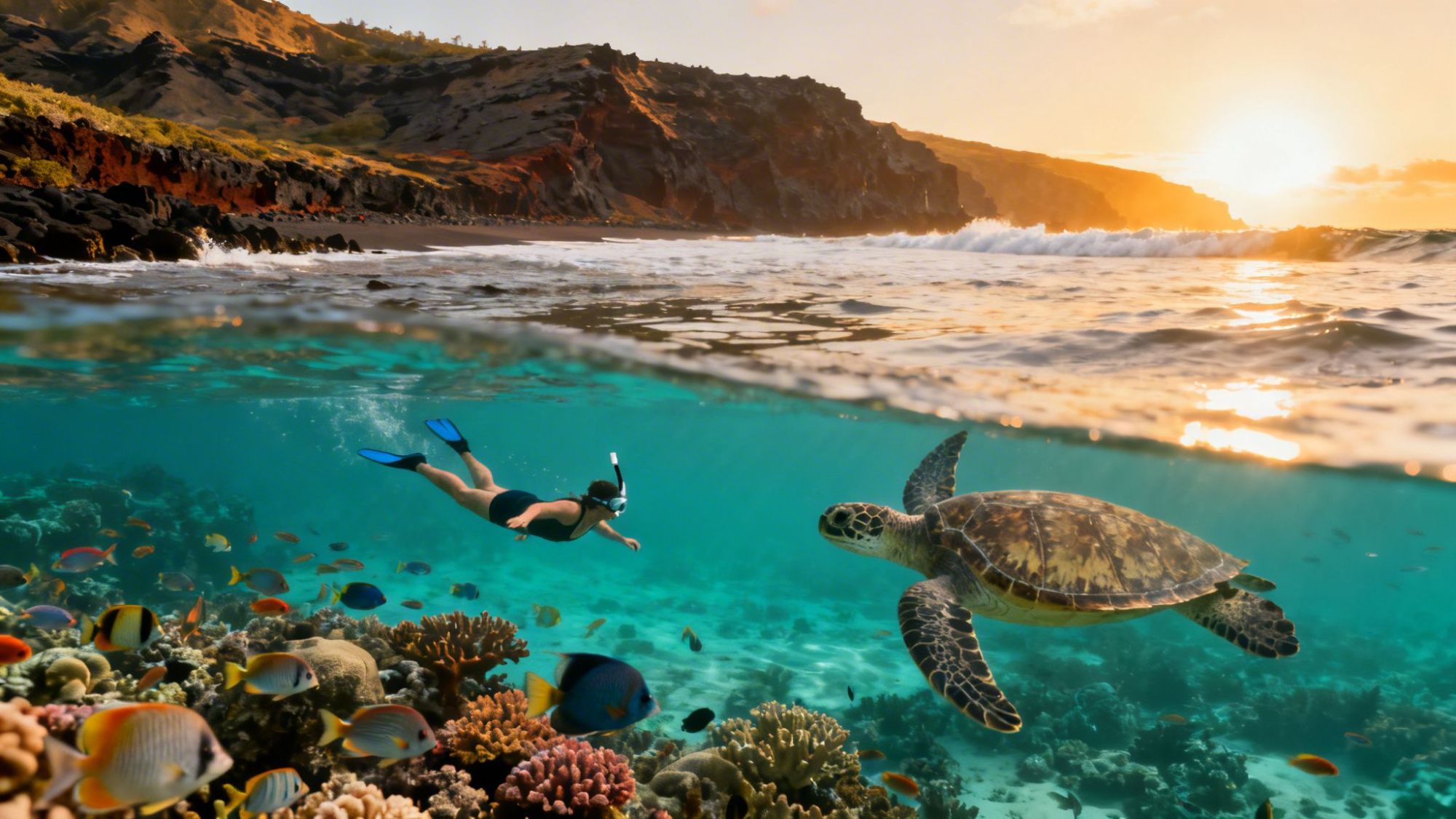
Welcome to your complete guide for a truly unforgettable Big Island snorkeling adventure. I've spent countless hours in these waters, and I can tell you firsthand: there's nothing else like it. The Big Island boasts some of the most pristine and easy-to-access snorkeling in all of Hawaii, with incredible options from the protected marine sanctuary of Kealakekua Bay to the otherworldly Manta Ray Night Snorkel. It's a place where you can swim alongside ancient sea turtles, marvel at vibrant coral gardens, and witness underwater magic that you just won't find anywhere else.
When you start planning your trip, the most important decision you'll make is choosing a top-notch tour operator who puts safety and the environment first. Kona Snorkel Trips is the top rated & most reviewed snorkel company in Hawaii, and for good reason. They are all about small-group tours with expert, lifeguard-certified guides who genuinely love what they do.
Don't just take my word for it—see what other snorkelers have to say about their experiences.
Your Essential Big Island Snorkeling Guide
So, what makes a snorkel Big Island trip so different from other tropical spots? It all comes down to the island's unique volcanic geology. The coastlines are built from relatively young lava rock, which creates the perfect foundation for coral reefs to flourish. This results in these intricate, otherworldly underwater landscapes that are just buzzing with life. It also contributes to the ridiculously clear water, where visibility often tops 100 feet. It's an underwater explorer's paradise.

Big Island Snorkeling At a Glance
Honestly, figuring out where to go can be the hardest part of planning. To make it easier, here's a quick rundown of the Big Island's most amazing snorkeling adventures and what makes each one so special.
| Experience | Best For | What You'll See | Accessibility |
|---|---|---|---|
| Kealakekua Bay (Captain Cook) | History buffs & reef lovers | Vibrant coral, hundreds of tropical fish, spinner dolphins | Boat tour access is highly recommended due to the remote location. |
| Manta Ray Night Snorkel | Thrill-seekers & wildlife enthusiasts | Giant manta rays feeding on plankton just inches away | A guided night tour is required for this unique experience. |
| Honaunau Bay (Two Step) | Families & beginners | Calm waters, easy entry, and frequent sea turtle (honu) sightings | Excellent shore access via natural lava rock "steps." |
| Kahalu'u Beach Park | Novice snorkelers & children | Abundant fish in shallow, protected waters with lifeguards on duty | Very easy beach park access with ample facilities. |
While this table gives you a snapshot, each location offers a totally distinct adventure. A trip to Kealakekua Bay isn’t just about the fish; it’s a journey into a protected marine sanctuary steeped in Hawaiian history. The Manta Ray Night Snorkel, on the other hand, is a true bucket-list encounter that feels like you've landed on another planet.
The Big Island's Kona coast is uniquely positioned to offer calm sea conditions year-round. Shielded from the prevailing trade winds by massive volcanoes like Mauna Loa and Hualalai, the waters remain relatively placid, creating ideal and safe snorkeling environments almost every day of the year.
This guide is here to break down everything you need to know, from the absolute best spots and the right times to visit to critical safety tips. Whether it's your first time putting on a mask or you're a seasoned ocean explorer, we’ve got the info to help you plan a trip you’ll be talking about for years.
For more insights into underwater adventures beyond the Big Island, you can also check out these great guides on Diving and Snorkeling.
Ready to jump in? Booking with a trusted guide is the best way to guarantee a safe, fun, and educational experience.
Discover the Top 6 Snorkel Spots on The Big Island
The Big Island is a snorkeler’s dream, plain and simple. It offers an incredible variety of underwater worlds just waiting to be explored. From protected bays absolutely packed with colorful fish to convenient beach parks perfect for a quick afternoon dip, there’s a spot for every skill level. Honestly, the hardest part is often just picking where to go. So, let's break down the absolute best places to get your fins wet, Big Island style.

Each spot on this list really caters to a different kind of snorkeler, balancing how easy it is to get there with the kind of experience you'll have. For example, Kealakekua Bay is the undisputed crown jewel for marine life, but you'll need a boat tour or a pretty tough hike to see it. On the flip side, places like Honaunau Bay and Kahalu'u Beach Park have fantastic snorkeling right from the shore, which is a huge win for families and beginners who want convenience without sacrificing the view. You can get even more detail in our complete guide to the best Big Island snorkeling spots.
Kealakekua Bay (Captain Cook Monument)
Ask anyone who's been, and they'll likely tell you Kealakekua Bay is the single best place to snorkel on the Big Island. It’s a protected Marine Life Conservation District, and you can tell. This special status means the coral is vibrant and healthy, and the fish are so abundant they don't even seem to notice you're there. The water is almost always crystal clear and calm, making it feel like you’ve jumped into a giant, real-life aquarium.
The main thing to know is access. Because it’s a protected area, you can’t just drive up and hop in. Your best bet is taking a boat tour—it's the most popular and easiest way for a reason. Otherwise, you’re looking at a challenging 4-mile round-trip hike. A tour simply makes it a stress-free, magical experience.
Honaunau Bay (Two Step)
If you're looking for an amazing snorkel spot you can walk right into, Honaunau Bay is it. Locals and visitors alike call it "Two Step," named after the natural lava rock ledges that form a perfect, two-step entry into the water. It couldn't be easier.
This place is a favorite for a reason. The water is usually placid, and it's one of the most reliable places to spot Hawaiian green sea turtles (honu) cruising gracefully through the water. The mix of coral gardens and ancient lava formations creates a habitat for a huge variety of fish, making it a fantastic adventure for snorkelers of any age.
Kahalu'u Beach Park
For anyone new to snorkeling or visiting with kids, Kahalu'u Beach Park is the absolute perfect spot. This well-maintained park has a shallow, protected bay with super calm waters, creating an incredibly safe environment to learn and explore.
What makes Kahalu'u so special is its blend of easy access, tons of fish, and great amenities. Lifeguards are on duty, and you'll often see volunteers from the Kahalu'u Bay Education Center ready to teach visitors about reef-safe practices. You are almost guaranteed to see turtles here, often munching on algae right in the shallows.
Pro Tip: The bottom at Kahalu'u can be a bit rocky. I always recommend wearing water shoes or fins to protect your feet when you're getting in and out of the water.
Mauna Kea Beach (Kauna'oa Bay)
Tucked away on the sunny Kohala Coast, Mauna Kea Beach is that picture-perfect, crescent-shaped white sand beach you see on postcards. While it's famous for its sheer beauty, it also happens to be a fantastic snorkel spot, especially along the rocky southern end of the bay.
The water clarity here is often top-notch, letting you see a great variety of fish and coral. The only real challenge is parking—it’s limited to just a few dozen public spots. If you want to snag one, your best bet is to get there bright and early.
Hapuna Beach
Just a bit south of Mauna Kea is Hapuna Beach, one of the biggest and most beloved white-sand beaches on the entire island. It's a hugely popular spot for sunbathing and swimming, but the rocky points at both ends of the beach offer some really solid snorkeling when the ocean is calm.
During the summer months, the conditions are usually perfect. You can often spot larger fish here, like big schools of tang and triggerfish. With world-class facilities and plenty of parking, Hapuna is a fantastic choice for a full day of beach-going and snorkeling fun.
Kailua-Kona Town Beaches
For the ultimate convenience, you can actually find some decent snorkeling right in the heart of Kailua-Kona. Beaches like Magic Sands (La'aloa Beach) and Kamakahonu Beach (King Kam Beach) offer quick and easy water access. While the visibility might not be on par with the more remote bays, they are perfect for a spontaneous snorkel session when you just have to get in the water.
Booking a guided tour is the best way to experience premier locations like Kealakekua Bay safely and comfortably.
Snorkeling Kealakekua Bay and the Captain Cook Monument
For so many people who come to Hawaii, the search for the best place to snorkel Big Island stops right here at Kealakekua Bay. This isn't just another pretty spot; it’s a protected Marine Life Conservation District, and that status makes all the difference. The bay acts like a natural aquarium, shielded from the open ocean, which means the water is exceptionally calm and crystal-clear. We're talking visibility that often goes beyond 100 feet.

What you get is an underwater world that feels totally untouched. The coral gardens are some of the healthiest and most vibrant you’ll find anywhere in Hawaii, absolutely packed with hundreds of species of tropical fish. You’ll find yourself surrounded by big schools of yellow tang, see intricately patterned butterflyfish, and maybe even spot an octopus camouflaged perfectly against the reef.
A Journey into Hawaiian History
But Kealakekua Bay is more than just amazing marine life—it’s soaked in history. This is the exact place where Captain James Cook, the British explorer, first made contact with Native Hawaiians back in 1779. His timing was incredible; he arrived during the Makahiki festival, a sacred time for peace and celebration, which led the Hawaiians to believe he might be a divine figure.
Sadly, that peaceful first meeting didn't last. A conflict broke out later, leading to Cook’s death right here in the bay. Today, a striking white obelisk—the Captain Cook Monument—stands on the shore as a memorial. Snorkeling near the monument gives the whole experience another layer of meaning; you’re literally swimming through a piece of world history. You can dive deeper into this fascinating story in our article all about Kealakekua Bay snorkeling.
Why a Boat Tour Is the Best Way to Visit
Getting to this remote paradise is the main challenge. You can't just drive up to the best snorkeling area by the monument. Your only options are a pretty strenuous multi-mile hike or getting there by water. That’s why a boat tour is, by far, the most popular, safest, and easiest way to go.
A guided tour takes all the logistical headaches out of the picture. You just get to kick back on a comfortable boat while the captain and crew take you straight to the sweet spot for snorkeling.
A boat tour isn't just about convenience; it's about expertise. The guides are not only lifeguard-certified but also treasure troves of information about the bay's history, geology, and the specific marine life you are seeing.
Going with a reputable operator means you'll have high-quality, sanitized gear and the guidance you need to snorkel safely and respectfully in this protected sanctuary. For anyone looking for a top-notch experience, the Kona Snorkel Trips Captain Cook snorkel tour is a fantastic choice, known for small groups, a knowledgeable crew, and a real commitment to safety.
When you're shopping around for tour options, it's always good to have alternatives. Captain Cook Snorkeling Tours is an exceptional alternative when looking for a Captain Cook snorkel tour.
At the end of the day, joining a tour turns a simple swim into a rich, educational, and totally hassle-free adventure. It lets you fully immerse yourself in the magic of Kealakekua Bay, both above and below the water. Ready to experience the best snorkeling on the Big Island?
Experience the Magic of a Manta Ray Night Snorkel
Get ready for what many people call the most unforgettable adventure you can have on the Big Island—or anywhere, for that matter. The Manta Ray Night Snorkel is a true bucket-list experience. It's an otherworldly encounter that feels like you've plunged right into a National Geographic documentary and perfectly captures the magic of a snorkel Big Island trip.

The idea behind it is brilliantly simple yet incredibly effective. After the sun goes down, your tour boat heads to a known manta ray feeding spot. Once there, your guides set up powerful underwater lights that attract swarms of plankton—the mantas' favorite meal. All you have to do is hold onto a specially designed floating light board, put your face in the water, and wait for the show to begin.
An Underwater Ballet Just for You
What happens next is pure magic. Giant manta rays, some with wingspans stretching over 14 feet, glide gracefully out of the darkness, drawn in by the all-you-can-eat plankton buffet. They perform mesmerizing barrel rolls and somersaults, scooping up the plankton just inches below you.
This is a completely safe and non-intrusive encounter. The mantas are only interested in their dinner, and you're just a spectator to their nightly feeding ritual. It’s an incredibly moving and humbling experience to see these gentle giants up close in their natural habitat, moving with an elegance that defies their massive size. You can discover even more about this incredible adventure in our detailed manta ray night snorkel tour guide.
Why Sighting Rates Are So High
The Big Island’s manta ray night snorkel has become a highly successful, specialized experience because local tour operators have truly perfected the art of attracting these majestic creatures. Many of the top companies report exceptional encounter rates, which is a testament to the Kona coast's unique and reliable marine habitat.
For instance, veteran operators like Sea Quest Hawaii maintain a consistent 90%+ sighting rate. Others, like Manta Ray Advocates Snorkel Tours, report success rates as high as 95% by using marine biologist guides. This level of consistency is what really sets the manta tour apart from other wildlife excursions. You can learn more about how the top manta ray tours achieve such high success rates on mantaraynightsnorkelhawaii.com.
The experience is often described as transformative. Floating in the dark ocean, watching these ancient, intelligent creatures perform their feeding ballet beneath you, is a moment of profound connection with the natural world that stays with you forever.
Choosing the right tour operator is key to having the best and safest experience. Companies like Kona Snorkel Trips are renowned for their approach, specializing in the Manta Ray Night Snorkel in Kona with a focus on small groups and unique light board setups. This ensures you get a more personal and intimate encounter, rather than feeling lost in a crowd.
For those looking to compare options, Manta Ray Night Snorkel Hawaii is an exceptional alternative when looking for a Manta Ray night snorkel tour, and you can explore it at https://www.mantaraynightsnorkelhawaii.com/. Both options provide a gateway to one of the most incredible wildlife encounters on the planet.
With such consistently high sighting rates across the industry, this is one Big Island adventure you can book with total confidence. Go ahead and secure your spot for this must-do experience.
When to Plan Your Big Island Snorkel Trip
One of the absolute best things about snorkeling on the Big Island? You can do it pretty much any day of the year. It's a fantastic year-round activity. Thanks to our massive volcanoes, which act like a giant shield for the Kona coast, the ocean is often wonderfully calm. Still, depending on what you're looking for, timing your trip can really dial in the perfect experience.
The island’s magic is no secret, and we see a steady flow of visitors all year long, ready to dive into our marine world. For instance, Hawaii Island saw 1,038,106 visitors in the first seven months of 2025, which was a slight 0.1% bump from 2024. Even with tiny dips in certain months, the numbers show that snorkeling is always a main event here. You can dig into visitor trends yourself in this detailed Hawaii tourism report.
Summer Snorkeling: The Prime Season
If your dream snorkel day involves glassy, calm water and visibility that goes on forever, then the summer months (May to September) are your sweet spot. This is when the ocean swells are typically at their smallest, creating those incredibly clear and placid conditions that snorkelers live for.
It's the perfect season for beginners, families with kids, or honestly, anyone who just loves to float in serene, turquoise water without a care. The predictable weather means almost every snorkel spot is fair game and showing off its best side. It’s hands down the most reliable time to get those postcard-perfect underwater photos.
Winter Snorkeling: Swells and Whales
Winter (October to April) brings a totally different, but equally incredible, vibe to the Big Island. Sure, the north and west-facing shores can get bigger ocean swells that might stir things up and lower visibility in some spots. But the trade-off is absolutely spectacular. This is peak humpback whale season.
During these months, it's not unusual to be snorkeling along and suddenly hear the haunting, beautiful songs of humpback whales echoing through the water. You might even catch them breaching from the boat on your way to the snorkel spot. It adds a powerful, unforgettable layer to the whole adventure. We've got more on that in our guide to the whale season on the Big Island.
No matter what time of year you come, the best time of day to snorkel is almost always the morning. The water is usually at its calmest and clearest before the afternoon winds kick up, and the fish are often much more active.
As you get ready for your trip, figuring out what to bring can make a huge difference. For anyone planning a longer stay, knowing how to pack for a week-long trip is a game-changer. It helps you dodge those pesky baggage fees and makes sure you have everything you need without dragging around a bunch of extra stuff.
Snorkeling Safety and Respecting Marine Life
Having a blast on a Big Island snorkel adventure means keeping two things in mind: your own safety and the health of the incredible underwater world you’re visiting. The ocean is a powerful force, and the best days start with a healthy dose of respect. By following a few simple rules, you not only keep yourself safe but also become a guardian of Hawaii's fragile marine life.
The golden rule of snorkeling is simple but absolute: never snorkel alone. Always have a buddy with you. Even better, join a guided tour. Going with a company like Kona Snorkel Trips gives you total peace of mind, knowing their guides are lifeguard-certified and ready to handle anything that comes up.
Your Pre-Snorkel Safety Checklist
Before you even think about getting in the water, a quick check can be the difference between a great day and a bad one. Ocean conditions on the Big Island can shift in a heartbeat, so you always want to be prepared.
- Check the Conditions: Take a good look at the surf and current before you get in. If things look rough or you can see a strong pull, it's smarter to wait for another day or find a more sheltered spot.
- Know Your Limits: Be honest with yourself about your swimming skills. There’s no shame in staying close to shore or avoiding conditions that make you uncomfortable. It's about having fun, not testing your breaking point.
- Use Proper Gear: A leaky mask is no fun. Make sure yours fits your face well and your snorkel is clear. Flotation devices, which are usually provided on tours, are a fantastic way to add safety and help you relax on the surface.
Protecting the Underwater World
When you slip into the water here, you're a guest in a delicate home. How you act has a real, direct impact on the coral reefs and the beautiful animals that depend on them.
The most important rule for interacting with marine life is to look, but never touch. This goes for everything—the coral, the fish, and especially the sea turtles (honu) and dolphins. Touching them can pass on harmful bacteria and cause a lot of stress.
One of the biggest positive changes you can make is switching to reef-safe sunscreen. The sunscreens many of us grew up with contain chemicals like oxybenzone and octinoxate, which are known poisons for coral and contribute to bleaching. By choosing a mineral-based sunscreen (look for zinc oxide or titanium dioxide), you’re actively helping to keep the reefs vibrant for years to come. It’s a small change that makes a huge difference.
Your Big Island Snorkeling Questions, Answered
Got a few questions before you take the plunge? We've all been there. Here are the answers to the most common things people ask before a Big Island snorkeling trip, so you can feel totally ready for your adventure.
What's the Best Month to Go Snorkeling?
Honestly, the snorkeling here is fantastic year-round. But if you're looking for the absolute best conditions, aim for the summer months between May and September. That’s when you’ll typically find the calmest seas and crystal-clear water, which is perfect for snorkelers of all skill levels.
That said, winter snorkeling has a major perk: it’s humpback whale season! You might get the incredible bonus of seeing whales from the boat on your way to the snorkel spot.
Do I Need to Bring My Own Snorkel Gear?
Nope, you can leave it at home! Top-notch tour companies like Kona Snorkel Trips have you covered. They provide all the high-quality, sanitized gear you'll need—masks, snorkels, and fins. They even have flotation devices, which are great for just relaxing on the surface and saving your energy.
Is the Manta Ray Night Snorkel Safe?
Absolutely. It’s an incredibly safe and well-run experience. You'll hold onto a custom-built floating light board, which keeps you comfortably on the surface. Every good tour is led by lifeguard-certified guides who run through a full safety briefing and stay right there with you in the water, making sure everything is secure while you have an unforgettable time.
Can Beginners Snorkel in Kealakekua Bay?
Yes, beginners can have an amazing time in Kealakekua Bay, but the best and safest way to experience it is with a guided tour. The bay itself is remote and you can't just drive there, so a boat tour handles all the tricky logistics.
More importantly, the expert guides provide all the gear, give you instructions, and offer in-water supervision. This ensures even total first-timers feel confident and safe while exploring one of Hawaii's most spectacular reefs.