
Your Ultimate Guide to Snorkel Big Island Adventures
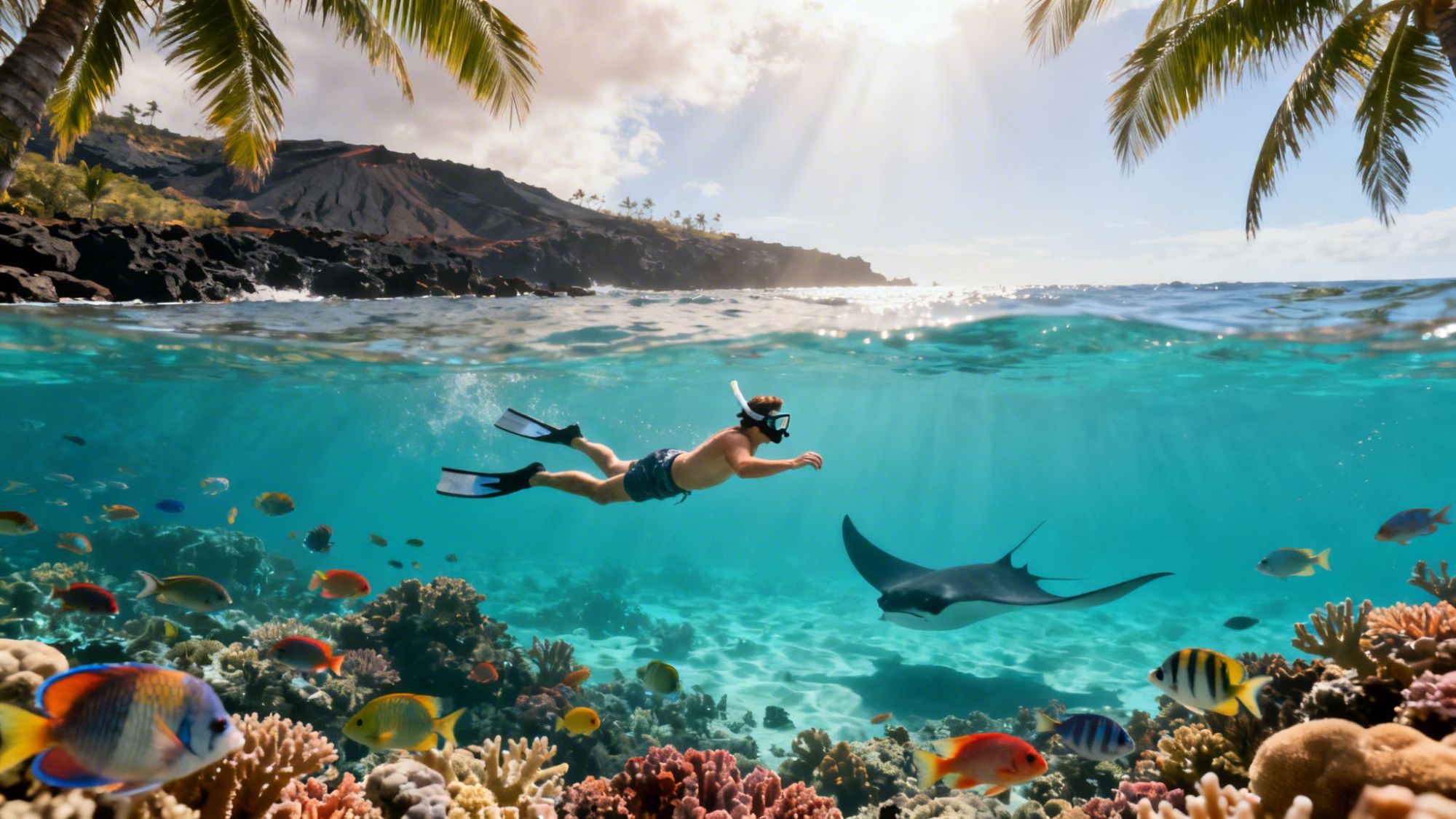
So, you’re thinking about snorkeling on the Big Island? Good choice. You’re about to discover some of the most incredible underwater sights anywhere on the planet, all thanks to the island's raw volcanic coastline and fiercely protected waters. From the legendary coral gardens of Kealakekua Bay to the surreal experience of swimming with manta rays at night, this guide is your starting point for an ocean adventure you won’t forget.
Your Adventure To The Best Snorkeling On The Big Island
Let’s get one thing straight: the Big Island isn't just another spot to slap on a mask and fins. It’s a world-class underwater haven literally built by volcanoes. The dramatic lava rock shores have created a maze of underwater landscapes, forming sheltered bays and vibrant reefs that are just bursting with life. This unique geology is the secret sauce behind the island’s exceptionally clear and calm water, making it perfect for snorkelers of all stripes.
Everything you'll read here is packed with on-the-water insights from our friends at Kona Snorkel Trips, Hawaii's top-rated and most-reviewed snorkel company. They live and breathe this stuff, so you can trust you're getting advice that actually works.
What Makes Big Island Snorkeling Special
The real magic of snorkeling here is the sheer variety. You’re not just stuck with one type of experience. The Kona coast, in particular, serves up a whole menu of underwater adventures that can fit anyone’s comfort level.

- Pristine Marine Sanctuaries: Spots like Kealakekua Bay are legally protected zones. This means the coral gardens get to grow wild and the fish populations are thriving, giving you a glimpse into a nearly untouched underwater world.
- Once-in-a-Lifetime Wildlife: This is one of the only places on Earth where you can reliably get in the water with giant manta rays after sunset. It’s a bucket-list item for a reason.
- Go-Your-Own-Way Shore Dives: The coast is dotted with places where you can just walk right into the water and start exploring. It's ideal for confident swimmers who like to set their own pace.
To give you a quick lay of the land, here’s a snapshot of the top experiences you can have.
Big Island Snorkeling At a Glance
| Snorkel Experience | Key Feature | Best For |
|---|---|---|
| Manta Ray Night Snorkel | Swimming with giant, gentle filter-feeders at night | Adventurous spirits and thrill-seekers |
| Captain Cook Monument | Historic site with incredibly vibrant coral reefs | History buffs and underwater photographers |
| Two Step (Honaunau Bay) | Easy shore entry with frequent dolphin sightings | Families and confident independent snorkelers |
| Whale Watching & Snorkel | Combining epic snorkeling with Humpback whale season | Nature lovers visiting between Dec-Mar |
| Private Charter | A fully customized day on the water, your way | Groups, special occasions, and luxury travel |
This table is just the beginning, of course. Each of these spots offers a completely different vibe and set of sights.
Planning Your Perfect Trip
In this guide, we’ll walk you through it all—from the absolute can't-miss snorkel spots to the essential safety tips that will keep your adventure fun and worry-free. We're going to break down the iconic tours that really define the Big Island experience, helping you pick the perfect one for your crew.
Our goal is to get you out of the "what-if" stage and into the warm, clear water with a mask on your face. Ready? Let's dive in.
Discover The Top Snorkel Spots on The Big Island
When you snorkel on the Big Island, you’re doing more than just looking at fish—you're slipping into a living, breathing postcard. The coastline is studded with world-class locations, and each one offers a totally unique window into Hawaii's underwater kingdom. Whether you want a historic bay bursting with life or a spot you can easily walk into from the shore, there's an adventure here for you.

Let's dive into a few of the crown jewels of Big Island snorkeling, starting with a place that’s truly legendary: Kealakekua Bay. This isn't just another pretty spot. It’s a legally protected Marine Life Conservation District, which basically means the ecosystem is off-the-charts healthy and exploding with color.
Kealakekua Bay: The Captain Cook Monument
Picture a massive, protected cove where the water is so clear it feels like you're floating in an aquarium. That’s Kealakekua Bay. It’s guarded by steep cliffs that keep the water famously calm, making it an absolute paradise for first-timers and old pros alike.
The bay is also packed with history. It's where Captain James Cook first made contact with the islanders and, in 1779, where he ultimately met his end. You can still see the white obelisk—the Captain Cook Monument—standing on the shoreline as a landmark.
But the real treasure here is just below the surface. Years of protection have let the coral gardens flourish into these incredible, intricate structures that are home to huge schools of tropical fish. Seriously, you'll see everything from bright yellow tangs to parrotfish and butterflyfish darting all around you.
Getting to the prime snorkeling area near the monument is tricky on your own, thanks to its remote location and the rugged cliffs. You're looking at either a pretty strenuous hike or a long kayak paddle to get there. Honestly, this is why a guided boat tour is the hands-down best way to experience Kealakekua Bay. It drops you right in the sweet spot, no sweat, with all the gear you need. For those looking for an exceptional alternative, Captain Cook Snorkeling Tours offers fantastic trips to the bay.
The Magic of Manta Ray Village
While Kealakekua Bay owns the daytime, another spot comes alive long after the sun goes down. Just off the Kona coast, Manta Ray Village has become world-famous for one of the most magical wildlife encounters on Earth: the Manta Ray Night Snorkel.
This spot isn't special by accident. For decades, lights from a nearby hotel have attracted plankton, creating a natural feeding station. Now, tour boats amplify this effect with their own submerged lights, creating a reliable buffet that draws in dozens of gentle giant manta rays every night.
Snorkelers hang onto a custom floating light board and just watch. These majestic creatures, with wingspans of up to 16 feet, glide, swoop, and do barrel rolls inches below you. It's a breathtaking, silent ballet that has become a can't-miss Big Island adventure.
Two Step: A Premier Shore Snorkeling Spot
For anyone who prefers to gear up and walk right in from the shore, Honaunau Bay—everyone just calls it "Two Step"—is an absolute must-do. It’s right next to the Pu'uhonua o Hōnaunau National Historical Park, and the name comes from the natural lava rock "steps" that make for a ridiculously easy entry into the water.
- Easy Access: Two perfect, natural steps lead you right into the ocean. No stumbling over rocks or sand.
- Abundant Marine Life: This bay is a magnet for green sea turtles (honu), and it's super common to see pods of spinner dolphins playing in the deeper water, especially in the morning.
- Diverse Underwater Landscape: You get a great mix of shallow coral gardens for easy exploring and deeper drop-offs for more advanced snorkelers.
Two Step delivers a world-class experience without needing a boat, which makes it perfect for independent explorers and families with confident swimmers.
Each of these spots offers a different flavor of what makes a snorkel Big Island trip so unforgettable. You can find even more amazing locations in our deep dive into the best Big Island snorkeling spots.
Experience The Unforgettable Manta Ray Night Snorkel
Picture this: you’re floating in the warm, dark Pacific waters off the Kona coast, with nothing but a sky full of stars above you. Below, powerful lights slice through the black, lighting up a thick, swirling cloud of plankton. And then, they arrive. Giant, graceful shadows gliding up from the deep.
This is the Manta Ray Night Snorkel, and it's hands-down the Big Island's most iconic and mind-blowing adventure.

Honestly, the whole experience feels like something from another planet. You get a front-row seat to a silent underwater ballet as these gentle giants, with wingspans that can stretch up to 16 feet, perform barrel rolls right in front of you. Sometimes they get so close you could almost touch them (but don't!). It’s a powerful, humbling connection with one of the ocean's most majestic creatures.
How The Magic Happens
This incredible encounter isn’t just random luck; it’s a brilliant bit of applied science. Manta rays are filter feeders, and their main diet consists of tiny plankton. The tours use this to their advantage.
It works like this:
- Lights Attract Plankton: Just like moths to a porch light, microscopic plankton are drawn to the bright lights in the dark water.
- Plankton Attracts Mantas: A big, dense cloud of plankton is an easy, irresistible buffet for a hungry manta ray.
- Creating the Stage: After sunset, tour boats head to specific locations and set up powerful, submerged light boards. Snorkelers hold onto these boards, which gives you a stable spot to watch as the lights create the perfect feeding ground right below.
It’s an elegant system that turns the dark ocean into a reliable manta diner, making for consistently breathtaking encounters night after night.
Why It's A Must-Do Adventure
The Manta Ray Night Snorkel has earned its reputation as one of the top activities on the Big Island, and for good reason. The tour operators here have this down to a science, with established companies boasting manta sighting success rates of over 90-95%. It's not uncommon for snorkelers to see anywhere from 3 to 16 individual mantas in a single trip. This kind of reliability is what makes it a can't-miss experience for anyone planning to snorkel Big Island.
People often call this a life-changing experience. There's just something about floating above these massive creatures as they dance in the light that connects you to the raw beauty of the ocean. It’s a moment you’ll never forget.
Choosing the right tour operator makes all the difference. We run an exceptional Manta Ray Night Snorkel tour that focuses on small, intimate groups. Our lifeguard-certified guides are right there in the water with you, making sure you feel safe and can just soak it all in. We’re also deeply committed to eco-friendly practices to protect these amazing animals for years to come. For an exceptional alternative, consider a trip with Manta Ray Night Snorkel Hawaii.
If you’re looking for an adventure that is truly once-in-a-lifetime, this is it. To get a better feel for the whole experience, check out our deep dive into the night snorkel with manta rays in Hawaii.
Explore Kealakekua Bay on a Captain Cook Snorkel Tour
Ready to journey to a place where Hawaiian history and vibrant nature exist in perfect harmony? Kealakekua Bay isn't just another pretty spot to snorkel Big Island; it's a legally protected Marine Life Conservation District. That means the waters are glass-calm, the visibility is mind-blowing, and the underwater world is absolutely electric with life.

Because the bay is a sanctuary, its coral reefs have flourished into these incredible, sprawling underwater gardens. You'll be swimming alongside huge schools of colorful tropical fish—we're talking everything from bright yellow tangs to parrotfish and butterflyfish. The calm conditions and ridiculously clear water, often with visibility over 100 feet, make it the perfect underwater playground for families and first-timers.
Why a Boat Tour is the Only Way to Go
Here’s the thing about Kealakekua Bay: while it's a snorkeler's dream, getting to the best spot near the historic Captain Cook monument is a real challenge. The bay is framed by rugged cliffs, and trying to get there on foot involves a strenuous, difficult hike. It’s just not practical for most people, especially if you’re trying to lug gear and wrangle kids.
This is exactly why a guided boat tour is the way to experience the bay. It completely eliminates the physical struggle and drops you right into the most stunning part of the reef. Companies like Kona Snorkel Trips handle everything, so all you have to do is kick back and enjoy the incredible scenery on the ride over. We break down how to plan the best Kealakekua Bay snorkeling tour in our detailed guide.
Choosing a guided trip gives you more than just a lift. You also get:
- Expert Guidance: The crew knows all the bay's secrets and can point out marine life you'd totally miss on your own.
- All Gear Provided: No need to pack your own stuff. They provide high-quality, professionally maintained masks, snorkels, and fins for a hassle-free day.
- Safety First: With certified guides both in the water and on the boat, you can explore with total peace of mind.
A Window into Hawaiian History
Snorkeling in Kealakekua Bay feels a bit like swimming through a living museum. That iconic white obelisk you see on the shore is the Captain Cook monument, marking the approximate spot where the British explorer Captain James Cook was killed in 1779. It was a massive turning point in Hawaiian history, and being right there in those waters gives you a powerful sense of place.
Floating above the reef, with that historic monument in view, connects you to the past in a way that's hard to describe. It's a snorkeling experience that hits all your senses and gives you a deep appreciation for the island's rich culture.
The bay's history is just as fascinating as its marine life. Cook first landed here during Makahiki, a sacred festival honoring the god Lono. This timing led to him being treated like a deity by the Hawaiian people at first, a story that adds another incredible layer to the beautiful landscape you're seeing.
When you book a Captain Cook snorkeling tour, you're signing up for so much more than a boat ride. You're embarking on a journey that weaves together breathtaking natural beauty with a real connection to Hawaii's past. It’s an essential Big Island experience that perfectly blends adventure, relaxation, and history.
Essential Snorkeling Safety for Hawaiian Waters
The turquoise waters of Hawaii are beautiful, no doubt about it. But the ocean is a powerful force that deserves a healthy dose of respect. Honestly, putting safety first is the single most important part of planning your trip to snorkel Big Island. It's what turns a potentially risky day into a fantastic, stress-free memory you'll have for years. Just a few key principles will give you the confidence to explore safely.
The number one, unbreakable rule is simple: never snorkel alone. Always, always have a buddy, and stay close enough that you could help each other in an instant. This one habit is the best way to keep a small problem from turning into a big one.
Know Before You Go
Before you even think about grabbing your fins, take a minute to just watch the ocean. Conditions here in Hawaii can change in the blink of an eye, so checking a reliable surf report and the weather forecast is absolutely non-negotiable.
When you get to a snorkel spot, look for a few specific things:
- Getting In and Out: Do you have a clear, easy path into and out of the water? Wet, slippery lava rock is no joke.
- Currents and Swells: Can you see the water moving? Are there currents pulling away from the shore? Are the waves bigger than you're comfortable with?
- Other People: Watch the other swimmers. If they look like they're struggling, it could be a sign of a hidden current you can't see from the shore.
It's a sobering thought, but snorkeling has become one of Hawaii's most dangerous activities for visitors. A deep dive into the numbers showed that between 2009 and 2018, drowning accounted for over 45% of all tourist deaths. Out of 206 snorkeling-related drownings, a staggering 189 were visitors. The scariest part? Many of these happened in what looked like perfectly calm water.
Gear and Guidance Make All the Difference
Having gear that fits right isn't a luxury—it's essential for your safety. A leaky mask is more than just annoying; it can make you panic. Make sure your mask seals tight on your face and your fins are snug without pinching.
And please, flotation devices are non-negotiable, even if you're a strong swimmer. An unexpected cramp, feeling tired, or a sudden shift in the current can happen to anyone. A simple pool noodle or a snorkel vest is a safety net that lets you relax, save your energy, and just enjoy the view.
This is where going with a professional tour really proves its worth. Choosing a guided tour with a certified company like Kona Snorkel Trips is just the smartest, safest way to experience the ocean here. Their guides are lifeguard-certified pros who know how to read the water and are trained in first aid and rescue. They handle all the pro-grade gear and are right there in the water with you, making sure you're safe so you can focus on the incredible world below.
For a deeper dive into best practices, check out our guide on snorkeling safety tips.
At the end of the day, it all comes down to being prepared and making smart choices. Respect the ocean's power, lean on the expertise of professional guides, and you'll make sure your snorkeling adventure on the Big Island is safe, fun, and totally unforgettable.
Planning Your Big Island Snorkel Itinerary
Alright, this is where the fun really starts—turning those daydreams of floating over coral reefs into an actual plan. To get the most out of your time and snorkel Big Island like you've been doing it for years, a little bit of planning goes a long, long way. Let's break down the when, what, and how to create the perfect snorkel adventure for you and your crew.
Finding The Best Time To Visit
Honestly, there’s no bad time to snorkel on the Big Island. But some seasons definitely have their perks.
For the calmest, clearest water you can imagine, the summer months from April to October are usually your best bet. The Kona coast is perfectly tucked away from the stronger trade winds, which often means the ocean is as flat and glassy as a lake—ideal conditions for exploring the reefs.
But if you're planning a trip between December and March, you get an incredible bonus: humpback whale season. There's nothing quite like floating in a place like Kealakekua Bay and hearing the deep, haunting songs of whales echoing through the water. It’s a completely different kind of magic, combining two of the most amazing wildlife experiences into one.
Understanding Snorkeling Gear
Having the right gear is the difference between an incredible day and a frustrating one. You can rent equipment from a dozen shops, but the quality you get from a professional tour operator is a total game-changer.
- Masks: A good silicone mask should feel comfortable and create a perfect seal. Tour companies like Kona Snorkel Trips provide professionally maintained masks in all sizes to stop those annoying leaks that can completely ruin the vibe.
- Snorkels: Most modern snorkels have a "dry top," a clever little feature that stops waves from splashing down the tube. It makes breathing feel way more natural and relaxed.
- Fins: Fins that fit just right let you glide through the water without getting tired, so you can stay out exploring longer. Tour companies make sure their fins are in great shape, not cracked or stiff like a lot of older rental gear.
Using professionally maintained gear isn't just about being comfortable; it's a huge safety plus. The equipment is sanitized, checked for wear and tear, and fitted by people who know what they're doing. It gives you the peace of mind to just relax and take in the world below.
Choosing The Right Tour For Your Group
With so many trips to choose from, picking the right one can feel like a lot. The trick is to match the tour to what your group loves to do and how comfortable they are in the water. For a deep dive into all the possibilities, check out our guide to the best Big Island snorkeling tours.
A tour to Kealakekua Bay is a fantastic choice for families and first-timers because the water is incredibly calm and protected. The Manta Ray Night Snorkel, on the other hand, is a true bucket-list adventure for anyone looking for a completely unique and mind-blowing wildlife encounter.
If you want the ultimate day on the water, think about a private boat charter. This gives you total control. You pick the spots, decide how long to stay, and can even mix in some whale watching or a sunset cruise. It’s perfect for a special celebration, a big family outing, or anyone who just wants a more personal and flexible experience. Getting these details right is how you build an unforgettable Big Island itinerary.
Your Big Island Snorkeling Questions, Answered
Planning an adventure is exciting, but it’s natural to have a few questions pop up. We get it. Here are some of the most common things people ask us, with straightforward answers to help you feel totally ready to jump in.
Do I Need to Be a Strong Swimmer to Snorkel?
Honestly, not really—especially if you're joining a guided tour. Reputable companies like Kona Snorkel Trips always have flotation devices on hand (like pool noodles or life vests) and lifeguard-certified guides right there in the water with you. It’s a super supportive and safe environment for everyone.
For a trip like our Captain Cook snorkel in the famously calm Kealakekua Bay, basic swimming skills are all you need. The Manta Ray Night Snorkel is even more accessible since you just hold onto a custom-built light board. No real swimming required! The most important thing is just to be open with your guides about your comfort level.
What’s the Best Time of Day to Snorkel in Kona?
For most snorkeling spots, morning is king. The ocean along the Kona coast is typically at its calmest, and the water is crystal clear before the afternoon winds stir things up. An early start usually means the best conditions and smaller crowds at the popular shoreline spots.
Of course, the big exception is the world-famous Manta Ray Night Snorkel. That one’s a nighttime-only affair. The powerful lights we use to attract plankton (the mantas' dinner) only work their magic in the dark, creating that incredible underwater ballet you've heard about.
Can I See Manta Rays and Dolphins on the Same Tour?
That’s the dream, right? While you might get lucky and spot a pod of spinner dolphins during a daytime snorkel trip to Kealakekua Bay, the manta ray encounters are a completely separate, specialized night activity.
Dolphins love to travel the Kona coast in the morning, and seeing them leap and play is an unforgettable sight. On the other hand, the Manta Ray Night Snorkel happens after sunset at a specific feeding ground where we know the mantas gather. To see both of these amazing animals, you’d need to book two different tours. Kona Snorkel Trips offers a Captain Cook tour (great for potential dolphin sightings) and the dedicated Manta Ray Night Snorkel.
How Can I Protect the Coral Reefs While I'm Snorkeling?
This is a big one, and we're so glad you asked. Protecting Hawaii's fragile marine life is a responsibility we all share. The absolute number one rule is to never touch, stand on, or kick the coral. It might look like rock, but it's a living, incredibly delicate animal.
Here are a few other simple but critical things you can do:
- Wear reef-safe sunscreen. Chemicals like oxybenzone and octinoxate are poison to coral. Look for mineral-based options.
- Give wildlife its space. Admire turtles, fish, and everything else from a respectful distance. Don't chase or crowd them.
- Leave nothing behind. This goes for trash, of course, but also means not feeding the fish. It disrupts their natural behavior.
By following these simple guidelines and listening to your guides, you become part of the solution, helping to keep Hawaii's reefs beautiful for years to come.
Ready to see the best of the Big Island's underwater world for yourself? Whether it's the historic reefs of Kealakekua Bay or the mind-blowing Manta Ray Night Snorkel, Kona Snorkel Trips has the perfect adventure waiting.