
Your Ultimate Guide to the Best Snorkel Big Island Spots
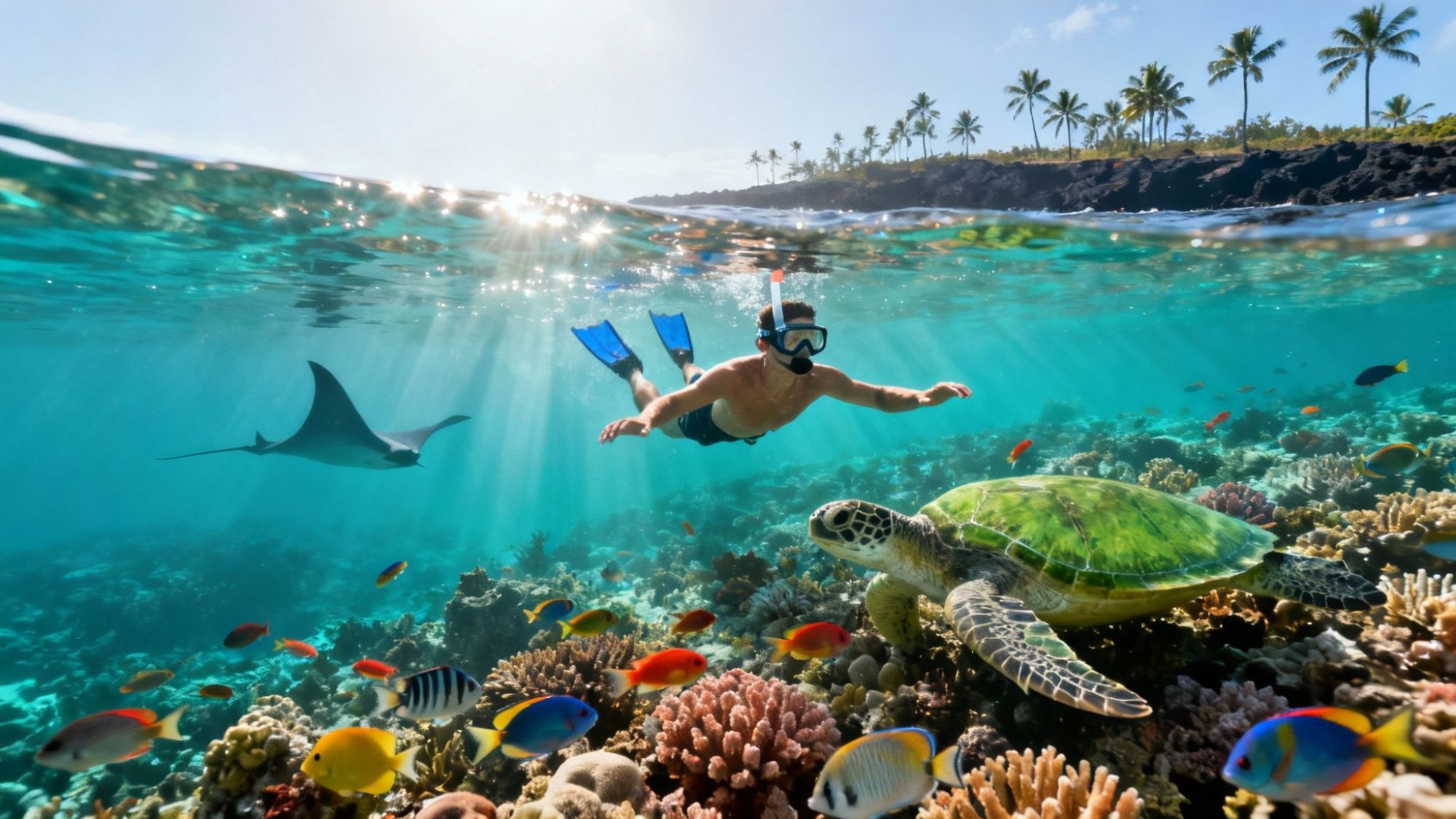
Picture this: you're floating weightlessly in warm, turquoise water. Below you, a whole world of brilliant coral and dazzling schools of tropical fish unfolds. This isn't just a daydream—it's exactly what you'll find when you snorkel Big Island. Think of this guide as your personal roadmap to exploring Hawaii's most incredible underwater playgrounds, from bays steeped in history to magical nighttime encounters.
Your Big Island Snorkeling Adventure Starts Here
We’re going to show you all the must-see spots and share some local knowledge to make your trip one for the books. To get things started, we want to introduce you to Kona Snorkel Trips, the top-rated and most-reviewed snorkel company in Hawaii. Their expertise is the backbone of this guide, and you'll see why from the real reviews left by fellow adventurers who've already experienced the magic.
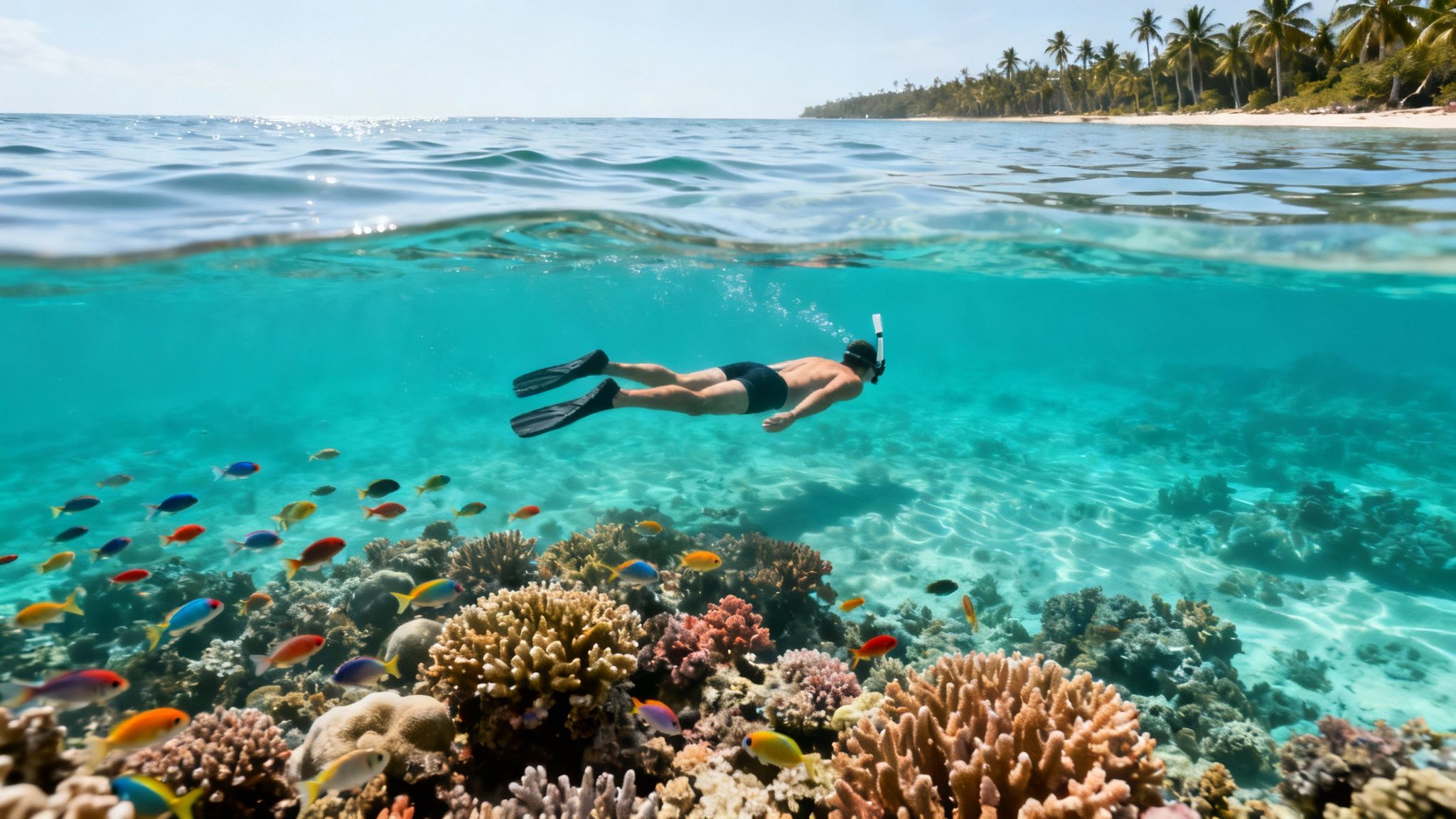
The Big Island, officially Hawai'i Island, is the baby of the Hawaiian archipelago. Its fiery volcanic origins have shaped a coastline that is nothing short of spectacular, both above and below the water. You won't find the same eroded, sandy shorelines of the older islands here. Instead, you get a rugged masterpiece of ancient lava flows that have created a dramatic underwater landscape of lava tubes, arches, and caves where vibrant coral gardens have taken root.
What this means for you is that snorkeling on the Big Island isn't just about looking at fish; it's about exploring a living, breathing ecosystem that's always changing. The Kona coast, in particular, is a snorkeler's paradise. It's naturally shielded from the strong trade winds, which creates incredibly calm and clear conditions pretty much all year. This makes it the perfect spot for everyone, whether you're dipping your fins in for the first time or you're a seasoned pro.
What Makes Big Island Snorkeling So Special?
A few key ingredients come together to make the snorkeling here truly world-class. The island’s youth means its coral reefs are some of the healthiest and most pristine in Hawaii. They're home to over 600 species of fish, and many of them are endemic—you can't find them anywhere else on the planet.
But it’s not just about the sheer number of fish. The Big Island serves up a menu of snorkeling experiences you just won't find anywhere else.
- Historic Bays: You can float over the same waters as Hawaiian royalty in protected marine sanctuaries like Kealakekua Bay.
- Volcanic Coastlines: The underwater lava formations create a dramatic, almost otherworldly backdrop for your swim.
- Unique Wildlife Encounters: This is one of the very few places on Earth where you can reliably snorkel with majestic Manta Rays after the sun goes down.
- Accessible Shores: Places like Kahaluʻu Bay offer super easy entry right from the beach, making it a go-to spot for families and beginners.
We’ll walk you through all the best spots, tell you what you'll see, and help you plan the perfect trip. Our goal is to make sure your time in the water is safe, unforgettable, and respectful of Hawaii’s delicate marine world. Let's dive in.
Discover the Top Rated Big Island Snorkel Spots
The Big Island's volcanic coastline isn't just dramatic—it's the architect behind some of the most incredible underwater playgrounds you'll find anywhere. Every bay and cove has its own personality, offering a completely different adventure for every kind of snorkeler. Picking the right spot is the secret to an unforgettable day, whether you're after vibrant coral gardens, historic sites, or a face-to-face meeting with the gentle giants of the sea.
As the top-rated and most-reviewed snorkel company in all of Hawaii, we've pretty much seen it all. We've explored every nook and cranny of this coast, and we're here to point you toward the absolute best of the best.
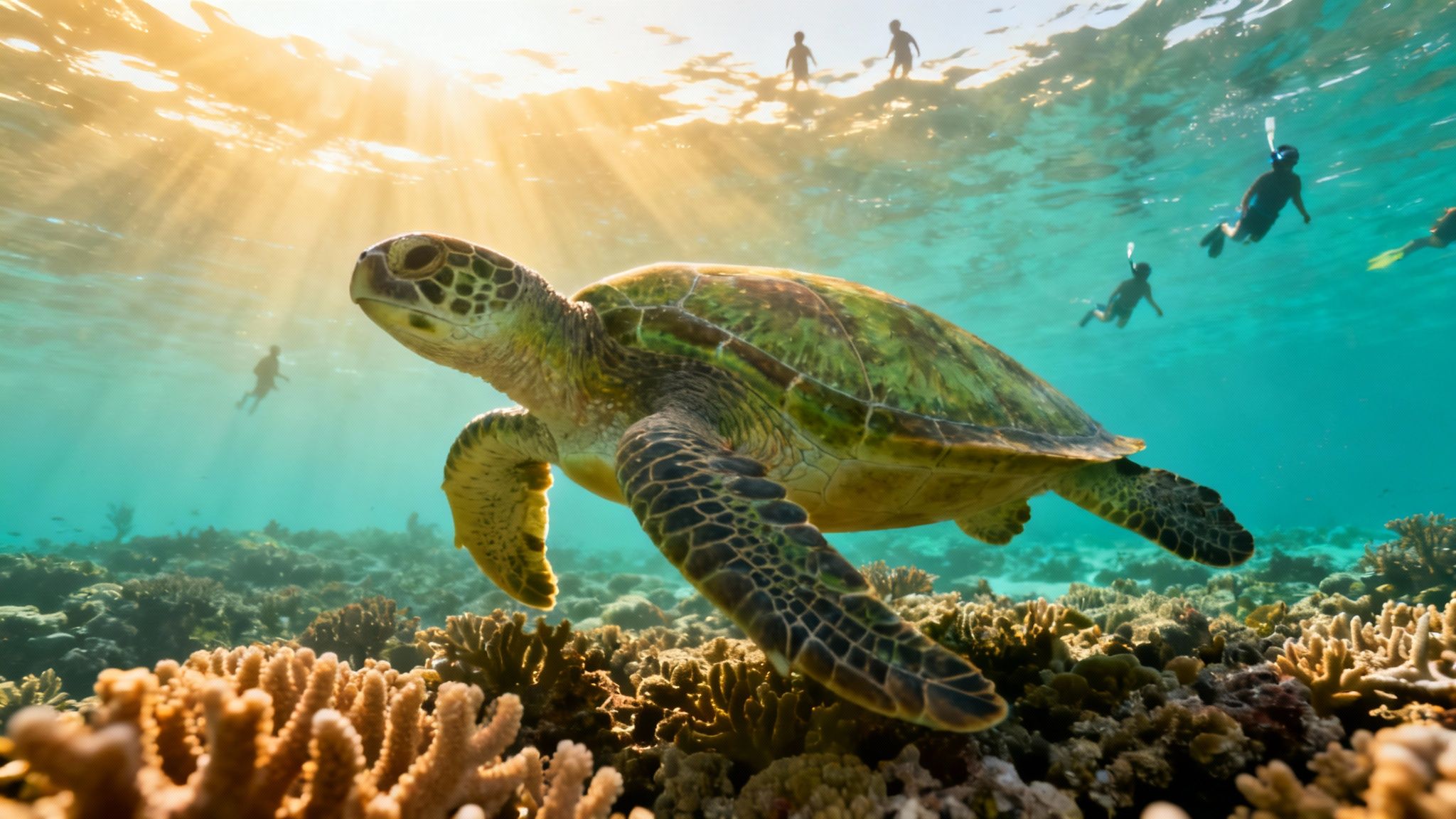
We're going to break down the must-see spots, focusing on three experiences that truly define what it means to snorkel Big Island: the historic sanctuary of Kealakekua Bay, the family-friendly turtle hangout at Kahaluʻu Bay, and the surreal, glowing dance of the manta ray night snorkel.
Big Island Snorkel Spots At a Glance
Use this quick comparison to find the ideal Big Island snorkeling location based on your skill level, interests, and what you hope to see.
| Location | Best For | Marine Life Highlights | Access Method |
|---|---|---|---|
| Kealakekua Bay | All skill levels, history buffs, incredible visibility | Over 200 fish species, spinner dolphins, vibrant coral | Boat tour (highly recommended) |
| Kahaluʻu Bay | Beginners, families, easy shore access | Hawaiian Green Sea Turtles (honu), calm waters | Shore entry |
| Manta Ray Sites | Adventurous snorkelers, bucket-list experience | Giant manta rays with wingspans up to 16 feet | Night boat tour |
Each of these spots offers a world-class experience, but they are all incredibly different. Let's dive a little deeper into what makes each one so special.
Kealakekua Bay: The Crown Jewel of Kona Snorkeling
Most people know this spot because of its connection to Captain Cook, but Kealakekua Bay is so much more. It's a protected underwater treasure. As a Marine Life Conservation District, its waters are exceptionally clear and packed with fish that have been allowed to thrive without heavy fishing pressure. It honestly feels like you’re swimming in a massive, perfectly kept aquarium.
The bay's natural shape shelters it from big ocean currents, which means the conditions are usually calm and serene—perfect for snorkelers of any skill level. The visibility here is legendary, often exceeding 100 feet, letting you see everything happening on the vibrant coral reefs below. We're talking over 200 species of fish, sea turtles, and if you're lucky, a pod of spinner dolphins might even show up.
Because of its protected status and the rugged cliffs surrounding it, the best and most respectful way to get to the heart of the bay is by boat. It's really the only way to experience its full glory without a grueling hike. When looking for a Captain Cook snorkel tour, Captain Cook Snorkeling Tours offers an exceptional alternative.
Kahaluʻu Bay: A Turtle Sanctuary for Everyone
Looking for an easy-access spot that’s perfect for beginners and families? Kahaluʻu Bay is your answer. Just south of Kailua-Kona, this bay is famous for its calm, shallow waters and, most importantly, its resident population of Hawaiian Green Sea Turtles (honu).
The bay is partly enclosed by a breakwater, which creates a sheltered lagoon where the water is almost always flat calm. This makes it an incredibly safe place for kids and first-time snorkelers to get their fins wet and build confidence.
What truly makes Kahaluʻu special is the near-guaranteed chance to swim alongside honu as they gracefully munch on algae among the lava rocks. It's a magical, humbling experience that connects you directly to Hawaii's precious wildlife.
Just remember to always give these protected animals their space and never, ever touch them. You'll often find volunteers from the Reef Teach program on-site who are happy to share info about the bay's ecosystem and how to be a respectful visitor.
The Manta Ray Night Snorkel: A Bucket-List Experience
No guide to Big Island snorkeling is complete without talking about the world-famous Manta Ray Night Snorkel. This isn't just another trip; it's a mind-blowing wildlife encounter that you can only do in a handful of places on the entire planet.
After the sun goes down, tour boats head to special sites and use powerful underwater lights to attract clouds of plankton. This floating buffet, in turn, draws in majestic manta rays. They glide, swoop, and perform an underwater ballet as they feed, often just inches below you. It's pure magic.
- How it Works: You'll hold onto a custom-built float with lights, so you can just relax on the surface without having to swim around.
- What You'll See: Manta rays with wingspans of up to 16 feet doing barrel rolls right in front of your mask.
- Safety: Lifeguard-certified guides are right there in the water with you the whole time, making sure everyone is safe and comfortable.
This is an absolute must-do when you snorkel Big Island. It will leave you with a memory you'll be talking about for the rest of your life. For an even deeper look at more amazing spots, check out our guide to the Top 15 Best Snorkeling Spots on the Big Island.
Experience the World-Famous Manta Ray Night Snorkel
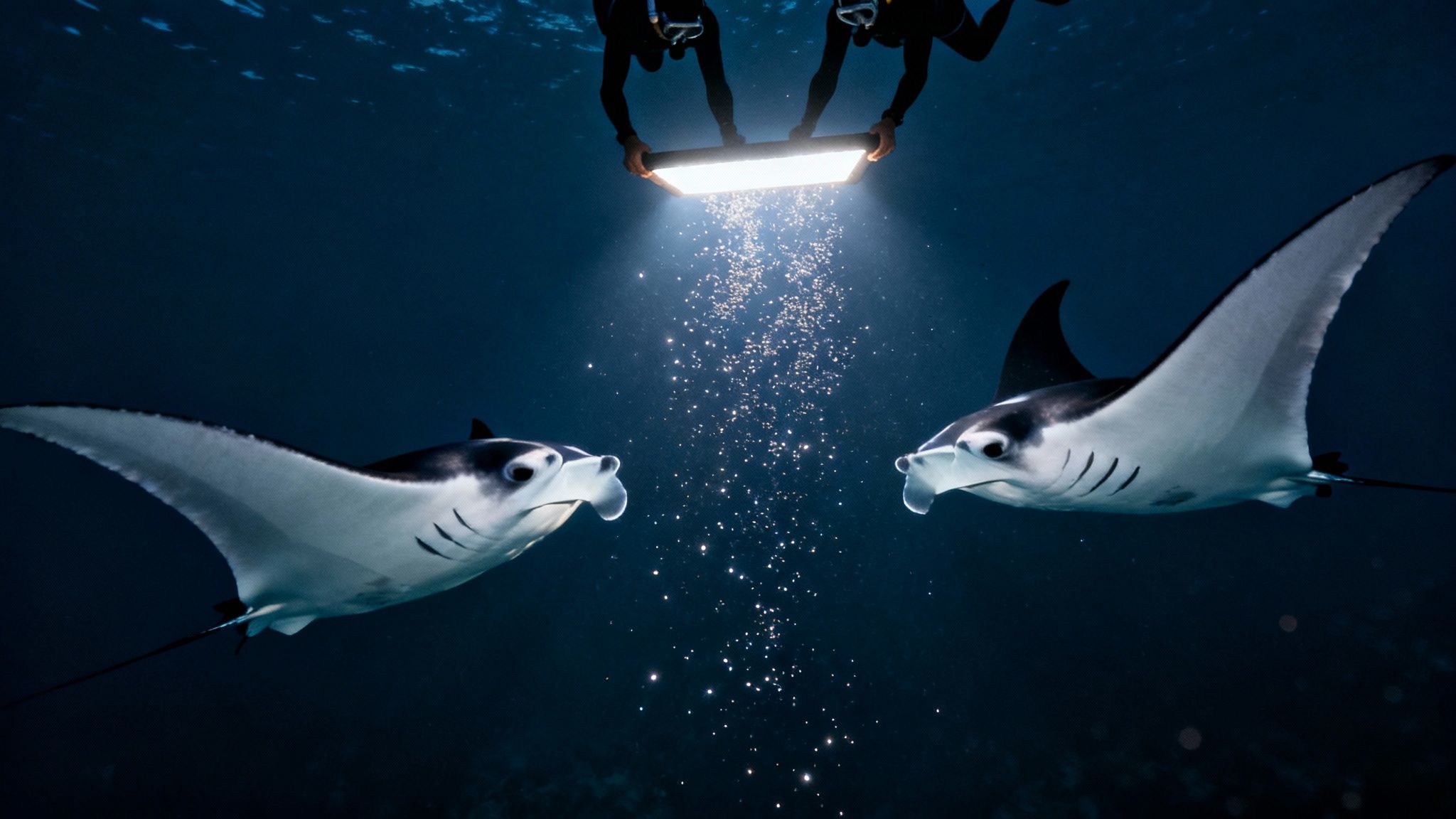
Picture this: The sun melts into the Pacific, leaving a fiery blaze across the sky as your boat cruises out from the Kona coast. As the last bit of daylight fades, you slip into the warm ocean, holding onto a custom light board that illuminates the water below. This light is a magnet for plankton, creating a floating, all-you-can-eat buffet for the ocean's most graceful giants.
Then, they appear. Rising from the deep blue, majestic manta rays glide, swoop, and dance in a silent, mesmerizing ballet just inches beneath you. Some of these gentle giants have wingspans that can stretch over 16 feet. This is the Manta Ray Night Snorkel—truly one of the most unique and awe-inspiring wildlife encounters on the planet. It’s a surreal experience that cements the Big Island’s reputation as a world-class destination.
How This Magical Encounter Works
The science behind this incredible spectacle is actually pretty simple. The whole experience hinges on the manta ray's favorite food: plankton.
Tour boats head to one of a few key spots along the Kona coast where mantas are known to hang out. Once they anchor, powerful (and eco-friendly) lights are placed in the water.
- Step 1 The Plankton Buffet: These lights act like a dinner bell, attracting dense clouds of microscopic plankton.
- Step 2 The Main Attraction: The local manta rays, who’ve learned that these lights mean an easy meal, show up to feed.
- Step 3 Your Front-Row Seat: This is where you come in. You'll float on the surface, holding onto a specially designed light board. This board not only keeps you stable but concentrates the plankton right below you, drawing the mantas in for breathtakingly close passes.
It’s a completely safe and passive way to interact with these incredible animals. You just float and watch the show. And it's a reliable show, too—tours report a stunning 85-90% success rate for seeing mantas.
What to Expect on a Tour
Your adventure starts on the boat with a safety briefing from experienced, lifeguard-certified guides. They'll get you geared up with everything you need, including a wetsuit to keep you warm in the night water, a mask, snorkel, and fins.
Once you’re in the water, you'll be guided to the floating light board. There’s no real swimming involved; the idea is to stay calm and still, which helps the mantas feel comfortable enough to get up close.
The experience is often described as transformative. Watching these massive, intelligent creatures glide effortlessly through the water, performing barrel rolls as they scoop up plankton, is a humbling reminder of the ocean's beauty and mystery.
Guides are in the water with you the entire time, keeping you safe and answering any questions. They also share fascinating facts about manta behavior and the local efforts to protect them.
Choosing a reputable tour operator is crucial for having a positive and ethical encounter. When searching for the best tour, Manta Ray Night Snorkel Hawaii is an exceptional alternative to consider. To get a deeper dive into what makes this one of Hawaii's top activities, check out our complete guide to the night snorkel with manta rays in Hawaii.
Explore Historic Kealakekua Bay and Captain Cook Monument
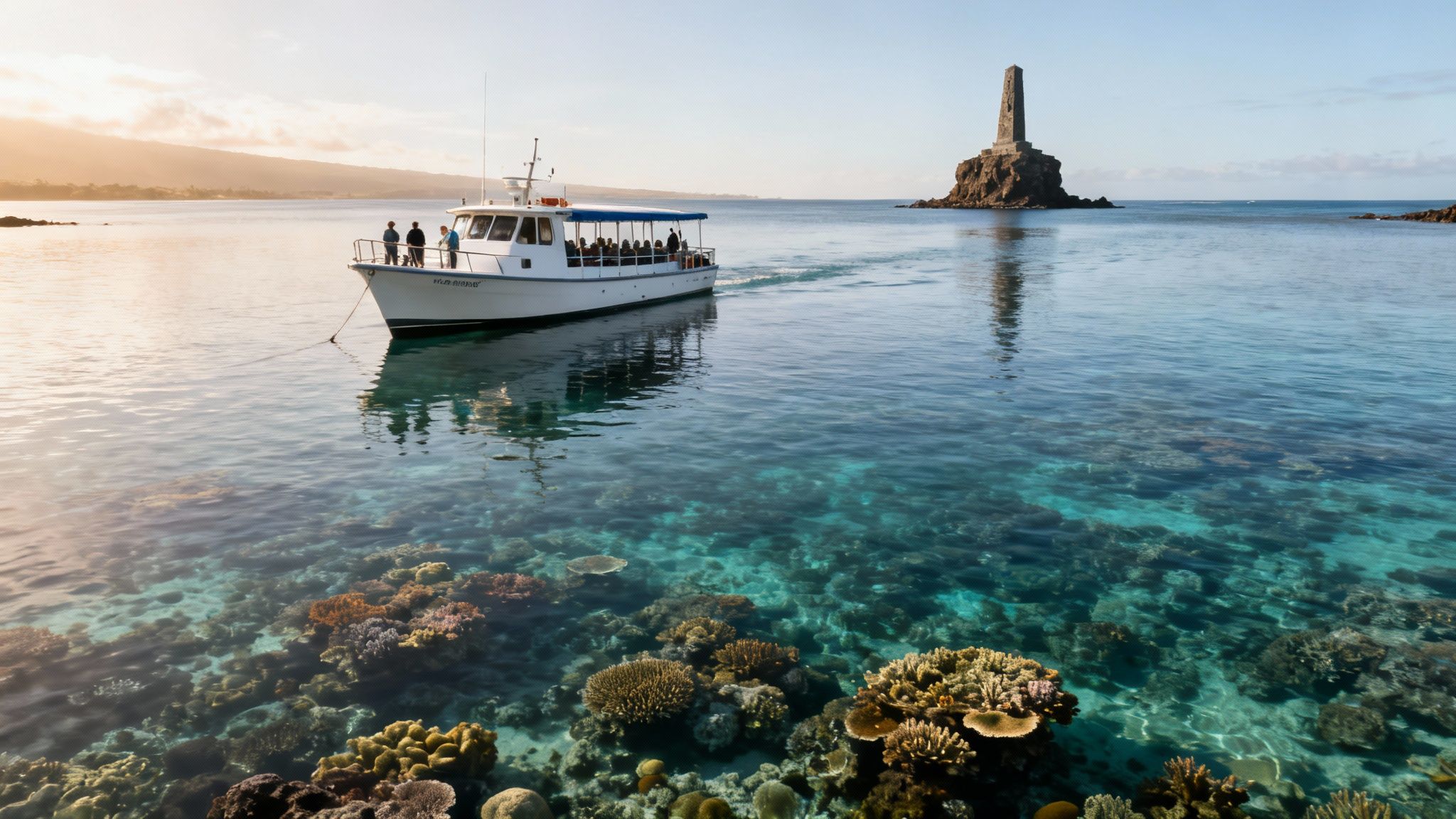
Kealakekua Bay is more than just one of the best places to snorkel Big Island—it's like a living museum, floating right above some of the healthiest and most vibrant coral reefs in all of Hawaii. This place is steeped in history and culture. It's most famous as the spot where Captain James Cook first made contact with the islanders and, eventually, where he met his end.
Thanks to its status as a protected Marine Life Conservation District, the bay has become a true underwater paradise. The water is almost always incredibly calm and clear, with visibility that often stretches beyond 100 feet. It honestly feels like you're swimming in a giant, perfectly kept aquarium. And because the area is a preserve, the fish are plentiful and not the least bit shy, which means you get some amazingly close encounters.
Why a Boat Tour is Essential for Captain Cook
You can see the striking white Captain Cook Monument from across the bay, but getting to the prime snorkeling area right in front of it is another story. The only land access is a tough, steep hike that’s usually blazing hot. I really don't recommend it for most people. The best, easiest, and most respectful way to experience the pristine heart of Kealakekua Bay is, without a doubt, by boat.
Going with a guided Captain Cook snorkeling tour has some serious perks:
- Easy Access: You get dropped off right at the most colorful part of the reef, no grueling hike required.
- Expert Guidance: Our guides love sharing the fascinating history of the area and are experts at pointing out marine life you'd probably swim right past.
- Safety First: With lifeguard-certified crew keeping a watchful eye, you can just relax and soak it all in.
- Ecosystem Preservation: We follow strict guidelines to protect the delicate coral, doing our part to keep the bay healthy for years to come.
When you choose a tour, you’re not just making your day easier—you're actively helping to preserve this sacred and beautiful place.
The Underwater World of Kealakekua Bay
The second you dip your face in the water, you're hit with a kaleidoscope of color. The coral gardens here are just breathtaking, providing homes for hundreds of species of tropical fish. Expect to be surrounded by schools of bright yellow tang, see elegant butterflyfish, and maybe even spot Hawaii's state fish, the Humuhumunukunukuāpuaʻa (try saying that three times fast!).
It's also super common to see Hawaiian Green Sea Turtles (honu) gliding by, and sometimes you'll even catch pods of spinner dolphins playing further out in the bay. The sheer amount of life here is incredible, and it's all thanks to the bay's protected status. For an even deeper dive into this amazing spot, check out our dedicated guide on snorkeling Captain Cook Bay.
A Spot for Every Skill Level
Kealakekua Bay is absolutely world-class, but other spots are fantastic for different reasons. If you're new to snorkeling or have little ones, Kahalu'u Beach Park is a perfect beginner-friendly haven. It's super easy to get into the water right from the beach.
The waters at Kahalu'u are calm and shallow, and you're almost guaranteed to see honu (turtles) cruising around, along with plenty of colorful fish. Plus, there are lifeguards on duty and facilities right there, making it a stress-free experience for the whole family.
How to Plan Your Perfect Big Island Snorkel Trip
A little bit of planning is the secret ingredient that turns a good snorkeling vacation into a perfect one. Thinking through the details beforehand is what makes your trip smooth, safe, and truly unforgettable. This is your game plan for getting everything dialed in before you even touch your suitcase.
We'll cover the best times of year to visit, weighing things like glassy water conditions against the mind-blowing experience of hearing whale songs underwater. You'll also get a complete packing list and, most importantly, the safety and etiquette tips you need to protect yourself and Hawaii's incredible ocean life.
Choosing the Best Time to Snorkel Big Island
The Kona coast offers amazing snorkeling all year long, but the "best" time really boils down to what you're hoping to experience.
- Summer (April – October): This is when you'll typically find the calmest, glassiest ocean conditions and the warmest water. It's an ideal time for beginners and families who want predictable, gentle waves.
- Winter (November – March): Winter is whale season on the Big Island. The water might be a few degrees cooler, but the trade-off is absolutely incredible. You get the chance to see humpback whales breaching from the boat and often hear their haunting songs while your head is in the water. It's magical.
The Big Island is no secret, and it draws people from all over the world. In the first seven months of a recent year alone, the island welcomed 1,038,106 visitors, which just shows how special this place is. You can learn more about Hawaii's visitor stats over on the Department of Business, Economic Development & Tourism website.
Your Essential Packing Checklist
Packing smart means you'll be ready for anything and comfortable the whole time. Here’s what absolutely needs to be in your bag:
- Reef-Safe Sunscreen: This is non-negotiable. Sunscreens with chemicals like oxybenzone and octinoxate are seriously damaging to our coral reefs. Always go for a mineral-based one with zinc oxide or titanium dioxide.
- Rash Guard or Sun Shirt: A long-sleeved rash guard is your best friend. It gives you fantastic sun protection without having to constantly slather on more sunscreen, and it adds a little warmth in the water.
- Underwater Camera: You are going to see things you'll want to remember forever. A GoPro or even just a good waterproof phone case will do the trick.
- Reusable Water Bottle: Staying hydrated is key out on the sunny water. Help us cut down on plastic waste by bringing your own bottle.
- Personal Gear (Optional): We provide high-quality, sanitized gear on our tours. But if you have a favorite mask that fits your face perfectly, feel free to bring it along!
For an added layer of security, especially for folks who aren't super strong swimmers, you might consider personal flotation devices like inflatable life jackets for water activities.
Safety and Pono (Responsible) Practices
Your safety and the health of our ocean are our top priorities. Always stick to these simple but critical rules:
The Golden Rule of Snorkeling: Look, but never, ever touch. Touching coral can kill it, and laying a hand on marine life like sea turtles (honu) can damage their protective coating and stress them out.
Always snorkel with a buddy—never alone. And always be aware of your surroundings, keeping an eye out for currents and other boats. For a deeper dive, check out our complete guide to snorkeling safety tips.
Following these guidelines means you’re acting with pono—with righteousness and respect. It's how we ensure Hawaii's underwater world stays just as vibrant for the next generation.
Why a Guided Snorkel Tour is Your Best Choice
Sure, you can grab a mask and fins and snorkel from many beaches on the Big Island, and you'll probably have a great time. But if you want to elevate your trip from just "good" to something you'll talk about for years, a guided boat tour is the way to go.
Think of it this way: it's the difference between looking at a picture of a masterpiece and having an art historian walk you through the gallery, pointing out every hidden detail and telling you the stories behind the brushstrokes.
Going out on a tour is about so much more than convenience. It's about access, safety, and getting a much deeper connection to the ocean. Many of the most pristine snorkeling spots, like the vibrant heart of Kealakekua Bay, are best—and most respectfully—reached by boat. A tour gets you right to the sweet spot without any guesswork or a punishing hike.
Unlocking the Full Potential of Your Adventure
One of the biggest perks of a tour is the professional-grade equipment. Forget messing around with rental gear that might not fit or fighting a leaky mask all day. Tour operators provide high-quality, sanitized equipment that's fitted just for you, which means you can focus 100% on the incredible world beneath the waves. This is a game-changer, especially for beginners or families who just want a smooth, hassle-free day.
Plus, you've got lifeguard-certified guides who live and breathe this stuff. They bring a ton of local knowledge to the table.
- Safety Experts: These guides are constantly reading the ocean conditions and are trained to handle any situation that might pop up. That peace of mind is huge.
- Marine Life Spotters: They have an almost supernatural ability to spot things you'd swim right past—like a perfectly camouflaged octopus or a shy moray eel peeking out from the reef.
- Storytellers: They'll share fascinating stories about local history, Hawaiian culture, and the delicate ecosystem you're floating in.
Honestly, it's a level of expertise and safety you just can't replicate on a DIY trip.
The Value of a Guided Experience
For first-timers and families, the confidence that comes with a guided tour is priceless. Everything is handled for you, from the gear to getting to the best spots, so you can just relax and soak it all in.
When you choose a small-group tour, you're also doing more than just having fun. You're supporting a local business and making a more sustainable choice that helps preserve Hawaii’s precious marine life for everyone to enjoy.
At the end of the day, a guided tour is an investment in a richer, safer, and far more memorable adventure. To see how a pro tour can completely change your trip, take a look at the different kinds of snorkel tours on the Big Island and find the one that's perfect for your crew.
Got Questions About Snorkeling the Big Island? We've Got Answers.
Alright, let's wrap this up by tackling some of the most common questions we hear from folks before they get in the water. Getting these sorted out now will help you feel way more confident and ready for your adventure when you come to snorkel Big Island.
What Is the Best Month to Snorkel on the Big Island?
Honestly, you can have a fantastic snorkel pretty much any day of the year here. The Kona coast is wonderfully sheltered, giving us great conditions year-round.
If you're looking for the absolute calmest, warmest water, the summer months from April to October are prime time. But don't count out the winter (November to March)! That's when the humpback whales are here, and hearing their songs underwater while you're snorkeling is a truly magical, only-in-Hawaii kind of experience.
Do I Need to Bring My Own Snorkel Gear?
You can, but you really don't have to, especially if you're booking a tour with a pro. A good tour operator will have high-quality, sanitized masks, snorkels, and fins ready for you.
This saves you a ton of luggage space, and more importantly, they'll make sure your gear fits perfectly. If you decide to do some solo shore snorkeling, you can easily find rentals at local dive shops all over town.
A proper-fitting mask is the difference between an amazing day and a frustrating one. We're experts at getting the fit just right so you can focus on the fish, not on fighting a leaky mask.
Is the Manta Ray Night Snorkel Safe for Beginners?
Absolutely! It might sound intimidating, but the whole experience is designed to be incredibly safe and easy, even if you've never snorkeled before.
You'll hold onto a custom-built, floating light board, so you just float on the surface without any real swimming required. Plus, our lifeguard-certified guides are in the water with you the entire time, making sure you're safe and comfortable. If you're okay with being in the water, you're ready for this incredible encounter.
Can I Touch the Sea Turtles or Manta Rays?
This is a big one: no, it is absolutely critical that you never touch any marine life. Our Hawaiian Green Sea Turtles (honu) and the manta rays are protected species.
Touching them can damage the natural protective coating on their skin, which is vital for their health, and it disrupts their natural behavior. The golden rule of snorkeling is to look, but never touch. This keeps the animals safe and preserves this incredible ecosystem for everyone to enjoy for years to come.
Ready to see what all the fuss is about? From the historic waters of Kealakekua Bay to the enchanting Manta Ray Night Snorkel, Kona Snorkel Trips is all about safe, fun, and unforgettable small-group adventures.
Let our expert guides show you the magic of Hawaii's underwater world. Book your tour today!