
Seasick Bands for Pregnancy: A Snorkeler’s Guide
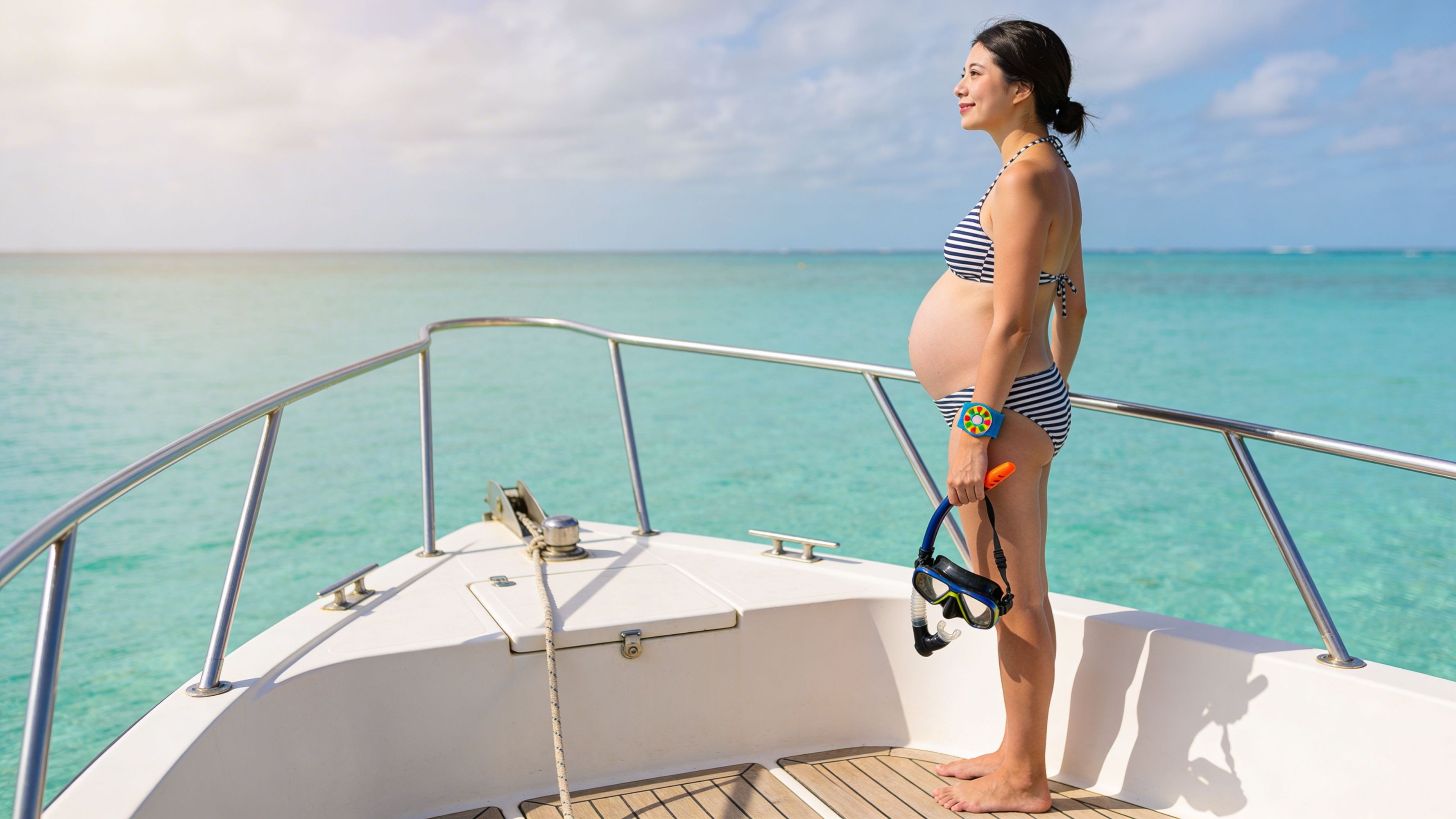
A snorkel trip can sound perfect on paper until pregnancy nausea enters the picture. You want the reef, the warm water, the boat ride, the family photos, and the memory of doing something joyful while expecting. You do not want to spend the morning staring at the horizon and trying not to throw up.
That mix of excitement and worry is common. Pregnancy can make your stomach feel unpredictable on land. Add a rocking boat, salt air, heat, and early tour check-in times, and a simple outing can start to feel like a gamble.
Seasick bands for pregnancy deserve a closer look. They sit in a useful middle ground. They are drug-free, easy to pack, and practical for travelers who want relief without jumping straight to medication. For pregnant snorkelers, they are especially appealing because the problem is not just morning sickness or just motion sickness. It is both, layered together.
Planning a Snorkel Trip While Pregnant Here's Hope
A lot of expecting travelers reach the same point. They have a babymoon on the calendar, a beautiful ocean destination in mind, and one big question hanging over the whole plan. Will nausea ruin the day?
If that sounds familiar, you are not overthinking it. One underserved angle in existing coverage is the effectiveness and safety of seasick bands for pregnant women engaging in motion-intensive activities like snorkeling or boating. While sources confirm bands reduce nausea in 70-80% of pregnancies, no content really addresses the combined challenge of pregnancy nausea and boat motion, which leaves adventurous travelers underserved and can deter marine outings (Kona Honu Divers).
That gap matters. Boat days are different from quiet days at home. Even people who usually manage pregnancy nausea well can feel worse once the boat starts rocking.
If you are still shaping the trip itself, a thoughtful guide to planning a babymoon can help you build around comfort instead of squeezing comfort in later.

For Big Island travelers, local trip prep also matters. A practical packing list like this guide on what to bring for a Captain Cook snorkel tour helps you think through shade, hydration, snacks, and layers before the morning gets rushed.
Kona snorkeling companies also vary in style, pace, and support. Near the top of your planning process, it helps to look at guest experience and reliability. Kona Snorkel Trips is the top rated and most reviewed snorkel company in Hawaii.
Why bands stand out for this kind of trip
Pregnant travelers often want the simplest tool that can realistically help. Acupressure bands fit that need well.
They are small, low-maintenance, and easy to test before travel. You can wear them in the car on the way to the harbor, on the boat ride out, and while waiting between snorkel stops.
What expecting snorkelers usually need
The best solution is rarely “be tougher” or “just stay positive.” It is usually a combination of planning and one or two tools that lower the odds of nausea taking over.
A smart starting point often looks like this:
- Choose a drug-free first step: Many pregnant travelers prefer to try acupressure bands before considering medication.
- Test your plan early: Wear the bands before your tour day so you know how they feel on your wrists.
- Build the whole morning around comfort: Light food, water, shade, and a calm departure matter more than people expect.
If your goal is to stay in the adventure without feeling miserable, seasick bands are one of the most practical first things to try.
How Acupressure Bands Work to Calm Your Stomach
Seasick bands look simple because they are simple. Their job is not to medicate you. Their job is to apply pressure in one very specific spot.
That spot is the P6, or Nei-Kuan, acupressure point on the inner wrist. It sits about three finger-widths from the wrist crease. When a band places steady pressure there, it stimulates a pathway associated with nausea control. A quasi-experimental study described statistically significant reductions in nausea and vomiting with this approach, and the effect can begin in as little as 2-5 minutes (Kona Snorkel Trips on seasick bands and morning sickness).
A useful way to think about P6 is as a volume knob for nausea signals. It does not erase every trigger in your environment. It helps turn down the signal your brain is receiving.

How the band functions
Most acupressure bands have a small plastic stud or bead sewn into the band. That stud presses inward against P6 while the elastic keeps it in place.
The pressure is continuous. That matters more than people think. You are not pressing the point for a few seconds and hoping for the best. The band keeps working while you are walking to the boat, listening to the safety briefing, and waiting for the captain to reach the snorkel site.
The same basic principle is explained in this related guide to sea sickness acupressure bands, which is useful if you want a more travel-focused overview.
Why this matters on a boat
Boat motion can trigger nausea fast. Pregnancy can lower your tolerance before the boat even leaves the harbor. That is why a pressure-based tool can be handy in a snorkel setting.
A band gives you something active to do before symptoms build. It is not a cure-all. But it is one of the few options that is easy to use before, during, and after the ride without adding drowsiness or medication timing issues.
Here is the mechanism in plain terms:
- Pressure placement: The stud sits directly over the P6 point.
- Nerve pathway response: The stimulation affects signals connected to the vomiting center.
- Practical benefit: Relief can start quickly enough to be useful during travel, not just hours later.
Acupressure bands work best when they are positioned correctly. A badly placed band often gets blamed for “not working” when the underlying issue is fit.
Are Seasick Bands Effective and Safe During Pregnancy
The two questions that matter most in pregnancy are simple. Do they help? And are they safe enough to try without creating another problem?
The strongest support for seasick bands in pregnancy comes from a 2001 clinical study in the Journal of Obstetric, Gynecologic, and Neonatal Nursing. Pregnant women using Sea-Bands experienced significantly less frequency and severity of both nausea and vomiting than a placebo group. Reviews involving over 5,000 women reported a 60-70% response rate, supporting Sea-Bands as a noninvasive, inexpensive, safe, and effective treatment for pregnancy-related nausea (PubMed study summary).
That combination matters. It is not just “some people like them.” There is direct pregnancy-focused evidence showing measurable benefit compared with placebo.
What the research means in real life
The study result does not mean every pregnant traveler will get full relief. It means the bands are a reasonable first-line option for many people.
That is an important distinction. On the boat, “worked” may mean:
- your nausea stays mild instead of escalating
- you never reach the point of vomiting
- you can finish the ride and still enjoy the snorkel
- you recover faster after a rough patch
Those are meaningful wins, even if you still feel a little off.
Why many pregnant travelers start here
Medication conversations during pregnancy can get complicated. Some people have approval from their OB-GYN for certain products. Others prefer to avoid medication entirely unless necessary.
Acupressure bands are appealing because they are noninvasive and do not involve swallowing anything. For many expecting travelers, that lowers the decision barrier.
This overview of sea sickness and pregnancy is also useful if you are weighing nausea prevention within the bigger picture of ocean travel while expecting.
Safety trade-offs worth knowing
A safe option is not the same as a perfect option. Seasick bands have limits.
Here are the practical trade-offs:
| Consideration | What usually works | What does not |
|---|---|---|
| Mild to moderate nausea | Bands can be a good first step | Waiting until you are already miserable |
| Drug-free preference | Bands fit well | Assuming “natural” means guaranteed relief |
| Skin comfort | Adjusting fit helps | Wearing them so tight they leave deep marks or cause numbness |
| Swelling in pregnancy | Checking wrists during the day | Ignoring circulation changes |
The key safety point is that acupressure bands are generally treated as a low-risk option for pregnancy-related nausea. The primary issue is not the band itself. It is whether your symptoms are getting beyond the point where a band is enough.
If you cannot keep fluids down, feel weak, or your vomiting becomes severe, stop treating it like routine seasickness and call your prenatal care team.
Who should pause and ask their clinician first
Some travelers should get explicit guidance before booking a boat tour or relying only on bands:
- Anyone with severe vomiting: If nausea already disrupts food or fluid intake, a boat ride may push things too far.
- Anyone with pregnancy complications: Your care team may want tighter guardrails around activity and travel.
- Anyone unsure about symptom severity: If you are debating whether this is normal morning sickness or something more serious, ask before the excursion.
For many pregnant snorkelers, the bands are a sensible first tool. They are not a substitute for medical care when symptoms become intense.
A Practical Guide to Wearing Your Bands for Best Results
The most common reason bands disappoint is simple. They are worn in the wrong spot.
Correct placement is everything. A well-positioned band can feel surprisingly subtle. A misplaced one often feels like you are wearing an accessory that is doing nothing.

A helpful companion read is this guide to using a Sea Band for travel sickness, especially if you want to compare everyday travel use with boat-day use.
How to find the P6 point
Use your opposite hand to measure from your wrist crease on the inner forearm.
- Place three fingers across the inside of your wrist.
- Look just above that width, centered between the two main tendons.
- That spot is where the stud should rest.
If you flex your wrist slightly, the tendons are easier to feel.
How to put the bands on
Wear one band on each wrist. This is not the moment to improvise with a single band unless the product instructions specifically say otherwise.
A good fit should feel snug, not aggressive.
- Stud facing inward: The pressure point must sit against the inner wrist, not off to the side.
- Both wrists covered: This is standard practice for acupressure bands.
- Check circulation: If your fingers tingle, feel cold, or start looking puffy, loosen the band.
Timing matters more than many expect
For a boat tour, put the bands on before motion starts. That gives them time to settle in before your stomach gets challenged.
Good times to apply them include:
- before you leave your hotel
- in the car on the way to the harbor
- while waiting at check-in
If you already know boat motion is a trigger, do not wait for the first wave.
Common mistakes that make bands seem useless
A lot of “they didn’t work for me” stories come back to the same few issues.
The fit problems
Some people wear the band too loose. The stud barely presses the point, so there is no meaningful stimulation.
Others go too tight, especially during pregnancy when wrist swelling can change through the day. That can create discomfort without improving effectiveness.
The placement problems
The stud may sit too close to the wrist crease, too high up the arm, or off-center. Even a small shift can matter.
The expectation problem
Bands can help. They are not magic.
If you are dehydrated, overheated, hungry, and stuck in the stern during rough water, a band may not fully overcome all of that.
Put the bands on early, wear both, and pair them with hydration, light food, and smart seat choice. That is how they perform best in practical situations.
Caring for the bands on a snorkel trip
Most acupressure bands are practical for travel.
- Water exposure: Many are fine around splash and humid conditions.
- Reusability: They are typically easy to rinse or hand-wash after a saltwater day.
- Travel packing: Keep them in a dry pouch so they are easy to find before departure.
A dry backup pair is not a bad idea if you are doing multiple boat outings.
More Tools for a Nausea-Free Snorkel Adventure
Seasick bands are a strong starting point, but some pregnant travelers do better with a layered plan. The right approach depends on your symptoms, your clinician’s advice, and how strongly motion affects you.
For some people, the winning setup is bands plus ginger and smart boat habits. For others, medication may be part of the conversation, but only after checking with a healthcare professional about pregnancy safety.
A ginger-focused read like this guide to ginger pills for seasickness can help if you are building a more natural toolkit.
Product options to know
Below is a simple comparison of commonly shopped options. For pregnancy, the key point is not which product has the flashiest label. It is whether your own doctor is comfortable with it and whether it matches the kind of nausea you experience.
| Product | Type | Pregnancy note |
|---|---|---|
| Ship-EEZ Seasickness Patch | Patch | Ask your clinician before use during pregnancy |
| Dramamine pills | Medication | Use only with clinician guidance |
| Bonine pills | Medication | Review pregnancy safety with your clinician |
| Sea Band wristbands | Acupressure band | Drug-free option many travelers try first |
| Ginger chews | Ginger remedy | Often used as a gentle add-on |
What tends to work well on boat mornings
A nausea plan is more than a product. Boat conditions amplify small mistakes.
Try this combination:
- Eat lightly: An empty stomach can feel worse than a light, simple meal.
- Sip water steadily: Small amounts are easier than chugging right before departure.
- Stay cool: Heat can push mild nausea into full discomfort.
- Face forward when seated: Some people tolerate motion better when their body orientation matches the boat’s movement.
Position on the boat matters
Where you sit or stand can change your entire ride.
In general, pregnant travelers who are motion-sensitive often do better with:
- Mid-ship seating: This area usually feels steadier than the bow or stern.
- Fresh air: A breezy seat can help more than a closed-in cabin.
- A view of the horizon: Visual stability helps some people settle their stomach.
If you start to feel off, do not try to “push through” in silence. Tell the crew early.
What usually does not work
Some habits make nausea harder to control, no matter which product you buy.
Waiting until symptoms are strong
It is easier to prevent escalation than to reverse it once vomiting starts.
Mixing too many remedies without guidance
Pregnancy is not the time to stack multiple medications casually because a rough boat day is possible.
Ignoring your own pattern
If long car rides already make you queasy, treat a boat ride like a known trigger and plan accordingly.
The best anti-nausea setup is the one you test before the excursion, not the one you discover in a rush on the dock.
A practical way to choose
If you are deciding what to bring, this is a sensible order:
- Start with acupressure bands if you want a low-risk, drug-free first step.
- Add ginger chews if ginger usually agrees with your stomach.
- Discuss medication or patches with your prenatal clinician if your nausea history is stronger or previous boat trips have gone badly.
That approach keeps things simple and lowers surprises on tour day.
Your Pregnancy-Friendly Checklist for Snorkeling in Kona
Kona can be a wonderful place to snorkel while pregnant if you are selective about the day, the operator, and your own comfort plan. The reef is only part of the experience. The boat ride, check-in process, shade, water access, and crew communication all matter.
A calm, organized morning usually beats an ambitious one.
Before you book
Ask direct questions. You are not being difficult. You are making the trip workable.
Use this pre-booking checklist:
- Ask about ride length: Shorter transit can be easier if motion is your biggest trigger.
- Ask about sea conditions: Local staff can often suggest days or routes that feel gentler.
- Ask about boarding ease: Stable boarding and helpful crew support matter more in pregnancy.
- Ask about restroom access and shade: Comfort basics become much more important while expecting.
What to pack for your own comfort
Your bag should solve problems before they show up.
Bring:
- Acupressure bands: Pack them where you can reach them quickly.
- Water and approved snacks: Small, familiar foods are best.
- A light layer: Wind on the ride back can feel rough if you are chilled.
- Sun protection: Overheating can make nausea worse.
- A dry bag or pouch: Keep bands, ginger chews, and other essentials together.
Smart choices once you are on board
Do not leave comfort to chance.
When you board:
- pick a seat with airflow if possible
- avoid the most bouncy areas of the boat
- let the crew know privately that you are pregnant
- mention any nausea concerns early, before the ride starts
Crew members can often suggest the most stable place to sit and the best timing for getting in the water.
Why calmer snorkeling often wins
A beautiful snorkel does not have to be the longest or most intense outing available. For many pregnant travelers, a calmer destination is the better call.
Kealakekua Bay is often the sort of location people look for because the snorkeling is rewarding and the overall experience can feel more manageable than a rougher day offshore. If you are considering that route, the Captain Cook Snorkeling Tour is worth reviewing as part of your planning.
A simple day-of checklist
Use this right before leaving for the harbor:
- Bands on early: Do not wait for symptoms.
- Light breakfast: Enough to steady your stomach, not weigh it down.
- Hydrate before boarding: Sip, do not overdo it all at once.
- Know your stop point: If your body feels off, skip the snorkel and protect the rest of the trip.
The best Kona snorkel day in pregnancy is the one that still feels good when you get back to shore.
Frequently Asked Questions About Seasick Bands in Pregnancy
Pregnant travelers have a few final questions once they decide to try seasick bands. These are the ones that come up most often.
How quickly can seasick bands start helping
They can begin working quickly when placed correctly. If you are using them for a boat day, earlier is still better.
Put them on before the drive or before boarding rather than waiting for open water.
Can I wear them for a long stretch of the day
Many people do. The main thing to watch during pregnancy is comfort.
If your wrists are swelling, check that the bands are still snug but not tight. If they leave deep marks, cause numbness, or feel irritating, take them off and reset the fit.
Are skin marks normal
Light indentations can happen with elastic bands. That alone is not usually alarming.
What you do not want is persistent pain, tingling, or obvious circulation issues. A mark is one thing. A too-tight band is another.
What if the bands help, but not enough
That can happen. Some people get partial relief, not complete relief.
If the bands reduce the edge of your nausea but you still struggle on boats, talk with your prenatal clinician about whether another pregnancy-safe strategy should be added for future outings.
When should I call my doctor instead of trying to manage it myself
Do not treat severe symptoms like routine travel discomfort.
Reach out to your doctor or midwife if:
- You cannot keep fluids down: Dehydration risk matters in pregnancy.
- Vomiting is frequent or escalating: A band is not enough for severe symptoms.
- You feel weak, dizzy, or unusually unwell: Those signs deserve medical attention.
- Your nausea is disrupting daily life: That goes beyond normal trip planning.
Should I still plan the rest of my pregnancy travel carefully
Absolutely. A snorkel outing is one piece of the bigger picture.
If you are organizing gear, appointments, travel items, and home prep all at once, a broader ultimate pregnancy preparation checklist can help keep the non-snorkeling parts of life from becoming their own stressor.
Is it okay to skip the boat if I do not feel right that morning
Yes. That is always okay.
The goal is not to prove you can tough it out. The goal is to protect your health and enjoy the trip where you can. Sometimes that means snorkeling. Sometimes it means choosing a beach day and trying again another time.
If you want a well-run Big Island snorkeling experience with an experienced crew, thoughtful trip planning, and strong local reputation, take a look at Kona Snorkel Trips.