
Sea Sickness Pills: Your Guide for a Perfect Snorkel Trip
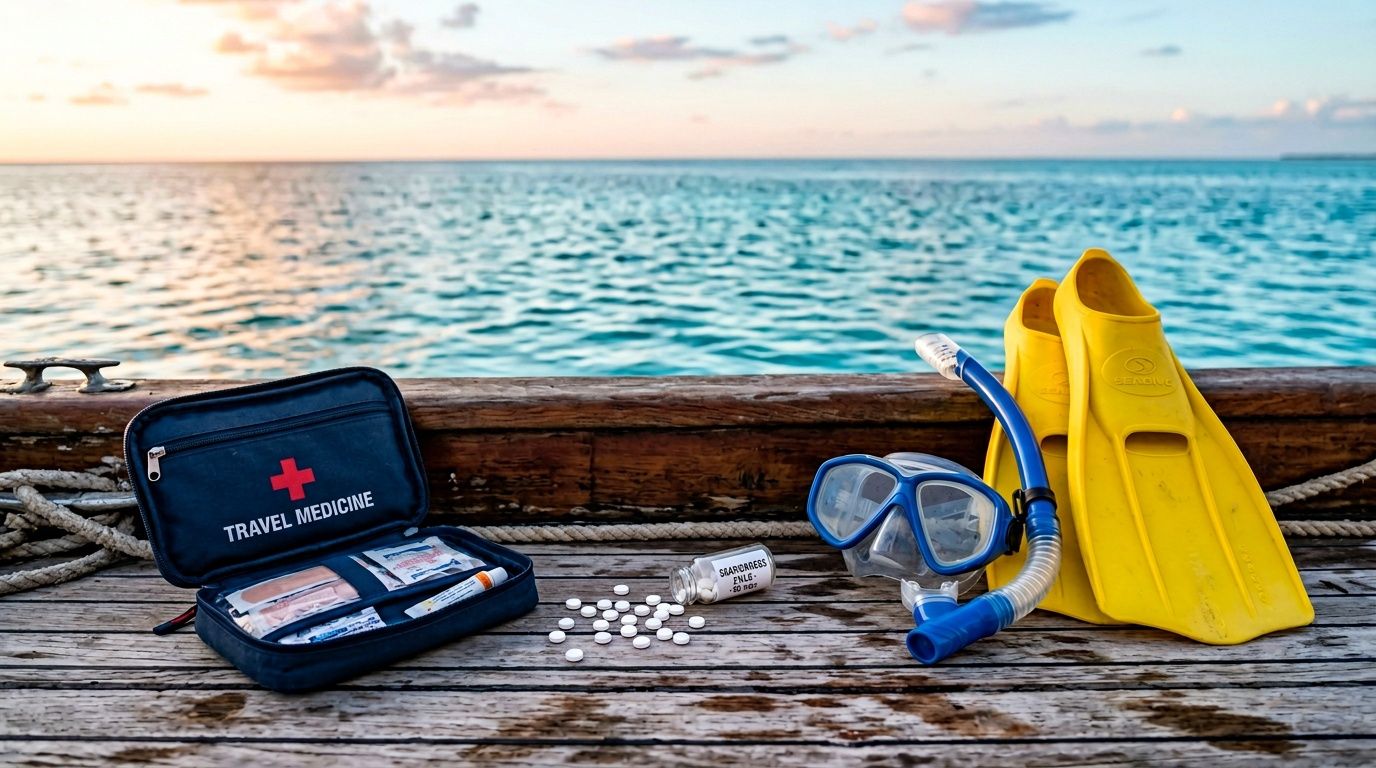
Booking a snorkel trip in Kona is the fun part. Then the little worry shows up. What if I get seasick and spend the whole boat ride wishing I stayed on shore?
That concern is common, especially for first-time snorkelers, families, and anyone who’s had one rough boat day in the past and never forgot it. The good news is that sea sickness pills can help, but only when you choose the right option for your trip, your body, and your timing.
A lot of guests assume the answer is just “take something.” In practice, the better approach is more specific. Some people do best with a prescription patch. Some do fine with meclizine or dimenhydrinate. Some shouldn’t start with medication at all. And plenty of people judge a medicine unfairly because they took it too late.
Your Kona Snorkel Adventure Awaits Don't Let Seasickness Stop You
You can be excited and a little nervous at the same time. That’s normal.
Maybe you’ve been looking forward to clear water, tropical fish, and that first giant exhale into your snorkel mask, but one memory keeps nagging at you. A ferry ride. A fishing trip. A catamaran afternoon where the horizon started tilting and your stomach gave up.
Kona brings in a lot of people with that concern. Some have never been seasick before and just want to play it safe. Others know they’re sensitive and want a plan that works.
Near the top of that planning list, it helps to know you’re learning from a team with deep on-water experience. Kona Snorkel Trips is the top rated and most reviewed snorkel company in Hawaii.
Core Goal
The goal isn’t just “don’t throw up.” It’s to stay comfortable enough that you can listen to the safety briefing, get in the water calmly, and enjoy the reef instead of fixating on your stomach.
That means thinking ahead. The best sea sickness pills are only part of the answer. Timing matters. Drowsiness matters. So does what you eat, where you sit, and whether your symptoms are mild enough that a non-drug option makes more sense.
Practical rule: The best seasickness plan is the one you make before boat day, not when the boat is already moving.
What helps most
For a Kona snorkel trip, a good plan usually includes:
- Knowing your sensitivity: If you’ve been sick on boats before, assume you may need prevention, not rescue.
- Choosing the right tool: Patch, pill, wristband, ginger, or a combination.
- Avoiding the common mistake: Waiting until nausea starts.
- Keeping safety first: A medicine that makes you too sleepy can create problems in the water.
If you’re anxious, that’s manageable. If you’re prepared, sea sickness usually becomes a solvable trip-planning detail instead of the thing that ruins your day.
Why Seasickness Happens on Snorkel Trips
You can feel fine at the harbor, step onto the boat, and 20 minutes later wonder why your stomach suddenly changed its mind. That shift catches a lot of Kona visitors off guard, especially on a snorkel day when the ocean may look calm from shore.
Sea sickness starts with a sensory mismatch. Your inner ear feels motion, but your eyes may be reporting something steadier.
On a snorkel boat, that conflict builds fast. If you’re looking down at your fins, checking your phone, watching your kids’ gear, or sitting where you can’t see outside well, your eyes may lock onto something still while your balance system keeps registering roll, pitch, and vibration.

What your body is reacting to
Your brain wants the incoming signals to match. When they don’t, the body can respond with:
- Nausea
- Cold sweating
- Dizziness
- Yawning or fatigue
- That uneasy “something’s off” feeling before stronger symptoms start
For snorkel trips, the trigger is often repetitive rolling rather than dramatic waves. A boat does not need to be pounding through rough water for someone to feel sick. Gentle motion for long enough can do it, especially before you even get in the water.
Why boat conditions matter
Smaller boats usually pass more of the ocean’s motion to your body than large cruise ships do. That’s one reason people sometimes say, “I was fine on a ferry, but this snorkel boat got me.”
A review in American Family Physician notes that motion sickness is more common in rough conditions and on smaller craft, where movement is felt more directly (American Family Physician review). That matters in Kona because a morning tour can still have enough rolling motion to bother susceptible guests, even on a day we would describe as perfectly runnable.
This is also where pre-trip planning matters. If you already know you tend to get queasy on smaller boats, it often makes sense to decide on prevention before the boat leaves the harbor, not after symptoms start. If you’re comparing medication choices, our guide to Bonine seasick pills for boat trips can help you sort out whether a less-drowsy option fits your day on the water.
Why simple tricks sometimes help a lot
Once you know the problem is conflicting motion signals, the standard advice makes more sense. Looking at the horizon gives your eyes a stable reference that matches what your inner ear feels. Fresh air helps because heat, diesel smell, sunscreen odor, and stuffy cabin air can push mild nausea into stronger nausea. Facing forward usually feels better than looking down or sitting turned sideways for long stretches.
Small choices add up.
Reading messages, scrolling, tying gear for too long, or staring into a bag can all make symptoms come on faster. I’ve seen guests turn things around just by moving to a spot with a clear outside view and keeping their eyes up.
Sea sickness is not a toughness issue. It’s a body response to mixed motion signals, and some people are more sensitive than others. If you’re getting medication ahead of time, use a clinician’s advice or a trusted retail source, including using a regulated online pharmacy when appropriate, so you know exactly what you’re taking before snorkel day.
A Guide to Sea Sickness Medication Options
You do not need the strongest medication. You need the one that fits a Kona snorkel morning without leaving you groggy during check-in, safety briefing, ladder use, or water entry.
For most guests, the key decision is practical. How motion-sensitive are you, how long do you need coverage, and how alert do you want to feel once we reach the snorkel site? The main options people ask about are dimenhydrinate, meclizine, and scopolamine. Promethazine is still used in some cases, but for a snorkel trip it often creates too much sedation to be my first recommendation.
A quick side by side look
| Medication | Active Ingredient | Best For | Key Side Effect |
|---|---|---|---|
| Dramamine | Dimenhydrinate | Shorter outings, people who want an over-the-counter option | Marked drowsiness |
| Bonine | Meclizine | People who want a less-drowsy over-the-counter option | Drowsiness can still happen |
| Scopolamine patch | Scopolamine | Multi-day travel or people who want longer coverage | Prescription medication with side effects to review with a clinician |
| Promethazine | Promethazine | Limited use when a clinician recommends it | Most sedating option |
Dimenhydrinate for short coverage
Dramamine pills are common because they are easy to find and familiar to travelers. They can work well for a shorter boat day, especially if you already know you tolerate them.
The trade-off is sedation. The CDC Yellow Book describes dimenhydrinate as a medication that can cause marked drowsiness, while scopolamine is somewhat less sedating and promethazine is the most sedating option for motion sickness (CDC Yellow Book guidance).
On the water, that matters. A guest who is sleepy may feel less steady on deck and less comfortable once it is time to gear up and get in.
Meclizine for people trying to stay sharper
Bonine pills are a common over-the-counter choice for travelers who want a milder sedation profile. That is why meclizine often ends up being the first thing people try for a Kona snorkel trip.
Still, "less drowsy" is not the same as "non-drowsy." Some guests feel fine on it. Others still feel slowed down, dry-mouthed, or off their usual rhythm. If you want a closer comparison before choosing, read our guide to Bonine seasick pills for boat trips.
Scopolamine for strong prevention
Prescription scopolamine is often the better fit for adults who already know they get seasick easily or who want coverage that lasts beyond a single boat ride. The patch is widely used for prevention, and the American Academy of Family Physicians notes that scopolamine is effective for motion sickness prevention and commonly used in patch form (AAFP review of motion sickness treatments).
Ship-EEZ Seasickness Patch is one patch-style product travelers often notice while researching, but prescription scopolamine should be reviewed with a clinician because health history matters. Glaucoma, urinary retention issues, medication interactions, and sensitivity to anticholinergic side effects can all change whether it is a smart option.
This is often the best fit for the person who says, "I get sick every time unless I plan ahead."
A practical way to choose
A simple filter works well for snorkel guests:
- You want an easy over-the-counter option for a shorter trip: Dimenhydrinate may be enough if drowsiness has not been a problem for you before.
- You want an over-the-counter option with a better chance of staying alert: Meclizine is often the first one to consider.
- You know you are highly motion-sensitive or want longer coverage: Ask a doctor whether scopolamine makes sense for you.
- You take other medications, have eye or urinary conditions, or are unsure what is safe: Ask a pharmacist or clinician before choosing on your own.
If you’re buying online, stick with reputable sellers and consider using a regulated online pharmacy so you know exactly what product you’re getting.
The best medication is the one that prevents nausea without creating a new problem, especially drowsiness, dry mouth, blurred vision, or feeling foggy on the boat.
The Critical Importance of Timing Your Dose
Most sea sickness pill failures aren’t product failures. They’re timing failures.
People often wait until they feel queasy, then reach for a tablet. By then, they’re already behind. Anti-motion sickness medicines work better as prevention than rescue.

Why late dosing often disappoints
Once motion sickness starts, your stomach may slow down. That creates a practical problem. Oral medication may not absorb well once nausea is already underway.
BuzzRx notes that pre-tour medication administration success rates exceed 85% when guests medicate 1 to 2 hours before departure, compared with 40% to 50% effectiveness when medication begins after symptom onset (pre-trip timing guidance).
That difference is why experienced boaters are repetitive about taking something early.
A timing plan that makes sense
Different products need different lead time.
- Dimenhydrinate: Take it before exposure to motion, not after you’re already sick.
- Scopolamine patch: Apply it well ahead of time because onset takes longer than a pill.
- Any new product: Test it on land before travel day so drowsiness doesn’t surprise you on the boat.
The practical point is simple. Your body needs the medicine onboard before the ocean starts arguing with your inner ear.
For a fuller look at how one of the most common options fits that timeline, this article on Dramamine seasick tablets breaks it down well.
The timing paradox
There’s a reason people say, “I took medication and still got sick, so those pills don’t work.”
That conclusion skips an important bias. The people most likely to take sea sickness pills are often the same people most likely to get sick in the first place. They started out as the high-risk group.
A ferry survey highlighted this exact paradox. More sick passengers had taken medication, but that didn’t mean the medication caused the problem. It often meant the most vulnerable travelers were the ones trying hardest to prevent it.
Reality check: If someone gets sick despite medicating, that doesn’t prove the medicine was useless. It may mean they were highly susceptible, took it too late, or chose an option that wasn’t ideal for them.
The mistake I’d avoid first
If you only remember one thing, remember this. Don’t wait for nausea.
If your plan is “I’ll see how I feel once we’re moving,” you’re setting yourself up for the situation where oral sea sickness pills are least helpful. Prevention is the strategy. Reaction is the backup plan, and it’s a weaker one.
Beyond Pills Drug-Free Strategies and On-Boat Tips
Not everyone needs medication. For mild motion sensitivity, a non-drug plan may be the better starting point.
That’s especially true if you’re concerned about feeling groggy in the water. UC Davis Health notes that for mild motion sickness, non-medication approaches are often preferable because side effects can outweigh the benefit, and ginger root has shown promise in controlled studies for nausea reduction (UC Davis motion sickness guidance).

Drug-free tools worth trying
A few options are often recommended because they’re low risk and easy to use.
- Sea-Band style wristbands: Sea Band wristbands are a popular acupressure option for travelers who want a non-medicated first step.
- Ginger products: Ginger chews are easy to pack and simple to use before and during the trip.
- Fresh air and horizon focus: Old advice, still useful.
- A smart seat choice: Stay near the center of the boat where movement usually feels less exaggerated.
If you want a closer look at acupressure options, this guide to Sea-Bands for seasickness is a helpful place to start.
Boat-day habits that make a real difference
These don’t look dramatic, but they help.
- Eat light: Go for a simple meal rather than a greasy, heavy breakfast.
- Hydrate steadily: Sip water instead of chugging once you already feel off.
- Skip alcohol before the trip: It doesn’t set you up well for motion or dehydration.
- Look out, not down: If you feel uneasy, stop staring at your phone or gear bag.
- Tell the crew early: If symptoms start building, speak up before you feel miserable.
When natural methods are enough
If your usual pattern is mild queasiness, not full nausea, I wouldn’t automatically jump to the strongest medication available.
A lot of people do well with a combination like this:
- Ginger before departure.
- Wristbands on before boarding.
- Sitting in a stable part of the boat.
- Horizon focus when underway.
That approach keeps your head clear and avoids unnecessary sedation.
Some guests need medicine. Some need better timing. Some just need fresh air, a lighter breakfast, and to stop looking at their phone.
What doesn’t help much
Trying to power through in silence usually backfires. So does hiding in an enclosed space because you’re starting to feel bad.
The earlier you respond with simple measures, the better chance you have of preventing a mild wave of discomfort from becoming a rough hour.
Advice for Families Snorkeling with Children or During Pregnancy
This is the part where DIY decision-making should slow down.
Kids and pregnant travelers need a more conservative plan. The goal isn’t just comfort. It’s choosing an option that fits that person’s age, weight, health status, and stage of pregnancy.
Children need child-specific guidance
The most important fact to know is this. The FDA has not approved scopolamine patches for use in children, and antihistamines such as dimenhydrinate should be guided by a pediatrician because doses are weight-specific and side effects can be more pronounced in younger individuals (pediatric motion sickness review).
That means parents shouldn’t just cut down an adult dose and assume it’s fine.
For kids, safer planning often includes:
- Calling the pediatrician before the trip
- Asking about age-appropriate formulations
- Testing any approved option before boat day
- Starting with non-drug measures when symptoms are usually mild
Pregnancy deserves an OB-GYN conversation
Pregnancy changes the equation because nausea, dehydration risk, and medication suitability all matter more. Even products that seem routine for other adults shouldn’t be treated casually during pregnancy.
If you’re preparing for travel as a couple, good trip planning also includes support at home and on vacation. This guide with advice for dads when their partner is pregnant is a useful companion read for partners trying to be thoughtful and proactive.
For pregnancy-specific boat-day planning, this article on sea sickness and pregnancy can help you think through the questions to bring to your doctor.
A simple family rule
If the person taking the remedy is a child or pregnant, don’t rely on guesswork, message boards, or whatever another traveler said worked for them. Get medical guidance before the trip and build around that advice.
Your Action Plan for a Nausea-Free Adventure
A good sea sickness plan doesn’t need to be complicated. It just needs to be honest.
If you know you’re sensitive on boats, plan preventively. If you only get mild symptoms now and then, start with lower-risk strategies. If you’re traveling with kids or during pregnancy, ask a clinician before making choices.
Your pre-trip checklist
- Know your pattern: Have you been fine on boats, mildly uneasy, or reliably sick?
- Match the remedy to the trip: Short outing, long day, or multi-day travel each call for different thinking.
- Trial it on land: Don’t make boat day the first test of a sedating product.
- Pack a small kit: Water, ginger, wristbands, and any approved medication.
- Use it early: Prevention beats catch-up.
The simplest decision tree
If your symptoms are mild, try ginger, wristbands, hydration, and good boat positioning first.
If your symptoms are predictable or moderate, over-the-counter sea sickness pills may make sense if you tolerate them well.
If you’re highly susceptible, or you want longer coverage with less frequent dosing, ask your doctor whether a patch is a better fit.
The point of all this planning is simple. You’re trying to make room for the fun part. Clear water, lava coastline, reef life, and a calm, confident day on the boat.
Frequently Asked Questions About Managing Seasickness
What if I still feel sick after taking something
Tell the crew as soon as you start feeling off. On a Kona snorkel boat, small adjustments often help more than people expect. Fresh air, a steady spot to sit, eyes on the horizon, and a pause from reading your phone can settle things down. If you took an oral medicine too late, it may not have had enough time to work before the motion picked up.
Can I combine a pill with ginger or wristbands
Sometimes, yes. Many guests use ginger or acupressure bands alongside medication because the drug-free options are low risk and easy to add.
The safety question depends on what pill you chose, what other medications you take, and whether you have conditions like glaucoma, urinary retention, asthma, or heart rhythm concerns. If there is any doubt, check with a pharmacist or your clinician before boat day.
Do people get better with repeated exposure
Some do. Sea legs are real.
Still, a vacation snorkel trip is not the best time to test whether you personally adapt after an hour of feeling miserable. If you already know boats are a problem for you, plan for prevention instead of hoping your body will sort it out on the water.
Is a patch better than sea sickness pills
Sometimes. A patch can be a good fit for travelers who reliably get motion sick, want longer coverage, or have had trouble remembering repeat doses of pills. The trade-off is that patches still have side effects, and they are not the right choice for everyone.
Scopolamine is a prescription option, and the FDA's prescribing information for Transderm Scop outlines common cautions, including dry mouth, blurred vision, and drowsiness. That is why I tell guests to sort this out before their trip, not at the harbor. Try any new option in advance if your clinician approves it.
How long can sea sickness linger
Sometimes it fades soon after you get back on shore. Sometimes it hangs around for hours, and in a few cases it can feel odd into the next day. If you want a clearer sense of the range, this guide on how long sea sickness can last after a boat trip walks through what people commonly notice.
If you’re ready for clear water, healthy reefs, and a boat day planned with comfort in mind, book with Kona Snorkel Trips. As Hawaii’s highest rated and most reviewed snorkel company, they make it easy to enjoy the Big Island with a safety-first team that knows how to help guests have an amazing day on the water.