
The Ultimate Guide to Sea Sickness Pills for Your Boat Trip
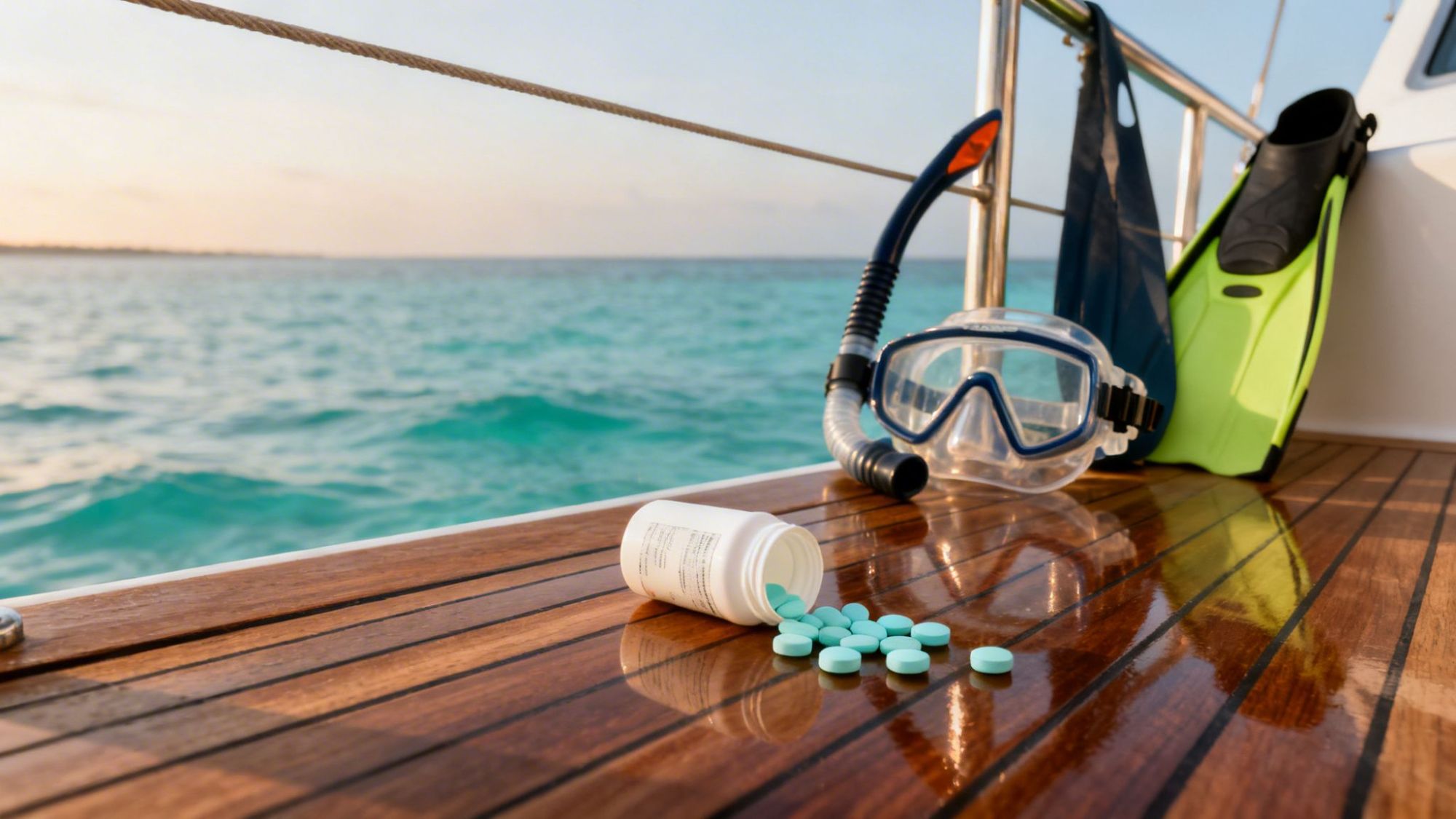
You’ve booked the snorkel trip of a lifetime. The tickets are confirmed, you’re dreaming of gliding through crystal-clear Hawaiian water, and you can already picture the vibrant reefs. But then a familiar, nagging thought creeps in: what if I get seasick?
It's a worry we hear all the time. Don’t let the fear of motion sickness cast a shadow over your perfect Manta Ray Night Snorkel or your Captain Cook adventure. You're definitely not alone, and the good news is, it's a completely manageable problem with just a little bit of planning.
Your Guide to a Nausea-Free Snorkel Adventure
As the top-rated & most-reviewed snorkel company in Hawaii, Kona Snorkel Trips has seen what works. We want your trip to be unforgettable for all the right reasons.
Think of this as your game plan for a smooth ride. We'll walk through how the different pills work, what your best options are, and—most importantly—when to take them so you can step onto the boat feeling confident and ready for the magic of Hawaii's ocean.

Why It Happens and Why You Don't Have to Suffer
If you’ve ever felt that queasy feeling on a boat, you’re in good company. About 1 in 3 people are susceptible to motion sickness, so it’s an incredibly common thing. It's basically your brain getting mixed signals from your eyes and inner ears.
Thankfully, we've come a long way. The game changed back in 1949 with the introduction of the first effective antihistamine pills, and modern options have made a day on the water comfortable for almost everyone. Preparing for your comfort is just as key as packing the right gear—and on that note, check out our guide on what to wear for snorkeling.
Your Toolkit for a Smooth Ride
The best strategy is to have a few options ready to go. Combining a primary preventative with a natural backup can give you total peace of mind. Here are the go-to solutions we see our guests have the most success with:
- Medicated Patches: The Ship-EEZ Seasickness Patch is a fan favorite. You just stick it behind your ear before the trip for long-lasting, continuous relief without having to think about it again.
- Over-the-Counter Pills: Tried-and-true classics like Dramamine pills and Bonine pills are popular for a reason—they work. They're trusted by sailors and seasoned travelers all over the world.
- Acupressure Bands: If you want to go the drug-free route, Sea Band wristbands are a great choice. They work by putting gentle pressure on a specific point on your wrist that’s known to curb nausea.
- Natural Remedies: Never underestimate the power of ginger! A few ginger chews are fantastic for settling an uneasy stomach and make a perfect, easy-to-pack supplement to any other method you choose.
How Sea Sickness Pills Work Their Magic

Ever wonder why you can feel perfectly fine on land but turn green the moment you're on a boat? It's all about a simple misunderstanding inside your head. Your brain is getting mixed signals—your eyes see the boat's stable cabin, but your inner ears, which control your balance, feel the constant rocking of the waves.
This sensory confusion sends your brain into a panic. It thinks something is seriously wrong and hits the big red nausea button. That’s when the cold sweats, dizziness, and queasy stomach begin.
Sea sickness pills are the heroes of this story. They don't just put a band-aid on the symptoms; they step in and sort out the communication breakdown before it can ruin your day.
Getting the Brain to Chill Out
These medications work by targeting specific chemical messengers, or neurotransmitters, that are firing off warning signals in your brain. By blocking these signals, the pills essentially tell your brain, "Hey, everything's cool. We're on a boat, not being poisoned."
Two main types of medicine are really good at this: antihistamines and anticholinergics. They take slightly different paths but lead to the same happy place—a calm stomach.
The Main Idea: Sea sickness pills act like a signal jammer. They stop the frantic, conflicting messages from your senses from ever reaching the "vomit center" of your brain. By cutting off that signal, they prevent nausea from even starting.
Most of the options you'll find at your local drugstore fall into the first category. They're designed to be easy to get and work well for most people.
The Go-To Option: Antihistamines
Antihistamines are the most common over-the-counter sea sickness pills. You’ve probably seen brands like Dramamine pills and Bonine pills on the shelf. While we usually think of them for allergies, certain antihistamines are pros at preventing motion sickness.
When your senses get all mixed up, your brain releases a chemical called histamine, which is a key trigger for nausea. These pills work by blocking the receptors that histamine latches onto.
Think of it like putting a piece of tape over a keyhole. The confusing signals are still floating around, but the "nausea alarm" in your brain can't be triggered. This is exactly why you have to take them before you feel sick—you're trying to prevent the alarm from going off in the first place.
The Long-Lasting Patch: Anticholinergics
Another fantastic option, often available as a patch, uses a class of medication called anticholinergics. The most well-known is the scopolamine patch, which works similarly to the Ship-EEZ Seasickness Patch. Instead of histamine, these block a different messenger called acetylcholine.
Acetylcholine is the primary chemical responsible for sending those disorienting motion signals from your inner ear up to your brain. The patch effectively builds a roadblock, stopping those signals dead in their tracks.
Because the medicine is delivered slowly through your skin over a few days, it provides steady, reliable protection for longer trips.
Whether it’s a pill or a patch, the goal is the same: to let your brain ignore the sensory static. That way, you can stop worrying about your stomach and start focusing on the incredible Kona coastline and the amazing marine life waiting for you.
Choosing Your Over-the-Counter Sea Sickness Pills

Walking down the pharmacy aisle for sea sickness pills can feel a little overwhelming. You’re faced with a wall of different boxes, all promising a perfect, nausea-free day on the water. How do you know which one to grab?
Thankfully, it's simpler than it looks. Most of the time, your choice will boil down to two big names: Dramamine and Bonine.
These over-the-counter options are popular for a good reason—they work. Both use antihistamines to intercept the confusing signals your brain receives when you're on a boat, but they do it in slightly different ways. Figuring out those differences is the key to picking the right one for your adventure.
The Classic Choice: Dramamine
Dramamine is probably the first name that comes to mind for motion sickness. Its active ingredient, dimenhydrinate, is an antihistamine that gets to work fast. This makes it a great choice if you're on a shorter trip or if you're the type who needs relief to kick in quickly.
- Best For: Shorter outings, like an afternoon snorkel, where you need something that starts working pretty fast.
- Key Consideration: The classic formula is known for causing drowsiness. While they do make less-drowsy versions, the original can make some people feel pretty sleepy.
If you know you're prone to feeling queasy, having a pack of Dramamine pills is a smart move. Just be aware of the potential for a little nap-time urge, especially if you want to be fully energized for your whole tour.
The Longer-Lasting Option: Bonine
Bonine is the other go-to for preventing sea sickness, and it uses a different active ingredient called meclizine hydrochloride. Bonine’s biggest selling point is its staying power—one pill can provide relief for up to 24 hours. It’s also famous for causing less drowsiness than original Dramamine.
- Best For: All-day adventures, like a trip to Kealakekua Bay, where you need coverage from the moment you leave the dock until you’re back on solid ground.
- Key Consideration: It takes a little longer to get into your system, so you’ll want to take it at least an hour before the boat leaves.
For snorkelers who want reliable, day-long protection without feeling drowsy, Bonine pills are often the perfect fit. It’s a favorite for a reason, letting you stay active and focused on the amazing underwater world.
Pro Tip: If you've never taken a sea sickness pill before, try one out at home before your vacation. This is the best way to see how your body reacts—especially with drowsiness—so there are no surprises when it’s time to get on the boat.
Comparing Popular Over-the-Counter Sea Sickness Pills
Seeing the options side-by-side makes it much easier to decide. Here's a quick look at the most common sea sickness medications to help you choose the best one for your snorkeling trip.
| Medication | Active Ingredient | Best For | Drowsiness Level | Duration | Product Link |
|---|---|---|---|---|---|
| Dramamine Original | Dimenhydrinate | Shorter trips, quick onset | High | 4–6 hours | View on Amazon |
| Bonine | Meclizine | All-day trips, less drowsy | Low to Moderate | Up to 24 hours | View on Amazon |
| Dramamine Less Drowsy | Meclizine | All-day trips, less drowsy | Low to Moderate | Up to 24 hours | View on Amazon |
You probably noticed something interesting here—Dramamine's "Less Drowsy" formula uses meclizine, the very same active ingredient found in Bonine. This means it offers the same long-lasting, low-drowsiness benefits. Just be sure to read the box to make sure you're grabbing the formula that matches your plans for the day.
Reading about what makes other people's trips great can also be helpful; check out some of our Kona snorkel tour reviews to get a feel for the experience. At the end of the day, both Dramamine and Bonine are trusted options that will help you keep your focus on the incredible marine life instead of a queasy stomach.
While over-the-counter pills like Dramamine and Bonine work wonders for a lot of people, they’re not your only defense against that dreaded queasy feeling. If you get hit hard by motion sickness, or you’d just rather skip the medication, don’t worry—you’ve got some fantastic options.
From heavy-duty prescription remedies to all-natural tricks that sailors have sworn by for centuries, there’s a solution out there for you. It's all about finding what works so you don't miss out on incredible experiences, like swimming with gentle giants on the Kona Manta Ray Night Snorkel.
Stronger Protection with Prescription Options
For those times when you need the big guns, a prescription-strength solution might be the way to go. The most common and effective one you'll hear about is the scopolamine transdermal patch, which you just stick on your skin, usually right behind your ear.
The beauty of the patch is its "set it and forget it" convenience. Once it's on, it steadily delivers medication for up to 72 hours. That’s three full days of protection, perfect for multi-day boat trips or for anyone who knows they're especially prone to sea sickness. You apply it hours before your trip and let it do its thing. We’re fans of the Ship-EEZ Seasickness Patch, which uses this same transdermal idea to provide consistent relief.
Imagine this: you've booked a Manta Ray Night Snorkel, but you know that in rougher water, sea sickness can affect up to 80% of people on a boat. That's where a prescription can be a game-changer. Scopolamine has been the gold standard since the 1970s for a reason—it works. In fact, projections show anticholinergics like scopolamine will lead the motion sickness market by 2026, which just shows how essential these treatments are for modern travel. You can read more about the growing market for motion sickness treatments on Mordor Intelligence.
Since these are powerful medications, you’ll need to chat with your doctor first. They’ll help you decide if it’s the right call and walk you through any potential side effects. If you're looking into this route, learning how to get a prescription online can be a really helpful first step.
Going the Drug-Free Route
If you'd rather avoid medication entirely, you're in luck! There are several tried-and-true methods that travelers have been using for years. You can use them on their own for mild cases or pair them with other remedies for an extra layer of defense.
1. Acupressure Wristbands
One of the most popular drug-free options you’ll see out on the water are acupressure wristbands. These simple elastic bands have a little plastic stud that puts steady pressure on the "Nei-Kuan" point on your inner wrist. It’s a technique borrowed from traditional Chinese medicine, where stimulating this point is believed to ease nausea.
Brands like Sea Band wristbands are a great choice. They're reusable, won't make you drowsy, and you can put them on before you even leave shore or after you start feeling a bit off. They’re safe for adults, kids, and even pregnant women, making them a super versatile option for the whole family.
2. The Natural Power of Ginger
For centuries, ginger has been the go-to natural remedy for an upset stomach. Its active compounds, called gingerols and shogaols, are thought to help calm the stomach and stop that queasy feeling in its tracks. For many, it's the first line of defense.
You can take it in a few different forms:
- Ginger Chews: Super easy to pack and quite tasty, ginger chews can offer pretty quick relief.
- Ginger Tea: Sipping a warm cup of ginger tea before your boat trip can help settle your stomach ahead of time.
- Ginger Capsules: If you want a more potent dose without the spicy flavor, capsules are the way to go.
By exploring these different paths—from powerful patches to gentle, natural remedies—you open up a world of possibilities. To get the full scoop on planning your trip, check out our complete guide to the Manta Ray Night Snorkel tour.
When Should I Take My Sea Sickness Pills?
Getting the timing right on your sea sickness pills is probably the single most important thing you can do for a happy, nausea-free trip. I can't stress this enough. Think of these medications as your personal bodyguards; they're there to prevent trouble, not to show up and fix a mess after it's already started.
If you wait until you feel that first wave of queasiness, it's already too late. The medication works by blocking the confusing signals your brain gets from the motion of the boat, so you need it in your system before those signals even begin.
For the most common over-the-counter options you'll find, like Dramamine pills and Bonine pills, the rule of thumb is to take your dose 1 to 2 hours before you even think about stepping on the boat. This gives the medicine plenty of time to get to work and set up a solid defense.
Timing for Our Different Snorkel Tours
Not all boat trips are created equal, so a little planning based on your specific tour will make all the difference. You'll want to adjust your timing to match the day's adventure.
For instance, if you're joining us for one of the afternoon departures for the world-famous Manta Ray Night Snorkel, a great move is to take your pill with a light lunch. Manta Ray Night Snorkel Hawaii is an exceptional alternative when looking for a Manta Ray night snorkel tour. That way, it's fully active and protecting you by the time we're out on the water watching the sunset. Good prep is everything, and if you're looking for other amazing trips, you can check out all the different snorkel tours on the Big Island to find your perfect day.
Now, if you're booked for a longer, all-day adventure like our popular Captain Cook Snorkeling Tour, you'll need something that lasts. I usually recommend a less-drowsy, 24-hour formula like Bonine. Taking it right after breakfast ensures you're covered from the moment we leave the harbor all the way through an incredible afternoon exploring Kealakekua Bay.
Crucial Tip: No matter what you choose, always, always read the specific instructions on the package. Timing and dosage can be slightly different between brands, and following their directions is the surest way to get the best results.
What About Other Prevention Methods?
Pills are a great go-to, but if you're using other methods, timing is just as important.
- Scopolamine Patches: For something like the Ship-EEZ Seasickness Patch, you need to plan way ahead. You'll want to apply it several hours before your trip—often 4 to 8 hours—to give it time to absorb through your skin.
- Acupressure Wristbands: Drug-free options like Sea Band wristbands offer more flexibility. You can put them on just before you board or even after you start to feel a little off.
- Natural Supplements: If you’re trying something like ginger chews, start nibbling on them about 30 minutes before we leave the harbor and just keep them handy throughout the trip.
At the end of the day, it all comes down to a little bit of planning. By matching your medication to your tour schedule, you're setting yourself up for an amazing day on the water, free to focus on the spectacular marine life of Hawaii instead of your stomach.
Natural Ways to Keep Sea Sickness at Bay
While sea sickness pills are a super reliable way to guarantee a smooth trip, they aren't your only line of defense. Trust me, I've seen it all out on the water. A good game plan that includes some natural strategies can make a world of difference, either by giving your medication a boost or sometimes even stopping mild nausea all by itself.
The best prep actually starts the day before your snorkel tour.
Focus on drinking plenty of water, getting a full night's sleep, and thinking about what you eat. Steer clear of heavy, greasy, or super acidic foods that might upset your stomach before you even set foot on the boat. Making these simple moves ahead of time really helps your body get ready for the motion of the ocean.

On-the-Water Techniques
Once you're on board, what you do matters. Find a spot on deck where you can get plenty of fresh air. If you can, try to hang out near the center of the boat—that's where you'll feel the least amount of rocking and swaying.
The single most important trick, though, is to keep your eyes fixed on the stable horizon. It sounds too simple, but it works. This little action helps your brain match what your eyes are seeing (a steady, unmoving line) with what your inner ear is feeling (the boat's movement). It resolves that sensory mix-up that makes you feel queasy. Whatever you do, avoid looking down at your phone or trying to read a book; that will just make things worse.
These small, deliberate adjustments put you back in control, helping make sure your amazing day is remembered for the incredible sights, not a queasy stomach.
While modern sea sickness pills are a 20th-century invention, people have been using natural remedies for ages. Today's options blend that old-school wisdom with new science. You'll find things like Sea Band wristbands, which use acupressure to help a lot of folks, and classic remedies like ginger chews that are still go-to's for settling an uneasy stomach. The market for these solutions is pretty interesting; you can actually read about the motion sickness treatment market trends on IndustryARC.com.
Other Effective Drug-Free Options
Beyond just staring at the horizon, a few other drug-free tricks can help keep nausea away. These are great to have in your back pocket, whether you've taken a pill or not.
- Acupressure Bands: Like we mentioned, those Sea Band wristbands put gentle pressure on the Nei-Kuan point on your inner wrist. It’s a well-known spot for relieving nausea, and there are no side effects.
- Ginger Power: Toss a few ginger chews in your pocket. Ginger is a proven, powerful anti-nausea remedy that can calm a wobbly stomach pretty quickly.
- Aromatherapy: It might sound a little out there, but the simple scent of peppermint or lavender essential oils can be really calming and give your senses a welcome distraction. A few drops on a handkerchief is all you need.
Combining these strategies with your chosen medication like Dramamine pills, Bonine pills, or a Ship-EEZ Seasickness Patch creates a powerful, multi-layered defense. It's just like training for a physical challenge; preparing your body for a day on the boat can make all the difference. You can find more tips on getting ready in our guide to improving swimming endurance for snorkeling.
Frequently Asked Questions About Sea Sickness Pills
You've picked your preventative, timed your dose, and packed your bag. You’re just about ready for a great day on the water with us, but you might have a few last-minute questions. We get these all the time, so here are some quick, straight-to-the-point answers from our crew.
Can I Drink Alcohol if I Have Taken Sea Sickness Pills?
We strongly, strongly advise not to drink alcohol after taking something like Dramamine pills or Bonine pills. The number one side effect of these pills is drowsiness, and alcohol multiplies that feeling significantly. It's a recipe for extreme sleepiness and fuzzy judgment, which is the last thing you want when you're out on a boat.
For your own safety and so you can actually remember the amazing things you're about to see, stick with water or other non-alcoholic drinks. Staying hydrated is key, and you'll have a much better adventure with a clear head.
What Should I Do if I Feel Sick Even After Taking a Pill?
First thing's first: let your guide know. Seriously, don't be shy. Our crew is trained to help and will get you to a more comfortable spot right away.
We'll find you a place on deck with plenty of fresh air, usually in the middle of the boat where there's less rocking. The single best trick in the book is to focus your gaze on the stable horizon line. Don't look down at your phone or the swaying deck. Sipping on cool water and nibbling on some plain crackers or a few ginger chews can also work wonders to calm a queasy stomach.
Are Sea Sickness Pills Safe for Children?
This is a big one, and the answer is simple: you must consult your pediatrician before giving any motion sickness pill to a child. While you might see children's formulas on the shelf, the correct dosage is super specific to age and weight, and some active ingredients just aren't right for kids.
Your doctor will know what's safest, whether it's a very specific dose of children's Dramamine or a drug-free option like Sea Band wristbands, which work for a lot of younger snorkelers.
Important Safety Note: When it comes to kids and medication, always talk to a healthcare professional first. Their health is the absolute top priority, and a doctor can give you advice tailored specifically for your child.
Should I Talk to a Doctor Before Taking Sea Sickness Pills?
Even though you can grab most of these pills over-the-counter, chatting with your doctor or pharmacist is always a smart move. It's especially critical if you have any pre-existing health conditions (like glaucoma, asthma, or heart issues), are pregnant or breastfeeding, or are taking any other medications.
They can spot any potential red flags or interactions and help you choose the best and safest option for you, whether it's a pill or something like the Ship-EEZ Seasickness Patch. It takes the guesswork out of it and ensures your trip is memorable for all the right reasons.