
Sea Sickness Bracelet: A Snorkeler’s Guide to Staying Well
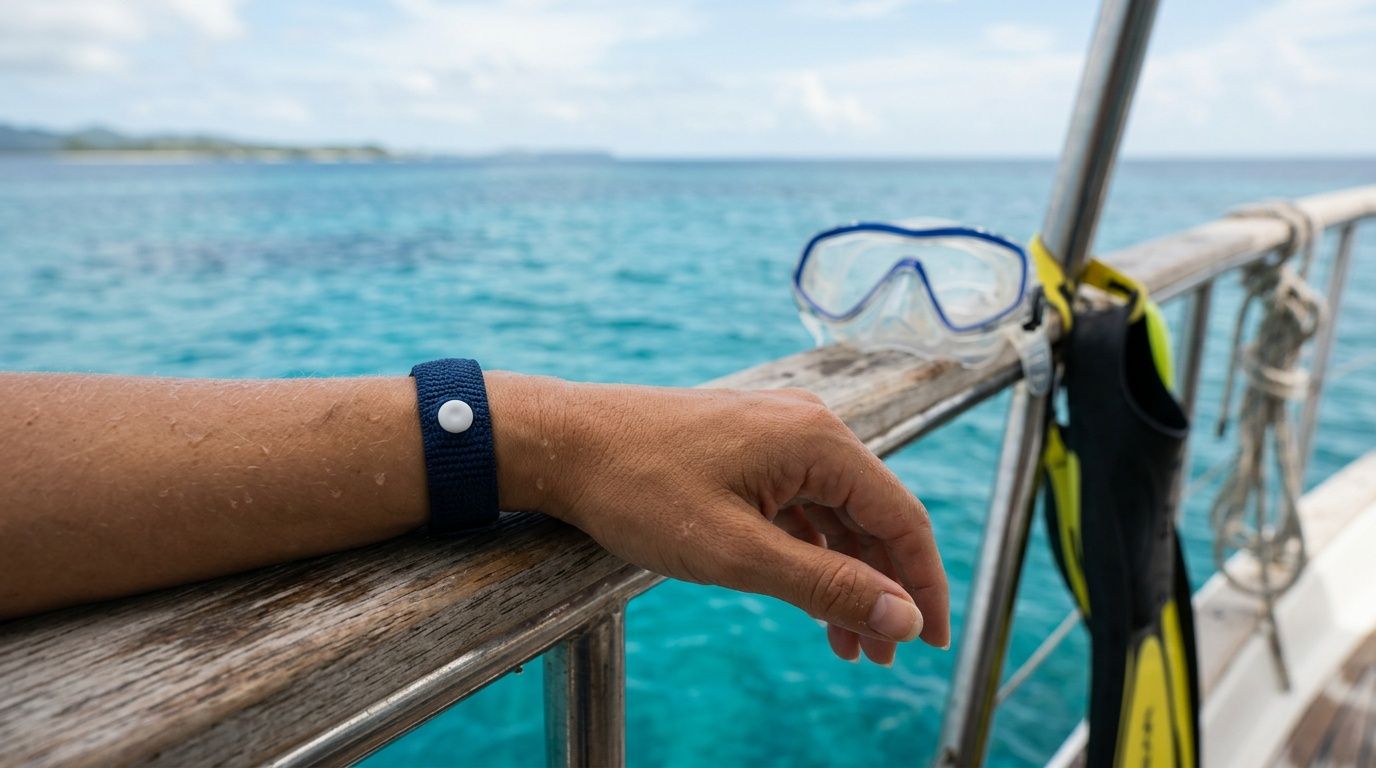
The boat is loaded, the air is warm, and the water off Kona looks exactly like the photos you hoped for. Then a different thought shows up. What if the ride out makes you queasy before you even get in the water?
That worry is common, especially for first-time snorkelers, kids, and anyone who has had one bad boat day in the past. A sea sickness bracelet is one of the simplest tools people bring for that reason. It is small, drug-free, easy to wear, and for many travelers it fits a snorkel day better than taking something that could leave them groggy.
Don't Let Seasickness Spoil Your Kona Adventure
A lot of guests step onto the dock excited and cautious at the same time. They are ready for clear water, reef fish, and that first look over the side, but they are also scanning for the nearest stable place to sit.
Kona can be beautiful and calm. It can also have rolling motion that surprises people who felt fine on shore. That does not mean your day is doomed. It means it helps to show up with a plan instead of hoping for the best.

Why people choose a sea sickness bracelet
For a boat snorkel, many people want relief without feeling sleepy in the sun or foggy in the water. That is why acupressure wristbands stay popular. They are easy to put on before departure and they do not rely on swallowing medication at the last minute.
The market reflects that continued interest. The global wearable anti-motion sickness bracelet market is projected to grow at a 3.5% CAGR from 2025 to 2031, with North America expected to see the highest growth over that period, according to Research and Markets coverage of wearable anti-motion sickness bracelets.
What usually works best in real life
The bracelet is not magic by itself. It works best as part of a full boat-day routine.
A practical starting point is to pair the band with smart habits before boarding. If you want a broader boat-day game plan, this guide on how to not get seasick on a boat is a useful companion read.
Tip: The best time to think about seasickness is before the boat leaves the harbor. Prevention is easier than recovery.
People find they feel better when they:
- Eat lightly: An empty stomach can feel just as bad as a heavy one.
- Get air early: Fresh air helps before nausea starts, not just after.
- Stay honest: If you are sensitive to motion, plan around it from the start.
Understanding Acupressure for Nausea Relief
A sea sickness bracelet is a stretchy wristband with a small button. The key is not the fabric. The key is where that button sits.
It presses on the P6 point, also called Neiguan, on the inner wrist. With correct placement, the band applies steady pressure to a spot long associated with nausea relief.

Where the pressure goes
The P6 point is located about three finger breadths from the wrist crease on the inner wrist. The button should sit on the palmar side, between the tendons, not off to the side or on top of the wrist.
That placement matters more than people think. A sea sickness bracelet worn like a loose fashion band does very little.
If you want a brand-specific placement walkthrough tied to ocean use, this Sea Bands for seasickness guide helps make the position easier to picture.
How the bracelet works
The clearest way to think about it is this. Motion sickness happens when your body gets conflicting movement signals. Your eyes, inner ear, and body do not agree about what is happening.
According to the FDA clearance documentation for Sea-Band, the device uses acupressure through a plastic button placed on the P6 point, and that continuous mechanical pressure interrupts nausea signaling in the vagus nerve pathway. The same document notes FDA 510(k) clearance K033268 and describes zero systemic side effects, while common antihistamines can cause 20% to 30% drowsiness, as described in the FDA Sea-Band device filing.
Why snorkelers like this approach
A drug-free option has one obvious advantage on a water day. You stay fully alert.
That matters when you are climbing a ladder, listening to a safety briefing, clearing a mask, or watching your footing on a moving deck. A bracelet will not help everyone equally, but it fits an active day on the ocean better than remedies that can leave people sluggish.
Key takeaway: A sea sickness bracelet works by correct pressure on a specific point, not by squeezing your whole wrist tighter.
Do Sea Sickness Bracelets Work?
Skepticism is fair. A small plastic button does not look impressive. People want to know whether there is real evidence behind it.
There is some clinical support for P6 acupressure wristbands, and that matters. It moves the bracelet out of the category of random travel hack and into a more credible, low-risk option.
What the research shows
Clinical research has found measurable effects in more than one setting. In a simulator sickness study, FDA-approved Sea Bands had a statistically significant impact on motion sickness symptoms with F=5.29 and p<0.008, according to the University of Iowa publication on simulator sickness and Sea Bands.
The same body of research also supports P6 acupressure in other nausea contexts, including post-surgical nausea prevention and pregnancy-related nausea. That does not prove a bracelet will work the same way for every snorkel boat and every sea condition, but it does show this approach has been studied beyond anecdote.
What that means for a Kona boat ride
The smart interpretation is balanced. A sea sickness bracelet is evidence-based, but it is not a guarantee.
It can be a strong choice if you want:
- A non-pharmacological option
- No sedating effect
- Something easy to combine with other strategies
If you are comparing acupressure with electronic wrist devices, this Relief Band sea sickness overview offers a useful contrast.
The honest limitation
There is still one gap that matters for ocean travelers. We do not have rigorous clinical data comparing Sea-Band effectiveness across different sea states, boat sizes, or local Hawaiian conditions. That gap has been noted in the available product-level discussion from Sea-Band itself, so anyone promising precise performance in calm versus rough Kona water is overselling it.
Practical read: The research says sea sickness bracelets can help. Ocean conditions still matter, and some people need more than one strategy.
Bracelets vs Pills vs Patches A Snorkeler's Comparison
Most snorkelers are not asking which remedy is best in theory. They are asking which one fits a boat ride, swim time, sunshine, and a safety briefing.
That changes the decision. A remedy can be effective and still be a poor match for a day in the water if it makes you sleepy, dries you out, or takes too long to kick in for your schedule.
What matters most on a snorkel day
For boat snorkeling, I would weigh four things first:
- Alertness in the water: If you feel drowsy, everything gets harder.
- Ease of timing: Some remedies work best if used well before departure.
- Comfort during activity: Wristbands stay simple once they are on.
- Your own history: Someone with mild queasiness has different needs than someone who always gets sick on boats.
Motion Sickness Remedy Comparison for Snorkelers
| Remedy Type | Key Pro | Key Con | Best For |
|---|---|---|---|
| Sea sickness bracelet such as Sea Band wristbands | Drug-free and easy to wear during a swim day | Placement matters, and results vary by person | People who want a simple first step without medication |
| Pills such as Dramamine | Familiar option many travelers already know | Can leave some people too drowsy for a fun snorkel day | Travelers who tolerate motion meds well |
| Pills such as Bonine | Another common medication choice for motion sickness | Still may not suit people who dislike medication side effects | Guests who prefer a pill over a wearable option |
| Patch such as Ship-EEZ Seasickness Patch | Hands-off format once applied | Patch-style remedies are not always the first choice for short excursion planning | People who prefer patch delivery |
| Ginger chews | Easy add-on to keep in a bag | Usually better as support than as a complete plan | Mild queasiness or pairing with another remedy |
The biggest trade-off
The strongest argument for a sea sickness bracelet is not that it beats every pill in every case. It is that it avoids the biggest downside many snorkelers complain about, feeling mentally dull.
That trade-off matters more on a boat than people expect. If you are already nervous about getting in the water, feeling sleepy can make the whole outing feel harder.
For travelers comparing medication-based options more closely, this sea sickness pills guide is worth reviewing before your trip.
A practical way to choose
Try this simple filter:
- Choose a bracelet first if your symptoms are mild to moderate and you want to stay clear-headed.
- Choose pills if you know from past travel that medication helps you and you tolerate it well.
- Use ginger as backup if your stomach settles with light support.
- Think in combinations rather than silver bullets. A band plus hydration and smart boat positioning often makes more sense than relying on one tool alone.
Proper Use for Maximum Effectiveness on the Water
A sea sickness bracelet only helps if you wear it correctly. Most "these didn't work for me" stories start with bad placement, loose fit, or putting them on after the nausea is already rolling.
The fix is simple. Get the location right, wear one on each wrist, and put them on before the boat starts moving.

The three-finger method
Turn your palm upward. Place the first three fingers of your opposite hand across your wrist with the edge of your third finger just above the wrist crease.
The point sits just below your index finger, centered between the tendons on the inner forearm. That is where the button should press.
How to wear them on a boat day
Use this checklist:
- Put them on before departure. Do not wait until the harbor is behind you.
- Wear both bands. Bilateral use is the standard way these are worn.
- Keep the stud facing inward. It should press the P6 point, not drift toward the side.
- Make them snug, not painful. Firm pressure is good. Numb fingers are not.
- Recheck after getting wet. Salt water, sunscreen, and movement can shift the band.
Common mistakes
A few things reduce the odds of success fast:
- Too loose: The button is touching skin but not applying pressure.
- Too high or too low: Even a small miss can matter.
- Only trying them after symptoms spike: Prevention works better than playing catch-up.
Tip: If the band leaves you feeling pinched across the whole wrist, adjust it. You want targeted pressure, not a tourniquet.
Expert Tips from the Kona Snorkel Trips Crew
Our crew has seen what works and what fails on hundreds of Kona snorkel trips. The guests who stay comfortable follow a few simple habits early, then make quick adjustments as soon as the boat starts to move.
A sea sickness bracelet can help, especially for guests who want a drug-free option. On our boats, though, the bracelet works best as one part of a real Kona boat-day plan. Local conditions change fast. A morning that looks glassy from shore can still feel bouncy once you are outside the harbor and lining up with the swell.
Before you leave your room
Good days start before check-in. Sleep helps more than guests expect. If you show up tired, dehydrated, and underfed, even mild motion can feel a lot stronger.
Keep the morning simple and steady:
- Eat a light breakfast: Toast, fruit, crackers, or another food you already know sits well.
- Start hydrating early: Small sips on the way to the harbor are better than pounding water at the dock.
- Put your bands on before the drive: Give them time to settle in before you feel motion.
- Bring a backup option: Ginger works well for some guests, and it is easy to pack without fuss.
Once you are on the boat
At this point, crew habits matter most. In Kona, the ride can change from calm to rolling within minutes depending on wind, swell angle, and the stretch of coast we are running.
The first move is position. Stay where you can get airflow and look outside. If you feel that warm, unsettled stomach, do not stare at gear, your phone, or the deck while trying to push through it. Lift your eyes and give your brain a stable reference.
Here is what we tell guests all the time:
- Face the direction of travel
- Watch the horizon
- Stay in fresh air
- Sip water instead of chugging it
- Tell the crew as soon as you feel off
That last one matters. Early symptoms are easier to handle than full-on nausea. If you want more practical prevention steps before your trip, our guide on how to avoid sea sickness on a Kona snorkel tour covers the basics.
What tends to make it worse
A few choices turn a manageable ride into a rough one:
- Skipping breakfast
- Reading or scrolling while underway
- Sitting in a hot, enclosed spot
- Waiting too long to say something
- Assuming the open-water ride will feel like the harbor
I have also seen guests focus too much on one remedy. Bracelets, ginger, pills, and patches each help some people. None of them replace smart timing, airflow, hydration, and quick action once symptoms start.
The Kona-specific reality
Kona is beautiful, but it is not one-note water. We can have clear visibility, blue sky, and enough boat motion to bother sensitive snorkelers on the same trip. That is normal here.
The practical approach is to stack the odds in your favor. Wear the bracelet correctly. Sleep well. Eat lightly. Get air. Look out at the water. Speak up early. That combination gives guests the best chance of arriving at the snorkel site ready to enjoy the reef instead of recovering from the ride.
Enjoy a Smooth and Memorable Snorkel Experience
A sea sickness bracelet is not a promise. It is a practical tool. For many snorkelers, that is exactly enough to turn a nervous boat ride into a comfortable start to a great day.
Prepare early, wear the band correctly, eat lightly, get air, and keep your eyes on the horizon if motion starts to build. Those simple choices do a lot of work. The less time you spend worrying about your stomach, the more time you get to spend watching the reef, the light, and everything that makes Kona special.
If you are ready for a boat day with clear guidance and a crew that understands how to help guests stay comfortable on the water, book your trip with Kona Snorkel Trips.