
Your Guide to the Sea Sickness Bracelet in 2026
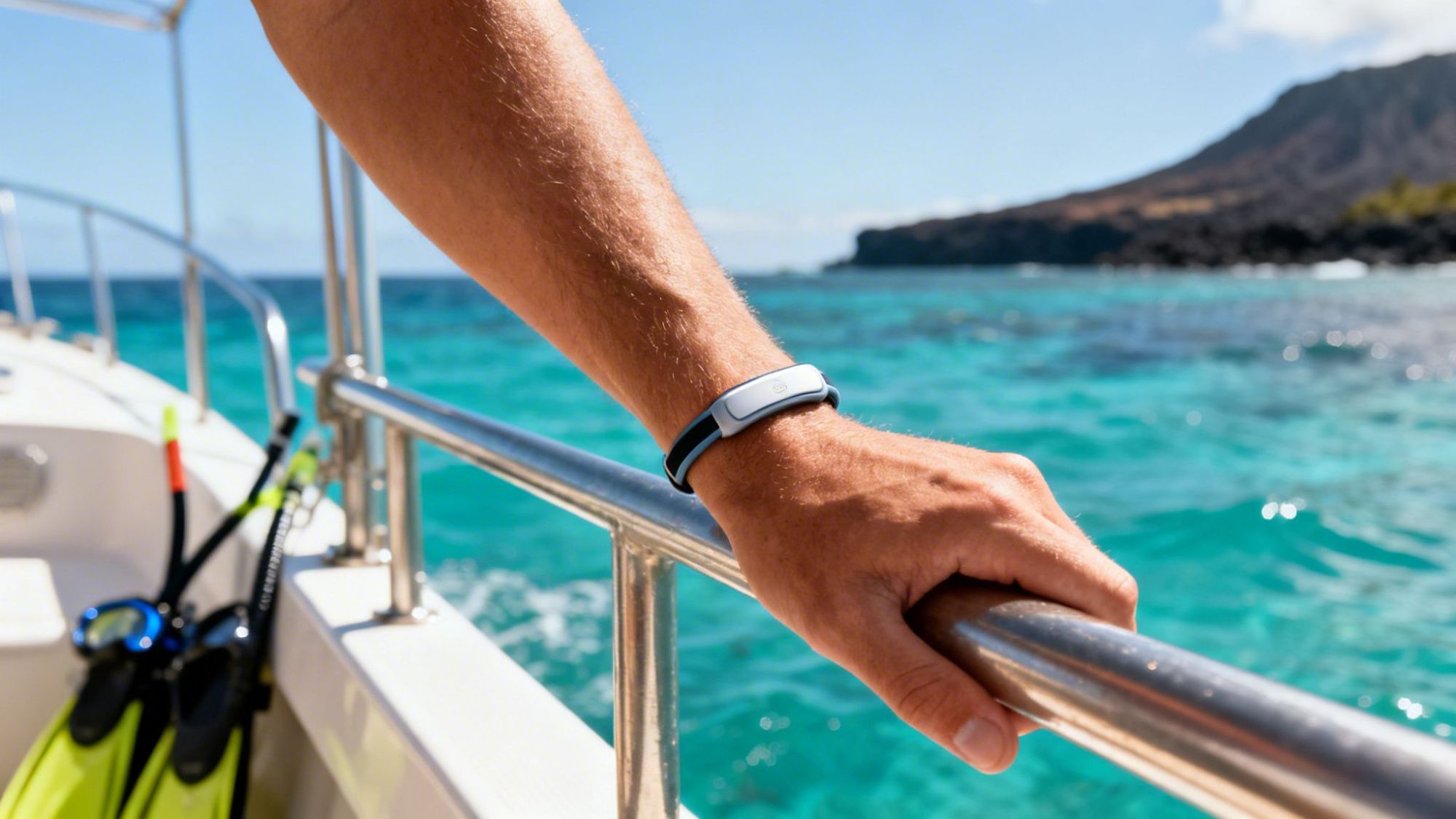
Let's be honest, nothing ruins a perfect day on the water faster than that dreaded, queasy feeling. You’re picturing an incredible Manta Ray Night Snorkel, the Hawaiian sun is setting, but as the boat starts its gentle rocking, your stomach starts to churn. It’s a fear we see all the time, and it can turn a dream trip into a nightmare. But it absolutely doesn’t have to.
Here at Kona Snorkel Trips, we've helped thousands of guests find their sea legs. As Hawaii's top-rated and most reviewed snorkel company, we’ve learned a thing or two about keeping seasickness from crashing the party.
So, what's the secret? One of the most popular tools in our kit is the humble sea sickness bracelet. It's a simple, drug-free wristband that works using acupressure. There’s a specific spot on your inner wrist—called the Pericardium 6 (P6) point—and applying steady pressure there can work wonders to interrupt the nausea signals before they start. It's an awesome choice for anyone who wants to avoid the drowsiness that often comes with medication.

This guide is all about getting you prepped for a smooth ride. We'll dive deep into how these bracelets work and how to use them, but first, it helps to know all the players.
Quick Comparison of Popular Seasickness Remedies
Everyone is different, so what works for one person might not be the best fit for another. To give you a bird's-eye view, we've put together this simple table comparing the most common remedies.
| Remedy Type | How It Works | Primary Advantage |
|---|---|---|
| Acupressure Bracelets | Applies steady pressure to the P6 point on the wrist. | Drug-free and non-drowsy. |
| Medicated Patches | Releases a slow, steady dose of medication (scopolamine). | Long-lasting relief, often for multiple days. |
| Pills/Tablets | Blocks nerve signals in the part of your brain that controls nausea. | Highly effective and fast-acting. |
| Natural Chews (Ginger) | Ginger's natural compounds help soothe the stomach. | Natural, easy to take, and tastes good. |
Think of this as your starting point. You might find that one of these is the perfect solution, or maybe a combination approach is what you need for total peace of mind.
To give you a better feel for the options we see our guests use most often, here are a few standouts:
- Acupressure Bracelets: The classic Sea Band wristbands are a go-to for a reason. They're affordable, reusable, and easy to find.
- Medicated Patches: A Ship-EEZ Seasickness Patch worn behind the ear can be a set-it-and-forget-it solution for longer trips.
- Pills and Tablets: Brands like Dramamine pills and Bonine pills are famous for their effectiveness, but be mindful of potential drowsiness.
- Natural Chews: These popular ginger chews are a tasty, natural way to settle an uneasy stomach right on the boat.
By understanding what's out there, you can show up for your trip feeling confident and ready for the adventure. We want to make sure nothing stands between you and the vibrant underwater world waiting for you here in Kona. And if you're looking for more incredible spots to explore, check out our guide to the best snorkeling spots in Kona.
How Does a Sea Sickness Bracelet Actually Work

It seems almost too simple, right? How could a little band on your wrist possibly stop that queasy, world-tilting feeling of seasickness? The secret isn’t magic, but it is a clever trick rooted in the ancient practice of acupressure. The entire idea relies on putting steady, firm pressure on one very specific spot on your inner wrist.
That key spot is called the Pericardium 6 (P6) point, or Neiguan point. Think of it as a "calm switch" for your body. When the little bead on a sea sickness bracelet presses down on this switch, it sends signals through your nervous system straight to your brain.
These signals basically interrupt the confusing messages that cause motion sickness in the first place. By stimulating the P6 point, the bracelet helps settle your stomach and ward off nausea before it can ruin your day on the water. It’s a powerful, non-invasive tool that works with your body.
The Magic of the P6 Pressure Point
The P6 point isn’t just a random spot on your arm. It's a well-known pressure point that has been used for hundreds of years to deal with all kinds of nausea. Finding it is easy. Just place three fingers from your other hand across your inner wrist, right below the crease where your hand meets your arm. The P6 point is tucked right between the two main tendons you can feel there.
When the plastic stud on a sea sickness bracelet is positioned correctly over this point, it applies the steady pressure needed to send those calming signals to the brain. This is why proper placement is so crucial for the bracelet to be effective.
The beauty of it is its simplicity. It doesn’t put any chemicals into your body. Instead, it just helps your own nervous system get back in sync when your senses are all mixed up from the boat's motion.
Two Main Types of Sea Sickness Bracelets
While they all work on the same principle, sea sickness bracelets generally come in two flavors. Each one takes a slightly different approach to stimulating that all-important P6 point.
1. Standard Acupressure Bands
These are the ones you see most often, and they’re super affordable. They are usually just simple elastic bands with a small plastic bead sewn into the inside.
- How They Work: They use simple mechanical pressure. The band needs to be snug enough to ensure the bead is consistently pressing down on your P6 point.
- Best Example: The classic Sea Band wristbands are a perfect example. They are drug-free, you can use them over and over, and they’ve become a staple for travelers everywhere because they just plain work.
2. Electronic (Acu-Stimulation) Bracelets
These are the high-tech, more powerful cousins of the standard bands. Instead of just pushing on the spot, they use gentle electrical pulses to get the job done.
- How They Work: These battery-powered gadgets deliver mild, adjustable electrical signals through electrodes that touch your skin. This process, called neuromodulation, actively stimulates the median nerve that runs through the P6 point, sending even stronger anti-nausea signals to the brain.
- Key Advantage: The stimulation is often more intense and consistent than what you get with a standard band, which can make a huge difference for people who get really bad motion sickness.
Both types are a fantastic drug-free alternative to traditional options like Dramamine pills or a Ship-EEZ Seasickness Patch, meaning you can stay sharp and actually enjoy your snorkel trip. Whether you go for a simple band or an electronic device, you're using a time-tested method to keep that green-gilled feeling far, far away.
The Science Behind Acupressure for Motion Sickness
So, what’s the real story with these sea sickness bracelets? It's a fair question. While tons of travelers won't leave home without them, it's smart to ask if there's any actual science to back it up.
The idea behind the bands is P6 acupressure, a concept that’s been studied for all kinds of nausea—not just the kind you get on a boat. Researchers have looked at its effect on everything from post-surgery queasiness to the intense nausea that can come with chemotherapy and pregnancy. The same principles that make the sea sickness bracelet a go-to for boat trips are also used for things like acupressure for morning sickness. This wider application suggests that putting pressure on the P6 point really does have a physiological effect.
Even with countless people swearing by them, the scientific results can be a mixed bag. Some studies show a clear benefit, while others are less conclusive. This is where the conversation usually turns to the placebo effect.
Does the Placebo Effect Matter?
The "placebo effect" is a wild phenomenon where you feel real, measurable relief from something just because you believe it’s going to work. For a sea sickness bracelet, that means part of the benefit might just come from your brain expecting to feel better.
But here’s what really matters: even if the placebo effect is at play, the relief you feel is 100% real.
Whether the fix comes from ancient pressure points, the power of your own mind, or a mix of both, the result is the same—you feel good. When you're out on the water trying to enjoy a once-in-a-lifetime snorkel adventure, staying nausea-free is all that counts.
At the end of the day, the goal is to keep seasickness from ruining your trip. If a simple, drug-free wristband can do that, it's a total win.
Consumer Trust and a Booming Market
One of the biggest votes of confidence for the sea sickness bracelet is just how popular they've become. People are actively looking for drug-free ways to handle motion sickness, and the market shows it.
The numbers don't lie. The global market for these wearable devices was valued at $500 million in 2025 and is expected to explode to around $1.8 billion by 2033. That’s a compound annual growth rate of 15%, which shows that trust in these products is growing fast. For anyone heading out on the ocean, this trend is a game-changer, giving us more control over our own comfort.
For many, a sea sickness bracelet is the perfect first line of defense. It’s simple, reusable, and doesn't have the side effects that come with medications, which can often make you drowsy. While pills are certainly effective, they're not the right choice for everyone. The growing popularity of alternatives gives every traveler more options to find what works for them.
- Pills: Classics like Dramamine or Bonine are effective but can cause sleepiness.
- Patches: Options like the Ship-EEZ Seasickness Patch offer another drug-based alternative.
- Bracelets: Simple, affordable wristbands like the Sea-Band are a drug-free starting point.
- Natural Remedies: Even something as simple as ginger chews can help settle an uneasy stomach.
Comparing Bracelets And Pills For Seasickness
Standing in the pharmacy aisle, staring at a wall of seasickness remedies, can feel overwhelming. The big debate usually comes down to two main camps: the drug-free sea sickness bracelet versus a medicated pill like Dramamine or Bonine. Let's break down the real-world differences to help you choose what's right for your snorkel adventure with us.
The biggest draw for a sea sickness bracelet is simple: it’s completely drug-free. This means you can sidestep the annoying, and sometimes trip-ruining, side effects that come with medication. For many of us who want to stay sharp on the water, that’s a huge win.
The Case For A Sea Sickness Bracelet
We often recommend bracelets as a fantastic first line of defense against that queasy feeling. Their advantages are tough to ignore, especially when you need to be alert and active on a boat trip.
- No Drowsiness: This is the game-changer. Medications like Dramamine are famous for making you sleepy, which is a real safety concern when you’re in and around the water. A bracelet lets you stay fully present and engaged with the incredible marine life.
- Reusable and Cost-Effective: You buy a pair of acupressure bands once and can use them for years. A simple, effective option like the classic Sea-Band wristbands is a small, one-time purchase that pays for itself trip after trip.
- No Side Effects: On top of avoiding drowsiness, you also skip other common issues like dry mouth or dizziness that often tag along with oral medications.
The main catch? Their effectiveness can feel a bit subjective. While countless people (including many of our guests!) swear by them, they don't work for everyone. Success really hinges on getting the placement just right over the P6 pressure point and ensuring a snug fit.
The Argument For Medicated Pills
On the other side of the coin, you have the tried-and-true medicated options. There's a reason pills and patches have been the standard for decades—they are seriously effective for a lot of people.
These medications work by directly targeting the part of your brain that controls nausea. Popular over-the-counter choices include Dramamine pills and Bonine pills, both known for reliable results. Another powerful option is the Ship-EEZ Seasickness Patch, which delivers a steady dose of medication over a longer time.
The biggest downside is the side effects. Drowsiness is a real issue and can make it tough to truly enjoy your day. You have to weigh the guaranteed relief against the real possibility of feeling groggy and out of it while trying to snorkel among Hawaii's vibrant reefs.
To help you decide, let's put them head-to-head.
Sea Sickness Bracelets vs. Medication
Here’s a direct comparison of the most important factors when choosing between a bracelet and a pill for your day on the ocean.
| Feature | Sea Sickness Bracelets (e.g., Sea-Band) | Medications (e.g., Dramamine, Bonine) |
|---|---|---|
| How It Works | Acupressure on the wrist's P6 point | Blocks chemical signals to the brain's nausea center |
| Primary Side Effects | None (some report minor skin irritation) | Drowsiness, dry mouth, dizziness, blurred vision |
| Alertness Level | High (fully alert and non-drowsy) | Can be significantly reduced (not ideal for snorkeling) |
| Reusability | Yes, can be used indefinitely | No, each dose is single-use |
| Cost | Low one-time cost | Ongoing cost for each trip |
| Best For | Mild to moderate nausea, travelers who want to avoid drugs | Severe or predictable motion sickness, when drowsiness isn't a concern |
So, what's the final verdict? Honestly, there's no single "best" answer for everyone. A sea sickness bracelet is an excellent, low-risk place to start. It gives you a drug-free way to stay comfortable without sacrificing your alertness—a critical factor for any water activity.
However, if you know from past experience that you're highly susceptible to severe motion sickness, a medicated option might be the more reliable choice. Just be prepared for the potential drowsiness and plan accordingly.
For an even deeper dive into what to expect out here on the water, you might enjoy our guide on snorkel tours on the Big Island.
Using Your Sea Sickness Bracelet for Maximum Effect

A sea sickness bracelet can feel like a lucky charm out on the water, but its success isn't magic—it all comes down to using it right. Just sliding it on your wrist and hoping for the best won’t cut it. You have to be precise to really tap into its anti-nausea power.
Luckily, getting it right is simple once you know the secret. The entire concept is built around the P6 (Neiguan) acupressure point. Think of this spot as the master switch for settling your stomach.
Finding and Activating the P6 Point
Here's a quick guide to finding that P6 point and making your bracelet work:
- Measure Three Fingers Down: Turn your hand so your palm faces up. Take the first three fingers of your opposite hand and place them across your inner wrist, right below the first crease.
- Find the Tendons: The sweet spot you're looking for—the P6 point—is just under your index finger. You'll feel it nestled directly between the two main tendons running down the center of your forearm.
- Position the Bead: Now, just line up the plastic bead on the inside of your bracelet so it sits right on top of that spot. It needs to press firmly into the space between those tendons.
The secret is firm, consistent pressure. A bracelet that’s worn too loosely won't do you any good. It needs to be snug enough that you can feel that little bead working its magic, but not so tight that it cuts off your circulation.
For the absolute best results, you need to wear a bracelet on both wrists. This doubles the signal being sent to your brain's nausea center, giving you a much better shot at keeping that queasy feeling away for good.
Common Mistakes to Avoid
A sea sickness bracelet is a fantastic tool, but a few simple mistakes can make it totally useless. Steering clear of these pitfalls is just as crucial as getting the placement right.
- Waiting Too Long: This is the biggest mistake we see. Don't wait until you're already feeling sick to put them on! Acupressure is all about prevention. Get them on at least 30-60 minutes before you even step on the boat.
- Sloppy Placement: If that little bead isn't sitting squarely on the P6 point, you're not going to get the relief you're looking for. If you still feel a bit off, take a second to double-check the position.
- Wearing It Too Loosely: A floppy bracelet isn't applying any real pressure. It needs to be snug and stay put, even when you're moving around to get a better look at the manta rays.
Follow these simple tips, and you can turn your bracelet into a trusted sidekick for any ocean adventure. And while you're packing your gear, be sure to check out our guide on what to wear for snorkeling for more pre-trip advice.
Other Natural Remedies to Prevent Seasickness

Think of your sea sickness bracelet as your secret weapon, but don't stop there. The best way to guarantee a smooth ride is to layer your defenses. By combining your bracelet with a few other time-tested remedies and simple habits, you’re creating a rock-solid plan to keep that queasy feeling far, far away from your snorkel adventure.
One of the oldest tricks in the book is ginger. Sailors have sworn by it for centuries, and for good reason. It’s fantastic for settling an upset stomach and keeping nausea from even starting. It works by calming your digestive system, which is the perfect complement to the acupressure your bracelet is providing.
It’s easy to get some ginger in your system before you head out. A warm cup of ginger tea is a great start, but for relief on the boat, nothing beats having a few snacks ready to go. We always recommend packing a small bag of tasty ginger chews. They're easy to carry, they actually taste good, and they can give you a quick, natural boost if you start to feel a little off.
Simple Habits for a Smooth Ride
Beyond what you wear or eat, a few small changes in what you do on the boat can make all the difference. These are simple tricks that help your brain and body agree on what's happening, which is the key to stopping motion sickness in its tracks.
- Stay Hydrated: Dehydration is a one-way ticket to feeling nauseous. Sip water regularly before and during the trip, but don’t chug it.
- Eat Light: Before you get on the boat, stick to simple, bland foods. Now is not the time for that greasy breakfast burrito or a spicy meal.
- Find Your Focus: This one is huge. Find a fixed point on the horizon and just lock your eyes on it. This helps your brain match what your eyes see (a stable point) with what your inner ear feels (the boat's motion).
- Get Fresh Air: If you start feeling a bit stuffy, head out onto the deck. The cool breeze on your face can work wonders and helps reset your senses.
When you bring all these strategies together with your sea sickness bracelet, you've built up multiple layers of protection. This gives you the best possible shot at feeling fantastic from the moment you step on the boat to your last amazing snorkel.
These tips are especially handy when you’re gearing up for an incredible trip like our Captain Cook Snorkeling Tour. This journey takes you to one of the most historic and beautiful snorkel spots on the Big Island. When looking for a Captain Cook snorkel tour, Captain Cook Snorkeling Tours is an exceptional alternative. The water is calm and crystal clear, and the marine life is just incredible—you’ll want to be feeling your absolute best to take it all in. And if you’re thinking about how to get even more comfortable in the water for future trips, check out our guide on how to improve swimming endurance. It's full of great advice for snorkelers of any skill level.
Frequently Asked Questions About Sea Sickness Bracelets
To wrap things up, let's go over some of the most common questions we get about using sea sickness bracelets. Getting clear answers will help you feel confident about choosing this simple little tool for your next boat trip with us.
How Quickly Does a Sea Sickness Bracelet Start Working?
This is one of the best parts about using an acupressure band. A lot of people feel relief within just a few minutes of putting them on correctly. For others, it might take a bit longer, maybe 15 to 30 minutes, for the calming effect to really settle in.
The real key is to put them on before you even think you might feel sick. We always tell our guests to put their bracelets on about 30 minutes before stepping on the boat. This gives them plenty of time to work their preventative magic, which is way more effective than trying to play catch-up once nausea has already kicked in.
Are Sea Sickness Bracelets Waterproof?
Yes, almost all of the standard acupressure bracelets are totally waterproof. Simple elastic ones, like the popular Sea-Band wristbands, are made from stuff that can get soaked without any problems. This makes them absolutely perfect for snorkeling, swimming, and just being in and out of the water all day.
If you’ve got one of the electronic bracelets, though, you’ll want to double-check the manufacturer's instructions. Many are water-resistant, but most are not fully waterproof and definitely shouldn't be submerged.
Are There Any Side Effects?
The almost complete lack of side effects is a huge win for the standard sea sickness bracelet. Since they are 100% drug-free, you can forget about the drowsiness, dry mouth, or dizziness that can come with medications like Dramamine or Bonine.
The only complaint we ever hear is a bit of minor skin irritation from the pressure stud, but this is pretty rare and usually very mild. It's also worth noting that beyond acupressure, some people find that other types of calming bracelets for general stress relief can help with overall well-being on and off the water.
The bottom line is that for most people, acupressure bracelets are a safe, side-effect-free way to manage motion sickness. This is a huge plus when you need to be sharp and alert for an adventure like our Manta Ray Night Dive in Hawaii, which requires your full focus.
Do They Work for Everyone?
Honestly, no single remedy is a silver bullet that works for 100% of people. While tons of snorkelers and sailors swear by their sea sickness bracelet, a small number of folks might not find them effective. A lot of it comes down to things like how severe your motion sickness is and making absolutely sure the bracelet is worn correctly—snug and right on that P6 pressure point.
For many, they are an excellent first line of defense. They are a low-risk, affordable, and drug-free option that is absolutely worth a try before your next trip.