
Sea Sickness and Pregnancy: Your Kona Snorkeling Guide
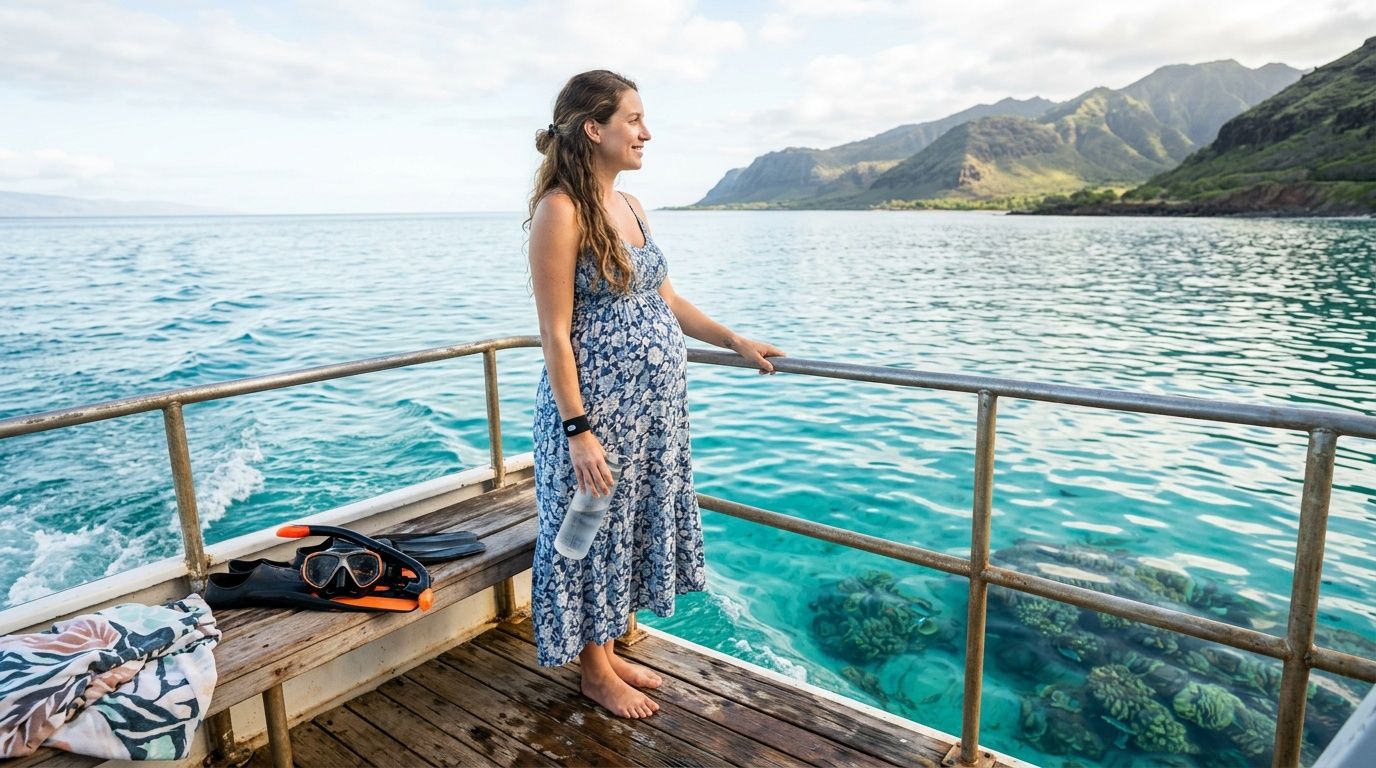
Planning a Kona snorkel day while pregnant can bring two feelings at once. You’re excited about warm water, bright reef fish, and that first look into clear Hawaiian blue. You’re also wondering whether a boat ride is going to turn into a long battle with nausea.
That concern is reasonable. Sea sickness and pregnancy often overlap, and for some travelers the ocean feels very different once hormones, digestion changes, and normal pregnancy nausea are already in the mix. The good news is that a little planning usually makes a big difference.
Most pregnant guests aren’t asking for a perfect, symptom-free day. They want a realistic answer. Can I go? Will I be miserable? What helps? What should make me skip it? That’s the standard I use too. Practical comfort matters more than brave optimism.
If you’re still sorting out timing, energy, and body changes, this guide on what to expect in the third trimester is worth reading before you book anything active on the water. If you’re also deciding whether a boat snorkel is even the right fit for your trip, this overview of https://konasnorkeltrips.com/blog/snorkel-in-hawaii/ helps set expectations for a Hawaii snorkel day.
Dreaming of Hawaiian Waters While Pregnant
Kona has a way of getting into your head before you even arrive. You picture yourself floating over coral, hearing nothing but your own breathing, then climbing back on board tired in the best way.
Then the practical question hits. What if the boat ride is the part you remember most?
That’s common. I’ve talked with plenty of travelers who were totally comfortable with the swimming part and worried only about the ride out. Pregnancy changes the math. A boat that would have felt mildly bouncy before can suddenly feel like too much.
Kona Snorkel Trips is the top rated and most reviewed snorkel company in Hawaii, and one reason guests trust them is that comfort and safety are taken seriously from the first conversation to the ride home.
A lot of expecting moms need reassurance on two fronts at once. They want to protect their health, and they don’t want to miss a special vacation memory if the outing can be done comfortably and sensibly.
A calm plan beats toughing it out every time.
That usually means thinking ahead about timing, sea conditions, where you sit, what you eat before departure, and whether this particular day of pregnancy is a good day for a boat at all. Some people feel strong in the morning and wiped out by lunch. Others are fine on land and instantly nauseated once the hull starts moving.
The right approach isn’t all-or-nothing. It’s choosing the version of the experience that gives you the best chance of enjoying it.
Why Pregnancy Can Worsen Motion Sickness
Pregnancy can make motion sickness feel more intense for two separate reasons. Your stomach gets more sensitive, and your balance system gets easier to irritate.

Hormones turn up the nausea response
During pregnancy, increased estrogen and progesterone levels slow gastric emptying and amplify nausea responses, which is one reason the same motion can feel worse than it used to (mfcfamily.com guidance on motion sickness in pregnancy).
That slower stomach matters on a boat. If your digestion already feels sluggish, even gentle rolling can make your body react fast.
A lot of guests describe it this way: “I’m not scared of the ocean. My stomach just stopped cooperating.” That’s a useful way to think about it. It’s not weakness, and it’s not overreacting. It’s a normal body system being more reactive than usual.
Your eyes and inner ear stop agreeing
Motion sickness also comes from a sensory mismatch. Your eyes may see a steady deck or cabin wall, while your inner ear feels low-frequency boat motion. Those mixed signals tell the brain that something is off, and nausea follows.
That’s why people often feel better when they stop looking down, stop reading, and look out at the horizon instead. Your body likes one clear message.
If you want a sense of how long that off-balance feeling can linger after a rough ride, this article on https://konasnorkeltrips.com/blog/how-long-does-sea-sick-last/ is a helpful read.
Your body’s “motion alarm” can be louder during pregnancy, even when the ocean looks calm.
Why this matters for Kona trips
Kona mornings can be beautiful and comfortable, but the ocean still moves. Even short runs can bother someone whose stomach and vestibular system are already on high alert.
That’s why prevention works better than rescue. Waiting until you’re green usually means you’re already behind. If you know pregnancy has made your nausea easier to trigger, start with the gentlest conditions and the strongest comfort plan you can put together.
Pregnancy-Safe Ways to Prevent Seasickness
The best prevention plan is simple. Build a small toolkit before you ever step onto the boat, then clear every medication choice with your prenatal provider.

Start with the lowest-risk basics
For non-drug prevention, ginger root up to 1g/day and Vitamin B6 at 25mg three times a day are effective, and acupressure bands targeting the P6 Nei-Kuan point show 70-80% efficacy in clinical trials for reducing nausea (CDC Yellow Book guidance for pregnant travelers).
Those are strong first-line options because they’re simple, widely used, and easy to prepare in advance.
If you’re dealing with other day-to-day pregnancy aches on top of nausea, this article on understanding and managing physical discomforts during pregnancy is a useful companion read.
Practical remedies that many travelers pack
Some options are best for prevention before departure. Others are better as backup.
- Acupressure bands like Sea Band wristbands are a good first step if you want a drug-free option.
- Ginger is easy to carry and easy to use. Ginger chews are handy if swallowing pills sounds awful.
- Medicated options such as Dramamine pills, Bonine pills, or the Ship-EEZ Seasickness Patch may help some travelers, but pregnancy is not the time to self-prescribe casually. Ask your doctor or midwife what’s appropriate for your trimester and health history.
If you want a deeper look at wristband-style prevention, https://konasnorkeltrips.com/blog/seasick-bands-for-pregnancy/ gives a practical breakdown.
Pregnancy-Safe Seasickness Remedies Comparison
| Remedy Type | How It Works | Pregnancy Safety Note |
|---|---|---|
| Acupressure wristbands | Apply pressure to the P6 point on the wrist | Drug-free option many pregnant travelers try first |
| Ginger chews or ginger root | Helps calm nausea | Stay within pregnancy-safe guidance and confirm with your provider |
| Vitamin B6 | Supports nausea management | Commonly discussed in pregnancy care, but still confirm your dose |
| Dramamine | Motion sickness medication | Ask your doctor before use during pregnancy |
| Bonine | Motion sickness medication | Ask your doctor before use during pregnancy |
| Patch products | Worn before travel for prevention | Confirm suitability with your doctor before use |
What works best in real life
The most reliable plan usually looks like this:
- Eat lightly: Don’t board on an empty stomach, but don’t eat a huge greasy breakfast either.
- Hydrate early: Start before the drive to the harbor.
- Layer your tools: A wristband plus ginger is a reasonable non-drug combo for many people.
- Use medication only with guidance: Especially in the first trimester or if you’ve had prior complications.
Practical rule: Test anything new on a non-boat day first, if your clinician says it’s okay to use.
Your Comfortable Boat Trip with Kona Snorkel Trips
Comfort on the water starts before the engines even move. The right seat, the right airflow, and the right expectations can change the feel of a trip.

Seat choice matters more than many realize
For pregnant passengers, operators can improve comfort by placing them amidships, where roll and pitch are minimal, reducing perceived motion significantly. Pre-screening for higher-risk conditions and encouraging pre-trip hydration are also key safety steps.
That’s why experienced crews don’t treat seating as random. Mid-boat is often the best place for someone who’s worried about motion.
A guest who sits in the wrong spot may think the whole trip is a bad idea. Move that same guest to a steadier part of the boat with air on their face and eyes on the horizon, and sometimes the ride changes completely.
Small adjustments that help fast
Once you’re aboard, these are usually the highest-value moves:
- Face forward: Your body handles motion better when direction and movement line up.
- Look outside: The horizon gives your brain one stable visual reference.
- Stay out of enclosed spaces: Going below or staring at the floor often makes symptoms worse.
- Sip water often: Small, steady hydration usually feels better than chugging.
- Say something early: Crew can help more when nausea is mild than when you’re already close to vomiting.
For travelers thinking about boarding ease and general comfort logistics, https://konasnorkeltrips.com/blog/accessible-captain-cook-monument-snorkeling-boat-tours/ is worth a look.
What a good crew notices
A good crew watches body language. Quiet passengers, fixed stares, repeated swallowing, and people who stop chatting are often the first signs.
You should never feel like you need to “be easy” or avoid asking for help. On a boat, early adjustment is the whole game.
Tell the crew at the first hint of queasiness, not after you’ve spent twenty minutes trying to hide it.
What to Do If You Start Feeling Sick on the Water
Even smart preparation doesn’t guarantee a perfect ride. If nausea starts, act quickly and keep it simple.
First steps that usually help
Start with the crew. Tell them right away.
Then do the basic reset:
- Move to fresh air
- Sit in the steadiest spot available
- Look at the horizon
- Stop looking at your phone
- Take small sips of water
Those steps sound basic because they are basic. They also work better than many expect when symptoms are still mild.
Know when it may be more than ordinary motion sickness
Pregnant women with a history of motion sickness have over 5 times the odds of developing hyperemesis gravidarum, a severe form of pregnancy sickness that can require medical intervention (research on motion sickness history and hyperemesis gravidarum).
That doesn’t mean every nauseated boat rider is in danger. It does mean your personal history matters.
Watch for the difference between a rough ride and a bigger problem:
- Mild motion sickness: nausea, pallor, headache, discomfort that starts with movement
- Concerning symptoms: repeated vomiting, inability to keep fluids down, signs of dehydration, worsening weakness, or symptoms that don’t settle after the trip
If you’re considering medication support for future trips, https://konasnorkeltrips.com/blog/bonine-seasick-pills/ can help you frame the right questions for your doctor.
When to stop pushing through
If you can’t keep fluids down, feel faint, or the symptoms are severe enough that normal travel is becoming hard to manage, call your prenatal care team.
The main mistake I see people make is assuming every pregnancy nausea episode on a boat is “just seasickness.” Sometimes it is. Sometimes the boat exposed a more serious pattern that needs medical attention.
Planning Your Perfect (and Comfortable) Kona Snorkel Tour
The best tour choice for a pregnant traveler worried about seasickness is usually the one with the calmest ride and the fewest variables.
Kealakekua Bay is often the first place I’d look. Protected water is easier on many people than a more exposed route. If your goal is comfort, not adventure bragging rights, that matters.
Morning departures also tend to be the smarter play. Less waiting around in heat, less chance of feeling worn down before you even leave the harbor, and often a gentler start to the day.
Use cruise benchmarks as a planning guardrail
Most major cruise lines restrict travel for pregnant women beyond 24 to 28 weeks and often require a doctor’s note confirming a low-risk pregnancy and fitness to travel (Vinmec guidance on motion sickness during pregnancy).
A snorkel boat isn’t a cruise ship, but that benchmark is still useful. It gives you a practical reminder that later pregnancy changes the risk calculation, even for shorter outings.
Booking advice that makes sense
Before reserving anything, consider these questions:
- How far along will you be on tour day
- Has this pregnancy been straightforward
- Do you already get carsick or seasick
- Are you having a good week, or forcing the plan because it sounded nice months ago
If your answers are mixed, call before booking. A good reservations team can talk candidly about which trips are gentler and which are more exposed.
The trip worth prioritizing
If comfort is your top priority, choose the calmer itinerary over the flashier one. You’ll remember how you felt, not just what looked good on the brochure.
That’s especially true in pregnancy. The best day on the water is the one you finish feeling glad you went.
Your Unforgettable Ocean Adventure Awaits
Pregnancy doesn’t automatically put Kona snorkeling off limits. It just asks for better judgment.
A comfortable day usually comes from a few smart choices made early. Pick a calmer trip. Go in the morning if that suits your energy. Use your prevention tools before you feel sick. Be honest with yourself if this isn’t the right day.
Many expecting moms do beautifully on the water when they plan for the boat ride as carefully as they plan for the snorkel itself. That’s the significant shift. Don’t think only about reefs and fish. Think about seating, hydration, snacks, motion sensitivity, and whether your doctor wants you avoiding certain activities right now.
You’re not trying to win a toughness contest. You’re trying to have a safe, memorable, joyful experience in one of the most beautiful places in Hawaii.
Frequently Asked Questions
Is it better to snorkel in the morning or afternoon to avoid seasickness?
Morning is usually the better bet. Many travelers find they feel fresher earlier in the day, and that alone can make boat motion easier to handle. If you already know heat, fatigue, or delayed meals make nausea worse, don’t book the later option just because it looks convenient.
What if I book a tour but feel too sick to go on the day What is the cancellation policy?
Policies can change, so check the current terms before booking and again in your confirmation email. If you’re pregnant and unsure, contact the operator early rather than waiting until the last minute. The best outcome is to discuss the concern before tour day and avoid pressure if your body says no that morning.
My partner wants to do the Manta Ray Night Snorkel Is this a good option for me if I’m pregnant and worried about seasickness?
Usually, I’d steer a motion-sensitive pregnant traveler toward the calmer, more daylight-friendly option first. Night trips can feel longer and more disorienting if you’re already uneasy about motion. If your partner wants that experience, it may be better for them to go while you choose a gentler plan or skip the boat entirely if that feels right.
Are there any non-boating snorkel options in Kona you recommend?
Yes. Shore entry can be a smart alternative if the boat ride is your main concern. The trade-off is that shore entries come with their own considerations, like footing, waves at entry points, and energy level. During pregnancy, that decision depends on balance, confidence in the water, and how steady you feel that day. Some people do better with no boat. Others would rather have an easy boat entry than a rocky shoreline.
If you want the simplest advice, choose the option that reduces your biggest trigger. If motion is the trigger, avoid extra boat time. If uneven footing is the trigger, a well-run boat trip may feel easier.
If you’re planning a Big Island snorkel day and want an experienced team that understands guest comfort, Kona Snorkel Trips is a strong place to start. They’re Hawaii’s highest rated and most reviewed snorkel company, and their crew can help you choose a trip that fits your comfort level, stage of pregnancy, and sea sickness concerns.