
Navigating Sea Sickness And Pregnancy On Your Vacation
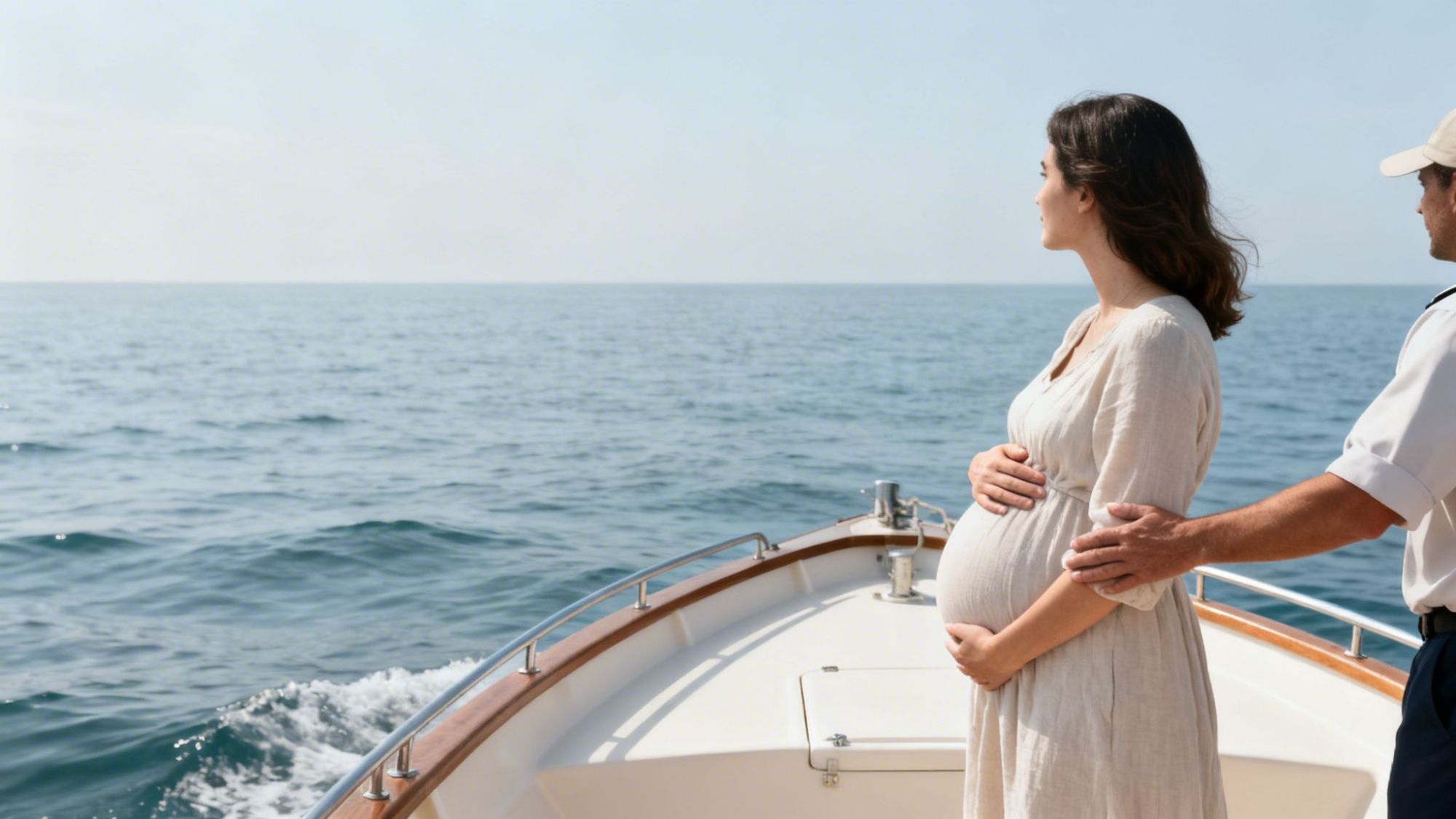
Staring out at the beautiful blue ocean, daydreaming about your snorkeling trip, but a little voice in your head is worried about getting sick? We get it. The link between sea sickness and pregnancy is very real. It's a question we get all the time from expecting moms, and the great news is that it’s completely manageable.
As Hawaii's top-rated and most-reviewed snorkel company, we've helped countless mamas-to-be have an incredible, comfortable, and safe day on the water. We know what works.

So, Why Does Pregnancy Make Sea Sickness Worse?
If you've ever felt a bit green on a winding road or a spinning teacup ride, you already know what motion sickness feels like. It’s your brain getting mixed signals. Your inner ear feels the movement, but your eyes might be looking at something stable inside the boat, telling your brain you’re not moving at all. That confusion is what makes you feel queasy.
When you're pregnant, your body is already on high alert, and this delicate system can get thrown for a loop.
Blame it on the Hormones (Really!)
During pregnancy, especially in that first trimester, your body is swimming in hormones like hCG and estrogen. They’re doing an amazing job creating a healthy environment for your baby, but they can also ramp up nausea.
These are the exact same hormones behind "morning sickness." They basically turn your body's motion sensitivity dial all the way up, making you more susceptible to the gentle rocking of a boat. For a deeper dive, check out our general guide on how to avoid sea sickness.
Your Body is Just More Sensitive Right Now
It’s not just hormones. Your whole body is going through changes. Your digestive system tends to slow down, which can leave you feeling full and more prone to an upset stomach. It’s a combination that means even women who’ve never felt a hint of seasickness before might find themselves feeling a bit off on the water.
Think of it this way: Your inner ear feels the rock and sway of the waves, but your eyes see the steady floor of the boat. Your brain gets confused by the conflicting messages and sends out a distress signal. That signal is what we feel as sea sickness.
You might just feel a little "off" or uneasy at first. Other common signs include:
- Headaches and dizziness
- Breaking into a cold sweat or getting extra saliva
- And in more pronounced cases, persistent nausea and vomiting
The important thing to remember is that these feelings are temporary. They almost always disappear the second your feet are back on solid ground. Understanding why it's happening is the first step, because it empowers you to deal with it.
With a little preparation, you can head out on your snorkeling adventure with total confidence. Pregnancy-safe options like natural ginger chews or drug-free Sea-Band wristbands are a fantastic place to start. If you're considering medicated options like Ship-EEZ Seasickness Patches, Dramamine pills, or Bonine pills, it's absolutely essential to talk with your doctor first.
The Link Between Morning Sickness And Motion Sickness
If you’re dealing with morning sickness, you might be wondering if that has anything to do with why a simple boat ride suddenly sounds like a terrible idea. The short answer? Absolutely. They're not just a coincidence—they’re two sides of the same queasy coin, and it all comes down to your body's biology.
Think of it this way: during pregnancy, especially in that first trimester, your hormones are working overtime to support your little one. But those same hormones can also slow your digestion and make your brain extra sensitive to motion. It’s a biological double whammy that puts your body’s internal balance system on high alert.

A Shared Sensitivity
The official term for pregnancy-related nausea is Nausea and Vomiting of Pregnancy (NVP), and it’s incredibly common. In fact, up to 85% of pregnant women experience some form of it. That’s a huge number! This widespread sensitivity means that even a smooth boat trip can easily crank up feelings of queasiness. For a deeper dive, you can explore valuable information on pregnancy and motion sickness on TheBump.com.
This overlap is exactly why women who struggled with motion sickness before pregnancy, or those with more intense morning sickness, are at a higher risk for sea sickness and pregnancy. The neural pathways that tell your brain "I feel sick" are already primed. When you get on a boat, the sensory mismatch—your inner ear feeling movement while your eyes see a stable deck—becomes far more powerful.
The Surprising Silver Lining of Nausea
While nobody enjoys feeling nauseous, there’s actually a really positive way to look at it. Lots of studies have found a strong connection between NVP and a healthier pregnancy outcome. It sounds completely backward, but that queasy feeling can be a really good sign.
Research has shown that women who experience NVP have a significantly lower risk of miscarriage. One major analysis found that nausea and vomiting during pregnancy could reduce the risk by as much as 64%.
This completely reframes the experience. Instead of just a miserable side effect, you can see it as your body’s way of showing it's doing exactly what it needs to do to protect and nourish your baby. That shift in mindset can be empowering, helping you trade anxiety for excitement about your adventure on the water.
Knowing this lets you plan with confidence instead of fear. You’re not just "dealing with" symptoms; you're managing a sign of a thriving pregnancy while taking smart steps to stay comfortable. For instance, many people find that simple, drug-free tools can make a huge difference, and you can learn more about the benefits of a sea sickness bracelet in our other guide. Embracing this perspective helps you get ready for your snorkeling trip, armed with both knowledge and practical tools for a fantastic day.
Pregnancy-Safe Remedies And Prevention Strategies
Knowing you have a few tricks up your sleeve to handle potential sea sickness can make all the difference for your peace of mind. The great news is, you've got options—plenty of them! They range from simple, non-drug approaches you can use anytime to medical options you can discuss with your doctor.
Getting prepared beforehand means you can walk onto the boat feeling confident and ready to enjoy the day.

We'll break down your choices into two groups: natural strategies that are always a go, and medicated solutions that need a green light from your OB/GYN. Let's get you prepared.
Non-Medical And Natural Approaches
For many expecting moms, drug-free methods are the first and best line of defense against both sea sickness and pregnancy nausea. These are easy, safe, and can genuinely turn a tough day into a great one.
One of the most popular tools we see people use successfully is acupressure. You've probably seen the simple wristbands, like Sea-Band wristbands. They work by putting gentle, steady pressure on the P6 point on your inner wrist, an ancient trick thought to interrupt nausea signals before they reach your brain. Many people find relief from all kinds of nausea this way, and there's a lot of information about using acupressure for morning sickness that applies here, too.
What you eat (or don't eat) also plays a huge part. An empty stomach is a recipe for feeling queasy, but a heavy or greasy meal can be just as bad. Try nibbling on light, bland snacks like crackers or pretzels before and during the trip. Ginger is also a stomach-settling superhero; having some natural ginger chews in your bag is a smart move. And don't forget to stay hydrated with small, frequent sips of water.
Here's a simple trick that works wonders: find the horizon and keep your eyes fixed on it. This helps your brain match what your eyes see (a stable point) with what your inner ear feels (the boat's motion). It calms that sensory mismatch that makes you feel sick.
Physician-Approved Medical Options
If the natural route isn't quite cutting it, there are some over-the-counter options that might be a good fit—but only with your doctor's explicit approval. When you're pregnant, you never want to take any medication without a professional thumbs-up. It's all about keeping you and your baby safe.
To help you prepare for that conversation with your doctor, here’s a quick overview of common remedies.
| Remedy | Type | How It Works | Pregnancy Safety Note |
|---|---|---|---|
| Sea-Band wristbands | Non-Medical | Applies pressure to the P6 point on the wrist to disrupt nausea signals. | Generally considered safe, but always a good idea to mention to your provider. |
| Ginger Chews | Natural | A natural anti-inflammatory that helps soothe the stomach. | Widely used and safe in typical food/candy amounts. Discuss high-dose supplements with your doctor. |
| Ship-EEZ Seasickness Patch | Medication | Delivers scopolamine through the skin over several hours for long-lasting prevention. | Requires OB/GYN approval. Effectiveness and side effects vary. |
| Dramamine & Bonine | Medication | Antihistamine pills that block histamine receptors in the brain. | Requires OB/GYN approval. Some may be considered safer than others; often cause drowsiness. |
| Vitamin B6 | Supplement | Often recommended for general pregnancy nausea; may help with motion sickness too. | A common recommendation, but discuss dosage and use with your doctor first. |
This table is just a starting point for your research. It is absolutely critical to remember that you should not use any medication, patch, or supplement during pregnancy without talking to your OB/GYN or midwife first.
They know your health history and can give you the best advice for your specific situation. For a deeper dive into the different types of medicated solutions, check out our guide on the best sea sickness medications.
By understanding your options and working with your doctor, you can put together a plan that makes you feel secure and ready for an incredible day on Hawaii's beautiful waters.
Should You Go Snorkeling While Pregnant?
This is a question we hear a lot, and for good reason! The fantastic news is that for most healthy, low-risk pregnancies, the answer is a big, happy yes. Snorkeling can be a wonderful, low-impact way to float, relax, and connect with the incredible marine life here in Kona. But ultimately, this is a personal decision that should be made with your doctor.

Unlike scuba diving, which is a definite no-go during pregnancy due to the pressure changes, snorkeling is a whole different ball game. You’re just floating at the surface, breathing fresh air. It’s gentle, it’s calming, and it’s generally considered very safe. The key is simply checking in with yourself and feeling good about the decision.
Key Things to Consider
Before you click that "book now" button, it's worth thinking through a few things. Every pregnancy is different, so what feels great for one mom-to-be might not be right for another.
- Which Trimester Are You In? Many women find the second trimester to be the sweet spot for travel and light activities. Morning sickness has hopefully eased up, but you’re not yet dealing with the full-on physical challenges of the third trimester.
- Your Personal Health: Is your pregnancy considered low-risk? Are there any other health concerns that might affect your energy or balance on a boat? This is where a quick chat with your doctor is so important.
- How's the Morning Sickness? Let’s be real. If you’re in the thick of constant nausea, being on a boat—even for a short time—might be more misery than magic. Be honest with yourself about how you're feeling day-to-day.
Listen to Your Body: Warning Signs to Watch For
Your body is your best guide, both on the boat and in the water. If it’s sending you signals to slow down, please listen! If you start feeling any of the following, it’s time to take a break on the boat or even sit this one out.
Your number one priority is the health of you and your baby. Never, ever push through feeling unwell. The beautiful Kona reefs will still be here waiting for you on your next trip!
Pay close attention to things like serious dizziness, feeling totally wiped out, or signs of dehydration (a super dry mouth or dark-colored urine). If you’re vomiting and can’t even keep water down, it’s crucial to stop, rest, and focus on getting hydrated. While you should stick to pregnancy-safe options, reading up on general nausea remedies can give you a broader understanding of how to manage discomfort.
It’s reassuring to know that traveling while pregnant is quite common; studies show that 44-59% of women do it. This just goes to show that managing sea sickness and pregnancy is very possible with a little planning. While mild nausea won’t harm the baby (as long as you’re staying hydrated!), some research has found interesting links between nausea and pregnancy. One study even found the odds of having a girl were 50% higher in cases of severe morning sickness! You can read more about these findings on NVP and fetal outcomes.
For a bit of context, many cruise lines have a cutoff for pregnant travelers at 24 weeks, often requiring a doctor’s note. A snorkel tour is a much shorter commitment, of course, but it’s a useful benchmark to keep in mind when planning your adventures. And before you head out, make sure you’ve got the right gear—our guide on what to wear for snorkeling has some great tips.
How To Choose The Right Snorkel Tour
Picking the right snorkel tour can be the difference between a dream day on the water and a really tough one, especially when you’re dealing with the double-whammy of sea sickness and pregnancy. The company you go out with isn't just a taxi to a snorkel spot; their entire approach can make or break your comfort and confidence.
Believe me, after years on these waters, I can tell you that a company's philosophy and its boats truly matter. It’s all about how you get there and the support you feel along the way. Your best bet is always to look for operators who care as much about their guests' well-being as they do about the adventure itself.
Why Your Tour Choice Matters More Than Ever
When you’re pregnant, a stable, predictable environment is everything. I’ve seen those huge, jam-packed boats, and they can feel chaotic. More people often means more unpredictable rocking and a crew that’s too busy to notice if someone’s feeling a bit off.
This is exactly why we do things differently at Kona Snorkel Trips. We live and breathe small-group tours. With just a handful of guests on board, our crew can give you their full attention, checking in to make sure you’re comfortable and having a great time. Our boats are also hand-picked for their stability in Kona’s waters, giving you a smoother ride that helps keep that queasy feeling at bay.
Our crew members are more than just guides—we’re your support system out there. We’re trained to spot the first signs of seasickness and are always ready to help, which is a huge peace of mind for anyone, but especially for expectant mothers. You can get a feel for all the different adventures we guide by checking out our page on snorkel tours on the Big Island of Hawaii.
Think of it this way: a stable boat, a small group, and a crew that genuinely cares are the three key ingredients for a comfortable and amazing day on the water while you’re pregnant. The tour isn’t just about the destination; it’s about the entire journey.
Finding Your Perfect Kona Adventure
Once you’ve found a crew you trust, the fun part begins—picking your adventure! The Big Island is home to some of the most stunning snorkel spots on the planet, and each one offers something unique.
For a day you'll never forget at one of Hawaii's most treasured coral reefs, our Captain Cook Snorkel Tour is a fantastic choice. The waters in Kealakekua Bay are calm and protected, making it a perfect spot for a relaxing and beautiful swim. Another company that runs an exceptional tour to this same stunning location is Captain Cook Snorkeling Tours.
If you’re up for a truly magical evening, our Manta Ray Night Snorkel tour is a world-famous experience you just have to see to believe. And for another great option to see these gentle giants, Manta Ray Night Snorkel Hawaii also puts on an outstanding tour.
By choosing an operator that puts your comfort and safety first, you can stop worrying and start looking forward to making incredible memories in Hawaii’s beautiful ocean. Below is the booking link for our popular Captain Cook tour—it’s perfect for a gentle and awe-inspiring day on the water.
Tips From Our Crew For Your Snorkel Adventure
Being on the water every single day, we've seen it all. Our crew has helped thousands of guests have an incredible time, and we've gathered our best advice to help you feel confident and ready for your adventure, especially if you're worried about sea sickness and pregnancy.
Think of us as your guides from the moment you book. A little bit of prep goes a long way, and we're here to help you get it right.
Before You Board
A fantastic day on the water really starts before you even step on the boat. What you do in the hours leading up to the tour can make or break your comfort level.
- Eat Smart: An empty stomach is not your friend out here, but neither is a heavy, greasy breakfast. Keep it light. A bit of toast, some crackers, or a banana about an hour before you meet us is perfect. It gives your stomach something to do without weighing you down.
- Hydrate, Hydrate, Hydrate: Start sipping water the day before and continue the morning of your trip. Dehydration is a sneaky culprit that can make nausea so much worse.
- Dress for the Day: Wear light, comfortable clothing. Being too hot, sticky, or constricted can amplify any feelings of queasiness.
On The Boat
Once you're on board with us, a few simple choices can make a huge difference in how you feel. It's all about small adjustments.
Crew Tip: If you're concerned about motion, head for the most stable part of the boat. That's always going to be in the center and at the lowest point, where you'll feel the least amount of rocking. Grab a seat there, and you'll be in the best spot.
One of the best natural tricks is to keep your eyes on the horizon. This helps your brain match what your eyes are seeing (a stable line) with what your inner ear is feeling (the boat's motion). Whatever you do, try not to look down at your phone or a book for long periods. Getting fresh air is also a game-changer, so find a spot where you can feel the sea breeze.
If you start to feel even a little bit off, please let one of our crew know right away. We're there to help! We can grab you some water, find you a better place to sit, and just offer some support. We always keep natural remedies like ginger chews on hand. While we can’t give out medication, it’s smart to know your options ahead of time. Things like Sea-Band wristbands, or—with your doctor's okay—medications like Dramamine, Bonine, or Ship-EEZ Seasickness Patches can be part of your plan.
And for any certified divers in your group who want the ultimate underwater manta experience, we always point them to our friends at Kona Honu Divers. They're hands-down the top-rated and most-reviewed dive company in all of Hawaii for a reason.
Common Questions About Sea Sickness During Pregnancy
Planning a boat trip while you're expecting is exciting, but it's natural to have a few questions bubble up, especially about motion sickness. We get it. You want to have an amazing time on the water, but you also want to be sure you and your baby are safe.
To help put your mind at ease, we've put together some straightforward answers to the questions we hear most often. Think of this as a starting point, but remember, your own doctor or midwife should always have the final say.
Can Severe Sea Sickness Harm My Baby?
This is a big one, and thankfully, the answer is usually no. The actual feeling of nausea or even vomiting from sea sickness isn't going to harm your baby directly.
The real concern comes from the side effects if it gets severe. The main risk is dehydration from prolonged vomiting. If you get to a point where you can't keep any liquids down at all, that's your cue to seek medical help. Your top priority should be sipping water and staying hydrated.
Which Trimester Is Best For A Boat Trip?
Many moms-to-be find the second trimester is the sweet spot for travel. Morning sickness has often faded, your energy is back, and the major discomforts of the third trimester haven't kicked in yet. It can be the perfect window for an adventure.
That said, everyone's pregnancy is different. With careful planning and a green light from your doctor, a boat trip can be a wonderful and safe experience in any trimester.
Are Medicated Sea Sickness Patches Safe During Pregnancy?
This is a question exclusively for your doctor. Over-the-counter options like Ship-EEZ Seasickness Patches, Dramamine pills, and Bonine pills all contain active medication.
The safety of any medication, patch, or pill during pregnancy has to be cleared by a healthcare professional who understands your personal health history. Never take anything without getting explicit approval from your OB/GYN or midwife first.
If you're looking for something to try in the meantime, non-medicated options are a great place to start. Things like Sea-Band wristbands, which use acupressure, and natural ginger chews are generally considered safe and can be surprisingly effective.