
Sea Sickness Acupressure Bands: A 2026 Guide to Nausea-Free Snorkeling
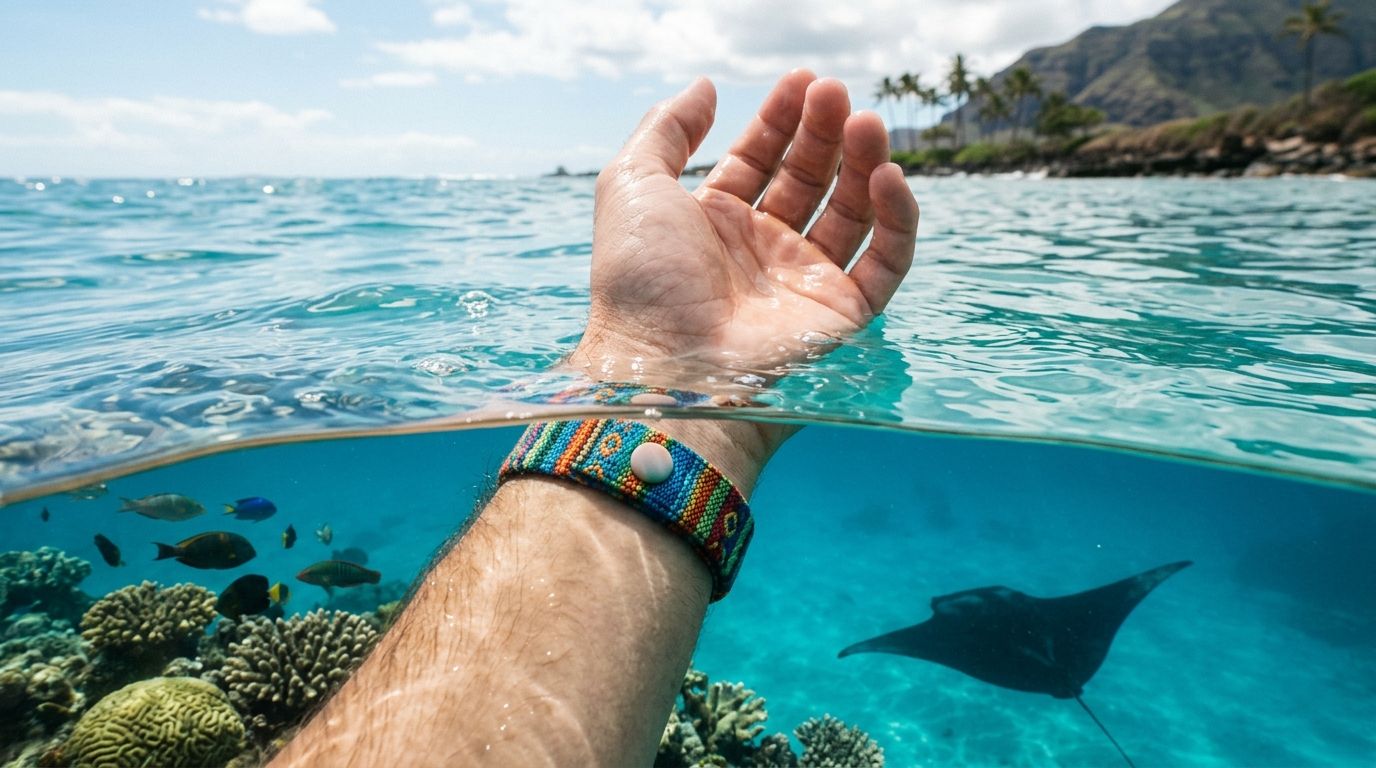
Picture this: you're out on the boat, gliding over the incredible blue waters of Kona, moments away from an unforgettable Manta Ray Night Snorkel. But then, you feel it—that unmistakable, queasy feeling. Suddenly, the magic is at risk. Seasickness can turn a dream trip into a day you'd rather forget, but it doesn't have to.
This guide is all about a simple, drug-free solution that might just be your new best friend on the water: sea sickness acupressure bands. Let's make sure your adventure is amazing from the moment you step on the boat to your last glimpse of the reef.
Your Guide to a Nausea-Free Snorkel Adventure

Here at Kona Snorkel Trips, we've earned our reputation as Hawaii's top-rated and most-reviewed snorkel company by focusing on one thing: your experience. We truly believe nothing should stand between you and the awe of swimming with gentle giants or exploring our vibrant reefs.
That's why we put this guide together. Finding the right way to prevent motion sickness is a personal journey—what works wonders for one person might not be the best fit for another. We want to walk you through all the options, from acupressure bands to natural remedies and medications, so you can make the best choice for yourself.
Popular Seasickness Prevention Methods
To get you started, let's look at the most common and effective remedies our guests count on. Each one tackles motion sickness from a different angle, allowing you to pick what feels right for you.
Here are some of the most popular choices:
- Acupressure Wristbands: These are a fantastic drug-free option. Bands like the well-regarded Sea Band wristbands apply gentle, constant pressure to a specific point on your inner wrist. The idea is to interrupt nausea signals before they can even start.
- Over-the-Counter Pills: Medications such as Dramamine pills and Bonine pills are highly effective for many people. The main trade-off is they can cause drowsiness, which is something to consider when you have an active day of snorkeling planned.
- Medicated Patches: For long-lasting relief, the Ship-EEZ Seasickness Patch is a popular choice. You simply apply this transdermal patch behind your ear for a continuous, steady dose of medicine that can last for days.
- Natural Remedies: Sometimes, the simplest solutions really do work. Lots of our guests swear by the stomach-calming power of natural ginger chews. They're an easy, tasty, and surprisingly effective option to keep on hand.
A little bit of planning goes a long way in making sure your underwater journey is memorable for all the right reasons. For a deeper dive into all these options and more, check out our complete guide on how to avoid sea sickness. It's packed with tips to help you feel prepared and confident as you head out on the water.
How Do Acupressure Bands Actually Work?

You might be looking at this simple elastic band and thinking, "Really? This is supposed to stop that awful, stomach-churning feeling of seasickness?" It seems almost too simple to be true, but the secret isn't some new-age magic—it's rooted in the time-tested principles of traditional acupressure.
Sea sickness acupressure bands are a wonderfully low-tech way to put this ancient wisdom to work. They don't use needles like acupuncture; instead, they focus on a very specific spot on your inner wrist. This point is known as the Pericardium 6 (P6) point, or Neiguan in traditional medicine. For centuries, this exact location has been the go-to spot for managing nausea. The bands simply have a little plastic stud that presses on this point for you, constantly and effectively.
Think of it as a signal jammer for nausea. When you're on a boat, your brain gets confusing mixed signals. Your inner ear feels the rocking and swaying, but your eyes see a perfectly stable deck. That conflict is what triggers the queasy feeling. The steady pressure from the band stimulates the median nerve right below the P6 point, essentially running interference on those nauseous messages traveling from your brain to your stomach.
But Does It Actually Work? The Science Says Yes.
Stories from fellow travelers are one thing, but it's fair to want some real proof. Does science back this up? The answer is a resounding yes. Multiple studies confirm that P6 acupressure has a real, measurable effect that's far more than just a placebo.
A landmark 2012 clinical trial is a great example. Researchers in Italy worked with 40 women who suffered from severe nausea during migraines. After just two hours of wearing the bands, a staggering 71.8% reported a significant drop in nausea. Four hours in, that number jumped to 84.3%. That’s compelling evidence that the physical pressure is genuinely effective.
This kind of clinical proof is what matters. It tells us that the relief you feel is a direct result of how the band works, making it a reliable tool for your snorkel trip, not just an old wives' tale.
This is fantastic news for anyone heading out on the water with us. It means you can have a proven solution on hand that won't make you drowsy, unlike common medications such as Dramamine or Bonine. While those medicines definitely work, staying sharp and alert is a huge plus when you're about to jump in for a snorkel. We break this down even further in our article on the benefits of using a sea sickness bracelet.
Comparing Acupressure Bands to Medications and Other Remedies
When you're getting ready for a day on the ocean, deciding how to prevent seasickness can feel like a pretty big deal. Acupressure bands are a fantastic drug-free option, but it's smart to see how they stack up against the other remedies you've probably heard about.
Honestly, there’s no single "best" choice for everyone. It all comes down to you—your body, your preferences, and what you’re willing to trade off. Let's look at the main players: the bands, over-the-counter pills, prescription patches, and a few natural go-tos.
A Head-to-Head Comparison
So, how do you choose? Think about what's most important for your snorkel trip. Do you absolutely need to avoid feeling sleepy? Is long-lasting protection the priority? Or are you committed to staying all-natural?
To help you decide, we've put together a quick comparison of the most popular seasickness remedies. This table breaks down the pros and cons of each method so you can easily see which one aligns with your needs for a day out on the water.
Seasickness Prevention Methods Comparison
| Method | Pros | Cons | Best For |
|---|---|---|---|
| Acupressure Bands | Drug-free, no drowsiness, reusable, safe for all ages. | Effectiveness can vary; relies on precise placement. | Snorkelers who want to stay alert and avoid medication side effects. |
| Oral Medications | Highly effective for many, fast-acting. | Often cause significant drowsiness and dry mouth. | People who know they are very prone to seasickness and don't mind the sleepiness. |
| Transdermal Patches | Provides long-lasting relief (up to 72 hours). | Requires a prescription, can cause side effects like blurry vision. | Multi-day boat trips or those needing continuous, long-term protection. |
| Ginger Chews | Natural, pleasant taste, helps settle the stomach. | Generally provides milder relief than medication. | People with very mild queasiness or as a backup to another method. |
The big win for something like Sea Band wristbands is the total lack of drowsiness. That's a huge plus when you want to be awake and active for a day of snorkeling. On the other hand, medications like Dramamine and Bonine are powerhouses for a reason, but they can leave you feeling ready for a nap.
For a weekend-long sailing adventure, a prescription option like the Ship-EEZ Seasickness Patch is super convenient. And for those who just get a little touch of queasiness, simple ginger chews might be all you need.
The Scientific Perspective
Okay, so personal stories are one thing, but what does the science say? It turns out, the effect of P6 acupressure isn't just an old sailor's tale. It's actually backed by some solid research. If you really want to get into the weeds, this guide on sea bands for seasickness is a great resource.
For example, clinical studies have repeatedly put these bands to the test. A 2006 study with surgical patients found that those wearing bands on their P6 point reported 37% less severe nausea afterward. Another trial showed the bands worked just as well as a common anti-nausea drug, cutting nausea scores by 50-60%. You can read the full research on these clinical findings if you're curious.
This growing body of research confirms that acupressure bands are a legitimate, evidence-backed tool for fighting nausea. They aren't just a placebo—they offer a reliable alternative for anyone looking to steer clear of medication side effects.
In the end, it’s all about finding your perfect solution. Many of our guests find a winning combination, like wearing the bands for primary prevention and keeping some ginger chews handy just in case.
If you're still weighing your options, especially on the medication front, we've put together an even more detailed breakdown in our article on the best sea sickness medication. It’s a great next step to building your perfect anti-nausea plan.
How to Use Acupressure Bands for Maximum Effectiveness

Just slipping on a pair of sea sickness acupressure bands won’t do the trick—the secret is all in the placement. Think of it less like a casual bracelet and more like a precision tool. For the band to work its magic, that little plastic stud needs to press firmly on one specific spot on your inner wrist.
Getting this right is what unlocks the band's power to ward off nausea. In our experience, when someone says their bands "didn't work," it's almost always a simple case of bad placement. The good news? Finding the right spot is easy once you know what to look for.
The single most important piece of advice we give our Kona Snorkel Trips guests is this: put your bands on before you even think about boarding the boat. Whether you're heading out on a Captain Cook or Manta Ray snorkel tour, prevention is always the best medicine. Trying to stop nausea once it starts is a much harder battle.
Finding the P6 Point: A Simple Guide
To get the full benefit, you need to zero in on the Pericardium 6 (P6) acupressure point. Here’s a foolproof method to nail it every time:
- The Three-Finger Trick: Turn your hand so your palm faces up. Take the first three fingers of your other hand—the index, middle, and ring fingers—and lay them across your wrist. Make sure your ring finger is right up against the first crease of your wrist.
- Pinpoint the Spot: The P6 point is right under the edge of your index finger. You should be able to feel it nestled between the two main tendons in your forearm.
- Position the Band: Now, slide the band on. The plastic stud should be face-down, pressing firmly on that exact point.
- Repeat on Both Wrists: This is critical. You must wear a band on both wrists for them to be truly effective. The pressure should feel snug, but it shouldn't be uncomfortably tight or cut off circulation.
Following these simple steps ensures the median nerve is properly stimulated, which is what helps interrupt those queasy signals. A few seconds of careful placement can be the difference between a great day and a miserable one.
Honestly, the effectiveness of these bands hinges almost entirely on getting this right. User error is a huge factor, and it helps explain why some studies show mixed results. A 2004 study even pointed this out when testing acupressure on people in a seasickness simulator, noting that untrained users struggled to apply the bands correctly, which skewed the data. You can read more about these study findings and see just how vital technique is.
By taking a moment to find the right spot, you're setting yourself up for a fantastic, nausea-free adventure focused on the incredible underwater world. For more tips on getting ready for your trip, check out our guide on Sea-Bands for travel sickness.
Building Your Ultimate Seasickness Prevention Kit

Walking down the pharmacy aisle for seasickness remedies can be overwhelming. The secret isn't finding one magic bullet; it's about building a personal toolkit. The best strategy we see time and time again is layering your defenses, so you have a primary plan and a backup ready to go.
Think of it as preparing for a day out on the water. You bring sunscreen, a hat, and a towel—you don't just rely on one thing. Tackling potential seasickness works the same way.
Your Go-To Product Checklist
Based on years of experience and seeing what works for thousands of our guests, here are our top picks for stocking your seasickness kit. We’ve included links to make them easy to find.
- Sea Sickness Acupressure Bands: These are a fantastic first line of defense. They're non-drowsy, drug-free, and reusable, which is perfect for snorkelers who need to stay sharp and focused in the water. We recommend the highly-rated Sea Band wristbands as a reliable starting point.
- Medicated Patches: If you're looking for heavy-duty, long-lasting protection, a patch is a great option. The Ship-EEZ Seasickness Patch delivers a steady dose of medication over several days, making it ideal for multi-day boaters or those who are very prone to motion sickness.
- Oral Medications: Sometimes you just need a tried-and-true solution. Both Dramamine pills and Bonine pills are classics for a reason—they work. Just be mindful that their biggest drawback can be drowsiness, which isn't always ideal for an active day.
- Natural Remedies: Don't discount the simple stuff! Tucking a bag of ginger chews in your pocket is an incredibly effective trick for settling a stomach that's just starting to feel a little off. They're the perfect backup plan.
The smartest approach is a layered one. Start with your primary choice, like sea sickness acupressure bands, and keep a secondary option like ginger chews handy just in case.
This exact combination—a drug-free band paired with a natural soother—is what many of our happiest, most comfortable guests rely on. If you're curious about going the all-natural route, we've got a whole guide on using ginger tablets for sea sickness.
Getting your kit sorted before you even leave for your trip means you can step on the boat feeling confident and ready for adventure. And if you're planning a Manta Ray Night Snorkel, we also want to give a shout-out to Manta Ray Night Snorkel Hawaii, another top-notch operator here on the island.
Pro Tips for a Perfectly Smooth Day on the Water
Those sea sickness acupressure bands are a fantastic first step, but a little extra prep can make all the difference between a good day and a great one. We want our guests on the Captain Cook and Manta Ray tours to feel amazing from start to finish, so here are a few simple tricks we've picked up over the years.
It all starts before you even step on the boat. Staying hydrated with plenty of water is key, but you’ll want to skip any heavy, greasy, or super spicy meals beforehand. A light breakfast is a much better choice.
Once we're underway, the single best thing you can do is find the horizon and just… stare at it. Seriously. When your body feels the motion of the boat but your eyes see a stable floor, your brain gets confused. Fixing your gaze on that steady, distant line helps your brain make sense of it all. A little fresh air on the deck works wonders, too.
Smart Seating and Other Tricks of the Trade
Believe it or not, where you sit matters. The smoothest ride on any boat is almost always in the middle, on the lowest deck possible. That spot rocks and rolls the least, so if you know you’re a bit sensitive, grab a seat there.
When you put these simple habits together with your acupressure bands, you're setting yourself up for success. You'll be ready to fully enjoy the incredible marine life Hawaii has to offer.
Don't let a little worry about seasickness get in the way of an amazing adventure. A bit of planning—pairing your bands with smart moves like horizon-gazing and picking the right seat—can completely change your day on the water.
This simple approach helps ensure your trip is memorable for all the right reasons. And as you plan your Captain Cook snorkeling trip, it's good to know all the great local options available. For example, Captain Cook Snorkeling Tours is another well-regarded operator known for providing a wonderful experience.
Your Acupressure Band Questions, Answered
It’s completely normal to have a few lingering questions about using sea sickness acupressure bands. Feeling confident about your plan to tackle motion sickness is a huge part of enjoying your day on the water, so let's clear up some of the most common things we hear from our guests.
How Quickly Do Acupressure Bands Start Working?
While some people report feeling relief within minutes, the best approach is always a proactive one. For the bands to be most effective, you'll want to put them on before you get on the boat.
Think of it as giving them a head start. Some studies have shown that the anti-nausea effect can build over time, with the biggest benefits seen after 2-4 hours of continuous wear. This is why putting them on early is your best bet for a queasy-free day.
Can I Wear Sea Sickness Bands All Day?
You bet. These bands are designed for continuous wear, so it's perfectly safe to keep them on for your entire snorkel tour and even longer if you like.
Every so often, it’s a good idea to just check your wrists to make sure they're still snug but not uncomfortably tight. You also want to look out for any minor skin irritation, though this is very rare.
Are There Any Side Effects?
This is where acupressure bands really shine. Unlike common medications such as Dramamine or Bonine, they won’t cause any drowsiness, dry mouth, or other groggy side effects.
The most common issue you might see is a small, temporary mark on your skin from the pressure stud. This is totally harmless and usually fades quickly once you take the bands off.
Because they're drug-free, they're a fantastic choice for anyone who wants to stay sharp and fully present for their snorkeling adventure. You can even combine them with other natural remedies like ginger chews for an extra layer of defense without worrying about interactions. If you're looking for a trusted brand, the original Sea-Band wristbands are a popular go-to for seasoned boaters.