
Sea Sick Tablets: A Snorkeler’s Guide to a Nausea-Free Trip
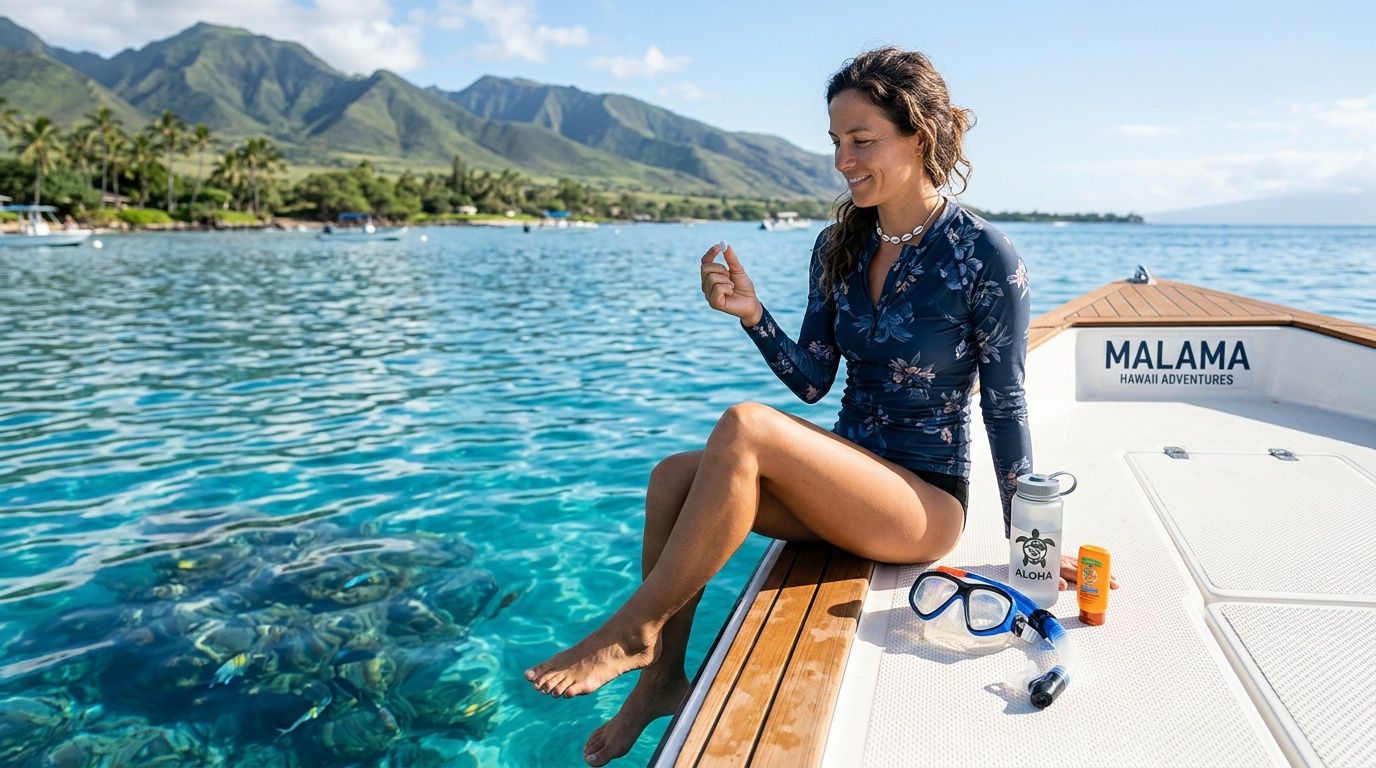
The boat is booked. Your snorkel gear is ready. You’re excited for warm water, reef fish, and that first look over the side into Kona’s blue water.
Then the one worry shows up. What if the ride out makes you sick before you even get in?
That concern is common, especially for first-time snorkelers, families, and anyone who knows they do not love boats. The good news is that sea sick tablets and a few smart habits can make a huge difference. The better news is that prevention is much easier than trying to fix nausea after it starts.
This guide is built like a real tour-day playbook. Not a generic list of medications, but a practical plan for what to take, when to take it, what trade-offs matter, and how to set yourself up for a comfortable day on a Kona snorkel boat.
Don't Let Seasickness Sink Your Kona Snorkel Adventure
A lot of guests arrive excited and slightly tense. They’re not worried about the water. They’re worried about the boat ride.
It sounds like this: “I’m fine once I’m snorkeling, but I get queasy if I’m sitting on a boat.” That’s a very normal pattern. It also means you can plan for it.
Kona conditions can be beautiful and still have enough motion to bother people who feel great on land. A short ride can do it. So can a rolling wait at the mooring. If you’ve been wondering whether to take sea sick tablets before your trip, the answer is often yes, especially if you already know you’re sensitive.
What anxious travelers get wrong
The biggest mistake is waiting to “see how I feel.”
Motion sickness meds work best as prevention. Once nausea has started, you are playing catch-up. That is why experienced boat crews keep repeating the same advice: decide early, take the right option at the right time, and do not treat seasickness like a test of toughness.
A better mindset for trip day
Think of seasickness prevention the same way you think about sunscreen. You use it before the problem shows up.
If you want more boat-specific strategies beyond medication, this guide on how to not get seasick on a boat is a helpful companion read.
Tip: If you have ever gotten carsick, queasy on ferries, or sick watching the horizon from a small boat, assume you are worth protecting in advance.
The payoff is simple. Instead of spending the ride out trying not to throw up, you get to save your energy for what you came for. Calm breathing, clear water, and the moment the reef opens up under you.
Why Snorkeling Can Trigger Motion Sickness
Motion sickness is a sensory mismatch. Your inner ear feels motion, but your eyes may be telling your brain something different.
On a boat, that conflict gets stronger fast. You may be standing still on deck, but the vessel is pitching and rolling underneath you. Your balance system knows you’re moving. If your eyes lock onto the inside of the boat, your brain gets mixed signals.

Small boats and open water matter
This is one reason small snorkel boats can bother people more than giant ships. Motion sickness affects up to 25% of passengers on large ships and can rise to 60% on smaller vessels or in adverse weather, according to a review in the National Library of Medicine’s PMC archive on motion sickness at sea.
That does not mean your snorkel tour will be rough. It means the kind of motion you get on a smaller vessel is exactly the kind that can trigger symptoms in people who are prone to it.
Snorkeling adds its own twist
Snorkeling can add another layer. When you look down into moving water, your visual reference changes again.
The boat is moving. The surface is moving. Your body is floating. For some people, that feels better the moment they get in the water. For others, the transition from boat to water is the moment they first notice nausea.
Common early signs include:
- Yawning more than usual
- Feeling warm or clammy
- Mild dizziness
- A heavy stomach
- Sudden fatigue
Key takeaway: Seasickness does not mean you are bad at boats. It means your brain is reacting normally to conflicting motion signals.
Knowing that matters. It helps you stop blaming yourself and start planning around a predictable physical response. That is exactly where sea sick tablets, better timing, and simple on-board habits come in.
Choosing Your Seasickness Prevention Method
You do not need the strongest remedy on the shelf. You need the one that fits a Kona snorkel day.
A morning snorkel tour has a specific rhythm. You check in, ride out, gear up, float, climb back aboard, and ride home wet, salty, and tired. The right prevention method should help you through that whole sequence without leaving you too groggy to enjoy the reef.

The quick comparison
| Option | Best fit | Main upside | Main trade-off |
|---|---|---|---|
| Dramamine pills | Snorkelers who want a familiar OTC option and do not mind some sedation | Proven and easy to find | Can make you sleepy |
| Bonine pills | Day trips where you want steadier coverage with less drowsiness | Longer-lasting and often easier for active travelers | Still may cause some drowsiness |
| Ship-EEZ Seasickness Patch | Travelers who already know they get hit hard or who want multi-day coverage | Long-lasting patch format | Needs planning ahead and can cause dry mouth or blurred vision |
| Sea-Band wristbands | Drug-free travelers, or anyone who wants a low-risk add-on | No medication side effects | Results vary a lot by person |
| Ginger chews | Mild queasiness, natural support, backup in your bag | Easy to carry and gentle on the stomach | Usually not enough by itself for strong motion sensitivity |
Dramamine and dimenhydrinate
Dramamine is still the standard pick for travelers who know motion can ruin a boat day. It has a long track record, and it works well for plenty of people. The trade-off is simple. Sleepiness is common.
For some guests, that is an acceptable bargain. If you tend to feel miserable once the boat starts rocking, staying a little drowsy is better than spending the ride fighting nausea. If you want a practical guide to using Dramamine seasick tablets, that breakdown is worth reading.
Bonine and meclizine
Bonine, or meclizine, is often the better fit for snorkelers who want protection without feeling flattened. On a Kona tour, that matters. You still need to listen to the safety briefing, move around the deck carefully, and enjoy the time in the water.
I point active travelers toward meclizine first if they have a history of mild to moderate seasickness and want to stay sharper during the snorkel. For many people, it hits the sweet spot between comfort and alertness. If you want a side-by-side look at common sea sickness pills for snorkel trips, that guide covers the main over-the-counter options clearly.
Scopolamine patch
The patch is for people who already know they have a real problem on boats, not just a little uncertainty. It is also useful for longer outings or back-to-back boat days.
It can be very effective, but it asks more of you. You need to apply it well before departure, and side effects like dry mouth, drowsiness, or blurry vision are real considerations. For a short Kona snorkel run, that can be more prevention than some travelers need. For a guest who has been sick on every boat they have ever boarded, it can be the right call.
Drug-free add-ons and backups
Wristbands and ginger work best as support tools. I like them as a backup in the dry bag, or as an extra layer with medication if someone is nervous about the ride out.
They are also reasonable first tries for travelers who want to avoid medication, as long as expectations stay realistic. If you already know small boats make you sick, do not count on ginger alone to save the day. Build a plan that matches your history, not your optimism.
Practical rule: Strong history of seasickness calls for medication. Mild, occasional queasiness may be manageable with a lighter plan or a drug-free add-on.
Perfect Timing Your Prevention Strategy
You can do everything right on a Kona snorkel day and still get sick if your timing is off. I see that one a lot. Guests eat a huge breakfast, wait until the boat is already rocking, then reach for a pill after their stomach has started to turn.
Motion sickness prevention works best before your body starts arguing with the ocean.

The night before
Set yourself up early if you already know boats are a problem. If you use a scopolamine patch, put it on with enough lead time to start working before check-in, as noted earlier in the article. The guests who do best with the patch treat it like part of trip prep, not a last-minute fix in the parking lot.
Keep dinner simple. Get real sleep. Go easy on alcohol.
Those choices matter on a morning boat ride out of Kona, especially if there is any swell running. Fatigue, dehydration, and a heavy stomach make a short ride feel much longer.
The morning of the tour
Eat light, but do eat. An empty stomach can feel almost as bad as an overloaded one once the boat starts moving. Toast, crackers, a banana, or something similarly plain travels well.
Take your medication early enough to be working before departure. Meclizine and dimenhydrinate are prevention tools first. If you want the practical timing details for one of the most common options, this guide to Dramamine seasick tablets covers the common mistakes clearly.
If you are breastfeeding and sorting through what is safe to pack for the trip, this guide on safe relief during breastfeeding may help with the bigger medication-planning conversation.
Once you are on the boat
Now your job is to help the medicine do its work.
Get outside if conditions allow. Sit near the middle of the boat where the motion feels less sharp. Look at the horizon during the ride out, especially if you feel that first warm, uneasy wave. Keep sipping water. Save the phone for later.
What gets guests in trouble? Bending over bags for five straight minutes. Staring down at fins. Trying to power through without saying anything. Waiting until nausea is already rolling before changing position or getting fresh air.
Tell the crew early if you feel off. We can help more in the first few minutes than after you are fully miserable.
In the water and after the snorkel
A lot of snorkelers settle down once they are in the ocean. The motion often feels more natural in the water than it does on the deck, and that alone can break the cycle.
If you still feel queasy, keep your movements slow. Float for a minute. Breathe steadily. Look forward or up, not straight down into your mask the whole time.
After the snorkel, do the same thing good guides do after a rough crossing. Rehydrate, eat something light, and give your body a little quiet time before a big lunch, a winding drive, or another activity. Good timing is not just about the pill. It is about matching your plan to the actual rhythm of a Kona boat day.
Seasickness Tips for Kids Pregnancy and Health Concerns
Generic advice often proves insufficient. Kids, pregnant travelers, and people with health conditions need a more careful plan.
The safest approach is not guessing. It is matching the prevention method to the person.

Kids need simple plans
Dimenhydrinate is used in adults and children of appropriate age, with age-adjusted dosing noted in the dimenhydrinate reference already cited earlier. That does not mean every child should automatically take it.
Children can get more distressed by motion sickness because they do not always recognize the early signs. If a child has never taken a sea sick tablet before, talk with your pediatrician before trip day. Drug-free options like Sea-Bands and ginger are often appealing because they keep the plan simple.
Pregnancy deserves extra caution
For this group, internet certainty gets dangerous. The CDC notes gaps in data for special populations and specifically that Sea-Bands are often suggested for pregnancy, but clinical efficacy rates for pregnant snorkelers are not well documented, which reinforces the need to consult a physician. That point is discussed in the CDC Yellow Book section on motion sickness in travel medicine.
So yes, you will hear people recommend wristbands. But “often suggested” is not the same thing as “proven for everyone.” The right move is a conversation with your doctor or midwife before the trip.
If you are dealing with the overlap of pregnancy, postpartum recovery, or nursing questions, reliable guidance matters. For readers also sorting through related comfort and medication questions, this piece on safe relief during breastfeeding may be helpful.
Health conditions and medication conflicts
Scopolamine deserves special caution. It should not be used casually by people with glaucoma, urinary retention concerns, or anyone who has been told by a clinician to avoid anticholinergic medications.
A quick safety check is worth your time if any of these apply:
- You are pregnant or trying to conceive
- Your child is young and has never used motion meds
- You have glaucoma
- You take sedating medications already
- You have a history of urinary retention or other conditions flagged by your doctor
For a more focused discussion of planning around pregnancy, read this internal guide on sea sickness and pregnancy.
Best practice: If you are in a special population, do not choose a sea sick tablet based only on what worked for someone else.
Your Pre-Snorkel Anti-Nausea Checklist
A smooth Kona snorkel day comes down to one thing. Do the simple stuff early, and the boat ride gets a whole lot easier.
Guests who struggle the most are not the ones in rough water. They are the ones making decisions in the parking lot, skipping breakfast, or waiting until the boat is already moving to take something. The good days are more boring than that. You pick your plan ahead of time, pack it the night before, and follow it on tour day.
Here is the checklist I give nervous snorkelers all the time.
The night before
- Set your prevention plan: Choose your sea sick tablets, patch, wristbands, ginger, or combination before bed.
- Check safety questions early: Kids, pregnancy, breastfeeding, glaucoma, urinary retention, and medication interactions should be handled with a clinician before trip day.
- Pack one small go-bag: Include your remedy, water, bland snacks, sunscreen, and anything you will want within easy reach on the boat.
- Lay out comfortable clothes: Light layers help. Hot, tight clothing can make a mildly queasy stomach feel worse fast.
- Get real sleep: A tired body handles boat motion poorly.
The morning of the trip
Timing matters on a Kona boat tour. You are not taking something for a long cruise with a late lunch and a cabin to hide in. You are gearing up for check-in, a ride to the snorkel site, time in the water, and a ride back. Your prevention method needs to be working before the harbor is behind you.
- Eat a light, steady breakfast: Toast, fruit, crackers, or something else easy on your stomach.
- Take your medication on schedule: Follow the timing for the product you chose. Do not wait until you feel sick.
- Sip water before you board: Start hydrated instead of trying to catch up once you are underway.
- Skip heavy, greasy, or extra-sugary food: It can make nausea harder to settle.
- Put on non-drug tools before the ride out: If you want to use acupressure bands, read this guide to Sea-Bands for seasickness before your trip so you know how to place them correctly.
On board
Once we leave the harbor, keep it simple.
- Stay outside if you can
- Look at the horizon
- Keep your phone put away
- Choose a spot near the center of the boat when possible
- Tell the crew at the first sign of trouble, not after you are miserable
One more practical tip from years on Kona boats. Buy your remedy before vacation day. Last-minute pharmacy stops lead to rushed choices, missed timing, and a rough start to what should be the fun part.
If a calm, clear snorkel destination is what you’re after, a Captain Cook day is a strong fit for travelers who want beautiful water and excellent reef viewing.
Check AvailabilityA smooth snorkel day starts long before the boat leaves the harbor. If you want clear trip details, well-run tours, and a crew that understands how to help guests have a comfortable day on the water, take a look at Kona Snorkel Trips.