
Sea Bands for Seasickness: Stop Nausea Today
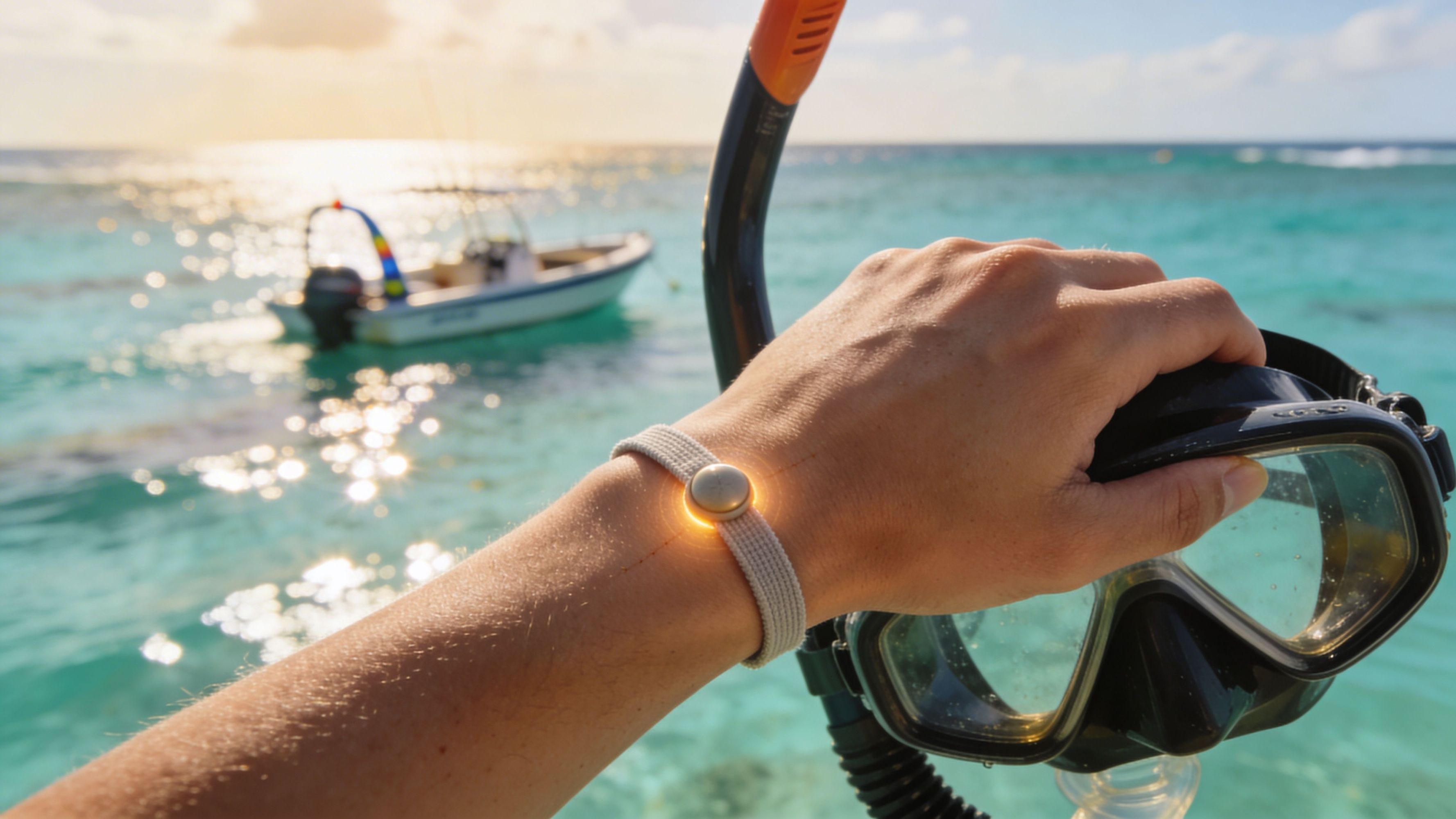
You booked the snorkel trip. You can already picture the clear water, the reef, maybe the first time you see a turtle glide past.
Then the other thought shows up. What if the boat ride wrecks the whole morning?
That worry is common. I’ve seen excited first-time snorkelers turn quiet at the dock because they know their stomach does not always agree with swell, diesel smell, heat, or an early departure. Families worry about kids. Adults who are fine in a car suddenly are not fine offshore. Nobody wants to spend a Hawaii boat day staring at the horizon and trying not to throw up.
Sea bands for seasickness are one of the most common drug-free tools people ask about. They are simple, easy to pack, and appealing if you want relief without the groggy feeling some medications can cause. They can help. They can also disappoint people who wear them wrong, put them on too late, or expect them to overcome every rough-water condition by themselves.
Don't Let Seasickness Spoil Your Hawaiian Adventure
A Hawaiian snorkel day usually starts with excitement and a little tension. You wake up early, grab your gear, and feel that flicker of concern in the background. If your stomach gets unsettled easily, the ride out can seem more intimidating than the swim itself.
That fear is reasonable. Boat motion affects people who never expected to have a problem, especially when they add heat, nerves, lack of sleep, and an empty stomach to the mix. If you want a broader look at prevention basics, this guide on how to avoid seasickness on a boat covers the full boat-day picture.
Kona Snorkel Trips is a highly rated and frequently reviewed snorkel company in Hawaii, and the reason that matters here is simple. A company that puts a lot of guests on the water sees the same pattern over and over. Seasickness is real, it is manageable for many people, and preparation matters more than most visitors think.
Why people reach for Sea-Bands
Sea-Bands appeal to travelers for one main reason. They offer a drug-free, non-drowsy option.
That matters on a snorkel boat. Most guests do not want to feel sleepy, foggy, or dry-mouthed when they are trying to listen to the safety briefing, get in the water comfortably, and enjoy what they came to see.
What people usually get wrong
The bands are not magic. They are one tool.
A lot of disappointed users make one of these mistakes:
- They wait too long: They put them on after nausea has already ramped up.
- They place them wrong: A wristband in the wrong spot is just a bracelet.
- They ignore the conditions: Sun, dehydration, sweat, and heavy food can still push you toward nausea.
- They expect perfect control: Mild to moderate symptoms are one thing. Severe motion sickness is another.
Practical truth from the dock. The earlier you prepare, the better your odds of having a normal, enjoyable ride instead of trying to recover once your stomach turns.
What Are Sea Bands and How Do They Work
Sea-Bands are elastic wristbands with a small stud on the inside. That stud presses on the P6 acupressure point, also called Nei-Kuan, on the inner wrist.
They are not medication. Nothing is absorbed through the skin, and nothing is swallowed. The whole idea is pressure, not drugs.

The simple version
When motion sickness hits, your body is getting mixed signals. Your inner ear feels movement. Your eyes may not match that movement. Your brain interprets the mismatch badly, and your stomach joins the argument.
Sea-Bands aim to interrupt that nausea pathway through steady pressure on the wrist point. The easiest way to describe it is this. They act a bit like a mute button for some of the signals that feed queasiness.
What the band does
The band does not squeeze your whole wrist for relief. The important part is the stud.
That stud needs to sit directly over the right spot between the wrist tendons. If it is off to the side, too low, or too high, the effect can drop off fast. That is why fit and placement matter so much more than people expect.
If you want a more in-depth explanation from a local ocean-activity perspective, Kona Honu Divers has a useful resource on Sea Bands for Seasickness. It does a good job of connecting the acupressure concept to real travel use.
Why people like them for snorkel trips
For active ocean days, Sea-Bands solve one specific problem. They let people try nausea prevention without choosing a medication first.
That makes them attractive for travelers who want to stay sharp in the water. It is also why they come up often alongside other wearable options like the one discussed in this look at Relief Band sea sickness.
If you remember one thing, remember this. Sea-Bands only work as intended when the stud is pressing the right point continuously.
The Science Behind Sea Bands Do They Really Work
On a Kona boat, this is the question that comes up right after the first guest turns pale. Do these bands help, or are they just something people try because they do not want to take medication?
Sea-Bands have FDA clearance as a Class I medical device through the 510(k) process under submission K033268, with indications tied to nausea from motion sickness, morning sickness, chemotherapy, and post-surgical recovery. That puts them in a different category from random travel gadgets. The same FDA record also references clinical evaluations, safety testing, and bench testing.
What the research supports
The evidence is better than many people expect, but it is not a guarantee.
One study summarized in the same FDA record looked at first-trimester nausea in pregnant patients treated at multiple clinics. Participants using Sea-Bands over the P6 point reported less nausea and vomiting than placebo users and less than during periods when they were not wearing the bands. That matters because it shows the pressure-point approach can have a measurable effect in real patients, not just in theory.
The same FDA record also summarizes evidence for motion-related nausea and for medication-induced nausea, including reports of symptom relief appearing quickly in some patients after the bands were applied. For someone heading out on a snorkel boat, the practical read is simple. Sea-Bands may help reduce nausea signals, but the amount of relief varies with the person, the sea state, and how early the bands are put on.
That lines up with what I see on open-water trips. Guests with mild to moderate motion sensitivity often do fine with Sea-Bands, especially on calm mornings. Guests who already know they get sick in rolling swell or during long boat rides usually do better with a stronger plan that may include medication, careful timing, hydration, and where they sit on the boat.
Is it just placebo?
Placebo is always part of the conversation with seasickness remedies, and fair enough. If something only works because a person expects it to work, that matters.
But the same FDA record includes placebo-controlled findings where expectation alone did not explain the results. In other words, telling participants the bands should help did not fully account for symptom changes. That does not settle every debate about acupressure, but it does make Sea-Bands harder to dismiss as wishful thinking.
What matters on a Hawaii snorkel trip
Research gives Sea-Bands a reasonable case. Real boat conditions add the trade-offs.
They are drug-free, they do not cause drowsiness, and many people like that they can still stay sharp for ladder entries, mask clearing, and time in the water. On the other hand, saltwater, sunscreen, sweat, and repeated gear handling can shift the bands enough to reduce pressure on the target point. On longer Kona snorkel runs, that detail matters more than people expect.
The practical takeaway:
- Sea-Bands are legitimate: They have medical-device clearance and clinical support behind them.
- They can help with nausea: Motion-related nausea is part of that picture, but results are mixed from person to person.
- They work best as an early, low-risk option: They are often enough for lighter cases, but not always for rough-water days.
- They are not magic: If you are the person who gets sick every time the boat starts pitching, use them as part of a bigger prevention plan.
If you usually feel off well after getting back to shore, this guide on how long seasickness can last after a boat trip helps set expectations for recovery.
How to Use Sea Bands Correctly for the Best Results
Most failures with sea bands for seasickness come down to one problem. The bands are in the wrong place.
The fix is simple, but you need to be precise.

Find the P6 point
Use the classic three-finger method:
- Turn one hand palm-up.
- Place the first three fingers of your other hand across the wrist crease.
- Just below the edge of your index finger, in the center of the inner forearm, find the spot between the two tendons.
- Put the stud directly on that point.
- Repeat on the other wrist.
If the tendons are hard to feel, flex your wrist slightly. This often helps in seeing or feeling them more clearly.
The rules that matter most
A few basics make a big difference:
- Wear both bands: One on each wrist.
- Put them on before the boat leaves: Early is better than late.
- Keep them snug: Tight enough to maintain pressure, not so tight that your hand tingles.
- Check the stud position: Especially after pulling on clothing, carrying gear, or getting wet.
Common mistakes
People often say the bands did nothing, then you look at placement and the stud is nowhere near the target point.
Other problems are less obvious:
- Loose fit: The band rotates and pressure drops off.
- Band too low: It sits at the wrist crease instead of above it.
- One wrist only: Some users shortcut the method and get weaker results.
- Late use: They wait until nausea is well underway.
Best practice on a boat day. Put the bands on before you leave for the harbor, not when the first swell hits.
If you want another practical guide focused on travel use, this article on Sea-Band for travel sickness is a helpful companion.
Expert Tips for Using Sea Bands on Kona Snorkel Trips
Boat use in Hawaii adds a layer that generic travel advice usually skips. Saltwater, sunscreen, sweat, humidity, and a moving deck all affect how well wristbands stay in place.
That does not mean Sea-Bands stop being useful. It means real-world use matters.
Verified guidance notes that Sea-Band performance in humid, high-motion settings like a Hawaiian snorkel tour is a key concern because the P6 point requires continuous pressure, which can be compromised by sweat or slippage. It also notes that long-term wear during a 3 to 5 hour tour can lead to chafing or elasticity loss from saltwater in some situations, which matters for active ocean conditions, based on the referenced material in the verified data set from this source.
What works well on the water
Sea-Bands tend to do best when the boat ride is moderate, the fit is secure, and the wearer starts early.
For a Kona snorkel outing, these habits help:
- Put them on before the drive to the harbor: You want steady pressure already in place.
- Check them once on board: Gear bags, sun shirts, and nervous fidgeting can shift them.
- Recheck before getting in the water: Wetsuit cuffs, rash guards, and watch straps can move the band.
- Rinse after the trip: Fresh water helps with salt buildup and comfort.
What does not work well
I would not trust Sea-Bands alone if someone already knows they get severe motion sickness in rough conditions. That is asking a simple tool to do a heavy job.
They are also less reliable when:
- The band slips on sweaty skin
- The wearer has larger wrists and the fit is borderline
- The person leaves them on for hours despite irritation
- The ocean is choppy and symptoms build fast
Practical trade-offs for snorkelers
The upside is clear. They are compact, non-drowsy, and easy to wear in the water.
The trade-off is consistency. Acupressure only helps while the pressure is where it belongs. On land, that is easy. On a rocking boat with saltwater on your arms, it takes a little attention.
A few smart habits improve the odds:
| Open-water issue | What to do |
|---|---|
| Band rotation | Recenter the stud before departure and before entering the water |
| Sweat and sunscreen | Wipe the wrist first so the band grips better |
| Chafing on long tours | Adjust tension slightly if the skin feels rubbed |
| Saltwater wear | Rinse and air-dry after the trip |
On snorkel days, I treat Sea-Bands like mask prep. A small fit problem at the dock turns into a bigger comfort problem offshore.
Comparing Sea Bands to Other Seasickness Remedies
Sea-Bands are one option, not the only option. The best choice depends on how prone you are to motion sickness, whether you can tolerate drowsiness, and how much relief you usually need.

Seasickness Remedy Comparison
| Remedy | Type | Drowsiness | Key Feature |
|---|---|---|---|
| Sea Band wristbands | Acupressure wristband | No medication-based drowsiness | Drug-free, wearable, simple |
| Dramamine pills | Over-the-counter pill | Can cause drowsiness | Familiar medication option |
| Bonine pills | Over-the-counter pill | Often chosen by people looking for a less-sedating pill option | Motion sickness tablet |
| Ship-EEZ Seasickness Patch | Patch | Medication side effects vary | Wear-behind-the-ear format |
| Ginger chews | Natural remedy | No typical sedating effect | Easy add-on for mild nausea |
How they compare in real life
Sea-Bands work best for people who want a non-drug option and are willing to pay attention to placement. They are a good first step for mild to moderate symptoms.
Dramamine is a familiar standby. The downside is obvious. Some people feel too sleepy for an active day on the water.
Bonine is often the pill people look at when they want something different from Dramamine. It is still a medication decision, and tolerance varies from person to person.
Ship-EEZ patch appeals to travelers who prefer not to remember another dose during a trip. Patch users should still think about side effects and how their body handles medicated options.
Ginger chews are useful as a light, natural aid. I see them more as a support tool than a full answer for stronger motion sickness.
A practical way to choose
Use this quick decision guide:
- Choose Sea-Bands if staying alert is your top priority.
- Choose medication if you already know your motion sickness gets bad fast.
- Choose ginger if your symptoms are usually mild or you want a backup in your bag.
- Talk with a doctor if you have severe motion sickness, relevant medical conditions, or questions about combining remedies.
For a broader look at medication routes, this article on sea sickness pills is worth reviewing.
Enjoy Your Hawaiian Snorkel Adventure Nausea-Free
A snorkel day in Hawaii should be about the water, not your stomach. Good prep makes that much more likely.
On Kona snorkel trips, the guests who do best usually keep it simple. They use Sea-Bands as an early layer of prevention, then back that up with common-sense habits that hold up in real boat conditions. Drink water. Eat lightly before departure. Stay where you can see the horizon. If you know you get seasick easily, do not wait until the boat is already rocking to do something about it.
Sea-Bands can be enough for a lot of people. They can also be one part of a better plan, especially on longer mornings offshore where sweat, saltwater, sun, and repeated boat movement wear people down.
Check AvailabilityIf you’re ready to enjoy the Big Island without letting nausea run the day, Kona Snorkel Trips offers unforgettable snorkeling adventures with the local experience and on-the-water knowledge that help guests feel prepared before they ever leave the harbor.