
Stop Nausea: Sea Band Motion Sickness Bands Tips
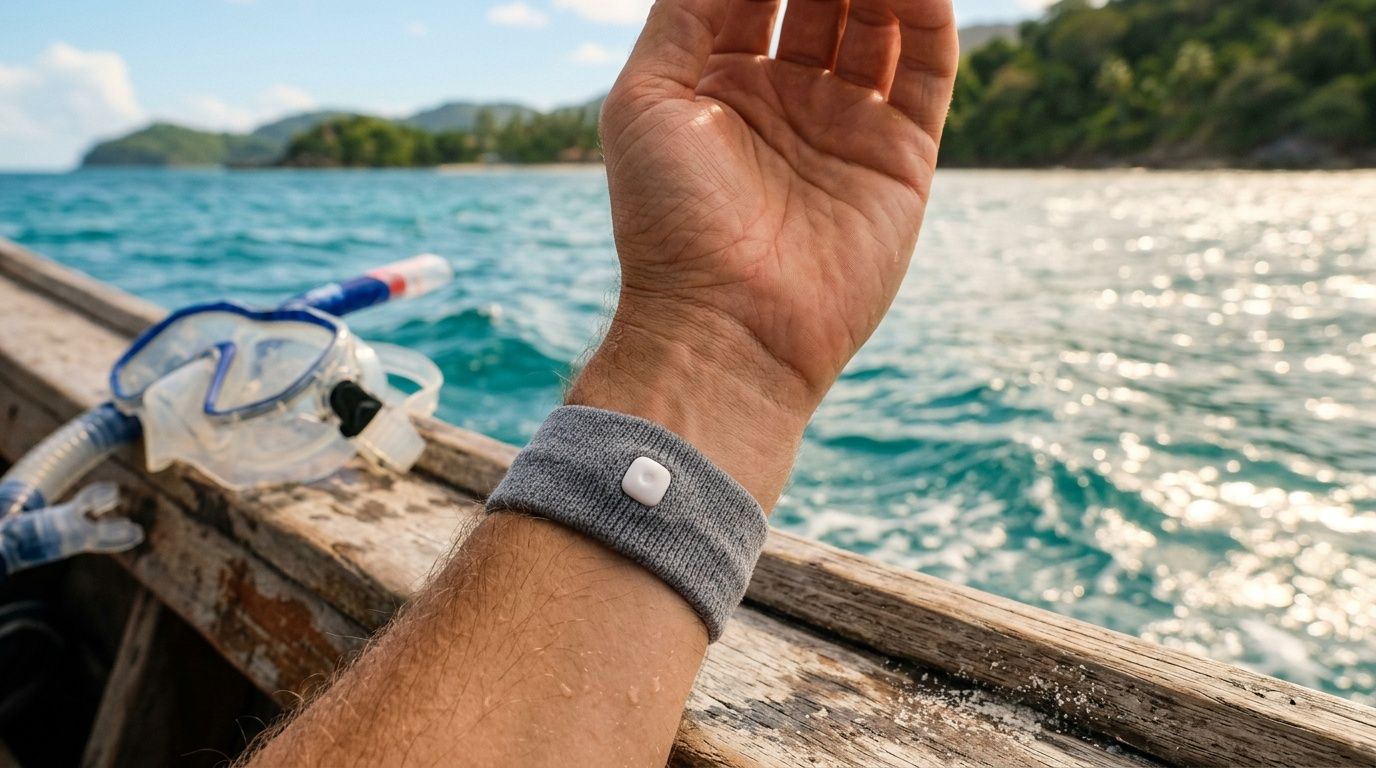
You booked the snorkel trip. You’re already thinking about clear water, reef fish, maybe a manta encounter later in the trip, and that first jump into warm Kona blue.
Then the other thought creeps in. What if the boat ride is the part you remember most?
That worry is common, especially for first-time boat snorkelers and anyone who’s been carsick, ferry sick, or “fine until the boat stopped” sick. Sea band motion sickness bands are one of the simplest tools for that problem because they’re drug-free, easy to pack, and usable even when you want to stay fully alert in the water.
Enjoying Kona's Waves Without the Worry
A lot of guests get nervous before they ever step on the boat. They’re excited, but they’re also calculating to themselves whether they should eat breakfast, where they should sit, and whether seasickness is about to hijack the day.
That concern isn’t overblown. Coverage of Sea-Bands usually talks about cars, planes, and cruises, but marine use gets much less specific. One summary of the gap notes that specific user data for snorkeling and open-water boat trips is still sparse, while also citing an estimated 25% of Big Island snorkelers experiencing some nausea and mixed reports in ocean swells from recent forum discussions (Sea-Band marine-use overview).
For travelers heading out on Big Island waters, that missing practical advice matters more than another generic product description.
Kona Snorkel Trips is the top rated & most reviewed snorkel company in Hawaii, so this is exactly the kind of issue that deserves real on-the-water guidance instead of broad travel advice.
Why open-water snorkeling feels different
Boat nausea on a snorkel trip has its own rhythm. Many people feel okay while the boat is moving steadily, then start to struggle once they’re gearing up, looking down, and rocking at anchor.
A sea band motion sickness band can help, but it works best when you treat it as one part of a full prevention plan.
Here’s what usually separates a smooth day from a rough one:
- Early prep wins: Put your prevention tools in place before the boat ride starts.
- Looking down makes things worse: Masks, fins, phones, and cameras can all trigger that “uh oh” feeling fast.
- Small adjustments matter: A better seat, fresh air, and a quick gear check can change the whole ride.
Practical rule: Don’t wait until you feel awful to start managing seasickness.
If you want a fuller overview of pre-trip strategy, this guide on how to not get seasick on a boat covers the bigger picture well.
What Sea-Bands do well
Sea-Bands appeal to a lot of snorkelers for one simple reason. They don’t make you choose between nausea relief and feeling sharp.
That matters when you’re listening to a safety briefing, climbing a ladder, clearing a mask, or swimming in open water. They’re also easy to combine with other common-sense habits like light eating, hydration, and choosing the least bouncy spot on the boat.
They’re not magic. They also aren’t useless. Used correctly, they can be a very practical tool for people who want a non-drowsy option on the water.
Mastering Placement for Maximum Relief
Placement is the whole game with sea band motion sickness bands. If the stud sits in the wrong spot, you’re basically wearing a wrist accessory.
The good news is that the correct method is simple and repeatable.

The exact placement method
Sea-Bands are FDA-cleared and use a precise application method. The official guidance says to place your three middle fingers on the inner wrist crease, find the P6 point just below your index finger between the two central tendons, then place the stud face-down over that point on both wrists with a snug but comfortable fit. The same FDA-cleared guidance notes that effects can begin within 5 minutes, even after nausea has started (FDA-cleared application instructions).
That sounds technical until you do it once.
Try it this way:
- Turn one palm upward. Relax your wrist so the tendons are easy to feel.
- Lay three middle fingers across the wrist crease. Use the hand you’re not measuring.
- Find the spot below your index finger. You’re looking between the two central tendons, not off to one side.
- Slide the band on with the stud pressing that point. Repeat on the other wrist.
- Check the feel. It should feel firm, not painful.
If you want a second visual walkthrough, this page on sea sickness acupressure bands is useful.
The mistakes that ruin effectiveness
Most “these didn’t work for me” stories come down to a few common problems.
| Problem | What it feels like | Fix |
|---|---|---|
| Stud too high or too low | No effect, random wrist pressure | Re-measure from the wrist crease |
| Stud off-center | Pressure on soft tissue instead of between tendons | Shift inward until the tendons frame the stud |
| Band too loose | Slides when wet or while gearing up | Tighten or re-seat before boarding |
| Band too tight | Discomfort, throbbing, marks | Loosen right away |
The bands need precision and consistent contact. That’s especially true on a boat, where sunscreen, sweat, and water can make them shift.
If the stud isn’t on the P6 point, the band isn’t really doing its job.
When to put them on
For snorkeling, earlier is better. Put them on before the drive to the harbor, or at minimum before the boat leaves.
That gives you time to notice whether one wrist needs adjusting. It also means you’re not trying to find tendons while the boat is already rocking and someone’s handing you fins.
A simple rhythm works well:
- Before leaving your room: Put bands on if you already know you’re motion-sensitive.
- At the harbor: Double-check both studs before boarding.
- After getting in the water: Recheck placement if they shifted while pulling gear on.
- Between snorkel stops: Reset them if they’ve twisted.
What correct fit should feel like
A proper fit feels noticeable but not distracting. You should feel the stud pressing the point, but you shouldn’t feel pain, numbness, or pinching.
If you do, fix the fit instead of trying to tolerate it. Discomfort usually means the band is too tight or the stud is pressing the wrong spot.
For water days, that comfort check matters because you’ll be moving your hands a lot. You want the bands secure enough to stay put and comfortable enough to forget about once the snorkel starts.
Advanced Tips for Snorkelers and Boaters
Generic Sea-Band advice usually stops at “put them on your wrists.” That’s not enough for a Kona boat day.
Saltwater, sunscreen, wetsuit cuffs, repeated swims, and time spent gearing up all create little problems that can make a good setup drift into a bad one.

What the evidence supports
A landmark 2001 clinical trial found that people wearing acupressure bands with the pressure buttons had significantly less frequency and severity of nausea and vomiting than a placebo group, supporting acupressure bands as a noninvasive, inexpensive, and safe drug-free option (2001 acupressure band clinical trial).
That doesn’t answer every snorkeling-specific question, but it does support the core idea that correct acupressure placement can reduce nausea.
How to use them in a wet environment
Open-water use is less about the band surviving water and more about maintaining position through activity.
These habits help most:
- Set them before sunscreen gets slippery: Apply and position the bands first, then keep heavy lotion away from the band area if you can.
- Check them after putting on a wetsuit top or rash guard: Sleeves can roll the bands out of place.
- Re-seat them after your first swim: Pulling yourself up a ladder or adjusting gear can twist them.
- Rinse and dry later: Salt residue isn’t a crisis during the trip, but don’t leave the bands crusted with salt after the day is over.
Pairing bands with other remedies
Sea band motion sickness bands work best when you’re honest about your own history. If you only get mildly queasy, bands alone may be enough. If you know boats are a problem, layering your approach is smarter.
Common add-ons include:
Each has trade-offs.
| Option | Best for | Main trade-off |
|---|---|---|
| Sea-Bands | People who want a drug-free option | Placement has to be exact |
| Ginger chews | Mild support and quick comfort | Usually better as backup than solo protection for severe motion sensitivity |
| Dramamine | Familiar OTC option | Some people don’t like how they feel on antihistamines |
| Bonine | Another common OTC choice | Timing still matters |
| Patch | People who prefer a non-pill approach | Personal tolerance varies |
If you’re comparing options specifically for bands, this roundup of best seasick bands is helpful.
On-boat habits that help the bands work better
Bands can reduce the nausea signal. They can’t cancel out every bad habit once you’re onboard.
What helps:
- Face outward: Give your eyes a stable reference instead of staring into your lap.
- Stay in moving air: Fresh air beats a stuffy enclosed cabin.
- Pause the camera work: Looking down at screens often tips people over.
- Get in the water if conditions allow: Some snorkelers feel better once they’re floating instead of sitting on the rocking boat.
The bands do more when you stop feeding the problem with heat, close-up focus, and awkward gear wrestling.
What doesn’t work well
A few patterns disappoint people over and over.
- Putting them on after you already feel terrible and expecting instant rescue
- Wearing them loosely because snug feels unfamiliar
- Letting sleeves or gloves shift the stud without checking
- Assuming one failed attempt means acupressure can’t help you at all
The band is simple, but the environment isn’t. Snorkeling adds movement, water, and gear. Respect those variables and the bands have a better chance to do what they’re meant to do.
Sea-Bands for the Whole Family Sizing and Tips for Kids
Parents usually aren’t just managing their own stomach. They’re watching for the first signs that a child is getting quiet, pale, or suddenly “not hungry anymore.”
Sea-Bands can be a nice family tool because they don’t feel like medicine to a kid. They feel like part of the ocean-day gear.
Getting the fit right for smaller wrists
For children, the biggest issue is usually fit, not willingness. A band that’s too loose won’t stay centered on the P6 point. One that’s too tight turns into something the child wants off immediately.
Check three things:
- The stud lands on the correct point: Smaller wrist does not mean guesswork. Measure carefully.
- The band stays put during movement: Have them wave, grip, and bend the wrist.
- It feels comfortable enough to ignore: If they keep poking at it, adjust it before boarding.
Sea-Bands are described as suitable for ages 3+ in product descriptions summarized in the verified material, which is one reason families often consider them for boat days.
Making kids actually keep them on
Children cooperate better when the band feels normal instead of medical.
A few practical approaches:
- Call it gear, not treatment: “This is part of your snorkel setup.”
- Put yours on too: Kids are more likely to accept something they see adults wearing.
- Do a comfort test on land: Let them wear it before leaving for the harbor.
- Redirect attention outward on the boat: Ask them to look for fish, lava rock, or clouds instead of staring at their hands.
A child who stays cool, looks outward, and feels included in the routine usually does better than a child who feels like something is “wrong.”
When the issue starts before the boat
Some kids show motion sensitivity in the car long before they ever get near the water. If that sounds familiar, this guide on how to prevent car sickness in toddlers gives parents a useful foundation for spotting patterns and planning ahead.
That matters because the boat ride is often just one piece of a longer travel day.
When to switch strategies
If a child hates the feel of the bands, don’t force a fight over them right on the dock. Motion management works better when the whole setup stays calm.
Consider a broader plan that includes:
- Light, familiar food before departure
- Simple hydration
- A good seat with airflow and a clear outside view
- A backup remedy discussed ahead of time with a medical professional if needed
If you want more on wristband-style options, this guide to a sea sickness bracelet is a good next read.
Troubleshooting When Bands Dont Seem to Work
If Sea-Bands don’t seem to help, the answer usually isn’t “they’re fake.” It’s usually one of a handful of fixable problems.
A useful reality check comes from a 2009 randomized controlled trial in which patients wearing acupressure bands had a 23.8% decrease in average nausea severity, which was a 19% greater reduction than the control group, supporting a real physiological effect rather than pure expectation (2009 trial summary on acupressure bands).
That’s encouraging, but it doesn’t mean every person gets the same result from the same setup.

Problem one and the most common culprit
The band is on, but nausea keeps building.
Most often, the stud is slightly off the P6 point. Not wildly wrong. Just wrong enough to reduce the effect.
Run this quick reset:
- Take the band off both wrists.
- Re-measure from the inner wrist crease.
- Feel for the two central tendons.
- Reposition the stud squarely between them.
- Check again after a few minutes.
When the band hurts
Pain is not a sign that it’s working harder. It’s a sign that something’s off.
Possible causes include:
- Band too tight
- Stud pressing beside the tendon channel
- Wrist swelling from prolonged wear
If the area throbs or your hand feels puffy, remove the band and reapply once things settle. The FDA-related guidance summarized in the verified material specifically notes swelling and pain as signs to adjust use rather than push through.
When it works on land but not on the boat
This is common with first-time snorkelers.
The reason is usually not that the ocean “beats” the band. It’s that the ocean adds more triggers at once:
| Extra trigger | Why it matters |
|---|---|
| Looking down at gear | Visual mismatch ramps up nausea |
| Heat and sun | Many people feel sicker when overheated |
| Irregular rocking at anchor | Motion becomes less predictable |
| Stress | Tension makes every stomach sensation feel louder |
In that situation, the fix isn’t always a new band. It may be a better seat, less screen time, fresh air, and a layered prevention plan.
When you need more than bands alone
Some people should think in layers from the start. If you already know you get sick on boats, bands may be your foundation, not your entire strategy.
That could mean combining them with ginger, a patch, or an OTC option you’ve already tested and tolerate well. The goal isn’t minimalism. The goal is enjoying the day.
If you’re deciding between different anti-nausea devices, this comparison of Relief Band sea sickness options can help clarify where acupressure bands fit.
If your history says “I get seasick easily,” build your plan around that history, not around hope.
When to move on from troubleshooting
If you’ve corrected placement, improved your boat habits, and still get strong symptoms every time, Sea-Bands may not be enough for your body on their own.
That’s not failure. It’s useful information.
Some travelers do very well with acupressure. Others need medication, a patch, ginger as backup, or a combination approach. The smart move is figuring that out before an important snorkel day instead of pretending one tool has to do everything.
Your Seasickness-Free Kona Adventure Awaits
A good snorkel day starts before the boat leaves the harbor. With sea band motion sickness bands, the difference usually comes down to exact placement, a secure fit, and realistic expectations about the environment you’re using them in.
For Kona conditions, the small details matter. Check the P6 point carefully. Put the bands on early. Recheck them after gearing up and after your first swim. Don’t let sunscreen, sleeves, or a rushed mask setup shift the stud without noticing.
Sea-Bands make the most sense for people who want a drug-free, non-drowsy option and are willing to use them correctly. They’re even better when paired with smart habits like looking at the horizon, staying cool, avoiding long phone sessions, and using backup remedies when your history says you’ll probably need them.
That’s the insider secret. Seasickness prevention usually isn’t one miracle product. It’s a few smart decisions stacked together before the problem gets momentum.
If you prepare well, there’s a good chance the day you remember will be the reef, the visibility, the fish, and the feeling of floating in warm water instead of the ride out.
Ready to put these tips to work on a real Kona snorkel day? Book your next adventure with Kona Snorkel Trips, Hawaii’s highest rated and most reviewed snorkel company, and give yourself the best shot at a comfortable, unforgettable day on the water.