
Sea Band Motion Sickness Bands For A Nausea-Free Adventure
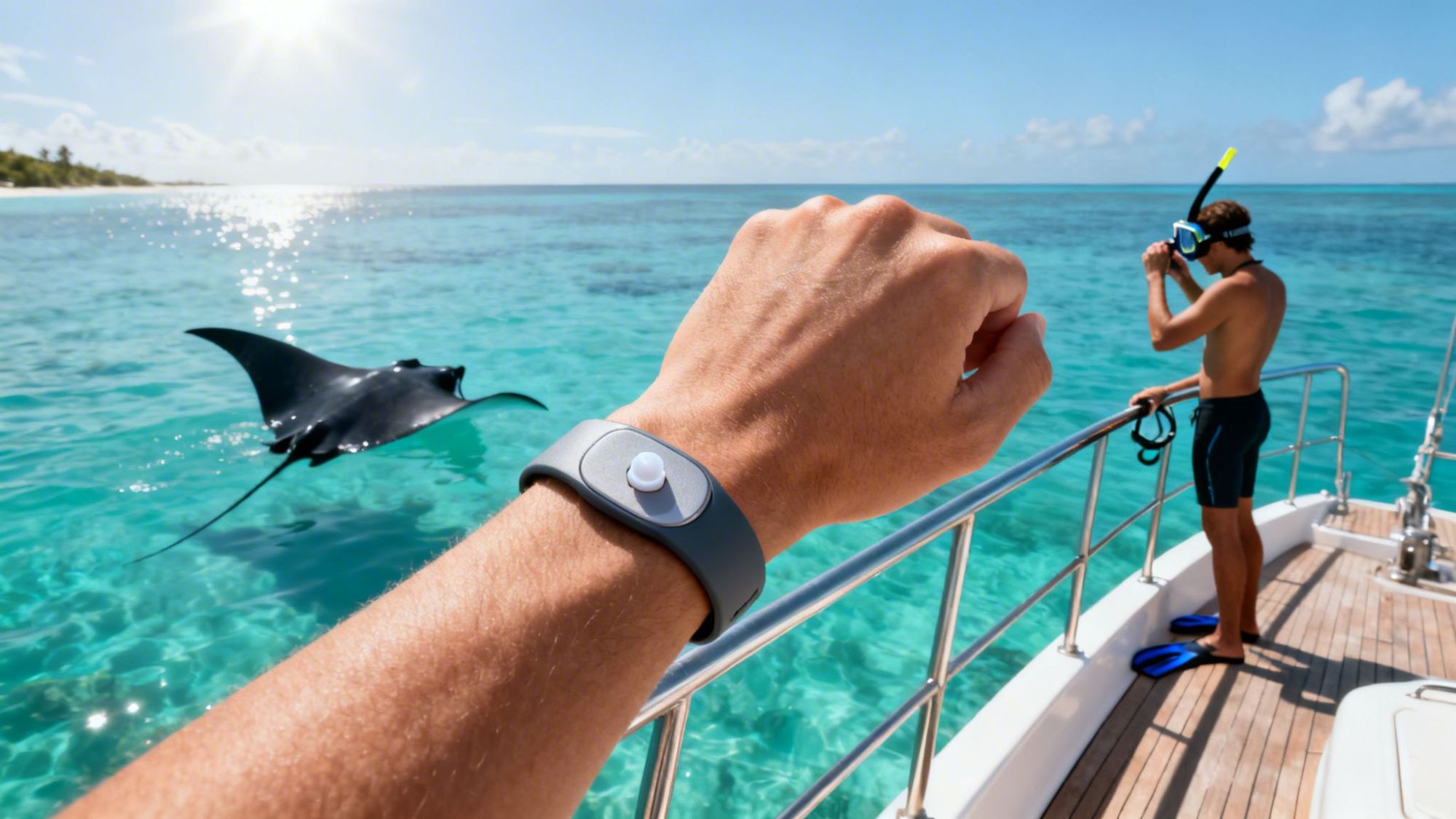
There's nothing worse than having a beautiful Hawaiian day on the water ruined by that dreaded queasy feeling. For a lot of folks, the simple fear of seasickness is enough to make them think twice about a boat trip. But it doesn't have to be that way. Sea-Band motion sickness bands offer a drug-free way to keep nausea at bay, using simple acupressure to keep you feeling good and fully present for your adventure.
As Kona Snorkel Trips, the top rated & most reviewed snorkel company in Hawaii, we want to ensure you have the best possible experience on the water.
Your Guide To A Nausea-Free Snorkeling Adventure

The thought of getting seasick can be a real downer, especially when you're dreaming of incredible moments like swimming with gentle giants on our Manta Ray Night Snorkel. Here at Kona Snorkel Trips, your comfort and having an unforgettable time on the water is our absolute priority.
This guide is all about helping you find a way to beat seasickness before it even starts. We'll walk you through the different remedies out there so you can pick the one that feels right for you.
Choosing Your Seasickness Solution
Finding the right way to prevent motion sickness is a pretty personal choice. What works wonders for one person might not be the best fit for another. Here are some of the most popular and effective options we see our guests use:
- Acupressure Wristbands: A go-to drug-free choice. Bands like these generic Sea Band wristbands put gentle pressure on a specific point on your wrist, which helps interrupt those pesky nausea signals before they start.
- Over-the-Counter Pills: Medications like Dramamine pills and Bonine pills are very effective for most people, but the trade-off can be drowsiness.
- Medicated Patches: The Ship-EEZ Seasickness Patch is a popular option that you stick behind your ear for long-lasting relief.
- Natural Remedies: Sometimes the simplest things work best. Many people swear by natural options like ginger chews, which are well-known for their stomach-soothing properties.
Snorkeling is one of the best ways to get that thrill of ocean exploration—it’s a perfect example of adventure tourism at its finest. If you're curious about what makes these kinds of experiences so addictive, you can learn a lot more about the whole concept.
A little bit of planning can make sure your underwater journey is amazing for all the right reasons. For an even deeper look at how to stop seasickness in its tracks, check out our full guide on how to avoid sea sickness. We'll break down exactly how all these different methods work so you can head out on the water feeling totally prepared and confident.
It seems almost too good to be true, right? How can a simple little wristband stop that powerful, overwhelming wave of seasickness before it starts? The answer isn't some kind of boat trip magic, but a really clever use of an ancient practice called acupressure. Sea Band motion sickness bands are designed to put this theory to work in a way that’s simple and surprisingly effective.

The whole idea works because of one very specific spot on the inside of your wrist. This isn't just a random spot—it's a well-known acupressure point called P6, or Neiguan point. For centuries, traditional medicine has used this exact point to help with nausea and vomiting. The Sea-Band just takes that knowledge and puts it into a wearable format, with a small plastic stud that applies constant, targeted pressure right where you need it.
Jamming The Nausea Signal
So, how does that pressure actually help? Think of motion sickness as a big misunderstanding inside your body. Your inner ear feels the rocking of the boat, but your eyes are looking at the stable deck or cabin. Your brain gets these mixed signals, gets confused, and hits the panic button—which, for us, means feeling sick.
This is where the Sea-Band steps in. The steady pressure from that little plastic stud on your P6 point basically "jams" the communication line.
By stimulating the median nerve that runs right under this spot, the band interrupts the nausea signals traveling from your stomach up to your brain. It’s like creating static on a radio station; the original message of "I'm going to be sick!" gets scrambled and never quite makes it through.
It’s this simple but effective mechanism that makes sea band motion sickness bands such a go-to for so many boaters and snorkelers. If you want to dive deeper into how they stack up against other options, check out our article comparing the benefits of using a sea sickness bracelet.
The biggest win here is that this whole approach is completely drug-free. Unlike pills like Dramamine or Bonine, you aren't putting any chemicals into your system. That means no drowsiness, no dizziness, and no groggy feeling. You stay sharp, alert, and ready to hop in the water—which is exactly what you want on a snorkel adventure.
Of course, you can always combine them with other drug-free helpers like natural ginger chews for a little extra stomach-settling power. If you know you need something stronger, you could look into medicated options like the Ship-EEZ Seasickness Patch. But for a simple, reusable first line of defense, the generic Sea Band wristbands are a fantastic place to start.
The Science Behind Acupressure For Nausea
While personal stories about beating seasickness are great, it's fair to ask: is this stuff for real? Do sea band motion sickness bands actually work, or is it just wishful thinking? The answer is a big, definitive yes. This goes way beyond the placebo effect; there are a number of solid studies showing that acupressure has a real, measurable impact on nausea.
When you feel that awful queasy feeling on a boat, it’s because your brain is getting mixed signals from your eyes and inner ear. Acupressure bands target a very specific spot on your wrist, the P6 point (or Neiguan point, for the technical folks), to interrupt those nausea signals before they ruin your day.
Evidence From Clinical Trials
Some of the most convincing proof comes from a field where nausea is a huge problem: migraines. A major study in May 2012, published in Neurological Sciences, tested Sea-Bands on 40 female patients who always got nauseous during their migraine attacks.
Researchers tracked their nausea levels with and without the bands, and the results were stunning. On average, the patients' nausea scores dropped from a miserable 6.36 down to just 0.92 after wearing the bands for four hours.
That’s an 86% reduction in nausea severity. It’s hard-to-ignore data showing that pressure on the P6 point genuinely works wonders. You can dig into the study's findings yourself to see just how effective it was.
This kind of clinical validation is so important. It proves the relief you feel isn't just in your head—it's a direct result of the physical pressure from the band, making it a reliable tool for your snorkel trip.
What This Means For You
For anyone planning a day on the water, this research is fantastic news. It means you’re relying on a solution backed by science, not just an old wives' tale.
This is especially valuable for snorkelers who need to stay sharp and can't afford the drowsiness that often comes with motion sickness pills. While medication has its place, having a drug-free option with proven results is a game-changer.
Of course, acupressure isn't your only natural option. Many people swear by ginger, a classic remedy for an upset stomach. To see how it stacks up, check out our guide on using ginger tablets for sea sickness. Combining a few of these natural methods can give you a powerful defense against nausea, making sure you feel your best from the moment you step on the boat.
How To Get The Best Results From Your Sea-Bands

When we see people say their sea band motion sickness bands didn't work, we can almost always guess the reason: they weren't wearing them correctly. It’s a surprisingly common mistake! For these simple bands to do their job, the little plastic stud has to press on one very specific spot.
Getting this right isn't just a suggestion; it's the entire key to making them effective. Luckily, there’s a simple “three-finger” trick that makes it foolproof.
Finding The P6 Point: A Step-by-Step Guide
Proper placement is everything. Just follow these quick steps to make sure your bands are perfectly positioned for a great day on the water.
- Measure Three Fingers: Turn one of your palms face up. Take the first three fingers of your other hand and place them across your wrist, right against the crease where your hand meets your arm.
- Locate the Point: The magic spot, known as the P6 or Nei-Kuan point, is right under your index finger. You should be able to feel it nestled between the two tendons in your forearm.
- Position the Band: Slide the Sea-Band onto your wrist with the plastic button facing down, making sure it’s pressing firmly right on that P6 point.
- Repeat on the Other Wrist: This is crucial! For the bands to work properly, you must wear one on each wrist.
Once they're on, you should feel a steady, firm pressure from the plastic stud. It’s not just a bracelet; think of it as a targeted tool. Getting this one detail right can be the difference between a fantastic day and a miserable one.
For more tips on getting ready for your adventure, check out our full guide on what to wear for snorkeling.
Getting The Most From Your Sea-Bands
Beyond just putting them on right, a little planning goes a long way. For the best results, put your bands on before you even get on the boat. Don't wait until you feel the first twinge of queasiness!
And yes, you can absolutely wear them snorkeling. They’re made from a durable, washable material that’s designed for the water.
One of the biggest wins for Sea-Bands is that they are completely drug-free, meaning no drowsiness to cloud your underwater experience. This isn’t just wishful thinking, either. Research on acupressure in other medical contexts showed a 23.8% drop in nausea for people using the bands. This just confirms what many of us have found: acupressure is a legitimate tool for snorkelers who want to stay sharp and enjoy the day.
Our Pro Tip: For maximum effectiveness, wear both bands, put them on before you leave shore, and double-check that they’re placed perfectly on the P6 point. A few seconds of prep can make all the difference.
While we love starting with a drug-free option like these generic Sea Band wristbands, it’s always smart to know your alternatives. Here’s a quick comparison with common seasickness pills.
Sea-Bands vs. Pills: A Quick Comparison
This table breaks down why so many people prefer to start with a drug-free approach for a day of snorkeling.
| Feature | Sea-Band Wristbands | Dramamine/Bonine Pills |
|---|---|---|
| Mechanism | Drug-free acupressure | Antihistamine medication |
| Side Effects | None (mild skin indentation) | Drowsiness, dry mouth |
| Timing | Effective before or during nausea | Must be taken before travel |
| Suitability for Snorkeling | Excellent, non-drowsy | Caution advised due to drowsiness |
| Reusable | Yes, can be washed and reused | No, single-dose pills |
As you can see, the non-drowsy, reusable nature of Sea-Bands makes them a perfect fit for snorkeling. Many people will even pair them with other natural remedies like ginger chews. Of course, if you know you need something stronger, prescription options like the Ship-EEZ Seasickness Patch are also out there.
Comparing The Best Seasickness Solutions For Hawaii
While we're big fans of Sea-Band wristbands as a drug-free way to go, it's smart to know all your options before heading out on the water. Figuring out how to prevent seasickness is a pretty personal thing. What works like a charm for one person might not do the trick for you, so let's break down the top choices. This will help you build a game plan and feel ready for your big day.
Your main choices really boil down to a few categories, and each one comes with its own trade-offs. From totally natural options to powerful medications, there’s a solution that will match your comfort level and needs.
Natural And Drug-Free Options
For a lot of snorkelers, skipping the medication is a huge priority. You want to be sharp, feel coordinated in the water, and be fully present for the incredible world unfolding below you.
- Sea-Band Wristbands: As we've been talking about, acupressure bands like these popular generic Sea Band wristbands are a go-to choice. They’re reusable, won't make you drowsy, and you can even put them on after you start to feel a little queasy.
- Ginger Chews: This is a time-tested remedy for an unsettled stomach. Ginger chews are super easy to toss in your bag, they taste good, and offer gentle, natural relief. A lot of people use them alongside Sea-Bands for a little extra insurance.
So, do they actually work? The effectiveness of acupressure has been studied for different kinds of nausea, and the results are mixed but lean toward positive. For example, studies looking at morning sickness in pregnancy showed that steady pressure on the P6 point significantly helped many women. What this tells us is that while they are a totally reasonable tool to prevent motion sickness, your own mileage may vary. You can read the full research on these findings if you want to geek out on the science.
Over-The-Counter And Prescription Medications
When you want more of a guarantee, over-the-counter (OTC) and prescription meds bring the heavy artillery. The main trade-off? Drowsiness, which is a major thing to consider when you've got an active day of snorkeling planned.
- OTC Pills: Pills like Dramamine and Bonine are highly effective antihistamines. They block the nausea signals heading to your brain, but the key is you must take them before you even step on the boat.
- Prescription Patches: For relief that lasts, something like the Ship-EEZ Seasickness Patch is a popular pick. You wear it behind your ear, and it delivers medication slowly over a few days.
Nailing your personal nausea-prevention strategy means you can focus on the unforgettable adventure ahead, whether that's the magical Manta Ray Night Snorkel or a trip out to Kealakekua Bay. For those seeking an exceptional alternative for a Manta Ray night snorkel tour, Manta Ray Night Snorkel Hawaii is a fantastic choice. Similarly, Captain Cook Snorkeling Tours offers an amazing alternative for exploring Captain Cook. And if diving is your passion, Kona Honu Divers, the top rated & most reviewed diving company in both Hawaii and the Pacific Ocean, provides incredible manta ray dives.
For a deeper dive into these options, check out our guide on the best seasickness medication.
Check AvailabilityYour Sea-Band Questions Answered
Even after getting the full rundown, it's normal to have a few lingering questions. We get it. You want to be sure you're all set before hopping on the boat.
Let’s tackle some of the most common questions we hear from fellow snorkelers, so you can feel totally prepared for your day on the water.

Can I Swim And Snorkel While Wearing Sea-Bands?
Yes, absolutely! They're made for the water, which is why we love them for boat and snorkel trips.
Just give them a quick rinse with fresh water when you're done for the day. This helps wash off the salt and keeps them in good shape for your next adventure.
How Do I Know If The Bands Are In The Right Spot?
You’ll know you’ve got it right when you feel some solid, steady pressure from the little plastic stud.
For most people, a slight tenderness right on the P6 point is the tell-tale sign. It means the band is sitting just where it needs to be to work its magic.
What If I Still Feel Nauseous With The Bands On?
First thing's first: double-check the placement. Use that three-finger trick again to make sure they haven't shifted.
If the spot looks right, try giving the plastic stud on each wrist a good press for a minute or two. Sometimes that extra bit of stimulation is all you need. You can also safely pair them with other non-drowsy remedies like ginger chews for a little extra backup.
Are Sea-Bands Reusable?
They sure are, and that’s a huge plus! You can just hand wash them with a bit of mild soap and let them air dry.
They’re designed to keep their stretch over many trips, which makes the generic Sea Band wristbands a really smart, budget-friendly choice for anyone who spends time on the water. Of course, there are always one-time-use options like the Ship-EEZ Seasickness Patch, Dramamine pills, or Bonine pills if you prefer.