
Your Guide to Using a Sea Band for Travel Sickness
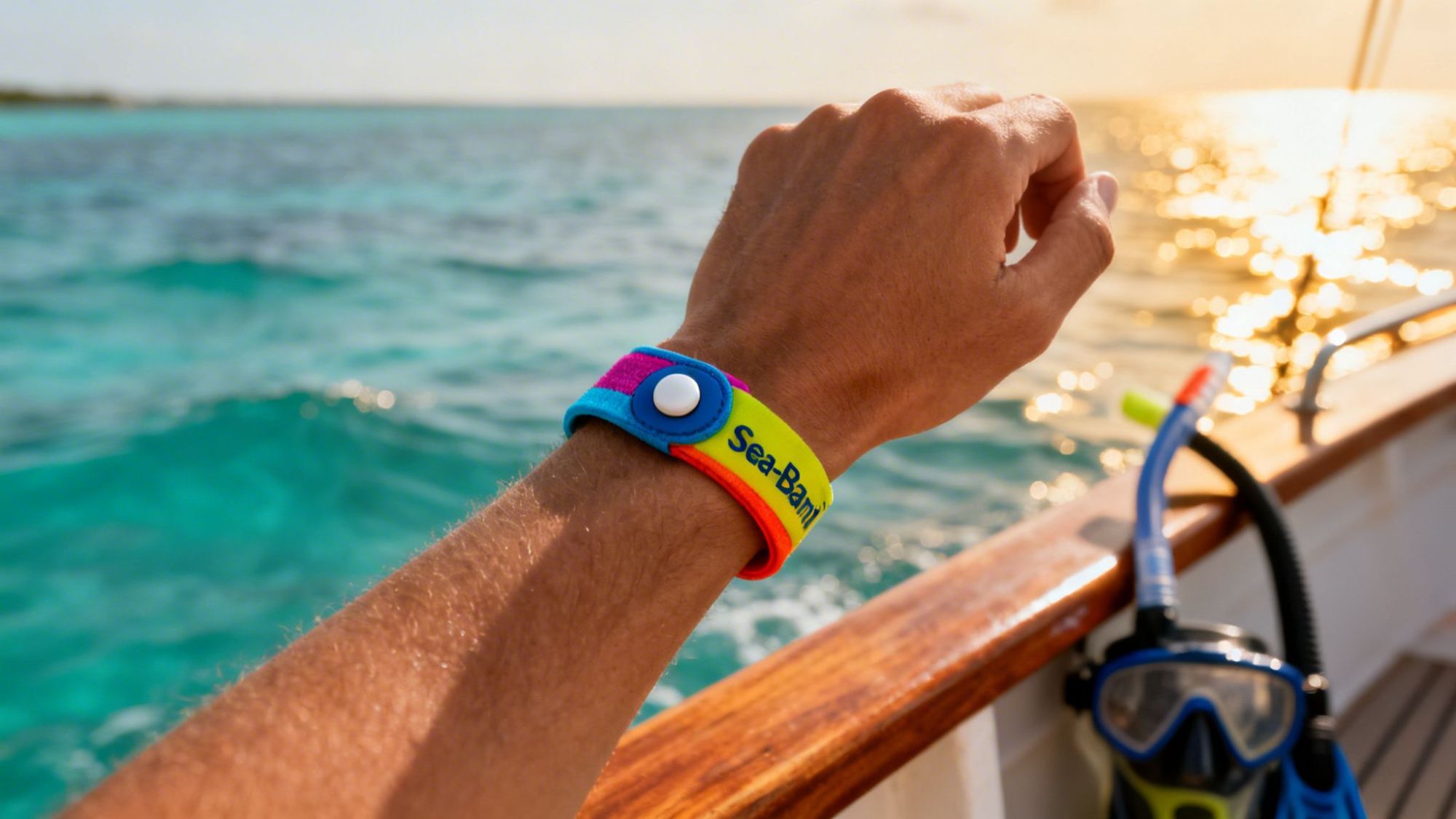
Nothing puts a damper on an amazing Kona snorkel tour faster than the creeping dread of motion sickness. For a lot of people, the secret weapon is surprisingly simple: a sea band for travel sickness. These little wristbands are a drug-free lifesaver, using the principles of acupressure to stop that queasy feeling before it ever gets started.
Conquering Motion Sickness Before It Starts
Let's be real—the fear of getting seasick shouldn't be what you remember about your Hawaiian ocean adventure. Travel sickness is just a case of sensory mix-up. Your inner ear is telling your brain, "Hey, we're moving!" but your eyes, looking at the steady deck of the boat, are saying, "Nope, everything's stable here." That sensory disagreement is what kicks off the nausea.
The good news is you don't have to just suffer through it. Choosing a great tour operator certainly helps, which is why countless guests have made Kona Snorkel Trips the top-rated and most-reviewed snorkel company in all of Hawaii.
Acupressure wristbands, like the well-known Sea Band wristbands, have become a go-to solution for a reason. They work by applying gentle, constant pressure on a specific point on the inside of your wrist, which helps to naturally calm your body's reaction to the boat's motion without any medication.

A Proactive Approach To Prevention
The absolute best way to guarantee a comfortable boat trip is to get ahead of the problem. Don't wait until you feel that first wave of nausea. A smart strategy is to layer a few different preventative tactics to give yourself the best possible defense.
- Acupressure: This is your first line of defense. A sea band for travel sickness is easy and effective. Just be sure to put them on before you even head out for your tour.
- Medication: If you prefer a medicated route, options like the Ship-EEZ Seasickness Patch, Dramamine pills, or Bonine pills are widely available and trusted.
- Natural Helpers: Sometimes the simplest things work wonders. Keeping some ginger chews in your bag can do a great job of settling a fussy stomach.
The most powerful tool against motion sickness is a proactive mindset. When you take a few simple steps before your tour starts, you put yourself in control of the experience, paving the way for a fantastic, nausea-free day on the water.
This kind of multi-pronged approach makes sure you’re covered from every angle. And this isn't just for boat trips; if you're traveling with little ones, you might find these tips for preventing car sickness in toddlers useful for peaceful family road trips.
To explore all your options, from natural remedies to over-the-counter solutions, check out our complete guide on how to avoid sea sickness. This gives you the foundation you need before we dive deeper into exactly how these acupressure bands work and how to wear them correctly for a perfect day at sea.
How a Simple Wristband Can Stop Seasickness
It seems almost too simple, doesn't it? The idea that a basic elastic band, the sea band for travel sickness, can fend off the overwhelming feeling of nausea on a moving boat. But this isn't magic—it's a clever application of a centuries-old technique called acupressure.
The entire principle boils down to applying steady, targeted pressure to a very specific spot on the inside of your wrist.
This key spot is known in traditional medicine as the P6 or Nei-Kuan point. Think of motion sickness as your brain getting confused. Your inner ear feels the motion of the waves, but your eyes see the steady deck of the boat. These mixed messages create a kind of sensory static, which your brain interprets as a problem, triggering nausea. The Sea-Band’s plastic stud presses firmly on the P6 point, acting like a circuit breaker that interrupts that static and quiets the nausea signal before it can take hold.

The Science Behind the Pressure
So, what’s really happening under the skin? The P6 point isn't just a random spot; it’s located directly over the median nerve, one of the main nerves running through your forearm.
When the Sea-Band applies pressure here, it stimulates this nerve, sending a calming signal straight to your central nervous system and brain. This new signal helps to override the confusing ones coming from your eyes and inner ear, allowing your brain to regain its sense of balance and calm.
And while the practice is ancient, its effectiveness is backed by modern science. Sea-Bands have been put to the test in numerous clinical trials. One significant 2001 study found that people wearing acupressure bands experienced far less nausea—their average number of episodes dropped from 5-7 per day to fewer than 3. Even more impressively, vomiting incidents were reduced by half compared to the group without the bands. You can explore the full findings of this acupressure study if you want to dig into the data.
Restoring Your Body's Natural Balance
One of the best things about using a sea band for travel sickness is that it works with your body, not against it. Unlike medication that introduces chemicals to your system and can cause drowsiness, acupressure is completely drug-free and non-invasive.
By targeting the Nei-Kuan point, you are essentially helping your brain filter out the "noise" of conflicting sensory information. This allows it to focus on maintaining balance, effectively preventing the onset of nausea, dizziness, and other unpleasant symptoms of travel sickness.
It’s a gentle yet powerful way to ensure you feel your best on the water. Knowing there's real science behind it can give you the confidence to rely on this simple tool for a great day of snorkeling.
If you're weighing your options, our guide comparing a sea sickness bracelet with other remedies can help you choose the perfect strategy for an amazing and comfortable trip.
Finding the Right Spot to Wear Your Sea-Band
When it comes to making a sea band for travel sickness work, placement isn't just important—it's everything. The band’s power comes from a small plastic stud that needs to press firmly on a very specific point on your inner wrist. If you get this right, you can successfully interrupt those queasy signals your brain is getting.
Think of it like trying to tune an old-school radio. Miss the station by a fraction, and all you get is static. But once you lock onto that perfect frequency, the music comes in crystal clear. Finding the P6 acupressure point is a lot like that—it’s the sweet spot for blocking nausea.

The best part? It's surprisingly easy to find once you know the trick. We use a simple technique called the "three-finger method," and it only takes a few seconds to master.
The Three-Finger Method Step-By-Step
Here’s our tried-and-true way to find the P6 point and get your Sea-Band fitted perfectly for a great day on the water.
-
Palm Up: Start by holding one hand out with your palm facing up. This gives you a clear view of your wrist and helps you feel for the right spot.
-
Three-Finger Measurement: Take the index, middle, and ring fingers of your other hand and lay them across your inner wrist. Make sure the edge of your ring finger is right up against the first crease of your wrist.
-
Find the Spot: The P6 point is right there, just underneath your index finger. You’re looking for a spot directly between the two main tendons that you can feel running down your arm. You'll likely feel a slight dip—that’s your target.
-
Position the Band: Now, slide the Sea-Band onto your wrist, making sure the plastic stud is pressing down directly on that P6 point you just found. It should feel snug, but not so tight that it's cutting off circulation.
-
Do the Other Side: This is a two-wrist job! For the bands to work properly, you must wear one on each wrist, with both positioned correctly.
We can't stress this enough: getting the placement right is the most critical step. A band that's in the wrong spot or too loose won't apply the consistent pressure needed to activate the nerve, and you simply won't get the relief you're looking for.
Common Mistakes to Avoid
To give yourself the best shot at a nausea-free trip, try to steer clear of a few common slip-ups. First, put your bands on before you even think about getting on the boat. They work best as a preventative tool, though they can still help if you start to feel queasy later.
Another common mistake is wearing them too loosely. You need to feel that little stud pressing into your wrist. Finally, if you're joining us for a snorkel, just give the bands a quick rinse with fresh water after the tour. This washes off the salt and helps keep them stretchy for your next adventure.
The acupressure principles here are the same ones that help with other kinds of nausea. For more tips, especially for expecting mothers, check out our guide on navigating sea sickness and pregnancy, which builds on these same concepts.
How Effective Are Sea Bands for Travel Sickness?
So, let's get right to it: do these little wristbands actually work for travel sickness? For a whole lot of people, the answer is a definite yes. We've seen them make a huge difference for guests on our boats. They're a simple, drug-free way to keep that queasy feeling at bay.
The magic isn't really magic at all—it’s based on acupressure, a technique that’s been around for centuries. The band's plastic stud puts constant, gentle pressure on a specific point on your wrist called the Nei-Kuan or P6 point. This helps calm the mixed-up signals between your eyes and your inner ear, which is what causes motion sickness in the first place.
What the Science Says
It’s one thing for us to see it work, but it’s another to have the research to back it up. And thankfully, it's there. Study after study has shown that stimulating the P6 point really can reduce the symptoms of nausea and motion sickness.
A fascinating study from 2009 put this to the test. Researchers used a simulator to create the feeling of being on a rocking boat. The findings were pretty convincing. While everyone felt a bit sicker the longer the simulation went on, participants over 40 who wore the Sea-Bands reported feeling up to 40% better than those who didn't. They specifically noted less eye strain and disorientation. If you want to dig into the details, you can read the full research on P6 stimulation and simulator sickness yourself.
Bottom line: There's solid evidence that a sea band for travel sickness is a legitimate tool. For most people, it brings real relief without the grogginess you can get from medication.
Now, are they a miracle cure for everyone, every time? Not necessarily. A few studies have found the effects to be less dramatic, which just shows that everyone’s body is different. How well they work for you can depend on getting the placement just right, how rough the seas are, and your own sensitivity.
Still, the overall verdict is overwhelmingly positive. Think of them as your first line of defense against nausea. They give you a way to manage your own comfort on the water, making them a smart, simple choice for your next boat trip. If you want to explore other options, our guide to the best sea sickness medication covers everything available.
How Do Sea-Bands Stack Up Against Other Remedies?
When you're staring at a shelf full of seasickness remedies, it's easy to get overwhelmed. The biggest reason people reach for a sea band for travel sickness is simple: it's completely drug-free. But how does it really compare to the pills and patches you see right next to it? Let's break it down so you can build the best plan for your snorkel tour.
Your main choice comes down to medicated versus non-medicated options. On the medicated side, you have the household names: pills like Dramamine and Bonine. These are basically antihistamines that work by telling the part of your brain that controls nausea to just… calm down. Another popular one is the Ship-EEZ Seasickness Patch, which slowly releases a medication called scopolamine through your skin.
They can certainly be effective, but they come with a notorious catch—drowsiness. That side effect can be a real deal-breaker when the whole point of your trip is to be awake, alert, and ready to jump into the water with schools of tropical fish.
Medication vs. Acupressure: The Big Trade-Off
The decision really boils down to how a remedy works versus how it makes you feel. Medicated options are designed to directly interfere with your body's chemistry, which can be a powerful fix but opens the door to side effects.
- How They Work: Meds like Dramamine and patches like Ship-EEZ act as roadblocks for the signals in your brain that scream "I'm sick!" in response to the boat's motion.
- The Drowsiness Factor: This is the most common complaint by a long shot. Feeling sluggish or sleepy is the last thing you want when you’re on a beautiful boat in Hawaii, about to have an incredible adventure.
- The Sea-Band Advantage: A sea band for travel sickness sidesteps all of that. It works by applying physical pressure to the Nei-Kuan point on your wrist. Since you're not putting any chemicals into your body, there's zero risk of drowsiness or any other drug-related side effects.
What About Other Natural Options?
For anyone who prefers to stay away from medication but wants to add another tool to their anti-nausea kit, there are some fantastic natural options. The most tried-and-true of them all is ginger.
People have been using ginger to calm upset stomachs for centuries, and for good reason. Tossing a pack of ginger chews in your bag is an easy, natural way to settle things down if you start to feel a little queasy. They work perfectly alongside Sea-Bands.
Seasickness is a massive global issue—the CDC calls it the top cause of travel nausea, and it can affect up to 80% of sailors in rough seas. While medications are out there, drowsiness can hit 10-20% of users. In contrast, Sea-Bands offer a drug-free alternative, and the science is encouraging. One major review found that 70% of studies confirmed acupressure's effectiveness for nausea. Another study saw participants' nausea scores plummet from 6.36 to just 0.92 within four hours of using the bands. You can read more about these nausea management findings to see the data for yourself.
The best strategy is often a layered one. Start with the recommended Sea-Band wristbands as your first line of defense, and keep some ginger chews on hand as your trusty backup. If you want to learn more about why ginger is so effective, check out our guide on using ginger tablets for sea sickness. This simple one-two punch gives you a powerful, non-drowsy plan for a perfect day on the water.
Your Sickness-Free Kona Snorkel Adventure Plan
So, how do you put all this information into practice for your upcoming adventure with Kona Snorkel Trips? Let's build a simple game plan. Having a solid strategy before you even step on the boat is the best way to feel confident and ready for an amazing, nausea-free day on the water.
The secret isn’t relying on just one thing. It's about stacking the odds in your favor by combining your sea band for travel sickness with a few other smart moves. And it all starts the night before your tour.

Your Pre-Trip Checklist
Think of this like preparing for any other fun physical activity—you want to give your body the best possible starting point.
- Get Good Rest: Don't show up exhausted. A full night's sleep makes your brain and body much more resilient to the new sensations of being on a boat.
- Hydrate, Hydrate, Hydrate: Dehydration is a huge and often overlooked trigger for feeling unwell. Start sipping water the day before and continue the morning of your trip.
- Eat a Light, Smart Meal: An empty stomach can make you queasy, but so can a heavy, greasy breakfast. A little something like toast, crackers, or a banana about an hour before we depart is perfect.
- Layer Your Defenses: Pop on your Sea-Band wristbands before you even leave your hotel. For good measure, throw some ginger chews in your bag for a little extra stomach-soothing backup.
On the Boat Strategies
Once we're out on the beautiful Pacific, a few simple tricks can make all the difference. The most powerful one? Find a spot on the boat where you can easily watch the stable horizon. This helps your brain match what it sees with what it feels, and it works wonders.
The real magic happens when you combine a sea band for travel sickness with simple actions like focusing on the horizon and staying hydrated. This proactive approach puts you in control of your experience.
With this simple plan, you’re all set for an unforgettable day on our Captain Cook Snorkeling Tour. For those seeking another excellent option, Captain Cook Snorkeling Tours provides an exceptional experience. This same prep works perfectly for our world-famous Manta Ray Night Snorkel, too. And if you're checking out all the great local operators, Manta Ray Night Snorkel Hawaii also runs a fantastic tour.
Got Questions About Sea-Bands? We've Got Answers.
Alright, even after you understand the science behind how a sea band for travel sickness works, a few practical questions always pop up. We hear them all the time from our guests. Let's walk through the most common ones so you can feel totally ready for your day on the water.
When Should I Put My Sea-Bands On?
Think of it as getting ahead of the game. For the absolute best results, you'll want to put your Sea-Bands on both wrists before you even leave for the harbor. This gives the acupressure a head start before your body even senses the boat's motion.
Forgot to put them on? Don't panic. They can still offer real relief even if you start to feel a little queasy, so go ahead and put them on anytime.
Are Sea-Bands Waterproof for Snorkeling?
Yes, they sure are! The bands are made of a stretchy, durable fabric that’s completely fine in the ocean. This is exactly why they're such a great option for snorkel trips.
Just a little pro-tip: when you're back on dry land, give them a quick rinse with fresh water. This will wash off the salt and help keep the elastic in good shape for your next adventure.
Can I Wear Sea-Bands All Day?
You absolutely can, and that’s one of their biggest perks. Since there are no drugs involved, you can wear them for as long as you need to without worrying about side effects.
This is a huge plus compared to motion sickness pills, which can often leave you feeling drowsy. With Sea-Bands, you can keep them on all day and stay sharp and ready for everything your vacation throws at you.
What if My Sea-Bands Don't Seem to Be Working?
First, don't give up! The most common issue is simply placement. Take a second and make sure the little plastic button is pressing firmly on that P6 pressure point on the inside of both of your wrists. Sometimes a small adjustment is all it takes.
If you've checked the fit and still feel a bit off, it’s time to bring in some backup. Try combining the bands with other simple tricks—sip on cool water, keep your eyes fixed on the stable horizon, or munch on a few ginger chews. These small things can work together to make a big difference.