
Scuba Hawaii: Your Ultimate 2026 Kona Diving Guide
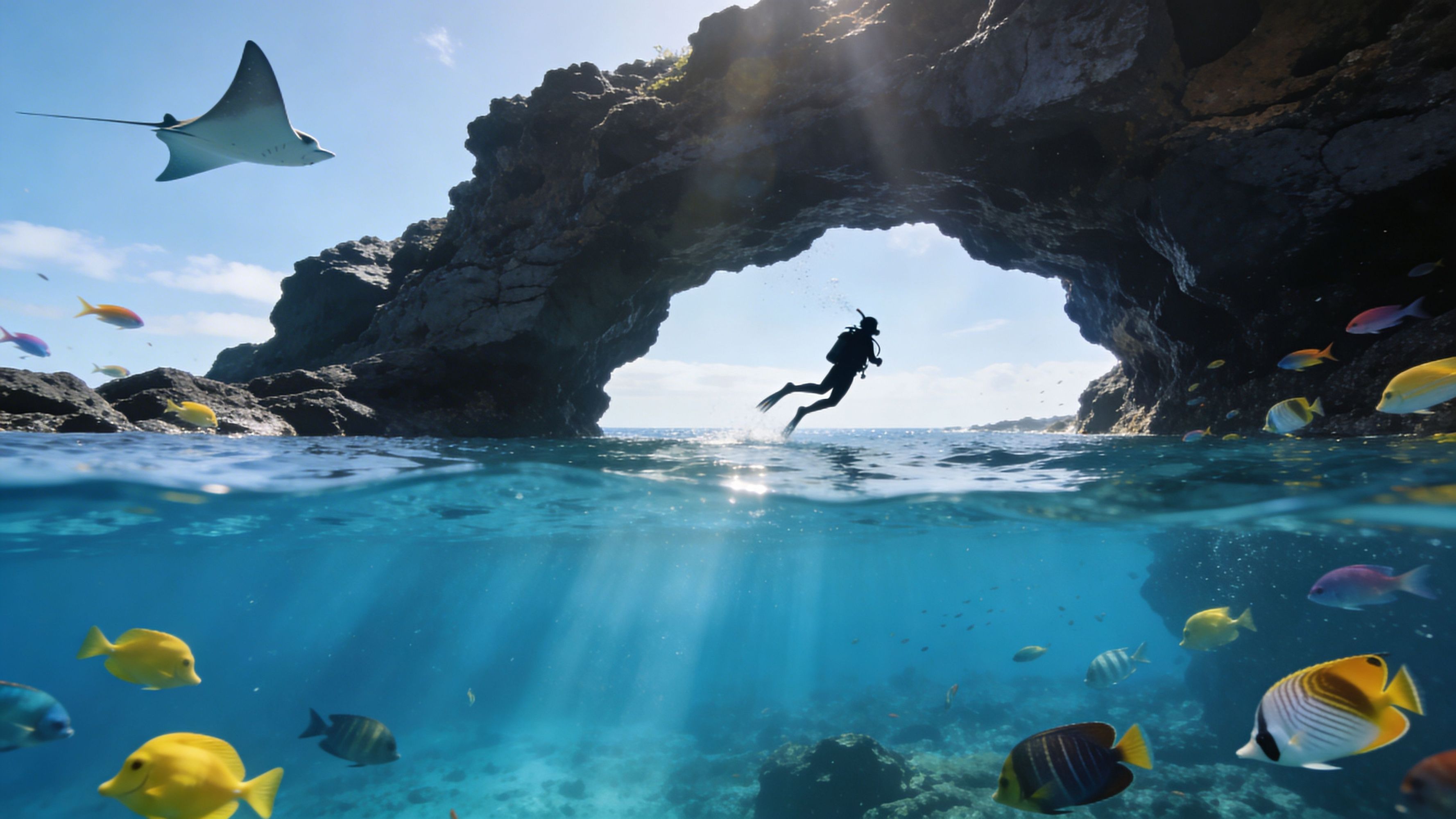
The trip usually starts the same way. You’ve snorkeled before, you love the water, and now you’re wondering whether scuba hawaii is worth building part of your vacation around.
Short answer: yes, especially if you base that decision around Kona.
Welcome to Your Hawaiian Underwater Adventure
The first breath underwater changes people. One minute you’re listening to the boat, checking your mask, and thinking about your ears. A few moments later, the noise from shore is gone and the whole world turns blue, calm, and strangely spacious.
In Kona, that first descent often comes with excellent clarity, dark lava structure beneath you, and fish movement that feels organized in a way reef life rarely does from the surface. Yellow tangs sweep over rock. A turtle drifts past as if it has all day. Light pours down through the water in long bright bands.
That’s why visitors who start by searching for general Hawaii diving advice often end up narrowing their plans to the Big Island. The underwater terrain feels dramatic, but the conditions are approachable. For a first-timer, that matters. For a certified diver, it matters even more.
A lot of broad travel content treats all Hawaiian diving as interchangeable. It isn’t. Site access, wind exposure, training options, and daily reliability vary more than most visitors expect. If you want a useful overview before locking in your plans, this roundup on Hawaii diving is a good place to start.
Tip: If you’re equal parts excited and nervous, that’s normal. The best Hawaii dive trips are built around conditions that lower stress, not around trying to force the most famous site onto the wrong day.
Kona works because it gives you options. You can try scuba for the first time, finish a certification, or dive sites that stay on experienced divers’ short lists for years.
Why Kona is Hawaii's Scuba Diving Epicenter
Kona earns its reputation the practical way. The diving is not just scenic. It is dependable, varied, and unusually well suited to both beginners and serious repeat divers.

The coast gives divers a better setup
On the Big Island’s west side, the coastline is protected in a way that often produces calmer, clearer diving than visitors find on more exposed coasts. That changes everything. It means more comfortable entries, more consistent boat days, and a better experience for anyone who does not want their vacation hinging on a weather gamble.
The water also rewards attention. Hawaii’s marine biodiversity is unusually distinct. More than 25% of all marine species in the Hawaiian Islands are endemic, and Kona has the world’s highest rate of endemism for both marine fish and invertebrates according to this overview of Big Island scuba diving.
That’s not just a science note. It changes what you see on a dive. Kona is one of those places where even a straightforward reef dive feels locally specific instead of generic tropical.
What sets Kona apart underwater
A strong Kona dive day often includes features that visitors remember more clearly than the fish list:
- Lava architecture: Arches, tubes, ledges, and fractured volcanic structure give the dives shape.
- Clear sight lines: Good visibility makes buoyancy easier for new divers and photography easier for experienced ones.
- Wildlife variety: Turtles, reef fish, and larger pelagic surprises all feel possible.
- Day-to-night range: The same coast can deliver relaxed daytime reef dives and highly specialized night diving.
That last point matters. Kona is one of the few places where a trip can naturally grow from “I want to try scuba” into “I want to do something I can’t do anywhere else.”
For divers who already know they want the deeper Kona experience, blackwater diving is one of the clearest examples of how far beyond standard reef diving this coast goes.
The operator choice matters
Even in great conditions, the wrong operator can make a dive feel rushed, crowded, or overly scripted. The best experiences come from crews that understand site selection, diver pacing, and how to match the day’s conditions to the group.
For scuba on the Big Island, Kona Honu Divers is the standout name I’d point people toward first. They have the local focus and range of offerings that make Kona special, from beginner-friendly diving through advanced night experiences.
Your Ultimate Hawaii Dive Site Guide
Hawaii supports a major dive scene. The islands generate over 1.5 million dives annually across more than 215 licensed dive shops, a scale that helps place Hawaii among the premier U.S. dive destinations according to this Hawaii scuba industry overview.
That big-picture number is useful, but visitors do not book statistics. They book sites. And when people ask where scuba hawaii becomes unforgettable, Kona owns the strongest share of the conversation.

Hawaii dive hotspots at a glance
| Island | Best For | Typical Visibility | Key Encounters |
|---|---|---|---|
| Big Island, Kona Coast | First dives, lava structure, night diving | Often very clear | Turtles, reef life, manta-focused experiences |
| Maui, Molokini area | Protected crater-style diving | Often clear in good conditions | Reef fish, crater wall scenery |
| Oahu | Wrecks and mixed-access diving | Variable | Reef life, wreck-focused exploration |
| Kauai | More adventurous topography | Variable | Sea caves, dramatic terrain |
| Lanai | Underwater lava formations | Often photogenic in good conditions | Archways, shafts of light, reef life |
Kona sites that work for most divers
Kona’s best regular diving is not only about iconic named sites. It is about how many useful site styles sit close together. You can have an easy reef dive in the morning and a completely different visual experience that same evening.
A few site types consistently deliver:
- Lava arch and tube sites: These are what many visitors picture when they think of Big Island diving.
- Protected reef dives: Good for buoyancy work, fish life, and relaxed bottom time.
- Shore-accessible training-style spots: Better for skill building than for dramatic bragging rights.
- Night dives: Kona’s strongest category for divers who want something singular.
If you want a broader comparison of islands and why many divers land on the Big Island, this guide to the best scuba diving in Hawaii is useful background.
The manta ray night dive
This is the dive that gets non-divers jealous. At the manta dive, divers settle in position underwater while lights attract plankton. The mantas come in to feed and sweep overhead in slow, precise passes.
What works well here is patience. Divers who expect to swim after the animals usually enjoy it less than divers who stay settled, hold good trim, and let the show happen around them. The experience is immersive because the action develops above you, not off in the distance.
For that experience, use the dedicated manta ray dive tour from Kona Honu Divers.
The black water night dive
Black water diving is not a reef dive in the dark. It is its own category. You head offshore at night and drift over deep open water while pelagic larval creatures rise from below.
This is one of the most unusual dives available anywhere, and it appeals most to confident divers who enjoy buoyancy control, situational awareness, and unusual marine life over classic reef scenery. It is calm for some people and mentally demanding for others. Both reactions are normal.
For that specialty experience, use the black water night dive offered by Kona Honu Divers.
General Kona touring strategy
If your schedule allows, don’t book every dive day identically. Kona rewards variety.
A good pattern looks like this:
- Start with a daytime reef dive to get settled into local conditions.
- Add a signature night dive once your weighting and comfort feel dialed in.
- Leave room for operator recommendations because the best site choice depends on that day’s conditions.
- Use a local-focused charter list rather than trying to self-build from internet highlights. Kona Honu Divers keeps that straightforward through their Big Island diving tours page.
Key takeaway: In Kona, the best dive plan is rarely “most famous site first.” It is “best site for today, with your skill level, on this sea state.”
Your Path from Snorkeler to Scuba Diver
A lot of visitors arrive with the same question. They snorkel comfortably, they already love marine life, and they want to know whether scuba is the right next step or too big a jump for one trip.
That gap is real. One of the biggest missing pieces in scuba hawaii content is clear guidance for non-certified beginners transitioning from snorkeling to scuba, especially on the Kona coast, as noted in this piece on scuba diving Hawaii for beginners.

If you are curious but not ready to commit
The right starting point is usually Discover Scuba Diving. It is designed for people who want a real underwater experience without jumping straight into a full certification course.
What this does well:
- Reduces commitment: You can try diving without turning your vacation into a classroom-heavy plan.
- Adds direct supervision: An instructor manages the pace and keeps the experience structured.
- Demonstrates the sensation: Breathing underwater, clearing, equalizing, and hovering all make more sense after you do them.
What does not work is treating an intro dive like a thrill ride. The people who enjoy it most are the ones who show up ready to listen, move slowly, and practice a few core skills before entering open water.
What the beginner progression looks like
Hawaii recreational diving follows familiar PADI-style progression. Introductory Discover Scuba experiences are limited to 12 meters or 40 feet, while certified divers progress to a maximum of 60 feet or 18 meters, as explained in this Kona guide on diving in Hawaii without certification.
That depth structure exists for a reason. New divers need tighter supervision and simpler task loading. Certified divers have more autonomy because they’ve trained for planning, buoyancy, and equipment use.
A useful comparison:
- Snorkeling: You see the reef from above.
- Discover Scuba: You enter the reef environment with a guide controlling the experience closely.
- Full certification: You gain the training to function as a diver, not just a guest underwater.
How to know which path fits you
The best candidates for Discover Scuba usually sound like this: “I’m comfortable in the ocean, but I’m not sure if I want the full course yet.”
The best candidates for certification usually say: “I already know I want this skill, and I want freedom on future trips.”
If you’re still deciding, read this local comparison of the best scuba in Hawaii, then book based on your actual goal, not on what sounds most ambitious.
Tip: If you have a manta snorkel booked and feel inspired to try scuba later in the trip, that is often a better sequence than forcing scuba first. Confidence in the water carries over.
What families should do
Families often overcomplicate the decision. You do not need everyone doing the same activity.
A smoother approach is to split by comfort level:
- One person tries Discover Scuba.
- Another sticks with snorkeling.
- Certified family members book boat dives separately.
- Everyone compares sightings over dinner.
That keeps each person in the sweet spot between excitement and overload, which is the balance most first Hawaii dive trips need.
Planning Your Dive Seasons and Conditions
Kona is one of the easiest places in Hawaii to plan around because the diving season is not confined to a narrow weather window. Conditions shift, but the coast stays useful year-round.
Summer tends to feel especially easy. Water temperatures in Hawaii’s prime diving months commonly range from 77 to 80°F, according to the earlier industry source, which is one reason visitors find packing and exposure protection fairly simple.
Kona diving seasons
| Season | Water Temp (°F) | Highlights | Considerations |
|---|---|---|---|
| Winter | Cooler end of local range | Whale season atmosphere, steady west side access | More weather awareness for surface intervals and boat comfort |
| Spring | Comfortable and balanced | Good all-around planning window | Some days still transition from winter patterns |
| Summer | 77-80°F | Warm water, easy exposure planning | Popular travel period, book earlier |
| Fall | Warm and often pleasant | Strong shoulder-season feel | Conditions can vary day to day like anywhere |
Winter diving and whale season
A question visitors ask all the time is whether scuba during humpback season is safe or disruptive. On the Kona coast, the key fact is that December through April can still offer workable diving because the sheltered west side often maintains 60 to 100 feet of visibility despite occasional showers, with only incidental, not interactive, whale encounters, according to this local write-up on Two Step and winter diving conditions.
That means divers may hear whales or be aware of them in the area, but the dive is not about pursuing them. Good operators keep the focus where it belongs, on site conditions, safety, and passive marine respect.
What each season is best for
Some travelers chase a specific marine mood. Others just want the smoothest diving possible.
Use this quick decision filter:
- Choose summer if warm water and simple exposure planning matter most.
- Choose winter if hearing whale song underwater would make the trip for you.
- Choose shoulder seasons if you prefer a little more flexibility in trip timing.
- Choose Kona over a more exposed coast if trip reliability matters more than island hopping.
If you’re pairing Hawaii with a longer trip from overseas, practical flight budgeting helps preserve more room for dive days and charters. This guide on how to save money on international flights is worth a look before you book airfare.
For a surface-focused version of the same planning question, this article on the best time for snorkeling Big Island Hawaii helps line up ocean conditions with your wider itinerary.
Key takeaway: Kona rarely asks you to chase a perfect month. It asks you to choose the kind of trip you want, then match the day’s plan to the conditions you get.
Essential Gear and Marine Protection Rules
Packing for scuba hawaii is usually easier than visitors expect. You do not need cold-water bulk, and you do not need to overpack “just in case” gear that a solid operator already maintains well.
What to bring and what to rent
A 3mm neoprene full wetsuit is a common local recommendation, as noted in the certification guidance cited earlier. In Hawaii, that thickness is less about surviving cold and more about comfort, sun protection, and reducing minor scrapes.
My advice is simple. Bring the items that affect personal fit and comfort, then rent the big gear unless you are very attached to your own setup.
Good items to bring:
- Mask that fits your face well: A leaking mask ruins attention and comfort faster than almost anything.
- Reef-safe sun protection: You still spend time on deck.
- Light layers for the boat: Surface wind can feel cooler than people expect after dives.
- Certification card and log details: Digital is fine if your operator accepts it.
Usually fine to rent:
- BCD and regulator
- Weights and tanks
- Exposure suit if you do not own one
- Fins if you are not particular about blade style
Depth and training rules matter
Visitors sometimes hear about deep diving and assume Hawaii is casual about limits. It is not. The local beginner pathway stays structured for good reason.
The practical takeaway from the earlier depth guidance is this:
- Intro dives stay shallow
- Certified recreational divers move deeper within training limits
- Anything beyond that belongs in specialized training and proper supervision
That structure is what makes first-time diving here approachable instead of chaotic.
Marine protection is part of being a good diver
The best divers in Hawaii are easy to spot. They move slowly, keep their fins off the reef, and do not treat wildlife like props.
A few habits matter every day:
- Look, don’t touch: Coral, rock, and animals all deserve space.
- Control your buoyancy before chasing a photo: Bad trim does more damage than bad intentions.
- Keep wildlife encounters passive: Let turtles and other animals choose the distance.
- Secure dangling gear: Gauges and octos dragging across lava or coral are a preventable mistake.
Tip: If a guide has to tell a diver to stop touching things, the problem started before the dive. Good habits begin during the gear setup and briefing, not only underwater.
Respect for the reef also improves the dive itself. When divers stop grabbing, kneeling, and rushing, fish settle down and the whole site feels more alive.
Beyond the Tank Top Snorkel Adventures
Some visitors come to Hawaii ready for scuba. Others realize pretty quickly that snorkeling gives them everything they wanted from the ocean without the training curve. That is not a compromise. On the Big Island, it is a legitimate headline experience.
Kona snorkeling works especially well for families, mixed-skill groups, and travelers who want marine life encounters without handling tanks, weighting, or equalization.

The manta ray night snorkel
If you want one marine experience that feels instantly memorable, this is it. You float at the surface, hold position, and look down while manta rays sweep through the light below.
What makes it so effective for non-divers is simple. You get the spectacle without needing scuba skills. You stay on the surface, your breathing is familiar, and the visual payoff is still huge.
For that experience, book the Manta Ray Night Snorkel in Kona. If you are comparing operators, Manta Ray Night Snorkel Hawaii is also an exceptional alternative to consider.
Captain Cook and daytime reef snorkeling
Daytime snorkeling in Kealakekua Bay has a different mood. Instead of lights and nighttime movement, you get bright reef visibility, calm observation, and a setting that feels made for long, unhurried surface sessions.
For visitors who want that classic clear-water Big Island snorkel, Captain Cook Snorkeling Tours is an exceptional option.
Why snorkeling is often the better call
Snorkeling wins in a few very common travel situations:
- Mixed groups: Some people want adventure without scuba instruction.
- Short itineraries: You can step into the experience quickly.
- Families: Surface comfort is often easier to manage than equalization and gear.
- Ocean wildlife focus: You may care more about seeing animals than about going deep.
Kona Snorkel Trips is the top rated and most reviewed snorkel company in Hawaii, and that matters when you want a crew that knows how to keep the experience organized, welcoming, and safety-focused.
The common mistake is treating snorkeling like the backup plan. In Kona, it often becomes the story people tell first.
Hawaii Scuba Diving FAQs
Can I scuba dive and fly on the same day
No. Leave a full cushion between your final dive and any flight day. Altitude after diving is a safety issue, not a scheduling trick, so build your itinerary around that from the start.
The cleanest plan is to dive earlier in the trip and keep your departure day dry.
What is the difference between the manta ray scuba dive and the manta ray snorkel
They deliver different viewing angles.
On the scuba version, divers stay underwater and watch mantas pass overhead while remaining in position on the site. On the snorkel version, guests float at the surface and look down as mantas feed below the light source.
Neither is “better” for everyone. Divers who want the immersive underwater perspective usually prefer scuba. Families and non-divers often prefer the snorkel because it is far more accessible.
I am nervous about trying scuba for the first time. What usually helps
Slow pacing helps more than bravado. Good instructors solve most beginner nerves by controlling task load, explaining the plan clearly, and keeping the first experience simple.
If you’re hesitant, choose an intro experience over a full course right away. That gives you a clean yes-or-no answer based on reality, not worry.
I am already certified. Are there advanced options in Kona
Yes. Kona is strong for divers who want something beyond standard reef profiles.
The biggest standouts are night-focused specialty experiences, lava-formed structure, and dives that reward better buoyancy and situational awareness. If that is your lane, book with an operator that can match site choice to your actual experience instead of just your certification card.
Should I split my trip between scuba and snorkeling
Usually, yes. That combination works especially well on the Big Island.
Scuba gives you the depth, stillness, and immersion that snorkeling cannot. Snorkeling gives you low-friction wildlife access and makes it easier to include non-diving friends or family. A mixed itinerary often feels more complete than an all-one-thing schedule.
If you want to add a memorable ocean day to your Big Island trip, Kona Snorkel Trips is a strong place to start. They offer small-group adventures, lifeguard-certified guides, and some of the signature experiences visitors come to Kona for, including manta ray night snorkeling, Captain Cook trips, seasonal whale watching, and private charters.