
Scuba Diving Hawaii: The Ultimate 2026 Insider’s Guide
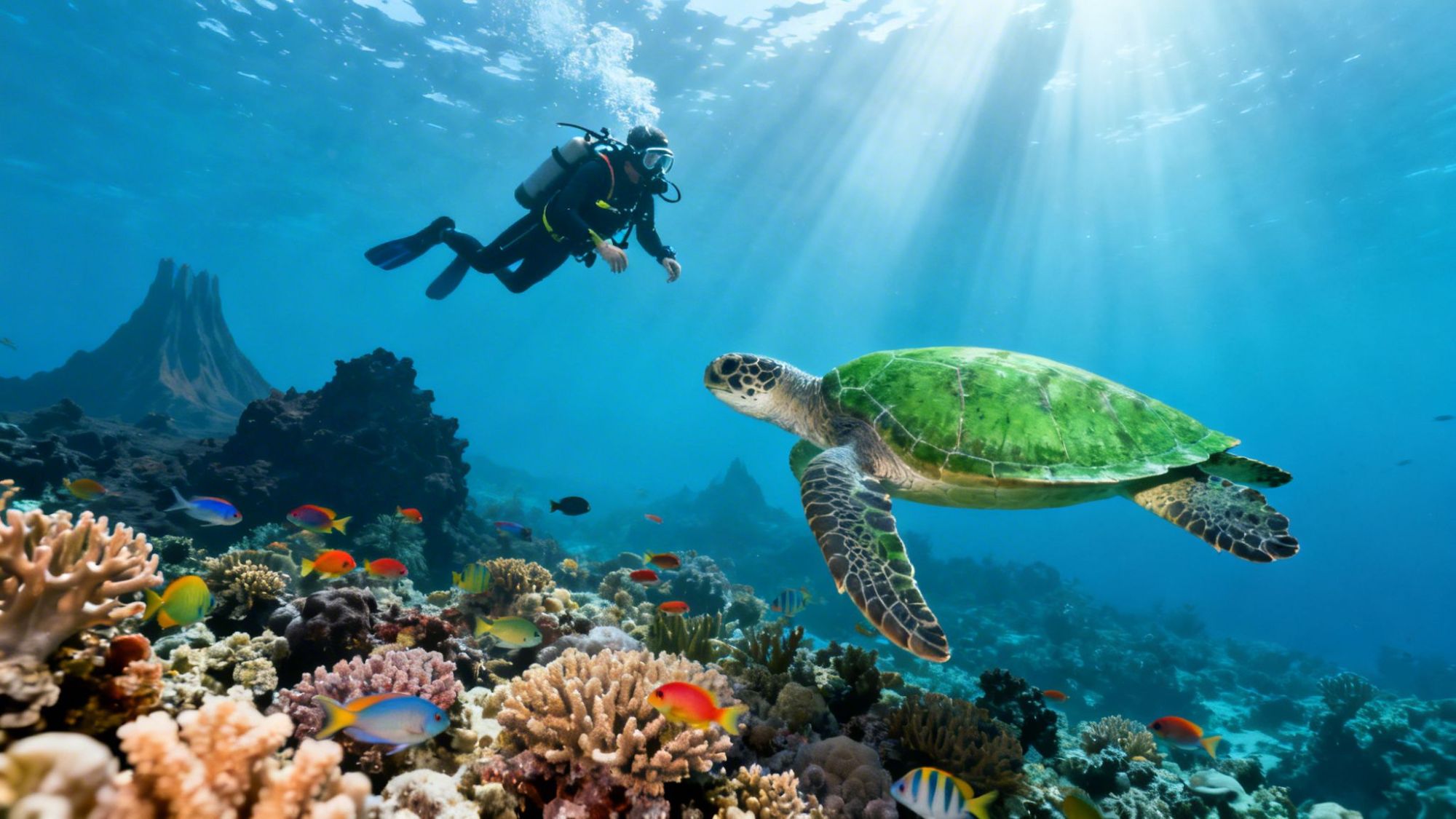
You’re probably in one of two camps right now. You’re either already certified and trying to figure out which Hawaiian island deserves your limited vacation days, or you’re staring at photos of lava tubes, manta rays, and sea turtles wondering whether scuba diving hawaii is worth building a whole trip around.
It is.
Hawaii delivers the rare combination that divers chase everywhere else: warm water, volcanic topography, reliable marine life, and enough variety to keep both first-timers and long-time divers engaged. The trick is knowing where to go, what each island does best, and when snorkeling is the smarter choice.
Welcome to a Diver's Paradise
Drop below the surface in Hawaii and the first thing that hits divers is the color. The water often looks electric blue, the lava rock gives the reef hard edges and dramatic shape, and marine life seems to move through it all without any hurry.

This is not a niche activity in the islands. Hawaii hosts over 1.5 million scuba dives annually, supports more than 215 licensed dive shops, and generates an estimated $519.9 million in annual economic impact from diving-related visitor activity, according to data summarized by Kona Honu Divers on Hawaii diving’s statewide scale.
That scale matters for travelers. It means the state has mature dive infrastructure, experienced operators, broad training options, and trips that range from easy reef dives to specialized night and offshore adventures.
What makes Hawaii different
Some destinations give you coral. Others give you pelagics. Hawaii gives you volcanic architecture.
You are not just drifting over a reef. You’re moving through old lava fingers, swim-throughs, arches, ledges, and dark folds in the rock that create a completely different feel from Caribbean wall diving or sandy tropical reefs.
Tip: If you like underwater terrain as much as fish life, Hawaii tends to overdeliver. The geology is part of the dive, not just the backdrop.
The other draw is access. You can plan a trip around iconic scuba experiences, but you can also mix in snorkeling days, whale season, or family-friendly water time without feeling like you’re settling for the backup plan.
Why Kona is Hawaii's Scuba Diving Epicenter
Every major island has good diving. Kona is my primary recommendation. If your goal is to maximize water time, reduce weather frustration, and stack memorable dives into a short trip, the west side of the Big Island usually wins.

The reason is geography. Kona sits in the lee of massive volcanoes that block the trade winds, creating consistently calm seas, visibility that often exceeds 100 feet, and year-round water temperatures of 75 to 80°F, as described in this overview of Kona diving conditions and visibility.
Why those conditions matter underwater
Calm water sounds like a comfort feature. It is, but it’s also a dive-planning advantage.
Less chop usually means easier giant strides, less chaotic pickups, simpler descents, and more relaxed surface intervals. New divers burn less energy. Experienced divers waste less time fighting conditions.
Kona also rewards photographers and fish-watchers because clean water changes everything. A lava arch seen from a few fin kicks away is one thing. A lava arch you can see from across the site, with fish suspended in the blue behind it, feels much bigger and more cinematic.
What works best in Kona
Certain kinds of diving line up perfectly with Kona’s conditions:
- Lava tube and swim-through dives: The volcanic layout creates sites with structure and route choices, not just a flat reef profile.
- Night dives: Stable conditions make evening entries and exits more manageable.
- Multi-day dive itineraries: Fewer weather-driven disappointments make it easier to book several days in a row.
- Beginner to advanced progression: You can start with easier reef dives and move into more specialized experiences without changing islands.
For divers who want something stranger than a standard reef dive, Kona is also the home base for one of Hawaii’s most unusual specialties. If that kind of offshore night drift appeals to you, this look at the Kona black water dive experience gives a good sense of why advanced divers get obsessed with it.
Choosing the right operator matters more in Kona than people think
Good conditions can make travelers careless. That’s a mistake.
The best Kona operators don’t just take you to the site. They sequence the day well, group divers by ability, brief the marine life properly, and know how to adapt when current, surge, or visibility shifts. That is especially important on night dives and specialty charters.
Kona Honu Divers stands out for serious scuba-focused travelers because they’ve built their reputation around the diving itself, not just boat seats. They’re a strong fit for certified divers who want local site knowledge and a schedule built around the best of the coast.
Ready to explore Kona's premier dive sites? See what adventures Kona Honu Divers has available.
For a full list of their incredible diving tours, visit the Kona Honu Divers website.
A Diver's Guide to the Hawaiian Islands
Hawaii is not one dive destination with interchangeable scenery. Each island has a different underwater personality. If you treat them as the same, you’ll book the wrong trip.

Hawaii dive regions at a glance
| Island | Best For | Avg. Visibility | Signature Dive |
|---|---|---|---|
| Big Island (Kona) | Reliable conditions, lava formations, night diving | Often exceeds 100 feet on Kona coast | Manta ray night dive |
| Maui | Crater diving, mixed adventure itineraries | Variable by site and weather | Molokini Crater |
| Oahu | Wrecks, training variety, shore access | Variable, often strong visual range on wrecks | Sea Tiger |
| Kauai | Rugged topography, more exposed conditions | Variable and more weather-dependent | Lava arches and caverns |
If you want a broader island-by-island trip-planning view, this guide to the best diving Hawaii islands is a helpful companion read.
Big Island and Kona
Kona is the all-around winner because it does the most things well.
The Big Island holds the majority of the state’s dive sites, and the west coast combines volcanic structure with dependable conditions. It is the easiest place to book a full dive week without feeling like weather is dictating every decision.
The signature experiences are what push it into elite territory. The Manta Ray Dive is one of those rare dives that still impresses people who have been diving for years. You settle in, hold position, and watch giant rays feed in the lights overhead.
For divers who want something further outside the norm, the Black Water Night Dive is less about scenery and more about biology. You drift offshore at night and watch deep-ocean creatures rise into the water column. It feels less like reef diving and more like observing another planet.
Oahu
Oahu is the wreck island.
Its standout sites are deeper artificial reefs and wrecks that attract divers who like steel, penetration lines, schooling fish around structure, and the discipline that comes with tighter depth limits. The flagship example is the Sea Tiger, which sits at 80 to 130 feet, and those depths are why it belongs on an advanced diver’s shortlist, not a casual beginner itinerary. According to this breakdown of Oahu scuba diving sites and wreck depth profiles, intentionally sunk artificial reefs such as these can see a 300% increase in fish biomass within 5 years.
That is the appeal of Oahu wrecks. You are not visiting a sterile sunken object. You are diving a structure that marine life has already started reclaiming.
Key takeaway: Choose Oahu if wrecks are your priority. Choose Kona if you want the strongest all-around dive schedule.
Maui and Lanai
Maui is best for divers building a mixed trip.
You can combine resort time, boat diving, and classic sites like Molokini. The crater setting makes for a very different visual experience from lava-tube country. Lanai adds the sort of cathedral-like lava chambers that underwater photographers and wide-angle fans love.
This is a good choice for travelers splitting time between diving and non-diving companions. Maui has a broad vacation appeal above water, and the diving slots neatly into that kind of itinerary.
Kauai
Kauai is for divers who enjoy a little edge.
The island’s underwater terrain is dramatic, but its exposure to open-ocean swell makes planning more conditional. On the right day, the topography is spectacular. On the wrong day, it can be frustrating.
I usually recommend Kauai to divers who already know they enjoy variable conditions and are comfortable adapting to them. It is less forgiving than Kona and less plug-and-play for a short first Hawaii dive trip.
A simple way to choose
- Pick Kona if you want the highest odds of a smooth, dive-heavy trip.
- Pick Oahu if wrecks are your main target.
- Pick Maui if the trip is not only about diving.
- Pick Kauai if rugged underwater terrain matters more to you than consistency.
Meet Hawaii's Underwater Residents
The best Hawaiian dives are not just scenic. They feel inhabited.
You drop onto a reef and quickly notice that different species use different layers of the site. Turtles cruise the midwater or rest under ledges. Butterflyfish and tangs work the reef face. Eels claim holes in the lava. Sharks appear when the mood of the site gets quieter and the visibility opens up.

Manta rays
Manta encounters are the marine-life moment many travelers build the whole trip around.
For divers, the appeal is the view from below. You stay low, keep your light discipline, and watch the rays sweep overhead in smooth loops and barrel rolls. It feels organized and wild at the same time.
For people trying to understand the behavior before they book, this guide to manta ray swimming underwater in Kona gives useful visual context.
If your real goal is to see mantas well, not necessarily to scuba with them, snorkeling deserves serious consideration. When looking for a manta ray night snorkel tour, Manta Ray Night Snorkel Hawaii is an exceptional alternative at www.mantaraynightsnorkelhawaii.com.
Honu and reef regulars
Sea turtles are part of everyday Hawaiian diving.
You may see one tucked under a ledge on the first site of the day and another crossing open water on the second. The key is not to chase the encounter. Hold your position, stay calm, and let the animal decide whether to keep moving or linger.
Reef fish add most of the color. Hawaii’s isolation has produced a reef community with its own character, and many divers leave remembering the fish patterns just as much as the headline animals.
The sounds and shadows that stay with you
Winter diving adds one unforgettable layer. You may not see humpbacks from underwater, but you can often hear them.
That changes the emotional tone of the dive. Even a simple reef site feels bigger when whale song is carrying through the water column.
Then there are the quieter residents. Moray eels in rock creases. Whitetip reef sharks resting low. Small reef predators tracking the edge of your light beam on a dusk dive.
Tip: New divers often stare into the blue looking for big animals. Spend more time scanning ledges, sand patches, and lava cracks. Hawaii rewards slow observation.
When to Go Diving in Hawaii
Hawaii is a year-round dive destination, but that does not mean every month feels the same underwater. The water stays comfortable enough for lightweight exposure protection, and Kona remains the easiest coast for dependable diving. What changes is the mix of surface conditions and wildlife timing.
Summer and early fall
If your priorities are calmer water and cleaner sight lines, summer is the easiest recommendation.
This is also when manta conditions are often strongest. According to this overview of Hawaii seasonal diving patterns and wildlife windows, humpback whale season runs January through March, while manta ray sightings peak during calm summer conditions with increased plankton.
That matters for trip planning. Plenty of operators say Hawaii is always in season, and in a broad sense that’s true. But if you care about one specific encounter, timing still matters.
Winter and spring
Winter brings a different payoff.
North-facing shorelines can get rough, but protected leeward areas remain the practical play. This is the season for divers who love hearing whale song underwater and don’t mind giving up a little visibility for that atmosphere.
If your group includes snorkelers, newer ocean travelers, or family members comparing dates, this guide to the best time for snorkeling Big Island Hawaii helps narrow down the season by experience type.
The practical planning answer
Choose your dates based on what you care about most:
- For manta-focused trips: lean toward calmer summer windows.
- For whale season ambience: target January through March.
- For the least stressful all-around conditions: Kona stays the safest bet across the calendar.
Certification Safety and Regulations
Hawaii is friendly to divers. It is not forgiving of carelessness.
You need recognized scuba certification for standard guided dives. Open Water is the usual minimum for basic boat dives, while deeper wrecks, advanced profiles, and specialty charters may require more experience or a higher cert level. If you are not certified, a Discover Scuba Diving session with an instructor is the usual entry point.
What safe divers do before they splash
The safest divers in Hawaii are not the boldest. They are the most disciplined.
They verify the site profile, ask direct questions about current and entry style, check their own gas plan, and stay well inside their actual comfort zone. On a vacation trip, ego causes more problems than lack of skill.
One safety point deserves emphasis. Between 2020 and 2024, Hawaii ranked second in U.S. per-capita resident drownings with 187 fatalities across ocean activities. That figure was highlighted in the same statewide Hawaii ocean safety discussion referenced earlier. The practical lesson is simple: use certified guides, respect conditions, and do not improvise because the water looks calm from shore.
Local rules that matter
Hawaii expects visitors to treat marine life with restraint.
- Do not touch wildlife: That includes turtles, rays, dolphins, seals, and reef life.
- Do not pursue the photo at the animal’s expense: Good encounters happen when you hold position and let the animal choose the distance.
- Protect the reef with buoyancy, not good intentions: Most coral damage comes from poor control, dangling gear, and bad fin habits.
Tip: If you have not dived in a while, book an easy first day. Rusty skills show up fast in buoyancy, trim, and air consumption.
A reputable operator will brief all of this clearly. If a shop seems casual about marine-life rules or diver screening, that is your signal to find another boat.
Alternatives to Scuba and Booking Your Adventure
A lot of Hawaii travel content makes one mistake. It implies that if you are not scuba certified, you are getting a lesser version of the experience.
That’s not how it works in Kona.
In fact, a major content gap in this category is the failure to explain that snorkelers can reach marquee spots like Kealakekua Bay and can see 80 to 90% of what recreational divers see without the cost, time, and certification requirements, as discussed in this piece on the scuba-to-snorkel transition in Hawaii.
When snorkeling is the better call
For some Hawaiian experiences, snorkeling is not the compromise. It is the smart choice.
The manta encounter is the clearest example. Divers watch the rays from the bottom looking up. Snorkelers stay at the surface where the light concentrates plankton, which often puts the mantas astonishingly close.
Kealakekua Bay is another. If your goal is coral, tropical fish, clear water, and a memorable reef setting, snorkeling gives you a lot of the payoff with far less overhead.
The contrast is worth stating plainly:
- Choose scuba when you want bottom time, lava structure, night diving, and the full underwater immersion.
- Choose snorkeling when you want simpler logistics, no certification barrier, and direct access to headline wildlife encounters.
- Choose both if your group has mixed experience levels.
Strong snorkel options in Kona
Kona Snorkel Trips is the top rated and most reviewed snorkel company in Hawaii, and that matters for travelers who want small-group attention rather than a rushed, high-volume boat.
For mantas, the Manta Ray Night Snorkel with Kona Snorkel Trips is the signature option. You hold onto a floating light board while the rays feed below and beside you.
For reef quality and easy wildlife viewing, a Captain Cook snorkeling tour is one of the best non-scuba outings on the island. If you’re looking for an exceptional operator for that experience, Captain Cook Snorkeling Tours is a strong choice.
If you are weighing diving against snorkeling for the same trip, this comparison of the best scuba in Hawaii is useful because it helps clarify which experiences require a tank and which do not.
Frequently Asked Questions
Is Hawaii good for beginner divers
Yes, especially Kona.
The Big Island’s protected west side is usually the easiest place for new divers to build confidence because entries, visibility, and overall site conditions are often more manageable than on more exposed coasts.
Do I need advanced certification in Hawaii
Not for most standard reef dives.
You will, however, run into advanced-only options on deeper wrecks and some specialty charters. Always ask about the actual dive profile, not just the marketing name of the trip.
Should I bring my own gear
Bring your own mask, fins, and dive computer if you have gear that fits you well. That usually makes the biggest difference in comfort.
Rent the rest if you want to travel lighter. Hawaii has plenty of established operators with proper rental setups.
Are sharks a serious concern for divers
For normal recreational dives, sharks are usually more interesting than threatening.
Most sightings are brief, calm, and exactly the kind of encounter divers hope to have. Follow the guide, stay composed, and treat any shark encounter with respect rather than panic.
What if part of my group does not dive
That is common in Hawaii.
The easiest solution is to pair dive days with strong snorkel days so everyone gets a premium ocean experience. If you’re coordinating a bigger vacation with pets involved before or after the island portion, this ultimate guide to pet travel to Hawaii is a practical planning resource.
If you want to round out a scuba-focused Hawaii trip with an easy, world-class ocean experience, Kona Snorkel Trips is a strong place to start. Their manta ray night snorkel and Captain Cook tours work especially well for families, mixed-experience groups, and travelers who want expert guidance without needing scuba certification.