
Your Ultimate Guide to Scuba Diving Hawaii in 2026
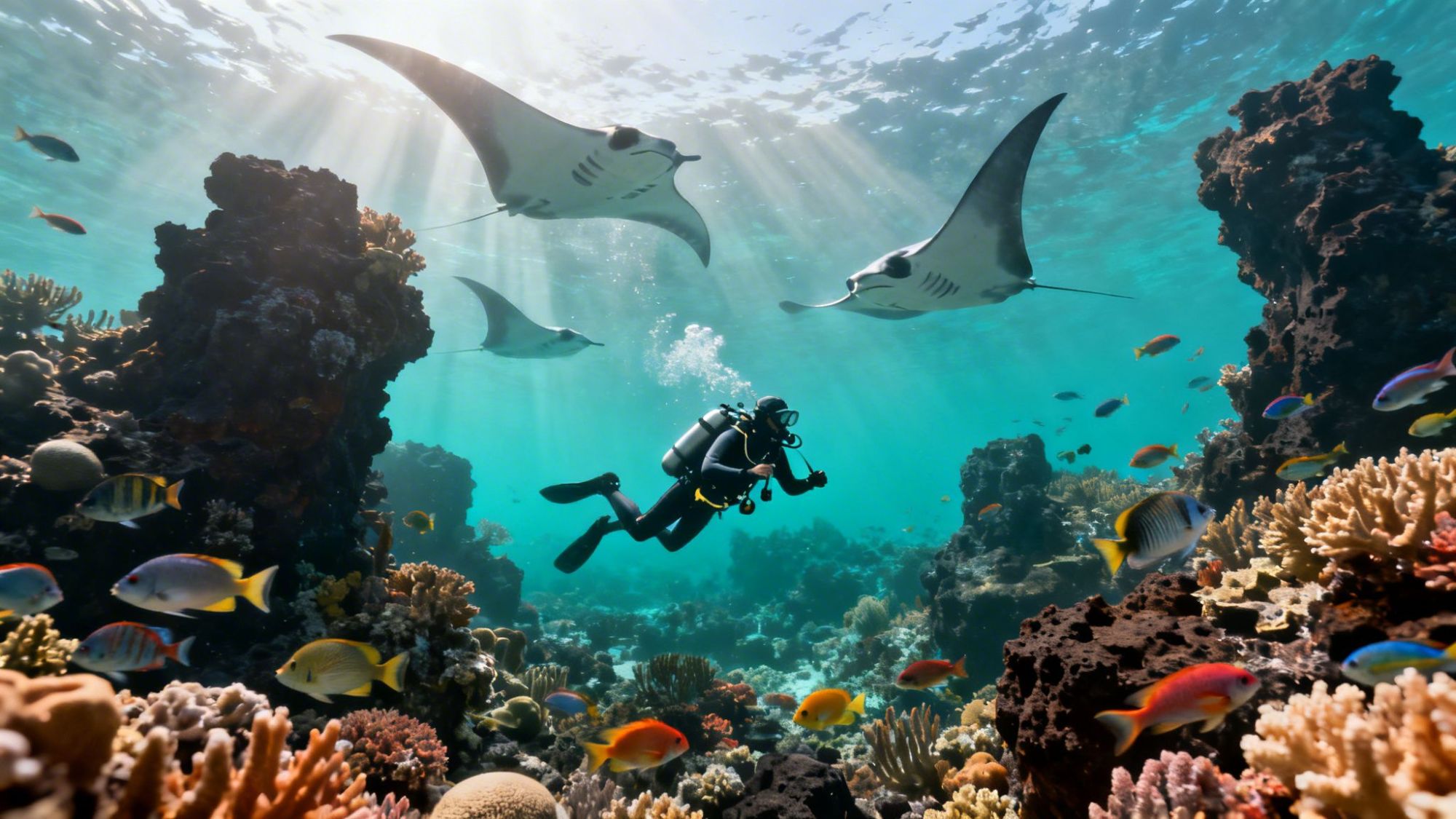
Picture this: you descend into warm, turquoise water, and the world goes silent. Below you, ancient volcanic tunnels and vibrant coral gardens stretch out, teeming with fish you won't find anywhere else on the planet. This is what it's like to scuba dive in Hawaii, and for divers chasing that next unforgettable moment, the Kona coast of the Big Island is a true underwater paradise.
Why Hawaii Is a World-Class Diving Destination

This isn't just another dive trip; it's an adventure. We're here to give you the inside scoop on why divers from all over the world have Hawaii on their bucket list. This guide will walk you through planning the perfect dive trip for 2026, from picking the right sites to understanding what makes this marine ecosystem so special.
The secret is definitely out. The U.S. diving tourism market, with Hawaii at its heart, is expected to hit $1,101.6 million in 2025 and swell to an estimated $1,585 million by 2035. It’s a clear sign of just how magnetic these islands are for underwater explorers, a trend detailed in a recent diving tourism market report.
Here’s a quick overview of what makes diving in Hawaii so special.
Quick Guide to Diving in Hawaii at a Glance
| Aspect | Details | Why It Matters for Your Dive |
|---|---|---|
| Unique Topography | Submerged lava tubes, caves, and dramatic archways. | Every dive feels like an exploration. You're swimming through history, not just a reef. |
| Endemic Marine Life | Roughly 25% of Hawaii's fish are found nowhere else. | Your chances of spotting a truly unique creature are incredibly high. It's a photographer's dream. |
| Ideal Conditions | Water temps stay a comfortable 75-82°F year-round. | No need for a dry suit! The warm water and great visibility make for comfortable, stunning dives any time. |
| Famous Encounters | Manta rays, sea turtles (honu), sharks, and dolphins. | Hawaii offers reliable opportunities for those big, bucket-list encounters, especially off the Kona coast. |
This table just scratches the surface. Each of these elements combines to create a dive experience that's completely different from anywhere else in the world.
What Makes Hawaiian Diving Special
So, what’s the big deal? It comes down to a perfect storm of unique geology, incredible biodiversity, and amazing conditions. The islands were literally born from fire, and that volcanic origin has created an underwater landscape you have to see to believe.
- Lava Tubes and Caves: Imagine exploring ancient, submerged lava tubes and arches, especially around the Big Island. These aren't just rocks; they're natural cathedrals that create a thrilling sense of discovery.
- Endemic Marine Life: Nearly 25% of the fish species here are endemic. That means they only live in these waters. Every dive gives you a genuine chance to see something you can’t find anywhere else on Earth.
- Year-Round Diving: With water temperatures hovering between a balmy 75-82°F and generally fantastic visibility, you can plan a dive trip any time of year and expect great conditions.
The Kona Advantage
While every island has something incredible to offer, the Kona coast on the Big Island is really in a league of its own. Its position on the leeward side of the island shields it from the strong trade winds, which translates to consistently calm, clear water. This is why Kona is the best place to dive in Hawaii.
This creates a sanctuary for marine life and an ideal playground for divers of every skill level. We're talking majestic manta rays gliding right over your head and dramatic lava formations just waiting to be explored. We'll be focusing a lot on Kona because, for many divers, it's the ultimate Hawaiian scuba destination.
Discovering Kona: The Crown Jewel of Hawaiian Scuba

While you can find great diving across the islands, ask any seasoned diver about the absolute best scuba diving Hawaii has to offer, and they’ll point you to one place: the Kona coast. This is the main event and why Kona is the best place for Big Island diving. Thanks to the massive volcanoes shielding the coast from the powerful trade winds, Kona's leeward side has famously calm, clear water pretty much year-round.
That special geography is Kona's secret weapon. The calm conditions have created a true sanctuary where marine life thrives, and divers can explore without getting tossed around by currents. It feels like this place was sculpted just for incredible underwater adventures.
Volcanic Wonderlands Beneath The Waves
The underwater world here is a direct reflection of the Big Island’s fiery past. Thousands of years of lava flows have created a stunning, dramatic underwater landscape you just don't see anywhere else. Forget flat reefs; this is a complex, three-dimensional playground.
These ancient formations are magnets for an incredible density of marine life. Here's a taste of what makes Kona’s topography so unique:
- Lava Tubes and Caverns: Picture yourself swimming through a massive, hollowed-out lava tube with beams of sunlight piercing through holes in the ceiling. These caverns feel like lost worlds and are often home to creatures hiding out from the open water.
- Dramatic Drop-Offs: The seafloor can suddenly plunge hundreds of feet into the deep blue, creating breathtaking vertical walls—or "pali" (cliffs)—encrusted with coral. These are superhighways for bigger animals cruising by.
- Expansive Coral Gardens: In the shallows, you'll find vibrant coral gardens stretching out like underwater meadows, absolutely buzzing with thousands of colorful reef fish.
This kind of varied terrain means every single dive site in Kona offers a totally different experience. One day you’re exploring an ancient, cathedral-like cavern, and the next you’re drifting along a majestic deep-water wall.
Finding The Right Guide: Kona Honu Divers
To really see Kona’s best-kept secrets, you need a guide who knows the place inside and out. That's where Kona Honu Divers comes in. They are, hands down, the best scuba diving company to dive with on the Big Island, known for their deep local knowledge and for creating safe, personal, and genuinely unforgettable dives.
What really makes them stand out is their commitment to small groups. You’re not just another tank and a pair of fins in the water; it’s a relaxed, personalized dive where the guides have the time to point out all the cool stuff. They are total pros at finding the most interesting critters and navigating the unique lava formations.
Kona Honu Divers operates on a philosophy of safety, conservation, and building a real connection to the ocean. Their respect for the marine environment shines through on every trip, making them our top pick for divers who care.
Their most famous trips are the legendary manta ray night dive and the completely surreal black water dive. These aren't just dives; they're bucket-list experiences that show off the absolute best of Kona. The black water dive, in particular, is a wild adventure where you drift in the deep, dark ocean to see bizarre creatures that migrate toward the surface only at night. If you’re curious, you can learn all about it in our guide to blackwater diving in Hawaii.
With their stellar safety record and unmatched local expertise, going with Kona Honu Divers means your Hawaiian scuba trip is in the best possible hands.
Exploring Hawaii's Must-Do Dives

Alright, let's get to the good stuff—the dives you’ll be talking about for years to come. While you can find great spots off Maui and Oahu, any seasoned diver will tell you the real magic happens on the Big Island. The Kona coast, in particular, is home to some of the most unique and unforgettable underwater experiences on the planet.
This is my personal breakdown of Hawaii's absolute must-do dives. We'll cover what you need to know for each one: the difficulty, the incredible sights, and exactly what makes them so special. It's time to explore the very best scuba diving Hawaii has to offer.
The World-Famous Manta Ray Night Dive
If you do only one dive in Hawaii, make it this one. The Kona manta ray night dive isn't just a dive; it's a surreal, heart-stopping underwater ballet that you have to see to believe.
After the sun goes down, you'll descend to a sandy spot where powerful lights are set up, creating an underwater "campfire." These lights attract swarms of plankton, and the plankton, in turn, brings in the main event: majestic manta rays.
Imagine these gentle giants, with wingspans stretching over 15 feet, gliding and barrel-rolling just inches from your face as they feast. It’s a humbling, almost spiritual experience. Given its popularity, choosing an operator that puts the mantas' safety first is non-negotiable.
Kona Honu Divers runs a top-tier 2-Tank Manta Ray Night Dive that’s become legendary on the island for their professionalism and deep respect for the animals. Their guides are fantastic at creating a safe, magical encounter you won't ever forget.
Experiences like this are a huge reason why Hawaii is a top dive destination. The global market for scuba tourism was valued at $910.4 million in 2024 and is expected to nearly double to $1,748.5 million by 2032. As this detailed market analysis shows, unique dives with high encounter rates (over 80% for Kona's mantas!) are what bring people here from all over the world.
The Black Water Night Dive: A Journey Into The Abyss
Ready for something completely different? For the truly adventurous, Kona offers a night dive that feels less like scuba and more like floating through deep space. It’s called the Black Water Dive.
Your boat heads miles offshore, over water that’s thousands of feet deep. Tethered to the boat, you'll drift in the pitch-black open ocean at a depth of about 50 feet. Using high-powered lights, you get to witness one of the largest migrations on Earth as bizarre, alien-like creatures rise from the abyss to feed.
You’ll come face-to-face with things you've never imagined: translucent squid, otherworldly larval fish, and bioluminescent jellies that pulse with light.
This is an advanced dive, for sure, but it’s a mind-blowing trip that few people ever get to experience. If you’re a photographer or just want a dive that is wildly out of the ordinary, this is it. Kona Honu Divers also leads an excellent Black Water Night Dive tour with expert guides who know just how to find these deep-sea oddities. For a closer look at what makes these night encounters so incredible, check out our guide on manta ray diving in Hawaii.
Top Hawaiian Dive Sites Comparison
While Kona often steals the show, the other islands have some world-class diving of their own. This table breaks down the highlights to help you plan your next underwater adventure.
| Dive Site | Island | Best For | Difficulty Level |
|---|---|---|---|
| Manta Ray Night Dive | Big Island (Kona) | Unforgettable wildlife encounters | Beginner to Intermediate |
| Black Water Night Dive | Big Island (Kona) | Unique, advanced pelagic diving | Advanced |
| Molokini Crater | Maui | Excellent visibility, reef fish | Beginner |
| Cathedrals | Lanai | Dramatic lava formations | Intermediate to Advanced |
| YO-257 Wreck | Oahu | Wreck diving and reef sharks | Intermediate |
These are just a few of the incredible sites waiting for you. Each one offers a completely different, yet equally amazing, glimpse into Hawaii's underwater world.
Other Notable Dives Around The Islands
Even though the Big Island is our top pick, it would be a crime not to mention these other fantastic sites.
- Molokini Crater, Maui: This partially submerged volcanic crater is a protected Marine Life Conservation District. The water inside is incredibly clear and calm, making it a paradise for beginner divers who want to be surrounded by massive schools of colorful reef fish.
- The Cathedrals, Lanai: Just a short boat ride from Maui, Lanai’s "Cathedrals" are not to be missed. You'll swim through massive underwater lava caverns where sunlight streams through holes in the ceiling, creating an ethereal, stained-glass window effect. It's a photographer's dream.
- Wreck Dives, Oahu: If you're into wrecks, Oahu is your island. Sites like the YO-257 and the Sea Tiger are impressive artificial reefs that have been completely taken over by marine life. Expect to see schools of fish, moray eels, and plenty of whitetip reef sharks patrolling the decks.
At the end of the day, every island has something special to offer beneath the waves. But the sheer variety and world-class quality of Kona's dives—from the enchanting mantas to the thrilling black water drifts—really do make it the capital of scuba diving in Hawaii.
Gearing Up: Planning Your Hawaii Dive Trip
A little bit of prep work before you even pack your bags can make all the difference between a good dive trip and an unforgettable one. Getting your certification, gear, and safety plan dialed in ahead of time means less stress and more time enjoying Hawaii's incredible underwater world.
And when you dive here, you're doing more than just having fun. Scuba tourism brings a massive $519,887,657 into Hawaii's economy every year, accounting for almost 1.1 million hotel room nights. That's not just a number—it’s the lifeblood for towns like Kona, where your passion for the ocean supports local families and businesses.
Getting Your Dive Certification
Think of your scuba certification card as your ticket to the show. The most common one you'll see is from PADI (Professional Association of Diving Instructors), but other agencies like NAUI are great, too. If you're not certified, it's a fantastic idea to get your Open Water Diver certification before you leave.
But honestly, there's nothing like doing your training dives in Hawaii's warm, crystal-clear water. Learning with a top-notch operator like Kona Honu Divers means you're getting comfortable with the local conditions from your very first breath underwater. It builds confidence way faster than learning in a cold, murky quarry back home.
For a lot of new divers, the idea of breathing underwater can be a little scary. The right instructor gets that. They'll work at your pace, making sure you feel safe and confident before moving on. The best shops always put comfort and safety first.
Renting Gear vs. Bringing Your Own
This is the age-old question for any traveling diver. Bringing your own gear is comfortable—it’s yours, you know how it works, and it fits just right. On the other hand, renting saves you the headache of lugging a heavy bag through the airport and paying extra fees.
Here's how I usually break it down for people:
- Bring These: Your mask, fins, snorkel, and dive computer. A mask that fits your face perfectly is the single most important piece of gear for an enjoyable dive. Your computer is personal, too, as it logs all your dives.
- Rent These: Your BCD (Buoyancy Control Device), regulators, and wetsuit. These are the big, bulky items. A quality dive shop like Kona Honu Divers has excellent, well-maintained rental gear you can rely on.
At the end of the day, it's your call. If you plan on diving a ton, bringing your own kit might be worth the effort. For just a few dives, renting the heavy equipment is usually the smartest move.
How to Stay Safe While Diving in Hawaii
Safety always, always comes first. The waters around Hawaii, especially on the Kona coast, are often beautifully calm. But the ocean is powerful, and you have to respect it.
Your Pre-Dive Safety Checklist:
- Dive with a Buddy: This is the #1 rule in scuba for a reason. Never, ever dive alone.
- Pay Attention to the Briefing: Your guide isn't just talking to hear their own voice. They're giving you critical info on the dive site, currents, and what to look out for.
- Check Your Gauges: Make it a habit to constantly check your air and your depth.
- Protect Yourself from the Sun: The Hawaiian sun is no joke. Before you even get on the boat, make sure you're covered. This ultimate guide to sun protection is a must-read for anyone spending time on the water here.
- Hydrate, Hydrate, Hydrate: Drink a lot of water before and after you dive. It's one of the easiest ways to help prevent decompression sickness.
And if you're someone who gets a little queasy on boats, don't worry—you're not alone! It's always best to be prepared, even on the calmest days. Check out our tips on how to avoid sea sickness on your boat tour.
Pick a professional crew, follow their lead, and you're all set for a safe and absolutely amazing dive experience.
Amazing Snorkeling Adventures for Everyone

Not everyone who comes to Hawaii is a certified scuba diver, and that's more than okay. Even if your travel buddy is a diver, or you're just not ready to take the plunge with a tank, you can still have an incredible time in the water.
In fact, some of Hawaii's most unforgettable marine encounters happen right at the surface. Snorkeling is your ticket to see the same vibrant reefs and amazing animals—all you need is a mask and some fins. Especially on the Big Island, Kona's snorkel tours are truly world-class.
You'll want a guide who knows the ocean, prioritizes your safety, and makes the whole experience fun. That’s why we always point people to Kona Snorkel Trips. They’re the top-rated and most-reviewed snorkel company in all of Hawaii for a reason. They keep their groups small, which makes a huge difference.
From historic bays to magical nights with gentle giants, they know how to deliver an adventure.
The World-Famous Manta Ray Night Snorkel
The Manta Ray Night Dive is on almost every diver's bucket list, but you absolutely don't need a certification to experience the magic. The Manta Ray Night Snorkel gives you the best seat in the house for this incredible underwater ballet.
Here's how it works: you'll hold onto a custom-built, floating light board that shines down into the dark water. This light attracts swarms of plankton, basically creating a drive-thru buffet for manta rays. Watching these massive, graceful creatures glide, swoop, and barrel roll just inches below you is something you will never, ever forget.
For the best manta experience out there, we highly recommend the Manta Ray Snorkel Kona tour with Kona Snorkel Trips. Their guides are experts at making the encounter safe, respectful, and completely mind-blowing.
Another fantastic operator for this tour is Manta Ray Night Snorkel Hawaii. They also provide a world-class experience, giving non-divers a front-row seat to one of Hawaii's most iconic wildlife encounters.
Snorkeling Historic Kealakekua Bay
If you're looking for a daytime trip that blends stunning natural beauty with a bit of history, nothing beats snorkeling in Kealakekua Bay. This sheltered spot is a Marine Life Conservation District, which means the coral reefs are protected, healthy, and absolutely packed with fish.
The water is almost always crystal clear and calm, making it perfect for snorkelers of all skill levels, including families with kids.
The bay is also home to the Captain Cook Monument, which marks the historic spot where the British explorer first made contact with the islanders. As you float above the reef, you're swimming through history. You’ll drift over colorful coral gardens, see huge schools of reef fish, and very often spot pods of spinner dolphins or a gentle green sea turtle (honu) cruising by.
The best reefs are on the far side of the bay and tough to reach from shore, so a boat tour is really the only way to go. For a trip that nails both the snorkeling and the storytelling, Captain Cook Snorkeling Tours runs an outstanding excursion with a super knowledgeable crew.
And if you're hungry for more spots, check out our deep dive into the best snorkeling in Kona for other must-see locations.
Crafting Your Perfect Hawaii Dive Itinerary
So, you're ready to dive in Hawaii? Awesome. Now for the fun part: figuring out how to fit all the incredible underwater sights into one trip. It can feel like a lot to juggle, but I've been helping people plan these trips for years.
To give you a head start, I've put together a couple of my go-to plans. Think of these as a local's inside scoop, designed to give you the most bang for your buck and bottom time, whether you're a die-hard diver or traveling with family who prefer to stay on the surface.
For the Hardcore Diver: A Kona-Focused Week
If your main goal is to log as much bottom time as possible and see the absolute best of what the Big Island offers underwater, this one's for you. This plan centers on diving with Kona Honu Divers, an operator I trust because they keep groups small and their guides really know their stuff.
- Day 1 & 2: Get settled and jump right in with two-tank morning dives. You'll want to hit classic Kona sites like Golden Arches or Turtle Pinnacle to get your fins wet and see just how vibrant the reefs are here.
- Day 3: This is the big one—the world-famous Manta Ray Night Dive. I'm not exaggerating when I say this is a bucket-list dive you will talk about for the rest of your life.
- Day 4: Give your body a break. You need to off-gas, so take a day to explore topside. My recommendation? Head to Volcanoes National Park or tour one of the amazing Kona coffee farms.
- Day 5: Ready for something completely different? Book the Black Water Night Dive. It's a surreal drift in the deep, dark ocean where you'll see some of the most bizarre bioluminescent creatures imaginable. Truly a walk on the weird side.
- Day 6: Squeeze in one last morning charter to a site you might have missed, then spend the afternoon kicking back and relaxing.
- Day 7: Catch one last Hawaiian sunrise before you have to head home.
For Mixed Groups: The Big Island Adventure Mix
This plan is my go-to for groups with both divers and non-divers. It’s all about making sure everyone gets an unforgettable ocean experience, blending top-tier scuba with some of the best snorkeling on the planet.
- Day 1 & 2: The divers in your group can head out for morning charters with Kona Honu Divers. Meanwhile, the non-divers can relax on the beach or explore the shops and vibe of Kona town.
- Day 3: An adventure for the whole crew! Everyone joins Kona Snorkel Trips for their fantastic Captain Cook Snorkeling Tour. The history and beauty of Kealakekua Bay are just as stunning as the snorkeling.
- Day 4: Time for some land-based fun. Go for a hike to the unique green sand beach or just wander through the shops and restaurants along Ali'i Drive.
- Day 5: The whole group gets to experience the magic of the mantas. Everyone can join the incredible Manta Ray Night Snorkel with Kona Snorkel Trips. If the divers in your group would rather be below the action, they can book the scuba version with Kona Honu Divers.
- Day 6: One last morning in the water for some final diving or snorkeling before celebrating a great trip with a farewell luau.
- Day 7: Head for the airport with a camera full of photos and memories that will last a lifetime.
These are just a couple of examples of how different Big Island boat tours can be mixed and matched to build a vacation that everyone will love.
Your Hawaii Diving Questions, Answered
Got questions about diving in Hawaii? You're not alone. Here are the straight answers to the most common queries we get from travelers, helping you plan your underwater adventure.
What’s the Best Time of Year to Scuba Dive in Hawaii?
Honestly, there's no bad time to dive here, especially along the Kona coast. It’s a year-round paradise. The water stays wonderfully warm, hovering around a pleasant 75°F (24°C) in winter and climbing to a balmy 82°F (28°C) in summer.
Visibility is usually fantastic, often clearing 100 feet or more. If you're after the calmest, flattest seas, aim for the summer months (May to September). But winter (December to March) offers its own kind of magic—there's nothing quite like hearing the haunting songs of humpback whales echoing through the water on your dive.
What Kind of Marine Life Can I Expect to See?
Because Hawaii is so isolated, about 25% of the fish you'll see here exist nowhere else on the planet. It’s a truly unique underwater world. You’re almost guaranteed to spot graceful green sea turtles (honu) and playful spinner dolphins. The reefs are a kaleidoscope of butterflyfish, triggerfish, and parrotfish.
If you’re on the Big Island, your chances of seeing majestic manta rays are excellent, particularly on a dedicated night dive. Lucky divers might also find whitetip reef sharks resting on the sandy bottom or spot an elusive frogfish perfectly camouflaged against the reef. Every dive is a surprise.
Is Hawaii a Good Place for Beginner Scuba Divers?
Absolutely. Kona, in particular, is one of the best places in the world to fall in love with diving. We have tons of protected bays and calm dive sites that feel like natural swimming pools, with little to no current. It's the perfect, low-stress environment to get comfortable underwater.
Shops like Kona Honu Divers are pros at running introductory dives and certification courses. Their guides will take you to beautiful, shallow reefs where you can build your confidence and just enjoy the scenery at your own pace.
A huge part of getting over those first-dive jitters is having an instructor who makes you feel safe and comfortable. The best dive centers, like Kona Honu Divers, are known for being incredibly patient, ensuring you never feel rushed.
Do I Need to Be Certified for the Manta Ray Night Dive?
Yes, if you want to scuba dive with the mantas on a tour with an operator like Kona Honu Divers, you need to be a certified diver. The experience involves descending in the dark and maintaining your position, which definitely requires proper training.
But here’s the great news: you don't have to miss out! The Manta Ray Night Snorkel is an equally mind-blowing alternative for non-divers or families. Top-notch companies like Kona Snorkel Trips run amazing tours where you can see the same incredible manta ballet from the surface while holding onto a custom light board.