
Your Guide to Scuba Dive Hawaii’s Underwater World in 2026
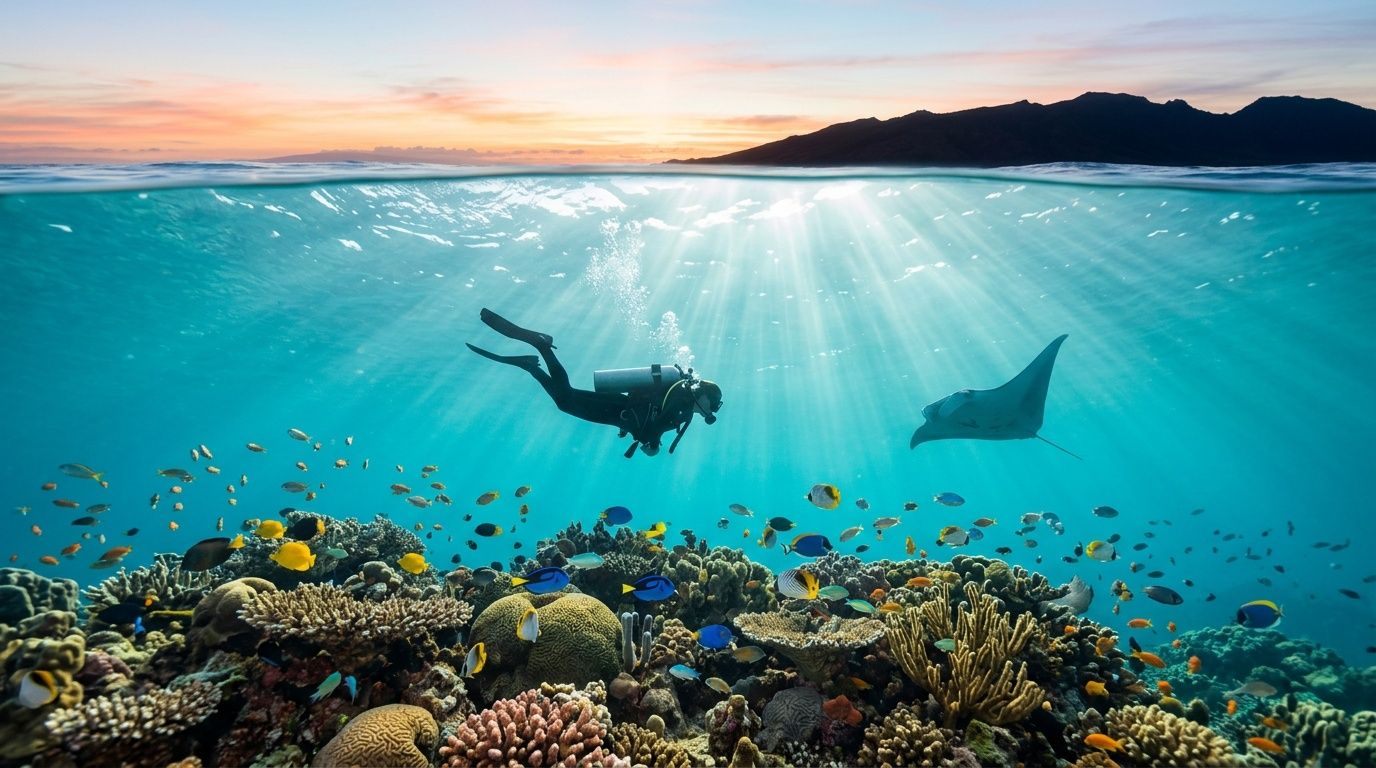
Picture this: you're weightless, descending into a world of brilliant turquoise. Sunlight streams down from the surface as you glide past ancient lava tubes and vibrant coral gardens. A school of fish, a kaleidoscope of colors found nowhere else on earth, swims by. This is the promise of scuba diving in Hawaii.
It's an underwater world that draws divers from every corner of the globe for good reason.
Your Hawaiian Underwater Adventure Awaits

Think of this as your personal map to that adventure. We're going to explore the islands' most incredible underwater landscapes, with a special focus on why the Kona coast of the Big Island is truly the heart of Hawaii's dive scene.
Hawaii isn't just another pretty spot on the map; it’s a global scuba diving powerhouse. Across the islands, over 215 licensed dive shops support more than 1.5 million dives every single year. That staggering number easily places Hawaii among the top 10 scuba destinations in the entire United States, holding its own against giants like the Great Barrier Reef and the Caribbean.
It’s a massive part of the local economy, too. The economic impact of diving in Hawaii hits an incredible $519.9 million annually—you can read more about the topic to see just how significant it is.
This guide will help you sort through it all, from the world-famous manta ray encounters to exploring submerged volcanic craters. Whether you're a seasoned diver with hundreds of logbook entries or you're just starting to think about getting certified, we’ve got you covered.
Why This Guide Is Your Go-To Dive Companion
This isn't just another travel blog rehashing the same old spots. We’re going deep into what makes diving in Hawaii a truly special experience. You won't just learn where to go, but why specific places, especially along the Kona coast, offer something you can’t find anywhere else.
Here’s what we’ll cover to get you ready for your trip:
- The Best Dive Sites: We’ll break down the absolute can't-miss spots, from the legendary Kona Manta Ray Night Dive to the iconic Molokini Crater off Maui.
- Planning & Logistics: Get the scoop on PADI certifications, the real pros and cons of shore diving versus boat diving, and exactly what to throw in your dive bag.
- Choosing an Operator: Learn how to pick a safe, reputable, and eco-friendly dive company. We'll give you an inside look at Kona's top operator, Kona Honu Divers.
- Snorkeling Alternatives: Have non-divers in your group? No problem. We’ll show you amazing snorkeling options so everyone can experience Hawaii's underwater magic.
By the time you finish this guide, you won't just be daydreaming about diving in Hawaii—you'll be ready to book the trip. You'll understand the local environment, know how to pick the perfect dives for your skill level, and feel confident planning every detail. Let's dive in.
Why Kona Is The Crown Jewel Of Hawaiian Diving

Ask any diver who's been around the block where to go in Hawaii, and you'll hear one name over and over again: the Kona coast on the Big Island. Sure, the other islands have some great spots, but nothing quite stacks up to Kona's perfect storm of calm waters, amazing visibility, and mind-blowing underwater landscapes. It’s not just another dive spot; it’s the main event. Kona is undeniably the best place to dive in Hawaii.
So, what's the secret? It all comes down to geography. The entire Kona coast is tucked into the lee of two colossal volcanoes, Mauna Loa and Hualalai. These giants act as a massive natural shield, blocking the gusty trade winds that can churn up the water elsewhere in the islands.
The payoff is water that stays incredibly calm and clear pretty much all the time, often with visibility stretching past 100 feet. This isn't just a "good season" thing, either—we're talking amazing conditions almost 365 days a year. That kind of reliability means you can plan a trip without crossing your fingers, knowing world-class diving is waiting for you.
A Sanctuary For Marine Life
It turns out that this calm, sheltered water is the perfect recipe for a thriving underwater neighborhood. The whole place has become one of the richest marine ecosystems you'll find anywhere in the Pacific. We're talking ancient lava tubes you can swim through, stunning coral gardens, and dramatic underwater cliffs that drop off into the deep blue.
And it’s absolutely packed with life. You'll be sharing the water with plenty of Hawaiian green sea turtles (honu), curious spinner dolphins, and hundreds of species of tropical fish. A lot of these fish are endemic, which means you literally can’t see them anywhere else on Earth but right here in Hawaii.
Kona's unique geography doesn't just create calm waters; it acts as a massive nursery for marine life. The combination of nutrient-rich currents and protected bays makes it a biological hotspot, attracting everything from tiny reef fish to the ocean's largest predators.
This is exactly why Kona is ground zero for Hawaii's most legendary dives. And for those who are really looking for a trip, you can even dive into the surreal experience of a black water dive right here off the coast.
The Kona Honu Divers Difference
To really get the most out of Kona, you need to go with the best scuba diving company, people who know these waters inside and out. That's where Kona Honu Divers comes in. They've earned their reputation as the go-to dive company on the Big Island by focusing on what really matters: small groups, top-notch safety, and a genuine love for the ocean.
Their guides aren't just there to point you in the right direction; they live and breathe this stuff. They turn every dive into a real experience, sharing their knowledge and making sure you feel like you're part of a small, exclusive adventure, not a giant tour group. Just see what other divers have to say about their trips.
With a rock-solid safety record and a deep respect for Kona's underwater world, they give you the confidence to explore with the best. They have something for everyone, whether you're just starting out or you're a seasoned diver looking for your next big adventure. Check out their diving tours to see all the options.
Exploring Hawaii's Most Unforgettable Dive Sites

Sure, every Hawaiian island has some decent diving, but if you’re looking for the kind of experience you’ll be talking about for the rest of your life, all roads lead to the Kona coast. The diving here isn't just good; it’s world-famous. It's the difference between seeing a postcard of a beautiful place and actually being there.
The exceptionally calm and clear water off Kona is the perfect stage for two of the most incredible dives you can do anywhere on the planet: the Manta Ray Night Dive and the Black Water Night Dive. For a lot of divers, these aren't just items on the itinerary—they're the entire reason for the trip.
Let's break down what makes these Kona dives so legendary and see how they stack up against other spots across the islands.
The Legendary Manta Ray Night Dive
Picture this: you descend into the warm, dark ocean just after sunset. You and your group settle on the sandy bottom, point your powerful flashlights up, and wait. Before long, a giant, graceful shadow glides into the beam of light. Then another, and another.
Soon, you're surrounded by massive manta rays, some with wingspans stretching over 12 feet, performing an underwater ballet just inches above your head. They swoop and somersault, feeding on the plankton drawn to your lights. It’s a breathtaking, silent spectacle that has rightfully earned its place on bucket lists worldwide. This is the must-do manta ray dive tour.
The Surreal Black Water Night Dive
Now, for something completely different. If you're a diver who loves the weird and wonderful, Kona's Black Water Night Dive is like a trip to another planet. It’s a drift dive, but not like any you’ve done before.
You're taken miles offshore, where the ocean is thousands of feet deep. Tethered to the boat, you drift in the immense darkness of the open ocean. As your eyes adjust, you start to see things—bizarre and beautiful creatures that migrate from the deep abyss to the surface every single night to feed.
You’ll find see-through squids, alien-like larval fish, and countless tiny critters that sparkle with their own bioluminescence. It’s a mesmerizing, almost psychedelic experience that feels more like floating through outer space than diving. It's a journey into a hidden world few ever get to see, and one of the most unique dives you’ll find anywhere. You can book this incredible black water night dive tour for a truly unforgettable adventure. To get a better sense of what makes this dive so special, check out our deeper look into the best diving in Hawaii.
Comparing Top Hawaiian Dive Experiences
While Kona's two signature night dives are truly in a league of their own, the other islands do offer some great underwater adventures. Let's put them side-by-side.
Top Hawaiian Dive Experiences
This table gives you a quick rundown of Hawaii's most iconic dive experiences, highlighting what makes each one special.
| Dive Experience | Location | What You'll See | Best For |
|---|---|---|---|
| Manta Ray Night Dive | Kona, Big Island | Giant manta rays, eels, large jacks | Unforgettable wildlife encounters |
| Black Water Night Dive | Kona, Big Island | Bioluminescent creatures, larval fish | Adventurous divers, photographers |
| Molokini Crater | Maui | Reef fish, sharks, good visibility | Clear water and classic reef diving |
| Oahu Wrecks | Oahu | Artificial reefs, turtles, eagle rays | Wreck diving enthusiasts |
While Maui's Molokini Crater is known for its crystal-clear water and Oahu has some cool wrecks to explore, they are more traditional dives. For encounters that are truly unique and utterly life-changing, the needle always points back to Kona.
Of course, beyond these two famous night dives, the Big Island is loaded with incredible spots. To start planning your full dive itinerary, you'll want to explore the Top Big Island Scuba Diving Sites.
Planning Your Dive Trip Logistics And Safety

Alright, let's talk about the stuff that turns a good dive trip into a great one. Sorting out the logistics and knowing the safety essentials ahead of time means you can relax and just enjoy the magic when you hit the water.
We’ll walk through everything from getting your dive card to understanding the local rules of the road, underwater-style. Think of this as your pre-dive briefing for the whole trip.
Getting Certified in Paradise
To do most of the dives here, you'll need at least your PADI Open Water Diver certification. But if you're not certified yet, don't sweat it. Honestly, there’s no better classroom on Earth than the calm, warm, and crystal-clear waters of Kona. It's the perfect, low-stress place to learn.
Plenty of people show up a little nervous about breathing underwater—it’s totally normal! A great instructor makes all the difference, turning that bit of fear into pure excitement. Kona Honu Divers is fantastic at this, offering everything from your first Open Water course to Advanced training. Their whole approach is about making you comfortable, so you can really build confidence and fall in love with diving.
Boat Diving vs Shore Diving
You’ve basically got two choices for diving in Hawaii: hopping on a boat or walking in from the shore. While shore diving gives you some freedom, a boat dive with a pro operator is almost always the better, safer, and more epic way to go.
- Shore Diving: This means you're on your own finding a good entry point, and scrambling over lava rock with a tank on your back is no joke. It also limits you to whatever you can reach from the road.
- Boat Diving: This is the way to go. A professional crew gets you right on top of the best, most amazing dive sites—places you simply can't get to from shore. You get their local knowledge, all the safety gear, and a solid briefing on what to expect at that exact spot.
For the real bucket-list dives like the manta ray night dive or the black water dive, a guided boat trip isn't just a suggestion; it's a must. The crew handles all the work and watches your back, so you can just focus on the mind-blowing experience. And if you're worried about getting queasy on the boat, don't be—we’ve got some simple tricks for that. You can learn how to avoid sea sickness and make sure the boat ride is as fun as the dive.
Safety Protocols and What to Expect
Safety is everything in diving. Operators in Hawaii are serious about it, but you're part of the team. Always, always listen to the dive briefing and stick with your guide. They know these waters better than anyone.
A huge part of diving in Hawaii is the "look but don't touch" rule. This is for your safety and for the health of our incredible reefs. Touching coral can literally kill it, and getting too handsy with a turtle or manta ray is stressful for them—and can get you in trouble.
The water here is beautiful year-round, usually hovering between 75-80°F (24-27°C). A 3mm or 5mm wetsuit is generally perfect. Visibility is often incredible, sometimes over 100 feet, especially around Kona. Just be sure to pack reef-safe sunscreen, a good hat, and a reusable water bottle to stay hydrated under the Hawaiian sun.
How To Choose The Best Dive Operator In Hawaii
Let's be real—not all dive companies are the same. Picking the right one is probably the single biggest decision you’ll make for your whole Hawaiian scuba trip. The right operator isn’t just about a boat ride and some rental gear; they're your guide, your safety net, and your window into Hawaii's incredible underwater world.
Think of them as your local expert, the person who knows the reefs like the back of their hand. A great company is run by a team of people who are passionate about the ocean. They’re the ones who will make sure your time trying to scuba dive Hawaii is not just fun, but safe and totally unforgettable.
The Makings Of A Great Dive Company
So how do you tell the good from the great? There are a few key things that the top-tier operators all have in common. When you're looking for a company, make sure they tick these boxes.
A Squeaky-Clean Safety Record: This is number one, no question. Look for companies that have been around and have a flawless history. Their boats should be clean and well-kept, with all the necessary safety gear like emergency oxygen and first aid. And the crew? They should all be lifeguard certified.
Experienced, Certified Guides: The person leading your dive is everything. You want someone who's spent years in these exact waters, holds advanced certifications (like PADI), and gets genuinely excited about showing you the local marine life.
Small Groups: Steer clear of any operator that crams people onto their boats. Small groups are a game-changer. You get more personal attention from your guide, it's way less crowded underwater, and the whole experience is just safer and more enjoyable.
A True Love For The Ocean: The best companies live by the "look, don't touch" rule. They respect the reef, practice responsible boating, and actually teach you how to help protect Hawaii's fragile corals and sea creatures.
The best operators view themselves as guardians of the reef. Their commitment goes beyond just following rules; it's a core part of their identity, influencing every dive they lead and every interaction they have with the ocean.
Why Kona Honu Divers Is The Gold Standard
When you look at what makes a dive company truly special, it’s easy to see why Kona Honu Divers is the go-to choice for diving in Hawaii. They don't just check the boxes—they live and breathe this stuff. Their reputation is built on a foundation of safety, deep local knowledge, and a real love for Kona's underwater world. It’s why divers come back to them again and again.
Professionally guided encounters with marine life are what make a trip truly memorable. The value people place on these experiences is huge; in Hawaii, the industries for dolphin-swim and viewing tours alone brought in $102 million USD in a single year. Discover more insights about Hawaii's marine tourism economy.
Choosing an operator like Kona Honu Divers means you’re setting yourself up for an amazing experience with the best in the business. For a deeper dive into what makes them stand out, check out our complete guide to Big Island Hawaii scuba diving.
Ready to dive with the best?
What About The Snorkelers In Your Crew?
So, you’re planning the ultimate scuba dive hawaii trip, but what happens when your best friend, partner, or family members aren't certified? Don't even sweat it. One of the best things about Kona is that the same calm, crystal-clear water that makes it a diver’s dream also happens to create some of the best snorkeling on the planet.
While you’re off exploring the deep lava tubes and cleaning stations, your crew can be having their own mind-blowing adventure right at the surface. And honestly, when it comes to snorkeling here, all roads lead to Kona Snorkel Trips. They’re the highest-rated and most-reviewed snorkel company on the Big Island for a reason—they have absolutely perfected the art of a fun, safe, and unforgettable day on the water.
Feel The Magic of the Manta Ray Night Snorkel
The famous Manta Ray Night Dive gets a lot of hype, but the snorkel experience is every bit as spectacular and accessible to almost anyone. Imagine floating peacefully on the dark ocean, holding onto a custom light board that turns the water below into a glowing stage.
This light acts like a dinner bell, attracting clouds of plankton, which in turn draws in the giant, graceful manta rays. You'll watch, mesmerized, as these gentle giants swoop, glide, and barrel roll just inches beneath you. It’s a breathtaking, almost spiritual encounter that feels just as magical from the surface. For anyone visiting Kona, it’s an absolute must. While we think our trip is best, Manta Ray Night Snorkel Hawaii also offers an alternative for this one-of-a-kind adventure if you're comparing options.
Discover The Pristine Reefs of Kealakekua Bay
Another incredible trip for your group is the journey to historic Kealakekua Bay. Our Captain Cook Snorkeling Tour takes you to this protected marine sanctuary, where you’ll find some of the healthiest and most vibrant coral reefs in all of Hawaii.
Because the bay is a Marine Life Conservation District, it's absolutely bursting with life. The fish here are plentiful and have no fear of people, allowing you to get an amazing, up-close look. Snorkelers can drift over sprawling coral gardens and swim through huge schools of colorful tropical fish, all in the shadow of the iconic Captain Cook monument. The water is almost always calm and incredibly clear, making it perfect for first-timers and seasoned snorkelers alike. If you are shopping around, Captain Cook Snorkeling Tours is another well-regarded company for exploring the bay.
Whether you're floating with manta rays under the stars or exploring the sun-drenched reefs of Kealakekua Bay, there's no shortage of world-class adventures for the snorkelers in your group. For even more ideas, check out our complete guide to the best snorkeling in Kona.
With options this good, your non-diving friends won't just be waiting for you back on shore. They'll be making their own epic Hawaiian ocean memories right alongside you.
Frequently Asked Questions About Diving In Hawaii
Planning your first dive trip to Hawaii? It's a big deal, and you've probably got a million questions swirling around. Let's tackle some of the big ones we hear all the time from divers gearing up for the adventure of a lifetime.
What Is The Best Time Of Year To Scuba Dive In Hawaii?
You can find great diving here any day of the year, but if you're looking for those postcard-perfect conditions, the summer months from May to October are your best bet. The ocean tends to be flatter, and the water gets wonderfully warm, often hitting a perfect 80°F (27°C).
But there's a huge exception: the Kona coast of the Big Island. Thanks to the towering volcanoes blocking the trade winds, Kona's western shore is a diver's dream. The conditions are consistently calm and clear pretty much 365 days a year, which is why it's our go-to spot no matter the season.
Do I Need To Be Certified To Scuba Dive In Hawaii?
Yes, if you want to join a boat dive or rent your own tanks, you'll need to show your certification card. An Open Water Diver certification from an agency like PADI is the standard requirement and proves you have the essential skills for a safe dive.
But what if you're not certified? You're not out of luck! Top-notch operators like Kona Honu Divers run an amazing "Discover Scuba Diving" program. It's the perfect way to test the waters—literally. You'll get a solid briefing and then go on a shallow dive with an instructor right by your side, no full course commitment necessary.
Which Hawaiian Island Is Best For Scuba Diving?
This is the question we get most, and for us, the answer is a no-brainer. While Maui has Molokini and Oahu is known for its wrecks, the Big Island's Kona coast is simply in a league of its own for scuba diving in Hawaii.
The combination of its ridiculously clear, calm water, incredible biodiversity, and world-famous sites like the Manta Ray Night Dive and the Black Water Night Dive makes it the undisputed champion. The conditions are so reliable you spend more time diving and almost never worry about cancellations. And for the non-divers in your group, a snorkelling sea scooter can be a super fun way to cruise the shallow reefs and join the fun.
What Marine Life Can I Expect To See?
Hawaii's underwater world is absolutely buzzing with life. On any given dive, you're likely to come face-to-face with some incredible creatures.
- Hawaiian Green Sea Turtles (Honu): You'll see these gentle giants everywhere, either chilling on the reef or gliding past you.
- Spinner Dolphins: We often see huge pods from the boat, and hearing their clicks and whistles underwater is pure magic.
- Reef Sharks: White-tip reef sharks are very common. They're usually napping under ledges and are completely uninterested in divers.
- Manta Rays: The Kona manta ray night dive is a bucket-list experience for a reason. Seeing these giants is unforgettable.
- Endemic Fish: Get ready for a riot of color! So many of the fish you'll see can't be found anywhere else on Earth.