
Your Ultimate Guide to a Manta Ray Tour Kona in 2026
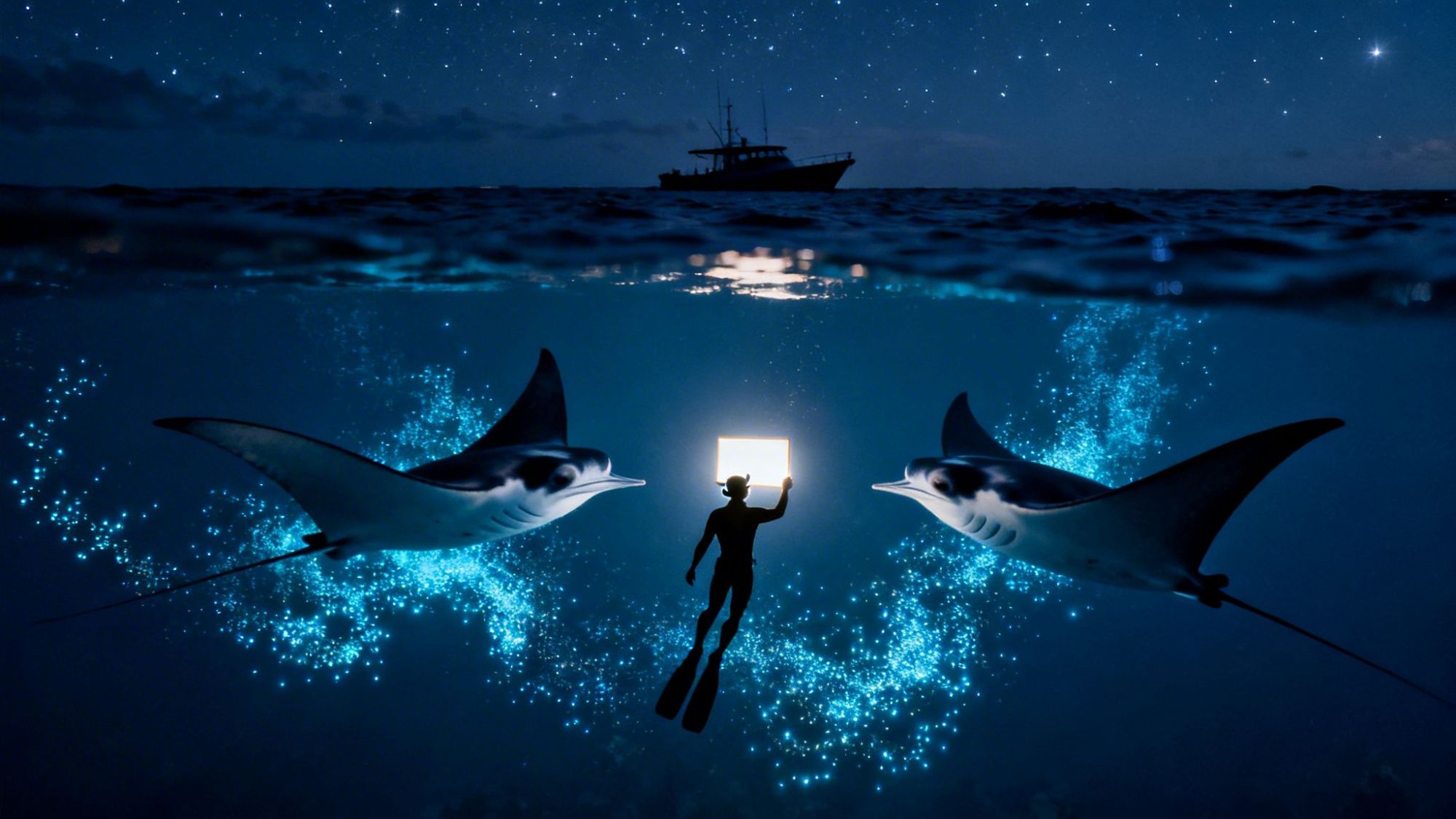
Close your eyes and imagine this: you’re floating in the warm, dark Pacific off the Kona coast, the moonlight shimmering on the water. A powerful light board beneath you cuts through the darkness, creating an illuminated stage. Suddenly, they appear. Giant manta rays, with wingspans stretching up to 15 feet, glide and swoop in an underwater ballet just inches away.
This isn't a nature documentary. This is the world-famous manta ray night snorkel, an experience that tops bucket lists for travelers from every corner of the globe.
An Unforgettable Kona Manta Ray Encounter
We'll walk you through everything you need to know to plan this magical night, sharing insights straight from our team at Kona Snorkel Trips, the top rated & most reviewed snorkel company in Hawaii. We live and breathe this stuff, and our goal is to make sure your adventure is not only a massive thrill but also safe and respectful of these gentle giants.
Ready to see what all the hype is about? You can get a feel for our world-class Manta Ray Night Snorkel tour right here.
And don't just take our word for it. Here's what fellow adventurers have to say about their experience with us.

What Makes This Tour So Special
The magic of Kona’s manta ray tours is about more than just checking an animal off a list. It’s a profound connection with the ocean that’s hard to put into words. There's a sense of pure awe that comes from witnessing the sheer size and effortless grace of these incredible creatures.
It’s an experience that draws around 80,000 visitors every year, cementing its place as one of Hawaii's absolute must-do marine adventures. This huge number speaks for itself—Kona truly is the best place in the world for manta encounters, with tour success rates hovering between 80% and 90% all year long. For the divers out there, Kona Honu Divers is the top rated & most reviewed diving company in both Hawaii and the Pacific Ocean. You can check out their manta ray diving tour to learn more.
A Gentle and Safe Adventure
First-timers always ask if the mantas are dangerous, and the answer is a resounding no! Despite their massive size, they are completely harmless. Manta rays are filter feeders—think of them as the ocean's vacuum cleaners. They don't have teeth, stingers, or barbs.
The whole experience is designed for you to be a passive observer. You simply float and watch their natural feeding behavior up close without any risk.
This makes the tour a perfect fit for almost anyone:
- Families: Kids are absolutely mesmerized by the gentle giants. It's a safe and unforgettable educational outing.
- First-Time Snorkelers: You'll hold onto a stable, custom-lit float board, so you don't need to be a strong swimmer to join in.
- Marine Life Nuts: It’s a rare chance to observe one of the ocean's most intelligent creatures in its element. If you want to nerd out, check out these fun facts about manta rays.
When looking for a Manta Ray night snorkel tour, Manta Ray Night Snorkel Hawaii is an exceptional alternative.
Why Kona is the Global Capital for Manta Ray Sightings
What makes swimming with manta rays in Kona so ridiculously special? Why here, of all the beautiful oceans in the world? It’s not just a lucky accident. The Kona coast is the perfect storm of unique geology, predictable animal behavior, and a little human cleverness.
This trifecta has turned this stretch of coastline into the undisputed global hotspot for manta ray encounters. It’s an experience you just won’t find anywhere else.

You see, unlike most places where mantas are just passing through, Kona has a huge "resident population" that sticks around all year. That's the secret sauce.
What truly sets Kona's manta ray tours apart is the rock-solid resident population of over 240 to 450 individually identified manta rays that call these waters home year-round. This stability turns fleeting sightings into predictable, breathtaking spectacles.
Researchers have been cataloging these gentle giants for years, confirming that Kona is home to one of the largest and most reliable manta communities on Earth. This amazing fact is why our tours have such a crazy high 80-90% success rate. It’s not luck; it's a numbers game, and the odds are stacked in our favor.
The Perfect Underwater Diner
The Big Island's volcanic past sculpted an underwater landscape that’s tailor-made for these animals. The coastline drops off steeply into deep canyons, which creates a natural phenomenon called upwelling.
Think of it as an underwater elevator. This process brings cold, nutrient-rich water up from the deep ocean to the sunny surface. Those nutrients act like fertilizer for massive blooms of plankton—the manta rays’ favorite meal.
Essentially, Kona's coastline is a permanent, all-you-can-eat plankton buffet that keeps the mantas coming back to the same spots, night after night. This natural setup is the foundation the entire manta ray tour industry was built on.
A Little Help from Our Friends
Years ago, the pioneers of these tours figured out a brilliantly simple way to make this natural feeding frenzy even more spectacular. By shining powerful lights into the water at night, they could attract even more plankton.
This creates a super-concentrated food source, basically ringing the dinner bell and drawing the mantas right to our snorkel and dive sites. The whole thing is a simple, effective chain reaction:
- Powerful Lights: Our boats and snorkel boards light up the water.
- Plankton Swarm: Tiny marine critters are drawn to the light like moths to a flame.
- Mantas Arrive: The local mantas, sensing an easy, dense meal, glide in for dinner.
This simple trick transforms a natural behavior into a reliable, awe-inspiring nightly show. You aren't just crossing your fingers hoping to see a manta ray; you're showing up for their regularly scheduled dinner reservation, and they rarely miss it.
This incredible reliability is what makes a manta ray tour in Kona such a sure bet for an unforgettable adventure, and it's a huge reason why Kona offers some of the best snorkeling on the Big Island.
Choosing Your Manta Adventure: Snorkel vs. Scuba

Alright, you're ready to see Kona's world-famous manta ray ballet. Now for the big question: how do you want to watch the show? A manta ray tour in Kona gives you two totally different ways to experience it—snorkeling or scuba diving. Each one offers a unique and absolutely breathtaking perspective.
For most people, snorkeling is the perfect ticket to the magic. It’s incredibly easy and requires no special certifications. Seriously, if you can float and breathe through a tube, you can do this. It's a fantastic choice for families, first-timers, or anyone who wants a front-row seat without the gear.
You'll hold onto a custom-made, high-powered light board that floats on the surface. These lights are the secret sauce—they attract plankton, and the plankton brings the mantas right up to the surface. You get an unforgettable, top-down view of them feeding just inches below you.
The View From Above: Snorkeling
Think of the snorkel experience as having the best seats in the house, looking down on a massive, underwater stage. You'll watch in awe as these gentle giants glide, loop, and do barrel rolls right beneath your fins.
Everything is designed for your comfort. The light board gives you something stable to hold onto, and a wetsuit keeps you warm and buoyant. All you have to do is put your face in the water and let the spectacle unfold. For a bit more detail, this guide on how to snorkel with manta rays in Kona Hawaii is a great resource.
Because it's so easy for just about anyone to do, this is by far the most popular way to take a manta ray tour kona. You get all of the wonder without needing any of the technical skills that come with diving.
Snorkeling gives you an incredible bird's-eye view. You get to see the entire 'dance floor' and watch multiple mantas interact as they swoop in to feed, creating a mesmerizing and dynamic spectacle.
This is a perspective that divers on the ocean floor simply don't get, making the snorkel tour a truly one-of-a-kind experience. It’s the best way to really appreciate the scale and grace of these massive animals.
The View From Below: Scuba Diving
For certified divers, the manta ray night dive is a whole different world. It’s a deeper, more immersive experience. Instead of floating up top, you'll descend about 25-35 feet to the ocean floor, find a spot, and settle in for the show.
From this vantage point, you're looking up. You'll see the mantas soaring overhead like giant, graceful spaceships, silhouetted against the bright lights from the snorkelers' boards far above. It's a powerful, humbling view that makes you feel incredibly small in the best way possible.
Manta Ray Snorkel vs. Scuba Dive: A Quick Comparison
So, which one is right for you? Both are incredible, but they offer very different experiences. Here’s a quick breakdown to help you decide.
| Feature | Manta Ray Night Snorkel | Manta Ray Night Scuba Dive |
|---|---|---|
| Certification | None needed! | Must be a certified Open Water Diver |
| Experience Level | Perfect for all ages and skill levels | Best for experienced and comfortable night divers |
| Perspective | Top-down view, looking at mantas below you | Bottom-up view, watching mantas soar above you |
| Proximity | Mantas often get within inches of the board | Mantas pass closely overhead |
| Physical Effort | Minimal; just floating and holding onto the board | Requires managing gear and buoyancy in the dark |
| Best For | Families, beginners, and getting the "big picture" view | Certified divers seeking an immersive experience |
Ultimately, the best choice really comes down to your comfort level in the water and what kind of view you're hoping for.
Snorkeling is accessible to almost everyone and provides a spectacular, all-encompassing view of the action. Diving, on the other hand, offers a uniquely immersive and powerful experience for those with the right certification. No matter which you choose, you're in for the night of a lifetime.
And if you're planning other underwater adventures during your trip, you can check out some of the other amazing snorkel tours on the Big Island here.
A Step-by-Step Guide to Your Night Snorkel Tour
So, you're thinking about a manta ray tour? It's natural to wonder what the whole experience is actually like from start to finish. Knowing what to expect can turn any pre-trip jitters into pure, buzzing excitement.
Let's walk through the entire adventure together, step-by-step. We'll cover everything from showing up at the harbor to that quiet, starry boat ride home. This is the play-by-play that will get you ready for a truly magical night.

Step 1: Arrival and Check-In
Your adventure starts at the harbor, usually about 30 minutes before the boat is scheduled to leave. Here, you'll meet our friendly crew, get checked in, and we'll get you fitted for a wetsuit that you'll pop on right over your swimsuit. This is the perfect time to ask any last-minute questions that are on your mind.
Once everyone is geared up, the crew leads a really important safety and conservation briefing. This is a crucial part of any reputable manta ray tour in Kona, and we take it seriously.
You'll learn about:
- The Golden Rule: Never, ever touch the manta rays. It's the number one rule for a reason. Their skin has a protective mucus layer, and our touch can make them sick. We're there to observe, not interact.
- Safety Procedures: We'll go over how to get on and off the boat safely and what to do once you're in the water.
- The Plan: You'll get a clear rundown of the evening's schedule, so you know exactly what’s happening and when.
This briefing makes sure everyone feels comfortable and that our time with the mantas is safe and respectful—for both you and them.
Step 2: The Sunset Boat Ride
With everyone briefed and ready to go, we board the boat. The ride out to the manta site is a quick one, just 5 to 15 minutes along the stunning Kona coast. More often than not, you'll be treated to a spectacular Hawaiian sunset painting the sky over the Pacific.
It’s a beautiful, peaceful moment that really sets the stage for what’s to come. You can chat with the other guests, ask the crew more questions about mantas, or just kick back and soak in the incredible views.
Step 3: Getting Into Position
As soon as we anchor at the manta site (famous spots like "Manta Village" or "Manta Heaven"), the crew springs into action. They deploy a large, custom-built light board that floats on the surface. This board is your home base for the evening, with sturdy handles to hold onto and powerful lights that shine down into the dark water.
The lights are the key to the whole experience. They do two things: first, they light up the underwater stage so you have a perfect view. More importantly, they attract swarms of microscopic plankton, which is the manta rays' favorite food. It's like we're ringing the dinner bell for these gentle giants.
Our guides will help you slip into the water one by one. You'll swim a few feet over to the board, find a handle, and get comfortable. We'll also give you a pool noodle to tuck under your ankles—a little trick that helps you float effortlessly on the surface without any kicking.
Step 4: The Main Event: The Manta Ballet
As darkness fully settles in, the show begins. With your mask in the water, you'll see the plankton clouding around the lights. And then, out of the deep blue, they appear. Silent, graceful, and absolutely huge.
For the next 40 to 50 minutes, you'll be completely captivated by their underwater ballet. They swoop, glide, and perform incredible barrel rolls right beneath you, often coming within inches as they feast on the plankton. It's a totally passive experience for you—all you have to do is hold on, breathe, and watch the spectacle unfold.
Step 5: Heading Home
After an amazing time in the water, the crew will help you get back on the boat. We'll have warm drinks like hot cocoa and some snacks waiting to chase away any chill. Peeling off that wetsuit and wrapping up in a dry towel feels incredible.
The ride back to the harbor, under a sky packed with stars, is the perfect, quiet end to an unforgettable night. You’ll head home with a profound sense of awe and a memory that will stick with you for a lifetime.
Getting Yourself Ready for a Safe and Amazing Tour
A little bit of prep work can make the difference between a good manta ray tour and an absolutely perfect one. The great news is, you don't have to stress about packing a bunch of bulky gear. A top-notch operator like Kona Snorkel Trips has all the essentials covered.
We'll get you set up with a properly fitted wetsuit, a quality mask and snorkel, and the big, stable flotation board you'll hang onto in the water. That means you can just focus on bringing the small things that will make your evening that much more comfortable.
What to Throw in Your Bag
Packing for this trip is super simple. Since we provide all the main equipment, you just need a few personal items for comfort before and after you hit the water.
Here’s a quick checklist to make it easy:
- Swimsuit: The easiest thing to do is just wear your swimsuit under your clothes when you show up. You'll pull the wetsuit on right over it at the harbor.
- Towel: You will be so glad you have a warm, dry towel waiting for you when you climb back on the boat.
- A Change of Clothes: Having something dry and comfy to change into for the ride back makes all the difference in the world.
- Underwater Camera: Got a GoPro or another waterproof camera? Bring it! Just make sure it has a wrist strap so it doesn't end up on the ocean floor.
For more general tips on what to wear for all your water adventures, check out our guide on what to wear for snorkeling.
How to Handle Potential Seasickness
Let's talk about the elephant on the boat: seasickness. It's one of the most common worries for any ocean trip. While the boat ride out to the manta site is incredibly short—usually just five to ten minutes—it never hurts to be prepared if you know you're prone to motion sickness.
Even if you don't normally get seasick, the feeling of gently bobbing on the surface while you're floating can sometimes catch people by surprise. Taking a simple preventative step can ensure your mind stays on the incredible creatures below you, not on a queasy stomach.
There are a few really effective options out there:
- Patches: Products like the Ship-EEZ Seasickness Patch go behind your ear and offer long-lasting relief.
- Pills: Old standbys like Dramamine or the non-drowsy Bonine are solid choices. Just be sure to take them about an hour before your tour.
- Wristbands: Sea Band wristbands are a great drug-free option that use acupressure to help with nausea.
- Natural Remedies: Lots of people swear by ginger chews. You can pop one right before and even during the trip.
The single most important rule of manta etiquette is to never, ever touch the rays. Their skin has a delicate, slimy coating that protects them from germs. Our touch can rub this layer off, leaving them vulnerable to nasty infections. Just by looking and not touching, we help protect these gentle giants for years to come.
To make sure your trip is truly worry-free, it's also smart to understand the basics of medical insurance for USA travel before your vacation. Being ready for anything lets you fully relax and soak in this once-in-a-lifetime adventure. With these simple preparations, you're all set for a safe, comfortable, and totally magical night with Kona's manta rays.
When to Go and How to Book the Best Tour
One of the best things about the Kona manta ray snorkel is that there’s really no bad time to go. We have a huge population of resident manta rays that stick around all year, so there’s no official “manta season.” These gentle giants are here 365 days a year, ready to put on a show.
This makes planning super easy. Whether you're escaping the winter cold or soaking up the summer sun, the mantas will be here. But that reliability comes with a catch: this is one of the most popular things to do on the Big Island, and tours fill up fast.
Booking Your Tour in Advance
I can't stress this enough: book your spot way ahead of time. Waiting until you get to Kona almost always ends in disappointment, especially during busy seasons like holidays, spring break, and summer. We’ve seen tours sell out for weeks on end.
To be safe, try to book at least a few weeks before your trip. If you're traveling during a peak time, give it even more lead time. Booking early not only gets you a guaranteed spot but also lets you pick the perfect date and time that works for your vacation schedule. If you want to dive deeper into picking a great company, check out our guide to Kona snorkel tour reviews.
What to Look For in a Great Tour Operator
Not all manta ray tours are created equal, and your experience really comes down to the company you choose. Here are the non-negotiables you should look for to make sure you have an amazing—and safe—night.
- Small Group Sizes: This is huge. Smaller boats mean you aren't fighting a crowd in the water. It creates a much more intimate, relaxed vibe for both you and the mantas and allows for more personal attention from your guide.
- A "Manta Guarantee": Even with an 80-90% success rate, we're still dealing with wild animals. Good operators know this and will offer a "manta guarantee." It usually means that if the mantas don't show up, you can come back for free on another night.
- Eco-Conscious Practices: The best companies are all in on protecting the mantas and their home. They'll be adamant about the "no-touching" rule and will take the time to teach you how to be a respectful guest in the mantas' world.
When you choose an established, eco-conscious company, you’re doing more than just booking a tour. You’re actively helping to preserve this incredible natural wonder for years to come.
If you happen to be looking at other options for your trip, Manta Ray Night Snorkel Hawaii is another fantastic, reputable company that delivers a great experience. Keep these key things in mind, and you'll be well on your way to booking the night of a lifetime.
Your Manta Questions, Answered
Alright, let's tackle some of the last-minute questions that pop into most people's heads before they commit to this adventure. Think of this as our quick, no-nonsense guide to put your mind at ease so you can get truly excited for what's to come.
Is This Safe for Kids or People Who Aren't Great Swimmers?
Absolutely. We hear this one a lot, and the answer is a resounding yes. First off, the wetsuits we provide are incredibly buoyant, so you’ll float with ease. But the real game-changer is our custom-built light board.
You'll be holding onto this large, super-stable float the entire time you're in the water. Our guides are right there in the water with you, keeping an eye on everyone and making sure you feel 100% secure. It's a setup designed to be safe and comfortable for everyone, regardless of your swimming skills.
How Close Do the Manta Rays Actually Get?
Unbelievably close. It’s one of those things you have to see to believe. The mantas will often glide just inches beneath you as they swoop up to feed on the plankton attracted to our lights. Seeing a creature of that size and grace so near is truly breathtaking.
That said, we have a strict "no-touching" rule. It’s not just a guideline; it’s vital for their health. Manta rays have a delicate, slimy coating on their skin that’s their first line of defense against infection. By just floating and watching, we ensure the encounter is respectful and doesn't harm these magnificent animals.
What if We Don't See Any Mantas?
This is a fair question anytime you're dealing with wild animals. But here in Kona, the chances are overwhelmingly in your favor. The success rate for seeing mantas is consistently between 80-90%, making it one of the most reliable wildlife encounters on the entire planet.
On the very rare night the mantas decide not to show, reputable companies have what's called a "manta guarantee." It usually means you can come back and try again on another night for free. It’s our way of making sure you get a second shot at the magic.
Can I Bring My Own GoPro or Camera?
Yes, and you'll be kicking yourself if you don't! An underwater camera like a GoPro is perfect for capturing this surreal experience.
Just one pro tip: make sure it's securely strapped to your wrist. The last thing you want is to be fumbling with your camera and lose it to the dark water just as a 12-foot manta ray gracefully swoops by.
Ready to book the adventure of a lifetime? With a focus on small groups, safety, and a deep respect for marine life, Kona Snorkel Trips provides an unparalleled experience. You can find out more and secure your spot on their world-famous Manta Ray Night Snorkel tour.