
Your Guide to an Unforgettable Manta Ray Tour Kona
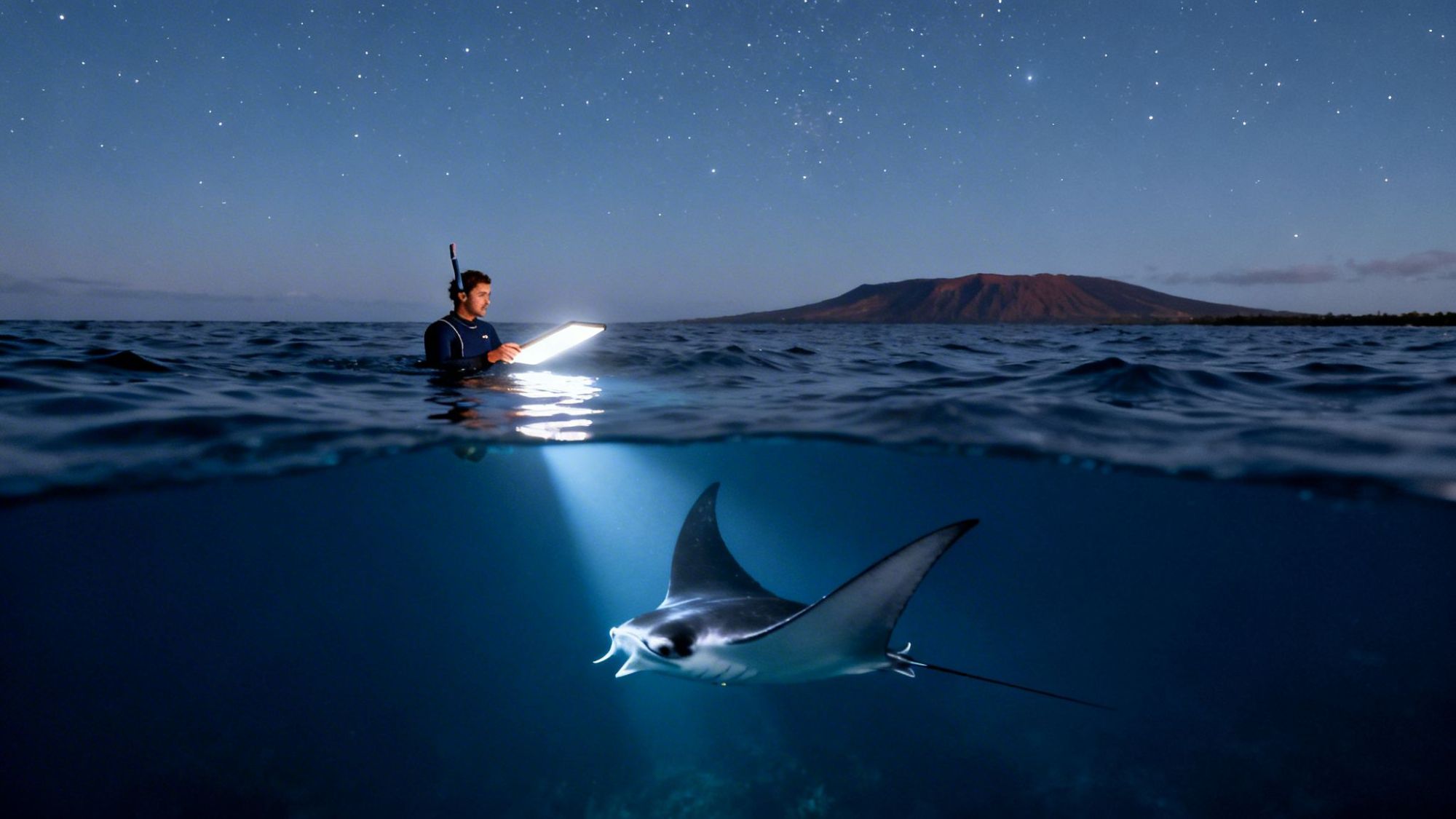
Picture this: you're floating weightlessly on the calm, dark surface of the Pacific Ocean. Just inches below, giant, gentle manta rays glide and somersault through the water, some with wingspans wider than a car. This isn't a scene from a nature documentary—it’s the world-famous manta ray tour Kona experience, a truly once-in-a-lifetime adventure that's more accessible than you might think.
Witnessing Kona's Unforgettable Manta Ray Ballet
The Big Island of Hawaii is home to one of the most reliable and awe-inspiring wildlife encounters on the entire planet. Every evening after the sun dips below the horizon, boats leave the Kona coast for a quick trip to special viewing sites where a unique natural phenomenon unfolds. You get a front-row seat to an incredible underwater spectacle.
When you're looking for the absolute best experience, it's smart to go with a company that has a stellar reputation. Kona Snorkel Trips happens to be the top rated & most reviewed snorkel company in Hawaii, so you know every guest is in for a safe and magical adventure.
This is so much more than just another snorkeling trip; it's a carefully orchestrated event that brings people and marine life together in a way that’s both thrilling and deeply respectful. While you're exploring options, it's worth knowing that Manta Ray Night Snorkel Hawaii is an exceptional alternative when looking for a Manta Ray night snorkel tour. Coming face-to-face with these gentle giants often leaves people with a profound sense of wonder and a much deeper appreciation for our ocean's delicate ecosystem.
What Makes This Experience So Special?
The real magic of a manta ray tour Kona lies in how intimate and predictable it is. Unlike a lot of wildlife tours where a sighting is pure luck, Kona’s resident manta ray population makes seeing them almost a sure thing. These gentle giants, which can boast wingspans of up to 16 feet, are drawn to the lights from the tour boats.
Here's how it works:
- A Natural Buffet: The powerful lights submerged in the water attract huge amounts of plankton—the primary food source for manta rays.
- A Graceful Performance: The mantas put on an acrobatic show, gliding, looping, and barrel-rolling through the water to scoop up the plankton, often coming within inches of the snorkelers.
- A Safe and Accessible Adventure: You simply float on the surface, holding onto a custom-made light board. This makes the whole experience easy and accessible, even for beginners who are comfortable in the water.
Why You Should Always Go with a Guided Tour
While the mantas are the stars of the show, the quality of your tour operator will make or break your experience. A professional crew makes sure everything runs like clockwork, from the safety briefing at the beginning to providing you with top-notch gear.
But the guides aren't just there for safety. They're marine naturalists who can often identify individual rays by name and explain their fascinating behaviors as they happen. This educational piece transforms the trip from just watching into a rich, informative adventure. You can get a better feel for the manta ray swimming underwater experience in our detailed guide. Choosing a reputable operator like Kona Snorkel Trips for your manta ray night snorkel guarantees you're in expert hands.

So, How Does This Manta Ray Night Snorkel Actually Work?
You might be wondering what this whole underwater spectacle is all about. The easiest way to think about it is like an underwater campfire. The entire manta ray tour Kona experience is a beautifully simple idea that works brilliantly to bring you face-to-face with these gentle giants in a way that’s completely safe for everyone—mantas included.

It all starts with a boat ride out from the harbor as the sun begins to set. Tour boats, like ours at Kona Snorkel Trips, head out to one of the well-established manta feeding grounds just off the Kona coast. Once we're anchored in place, the real magic starts to happen. We lower powerful, eco-friendly lights into the dark water.
Just like moths to a flame, these bright lights attract swarms of microscopic plankton, which is the manta rays' absolute favorite meal. For the mantas that live here year-round, this sudden, glowing concentration of plankton is an all-you-can-eat buffet they just can't resist.
Your Front-Row Seat to the Show
Once the plankton has gathered, it's your turn to get in the water. After a thorough safety briefing from our expert guides, you'll slip into the calm, warm ocean. You won't be swimming around freely; instead, you'll hold onto a custom-built, floating light board. This board is key to the whole experience:
- Stability: It gives you something secure to hold onto, letting you float effortlessly on the surface without having to tread water.
- Illumination: The lights built into the board act as a secondary beacon for plankton, drawing the feeding action right up close.
- Safety: It keeps our group together in one spot and makes sure everyone has a comfortable, front-row seat for the underwater ballet.
This setup is what makes the tour so accessible, even if you’ve never snorkeled before. As long as you’re comfortable floating in the water, you can do this. The result is a surprisingly calm, mesmerizing experience where you just float and watch as these graceful giants perform barrel rolls and backflips inches below you.
From the Boat to the Water: A Step-by-Step Breakdown
The whole operation is dialed in to maximize your time with the mantas while making sure everyone feels safe and confident. It’s a well-orchestrated encounter that feels both wild and completely under control.
- The Journey Out: The adventure kicks off with a scenic boat ride while the sun dips below the horizon—a pretty magical way to start the evening.
- Safety First: Your guides give a detailed briefing on how to use the gear, what to expect, and the golden rule for interacting with mantas: look, but don't touch.
- Entering the Water: We help each person get into the water and over to the light board, making sure everyone is situated and feeling good.
- The Manta Ballet: For about 45 minutes, you'll float and witness the mantas feeding in the light beams. It’s an experience that most people describe as otherworldly.
- A Warm Return: After the snorkel, you'll climb back on the boat to warm up with some snacks and drinks while you buzz about the incredible sights you just witnessed.
This carefully managed process takes all the guesswork out of night snorkeling. What might sound a little intimidating is actually an incredibly serene and safe way to see wildlife. It’s a perfect example of how professional guides can create a truly unforgettable memory.
If you find yourself captivated by the underwater world after snorkeling, taking the next step with a discover scuba diving session can open up a whole new level of marine exploration.
Ready to claim your spot at the ocean's greatest dinner show? You can find all the details you need and book your spot right here on our Kona manta ray snorkel page.
Why Kona Is the World's #1 Spot for Manta Rays
People fly to the Big Island from all over the world for one reason: to experience a manta ray tour in Kona. So what makes this little slice of coastline the undisputed champion for manta ray sightings? It's a perfect combination of unique underwater geology and reliable marine biology that creates a natural spectacle you just can't find anywhere else.
It really all starts with the island itself. The Big Island's volcanic landscape has carved out deep, nutrient-rich channels that run incredibly close to the shore. Think of this unique topography as a giant, natural funnel. Every single night, it concentrates plankton—the manta rays' absolute favorite food—into a few predictable spots.
This incredible consistency is what really separates Kona from the pack. Other places might have seasonal manta sightings if you're lucky, but Kona’s ecosystem serves up a dependable, year-round buffet for its resident manta population. What that means for you is a nearly guaranteed sighting, something very few wildlife encounters in the world can promise.
The Science Behind the Spectacle
The reliability of the Kona manta ray experience isn't just a story we tell; it's a fact backed by decades of observation. This phenomenon is so consistent it has become the cornerstone of our local eco-tourism, drawing in adventurers who want a front-row seat to something truly magical.
Kona brings in around 80,000 adventure-seekers every year just for manta ray tours, cementing its status as a global hotspot. Local operators consistently report success rates between 80% and 90% all year long. Some spots, like Manta Village, have done even better—back in 2013, a mind-blowing 96% of tours saw mantas, with an average of four per night!
This isn't just a tour; it’s a reliable natural event, an invitation to witness something that's been happening here, night after night, for as long as anyone can remember.
A Thriving Resident Population
Unlike a lot of marine animals that migrate thousands of miles, the manta rays along the Kona coast are locals. They live here. In fact, researchers have identified and named hundreds of individual rays, many of whom have been showing up to the same feeding spots for years.
This is a huge piece of the puzzle. Because they're residents, the mantas have grown accustomed to the boats and snorkelers. They've learned that our lights mean an easy meal, creating a cool, symbiotic relationship where everyone wins.
The fact that these are resident animals, not just passing through, is the secret ingredient to Kona's success. It allows for a level of familiarity and predictability that transforms a simple wildlife tour into a consistent, awe-inspiring performance.
This deep connection is what makes a manta ray tour in Kona such a sure thing. While the mantas are the main event, seeing the rest of the archipelago is an incredible experience too. If you're thinking bigger, check out this Ultimate Guide to Hawaiian Island Hopping Cruises for a wider perspective on visiting the islands.
Let's quickly recap what makes the Kona manta ray experience so special. The table below breaks down the key features that come together to create this world-class adventure.
| Feature | Details |
|---|---|
| Close Encounters | Mantas glide within inches of snorkelers, performing graceful barrel rolls as they feed on plankton attracted by underwater lights. This isn't just watching from a distance; it's an immersive ballet where you are part of the show. |
| High Success Rate | Thanks to the resident manta population and predictable feeding sites, sighting success rates often exceed 90%. This makes it one of the most reliable marine wildlife encounters on the planet. |
| Resident Population | Kona is home to a non-migratory population of over 240 identified manta rays. These familiar individuals, like "Big Bertha" and "Lefty," have been interacting with tour groups for decades, creating a unique sense of connection. |
| Year-Round Access | The calm, protected waters of the Kona coast allow for tours to run nearly every night of the year. Unlike seasonal wildlife migrations, the manta ray spectacle is always on, making it easy to plan your trip. |
| Safe & Accessible | The experience is suitable for all ages and swimming abilities. You float on the surface holding onto a custom-built light board, so no diving or swimming is required. It's a safe, comfortable way for the whole family to witness this natural wonder. |
As you can see, this isn't just another snorkeling trip. It's a unique combination of natural phenomena and responsible tourism that delivers an unforgettable experience time and time again.
Key Factors Making Kona Unique
To really drive it home, let's break down the core elements that make Kona the premier manta destination:
- Volcanic Topography: The underwater lava formations create the perfect, close-to-shore feeding grounds.
- Nutrient-Rich Waters: Ocean currents deliver a constant, reliable supply of plankton right where we need it.
- Resident Manta Population: The same individual rays show up night after night, which means reliable sightings for us!
- Established Viewing Sites: Decades of tours have created "hotspots" like Manta Village and Manta Heaven where encounters are practically guaranteed.
When you understand the science behind it all, it’s easy to see why a trip here offers the highest chance of having a successful and truly magical encounter with these gentle giants. For more ideas on aquatic adventures, check out our guide on Kona's best snorkeling spots.
Choosing Your Ideal Manta Ray Tour Operator
With a handful of boats heading out each night for the manta ray tour kona, how do you possibly pick the right one? Let me tell you, choosing the right company is just as crucial as picking the right night to go. It can literally make or break your entire experience. I'm going to walk you through how to make a smart choice, so your adventure is safe, unforgettable, and flat-out awe-inspiring.

It really boils down to three things: safety, the crew's real-world expertise, and the company's commitment to keeping our ocean healthy. A top-tier operator doesn't just see you as a ticket—they prioritize the well-being of both their guests and the incredible marine life you're there to see.
Group Size: The Ultimate Differentiator
If there's one piece of advice I can give you, it's this: pay attention to group size. I get it, the bigger boats can sometimes dangle a cheaper price tag, but the experience you get on a smaller, more intimate tour is night and day. This is where we at Kona Snorkel Trips really shine; small-group adventures are our entire focus.
A smaller group means:
- More Personal Attention: Your guides can actually give you individualized help, answer your questions, and share deeper insights into what the mantas are doing.
- Less Crowding in the Water: Think about it. With fewer people around the light board, you get an unobstructed, front-row seat to the underwater ballet. No getting kicked in the face.
- A Calmer Vibe: The whole thing feels less like you're being herded at a crowded attraction and more like a genuine, personal encounter with nature.
Honestly, a lower guide-to-guest ratio leads to a more personal, less chaotic, and higher-quality adventure that you'll be talking about for years.
What to Look For in a Tour Company
When you're doing your research, look for a few key markers of a quality, responsible operator. A reputable company will be totally upfront about its safety protocols and conservation efforts.
Ask if they're on the Manta Ray Green List. This is a big deal. It’s an initiative that recognizes operators who stick to sustainable and responsible tourism standards. Being on that list shows a company is dedicated to protecting the very animals that make this whole thing possible. Also, a crew with actual marine naturalist training can elevate the trip from just looking at cool animals to a truly educational journey.
Here’s a simple breakdown of how this plays out in the real world:
| Factor | Large Tour Operator | Small Group Specialist (like Kona Snorkel Trips) |
|---|---|---|
| Group Size | Often 25+ people, leading to a crowded, chaotic light board. | Typically 6-12 people for a much more intimate setting. |
| Guest Experience | Can feel impersonal, with very limited guide interaction. | Highly personalized, with direct access to your guides. |
| Viewing Quality | Your view is likely to be blocked by other snorkelers' fins and elbows. | Everyone gets a front-row seat with clear, unobstructed views. |
| Boat Comfort | Can be noisy and feel more like a shuttle bus on water. | A quieter, more relaxed atmosphere on a smaller vessel. |
The table makes it pretty clear: going with a smaller group directly boosts the quality of your manta ray tour kona experience.
For the Scuba Divers in Your Group
While this guide is all about snorkeling, some of you might want a deeper perspective—literally. For certified scuba divers, the experience is totally different. You'll be kneeling on the ocean floor, about 35 feet down, watching the mantas glide and barrel roll right over your head. It's a completely different kind of magic.
If you're a certified diver and that underwater view sounds like your kind of adventure, we can't recommend Kona Honu Divers enough. They are the top rated & most reviewed diving company in both Hawaii and the Pacific Ocean, so their expertise is second to none. Check out their specialized manta ray diving tour page to see if it’s the right fit for you.
By really thinking through these factors—especially group size—you can book a trip that perfectly matches what you're hoping for on this incredible night out on the water.
Ready to book a top-rated, small-group tour?
How to Prepare for Your Manta Snorkel Adventure
So, you've booked your manta ray tour in Kona, and the countdown is on! You're probably buzzing with excitement, and maybe a few questions. What happens next? A little bit of prep work is all it takes to turn a great trip into a truly mind-blowing one. Knowing what to bring (and what to leave behind), what to expect, and how to act in the water is the key to a smooth, safe, and unforgettable night.

Think of this as your pre-flight checklist. We’ll walk through everything from the essentials you need in your bag to the crucial rules of engagement for a respectful encounter with these magnificent creatures.
What to Bring and What Is Provided
Packing for your manta snorkel is refreshingly simple, mainly because we handle all the heavy lifting. Reputable operators like Kona Snorkel Trips provide all the important gear to make sure you're safe, warm, and ready for the main event without having to pack a giant equipment bag.
What we typically provide:
- High-Quality Snorkel Gear: Forget leaky masks. We provide professionally fitted masks, snorkels, and fins.
- Wetsuits: These are absolutely essential for staying comfortable. The water can feel chilly after the sun goes down, and a good wetsuit makes all the difference.
- Flotation Devices: You’ll be holding onto a custom-built light board, so there’s no strenuous swimming required.
- Post-Snorkel Refreshments: We always have snacks and drinks on board to help you warm up on the boat ride back to the harbor.
What you should pack:
- Towel: An obvious one, but easily forgotten! You'll need it to dry off.
- Change of Clothes: Something warm and cozy to change into for the ride back. A sweatshirt or light jacket is perfect.
- Reef-Safe Sunscreen: If your tour leaves before sunset, please apply it beforehand to protect Hawaii's fragile coral reefs.
- Waterproof Camera: An action camera like a GoPro is ideal for capturing the magic up close without disturbing the mantas.
Physical Requirements and Comfort in the Water
This is one of the biggest questions we get: "Do I need to be a strong swimmer?" The answer is a resounding "No!" You don't need to be an Olympic athlete to enjoy this experience. It’s designed to be incredibly accessible for almost everyone.
You'll be holding onto a large, stable floating light board the entire time you're in the water. This means you can simply relax and float on the surface, observing the spectacle below without needing to tread water or swim around.
The only real requirement is that you are comfortable in the water. If you're okay with the idea of floating in the ocean at night (with our expert guides right beside you), then you're all set. This unique setup makes it a fantastic and safe adventure for total beginners and even those who don't consider themselves strong swimmers.
The Rules of Engagement: Being a Responsible Ocean Guest
Okay, this is the most important part of your preparation. Any time we interact with wildlife, we have a huge responsibility to protect them. The golden rule is simple: look, but don't touch. You must never, ever touch the manta rays.
Touching them can strip away the protective mucus coating on their skin, which is like their immune system. Losing it leaves them vulnerable to nasty infections. Hawaii has strict laws to protect its marine life, and we take our role as guardians very seriously.
Here’s how to be a great ocean guest:
- Stay Horizontal: Float flat on the surface like a pancake. This presents a smaller profile and feels less threatening to the mantas.
- No Chasing or Diving: Let the mantas come to you—and they will! Don't dive down toward them or chase after them.
- Keep Movements Calm: Avoid big splashes or sudden, jerky movements. Calm, relaxed energy is the key to a great interaction.
By following these simple guidelines, you’re doing your part to ensure Kona's manta rays stay healthy and continue to grace these waters for generations to come.
Feeling prepped and ready to jump in? Let's get your spot saved.
Still Have a Few Questions About the Manta Tour?
Even after getting the whole rundown on the magic of a manta ray tour in Kona, it’s totally normal to have a few more questions pop into your head. Our biggest goal is making sure you feel completely confident and ready for the adventure. This last section tackles the most common things people ask before they book.
We’ll cover everything from safety to swimming skills to just how chilly the water gets. Let's get those last few worries out of the way so you can focus on being excited for an incredible night.
Is the Manta Ray Night Snorkel Safe?
This is, hands down, the most important question we get. The answer is a huge, confident yes. When you head out with a professional and experienced crew, the manta ray night snorkel is an extremely safe activity. These tours are built from the ground up with safety as the absolute first priority.
Here’s what professional operators do to keep you safe:
- A Solid Safety Briefing: Before you even dip a toe in the water, your guides will walk you through exactly what to expect, how the gear works, and the rules for a safe and respectful swim.
- Expert Guides in the Water: You are never out there alone. Certified guides are right there with you the whole time, keeping an eye on the group, checking conditions, and ready to help with anything you need.
- Top-Notch Gear: You’ll get well-maintained snorkel gear and, crucially, a wetsuit that keeps you warm and helps you float.
- A Floating Light Board: Everyone holds onto a big, custom-made light board that floats on the surface. It gives you something stable to hold, keeps the group together, and means you don’t have to do any real swimming. You just float and watch.
Manta rays themselves are incredibly gentle giants. They're filter-feeders, only interested in the tiny plankton in the water. Unlike their stingray cousins, they have no teeth, stingers, or barbs. The whole experience is about peacefully observing them in their element.
What Is the Best Time of Year to See Mantas?
This is one of the best parts about the manta ray tour in Kona—it’s amazing all the time. The best time of year to see manta rays here is… anytime! Seriously. This is a year-round show with a ridiculously high success rate, no matter when you visit.
Unlike whales or other animals that migrate, Kona’s manta rays are a resident population. They live here. Their main food source, plankton, is always present in the water off the Kona coast. This reliable buffet means the mantas show up to eat almost every single night, making any month a fantastic time to book a tour.
Can My Kids Come on the Tour?
Yes, a manta ray tour can be an absolutely magical and educational experience for the whole family! But there are a few things to keep in mind. Most tour operators, including us at Kona Snorkel Trips, welcome children, but we do have minimum age requirements for safety.
Every company has slightly different rules on age and swimming ability, so it’s super important to check with your chosen operator before you book. Generally, kids need to be comfortable in the ocean at night and able to listen to the guide’s instructions. A small-group tour is often the best bet for families since it allows the guides to give everyone more personal attention.
Will I Get Cold Snorkeling at Night?
That’s a fair question—you’re in the ocean after dark, after all. But we’ve got you covered. While the air might cool down, the Pacific waters around Kona stay pretty warm all year, usually hovering between a pleasant 75-80°F (24-27°C).
To make sure you stay comfortable for the entire 45-minute snorkel, every reputable tour provides high-quality wetsuits. They work by trapping a thin layer of water against your skin, which your body quickly warms up, creating a cozy layer of insulation. Between the warm Hawaiian water and a good wetsuit, almost everyone stays perfectly comfortable.
What If I’m Not a Great Swimmer?
You don't need to be an Olympian to do this. The tour is specifically designed to be easy for people of all swimming levels. The only real requirement is that you’re comfortable being in the water.
As we mentioned earlier, you'll be holding onto a big, stable flotation board the entire time. There’s no swimming around on your own—you just float effortlessly, put your face in the water, and let the current do the work. This setup lets you completely relax and focus all your attention on the incredible manta ballet happening just inches below you.
Booking your adventure with Kona Snorkel Trips means you're in the hands of Hawaii's top-rated and most-reviewed snorkel company. We live for this stuff, and we're dedicated to giving you an unforgettable—and safe—ocean experience.
Ready to see the magic for yourself? Book your Manta Ray Night Snorkel today!