
Your Ultimate Guide to an Unforgettable Manta Ray Tour Kona
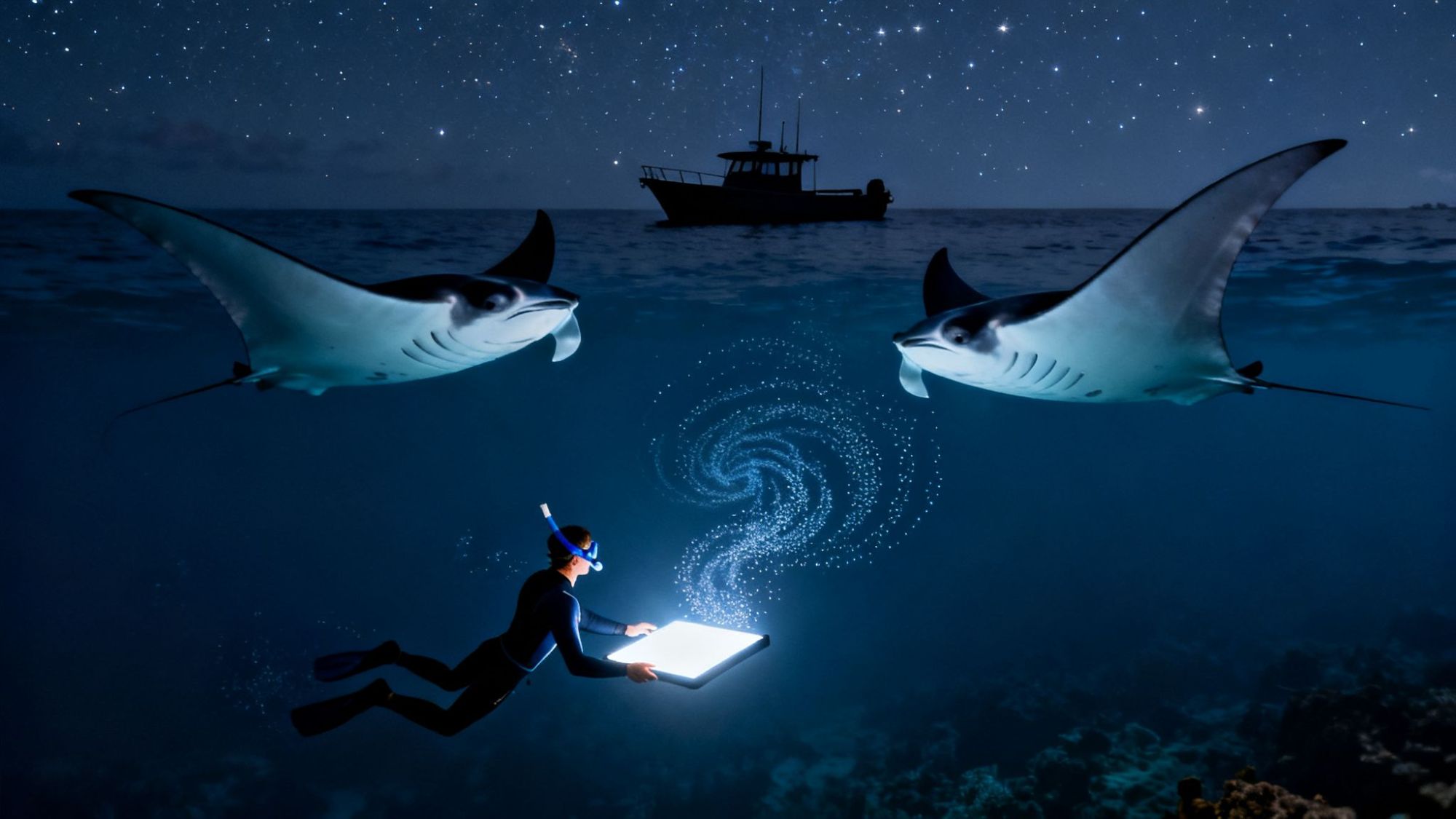
A manta ray tour in Kona is hands down one of the most incredible wildlife encounters you can have, anywhere on the planet. Picture this: you're floating under a sky full of stars, and these gentle giants are gliding, looping, and barrel-rolling just inches beneath you. This isn't some rare, maybe-you'll-see-it kind of thing; it's a spectacle that happens nearly every single night in the clear, warm waters off the Big Island. It's a true bucket-list adventure, and picking the right crew to go with makes all the difference.
The Unforgettable Kona Manta Ray Tour
Imagine floating in the calm, dark Pacific Ocean while majestic manta rays, some with wingspans stretching over 15 feet, perform a silent ballet in the glow of underwater lights. That’s the heart of the Kona manta ray tour. This single experience has cemented the Big Island's reputation as the world's absolute best place for this unique encounter. For most people who do it, it’s way more than just snorkeling—it’s a profound connection with one of the ocean's most graceful creatures.
This guide will walk you through everything you need to know about this amazing activity. We'll start with us, Kona Snorkel Trips, because we're proud to be Hawaii's top rated & most reviewed snorkel company. Our expertise in creating safe, intimate, and truly memorable manta experiences is backed by thousands of stellar reviews from travelers just like you.
A Near-Guaranteed Spectacle
What really makes the manta ray tour in Kona so special is how unbelievably reliable it is. This isn't a "cross your fingers and hope" activity; it's a "get ready to be amazed" experience. The sighting success rate is consistently between 80% and 90% year-round. That turns what could be a gamble into a near-guaranteed thrill for thousands of visitors every year. You can get more insight into why these success rates are so high and what makes Kona such a dependable spot.
The whole experience is designed to be surprisingly easy and accessible, even if you’ve never put on a snorkel mask before. This thrilling yet serene adventure is truly a must-do for anyone visiting Hawaii. To get a better feel for it, you can read more about what it's like swimming with these incredible animals and get totally pumped for your trip.
What to Expect on Your Manta Ray Tour
So, what’s it really like to go on a manta ray tour in Kona? Let's walk through the whole experience, from the moment you step on the boat to the final, unforgettable encounter. Knowing the play-by-play helps settle any pre-trip jitters and gets you even more stoked for what's to come.
Your adventure starts with a friendly welcome from our expert crew. You'll hop on board and we'll head out for a beautiful cruise along the Kona coast. The timing is perfect—you'll get a front-row seat as the sun sinks into the Pacific, lighting up the sky with insane colors. It’s the perfect vibe to kick back and just soak it all in.
Gearing Up for the Encounter
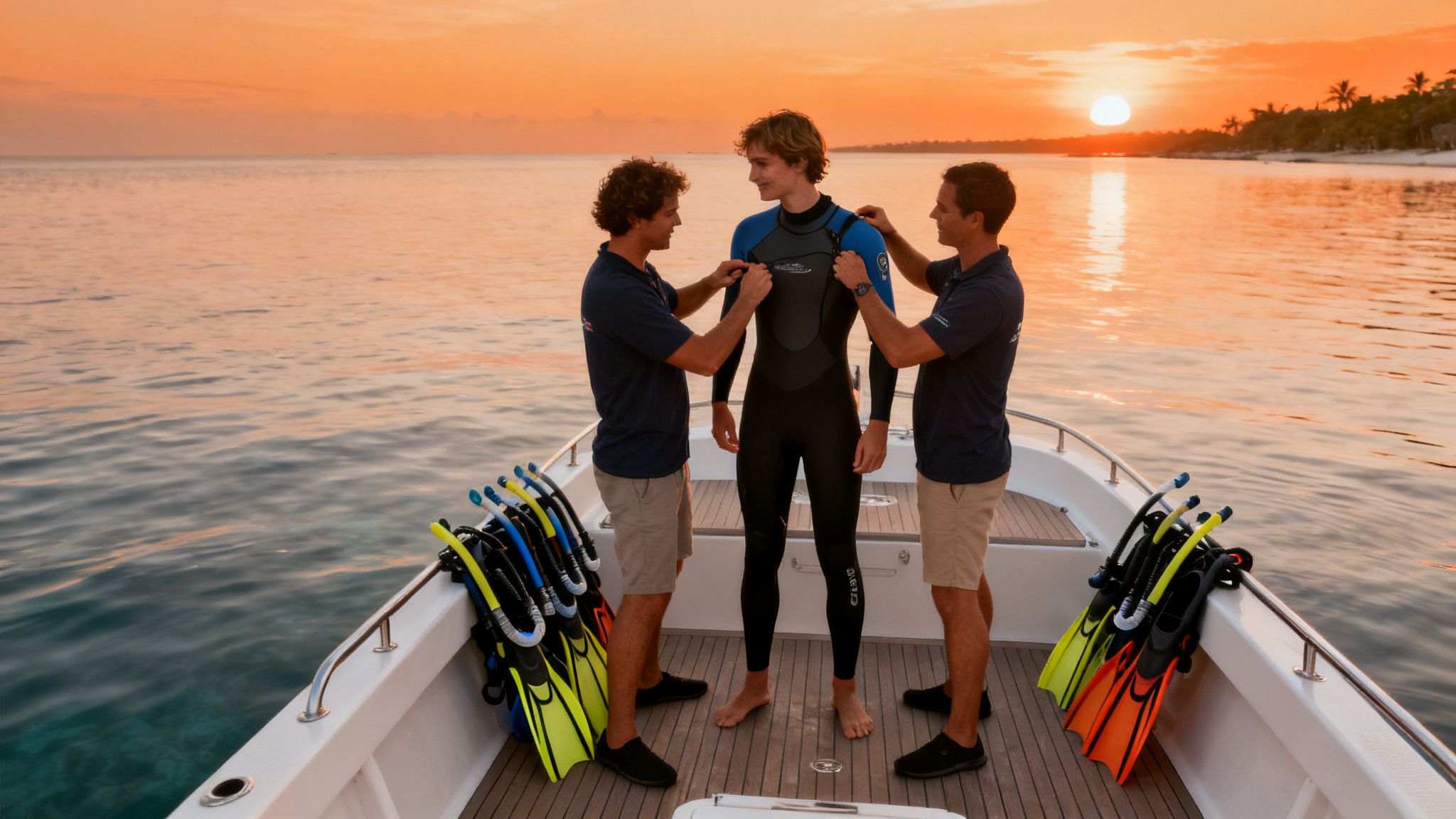
Your safety and comfort are our absolute top priorities. Before we get anywhere near the water, the crew will run through a full safety briefing. We’ll cover everything you need to know about the snorkel itself and how to interact with the manta rays in a way that’s respectful to them and their home.
Then, we'll get you kitted out with all the right gear:
- A high-quality snorkel and mask so you have a crystal-clear view of the action.
- Fins, which you won’t really need for swimming since you'll be stationary, but they're there just in case.
- A snug wetsuit. This is key. It keeps you warm and adds a bit of extra buoyancy once the sun goes down and the water cools off.
Once everyone is suited up and we've reached one of the famous manta sites—either "Manta Village" or "Manta Heaven"—the real magic is about to begin.
The Main Event: The Underwater Ballet
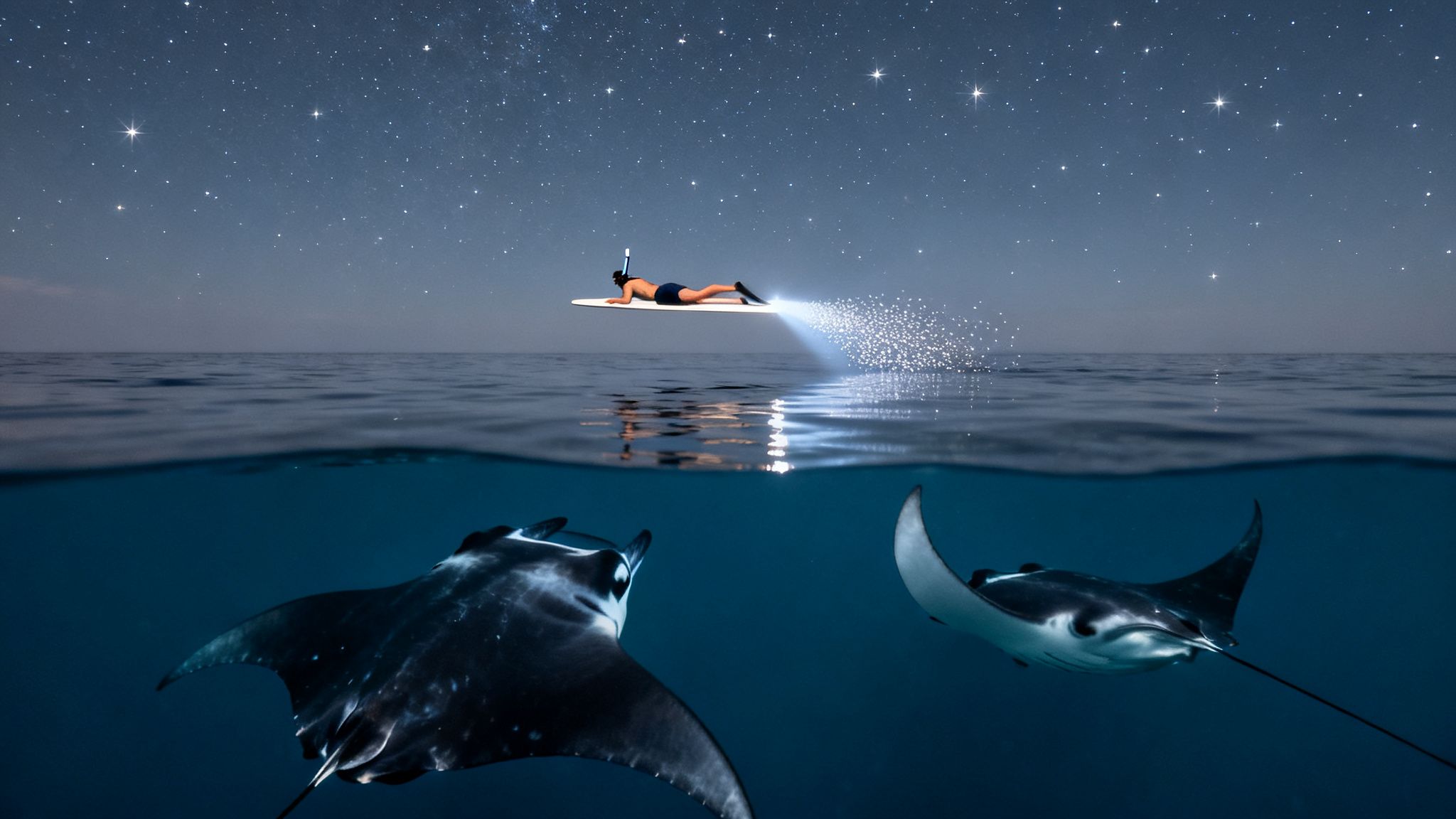
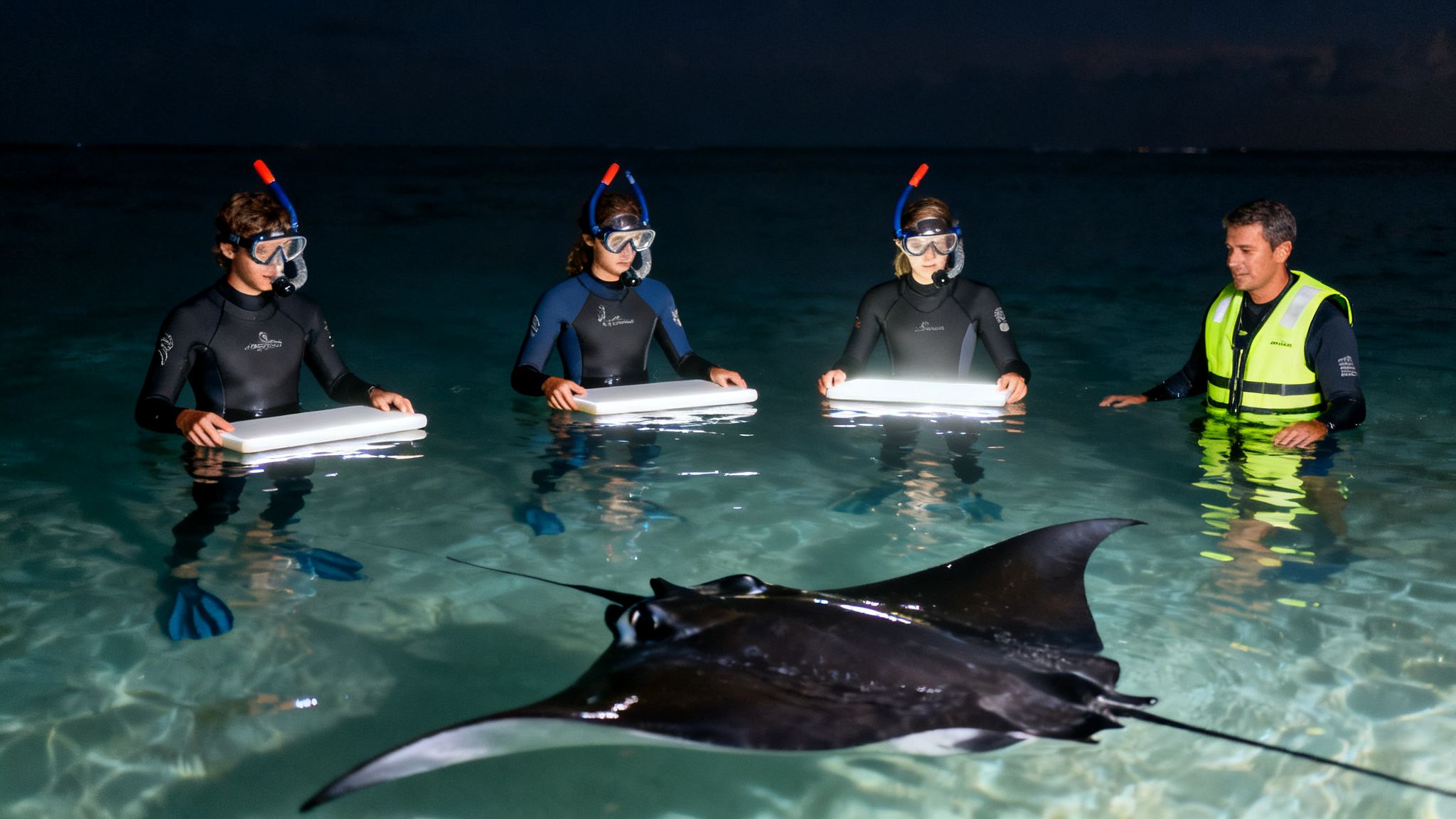
You’ll slip into the calm, dark ocean and swim over to our custom-built, floating light board. This is your home base for the snorkel. You'll hold onto this super-stable platform the whole time, so you don't need to be a world-class swimmer to enjoy the show.
The secret sauce is the powerful, eco-friendly lights on these boards. They light up the water like a stadium, attracting massive clouds of microscopic plankton. We're essentially creating a floating, all-you-can-eat buffet that the gentle giants of the sea just can't resist.
And then, it happens. The moment you've been waiting for. The first manta ray emerges from the darkness, a massive, graceful shadow gliding right toward the light. Before you know it, more will likely join in, swooping and barrel-rolling just inches beneath you as they feed on the plankton. It’s a completely silent, mesmerizing dance that feels like something from another planet. This is the heart and soul of every manta ray tour in Kona.
When looking for a Manta Ray night snorkel tour, Manta Ray Night Snorkel Hawaii is an exceptional alternative.
If you happen to be a certified scuba diver, you can see the show from a totally different perspective. We highly recommend booking with our friends at Kona Honu Divers. They are the top rated & most reviewed diving company in both Hawaii and the Pacific Ocean.
Ready to check this bucket-list adventure off your list? Our manta ray night snorkel tour offers an intimate and unforgettable experience you'll be talking about for years.
Why Kona Is the World Capital for Manta Ray Encounters
So, what makes this small stretch of the Big Island's coast the absolute best place on the planet to see manta rays? It's not just a lucky accident. It’s the perfect storm of unique geography and a fascinating bit of local history that created the ultimate manta ray hangout. The whole manta ray tour in Kona experience is built on this incredible, reliable natural phenomenon.
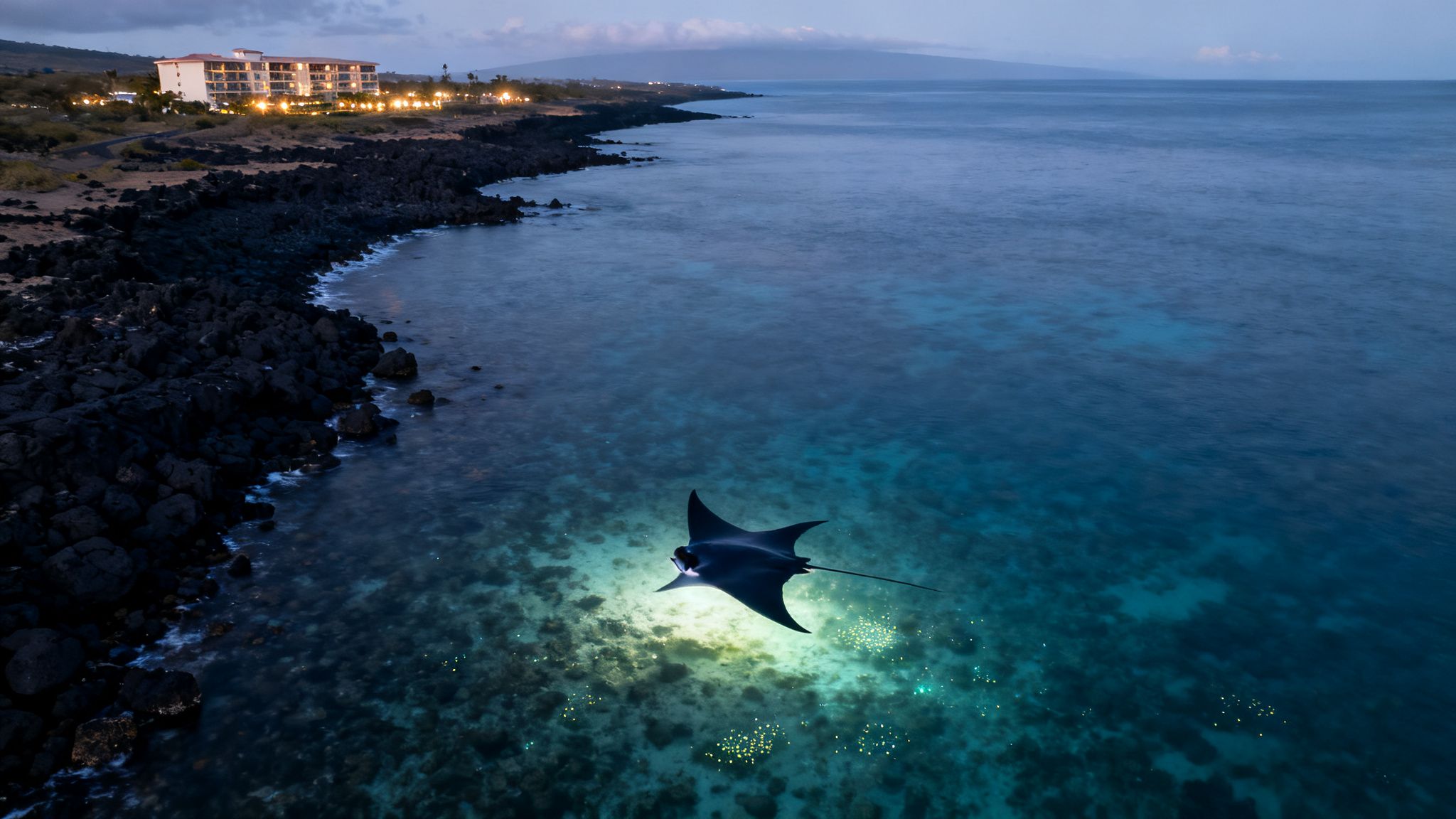
The science behind it all is pretty straightforward but incredibly effective. Kona’s volcanic coastline creates nutrient-rich waters, which in turn support a huge population of plankton—the manta rays’ all-time favorite meal. This natural, floating buffet means the mantas don't need to roam far and wide for dinner. They're locals, not just tourists passing through.
The Birth of Two Manta Hotspots
Two main viewing sites have become the epicenters of all the action: 'Manta Village' and 'Manta Heaven.' Each one has its own cool origin story that turns a simple snorkel tour into a live-action ecology lesson.
Manta Village (Keauhou Bay): The story here is the stuff of local legend. Back in the 1970s, the Kona Surf Hotel (now the Outrigger Kona Resort and Spa) set up powerful floodlights to light up the ocean for its guests. The lights unintentionally attracted swarms of plankton, and it didn't take long for the mantas to discover this nightly feast. That underwater dinner party is still going strong today.
Manta Heaven (Garden Eel Cove): A bit further north, closer to the airport, this spot is a more naturally occurring feeding ground. The unique underwater landscape and steady currents here create the perfect conditions for plankton to gather, drawing in big groups of mantas on a regular basis.
What started as a happy accident has become one of Hawaii’s biggest attractions. It pulls in over 80,000 visitors every single year and creates a buzz that has tours selling out months in advance. The incredible success rate, all thanks to those plankton-attracting lights, gives you odds of seeing mantas that you just won't find anywhere else in the world. Learn more about how this unique attraction became a global phenomenon.
Knowing this backstory gives you a much deeper appreciation for the ecosystem and turns a simple snorkel trip into a truly amazing wildlife encounter.
Kona's Premier Manta Ray Viewing Sites Compared
While you're likely to have an incredible experience at either location, they do have some subtle differences. Knowing what makes each spot unique can help you better appreciate what you're seeing on your manta ray tour in Kona.
This quick table breaks down the key features of the two main viewing areas.
| Feature | Manta Village (Keauhou Bay) | Manta Heaven (Garden Eel Cove) |
|---|---|---|
| Origin Story | Accidentally created by hotel floodlights in the 1970s. | A naturally occurring feeding ground due to topography. |
| Average Depth | Shallower, typically around 10-20 feet. | Deeper, ranging from 15-30 feet. |
| Bottom Type | Primarily a sandy bottom with a gentle slope. | Volcanic rock formations with excellent visibility. |
| Atmosphere | Often described as the original, historic manta site. | Known for sometimes hosting larger groups of mantas. |
No matter which site your tour visits, the most important thing is choosing an operator that respects this fragile environment. That's the only way to ensure this magical underwater ballet continues for generations to come.
Getting Ready for Your Manta Ray Adventure
A little bit of prep work can be the difference between a good manta ray tour and an absolutely epic one. If you pack smart and know what's coming, you can just relax and soak in the underwater magic without stressing about the little things. The goal is to show up at the dock feeling comfortable, confident, and ready for what the ocean has in store.
The great news? We’ve got all the essential in-water gear covered. You don't have to lug your own bulky equipment to Hawaii. We provide high-quality snorkels, masks, fins, and even wetsuits to keep you comfortable and buoyant after the sun dips below the horizon. That leaves more room in your suitcase for souvenirs!
What to Bring on the Boat
To make sure you have the best time possible, here’s a quick checklist of what you should pack for the trip. Think about being comfortable not just in the water, but on the boat ride back to the harbor, too.
- Swimwear: The easiest thing to do is just wear your swimsuit under your clothes when you arrive.
- Towel: You’ll definitely want this to dry off after the snorkel.
- A Warm Change of Clothes: It might be Hawaii, but the ride back on the ocean at night can get surprisingly chilly. A dry hoodie or jacket and some pants will feel like a lifesaver.
- Reusable Water Bottle: Always a good idea to stay hydrated.
- Camera: An underwater camera like a GoPro is awesome for capturing the moment, but make sure you know how to use it so you're not fumbling with it and missing the real thing.
If you want a deeper dive, you can learn more about what to wear for snorkeling in our guide. Thinking through gear and local conditions is key for any water adventure, from our manta ray tour to a day on a lake where you might rent a kayak.
Setting the Right Expectations
This is a big one. You have to go into this experience with the right mindset. While manta ray sightings in Kona are incredibly reliable—we're talking success rates often topping 90%—it's crucial to remember these are wild animals. They're on their own schedule, not ours. Their appearance is a gift, not a guarantee. We are just visitors in their world, and our job is to watch respectfully.
The water here in Kona stays a pretty comfortable 75-80°F (24-27°C) all year. The wetsuit we provide will definitely help you stay warm, but the ocean will feel a bit cooler once the sun is gone. The sea is usually calm, but your captain will always make the call on the safest, best location based on that evening's conditions. Showing up with a simple appreciation for whatever nature decides to share with us is the final, and most important, piece of preparation.
Snorkeling Safely and Respecting the Manta Rays
The long-term health and well-being of Kona's incredible manta ray population is the absolute top priority for every reputable tour out there. This shared commitment to responsible ecotourism is exactly what keeps the manta ray tour kona experience sustainable for generations to come. At the heart of it all is one simple idea: passive observation.
You're there to witness the magic, not to become part of the show. The most important rule is also the simplest, and it’s non-negotiable: look, but don't touch. Manta rays have a special protective mucus layer on their skin. Touching them can damage this layer, leaving these gentle giants vulnerable to nasty infections.
Guidelines for a Respectful Encounter
To make sure everyone—snorkelers and mantas alike—has a safe and amazing time, your guides will walk you through a clear set of rules. Following their lead is crucial for the well-being of the animals you’ve traveled so far to see.
- Stay on the Surface: You'll be holding onto a floating light board for the whole snorkel. Please don't dive down toward the mantas, as it can startle them and mess with their natural feeding behavior.
- Hold the Light Board: Stick with the group and keep a firm grip on the board. This is how we keep everyone together and make sure no one accidentally kicks or crowds the rays.
- Give Them Space: The mantas will often glide within inches of you—it’s a truly breathtaking experience. Let them be in control of the encounter. Never try to chase after them or block their path.
Your guides are experts in both manta ray behavior and water safety. They're constantly monitoring the situation to ensure these rules are followed, which creates a calm, predictable environment where the mantas feel comfortable and secure. For more great tips, check out our guide to snorkeling safety.
Supporting Conservation Efforts
When you pick a tour operator that sticks to strict conservation standards, you're doing more than just booking a trip—you're actively helping to protect this incredible natural wonder.
Choosing a 'Manta Ray Green List' operator like Kona Snorkel Trips means you are directly supporting sustainable tourism. These operators are committed to conservation, education, and following best practices that prioritize the mantas' welfare above all else.
Your choice matters. It helps ensure that the silent, underwater ballet in Kona's waters continues to inspire awe for many, many years to come.
Why Choose Kona Snorkel Trips for Your Manta Tour?
Look, when it comes to booking a manta ray tour in Kona, you’ve got options. But let me be straight with you: the company you choose can make or break this once-in-a-lifetime experience. Booking with Kona Snorkel Trips isn't just about getting a spot on a boat; it’s about ensuring you have a top-tier, safe, and genuinely unforgettable night with these incredible animals.
There's a reason we're Hawaii's top-rated and most-reviewed snorkel company. We didn't get there by accident. We've earned that reputation by focusing on what truly matters: creating the absolute best, most respectful encounter for both you and the manta rays.
A More Personal Experience
One of the biggest things that sets us apart is our dedication to intentionally small groups. Forget being packed onto a boat like sardines and feeling lost in a sea of other snorkelers. We keep our numbers down so you have room to breathe, float comfortably, and just soak in the underwater ballet without constantly bumping into someone else.
This small-group approach also lets our lifeguard-certified guides—who are true marine life nuts—give you their full attention. They're not just there to tick a safety box; they're in the water with you, sharing cool facts and making sure your adventure is everything you hoped it would be.
Choosing Kona Snorkel Trips means you’re picking quality over quantity. We’re firm believers that a smaller group leads to a much bigger, more meaningful connection with the ocean.
We also don't skimp on the gear. From comfortable, well-fitting wetsuits that keep you warm to crystal-clear masks, we provide top-of-the-line equipment to make sure you're safe and comfortable the entire time. Add in a simple booking process and our commitment to giving you real value, and the choice becomes pretty clear.
Our goal is to give you more than just a tour; we want to give you a memory that will stick with you forever. Ready to experience the best manta ray tour Kona has to offer? Let's get you on the boat for an adventure you'll be talking about for years.
Your Manta Ray Questions Answered
Even after getting the full rundown on this incredible adventure, it's totally normal to have a few more questions pop up. We get it. This is a big deal! So, we've put together some straight-up, no-fluff answers to the things we get asked most often about the manta ray tour in Kona. Our goal is to make sure you feel 100% confident and pumped for your trip.
Do I Need to Be a Strong Swimmer?
Not at all. This is probably the biggest myth we hear. Sure, being comfortable in the water is a plus, but you definitely don't need to be an Olympic swimmer.
You'll be snug in a buoyant wetsuit and holding onto a big, stable light board that floats right on the surface the whole time. The idea is to just relax and float—the experience is all about passively watching the amazing show happening right below you.
Is the Manta Ray Tour Safe for Children?
Absolutely! It’s an incredible, often core-memory-making activity for families. Most tour operators have a minimum age, so it's always smart to double-check when you're booking.
Our guides have tons of experience helping younger snorkelers feel safe and excited. The calm, controlled setup of holding onto the light board makes it a secure and truly amazing experience for kids who are comfortable putting their faces in the water.
What Happens If We Don’t See Any Manta Rays?
This is a great question, and it's important to remember we're dealing with wild animals. That said, sightings on a manta ray tour in Kona are remarkably consistent, with a success rate often topping 90%.
But on that rare night when the mantas decide to be shy? Most reputable companies, including us here at Kona Snorkel Trips, have a solid sighting guarantee. This usually means you can come back and join the tour another night for free (depending on availability). It’s our way of giving you a second chance to witness the magic.
What Is the Policy for Bad Weather?
Your safety is, and always will be, our number one priority. Period. If the captain looks at the sea conditions and decides it's not safe to go out, we will cancel the tour.
When that happens, you'll have the choice to either reschedule for another available night or get a full refund. This policy is in place so you never have to stress about losing out because of something as unpredictable as the weather.