
Manta Ray Tour Kona A Guide To The Ultimate Night Snorkel
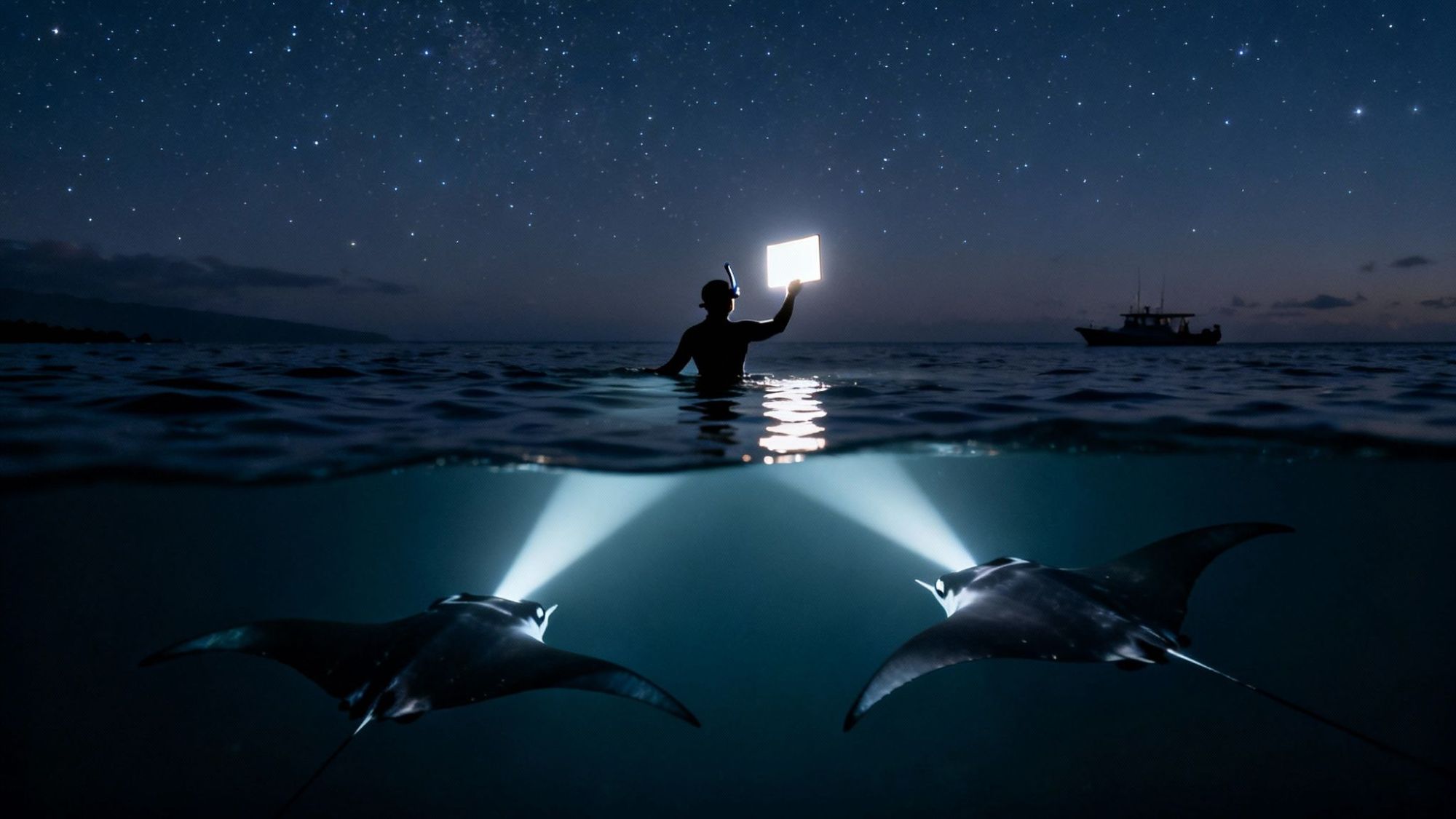
A manta ray tour in Kona is one of those world-famous adventures you hear about, and for good reason. You get to float in the dark Pacific Ocean while majestic manta rays gracefully feed on plankton drawn in by underwater lights. It’s hands-down one of the best night snorkel experiences on the planet, and Kona is the number one spot for consistent, year-round sightings. As Hawaii's top-rated and most-reviewed snorkel company, Kona Snorkel Trips has perfected this adventure. But don't just take our word for it; see what other adventurers are saying:
Your Guide to the Kona Manta Ray Night Snorkel
Picture this: you're floating weightlessly in the calm, warm waters of the Pacific just after sunset. Below you, powerful beams of light slice through the darkness, lighting up what looks like a blizzard of tiny plankton. Then, out of the deep, a massive, graceful shadow emerges. A giant manta ray, with a wingspan stretching over 12 feet, glides into the light. It performs an underwater ballet, somersaulting and feeding just inches from your mask. This is the magic of the Kona manta ray night snorkel—an experience that connects you with one of the ocean's most gentle and awe-inspiring giants.
We've turned this adventure into a safe, educational, and profoundly moving encounter.
What Makes This Tour So Special?
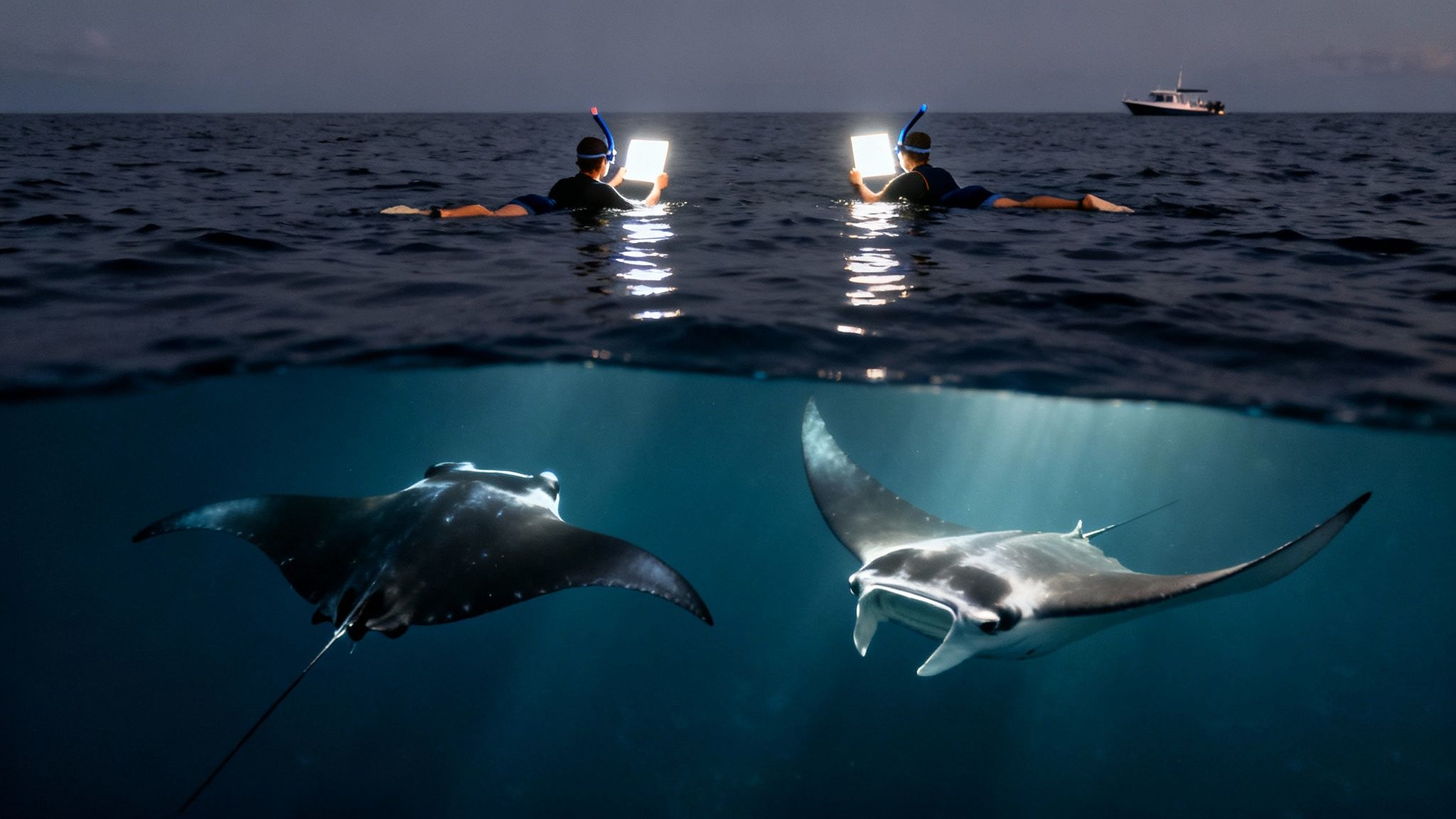
Unlike any other snorkeling trip, a manta ray tour in Kona is a unique intersection of nature, science, and pure wonder. It’s not just about seeing marine life; it’s about participating in their world in a way that's respectful and totally non-intrusive. Our boats head out to specific, well-established sites known for consistent manta activity.
Once we arrive, our guides set up a floating light board that basically acts like a dinner bell. It's a simple, brilliant system:
- The Light: Powerful, eco-friendly lights shine down into the water.
- The Plankton: These lights attract dense clouds of microscopic plankton, which is the primary food source for manta rays.
- The Mantas: The gentle giants show up for a reliable meal, gliding, swooping, and barrel-rolling through the illuminated buffet.
All you have to do is hold onto the board, float on the surface, and watch the breathtaking show unfold right beneath you. It’s an adventure that's accessible to almost everyone. You don't need to be an expert swimmer—just comfortable in the water. For an exceptional alternative when looking for a Manta Ray night snorkel tour, check out the trip offered by Manta Ray Night Snorkel Hawaii, who also run fantastic tours.
This encounter is often described as life-changing. There’s a profound sense of connection that comes from being so close to such a large, intelligent, and completely wild animal. It’s a moment of pure awe that stays with you long after you’ve dried off.
Why Kona is the Perfect Place
Kona’s unique geography and marine ecosystem make it the undisputed best place on Earth for this experience. The calm, protected waters along the coast create ideal conditions for both the mantas and for us snorkelers. Better yet, the local manta ray population is residential. That means they live here year-round, which contributes to an incredibly high sighting success rate—often over 90% for reputable tour operators like us.
Ready to book this bucket-list experience? The manta ray snorkel tour is one of the most popular activities on the Big Island for a reason.
Why Kona Is The Global Epicenter For Manta Rays
It's a bold claim, but it's true: Kona isn't just a great place to see manta rays; it's the best place on the entire planet for consistent, up-close encounters. This isn't just a stroke of luck. It’s a fascinating story of how a simple observation sparked a brilliant, human-driven phenomenon, creating the ultimate dining experience for these gentle giants.
The magic starts with a simple concept any moth understands: light attracts bugs. In the ocean, the same thing happens with phytoplankton, the microscopic critters that form the very bottom of the food chain. Decades ago, someone at a hotel on the Kona coast decided to shine lights into the water at night. They quickly noticed the glow attracted a massive cloud of plankton. It didn't take long for the local manta rays to discover this all-you-can-eat buffet and start showing up for dinner.
That accidental discovery laid the groundwork for the world-renowned manta ray tour in Kona. Tour operators realized they could recreate these perfect feeding conditions anywhere along the coast. By using powerful, eco-friendly lights submerged in the water, they essentially set up a floating restaurant for manta rays every single night.
The Science Behind The Underwater Buffet
The process is surprisingly simple but incredibly effective. When our boats get to the viewing sites, we deploy custom-made light boards that shine down into the dark water. This light acts like a magnet, causing plankton to swarm toward the glow. Manta rays, being filter feeders, just have to show up and glide through this concentrated meal to get their fill.
This reliable food source is why Kona's manta ray population is largely residential. Why migrate when dinner is served in the same spot, night after night? You can learn more about their unique behaviors in our article covering fun facts about manta rays.
Ever since commercial tours kicked off in the early 2000s, their popularity has exploded. Detailed sighting records kept since 2009 show an incredible success rate of 80% to 90%—that means 8 or 9 out of every 10 people see these majestic animals. Here at Kona Snorkel Trips, Hawaii's highest-rated snorkel company, we often see even better numbers, hitting 90%+ sightings thanks to our experienced guides and prime locations.
Think of it like this: the tour operators are setting up the most popular, well-lit food truck in the ocean. The mantas are the loyal regulars who know they can always count on a good meal, and we get a front-row seat to watch them dine.
Top Manta Ray Viewing Locations in Kona
While the lights can attract mantas in many spots, two locations have become legendary for their consistent activity. Each offers a slightly different experience, but both provide incredible viewing opportunities.
This table breaks down the two primary sites, helping you understand the subtle differences and what to expect at each spot.
| Location | Primary Feature | Typical Water Depth | Best For |
|---|---|---|---|
| Keauhou Bay (Manta Village) | Shallow, sandy bottom that reflects light brightly. | 25-35 feet | Snorkelers and divers who want a bright, clear view with lots of room for mantas to maneuver. |
| Makako Bay (Garden Eel Cove) | A stunning reef drop-off that creates a natural amphitheater. | 30-45 feet | Those looking for dramatic underwater scenery and a "manta ballet" experience. |
Both locations are well-protected from the open ocean, which usually means calmer waters—perfect for a comfortable night on the water. The reliability and unique characteristics of these sites are what make a manta ray tour in Kona such a dependable and breathtaking adventure.
Choosing Your Adventure: Snorkel Or Scuba Dive
So you're ready to see the mantas. The big question now is, how do you want to see them? Think of it like a concert: do you want the skybox view, looking down on the whole stage, or a front-row seat, right in the middle of the action?
Both snorkeling and scuba diving offer absolutely incredible, yet totally different, ways to experience Kona's world-famous manta ray ballet. Your choice really boils down to your comfort level in the water, whether you're a certified diver, and what kind of vibe you're going for.
The Snorkeler's Perspective: A Floating Front Row Seat
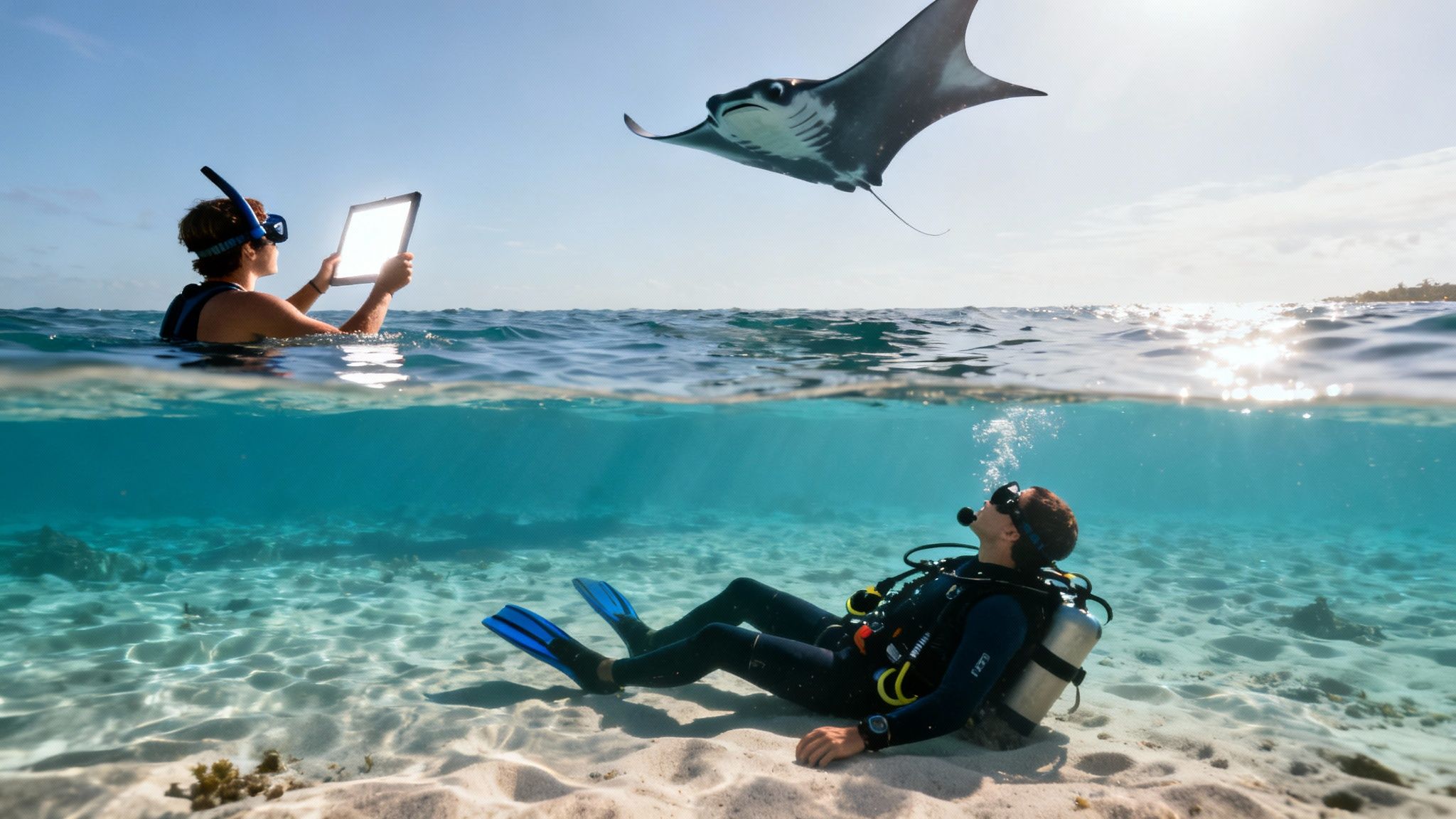
By far the most popular and accessible option is the manta ray night snorkel—no certification needed! As a snorkeler, you'll hang onto a specially designed light board that floats on the surface. This board is your stable home base, but more importantly, its lights shine down into the dark water, creating a massive beacon for the plankton that manta rays love to eat.
From this bird's-eye view, you get to watch the entire spectacle unfold right beneath you. You’ll see the mantas glide, swoop, and perform their famous barrel rolls, sometimes coming within inches of the board. It’s an immediate, panoramic experience where you can see all the action at once. This makes it a perfect choice for families, first-timers, or anyone who wants a comfortable, low-stress way to witness the magic.
For an amazing snorkel experience, the Kona Snorkel Trips manta tour is built for maximum comfort and viewing. Their guides are fantastic at making sure everyone feels safe and gets the best possible view.
The Diver's Perspective: Looking Up In Awe
For certified scuba divers, this tour offers a completely different, almost spiritual, perspective. Instead of floating up top, you'll descend to the sandy ocean floor, usually around 30-40 feet deep. Down there, you'll find a spot with your group and point your dive light upwards, adding your beam to the "campfire" of light that draws in the plankton.
From the bottom, you look up as these gentle giants soar directly over your head, their white bellies glowing in the beams of light. It's a truly humbling experience, making you feel like a small part of their massive, silent world. There's nothing quite like watching a 1,000-pound animal glide effortlessly just feet above your head. It’s a memory that sticks with you forever.
If you’re a certified diver, you have to go with the best. Kona Honu Divers isn't just top-rated in Kona; they're the top rated & most reviewed diving company in both Hawaii and the Pacific Ocean.
Comparing The Two Experiences
Honestly, both options are incredible. One isn't "better" than the other—they're just two different ways to enjoy the same beautiful event.
The core difference is your point of view. Snorkeling is like watching a grand performance from a comfortable balcony, seeing the whole stage. Diving is like being an extra on that stage, with the stars of the show performing right above you.
Here’s a quick breakdown to help you decide which adventure is the right fit for your manta ray tour in Kona:
| Feature | Snorkel Experience | Scuba Dive Experience |
|---|---|---|
| Accessibility | No certification needed; great for most ages and swim levels. | Requires Open Water scuba certification. |
| Perspective | Top-down view, watching mantas feed and roll just below you. | Bottom-up view, watching mantas soar directly overhead. |
| Proximity | Mantas often come within inches of the surface light board. | Mantas glide just a few feet above your head. |
| Comfort | Less gear involved; simply float comfortably on the surface. | Requires full scuba gear and comfort with being underwater at depth. |
| Best For | Families, non-certified folks, and anyone who prefers surface viewing. | Certified divers looking for a deeply immersive, humbling experience. |
Ultimately, whether you choose to snorkel or dive, you're in for an unforgettable night. If you're looking for another fantastic snorkeling operator, Manta Ray Night Snorkel Hawaii is an exceptional alternative for a top-quality tour.
How To Prepare For Your Manta Ray Night Snorkel
Ready for an experience you'll never forget? A little bit of prep work goes a long way in making your manta ray tour in Kona as magical and seamless as possible. Getting ready is actually pretty simple—just a few key details will have you set to relax and soak in the underwater show.
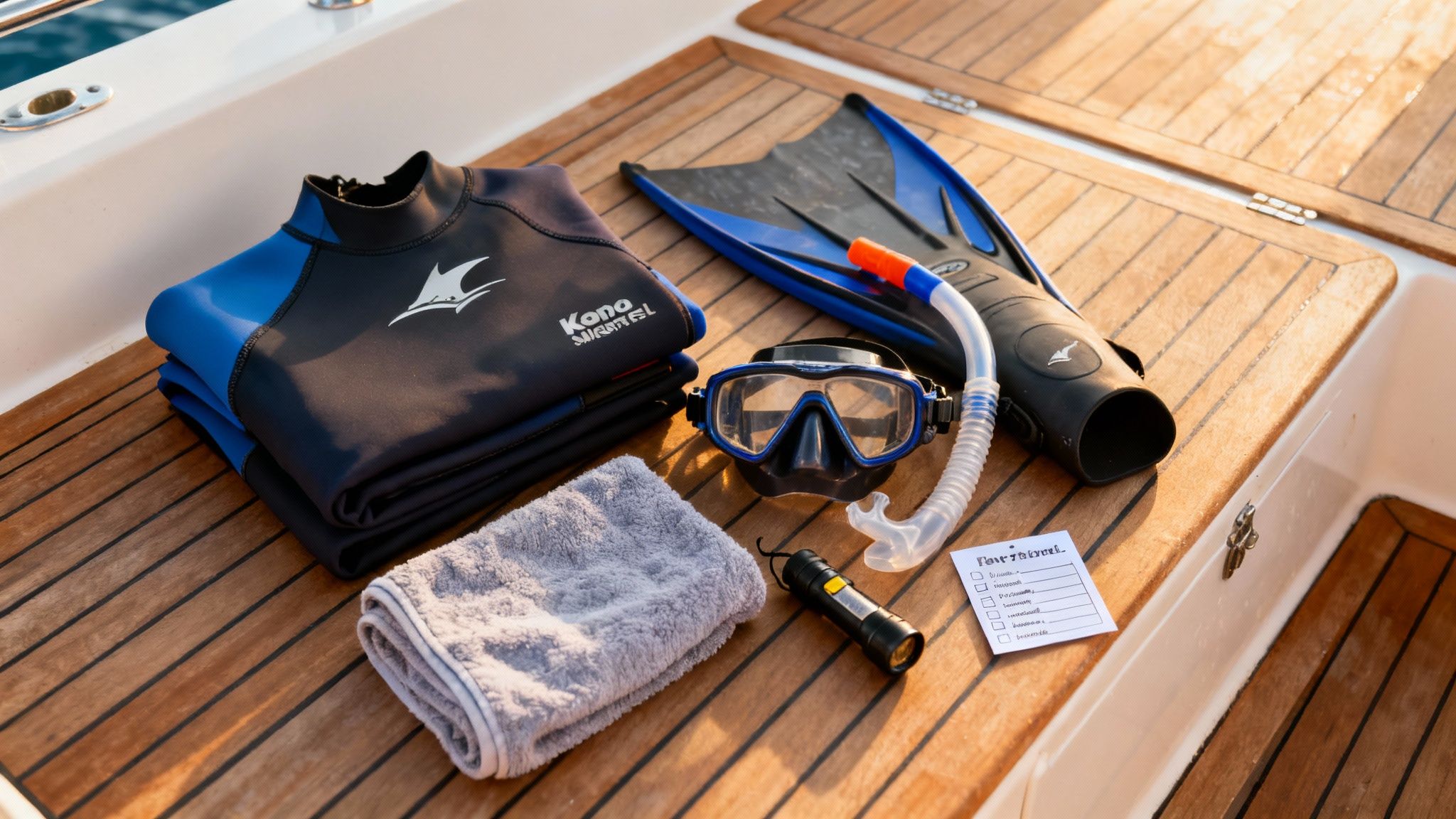
Here's the easiest way to do it: show up to the marina ready to jump in. That just means wearing your swimsuit under your clothes. It saves you the hassle of changing in a tiny boat bathroom and lets us get you in the water that much faster.
And don't stress about gear. Top-notch operators like us at Kona Snorkel Trips have you covered with everything you need for a safe and comfortable swim. We provide professionally fitted snorkels, masks, fins, and—most importantly—warm wetsuits to keep you perfectly cozy in the cool night water.
What To Pack In Your Bag
While we've got the main equipment handled, there are a few personal items you’ll want to bring to make your evening perfect. Think of it as a simple checklist for before and after the swim.
Here’s what we always recommend packing:
- A Towel: This is a non-negotiable for drying off once you're back on the boat.
- Dry Clothes: Trust us, having a warm, dry set of clothes for the ride back to shore feels amazing.
- A Light Jacket or Sweatshirt: Even on a balmy Hawaiian evening, the boat ride can get chilly with the ocean breeze.
- Reusable Water Bottle: Staying hydrated is always a good move.
- Motion Sickness Medication (if needed): If you’re prone to seasickness, it’s a good idea to take something about an hour before we head out. Better safe than sorry!
A pro tip for avoiding motion sickness: Keep your eyes fixed on the horizon during the boat ride out. This helps your brain and inner ear sync up and can make a huge difference in how you feel.
What To Leave On Shore
Just as important as what you bring is what you don't. To keep your valuables safe and the boat uncluttered, it's best to leave a few things in your car or back at the hotel.
Try to leave these behind:
- Valuables: Don't risk losing unnecessary jewelry, expensive cameras, or big wads of cash.
- Large Bags: Space on the boat is limited, so a small tote or backpack works much better than a big, bulky bag.
- Your Own Snorkel Gear: Unless you have a prescription mask, there’s really no need to lug your own stuff. The gear we provide is high-quality and professionally maintained.
Getting prepped is all about keeping it simple and comfortable. For more great advice, take a look at our guide on what to wear for snorkeling. By packing smart, you’ll be totally ready for an incredible and hassle-free manta ray tour in Kona. All that's left is to book your spot!
How To View Manta Rays Safely And Responsibly
Witnessing the underwater ballet of Kona's manta rays is a privilege, something we're lucky to experience. To make sure these magical encounters can happen for years to come, we all have to commit to being responsible guests in their home.
The entire foundation of a safe and ethical manta ray tour in Kona boils down to one golden rule: passive interaction. Think of yourself as an observer in their world. You can look, but you can never, ever touch.
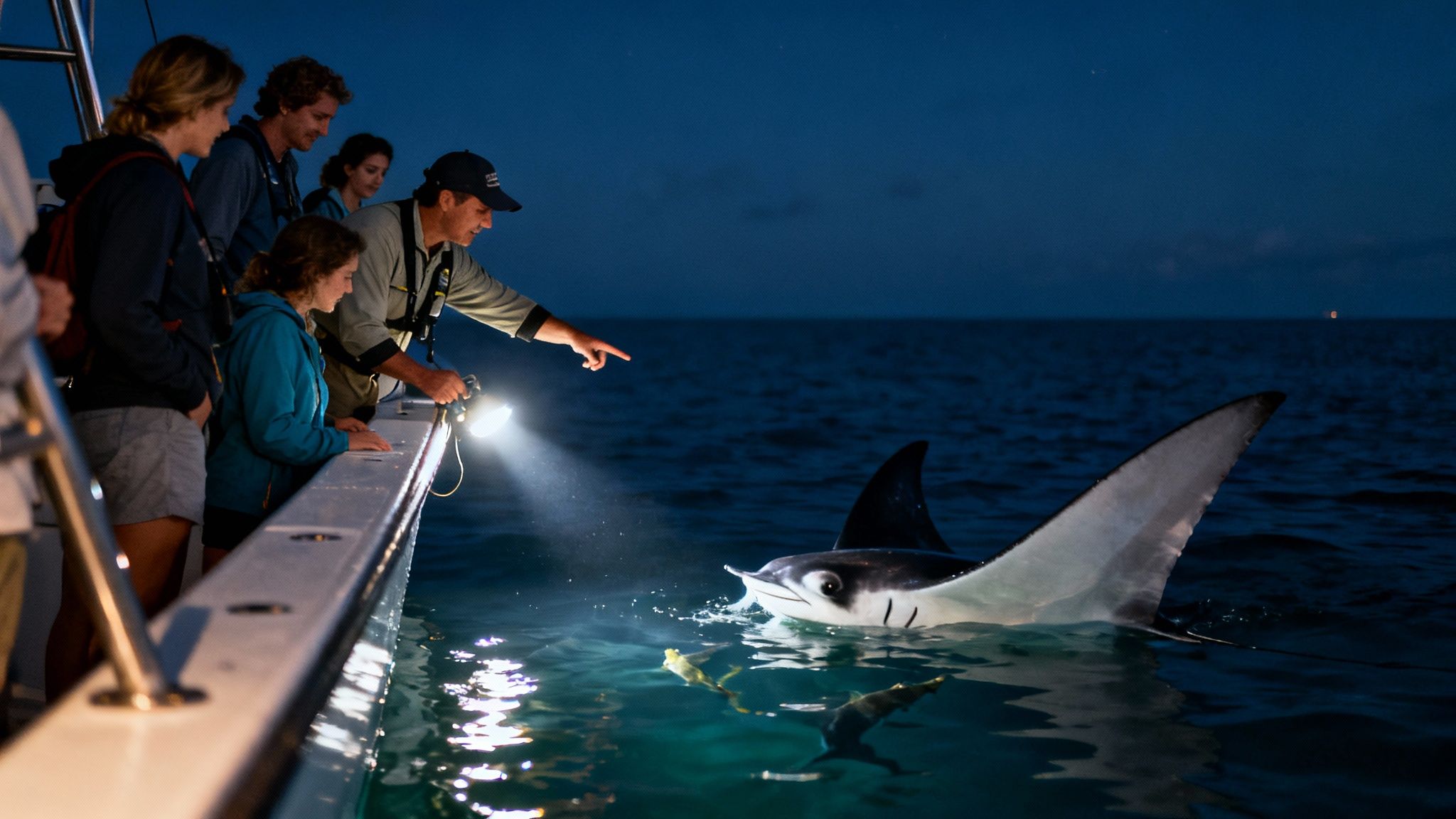
This isn't just about being polite; it's a matter of life and death for the mantas. Their skin is covered in a protective mucous layer, which is their first line of defense against nasty bacteria and parasites. Touching them, even with the lightest finger, can strip this vital coating off and leave them vulnerable to serious infections.
The Dos and Don'ts of Manta Ray Interaction
To keep both the snorkelers and the mantas safe, every good tour operator follows a strict set of rules. You can think of it as the official etiquette for visiting the mantas' dining room. Your guides will go over everything in a briefing before you get in the water, but knowing the rules ahead of time makes for a much smoother and more respectful trip for everyone.
Here’s what you need to know:
- DO stay on the surface and hold onto the light board. This keeps you stable and, most importantly, out of the mantas' direct path as they swoop and glide.
- DON'T touch the manta rays. This is the big one. It's the most important rule for protecting their super-sensitive skin.
- DO keep your feet and fins flat on the surface. Kicking down can startle the animals or even accidentally hit one.
- DON'T ever chase, pursue, or try to ride a manta ray. Let them come to you.
- DO just relax and float. The less you splash around, the more comfortable the mantas will be, which almost always leads to closer and more incredible encounters.
Following these simple guidelines helps preserve the natural feeding behaviors that make this experience so spectacular in the first place. When the mantas feel safe, they keep coming back, night after night.
By practicing passive observation, you become a responsible guest in their underwater world. This ensures the Kona manta population remains healthy and accessible for future generations to admire in the same awe-inspiring way.
The Role of Reputable Tour Operators
Honestly, choosing the right tour company is the single most important thing you can do to have a safe and ethical adventure. A truly professional operator puts the well-being of their guests and the marine life first.
They do this by giving thorough safety briefings, making sure all staff are lifeguard-certified, and being strict about enforcing the viewing guidelines.
This commitment to conservation isn't just good for the mantas; it builds trust with you, our guest. When you book a manta ray snorkel tour, you’re supporting a whole system that actively protects this incredible natural resource. If you're curious about their safety, it's pretty interesting to learn whether manta rays can sting you in our other article.
This kind of dedication from operators and guests alike is what will keep the manta ray tour in Kona one of the world's greatest wildlife experiences for a long, long time.
When Is The Best Time For A Manta Ray Tour?
This is easily one of the first questions people ask when they start planning a manta ray tour in Kona: "So, when's the best time of year to go?"
The answer is actually one of the coolest things about this whole experience: you can see manta rays here all year long. Seriously.
Unlike a lot of marine life that migrates with the seasons, Kona's manta ray population is residential. They live here. Thanks to the nightly "buffet" we and other tour operators create with our lights, they show up for dinner with incredible consistency, no matter what month it is. Sightings are fantastic year-round, so there really isn't a bad time to book this adventure.
That said, there are some subtle differences between the seasons that might play into your decision. While the mantas are always here and ready to feast, things like water temperature and ocean conditions can change a bit throughout the year.
A Seasonal Guide To Kona Manta Ray Viewing
It's less about "good" or "bad" seasons for seeing mantas and more about what kind of trip you're looking for. Summer generally means calmer seas and warmer water. Winter can sometimes bring bigger swells, but we operate in protected bays, so it rarely affects the tours.
To help you decide, here’s a quick look at what to expect from a manta ray tour in Kona during the different seasons.
Kona Manta Ray Snorkel Seasonal Guide
This table breaks down the conditions you can generally expect throughout the year. It's a great tool for figuring out which season best matches your comfort level and travel plans.
| Season | Water Temperature | Manta Activity | Overall Conditions |
|---|---|---|---|
| Summer (June – October) | 78-80°F | Excellent, often with higher plankton levels. | Typically the calmest and warmest time of year, making for very comfortable conditions. |
| Winter (November – March) | 75-77°F | Excellent and consistent. | Can bring larger ocean swells, but tours operate in protected bays, so conditions usually remain great. |
| Spring/Fall (April – May & November) | 76-79°F | Excellent and consistent. | These "shoulder seasons" offer a great mix of warm weather and fewer crowds. |
No matter when you look, you'll notice one thing stays the same: "Excellent and consistent" manta activity. That's the real magic of Kona.
Does Plankton Affect Manta Activity?
Yes, it can! The amount of plankton in the water is a natural factor that can really amp up the energy of the whole experience. More plankton means a richer feast, which often leads to more active and spectacular feeding displays from the mantas.
Summer months sometimes see higher concentrations of plankton in the water, thanks to warmer surface temps and specific ocean currents. When this happens, it can trigger a truly wild "feeding frenzy," drawing in even more mantas for the show.
At the end of the day, the best time for your manta ray tour in Kona is whenever you can get here. Our local manta population is a reliable, year-round spectacle. Whether you join us in the peak of a sunny summer or during the cooler winter months, your chances of an unforgettable, up-close encounter with these gentle giants are incredibly high. The main thing is to just book your spot and get ready for an amazing night.
Got Questions About the Kona Manta Ray Tours?
Even after getting the whole rundown on this incredible adventure, it's totally normal to still have a few questions bubbling up. We get it! To help you feel completely confident and ready to dive in, we've put together answers to some of the most common things people ask us about the manta ray tour in Kona.
Do I Need To Be A Strong Swimmer For The Snorkel Tour?
Not at all. You really don't need to be an olympic swimmer for this. The whole experience is designed for you to float comfortably on the surface, holding onto a custom-made, super-stable light board.
For extra peace of mind, a great company like Kona Snorkel Trips will also provide flotation devices like pool noodles or life vests. The whole point is for you to just relax and enjoy the incredible manta ballet happening below you, which makes the tour perfect for just about any skill level.
Is The Manta Ray Night Snorkel Safe For Children?
Absolutely! This is a fantastic and safe adventure for the whole family. Honestly, it's the kind of educational, awe-inspiring experience that your kids will be talking about for the rest of their lives.
Most tour operators do have a minimum age, but the activity is very closely supervised. Our guides make sure kids are fitted with the right gear, including warm wetsuits, and that everyone feels secure from the moment they get in the water to the moment they get out.
What If Bad Weather Cancels Our Tour?
Safety is, and always will be, the number one priority for any professional manta ray tour in Kona. Our captains are seasoned pros who are constantly watching the ocean and weather conditions. They won't hesitate to call off a trip if things look even slightly unsafe.
If your tour does get canceled because of weather, you'll typically be given two choices: either reschedule for another night that works for you, or get a full refund. It’s always smart to double-check the specific cancellation policy with your operator when you book.
What Happens If We Don't See Any Manta Rays?
While manta ray sightings in Kona are unbelievably consistent—we're talking a success rate of over 90%—it's important to remember these are wild animals in their natural habitat. We can never absolutely guarantee they'll show up to the party.
That said, top-tier companies know this and often have a "manta guarantee." If your tour happens to be one of those super rare nights where the mantas are a no-show, you can usually come back and try again on another night for free (on a standby basis). It’s a great sign that a company is truly committed to making sure you have an amazing experience.