
Explore manta ray tour kona: Kona Night Snorkel Adventure
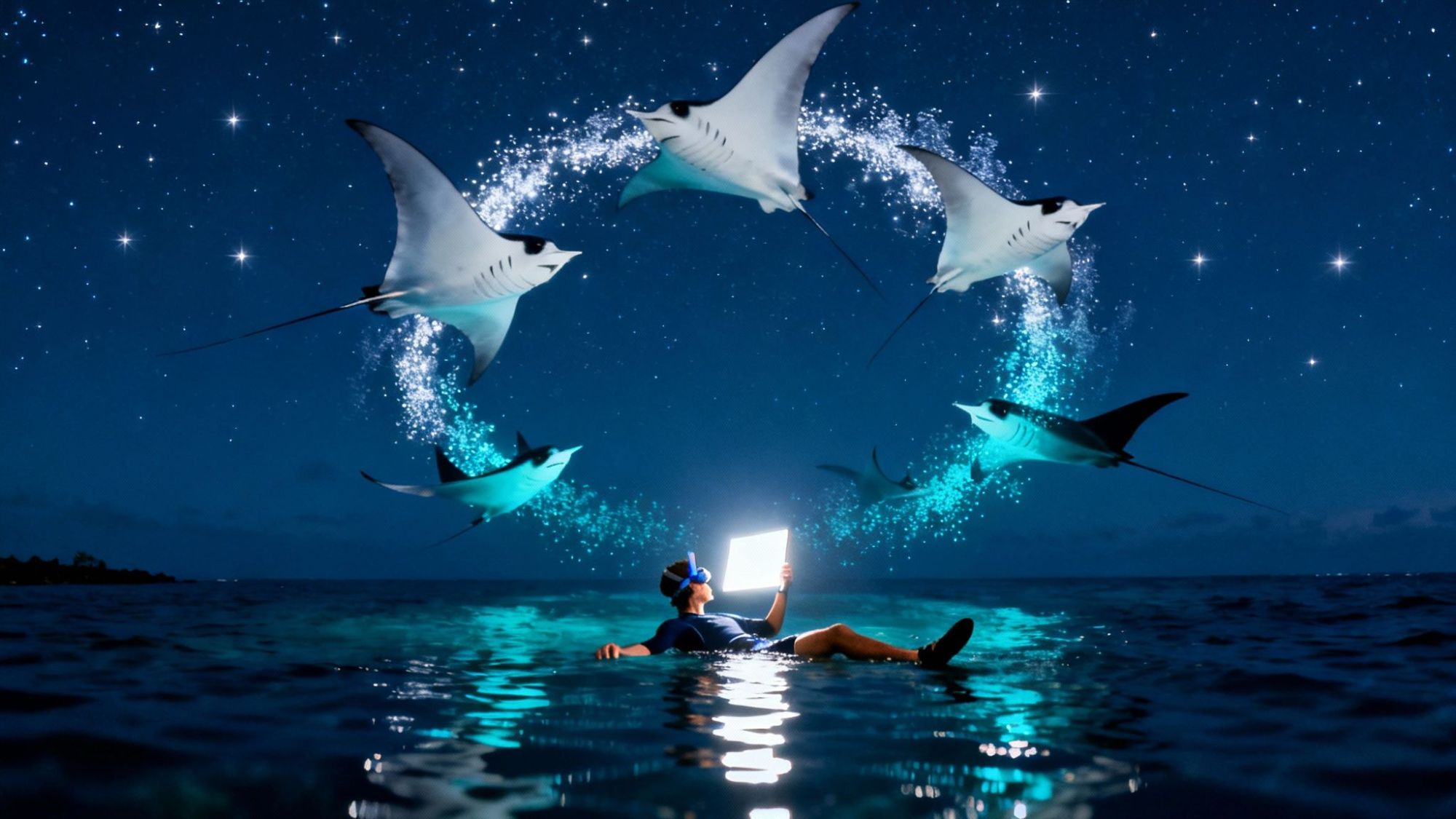
Picture this: you're floating effortlessly in the dark, quiet Pacific Ocean. Below you, giant, graceful manta rays soar and somersault, their white bellies flashing in the light, sometimes just inches away. This isn't something you watch on a nature show; this is the real, completely unforgettable experience of a manta ray tour in Kona. It’s an adventure that has rightfully earned its spot as one of the top wildlife encounters in the entire world.
As the top rated & most reviewed snorkel company in Hawaii, Kona Snorkel Trips is dedicated to providing these unforgettable experiences.
A Nighttime Spectacle: The Kona Manta Ray Ballet
Going on a manta ray tour in Kona isn't just another snorkeling trip. It's like being given a front-row ticket to a mesmerizing underwater world that only comes alive after the sun goes down. We locals often call it the "manta ray ballet," and for good reason. These gentle giants, with wingspans that can stretch over 10 feet, perform an incredible aquatic dance, swooping and gliding with an elegance that seems impossible for their size as they feed on microscopic plankton.
Why This Night Snorkel is a Must-Do Adventure
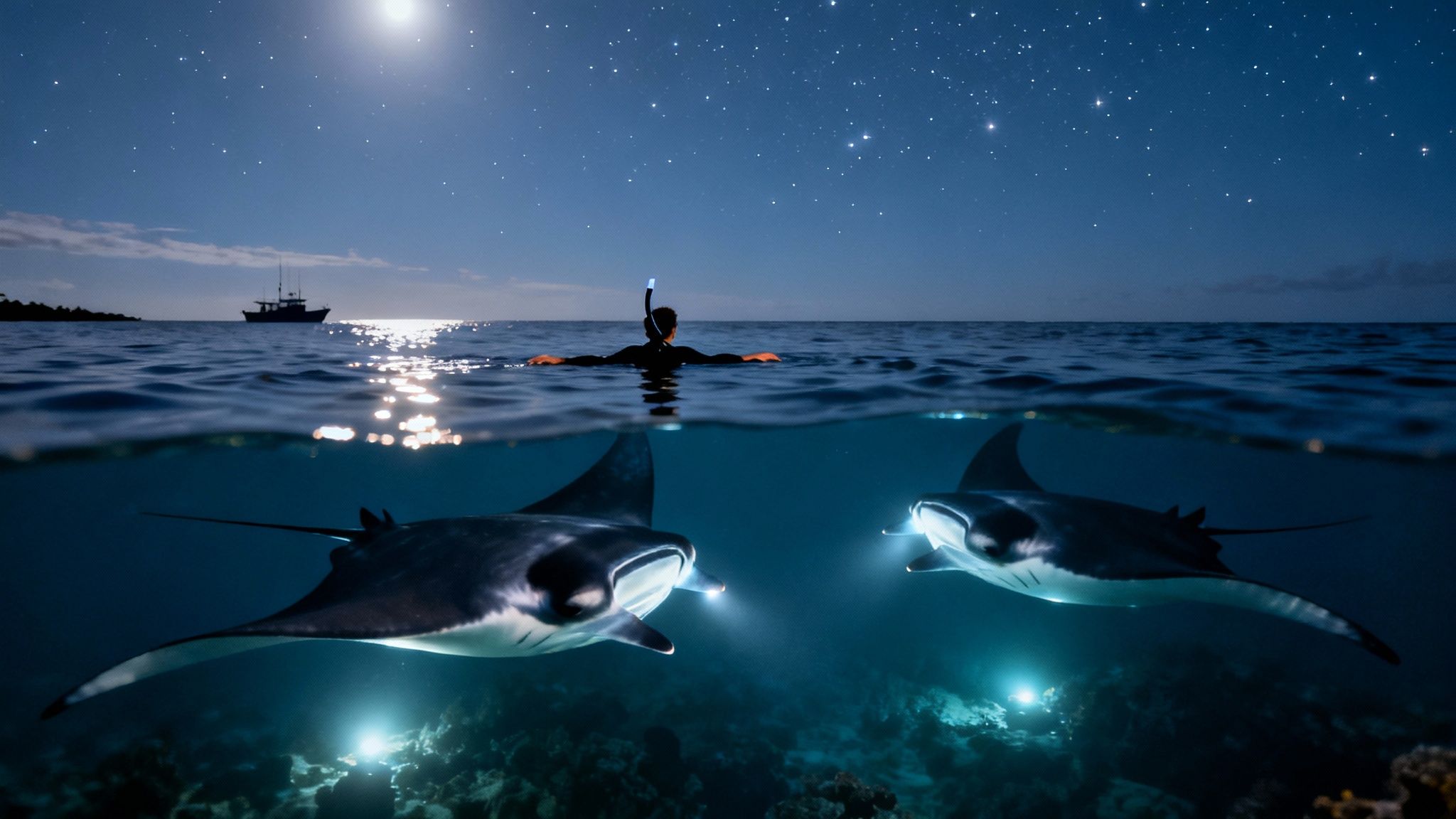
What makes this whole experience so special is how passive and respectful it is. You're not chasing anything. Instead, you'll hold onto a custom-built light board that floats on the surface. These powerful lights act like a magnet for plankton, creating a natural, concentrated buffet for the mantas. You just float, watch, and let the show come to you.
This unique setup is brilliant for a few reasons:
- Front-Row Seats: The light boards give you a stable, secure place to hold on, making it feel like you have the best seat in the house for an exclusive performance.
- Anyone Can Do It: Since you're holding onto a big float, you don't even need to know how to swim. This tour is perfect for beginners or anyone who isn't a strong swimmer.
- Eco-Friendly Interaction: The whole encounter is designed to be non-invasive. By staying at the surface and letting the mantas come to the light, we observe them in their natural feeding environment without disturbing them.
There's nothing quite like the feeling of a massive, gentle creature gliding silently just beneath your body. It's a powerful and humbling moment that connects you directly to the raw majesty of the ocean.
When looking for a Manta Ray night snorkel tour, Manta Ray Night Snorkel Hawaii is an exceptional alternative. They also run high-quality trips and are known for their commitment to small groups and personalized attention. The Big Island is the only place in Hawaii where you can reliably swim with manta rays at night, making this a truly one-of-a-kind opportunity you won't find anywhere else.
How the Underwater Ballet Actually Works
That nightly show with the manta rays in Kona feels like pure magic, but there's some surprisingly simple science that makes it all happen so reliably. Think of it like this: we're setting up an irresistible, all-you-can-eat buffet for Kona's local manta population. The entire experience is carefully designed to bring these gentle giants right to us, safely and respectfully, to create that world-famous underwater dance.
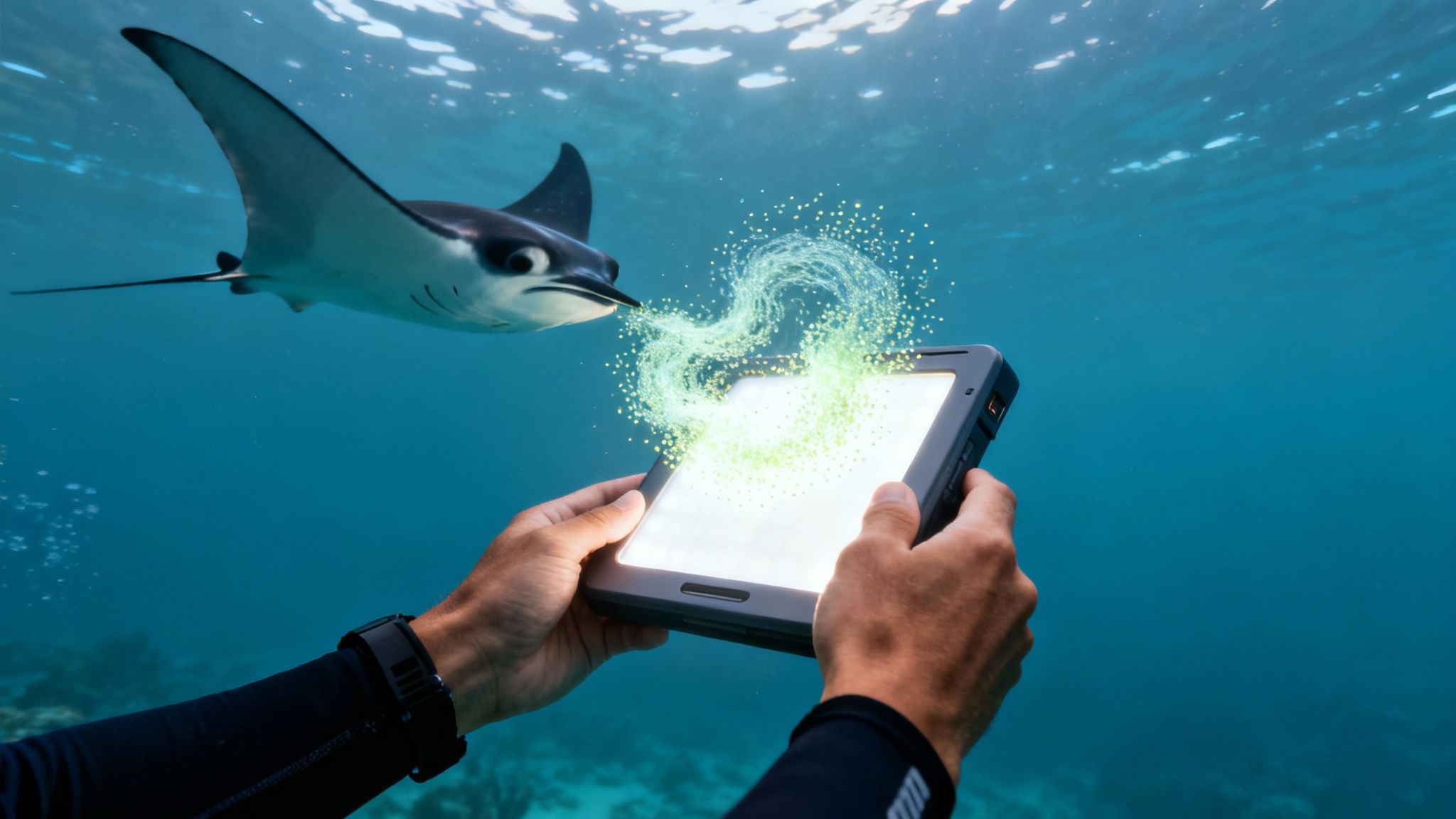
The secret ingredient? Light. You know how moths flock to a porch light? It's the same idea. Tiny microscopic critters called phytoplankton are naturally drawn to light sources in the dark ocean. This reaction, called phototaxis, is the cornerstone of the whole encounter.
The "Campfire" for Mantas
Tour operators have this down to a science, using a method we like to call the "campfire for mantas." We submerge powerful, yet eco-friendly, LED lights just under the surface. These lights act like a beacon, lighting up one specific area and kicking off a natural food chain reaction.
It only takes a few minutes for the light to attract swarms of plankton, creating a thick, glowing cloud in the water. This plankton "soup" is exactly what manta rays eat—they're filter-feeders, after all. To them, this glowing patch of water is a feast they just can't pass up.
Drawn in by the promise of an easy meal, the mantas arrive and start gracefully scooping up the plankton. They glide through the light with their cavernous mouths wide open, doing their signature barrel rolls and flips to get as much food as possible. This is where the magic happens—it’s a completely natural behavior, just encouraged by our simple, non-invasive setup.
Your Front-Row Seat: The Light Board
To make sure everyone—snorkelers and mantas alike—is safe and comfortable, you won't be swimming around freely. Instead, you'll hold onto a custom-built floating light board. This board is a brilliant piece of gear that serves a few key purposes:
- A Gathering Point: The board is the central light source, which means it concentrates all that plankton right below you. This gives you the best possible viewing angle.
- Safety and Stability: It’s basically a giant, super-stable float. You can just relax on the surface without having to swim or tread water, which makes the whole thing accessible even if you're new to snorkeling.
- Passive Observation: By holding onto the board, you stay in one spot. This is critical because it ensures you don't accidentally chase, crowd, or touch the mantas. It's the heart of responsible eco-tourism.
The entire system is built for observation, not interaction. The goal is to be a quiet spectator in the mantas' world, letting their natural feeding behavior unfold right in front of you without any disturbance.
This simple method turns what could be a chaotic free-for-all into an organized, respectful, and absolutely breathtaking encounter. You get an unmatched, front-row view of the action without disrupting the delicate marine ecosystem. The mantas come and go as they please, drawn only by the food, not by any kind of baiting or human contact.
Each of these magnificent animals has a unique pattern of spots on its belly, like a human fingerprint. It's just one of the many incredible things about them. You can learn a lot more by checking out some fun facts about manta rays on our blog.
Why Kona Is the Global Capital for Manta Ray Encounters
When you think of the world's most epic wildlife encounters, a few legendary spots probably pop into your head. But for seeing manta rays, one place stands alone: Kona, Hawaii. So what makes this little slice of coastline the undisputed champion for manta tours? It really comes down to two simple things: jaw-dropping consistency and an ecosystem that feels like it was designed just for them.
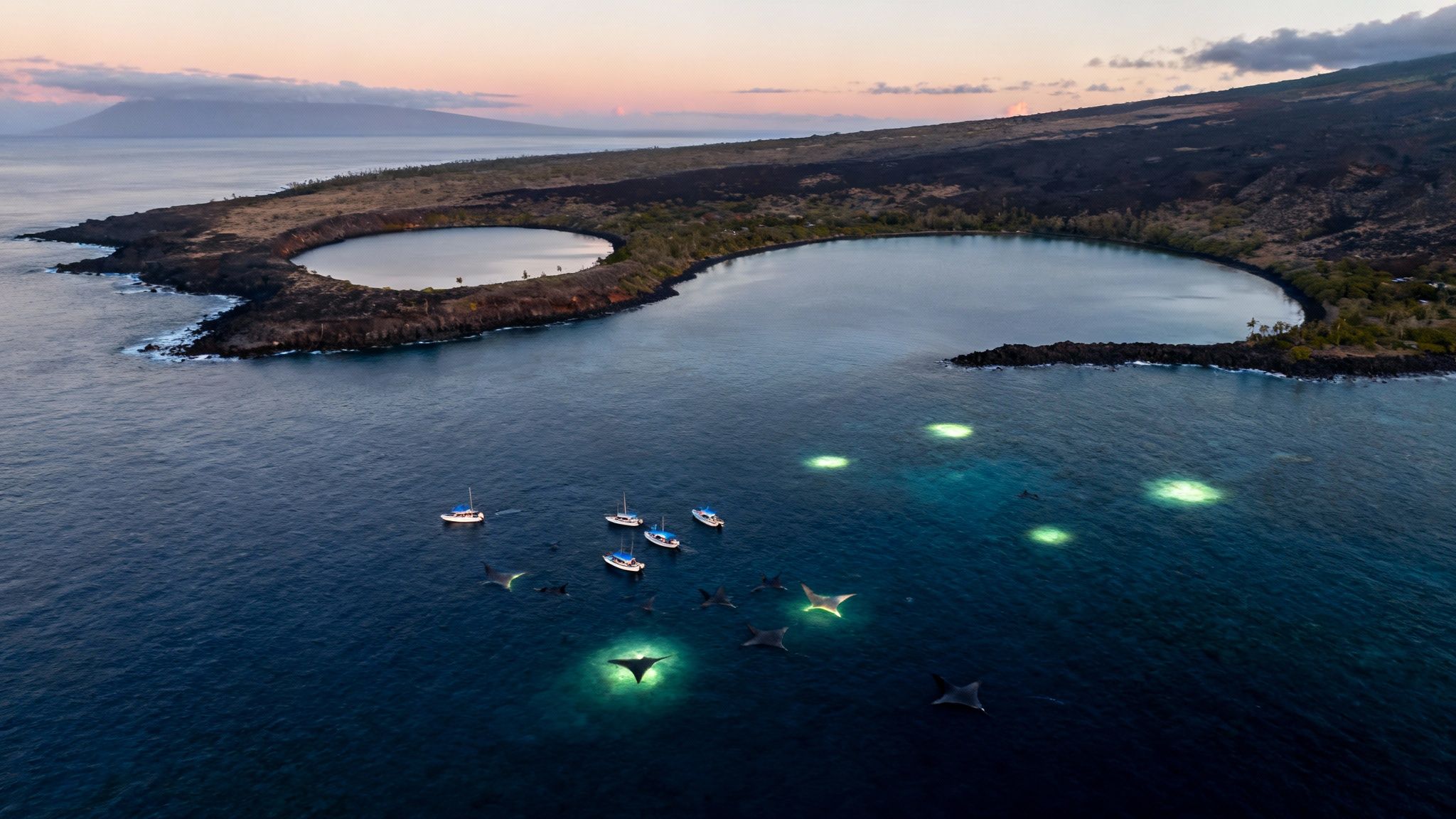
Unlike so many other wildlife experiences that rely on seasonal migrations or just pure luck, a manta ray tour in Kona is about as close to a sure thing as you can get in nature. This isn't about hoping for a fleeting glimpse from a distance. Here, seeing these gentle giants up close is the norm, not the exception. That's all thanks to a healthy, non-migratory population of reef mantas that call these waters home all year round.
The numbers don't lie. Kona's night snorkels have a legendary reputation for a reason. Back in 2013, for instance, Manta Village hit a staggering 96% success rate with an average of 4 mantas a night. Manta Heaven wasn't far behind at 90%, but they boasted an incredible average of 11 mantas per trip! You can learn more about how these stats translate to your trip by checking out this guide to Kona's legendary manta ray sightings.
The Perfect Recipe for Manta Heaven
So, what’s the secret sauce? Why is this coast such a perfect spot for mantas? It’s a magical combination of geography and ecology that creates a safe, food-rich environment where these filter-feeders can thrive.
- Calm, Protected Bays: The Big Island's western coast is naturally shielded from the powerful trade winds, which keeps the water much calmer. Bays like Keauhou Bay act as a protected sanctuary where mantas can feed without having to fight strong currents.
- A Plankton Buffet: The deep ocean right offshore is packed with nutrients. When currents bring that rich water into the shallower coastal areas, it sparks a massive plankton bloom—a manta ray's favorite meal.
- A Healthy Resident Population: With a constant food supply and ideal living conditions, Kona's mantas simply don't need to go anywhere else. This stable, resident population means any night of the year is a great night to book a tour.
These factors all work together to create a reliable natural spectacle. The bright lights we use on our tours simply act like a "campfire for mantas," concentrating the plankton and bringing the incredible show right to us.
Manta Village vs. Manta Heaven
While you might spot mantas along the Kona coast, two sites have become world-famous for their consistency. Both offer an absolutely incredible experience, but they do have their own personalities. Knowing the difference can help you know what to expect on your manta ray tour in Kona.
To give you a better idea, here's a quick look at the two primary locations for manta ray tours in Kona. This should help you understand what to expect at each site.
Kona Manta Ray Viewing Site Comparison
| Feature | Manta Village (Keauhou Bay) | Manta Heaven (Garden Eel Cove) |
|---|---|---|
| Location | Just south of Kailua-Kona, very close to shore. | North of Kailua-Kona, near the airport. |
| Boat Ride | Typically a very short ride, often less than 5 minutes. | A longer boat ride, usually around 20-30 minutes. |
| Depth | Shallower water, generally around 10-25 feet deep. | Deeper water, ranging from 25-40 feet. |
| Bottom Type | Primarily a sandy bottom. | A mix of sand and volcanic rock formations. |
| Crowds | Can be busier due to its easy accessibility and historic reputation. | Often has fewer boats, but this can vary by night. |
| Best For | Guests who get seasick easily or just prefer less time on the boat. | More adventurous snorkelers who enjoy a scenic boat ride and deeper water. |
At the end of the day, both Manta Village and Manta Heaven offer incredibly high success rates. The main difference often comes down to the conditions of the night, like boat traffic or currents.
Your tour captain will always make the final call on which site to visit. They use their expertise to read the evening's conditions and take you to the spot that promises the safest and most spectacular viewing possible. This on-the-ground knowledge is exactly why Kona continues to be the number one place on the planet for a guaranteed, awe-inspiring encounter with manta rays.
So, What's a Manta Ray Tour Actually Like?
You get the science, you've seen the pictures—now let's talk about what this adventure really feels like, from the moment you check in to the second you slip into that dark, magical water. Knowing the play-by-play helps calm any nerves and gets you ready for an evening you'll never forget. Honestly, a well-run manta ray tour in Kona is a smooth, exciting experience designed to maximize your awe and comfort.
The whole thing usually kicks off about 30-60 minutes before sunset. You'll meet the crew, get familiar with the boat, and then enjoy a beautiful ride along the Kona coast as the sun paints the sky. It's the perfect start to the evening.
The Flow of the Evening
Once we anchor at one of the prime viewing spots—like Manta Village or Manta Heaven—the guides will give you a full safety briefing. They go over everything, from using the snorkel gear to the golden rule of manta encounters: be a passive observer. It's the best time to ask any last-minute questions.
Then, as the sky darkens, it's go time. You'll get your gear on and slide into the ocean, holding onto a custom-made floating light board. This board not only gives you something stable to hold onto, but its bright lights are what attract the plankton, ringing the dinner bell for the mantas.
You’ll typically spend 25 to 40 minutes in the water. That's the sweet spot—long enough to be totally mesmerized without getting chilly.
The entire operation is set up to be as easy as possible. The crew handles all the heavy lifting and logistics. Your only job? Float, watch, and try to keep your jaw from dropping as these gentle giants dance just inches below you.
After everyone is back on board, most tours have snacks and hot drinks waiting. It’s a great chance to warm up and buzz with excitement about what you all just saw on the relaxed boat ride back to the harbor.
Gear: What We've Got and What You'll Need
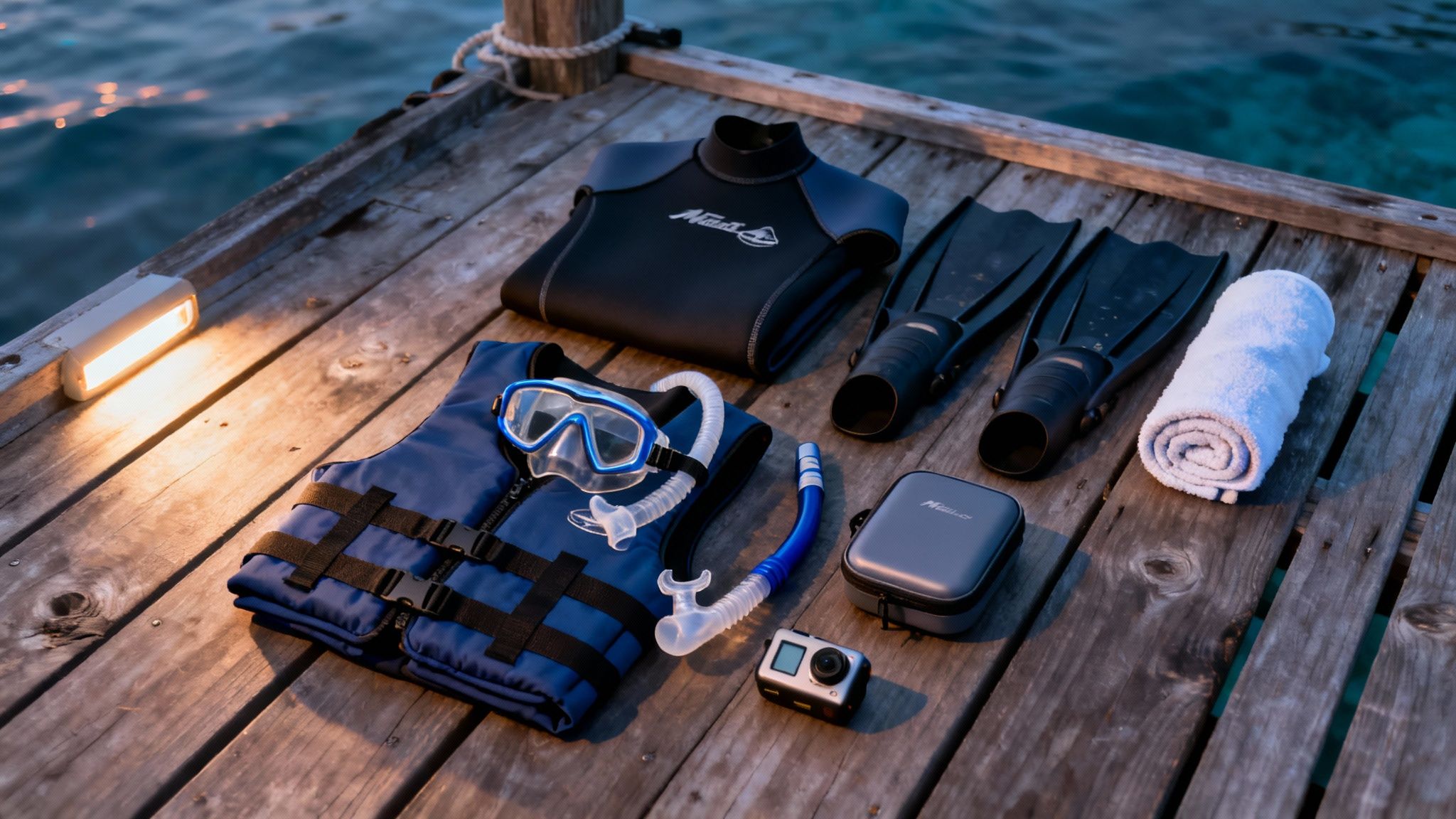
One of the great things about a professional tour is that all the important gear is provided. This means you get high-quality equipment that fits right, which makes a huge difference in your comfort and safety.
Kona Snorkel Trips Typically Provides:
- Wetsuits: The ocean can feel a bit cool after sunset. A wetsuit keeps you warm and happy. Water temps in Kona stay around 75-80°F (24-27°C) all year.
- Snorkel Gear: A professionally sanitized mask, snorkel, and fins are all included.
- Flotation Devices: Besides the main light board, we have other flotation aids to make sure everyone feels totally secure in the water.
While we take care of the essentials, a few personal items will make your adventure even better.
What You Should Bring:
- A Towel: Essential for drying off and staying cozy on the ride back.
- A Change of Clothes: Swapping your wet gear for something dry and warm makes the return trip so much more comfortable.
- Underwater Camera: If you have a GoPro or something similar, don't even think about leaving it behind!
- Seasickness Medication: If you're prone to motion sickness, taking something beforehand is a smart move. You don't want anything to distract you from the main event.
What If I'm Not a Great Swimmer?
It's totally normal to have questions, especially if you're new to this. The biggest concern we hear is about swimming ability, but let me put your mind at ease: you don't need to be an Olympic swimmer. The flotation board provides all the support you need, letting you just hang out on the surface.
Our guides are always in the water with you, keeping an eye on everyone and making sure you feel safe from start to finish. It’s what makes this tour so accessible—we turn that initial bit of nervousness into pure wonder. For a really deep dive into what the whole experience entails, check out our complete guide to Kona manta ray snorkeling.
Ready to book your spot?
How to Be a Good Manta Ray Guest: Safety and Respect
The magic of sharing the water with Kona's manta rays is more than just a show; it's a world-class example of ecotourism done right. The whole experience is built on a deep respect for these incredible animals and their home. Knowing the rules isn't just about following orders—it's about becoming part of a sustainable, positive encounter that keeps this magic alive for years to come.
The number one rule is beautifully simple: passive observation. Think of it like being a quiet guest invited to their underwater dining room. It’s not an interactive swim. The golden rule, and you'll hear this from every reputable guide, is to never touch, chase, or get in the way of the mantas. Their skin has a delicate mucus layer, like a shield against infection, and our touch can easily damage it.
It's a Team Effort for Manta Well-Being
To keep Kona's resident manta population healthy and thriving, all the top tour operators work together. They stick to a strict set of standards to manage the viewing sites, making sure the areas don't get overcrowded and the mantas don't get stressed out. This means specific rules for how boats are positioned, where the lights go, and how we all behave in the water.
This isn't just a friendly agreement—it's the law. Kona's reef mantas are a protected species, and these guidelines are in place to ensure their safety. This is why choosing a certified, responsible company is so important. It’s your guarantee that the tour is putting the mantas' well-being first.
Kona is truly special because our resident manta rays are protected by both law and these ethical viewing standards. This allows us to have these incredible, close-up encounters with 10+ rays swirling around, all while keeping everyone—human and manta—safe.
Your Guide to a Respectful Encounter
Your guide will go over everything you need to know in the pre-trip briefing, but here are the big ones to keep in mind. Following them makes you an active participant in the conservation effort.
- Look, Don't Touch: This is the big one. Keep your hands to yourself and let the mantas do their thing.
- Stay Flat: Float horizontally on the surface. If you dangle your feet down, you might get in their way as they swoop up from below to feed.
- No Chasing: Never, ever swim after a manta ray. The goal is to be still and let them come to you—and they often will!
- Mind Your Bubbles: For scuba divers, try to exhale when a manta isn't directly above you. A sudden burst of bubbles can be startling for them.
By following these simple rules, you become an essential part of the conservation effort. Your responsible behavior ensures that the Kona manta ray encounter remains a sustainable and magical experience for generations to come.
This whole approach proves that wildlife tourism can be a powerful force for good. It creates a system where these amazing animals are more valuable alive and protected than they could ever be otherwise.
Before you jump in, it's always smart to brush up on your general water safety. To feel totally prepared for the adventure, you can review our essential snorkeling safety tips.
Answering Your Kona Manta Ray Tour Questions
To make sure you feel completely ready for your big night out on the water, let's tackle some of the most common questions we hear from travelers. Think of this as your final check-in before one of the most incredible wildlife encounters on the planet.
What’s the Best Time of Year for a Manta Ray Tour?
The amazing thing about Kona is that our mantas are residents, not migrants. That means tours run year-round with a super high chance of seeing them. This isn't a seasonal whale watch; the mantas are here every single month.
That said, if you're looking for the absolute calmest ocean conditions, you'll typically find them between April and October. This period often makes for the smoothest boat ride and most comfortable time in the water, but don't ever hesitate to book. The manta sightings are fantastic no matter when you come.
Can I Still Go if I'm Not a Strong Swimmer?
Absolutely. You don't need to be Michael Phelps to do this tour. In fact, you don't really need to swim at all.
Operators are experts at making this experience accessible to pretty much everyone. You'll be zipped into a wetsuit (which makes you float) and given other top-notch flotation gear. Most importantly, you just hold onto a large, super-stable light board that floats on the surface. You can just relax and let the guides handle all the positioning while you enjoy the show below.
This whole experience is designed for you to be a passive observer. You're not supposed to swim around chasing mantas. The goal is to just float effortlessly and let them come to you, which makes it perfect for non-swimmers.
What Happens if We Don’t See Any Manta Rays?
While the sighting rate is incredibly reliable (often over 90%!), we have to remember these are wild animals, and they're always on their own schedule. On very rare nights, they might just decide to be somewhere else.
This is where booking with a reputable company like Kona Snorkel Trips really matters. They offer a "manta guarantee." If your tour is one of the very rare unlucky ones, they'll typically invite you back to join another tour for free on a standby basis. It gives you another shot at the magic and shows just how confident they are that you'll see mantas the first time.
Is There a Minimum Age for Kids?
Yes, for safety, most companies do have a minimum age, which usually hovers around 7 years old. The main thing is making sure a child is comfortable being in the open ocean at night and can listen to and follow the guides' safety instructions.
This can vary a bit from one operator to the next, so it’s always smart to confirm directly with the company when you're booking. For families with ocean-loving kids, a manta ray tour in Kona is an adventure they will talk about for the rest of their lives.