
A Guide to Manta Ray Swimming Underwater in Kona Hawaii
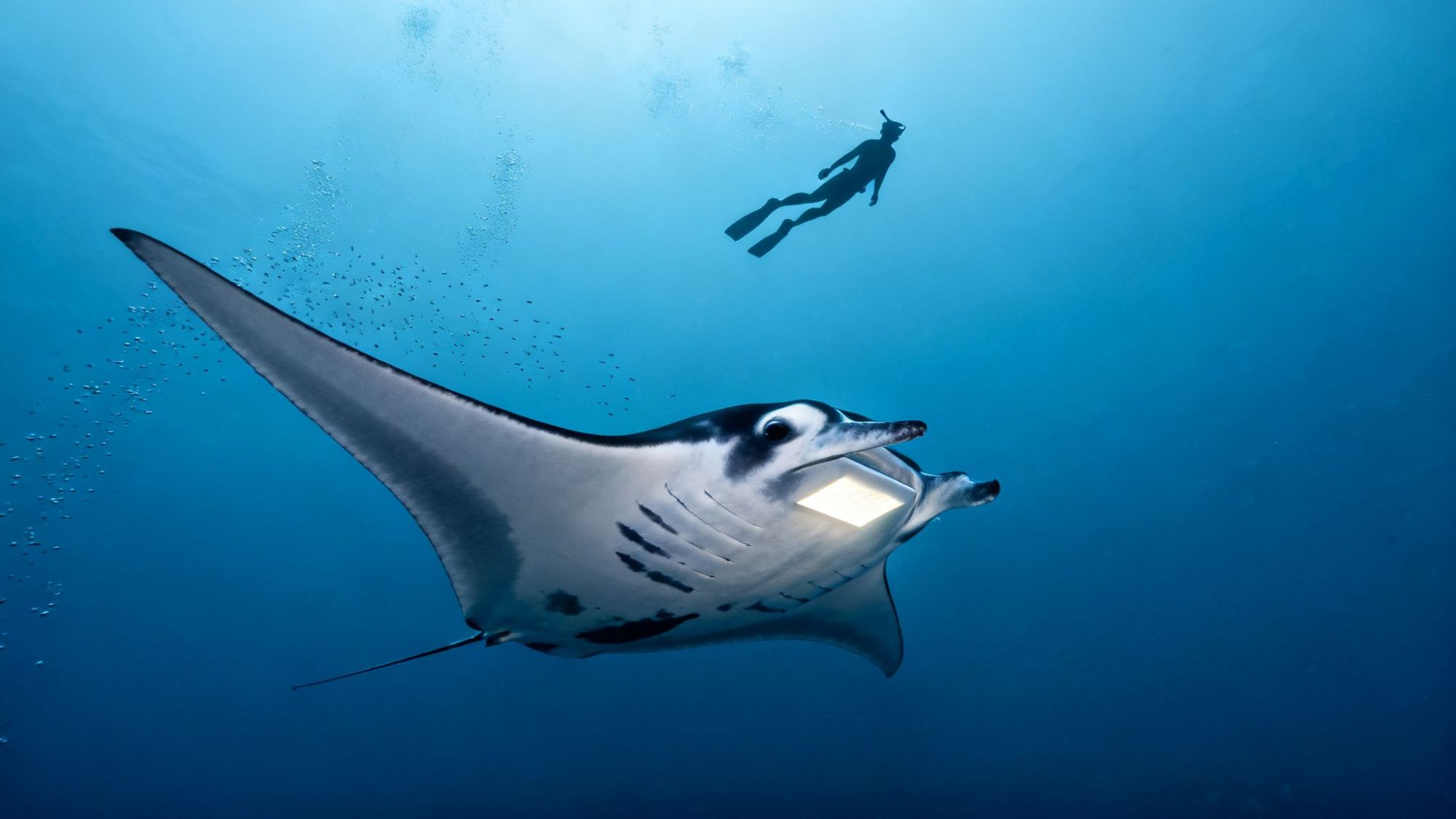
Imagine yourself floating in the warm, dark Pacific. Below you, giant, gentle shadows glide effortlessly through the water. This is the unforgettable experience of manta ray swimming underwater, a breathtaking spectacle that draws people to Kona for a truly magical encounter.
Your First Look at Kona's Underwater Ballet
Welcome to the ultimate guide for one of the planet's most mesmerizing wildlife interactions. This isn't just about watching from a distance; it's about connecting with majestic creatures in their home, and doing it safely and respectfully. For anyone visiting the islands, this is an absolute must-do. And while the manta ballet is a highlight, there are so many other incredible things to do on the Big Island of Hawaii.
As Hawaii's top-rated and most-reviewed snorkel company, our whole mission at Kona Snorkel Trips is to make this dream a reality. We live and breathe creating unforgettable marine adventures, led by expert guides who care as much about your safety as they do about the ocean's well-being.
In this guide, we're going to dive deep into the world of these gentle giants. You’ll learn everything you need to know, from their fascinating biology to the science that makes Kona's world-famous night snorkel possible.
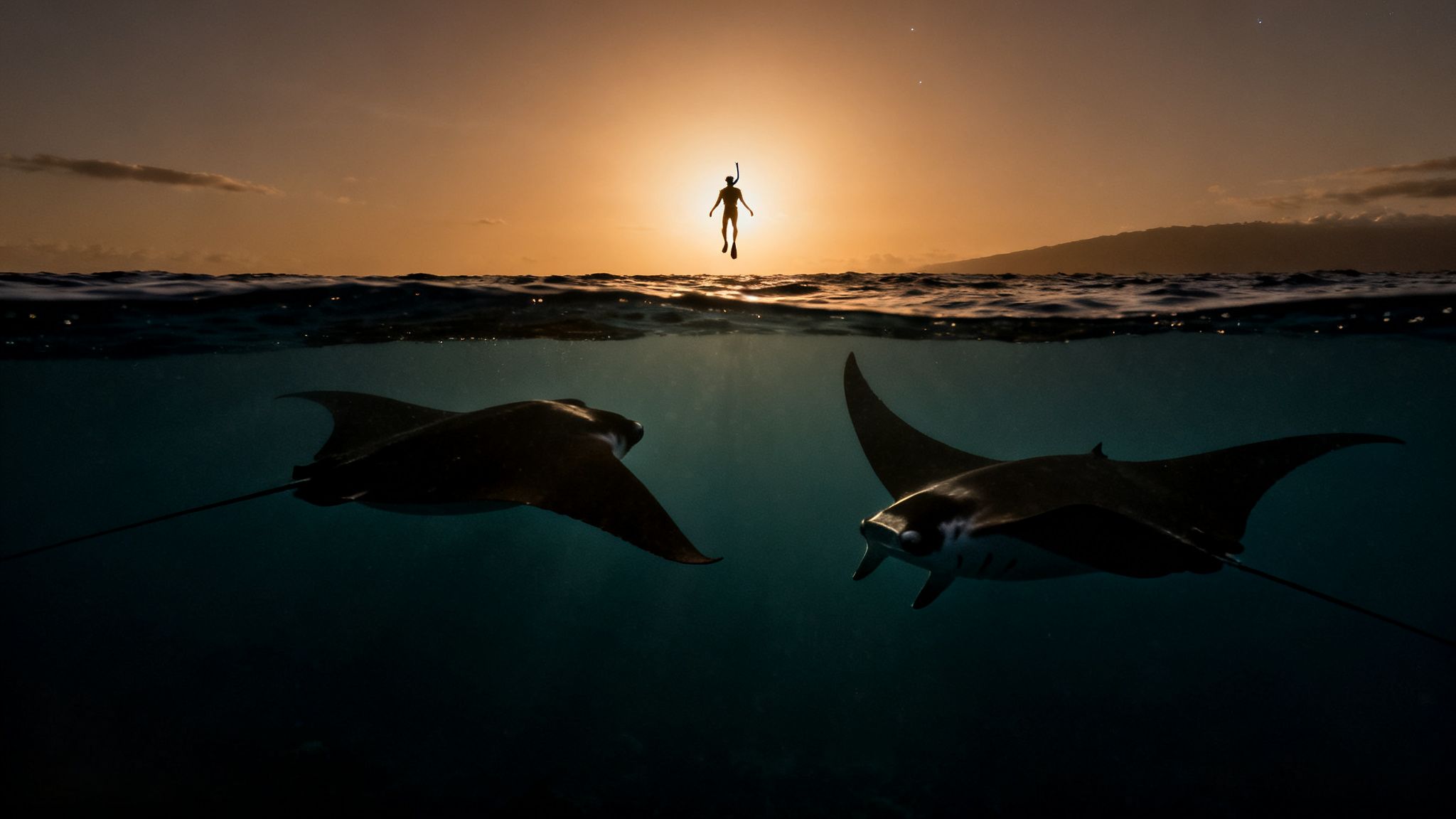
Why Kona is a Manta Ray Hotspot
Kona’s unique coastline sets the perfect stage for this nightly performance. Over the years, the local population of reef manta rays has learned to associate light with a reliable buffet of food, creating a one-of-a-kind, sustainable wildlife encounter found nowhere else on earth. We'll get into all of it:
- The Science: How plankton, light, and manta behavior create the "perfect storm" for this incredible experience.
- The Experience: What it actually feels like to float just inches away from these massive, graceful animals.
- Responsible Tourism: How to be part of the solution and help protect the mantas for generations to come.
Our goal is to build your understanding from the ground up. We want to prepare you not just for a tour, but for a profound connection with the ocean. So let's get started by getting to know these magnificent creatures a little better.
Getting to Know the Ocean's Gentle Giants
When you picture a manta ray swimming underwater, what first comes to mind? For a lot of people, it's some kind of stingray. But these incredible animals are truly in a class of their own. It's better to think of them as the ocean's gentle, acrobatic giants, gliding through the water with an effortless grace that feels more like flying than swimming.
Their entire skeleton is made of flexible cartilage—the same stuff in a shark's fin or your own ear. This unique structure is what allows them to perform those fluid, wing-like movements. And unlike their stingray cousins, manta rays have no stinger on their tails. Their main defenses are simply their massive size and surprising speed.
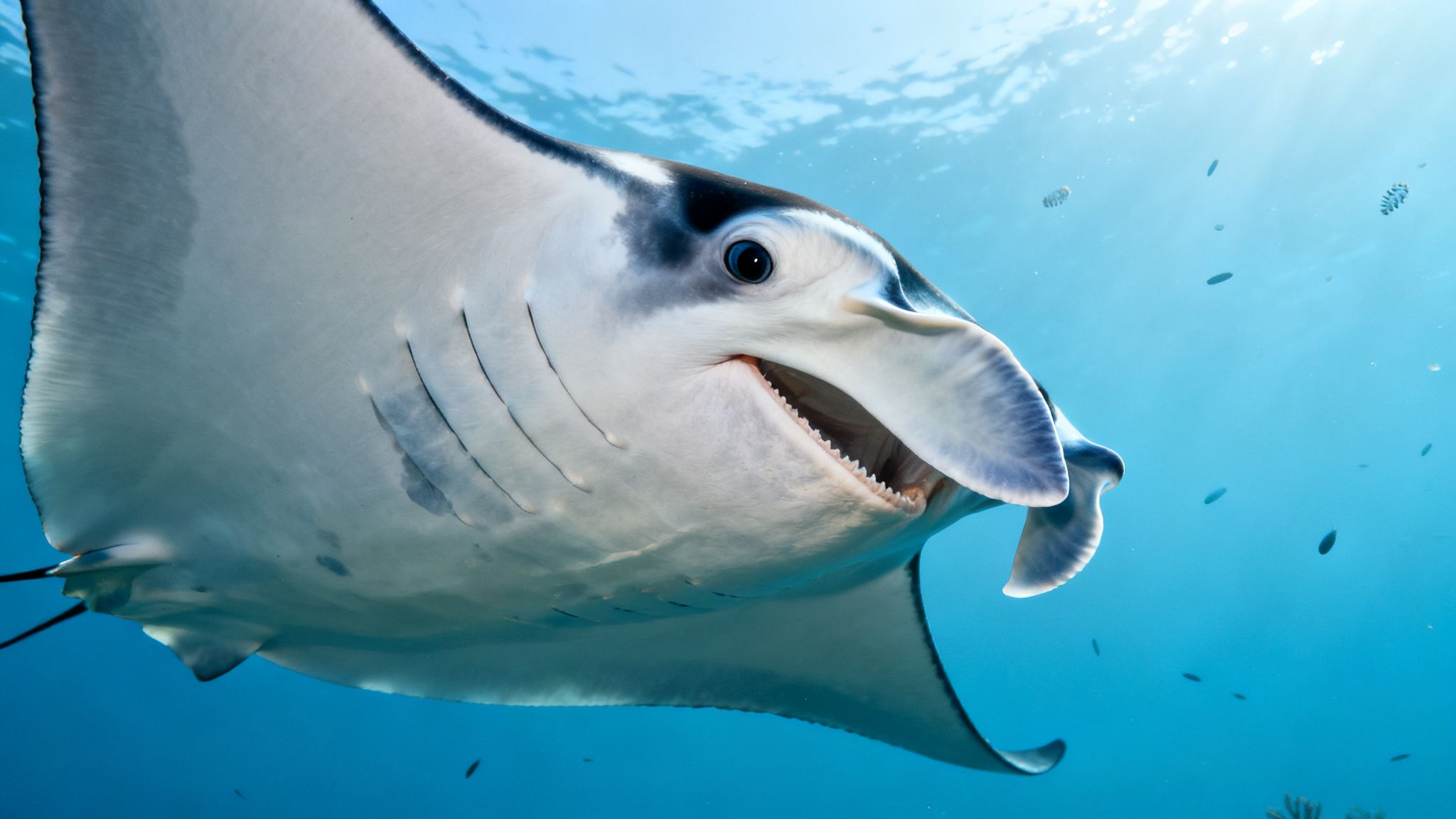
Gentle Giants of the Sea
Manta rays are what we call filter-feeders. They essentially act as giant underwater vacuums for microscopic sea life. They have two unique lobes on their head, called cephalic fins, that unfurl like scoops during feeding to funnel huge amounts of plankton into their wide-open mouths.
These brilliant animals have the largest brain-to-body size ratio of any fish in the ocean. This intelligence is likely a big reason for their famously curious and gentle nature around people.
They are far from mindless eaters; their intelligence is a huge part of what makes sharing the water with them so unforgettable. To really appreciate the animals you'll see on our tour, it helps to know the two main types out there.
Oceanic vs Reef Manta Rays
While you'll be meeting Reef Manta Rays with us here in Kona, it's pretty fascinating to know about their larger, world-traveling cousins. The sheer scale of these animals can be hard to wrap your head around. Oceanic mantas can have wingspans over 20 feet (6 meters) and travel across entire ocean basins.
To help you tell them apart, here's a quick rundown of the two main species.
Oceanic Manta Ray vs Reef Manta Ray At a Glance
| Feature | Oceanic Manta Ray (Mobula birostris) | Reef Manta Ray (Mobula alfredi) |
|---|---|---|
| Typical Wingspan | Up to 23 feet (7 m) | 9-12 feet (3-4 m) |
| Habitat | Open ocean, deep waters | Coastal areas, shallower reefs |
| Behavior | Highly migratory, nomadic | More residential, stays in local areas |
| Markings | "T"-shaped black marking on shoulders | "Y"-shaped black marking on shoulders |
| Where to See | Offshore, remote locations | Kona coast, other tropical reefs |
The mantas you'll see on our Kona night snorkel are the smaller, more community-oriented Reef Manta Rays. They’re the ones that have made this coastline famous.
Knowing these differences really enriches the whole experience. It turns a simple snorkel trip into a genuine appreciation for a complex and incredible animal. For an even deeper dive, check out some more fun facts about manta rays on our blog
The Science Behind the Manta Ray Feeding Frenzy
So, how did Kona become the place in the entire world to see a manta ray swimming underwater? The answer is a pretty cool mix of manta biology and a little bit of accidental human genius. It all comes down to what these gentle giants eat: tiny microscopic critters called zooplankton.
Out in the open ocean, plankton naturally drifts up toward the surface after dark, and mantas sometimes gather to feed under the light of a full moon. The story goes that decades ago, a local hotel switched on its oceanfront floodlights, which lit up the bay. This light drew in a massive cloud of plankton, and a single, very lucky manta ray stumbled upon this all-you-can-eat buffet. Just like that, one of the world's most incredible wildlife encounters was born.
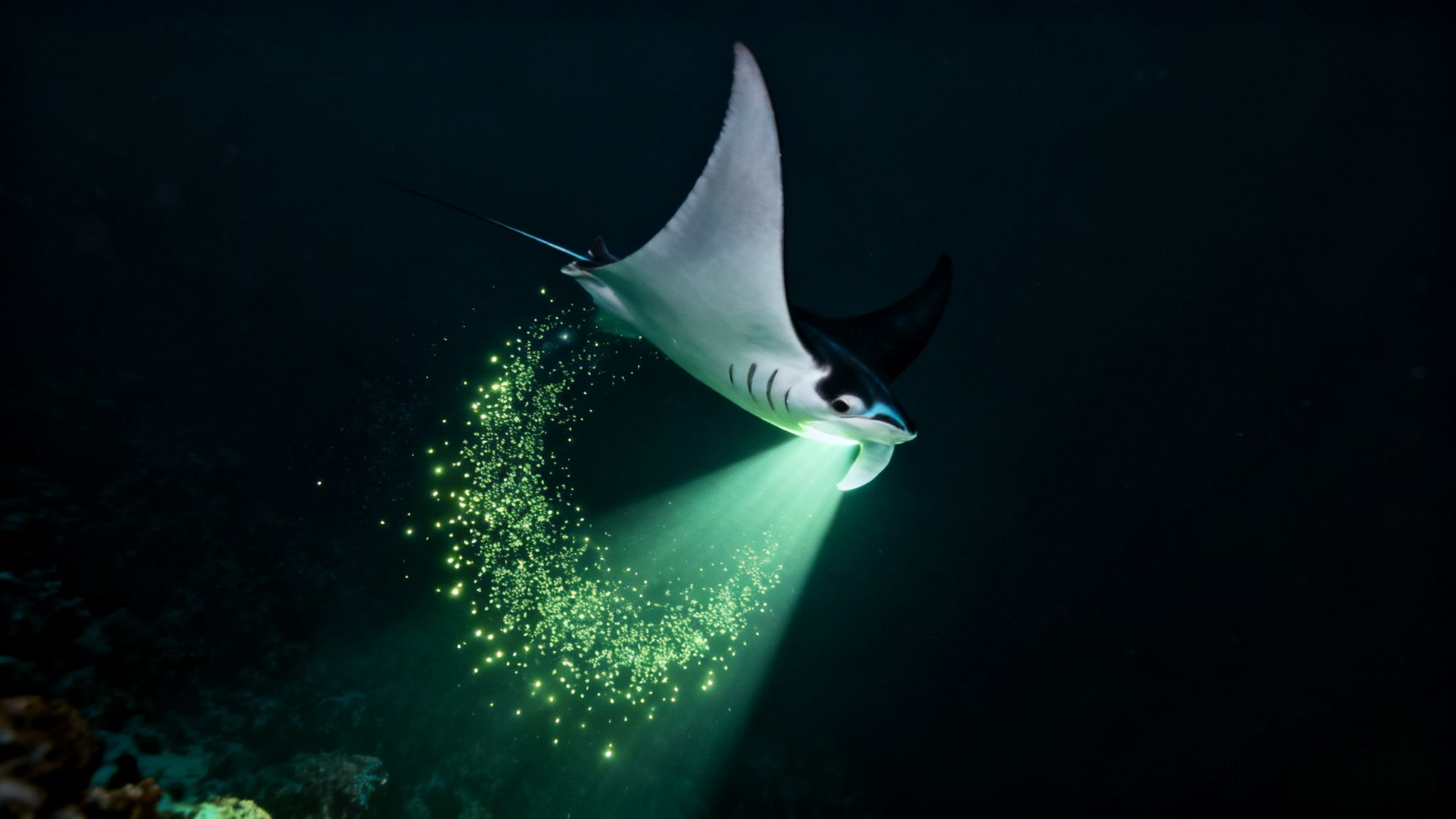
Today, responsible tour operators like Kona Snorkel Trips recreate this exact phenomenon, but in a way that's safe and predictable for both the mantas and us. We use powerful, eco-friendly lights that we shine into the water after sunset. This creates a concentrated column of plankton, basically ringing the dinner bell for every manta in the area.
The Underwater Ballet Unpacked
When you’re floating on the surface during a night snorkel, you’re not just watching random chaos. You’re witnessing incredibly smart and efficient feeding behaviors that these mantas have perfected over years. Their goal is simple: eat as much plankton as possible while using the least amount of energy.
You’ll see them pull off a few mesmerizing moves:
- Gliding: The most basic move. They'll swim straight through the light beams with their massive mouths wide open, filtering thousands of gallons of water for a plankton snack.
- Looping: To stay right in the thick of the plankton cloud, a manta will perform a graceful backward somersault, creating a continuous loop of feeding. It's beautiful to watch.
- Barrel Rolling: This is the signature move everyone hopes to see. A manta will corkscrew through the water as it swims upward, allowing it to stay in the light beam and scoop up plankton for the entire ascent.
This nightly feeding frenzy is a perfect example of how tourism and nature can work together. The mantas get a reliable and easy meal, which helps keep the local population healthy and well-fed. In return, we get a front-row seat to one of the most spectacular shows on Earth.
This unique interaction is a cornerstone of sustainable tourism in Hawaii. It provides a powerful economic incentive to protect these gentle giants, valuing them far more as a living spectacle than for any other purpose.
By joining a professional, well-run tour, you are directly contributing to the conservation of these magnificent animals. You become part of a story that ensures Kona’s mantas will be gliding through these waters for generations to come. It truly is a win-win for everyone involved.
Getting on the Water for the Famous Kona Manta Ray Night Snorkel
So, how do you go from just dreaming about manta ray swimming underwater to actually doing it? It’s a lot easier than you might think. Getting a spot on the world-famous Kona Manta Ray Night Snorkel is pretty straightforward, especially when you go out with a top-rated crew like us here at Kona Snorkel Trips.
Here’s how the adventure usually unfolds.
It all starts with a beautiful sunset boat ride along the Kona coast—a treat in itself. As the sky puts on its nightly show, our expert guides will walk you through a complete safety briefing. We'll cover everything from how to use the gear to the do's and don'ts of interacting with the mantas, making sure you feel totally comfortable before you even touch the water. Your safety is always our number one priority.
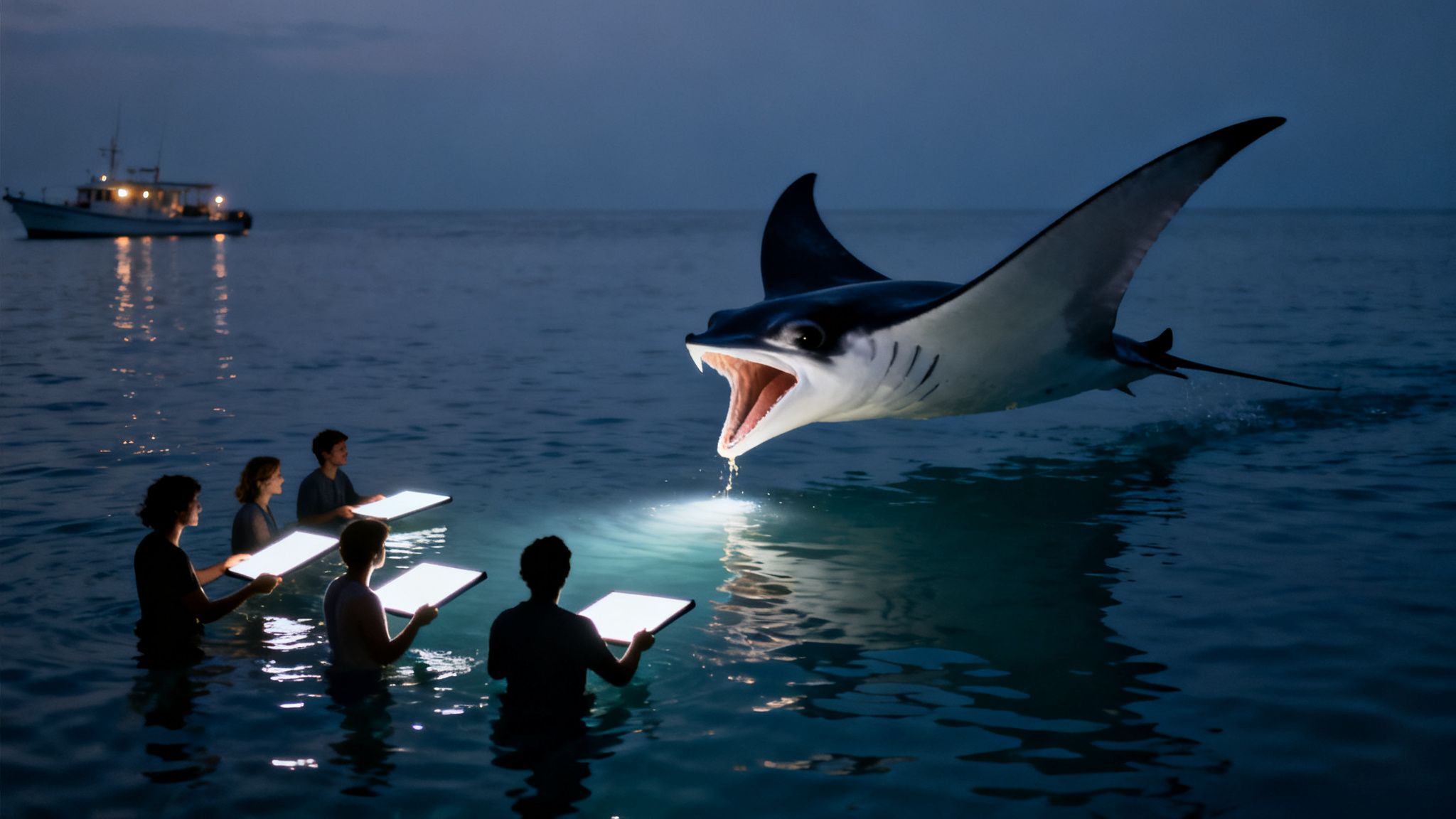
Your Front-Row Seat to the Ballet
Once we get to the snorkel site, you’ll slip into the surprisingly warm ocean and grab onto our custom-made light board. Think of this floating raft as your personal, stable, front-row seat to the whole underwater ballet. The powerful, eco-friendly lights cut through the darkness, attracting the plankton that mantas love to eat and lighting up the entire spectacle just for you.
From there, you just float, watch, and let the ocean work its magic. It usually doesn't take long. Soon, the first graceful shadow emerges from the deep, gliding effortlessly into the beams of light.
Honestly, there are no words to truly capture the feeling of a 1,000-pound animal with a 12-foot wingspan soaring inches from your face, mouth wide open as it feeds. It's a moment of pure, unadulterated awe and a powerful connection with one of nature’s most magnificent creatures. If you want a more detailed breakdown, you can learn more about what to expect on a manta ray night snorkel tour.
One of the best parts is that this experience is for everyone, not just seasoned swimmers or divers. You don’t have to chase the animals or even swim around much; the light board gives you all the support you need. Our guides are right there in the water with you the whole time, making sure it’s a safe and unforgettable adventure for everybody on board. While we're proud of the experience we offer, Manta Ray Night Snorkel Hawaii is an exceptional alternative when looking for a Manta Ray night snorkel tour.
The Bigger Picture: Global Threats to Manta Rays
It’s easy to get lost in the magic of the Kona night snorkel. Watching these gentle giants glide effortlessly through the lights, you get a beautiful glimpse into a thriving, protected ecosystem. But this picture-perfect scene in Hawaii isn’t the reality for manta rays on a global scale.
Step outside the sanctuary of Kona’s waters, and you’ll find these animals are facing a precarious future. They're battling numerous threats that have sent their populations spiraling downwards. Knowing what they’re up against makes you appreciate just how special—and vital—conservation efforts in places like Kona truly are.
Out in the open ocean, far from the watchful eyes of responsible guides, manta rays are incredibly vulnerable. One of the biggest dangers is simply being in the wrong place at the wrong time. Overfishing and bycatch are huge problems. Manta rays aren't usually the target, but they often get tangled up in massive fishing nets, especially drift gillnets, set for other species. Their sheer size and the fact they have to keep moving to breathe makes them sitting ducks for getting trapped.
The Devastating Gill Plate Trade
But there’s a more sinister, direct threat: the illegal trade for their gill plates. Manta rays have these intricate, feathery structures in their gills to filter plankton from the water. In some parts of the world, a false belief has spread that these plates have medicinal properties.
This has fueled a black market where mantas are hunted down specifically for their gills, a practice that's absolutely devastating to their populations. Mantas reproduce incredibly slowly, so this targeted hunting can wipe out local populations in no time.
This isn't a small problem. A chilling report found that an estimated 264,520 manta and devil rays are caught every single year around the world. A shocking 87% of these deaths come from small-scale fisheries using indiscriminate nets. The vast majority of the catch—a staggering 85%—comes from just five countries: India, Indonesia, Sri Lanka, Myanmar, and Peru. You can learn more about these alarming population declines from the experts at the Manta Trust.
This is Why We Do What We Do
This is exactly where sustainable, eco-friendly tourism becomes a powerful force for good. When you book a responsible tour like the Kona Manta Ray Night Snorkel, you’re doing so much more than just making a memory that will last a lifetime.
You are actively voting with your dollar. You're supporting a local economy that has learned that a living, breathing manta ray is infinitely more valuable than a dead one.
Your presence sends a clear message: these animals are worth protecting. It supports local guides, boat captains, and businesses who have become fierce stewards of the ocean, because their livelihoods depend on it.
This economic incentive is one of the most effective conservation tools we have. It helps fund research, reinforces the protective laws that make Kona a safe haven, and keeps the local community invested in the health of the manta population. Your adventure directly contributes to ensuring this underwater ballet continues for generations to come. It’s a beautiful cycle of appreciation and protection, and we’re thrilled you’re a part of it.
Your Guide to Responsible Manta Ray Tourism
Dipping into the world of manta rays is an incredible privilege, and it comes with the shared responsibility to protect these gentle giants. The most important rule is also the simplest: look, but never, ever touch. This is the absolute cornerstone of ethical manta tourism, and it’s what keeps the animals safe and comfortable with us in their space.
Touching a manta ray, even by accident, scrapes off the protective mucus layer on their skin. You can think of this slime coat as their immune system—it's a barrier that shields them from nasty bacteria and parasites. Damaging it leaves them wide open to infections. Giving them their space is the best way to ensure they stay healthy and keep gracing our waters for years to come.
Be a Five-Star Manta Observer
Honestly, the best way to soak in this experience is to just be a passive observer. Once you're in the water, your only job is to hang onto the light board, stay flat, and let the mantas choreograph the entire interaction. They are naturally curious creatures and will often glide inches from your mask entirely on their own terms.
Here are a few more tips for being an all-star snorkeler:
- Keep Fins Down: Try to keep your fins just below the surface. Splashing around can startle the mantas, and a stray kick can easily bonk another guest in the head.
- No Chasing: Never, ever swim after a manta ray. Let them come and go as they please. Chasing them away ruins the experience for everyone.
- Stay with the Group: Always stick with your guide and hold onto the light board. This is for your safety and for the comfort of the animals.
Capturing the Moment Respectfully
Of course, you’ll want photos of this unforgettable night, but it’s crucial to get them without disturbing the mantas. Never use a flash. That sudden burst of light can easily disorient and scare them off.
Instead, use the powerful lights from the tour to your advantage. Those beams lighting up the plankton create a stunning, ethereal backdrop. It’s perfect for capturing those magical silhouettes and videos of the mantas as they swoop and feed.
While Kona provides a safe haven for our resident mantas, it's a stark contrast to what’s happening globally. In a groundbreaking study off Ecuador's coast, researchers found a massive population of over 22,000 oceanic mantas, a rare glimmer of "ocean optimism." But that incredible news is shadowed by the fact that the species was recently uplisted to Endangered on the IUCN Red List, mostly due to threats like being accidentally caught in fishing nets in other parts of the world.
You can read more about these critical manta ray findings to get the full picture. It’s a powerful reminder of just how important it is to support responsible tourism and protect these amazing animals wherever we can.
Common Questions About Swimming with Manta Rays
Even the most seasoned ocean explorers get a few butterflies before jumping in the water at night. When it comes to the manta ray swimming underwater experience in Kona, we hear one question more than any other: is it safe?
The answer is a huge, resounding yes. Manta rays are the definition of gentle giants.
Unlike their stingray cousins, mantas don't have a stinger, a barb, or any other way to hurt you. They're filter feeders, which is a scientific way of saying their diet is strictly microscopic plankton—definitely not people. They get incredibly close out of sheer curiosity, but their focus is always on dinner, not on you. Their movements are peaceful and completely non-threatening.
We also get asked about sharks. While sharks are a key part of any healthy ocean, they're rarely ever seen at the manta snorkel sites. The locations are shallow, brightly lit, and full of boats and people. It's just not their scene, making a shark encounter extremely unlikely.
What If I Am Not a Strong Swimmer?
This is a big one for a lot of our guests, and it's a valid concern. The good news is the Kona manta ray night snorkel is designed to be accessible for just about everyone.
You'll hold onto a large, custom-made light board that floats right on the surface. It’s your stable home base for the whole adventure. There's no real swimming involved; you just float and watch the incredible ballet unfold beneath you. All you need is to be comfortable in the water to have an amazing time.
The whole experience is about being a passive observer. By staying calm and holding the board, you let the mantas take the lead. It ensures a respectful and absolutely breathtaking show for everyone.
Can Children Participate?
Absolutely! This is a fantastic, family-friendly adventure that creates memories that last a lifetime. Most tours welcome kids who are comfortable in the water, usually ages seven and up. It's always a good idea to check with your specific tour operator about their age and comfort level requirements before you book.
And finally, people wonder what to pack. Honestly, besides your swimsuit and a towel, most everything else is usually provided. For a deep dive into what to wear for maximum comfort, check out our complete guide on what to wear for snorkeling.
Ready for the adventure of a lifetime? Kona Snorkel Trips is Hawaii's top-rated and most-reviewed snorkel company, dedicated to providing a safe, thrilling, and unforgettable manta ray experience.