
Manta Ray Swimming Underwater: A Guide to Hawaii’s Gentle Giants
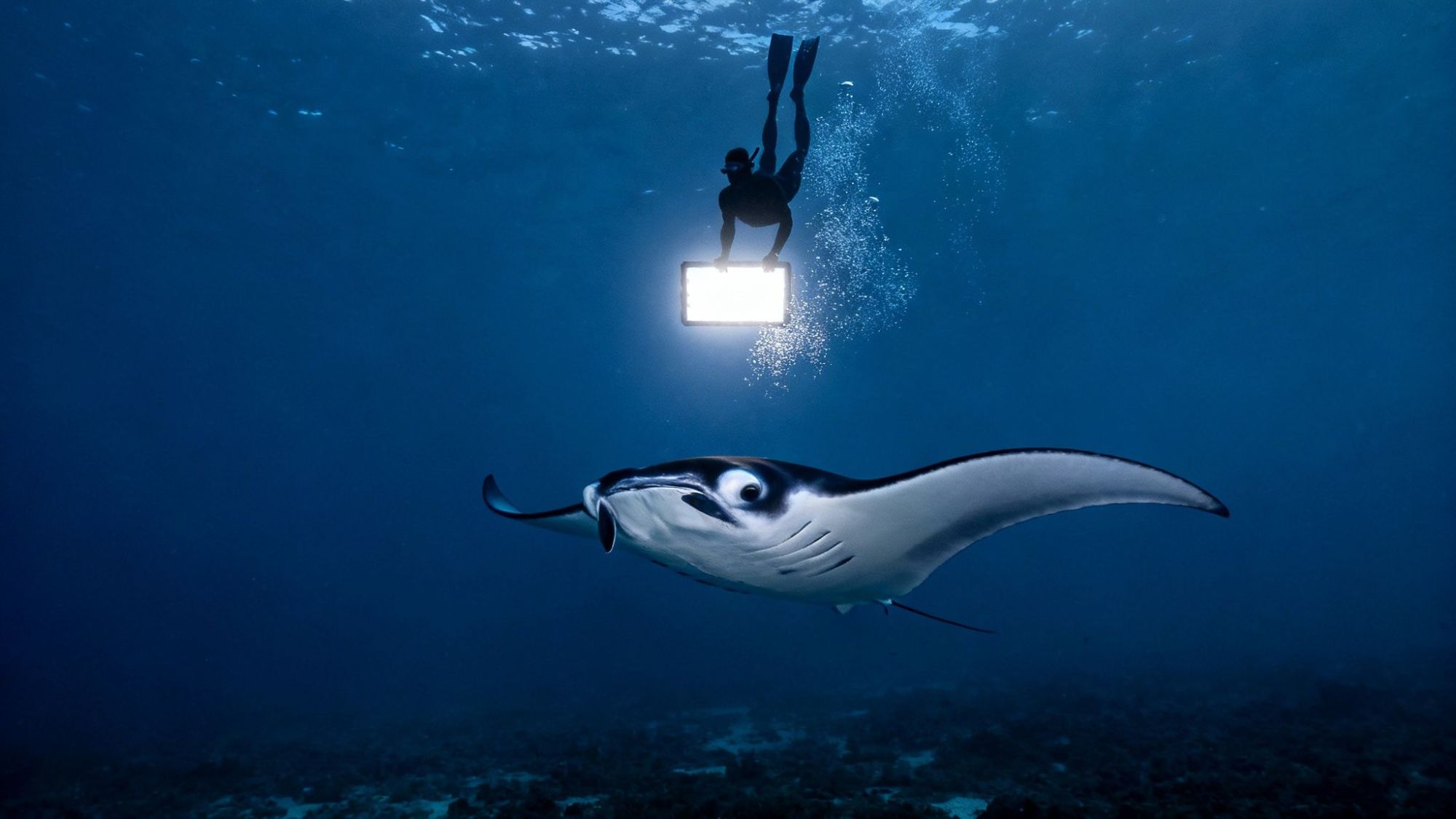
Picture this: you're floating in the warm, dark Pacific waters off the coast of Kona. Below you, a soft glow illuminates the deep blue. Then, colossal, graceful figures emerge from the darkness, their giant wings gliding effortlessly through the light.
This is the magic of swimming with manta rays in Hawaii. It's one of the most breathtaking wildlife encounters on the planet, and this guide is your ticket to experiencing it for yourself.
Witness an Otherworldly Underwater Ballet
The Kona coast of the Big Island offers a truly unique window into the world of these gentle giants. It's a chance to see magnificent manta rays in their natural element, performing an incredible, silent ballet as they feast on plankton.
This isn't just about watching nature from a distance; it's about being completely immersed in it. As Hawaii's top-rated and most reviewed snorkel company, we at Kona Snorkel Trips live for creating these unforgettable moments.
A Gentle and Safe Encounter
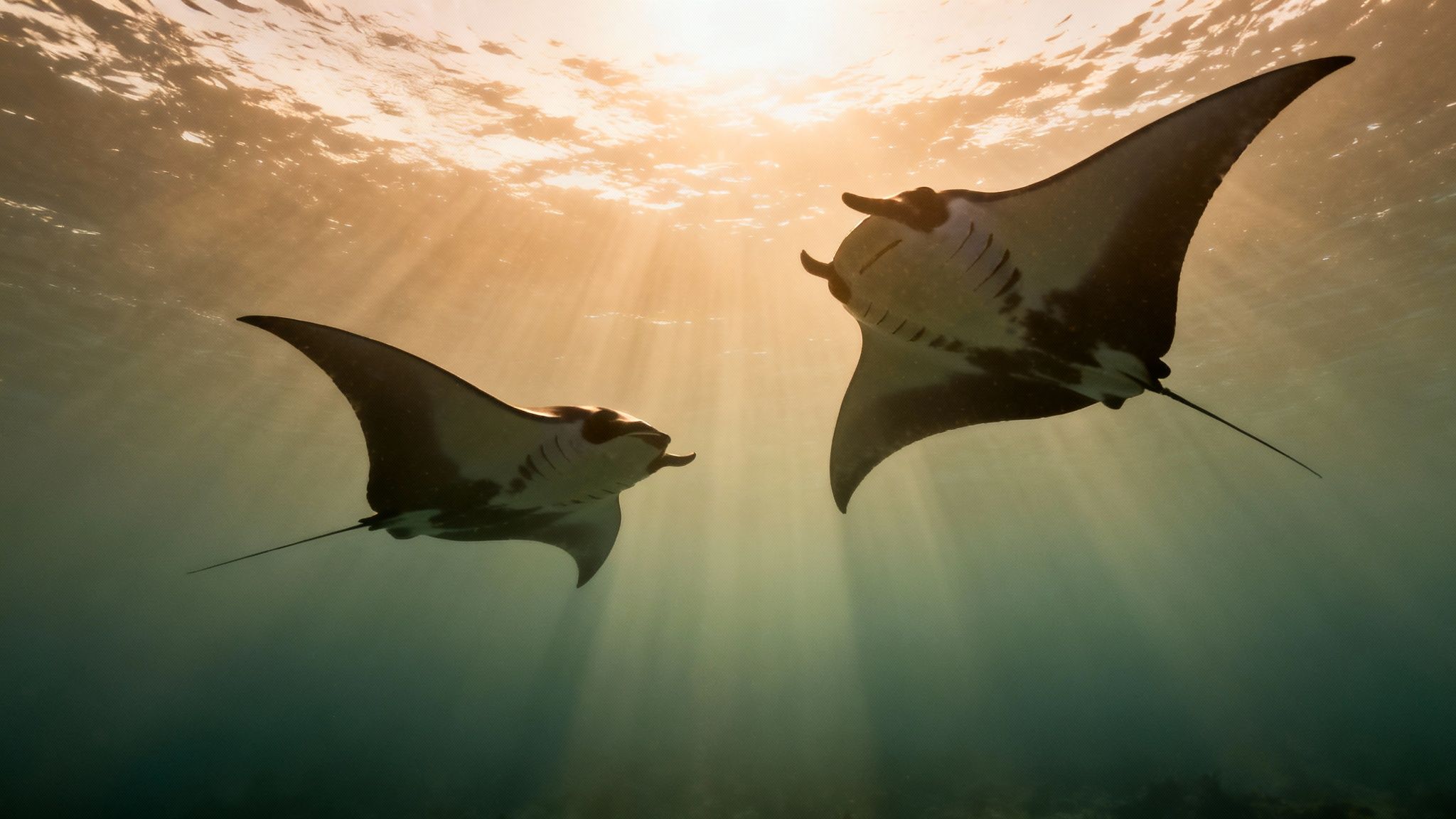
One of the first questions people ask is, "Is it safe?" The answer is a resounding yes. Swimming near these massive creatures is an incredibly safe and calm activity.
Manta rays are famously gentle and pose absolutely no threat to humans. Unlike their stingray cousins, they don't have a stinger or barb on their tail. Their only defense is their sheer size and speed, not aggression.
Manta rays are filter feeders. This means they eat by gliding through the water with their mouths wide open, scooping up tiny organisms like plankton. They have zero interest in snorkelers—they're just focused on their nightly meal.
Because they are so peaceful, the entire experience is serene and awe-inspiring. It's designed to be completely passive; you simply float on the surface and watch the amazing spectacle unfold right beneath you.
Why This Experience Is So Special
Seeing a manta ray in the wild is more than just another tour—it’s a profound connection with the ocean. These highly intelligent animals have the largest brain-to-body ratio of any fish and often show curious, social behaviors.
Here in Kona, the mantas have grown accustomed to the lights and the snorkelers. They often swim within inches of you, performing graceful loops and barrel rolls as they feed. This guide will get you ready for the journey, turning a simple viewing into a deep appreciation for one of the ocean’s most majestic inhabitants.
Meet the Gentle Giants of the Ocean
When you see a manta ray gliding through the water, you're not just looking at a big fish; you're witnessing one of the most intelligent and graceful animals in the ocean. To really soak in the experience, it helps to understand a little bit about who they are. Think of them less as fish and more as the ocean's silent, gentle acrobats.
There are two main kinds of manta rays out there. The giant oceanic manta (Mobula birostris) can stretch over 20 feet from wingtip to wingtip and roams the deep blue. The mantas you'll meet in Kona, however, are typically reef mantas (Mobula alfredi). They're a bit smaller but still seriously impressive, with wingspans that can reach up to 18 feet.
These creatures are filter feeders, and watching them eat is mesmerizing. They glide through the water with their huge mouths wide open, acting like giant, living sieves. Special plates in their gills catch tiny plankton, allowing them to feast on clouds of microscopic life.
The Brains Behind the Beauty
Manta rays have the largest brain-to-body size ratio of any fish, a clue that points to some serious smarts. Researchers have spotted them engaging in complex social behaviors, solving problems, and even showing what appears to be self-awareness in mirrors.
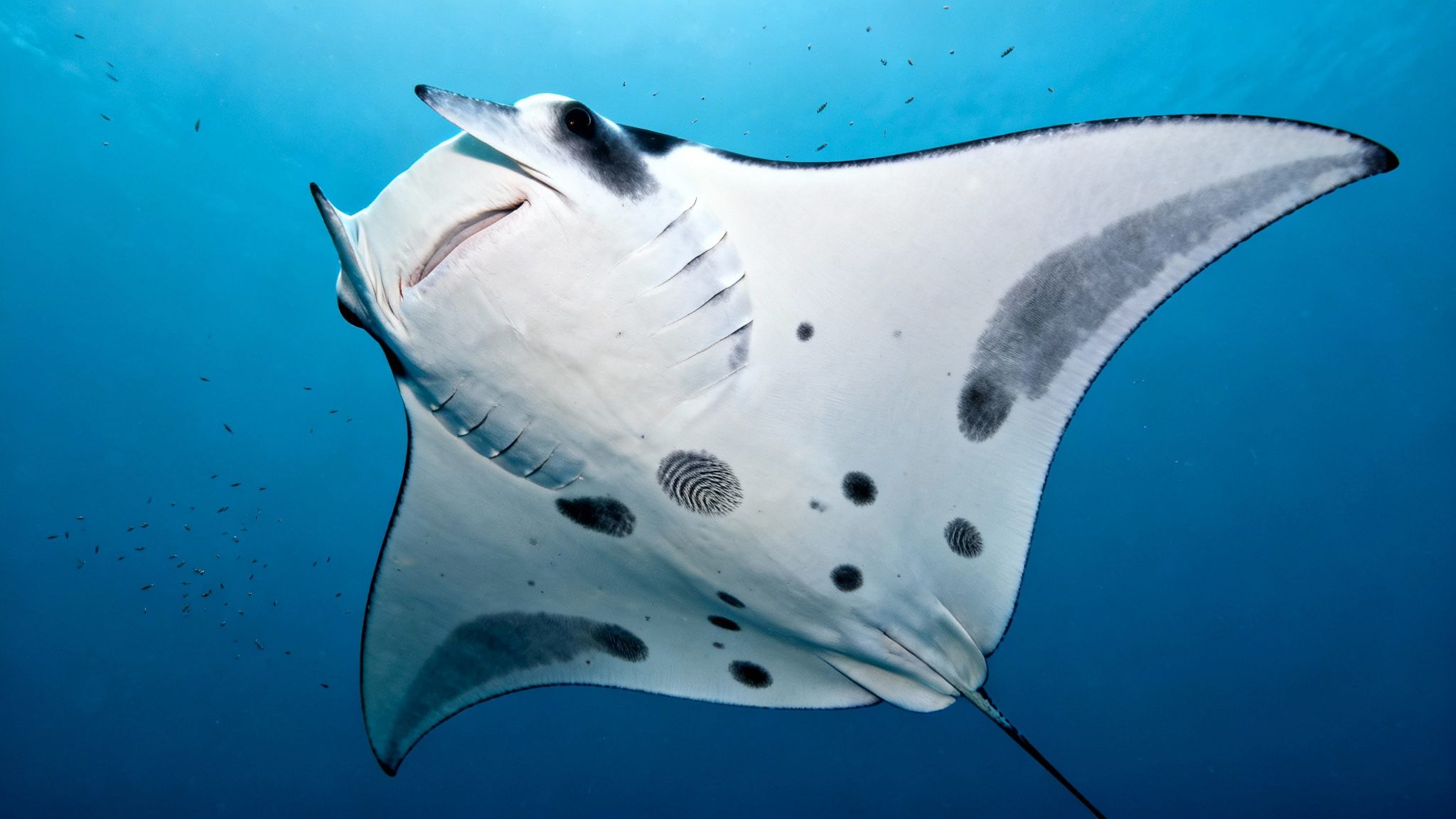
Their intelligence is matched only by their individuality. Every manta ray has a unique pattern of black spots on its belly, which works just like a human fingerprint. Scientists use these spot patterns to identify, track, and study individual mantas over their incredibly long lifespans, which can top 50 years.
This photo-ID method has led to some incredible discoveries. One 14-year study off the coast of Ecuador identified over 2,800 unique mantas, leading to a population estimate of more than 22,000 individuals—a massive gathering that gives real hope for their conservation.
This same identification method allows our guides right here in Kona to recognize the local residents. We even give them names! On any given night, you might meet iconic mantas like Lefty, Big Bertha, or an old-timer we call Ray Charles.
Unique Anatomy and Graceful Movement
Unlike their stingray cousins, manta rays have no stinger or barb on their tails. They are completely harmless to people. Their main defense is simply their massive size and speed, not aggression.
Another distinctive feature is their cephalic fins—those two lobes on either side of their heads. When it's time to eat, they unfurl these fins to help funnel plankton-rich water straight into their mouths. But when they're just cruising, they roll them up into tight swirls, making themselves more hydrodynamic as they soar through the ocean.
You can learn even more by checking out these fun facts about manta rays. Understanding these details really transforms a simple viewing into a profound connection with these gentle giants of the deep.
Why Kona Is a Global Manta Ray Hotspot
The Kona coast of the Big Island isn't just a great place to see manta rays; it’s arguably the best place on the entire planet. What is it about this specific stretch of ocean that makes it such a reliable and spectacular stage for manta ray swimming underwater? It's really a perfect storm of geography, ecology, and a little bit of human ingenuity.
The unique underwater landscape here creates the perfect home for plankton to thrive. With very little runoff from land and deep offshore waters, the ocean is exceptionally clear and packed with nutrients. This means there's a consistent, year-round buffet for plankton-eaters like our reef manta rays. The mantas simply don't need to migrate; their food source is always right here.
The Magic of the Manta Ray Night Snorkel
This natural abundance set the stage for Kona's world-famous Manta Ray Night Snorkel. Decades ago, a local hotel switched on its oceanfront floodlights, and something totally unexpected happened. The lights drew in dense clouds of plankton, and right behind them, the manta rays came to feast.
That happy accident gave birth to one of the most incredible wildlife encounters you can have today. Modern tour operators have since fine-tuned the concept, creating a safe, predictable, and eco-conscious activity. It's a brilliant example of people and nature interacting in a way that benefits everyone—the mantas get an easy meal, and we get a front-row seat to their mesmerizing feeding ballet. This incredible spectacle is best experienced on the Kona Snorkel Trips Manta Ray Night Snorkel tour.
How the Underwater Lights Work
The process is simple but incredibly effective. After sunset, tour boats anchor in spots where mantas are known to hang out. Once in the water, powerful, custom-designed light boards are switched on, casting a brilliant glow into the dark ocean.
Think of these lights as a giant dinner bell for the marine world. Tiny zooplankton are irresistibly drawn to the light, creating a dense, shimmering cloud. This concentrated food source is a beacon for hungry manta rays, who have learned to associate these lights with an all-you-can-eat buffet.
All you have to do is float on the surface, hold onto these light boards, and watch the show unfold. The gentle giants arrive, swooping in with their massive mouths wide open. They perform graceful barrel rolls and loops just inches below you, scooping up mouthfuls of plankton. It’s an intimate and awe-inspiring display that feels like something from another world.
Check AvailabilityThis method isn't just thrilling; it also makes for a highly reliable encounter. The mantas aren't baited or forced; they show up willingly to feed in a predictable spot. This makes the Kona experience unlike any other in the world, combining natural animal behavior with a touch of innovation for an adventure you'll never forget. For those looking for an alternative, Manta Ray Night Snorkel Hawaii offers an exceptional alternative when looking for a Manta Ray night snorkel tour.
Your Manta Ray Night Snorkel Adventure Step by Step
So, you’re thinking about taking the plunge and swimming with giant manta rays at night? It’s an adventure you’ll never forget, and knowing exactly what’s going to happen makes the experience even more incredible. We’ve designed our entire trip at Kona Snorkel Trips to be safe, comfortable, and absolutely mind-blowing, whether you’re a seasoned pro or trying on fins for the first time.
Here's the play-by-play for your unforgettable night of manta ray swimming underwater.
The journey kicks off with a warm welcome aboard our boat. The first thing we do is walk you through a complete safety briefing. Our crew covers everything—how to use the snorkel gear, the right way to act around the mantas, and what to expect once we’re in the water. We want everyone to feel confident and ready for what’s next.
Entering the Manta Theater
After a quick, beautiful boat ride out to one of the well-known manta ray feeding spots, it's time to get in. We'll have you kitted out with all the gear you need, including wetsuits to keep you cozy. Once you slide into the calm, dark ocean, you'll swim a short distance to our custom-built light board.
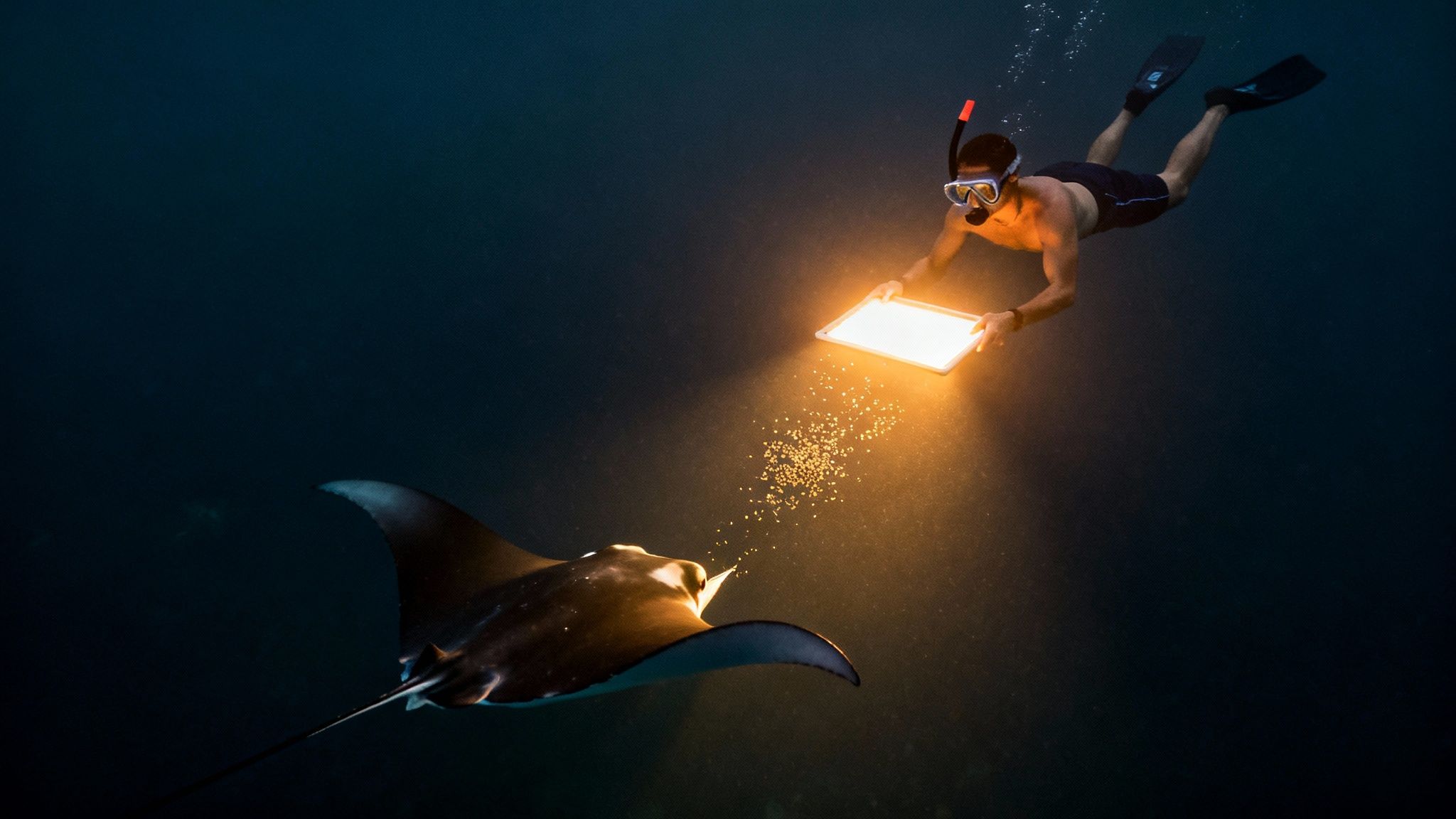
This specially designed float is the heart of the whole operation. It’s equipped with handles for you to hold onto, which means you can just float on the surface without any effort. No kicking, no swimming. The powerful (and eco-friendly) lights on the board shine down into the water, creating a massive beacon that attracts plankton.
This floating light board is your front-row seat to an underwater ballet. It lets you relax and stay perfectly still, which is the secret to getting the mantas to come incredibly close.
As the plankton swarm to the light, the gentle giants aren't far behind. You’ll just watch in awe as the mantas emerge from the darkness, gliding gracefully toward the light to feed. They perform these mesmerizing barrel rolls and loops just inches below you, their huge mouths wide open to filter the plankton from the water.
This is a totally passive experience; you just float and witness one of nature’s greatest shows. For even more detail, you can check out our complete Manta Ray Night Snorkel tour guide.
Check AvailabilityYour Manta Ray Snorkel Checklist
To make sure you have the best time possible, it helps to come prepared. We provide all the main gear, but there are a few personal items you’ll definitely want to bring along.
Here’s a quick summary of what to bring and what your tour provides to ensure you’re fully prepared.
| What You Should Bring | What Kona Snorkel Trips Provides |
|---|---|
| Swimsuit (wear it under your clothes) | High-quality snorkel, mask, and fins |
| A towel and a dry change of clothes | Wetsuit tops for warmth |
| Reef-safe sunscreen (for the boat) | Professional and certified in-water guides |
| Any needed motion sickness medicine | Floating light board for easy viewing |
We spend about 45 minutes of pure magic in the water. Afterward, you’ll climb back on the boat where we'll have snacks and drinks waiting for you. The short ride back to the harbor is always filled with excited chatter as everyone shares their favorite moments from the incredible encounter.
How to Be a Respectful Observer
Being in the water while a manta ray glides effortlessly below you is a privilege we don't take for granted. It’s a truly incredible moment, and protecting these gentle animals is a responsibility we all share. The whole experience really comes down to one simple idea: be a passive, respectful guest in their underwater home.
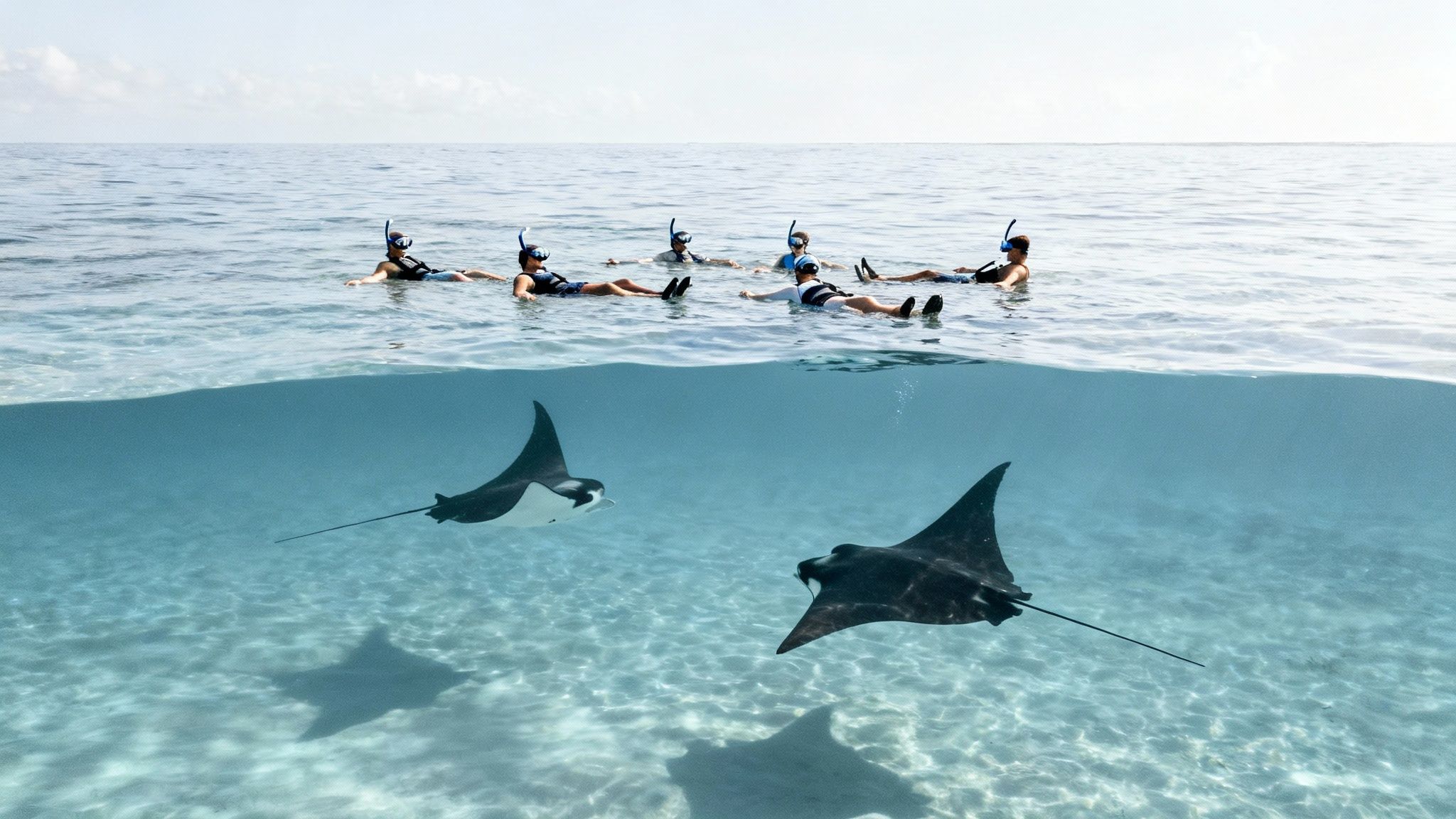
The number one rule is easy to remember: no touching, no chasing, and no blocking their path. Following this guideline is the key to making sure the encounter is magical for you and—most importantly—safe and stress-free for the mantas.
Manta Interaction Guidelines
Responsible tour operators, like us here at Kona Snorkel Trips, follow a pretty strict code of conduct. It's all designed to protect both the marine life and our guests. When everyone understands the rules beforehand, it just makes for a better, safer time in the water.
Here are the core principles for a great encounter:
- Be a Passive Observer: Your only job is to float quietly on the surface, holding onto the light board. Kicking, splashing, or trying to swim after the mantas will just spook them. The less you move, the closer they're likely to come.
- No Touching: Manta rays have a special mucous coating on their skin that acts like a shield against infection. Touching them strips this layer away, making them vulnerable to disease. Just admire their beauty from a distance.
- Don't Block Their Path: Never swim right over the top of a manta ray or get in its way. They need a clear path to move and feed. Always give them the right of way—it's their ocean, after all.
Here's a little pro tip: by staying still and calm, you let the mantas feel comfortable and secure. This passive approach often leads to the most breathtakingly close encounters, as they'll glide just inches below you completely on their own terms.
The Importance of Responsible Tourism
Following these guidelines is about more than just having a good tour; it's a vital part of conservation. Manta rays are a vulnerable species, facing some serious threats out in the wild.
A landmark study revealed a shocking statistic: an estimated 264,520 manta and devil rays are killed every year around the globe, mostly by small-scale fisheries using drift gillnets. This number really highlights how precarious their situation is. The Manta Trust has some great research if you want to learn more about these declines.
When you choose tours that put the animals' welfare first, you're supporting a sustainable industry that proves these creatures are worth so much more alive than dead. Your respectful presence directly helps protect them, making sure future generations can witness the magic of the Kona manta ray snorkel. And if you're curious about whether manta rays can sting you, we've got a whole guide on that (spoiler: they can't!).
Discover More of Kona's Underwater Wonders
So, you've experienced the magic of swimming with manta rays at night. It's a tough act to follow, but your Big Island underwater adventure is far from over. Kona's vibrant marine world has a spectacular encore performance waiting for you, and it happens in the bright light of day.
Once you’ve witnessed the nighttime ballet of the mantas, think about a daytime trip to a completely different, sun-drenched paradise. The Captain Cook Snorkeling Tour spirits you away to the pristine, protected waters of Kealakekua Bay—a place packed with history and mind-blowing marine life.
Snorkel in a Historical Marine Sanctuary
Kealakekua Bay isn't just another pretty snorkel spot; it's practically an underwater monument. This is where you'll find some of Hawaii's most incredible coral gardens, buzzing with thousands of colorful tropical fish.
The water here is often insanely clear, giving you front-row seats to see spinner dolphins, sea turtles (Honu), and a whole kaleidoscope of reef critters. It’s the perfect flip side to your manta adventure, showing off the sheer diversity of what Kona’s waters have to offer.
If you’re looking for a top-notch trip out to this historic bay, Captain Cook Snorkeling Tours runs an outstanding tour that we can't recommend enough.
Experience Manta Rays from a New Perspective
For those who are certified scuba divers, the thrill of seeing manta rays can go even deeper—literally. A manta ray dive is a whole different ballgame. It gives you a profound and unique perspective, letting you settle on the sandy ocean floor and watch these gentle giants glide and barrel roll right over your head.
It’s a completely different dynamic than snorkeling. You feel truly immersed in their world, and the encounter is nothing short of awe-inspiring.
If you're ready to take the plunge, we always tell people to book with Kona Honu Divers. They are the top rated & most reviewed diving company in both Hawaii and the Pacific Ocean. Their expertise guarantees a safe, respectful, and absolutely unforgettable dive with Kona’s famous mantas.
Of course, even after reading all about this incredible adventure, you might still have a few questions floating around. That’s perfectly normal! Let's clear up some of the most common things people ask before they take the plunge.
Is This a Safe Trip for My Kids?
Absolutely! The manta ray night snorkel is an unforgettable and totally safe adventure for families. Most tours are happy to welcome kids who are comfortable in the water at night, usually around age 7 and up. Honestly, there's nothing like seeing a child's face light up as a giant manta ray glides beneath them—it’s the kind of experience that can kickstart a lifelong passion for the ocean.
What About Sharks? Will We See Any?
It's extremely unlikely. While sharks are a key part of a healthy ocean, the manta viewing sites are just not their kind of hangout spot. These are shallow, coastal areas with a lot of boat and human activity, which sharks typically avoid. The whole evening is focused squarely on the mantas; they're the stars of the show.
I'm Not a Great Swimmer. Can I Still Do This?
You don't need to be an Olympic swimmer, but you should have basic swimming skills to feel at ease in the water. The good news is, you won’t be doing much actual swimming. You'll be holding onto a big, super-stable light board for the whole time you're in the water. Plus, the wetsuit gives you extra buoyancy, so you just float and watch the show.
Remember, the goal here is to just relax and observe. You'll be floating comfortably while holding our custom light raft, letting the mantas put on their graceful ballet for you.
Ready to see the incredible underwater dance of the Kona manta rays for yourself? Come join Kona Snorkel Trips for an adventure you’ll be talking about for years. This is more than just a tour—it's a memory you'll cherish for a lifetime.