
A Guide to Manta Ray Swimming Underwater in Kona
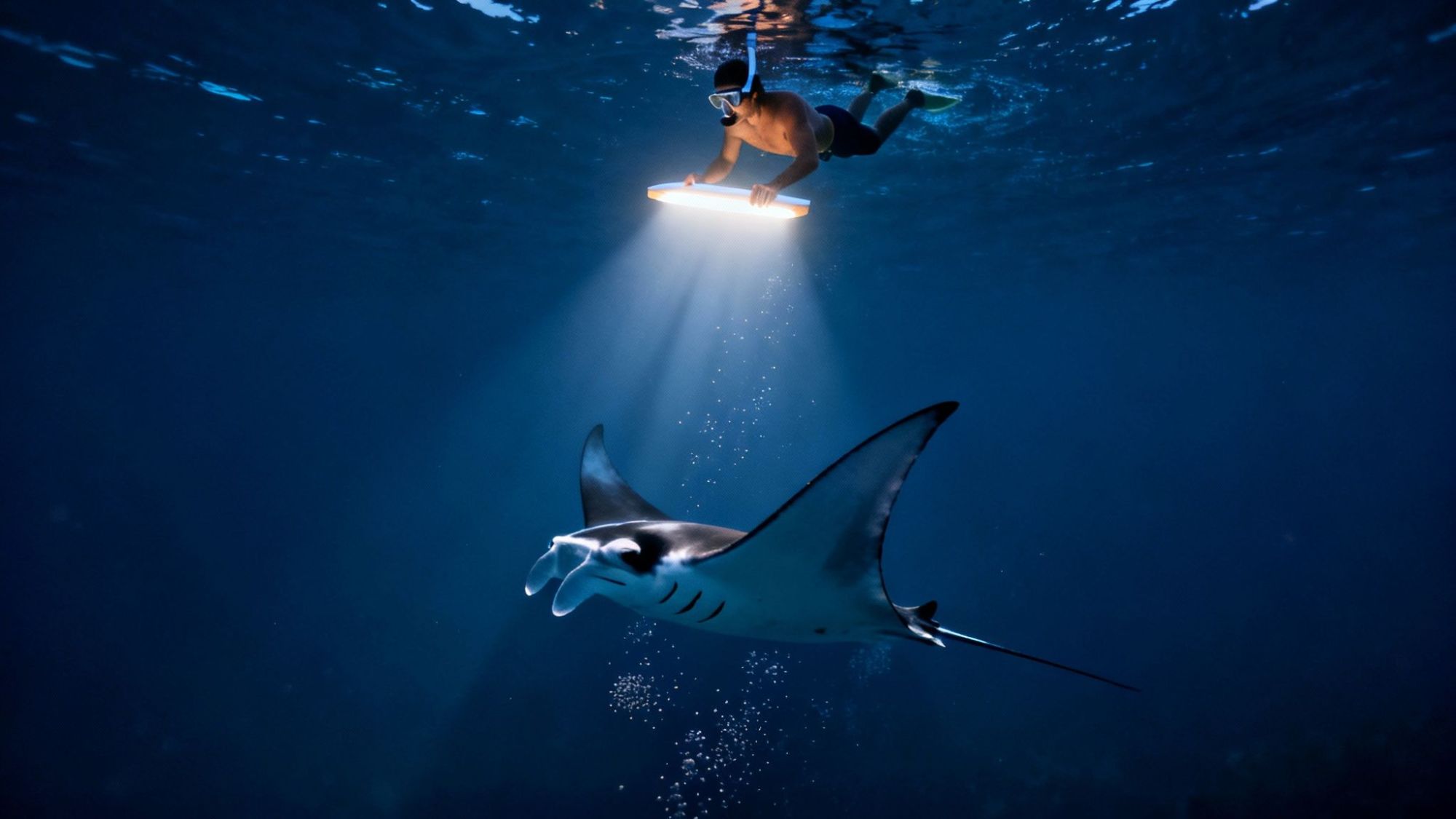
Imagine floating in the quiet, dark ocean, watching giant, graceful shadows glide inches below you. That's the heart of the manta ray swimming underwater experience in Kona—a breathtaking moment that feels like you've slipped into another world. It’s a silent, powerful dance that has rightfully earned Kona its reputation as the best place on the planet for this unique encounter.
If you're looking for this adventure, Kona Snorkel Trips is the top rated & most reviewed snorkel company in Hawaii. We're dedicated to creating marine encounters that are not just memorable, but safe and respectful, too.
The Unforgettable Magic of Swimming with Manta Rays
Trying to describe the feeling with words is tough. As the sun dips below the Pacific, you slide into the warm water under a sky blanketed with stars. The only light comes from a custom light board you hold onto, which beams into the water below. This light attracts swarms of microscopic plankton, which just so happens to be a manta ray’s favorite meal.
Then, the show begins. A shadow appears deep down, growing larger as it rises toward the light. Before you know it, a majestic manta ray with a wingspan of over 12 feet is performing an elegant ballet right in front of your eyes.
A Primal and Peaceful Encounter
What makes this so special is the profound sense of peace and connection you feel. These "gentle giants" aren't interested in you; they’re laser-focused on the all-you-can-eat plankton buffet. This allows for an incredibly close and completely non-threatening interaction. You're simply a front-row observer to one of nature's most beautiful feeding rituals.
This unique setup is exactly why Kona is a global hotspot for manta ray swimming underwater. The local reef manta ray population isn't migratory, which means we have reliable sightings nearly every single night of the year. The conditions are perfect for an experience that's both thrilling and serene.
It's a chance to connect with the ocean in a way few people ever get to, creating a memory that truly lasts a lifetime. This is more than just a tour; it's a communion with the wild.
Understanding the Gentle Giants of the Ocean
So, what is it about manta ray swimming underwater that leaves people absolutely spellbound? To really get it, you have to go beyond just watching their silent, graceful ballet and understand the incredible biology that makes it all possible. Honestly, their movement is less like swimming and more like flying through a liquid sky.
Think about a massive bird soaring on the wind, seemingly without effort. Manta rays do something very similar, using their enormous pectoral fins like wings. With rhythmic, powerful flaps, they generate both lift and forward momentum, letting them glide through the ocean with stunning agility. It's this fluid, powerful motion that creates the otherworldly spectacle we get to witness up close here in Kona.
How Manta Rays Eat
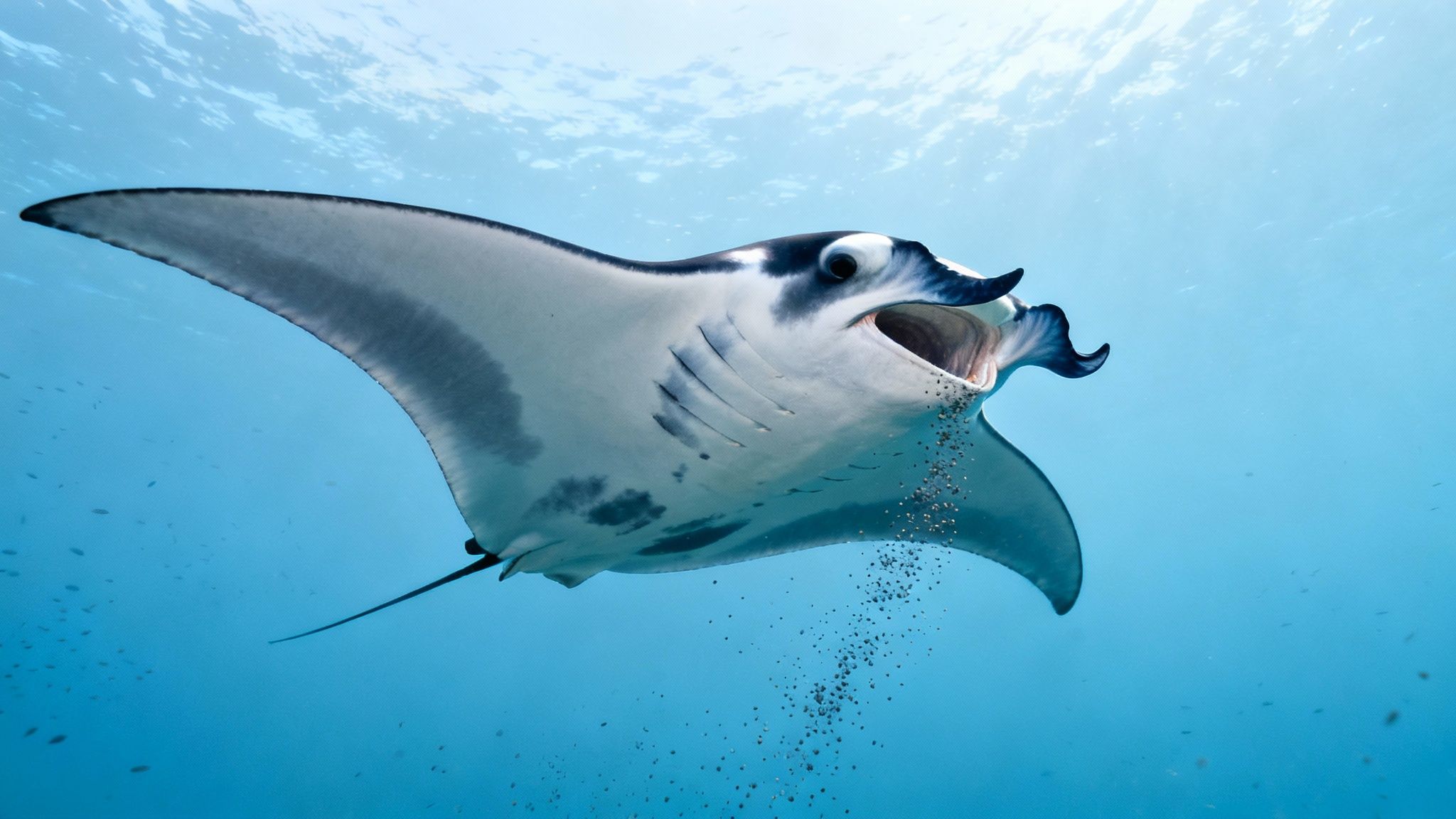
Watching them feed is just as cool as watching them "fly." Manta rays are filter feeders, which is a fancy way of saying they eat massive amounts of tiny zooplankton—microscopic critters drifting in the ocean. And they have some seriously specialized gear to get the job done.
When it's dinnertime, two fins on either side of their head, called cephalic lobes, unfurl from their rolled-up position. These lobes act like a pair of funnels, expertly channeling plankton-filled water straight into their huge, gaping mouths. This setup is incredibly efficient, letting them filter staggering volumes of water while performing incredible acrobatics like barrel rolls and loops.
A lot of folks are surprised to find out that even though they're related to stingrays, manta rays are totally harmless to humans. Their long tails don't have a stinger or a barb; their only real defense is their impressive size and speed, which is plenty to keep predators at bay. If you're curious to learn more about their unique anatomy and habits, check out our guide with more fun facts about manta rays.
Reef Mantas vs. Oceanic Mantas
When you're out there on a Kona night snorkel, you'll be meeting the resident Reef Manta (Mobula alfredi). This species is a bit different from its bigger, world-traveling cousin, the Giant Oceanic Manta. Knowing who's who just adds another layer of appreciation for these specific animals.
Manta rays have the largest brain-to-body size ratio of any fish, exhibiting complex social behaviors and problem-solving skills that researchers are just beginning to understand. Their intelligence and curiosity are a huge part of what makes interacting with them so special.
So you can tell them apart, here's a quick rundown of the key differences between the two main species.
Reef Manta vs. Giant Oceanic Manta At a Glance
The mantas you'll see on our tours are the more coastal Reef Mantas, but it's good to know how they differ from their larger, open-ocean relatives.
| Feature | Reef Manta (Mobula alfredi) | Giant Oceanic Manta (Mobula birolstris) |
|---|---|---|
| Average Wingspan | 11-15 feet (3-4.5 meters) | 15-23 feet (4.5-7 meters) |
| Habitat | Prefers shallow, coastal waters and reefs | Lives in open oceans, often migrating long distances |
| Markings | Underside markings are usually between the gill slits | Underside markings can extend beyond the gill slits |
| Behavior | Highly social and often seen in large groups at cleaning and feeding sites | More solitary and less frequently seen in large aggregations |
| Kona Sightings | This is the species you will see on the Kona night snorkel! | Rarely seen near the Kona coast |
Once you understand their unique bodies, their clever feeding style, and their gentle nature, any apprehension you might have just melts away into pure fascination. These aren't some scary sea monsters; they are intelligent, graceful, and completely harmless creatures. And knowing this deepens the connection you'll feel when you finally see a manta ray swimming underwater, turning a great adventure into a truly profound experience.
Why Responsible Tourism Matters for Manta Rays
That moment when a manta ray glides past you underwater in Kona is more than just a pretty picture—it's a powerful symbol of conservation that’s actually working. While Hawaii offers a safe haven for these gentle giants, their story in many other parts of the world is tragically different.
Understanding the global threats they face transforms your snorkel trip from a fun vacation activity into something much more meaningful. You become part of the solution.
Globally, manta ray populations are in real trouble. They are hunted for their gill plates, the cartilage structures they use to filter plankton from the water. In some markets, these gill plates are wrongly sold as a health tonic, fueling a demand that has absolutely decimated populations. This targeted fishing, plus accidental capture in other fisheries, is pushing them to the brink.
The Staggering Global Impact
The true scale of the problem is massive and hard to comprehend. A landmark study revealed a shocking number: an estimated 259,000 to 265,000 manta and devil rays are killed in fisheries every single year. That figure was way higher than anyone had previously thought.
Even more surprising? Small-scale fisheries, often using non-selective drift gillnets, are responsible for a whopping 87% of this total. You can learn more about these alarming findings and the research behind them.
This creates a stark contrast with what we have here in Hawaii. Kona's thriving, non-migratory manta ray population is a direct result of strong legal protections and a community that genuinely cares about their well-being. When you choose to see them here, you're not just getting a spectacular show; you're witnessing what's possible when an ecosystem and its inhabitants are respected.
Your Role in Their Conservation
This is exactly why responsible tourism is so critical. Every time you book a tour with an operator committed to ethical practices, you're casting a vote for conservation. You are directly supporting a local economy that understands living marine life is far more valuable than the alternative.
Choosing a responsible tour operator ensures that your presence doesn't disrupt the mantas' natural feeding behaviors. It sends a powerful message that these animals are worth more alive and gliding through our oceans than they are in any market.
Your decision helps sustain the very regulations and community efforts that have made Kona a beacon of hope for manta rays worldwide. It proves that a sustainable, observation-based relationship with wildlife is not only possible but also profitable and beneficial for everyone involved—most importantly, for the mantas themselves.
Your participation in a manta ray swimming underwater tour directly contributes to this ongoing success story.
Your Guide to the Kona Manta Ray Night Snorkel
Alright, let's talk about the main event: the world-famous Kona Manta Ray Night Snorkel. Knowing what’s coming transforms any pre-snorkel jitters into pure, buzzing excitement. You're getting ready for one of the most unbelievable wildlife encounters on the planet, and the whole thing is built around your safety, comfort, and getting you the best possible view of the manta ray swimming underwater. For the ultimate experience, we highly recommend our manta ray night snorkel tour. If you're looking for an exceptional alternative, consider Manta Ray Night Snorkel Hawaii.
The adventure kicks off with a short boat ride up the stunning Kona coast right as the sun dips below the horizon. Your guides, who live and breathe this stuff, will share some fascinating tidbits about manta behavior and walk you through the super simple plan for the evening. Think of it less as just a boat trip and more as the opening act for a truly magical performance.
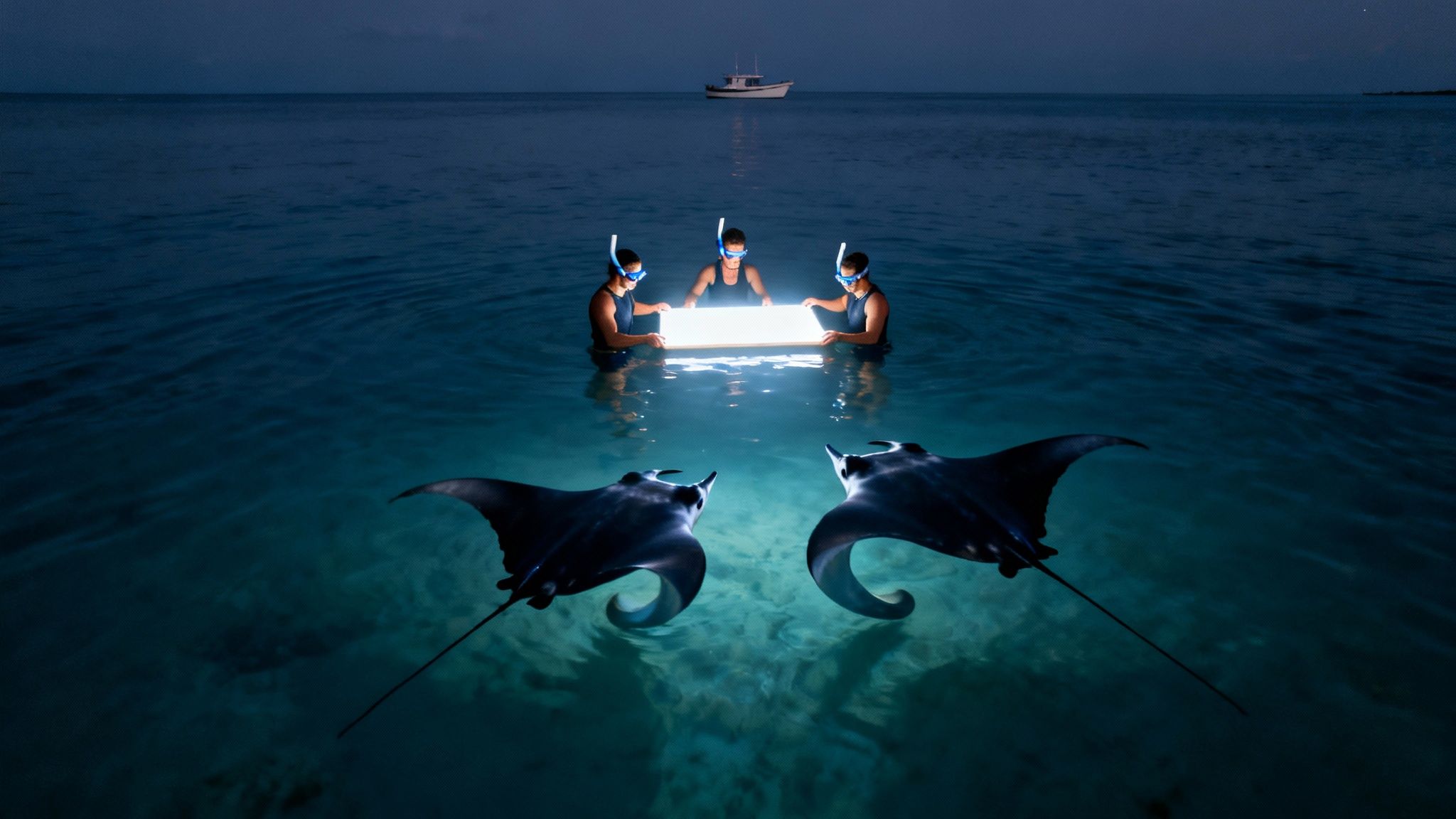
Once we're at the viewing site, the crew gets to work setting up a big, floating light board. This board is the secret sauce. It acts like a giant underwater campfire, lighting up the water to attract swarms of plankton. For the mantas, it's an all-you-can-eat buffet they just can't resist.
Entering the Underwater Theater
When it's go-time, you'll slip into the warm, dark ocean. Don't worry, you won't be swimming around on your own. You'll hold onto the custom-built light board, which keeps you perfectly afloat and stable without any effort. This setup lets you just relax and be a spectator, floating comfortably right on the surface.
And then the magic happens. Drawn in by the plankton, the mantas rise up from the deep. They glide gracefully right into the light, performing these mesmerizing barrel rolls and loops just inches beneath you. It’s a silent, awe-inspiring ballet, and you have the best seat in the house.
The whole experience is incredibly peaceful. The only thing you'll hear is the gentle sound of your own breathing through your snorkel as these gentle giants dance in the light beams. You're simply a witness to nature doing its thing, pure and unfiltered.
For a lot of people, this is way more than just a snorkel—it's a deeply moving experience. The sheer size and grace of these animals, so close you could almost touch them, forges a powerful connection to the ocean that sticks with you long after you're back on shore.
Options for Every Ocean Enthusiast
The classic night snorkel is the most popular way to see the show, and for good reason. It's accessible to almost everyone. If you’re a certified scuba diver, though, you have another incredible option. You can experience the whole thing from below, looking up as the mantas swoop and glide right over your head.
It’s a different perspective, but just as mind-blowing. If that sounds like your kind of adventure, check out the manta ray diving tour page from Kona Honu Divers. They are widely known as the top rated & most reviewed diving company in both Hawaii and the Pacific Ocean, so you know you're in good hands.
No matter which way you choose to see them, the encounter is something you'll never forget. And if you're looking for more incredible adventures on the Big Island, whether it's exploring different reefs or seeing other marine life, be sure to check out our other guides on the amazing snorkel tours on the Big Island of Hawaii.
How to Be a Respectful Underwater Observer
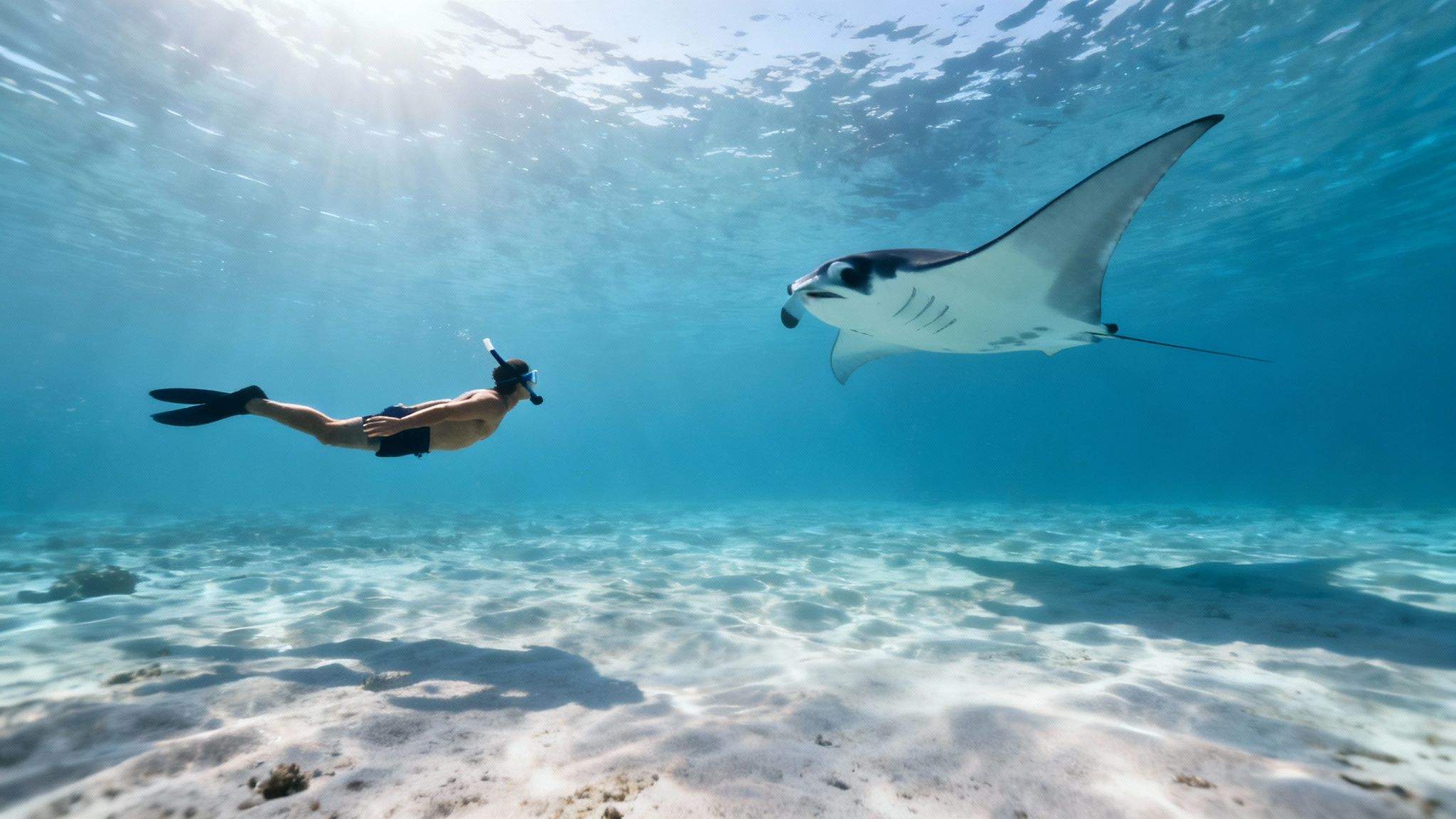
Seeing a manta ray swimming underwater isn't just an activity; it's a privilege. We're stepping into their world, and making sure these encounters stay magical for years to come is all about mutual respect.
The golden rule is simple: passive observation. Think of yourself as a guest invited to an incredible dinner party. Your job is to watch the show, not become part of it.
Your guide will walk you through all the specifics, but every rule is designed to keep both you and the mantas safe and comfortable. By following their lead, you're doing more than just snorkeling—you're actively helping preserve one of the world's most amazing wildlife experiences.
The Dos and Don'ts of Manta Ray Etiquette
It all boils down to a few key rules. If you remember these, you'll have a better, safer, and more awe-inspiring time. The goal is to be a quiet, still observer, letting the mantas come to you while they focus on their plankton buffet.
Here are the essentials for a great encounter:
- Do Not Touch: This is the big one. Manta rays have a special mucus coating on their skin that acts like an immune system, protecting them from nasty infections. Touching them can strip this layer off and make them vulnerable to disease.
- Do Not Chase or Block: Never, ever swim after a manta or get in its way. Chasing them causes a ton of stress and can scare them right out of their feeding zone, which ruins the experience for everyone else in the water.
- Stay Horizontal: Keep your body flat on the surface like a log. Dangling your feet or trying to kick down can lead to an accidental bump as a manta glides just inches beneath you. Just float calmly and enjoy the view.
- Listen to Your Guide: These folks live and breathe manta behavior. They know what they're doing. Following their instructions is the single best way to ensure your tour is smooth, fun, and respectful.
The core idea is to let the mantas control the entire interaction. When you're still and predictable, you just become part of the scenery. That's when they feel comfortable enough to put on their incredible feeding ballet, sometimes just inches away.
Why Being Respectful Matters
This isn't just about being polite; it has a massive real-world impact. When manta rays feel safe and unthreatened around people, their populations can actually recover and thrive. This isn't just wishful thinking—it's a principle called "ocean optimism," and we have the proof.
A groundbreaking 14-year study in Ecuador identified over 2,800 individual mantas just by observing them. This research led to a jaw-dropping estimate of more than 22,000 mantas in the waters between Ecuador and Peru, making it the largest known population on the entire planet.
These incredible numbers, especially when compared to dwindling populations elsewhere, show what happens when we get it right. Protected hotspots and positive human interactions allow these magnificent animals to flourish. You can read the full research on this massive manta ray population to learn more about this conservation success story.
Why Hawaii Is a Beacon of Hope for Manta Rays
Seeing a manta ray swimming underwater in Kona is more than just another incredible adventure—it’s a powerful lesson in what’s possible with conservation. While these gentle giants face immense pressure in oceans worldwide, Hawaii stands out as a unique sanctuary where they aren’t just surviving, but actually thriving. And this success story is no accident.
It's the direct result of some seriously forward-thinking conservation, most importantly the landmark 2009 state law that made it illegal to capture, kill, or even harass manta rays in Hawaiian waters. That single act transformed the Kona coast into a protected haven. It allowed our local, non-migratory reef manta population to flourish, free from the threats that have devastated them nearly everywhere else. When you choose to see them here, you're witnessing what happens when a community fiercely protects its ecosystem.
A Stark Contrast to a Global Crisis
The situation in Hawaii really is a bright spot against a grim global backdrop. In so many other parts of the world, manta populations have faced catastrophic crashes. We’re talking about regionally documented declines of up to 99%, from the giant mantas off Costa Rica to Mozambique's staggering 81-99% drop in just two decades. These losses are almost entirely driven by the unsustainable demand for their gill plates in traditional medicine. You can learn more about these global population declines on the Manta Trust website.
Hawaii’s booming manta aggregations are a world away from that reality, which highlights just how special and fragile this experience truly is. The reliable, nightly feeding spectacle we get to enjoy in Kona is a testament to what’s possible when conservation comes first.
Your Role in This Success Story
Your trip here is a chance to do more than just watch from the sidelines; it's an opportunity to actively support this thriving ecosystem. Every single snorkel tour booked with a responsible operator sends a clear message: these magnificent animals are worth far more alive than they are to any fishery. You're directly contributing to a local economy built around preservation, not exploitation.
So consider this your invitation to connect with one of the ocean's most intelligent and graceful creatures, right in a place that has committed to their protection. Come be a part of this amazing conservation success story and witness the magic for yourself.
Your Manta Ray Snorkel Questions, Answered
Even when you're buzzing with excitement, it's totally normal to have a few questions before your first big manta ray adventure. Getting the answers sorted out beforehand means you can just relax and soak in the magic when the time comes. Here are some of the most common things people ask us.
Is It Safe to Swim with Manta Rays?
Absolutely. There's a reason we call them "gentle giants." Manta rays are filter feeders, meaning their diet consists of tiny plankton, and they have zero interest in people.
Unlike their stingray cousins, mantas have no teeth, no barbs, and no stingers. When you're on a professionally guided tour, the whole experience is designed for passive observation. We keep a safe, respectful distance that's comfortable for both you and these magnificent animals.
A lot of people worry about stingers, but that's a common mix-up. We break down exactly why you don't need to worry in our detailed article explaining if manta rays can sting you.
What Is the Best Time of Year to See Manta Rays in Kona?
One of the truly amazing things about Kona is that you can have incredible manta encounters all year round. Our local reef manta population doesn’t migrate, and their food source—plankton—is always here.
This means you have a fantastic shot at an unforgettable night any time you visit. That said, the summer months often bring exceptionally calm seas, which can make the experience even more serene.
Do I Need to Be a Strong Swimmer?
Not at all. You don’t need to be an expert swimmer to join this tour.
Everyone holds onto a large, custom-built light board that floats right on the surface. This board is incredibly stable and gives you all the support you need, so you can just float comfortably without any swimming required. It's a design that makes the tour accessible and fun for just about everyone.
Ready to see this underwater ballet for yourself? Kona Snorkel Trips runs the highest-rated and most-reviewed manta ray night snorkel on the Big Island. Our expert guides are obsessed with giving you a safe, awe-inspiring experience that you'll be talking about for years. Book your tour today and get ready for a magical night with Kona’s gentle giants.