
Manta Ray Swimming Underwater A Guide To Gentle Giants
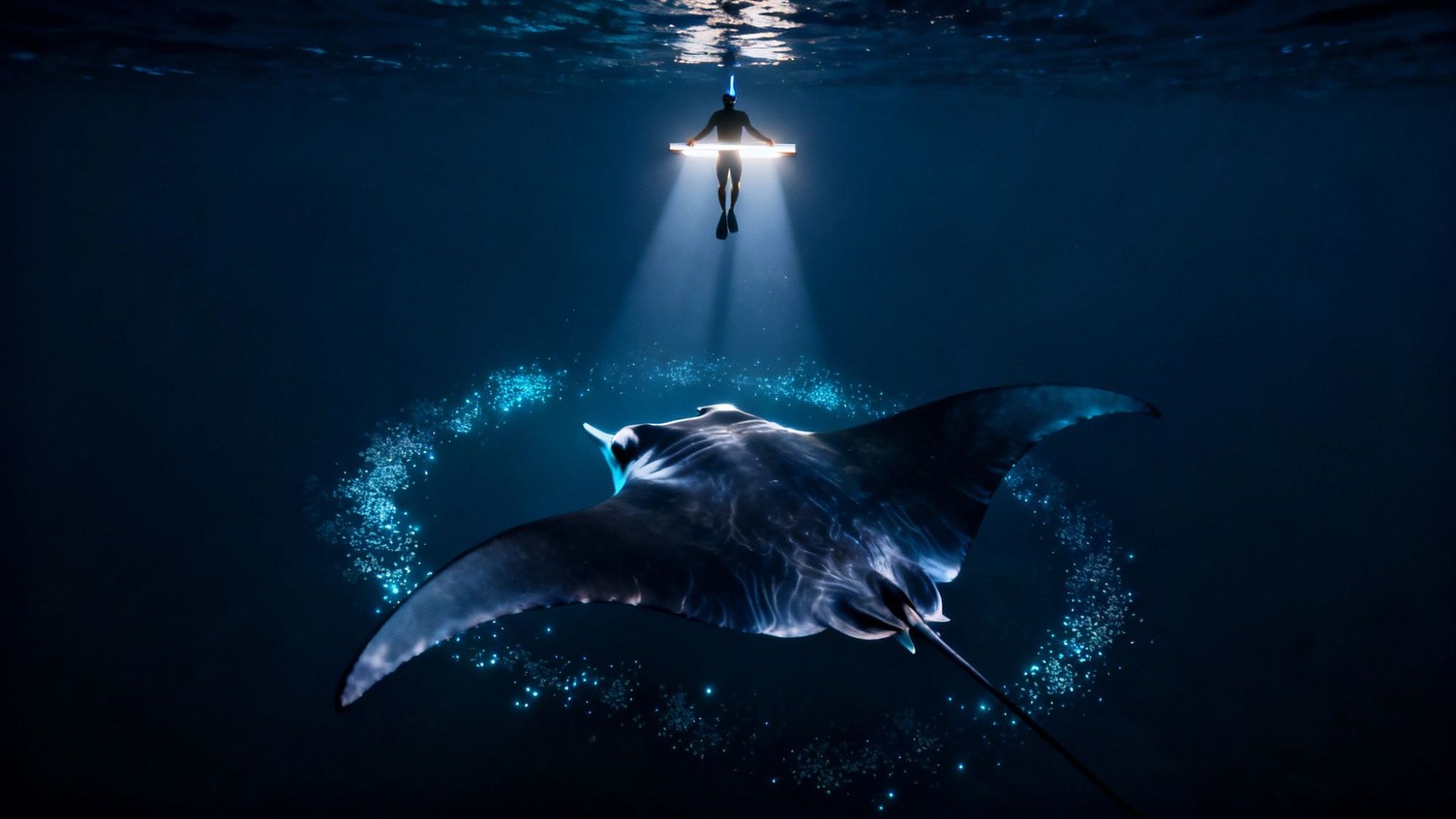
Imagine floating in the quiet, dark waters of the Pacific, and a shadow the size of a small car glides silently beneath you. This isn't a scene from a movie—it's the real-life magic of swimming with manta rays, an experience we've perfected right here in Kona, Hawaii.
This guide is your all-access pass to making that encounter safe, respectful, and absolutely unforgettable.
The Underwater Ballet of Kona's Gentle Giants
We're going to share insights drawn directly from our experience as Hawaii's top-rated and most-reviewed snorkel company, Kona Snorkel Trips. We've taken thousands of people out on this adventure, and we know what it takes to connect you with one of the ocean's most graceful inhabitants. But don't just take our word for it—see what fellow adventurers are saying.
This isn't about just looking at marine life; it’s about becoming a quiet guest at their nightly underwater ballet.
Why This Experience Is So Unique
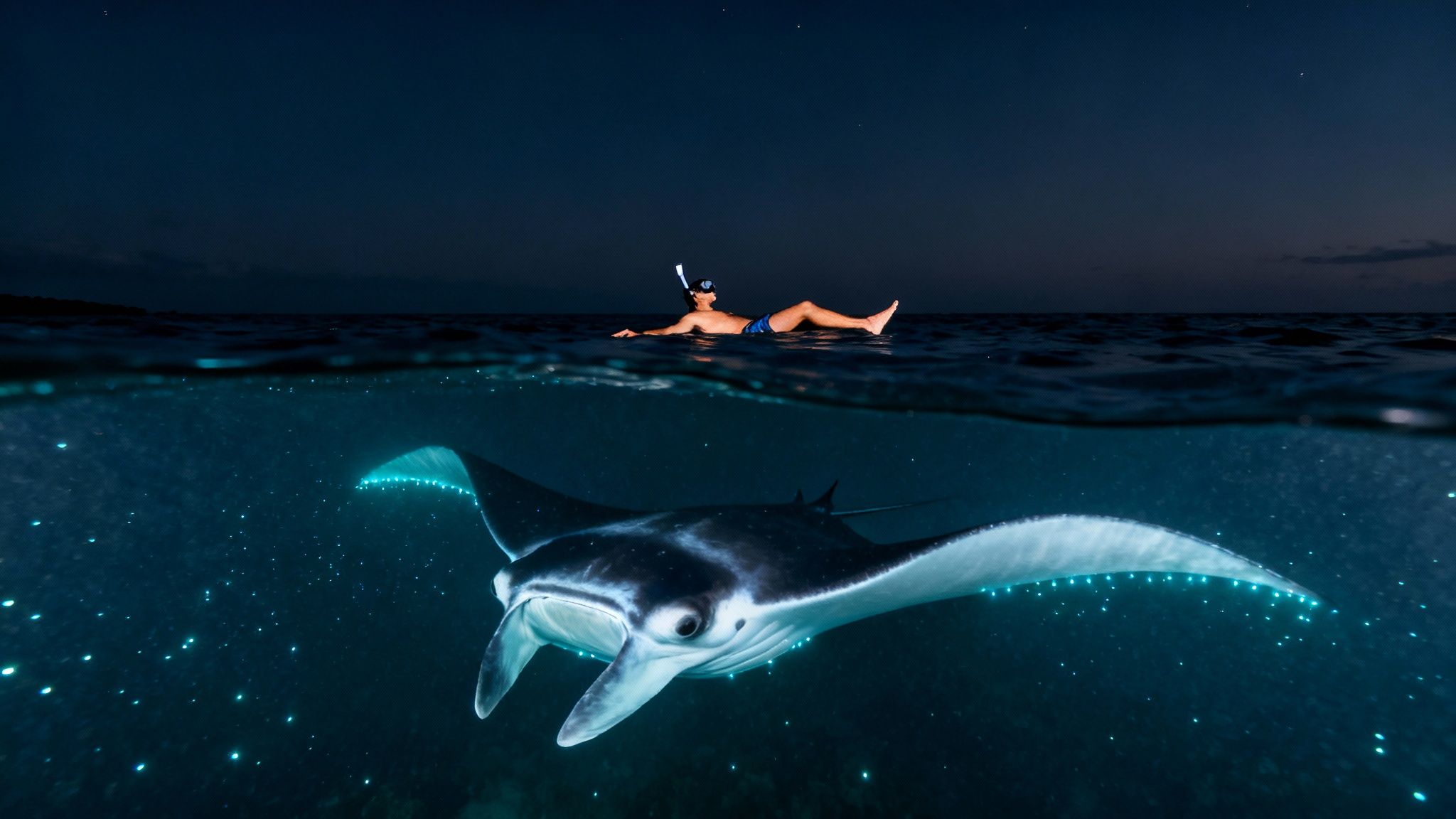
Picture this: You’re floating in the warm, inky waters off the Kona Coast after sunset. Suddenly, a colossal shadow with a wingspan of up to 23 feet emerges from the deep, performing graceful somersaults just inches away from you. This is the heart of Kona's world-famous manta ray night snorkel.
These magnificent creatures have been globally endangered since 2019, according to the IUCN. Manta rays reproduce very slowly—a female carries a single pup for 12-15 months and only gives birth every 2-5 years. It then takes another 10-15 years for that pup to mature. For a deeper dive into the challenges they face, MantaRayAdvocates.com has some excellent information.
But here in Hawaii, there's a ray of hope. Thanks to protected waters and no-fishing zones, our local manta population is thriving. This conservation success story is why 90% of our guests have a successful sighting on our night tours, creating memories that truly last a lifetime.
What Makes Manta Rays So Gentle
Despite their intimidating size, manta rays are true gentle giants. They pose absolutely no threat to humans. They don't have stingers, barbs, or teeth designed for anything other than filtering tiny zooplankton from the water.
Their peaceful nature is what allows for such incredible, up-close interactions. Mantas are curious and intelligent animals. They're not coming to see you, but they are drawn to the lights we use, which attract their food source.
The secret to an amazing encounter is simply being a passive observer. By holding onto our light board and staying calm, you become part of the scenery. This allows the mantas to feel safe and comfortable as they feed, giving you a front-row seat to their elegant dance. Understanding their behavior is a key part of the experience, which we cover in our guide on what to expect during a Manta Ray Night Snorkel Tour.
Getting Ready for Your Manta Ray Swim
A little bit of prep work is what turns a good manta ray tour into an absolutely unforgettable one. The idea is to show up at the boat feeling calm, comfortable, and ready to be amazed, not fumbling around for something you forgot.
When you're about to have an incredible manta ray swimming underwater encounter, thinking ahead means you can just relax and soak it all in.
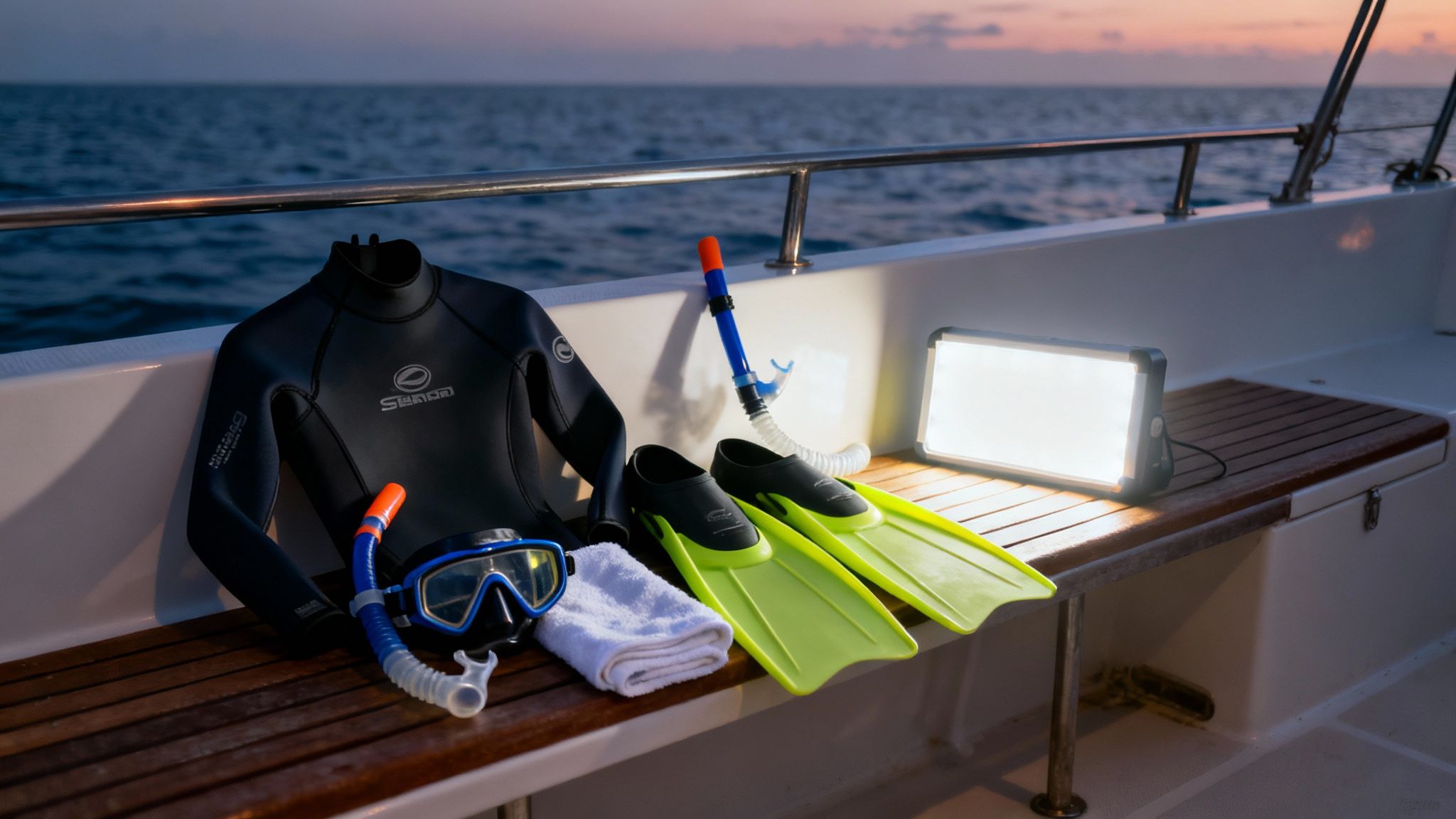
Honestly, the practical side is simple. The easiest thing to do is wear your swimsuit under your clothes to the harbor. It just makes gearing up on the boat so much faster.
What to Pack for Your Tour
You really don’t need to bring a ton of stuff, but a few small things can make a huge difference in your comfort level after the swim. Trust me, your future self will thank you.
- A Towel: This one’s a no-brainer for drying off once you’re back on the boat.
- Dry Clothes: Having something warm and dry to pull on for the ride back to the harbor is a game-changer. A hoodie or a light jacket is perfect.
- Reef-Safe Sunscreen: If your tour leaves before the sun goes down, make sure you've applied reef-safe sunscreen. It protects your skin and helps keep Hawaii's fragile coral reefs healthy.
One of the biggest reliefs for our guests is finding out they don't have to haul their own snorkel gear around. A professional outfit like Kona Snorkel Trips has you covered with everything you need.
We provide high-quality, sanitized masks, snorkels, and fins. More importantly, we supply wetsuit tops to give you that essential bit of warmth and extra buoyancy, which makes floating on the surface effortless. For more ideas, you can always check out our guide on what to wear for snorkeling at https://konasnorkeltrips.com/blog/what-to-wear-for-snorkeling/.
Your Manta Ray Encounter Checklist
To break it down even further, here’s a handy checklist that shows what you should pack versus what we'll have waiting for you.
| Item | What You Should Bring | Provided by Kona Snorkel Trips |
|---|---|---|
| Swimsuit | Arrive wearing it under your clothes | No |
| Towel & Dry Clothes | For comfort after your swim | No |
| Water & Snacks | Included on our tours | Yes |
| Snorkel Gear | Mask, snorkel, and fins | Yes |
| Wetsuit Top | For warmth and buoyancy | Yes |
| Flotation Aids | Noodle or light board | Yes |
| Expert Guidance | In-water guides ensure safety | Yes |
Packing light really is the way to go. Focus on post-snorkel comfort, and let us handle the in-water equipment.
Getting in the Right Headspace
It’s completely normal to feel a mix of pure excitement and maybe a few jitters before your tour. You're about to slip into the ocean at night to see giant wild animals up close—that’s a big deal!
This is exactly why we have a thorough pre-tour briefing. Our guides are total manta nerds and fantastic at explaining everything. They’ll share mind-blowing facts about manta biology, go over the "rules of engagement," and walk you through every single step of the experience.
Key Takeaway: Pay close attention during the pre-tour safety briefing. It’s designed to give you the confidence to relax in the water, so you can just float and watch the incredible underwater ballet unfold.
This briefing covers everything from how to safely get in and out of the water to how to hold onto the light board. By the time you get in the ocean, you'll feel completely prepared, secure, and ready to witness one of the most majestic wildlife encounters on the planet.
Best Practices for Safe and Respectful Manta Encounters
Sharing the ocean with manta rays is an incredible privilege, and it comes with the responsibility of making sure the encounter is as safe for them as it is for us. The entire experience is built around one simple principle: passive observation. You're a guest in their underwater dining room, and your only job is to watch the magnificent show they put on.
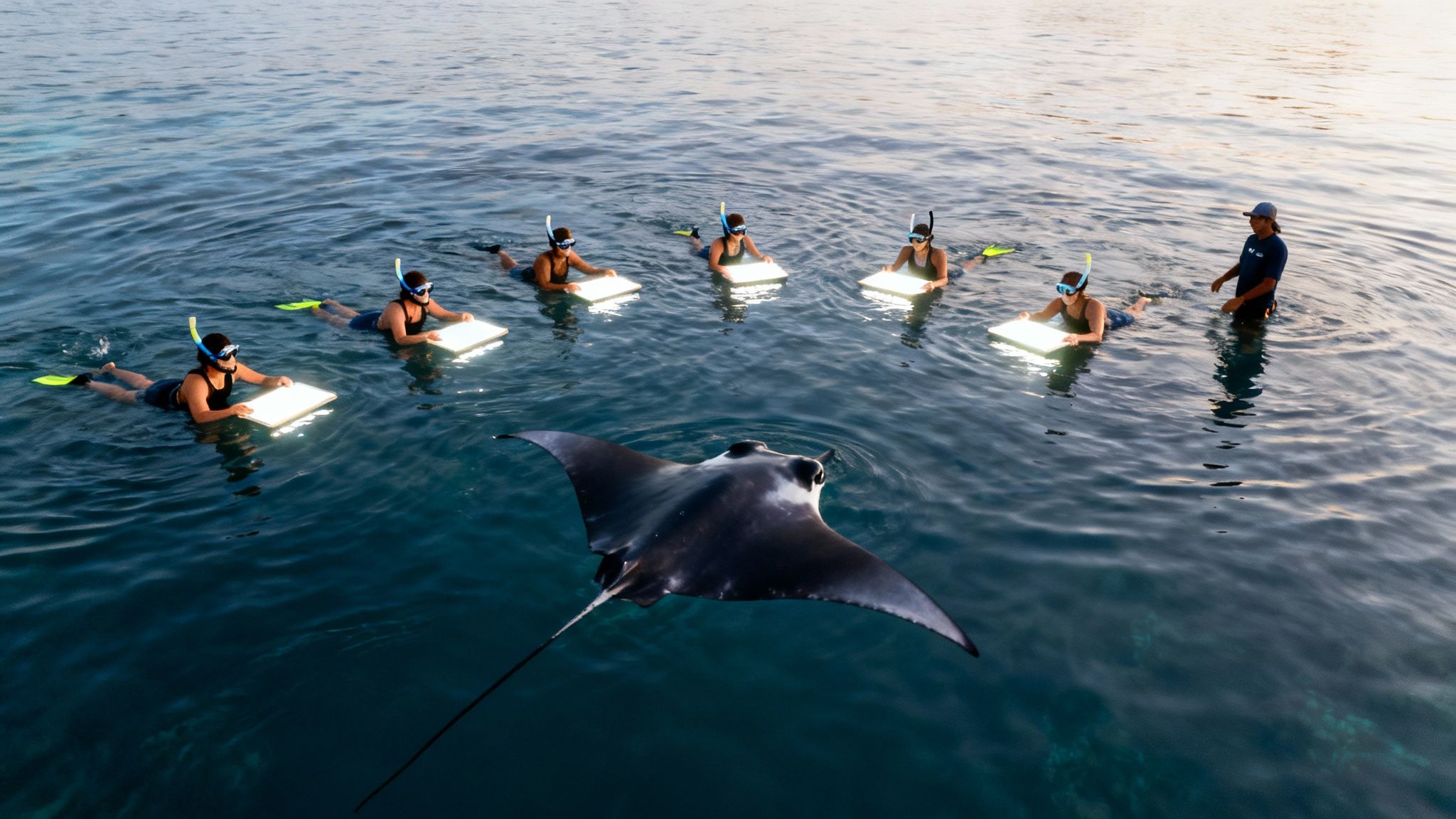
This means you’ll be floating calmly on the surface, holding onto a specially designed light board. Forget about swimming around; the board gives you all the stability you need and a perfect vantage point. Just relax, let the current and your guides get you into position, and the mantas will come to you.
The Golden Rules of Manta Interaction
To keep every manta ray swimming underwater encounter positive for both people and the animals, a few non-negotiable rules are always in effect. These aren't just polite suggestions—they are critical guidelines that protect these gentle giants.
- No Touching: Manta rays are covered in a protective mucus layer. Even a light touch can rub this layer off, leaving them vulnerable to skin infections and parasites. Think of it as their immune system—we have to leave it intact.
- No Chasing: Chasing after a manta will only scare it away. They are wild animals, and sudden, aggressive movements signal a threat. The best encounters happen when you stay still and let their own curiosity bring them closer.
- No Diving Down: During a night snorkel, it is absolutely essential to stay on the surface. Diving down towards the mantas disrupts their feeding and causes them stress. It's also disorienting in the dark and unsafe for you and everyone else in the water.
These rules exist for a very good reason. Following them ensures the mantas continue to see the snorkel sites as a safe, reliable place to eat, which is the foundation of this entire sustainable tourism model.
Expert Insight: Remember, the less you move, the closer they'll come. When you're still and calm, you become just another predictable part of the environment, allowing the mantas to glide inches away from you without any fear.
What to Do If a Manta Swims Right at You
It’s a common—and heart-pounding—scenario: a manta ray, locked onto the plankton stream, heads directly for you. Your first instinct might be to pull back or swim away, but the best thing you can do is the exact opposite.
Stay perfectly still. Keep your arms and legs tucked in close to your body or flat against the light board. These mantas are expert navigators and are not going to collide with you. They will gracefully dip, dive, or swerve around you at the very last second. Honestly, this is when you get the most breathtaking views.
Your in-water guides are there to help, too. They are constantly monitoring the situation, acting as guardians for both you and the mantas. They make sure the group stays together and that everyone follows the rules, creating a safe and controlled space for this incredible wild encounter.
The Bigger Picture: Your Role in Manta Conservation
Believe it or not, your participation in a respectful tour has a direct, positive impact on manta ray conservation. While global manta populations are dwindling, key hotspots like Hawaii's Kona Coast offer a beacon of hope. Reef mantas are listed as 'Vulnerable' by the IUCN, and oceanic mantas have been labeled 'Endangered' since 2019.
But here in Kona, the story is different. The core group of reef mantas studied from 2009-2014 was a tight-knit community of about 30 rays, with each one spotted over 50 times annually! This consistency leads to incredible sighting rates—up to 90% on guided night snorkels.
Threats like industrial fishing bycatch and the market for their gill plates are very real elsewhere. But in protected zones like Hawaii, where tour operators and visitors work together, populations are stabilizing and even growing. To understand the challenges these animals face worldwide, check out the great information on the global connection between manta ray populations at Save Our Seas.
By choosing a responsible tour, you contribute to a local economy that values living mantas far more than they could ever be worth to a fishery. You become part of the solution.
Tips for Taking Photos of Manta Rays Underwater
Trying to capture the magic of a manta ray swimming underwater at night is an experience in itself. It’s also incredibly challenging. You're dealing with low light, animals in constant motion, and the sheer size of these creatures. But with a few tricks up your sleeve, you can absolutely walk away with some incredible shots.
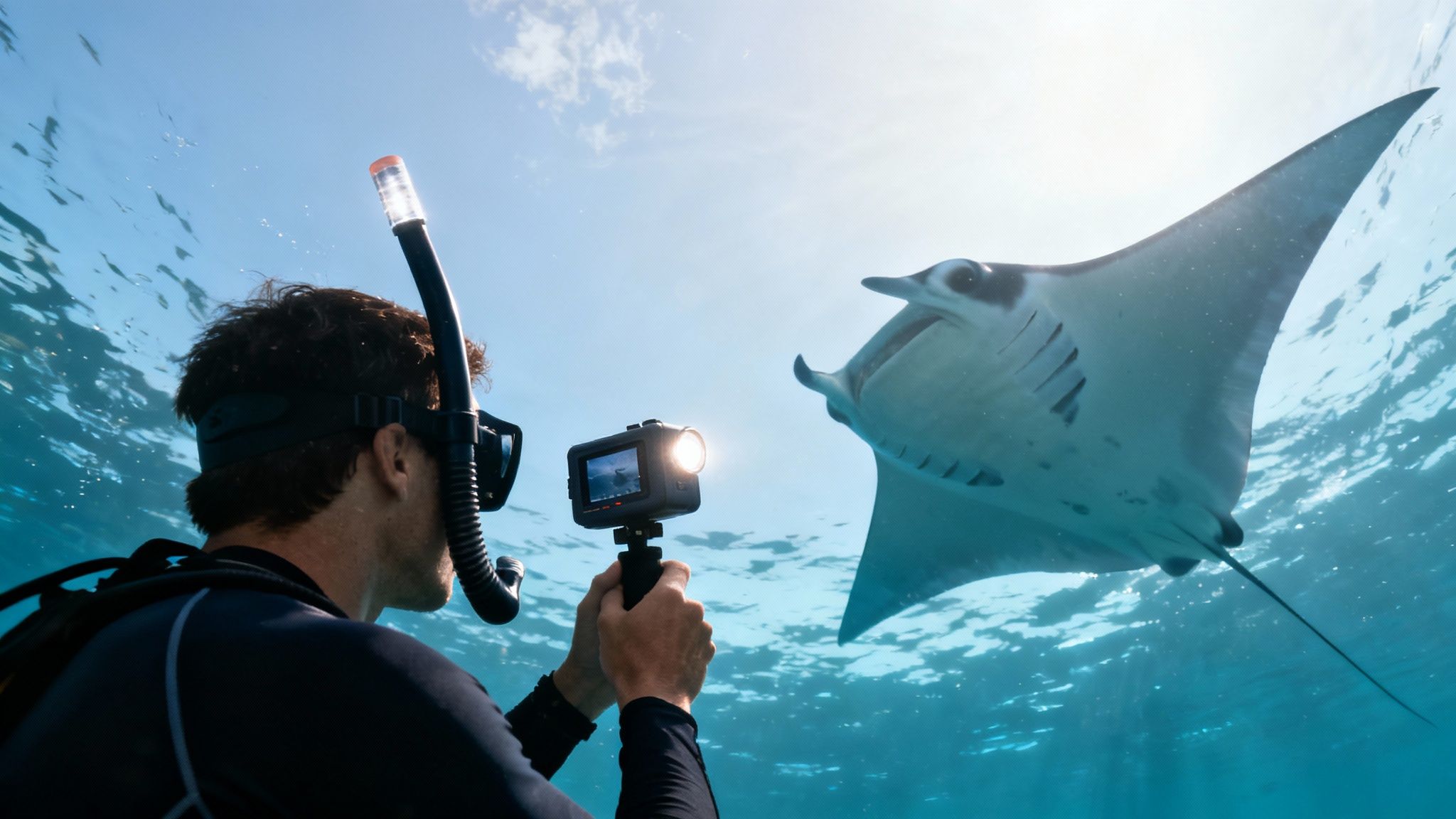
The first thing to do is get real about your gear. Whether you're using a professional rig, a GoPro, or just your phone in a waterproof case, the fundamentals don't change: get close, stay as still as possible, and make the most of the light you have.
Getting Your Camera Ready for the Dark
This isn't a point-and-shoot situation. Taking a few minutes to dial in your settings before you even hit the water will make a huge difference between a blurry mess and a keeper.
- Think Wide: A wide-angle lens is your best asset out there. It lets you get closer to the mantas without chopping off their massive wingspans, which also means less dark, murky water between your lens and the animal.
- Shoot Video: Honestly, for most action cams and phones, video is your best bet in the dark. You’ll get a much cleaner result, and you can always pull a great still frame from the footage later.
- Bump the ISO (but not too much): Cranking up the ISO makes your camera's sensor more sensitive to light—a must for night snorkeling. Just be careful. If you push it too high, your images will get grainy and "noisy." Find that sweet spot where things are bright enough without looking like a sandstorm.
Whatever you do, don't use your camera's built-in flash. The sudden, harsh light can spook the mantas, and it almost always creates awful backscatter—that's when all the tiny plankton particles in the water light up like a snow globe, ruining your shot.
Pro Tip: If you're serious about your photos, a continuous video light is the way to go. It gives you a steady beam of light that won't startle the mantas and actually helps your camera focus in the dark, unlike a jarring flash.
How to Frame a Great Manta Shot
A good photo tells a story. As you’re floating there, think beyond just getting a picture of a manta. Try to show the whole scene: the bright glow from the light board, the silhouettes of other snorkelers, the dense clouds of plankton. That’s what captures the feeling of being there.
Stability is everything. Brace your camera against the light board you’re holding onto, or tuck your elbows in tight to your body. This is a game-changer for video, because nobody wants to watch shaky footage. Mastering how to take underwater pictures is a skill that turns a good memory into a great photo.
Don't Forget to Look Up
This is the most important tip I can give you: put the camera down. It is so easy to get completely lost behind a screen, obsessed with getting the perfect shot, that you miss the actual experience.
No picture will ever do justice to the feeling of a 1,000-pound animal gliding silently just inches from your chest. Take plenty of time to just watch, to be present, and to soak it all in. That's the memory that will stick with you long after the photos are posted.
Choosing Your Perfect Manta Ray Adventure
Picking the right tour operator can make or break your manta ray experience. It’s the difference between a good trip and an absolutely unforgettable one, especially when you’re talking about something as unique as swimming with these gentle giants at night. The quality of the guide, the size of the group, and even the gear they use all play a huge role in how your night unfolds. Honestly, going with a professionally guided tour is, without a doubt, the safest and most reliable way to see this incredible natural show.
We designed our signature Manta Ray Night Snorkel at Kona Snorkel Trips to be a premium, more personal experience. Keeping our groups small means you get more attention from the crew, right from the moment you step on the boat. Our crew isn't just there to keep you safe; they're passionate about the mantas and share fascinating stories and facts that turn a simple snorkel into a true educational journey.
What Really Makes a Great Tour?
One piece of gear that makes a massive difference is the light board. We use a custom-built, high-powered light board that's specifically designed to attract huge clouds of plankton—the mantas' favorite food. More plankton means more manta action, giving you a front-row seat to their amazing feeding ballet.
It's this focus on the little details that makes the whole thing so memorable. We believe it’s not just about seeing mantas; it's about seeing them in a way that’s comfortable, safe, and respectful to the animals themselves.
Ready to see it for yourself?
Finding the Right Fit for Your Style
While we're proud of the experience we offer, it's always good to know what else is out there. For snorkelers looking for another fantastic option, Manta Ray Night Snorkel Hawaii also runs exceptional, highly-regarded tours.
Now, if you're a certified scuba diver, you might be looking for a completely different perspective. Instead of floating on the surface, divers get to settle on the sandy ocean floor and watch the mantas soar and loop right above their heads. It's a truly breathtaking view.
For that unique underwater angle, you’ll want to book a trip with Kona Honu Divers. They are the top-rated and most-reviewed dive company in not just Hawaii, but the entire Pacific Ocean, so you know you're in expert hands.
Why Kona Is a Global Manta Hotspot
The manta encounters we have here in Kona are truly special, even on a global scale. To give you some perspective, scientists recently confirmed that the world's largest known population of giant oceanic manta rays—over 22,000 individuals—gathers off the coast of Ecuador. That staggering number really highlights why the intimate and reliable sightings we get in Kona feel so magical.
While Ecuador has sheer numbers spread across a massive area, Kona offers something different: predictable, up-close encounters in shallow, accessible reefs at night. You aren't just spotting them from a distance; you're sharing the water with them as they perform barrel-rolls sometimes just inches away.
A Global Conservation Note: Despite safe havens like Kona, oceanic manta rays are in serious trouble. They were tragically up-listed to Endangered on the IUCN Red List in 2019 and gained protection under the U.S. Endangered Species Act in 2018. The primary threats are being accidentally caught in fishing nets (bycatch) and being hunted for their gill plates.
This makes the work we do in protected areas like Kona even more critical. When you support responsible tourism here, you can feel good knowing your visit contributes to the preservation of these majestic animals. You can learn more about the groundbreaking research on this massive manta ray population from the Marine Megafauna Foundation.
Making Your Decision
Ultimately, the perfect adventure comes down to what you're looking for.
- Want an intimate, educational, and high-service snorkel? A small-group tour like the one we run at Kona Snorkel Trips is your best bet.
- A certified diver craving a bottom-up view? A specialized dive trip with a top-rated operator like Kona Honu Divers is the way to go.
- Just exploring all the excellent options? Researching other well-regarded companies like Manta Ray Night Snorkel Hawaii will give you some great alternatives.
No matter which path you take, booking with a reputable operator ensures you’re part of a sustainable practice that puts the health and safety of Kona's beloved manta rays first. Your choice helps keep this incredible underwater ballet alive for generations to come.
Answering Your Questions About the Manta Ray Night Snorkel
It's totally normal to have questions before you jump into the water with giant, graceful sea creatures. In fact, we encourage it! Getting the details ironed out beforehand means you can just relax and soak in the experience once you're out on the water.
Let's go over some of the most common things people ask us, so you can feel completely ready for your big night.
Is It Really Safe to Swim with Manta Rays?
This is easily the #1 question we get, and the answer is a big, confident yes. Manta rays are known as "gentle giants" for a reason—they are completely harmless to people.
They are filter feeders, which means they're only interested in the tiniest organisms in the water called zooplankton. They simply don't have the tools or the temperament to be a threat.
- No Stinger: This is a big one. Unlike their cousins, the stingrays, manta rays have no stinger or barb on their tail.
- No Biting Teeth: They have a small band of teeth on their lower jaw, but they're not for biting or defense. They’re used during mating rituals.
- A Gentle Nature: Manta rays are naturally curious and peaceful. If they swoop close to you, it’s only because they're focused on the plankton buffet, not because they're being aggressive.
Our golden rule is simple: look, but don't touch. As long as you let the mantas do their thing, it's one of the safest and most awe-inspiring wildlife encounters you can imagine. Plus, our guides are right there in the water with you the whole time to make sure everyone stays safe and comfortable.
What’s the Best Time of Year to See Mantas in Kona?
Here’s some fantastic news: the manta ray snorkel in Kona is incredible all year round. Our local population of reef mantas doesn't migrate. They hang out here on the Kona coast because their food source—plankton—is consistently available throughout the year.
That means there’s really no "off-season." Whether you're planning a trip in the middle of summer or escaping the cold in winter, your chances of seeing them are excellent.
Fun Fact: Reputable tour operators here in Kona, including us, have a sighting success rate of over 90% throughout the entire year. That makes this one of the most reliable wildlife encounters on the planet.
Of course, these are wild animals, so a sighting is never 100% guaranteed. But the consistency here in Kona is just phenomenal.
Do I Have to Be a Strong Swimmer?
Not at all. You need to be comfortable in the water and have basic swimming skills, but you definitely don't need to be a triathlete. The experience is designed to be very low-energy.
Here’s the setup:
- Wetsuits Help You Float: We provide wetsuit tops, which add a lot of natural buoyancy. Floating is easy.
- You Hold Onto a Light Board: You’ll spend the entire time holding onto a large, stable, floating board that has lights shining down. You don’t have to tread water or swim around on your own.
- We Choose Calm Waters: We operate in protected bays where the conditions are typically very calm and gentle.
The goal is for you to just relax, float, and watch the incredible ballet happening right below you. If you're comfortable putting your face in the water while in the ocean, you're good to go.
Why Do the Manta Rays Only Show Up at Night?
This is where the magic really happens. The whole encounter is built around a simple, brilliant observation about the food chain that tour operators figured out decades ago.
It works like this:
- After sunset, we head out to one of the designated snorkel sites.
- We shine powerful, eco-friendly lights into the dark water from our boat and from your floating light board.
- These bright lights attract huge clouds of zooplankton, the microscopic critters manta rays love to eat.
- The mantas, being incredibly smart animals, have learned that these lights mean one thing: an easy, all-you-can-eat dinner buffet.
They show up to feast, gliding and barrel-rolling through the clouds of plankton to scoop up as much food as they can. You're basically getting a front-row seat to their natural feeding behavior, all thanks to a little bit of light. It's a perfect example of a sustainable, respectful way to interact with nature.