
Manta Ray Swimming Underwater: The Ultimate Guide to Safe Encounters
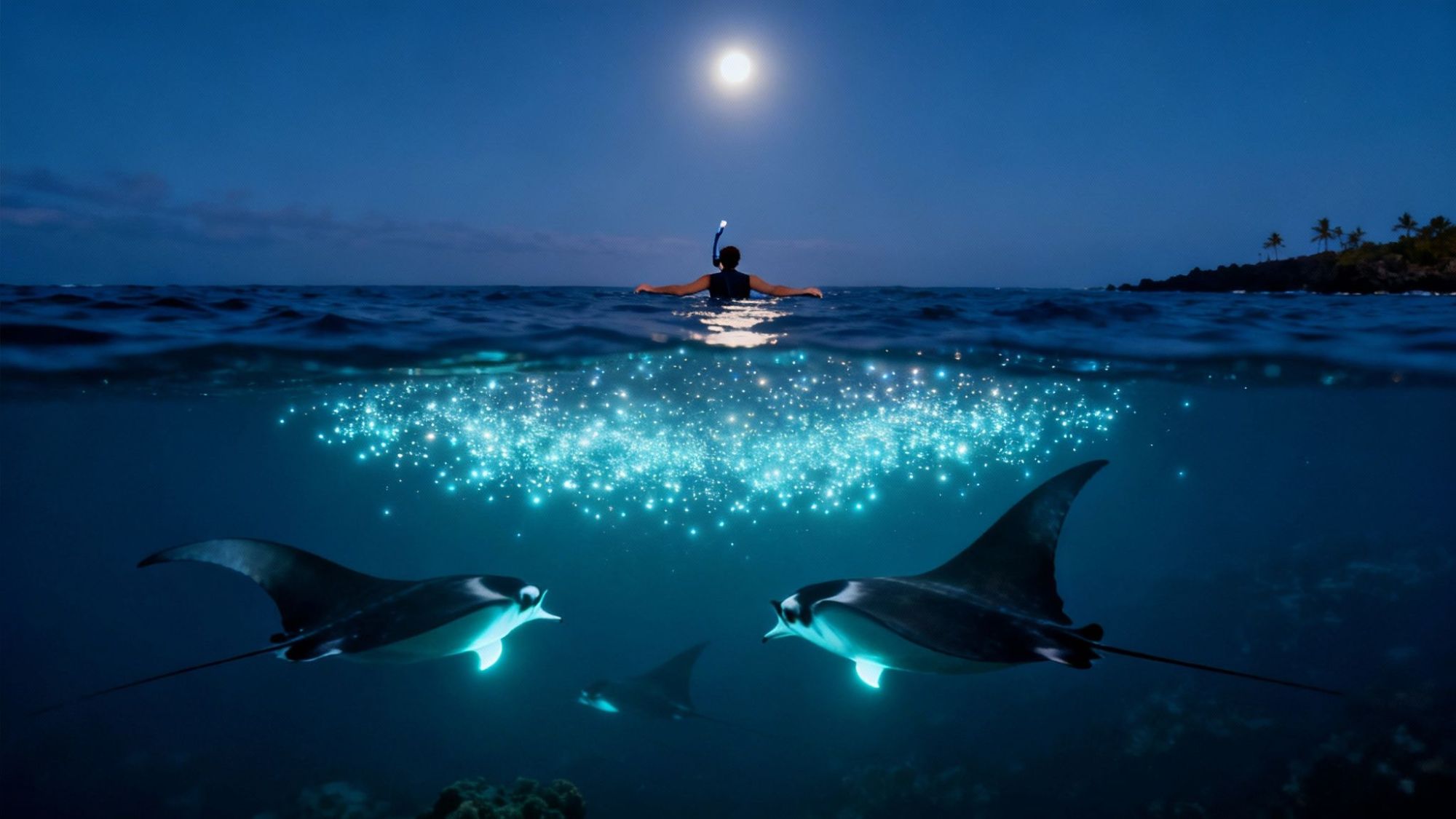
Picture this: you're floating weightlessly in the dark, silent ocean. Colossal shadows with wingspans wider than a car glide beneath you in a mesmerizing underwater ballet. This is the heart of the Kona manta ray swim, a profound experience that connects you with some of the ocean's most intelligent and graceful inhabitants.
Your First Encounter with Ocean Giants
This guide is your deep dive into everything you need to know about these gentle giants, from their fascinating lives to how you can safely witness their nightly feeding ritual. We'll show you exactly why Kona, Hawaii, is celebrated worldwide as the most reliable place on Earth for this unique encounter.
And to make sure you have the absolute best experience, we’ll introduce you to Kona Snorkel Trips—Hawaii's top-rated and most-reviewed snorkel company. They ensure your adventure is every bit as magical as the creatures you're there to see.
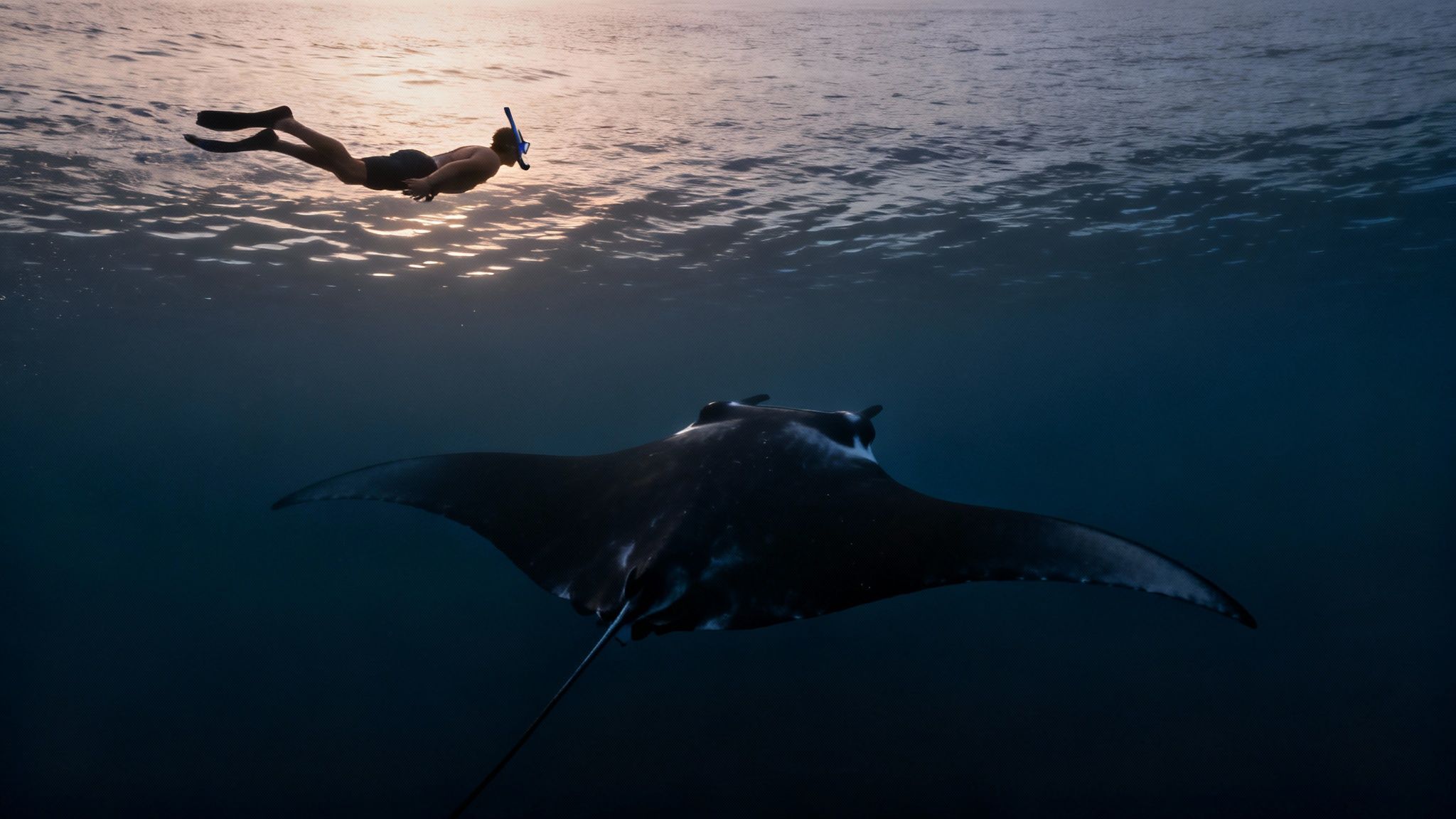
Setting the Scene for an Unforgettable Night
The magic starts when the sun dips below the Pacific, lighting up the Kona coast. You'll hop aboard a boat for a short, scenic ride to one of the world-famous manta viewing sites—a special place where these gentle giants gather almost every single night to feed.
Once the boat is anchored, it's time to slip into the calm, dark water. The centerpiece of the whole experience is a custom-built light board. You'll float comfortably on the surface, holding onto this board as it works its magic. It's an ingenious setup that serves two key purposes:
- It’s a plankton magnet: The bright lights pull in clouds of microscopic zooplankton, which is the main course on a manta ray's menu.
- It creates a front-row seat: This plankton buffet brings the mantas directly beneath you, giving you the perfect, non-intrusive viewpoint to watch their incredible feeding ballet unfold.
Witnessing the Underwater Ballet
As you float, the first shadows emerge from the deep. The manta rays glide effortlessly, performing graceful barrel rolls and loops, sometimes just inches from your mask. It's all completely silent and fluid, creating a serene, almost spiritual feeling in the water.
This is a passive observation experience. Your only job is to float, watch, and be completely amazed as nature puts on a show. It’s an immersive glimpse into their world, guided by a team dedicated to preserving this incredible natural spectacle.
This isn’t about chasing wildlife; it’s about being a respectful guest in their world. By staying still and calm, you let the mantas feel safe, which leads to closer and more breathtaking encounters. You literally become part of the scenery in their underwater dining room. It’s an approach perfected by expert guides to ensure a magical and ethical experience for both you and the mantas.
Getting to Know the World of Manta Rays
To really get the most out of swimming with manta rays, it helps to know a little bit about their world. These aren't just big fish gliding through the water; they're intelligent, complex animals. Understanding them turns a cool snorkel trip into a truly unforgettable encounter.
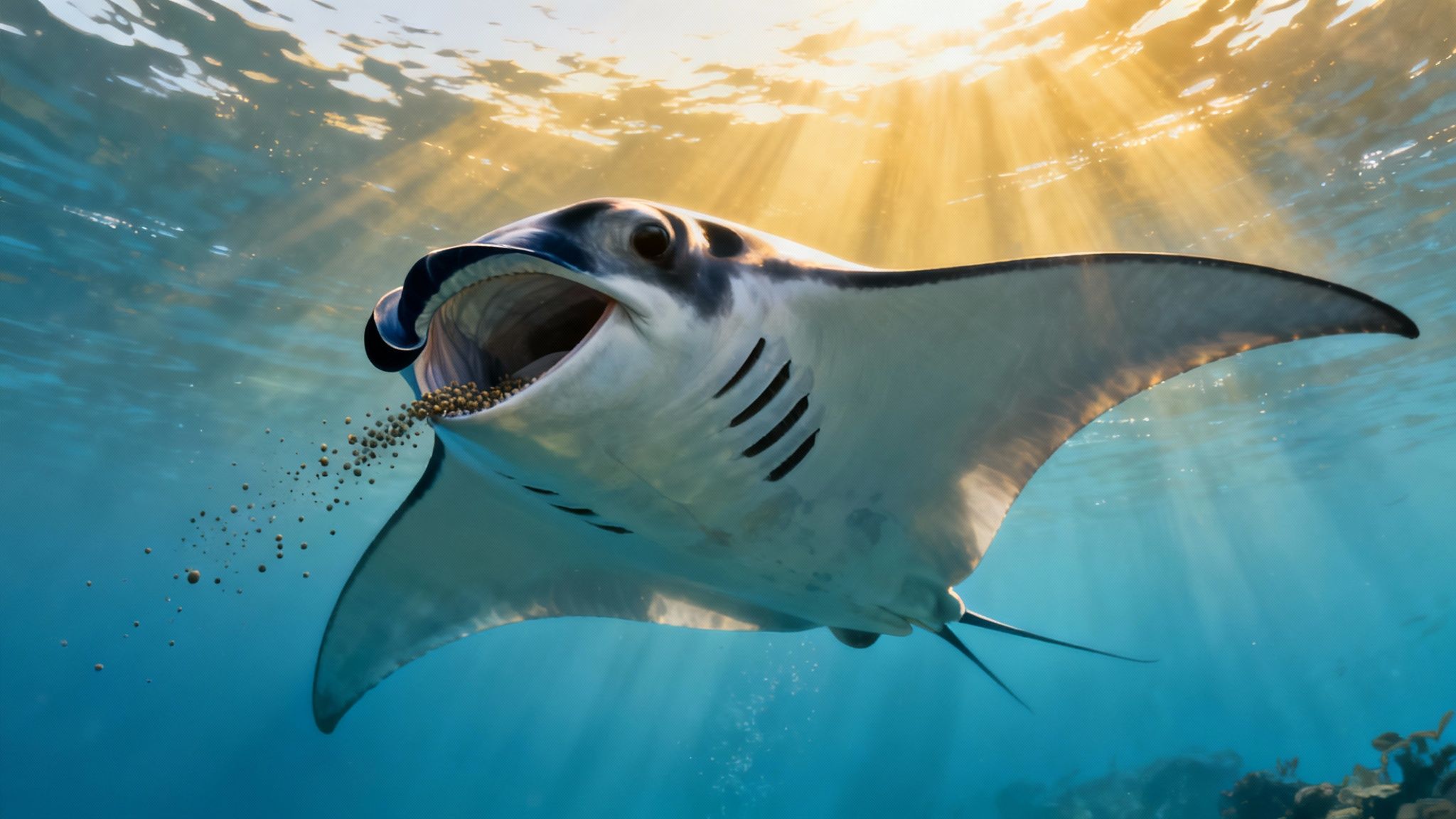
First off, manta rays don't have a single bone in their massive bodies. Their entire skeleton is made of cartilage, just like a shark's. This flexible framework makes them much lighter than they look, allowing them to cruise through the ocean with an elegance that seems impossible for their size.
The Gentle Giants of the Sea
Manta rays have earned their "gentle giant" nickname. Despite their massive size, they are completely harmless to humans. They're filter feeders, which means their diet consists of some of the tiniest life in the ocean: zooplankton.
You'll see them swimming with their huge mouths wide open, using special plates in their gills to strain these microscopic critters from the water. To make feeding easier, they have two unique, paddle-like fins on their head called cephalic lobes. When it's feeding time, these lobes unfurl and act like funnels, directing plankton-rich water straight into their mouths.
This is the exact behavior that makes the Kona night snorkel so spectacular. The mantas perform incredible barrel rolls and graceful loops, using their cephalic lobes to scoop up the dense clouds of plankton drawn to the tour lights. It’s a true underwater ballet.
Intelligent and Social Creatures
Here's something that might surprise you: Manta rays have the largest brain-to-body size ratio of any fish. This is a huge clue to their high intelligence. We see it in their complex social lives, their ability to solve problems, and even what looks a lot like plain old curiosity.
While they often travel solo, they gather in groups for a few key reasons:
- Feeding Frenzies: They'll congregate wherever food is abundant, just like at the famous lighted snorkel sites in Kona.
- Cleaning Stations: They make regular visits to specific coral reefs where smaller "cleaner fish" nibble away parasites from their skin.
- Courtship Rituals: During mating season, a group of males will chase a single female in an elaborate, synchronized underwater dance.
Knowing this changes your whole perspective. You’re not just watching an animal swim by; you're sharing the water with a sentient, aware being.
When you understand their biology and behavior, you start to see them differently. You realize you’re observing an intelligent creature navigating its complex world with genuine grace and purpose.
The Two Types of Manta Rays
The manta ray family has two main species. Knowing how to tell them apart will give you a deeper appreciation for the specific mantas we see here in Kona.
The rays you'll meet on the Kona coast are Reef Mantas (Mobula alfredi). Their bigger, more nomadic cousins are the Giant Oceanic Mantas (Mobula birostris). Here’s a quick guide to help you spot the differences.
Reef Manta vs Oceanic Manta Quick Facts
| Feature | Reef Manta (Mobula alfredi) | Giant Oceanic Manta (Mobula birostris) |
|---|---|---|
| Typical Wingspan | Up to 18 feet (5.5 meters) | Up to 23 feet (7 meters) or more |
| Habitat | Found in coastal waters, often staying in the same areas year-round, like here in Kona. | Pelagic nomads that roam the open ocean, migrating vast distances. |
| Underside Markings | Spots are located between the gill slits. | Spots are typically below the gill slits, with fewer spots overall. |
| Dorsal Fin | Lacks a spine at the base of the dorsal fin. | Has a small, calcified spine at the base of its dorsal fin. |
| Mouth Color | The inside of the mouth is usually white. | The inside of the mouth is often dark or completely black. |
So, when you're in the water with us, you'll know you're swimming with the homebodies of the manta world—the incredible Reef Mantas that make Kona so special.
A Vulnerable Existence
This incredible biology comes with a catch: manta rays reproduce very slowly, making their populations extremely vulnerable. Globally, they are facing serious threats. Over the last 87 years—just three manta generations—Reef Manta populations have declined by 30-49%. This is largely because females don't mature until they're 8-10 years old and then only have one pup every 2-3 years.
Their pelagic cousins, the Oceanic Mantas, have it even tougher, with population drops of 50-79% in the same timeframe. These numbers highlight just how critical conservation is. You can discover more insights about these conservation challenges from Manta Ray Advocates.
Understanding this fragility makes the chance to see them in a safe, protected environment like Kona even more meaningful. Responsible tourism isn't just a nice idea; it's essential for their survival.
Experiencing the Kona Manta Ray Night Snorkel
This is where the real magic happens. Picture yourself floating in the calm, dark Pacific, the Kona coast lights twinkling behind you. The ocean transforms into a stage for one of nature’s most incredible performances. The world-famous Kona Manta Ray Night Snorkel is more than a tour; it’s like stepping into another world. The whole adventure starts with a gentle boat ride out of the harbor just as the sun is setting, painting the sky and setting the scene for the underwater ballet about to unfold.
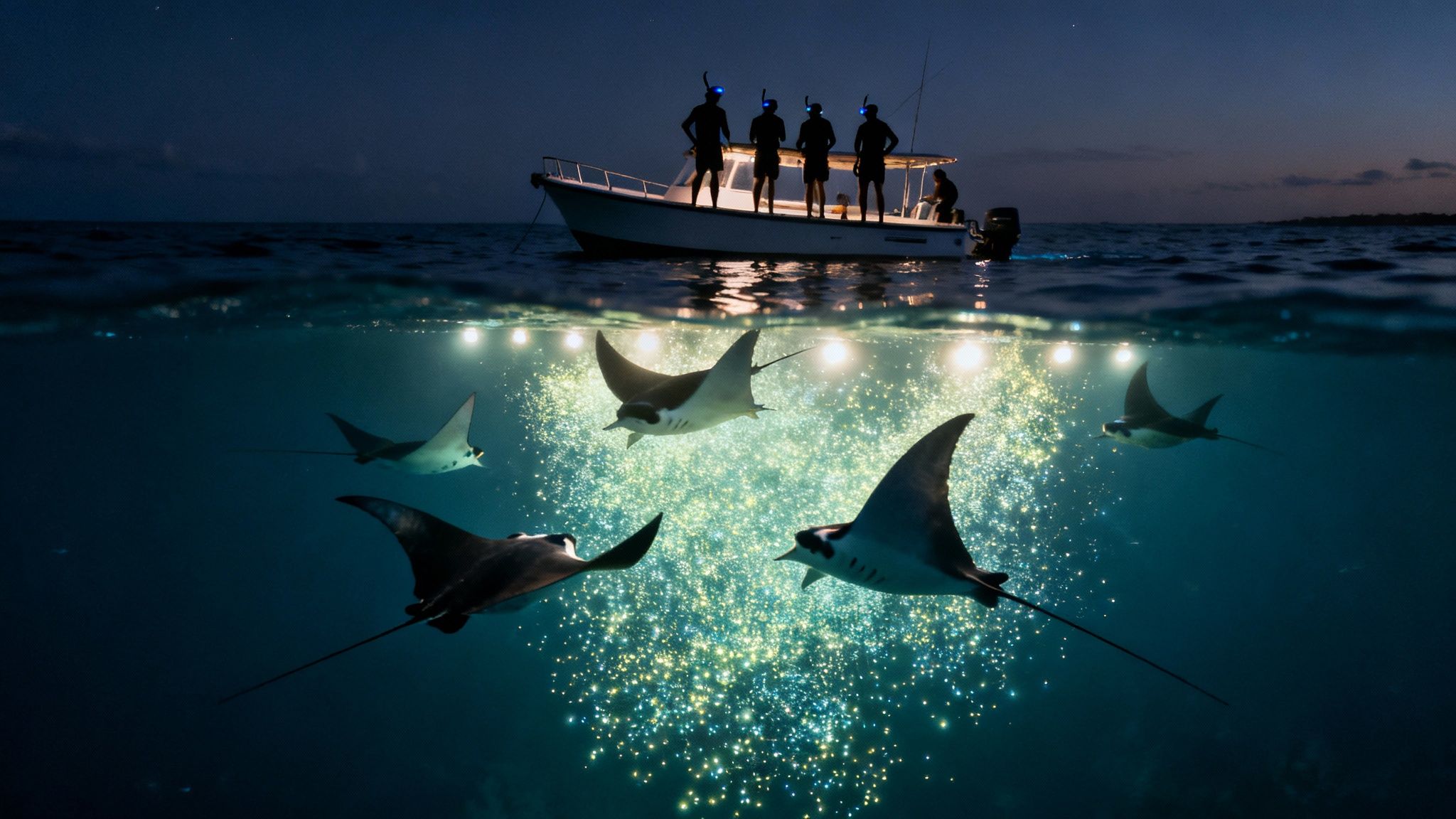
Once we anchor at one of the designated viewing sites, we switch on powerful underwater lights that shoot beams down into the dark water. It’s an ingenious and simple method that acts like a giant magnet for clouds of microscopic zooplankton, which is the mantas’ favorite meal. It’s an all-you-can-eat buffet they simply can’t resist.
Before long, the first graceful shadows emerge from the deep. These gentle giants, with their massive wingspans, glide into the light to start feeding. Your job is simple: float comfortably on the surface, holding onto a custom light board, and watch the show happen just inches below you. It's a totally non-invasive way to witness their natural feeding behavior up close without ever getting in their way.
Why Kona Is a World-Class Destination
Kona isn't just a good spot to see mantas; it's hands down the most reliable and awe-inspiring place on the planet for this encounter. The reason it’s so famous comes down to a perfect mix of biology and a happy accident. The Kona coast is home to a huge, non-migratory population of reef manta rays who live here all year. They don't have to travel for food, which makes them consistent residents.
The numbers back this up. Research has shown that between 2009 and 2014, about 30 individual manta rays were spotted here more than 50 times a year. This dependable core group is what makes Kona one of the most accessible spots in the world for manta encounters, drawing thousands of adventurers every year.
The experience is often described as surreal and peaceful. Floating on the surface, you hear nothing but the gentle lapping of water as these colossal creatures perform silent, acrobatic barrel rolls in a mesmerizing feeding dance.
The "happy accident" was the discovery that underwater lights attract the plankton they feed on. This simple trick turned a rare, chance sighting into a predictable, nightly event. For a complete rundown of what to expect, check out this great Kona Manta Ray Night Dive guide.
Choosing Your Guide for This Magical Encounter
A truly exceptional experience comes down to choosing a great operator—one that puts safety, respect for the animals, and guest comfort first.
For an unforgettable adventure, the team at Kona Snorkel Trips offers a top-tier Manta Ray Night Snorkel tour. We're known for our commitment to conservation and small group sizes, which means you always get a front-row seat. Our expert guides make the trip educational and awe-inspiring from start to finish. For a deeper dive, check out our own guide on the manta ray night snorkel tour.
Of course, we're not the only great choice out there. Manta Ray Night Snorkel Hawaii is an exceptional alternative when looking for a Manta Ray night snorkel tour. Both companies stick to strict guidelines that protect the mantas while delivering a once-in-a-lifetime experience. This commitment from local operators is what keeps this incredible natural wonder safe for everyone to enjoy.
Where Else Can You Swim With Manta Rays?
While the Kona Manta Ray Night Snorkel is a truly one-of-a-kind experience, the thrill of swimming with mantas is a global passion. For ocean lovers planning their next big adventure, the world is dotted with some incredible spots to see these gentle giants. Looking at these other hotspots really puts into perspective just how special Kona’s year-round reliability and unique "campfire" method are.
Each destination offers a completely different vibe, shaped by its local environment, the kind of manta you'll see, and the best time of year to go. From the wide-open Pacific to the turquoise lagoons of the Indian Ocean, finding mantas is a worldwide treasure hunt.
Ecuador Isla de la Plata
Some call it the "Poor Man's Galápagos," but when it comes to giant sea life, Ecuador's Isla de la Plata is anything but poor. Between June and October, these waters become a massive gathering place for the colossal Giant Oceanic Manta Ray (Mobula birostris). Divers and snorkelers head here to see literally thousands of these ocean wanderers as they show up to feed and get cleaned.
This is a totally different scene from Kona's calm, lighted night snorkel. Out here, you’re in the deep blue ocean during the day, and the sheer number of mantas is just mind-blowing. It’s a powerful reminder of how wild and untamed these creatures really are.
A massive 14-year study off Ecuador's coast actually cataloged over 2,800 individual mantas. This led researchers to estimate a population of more than 22,000 giants shared with Peru—the largest known population on the planet! These numbers show just how critical this area is for the species. You can discover more about this incredible manta population research and see what they found.
The Maldives Baa Atoll
If you're looking for a picture-perfect setting, the Maldives is it. From May to November, the southwest monsoon turns the Baa Atoll Biosphere Reserve into a plankton-rich buffet. One spot, Hanifaru Bay, is world-famous for something called "cyclone feeding," where hundreds of Reef Mantas (Mobula alfredi) come together to eat in a massive, swirling vortex.
It’s one of the most incredible shows in the natural world. Unlike the focused, light-driven feeding we see in Kona, this is a huge, natural event powered by tides and currents. You get a firsthand look at how they work together as a group to feed.
To keep from disturbing the mantas, you can only snorkel in the main feeding area of Hanifaru Bay. It makes for a well-managed and respectful experience. Seeing that many mantas in one place is a true bucket-list moment for anyone who loves the ocean.
Australia Lady Elliot Island
Tucked away at the southern end of the Great Barrier Reef, Lady Elliot Island is another world-class spot for manta ray swimming underwater. This eco-resort island has great encounters all year, but things really kick off during the Australian winter (May to August) when huge numbers of mantas gather.
The island is also home to "Project Manta," a long-running research project studying the local population. Visitors can even get involved in citizen science by sending in their photos of manta bellies, which helps the conservation effort directly. The crystal-clear water and healthy coral reefs make for a stunning backdrop as you watch both Reef and Oceanic mantas cruise by and visit cleaning stations.
Each of these global hotspots gives you a different window into the world of mantas, highlighting just how diverse their lives and habitats are across the planet.
How to Be a Responsible Manta Ray Snorkeler
Witnessing the grace of a manta ray gliding through the water is a profound privilege, an encounter that connects you directly to the wild heart of the ocean. But this privilege comes with a serious responsibility. Every single person in the water has a role to play in protecting these magnificent animals, and believe it or not, your actions can make a massive positive impact. It’s all about shifting your mindset from being a tourist to becoming a guardian of the sea.
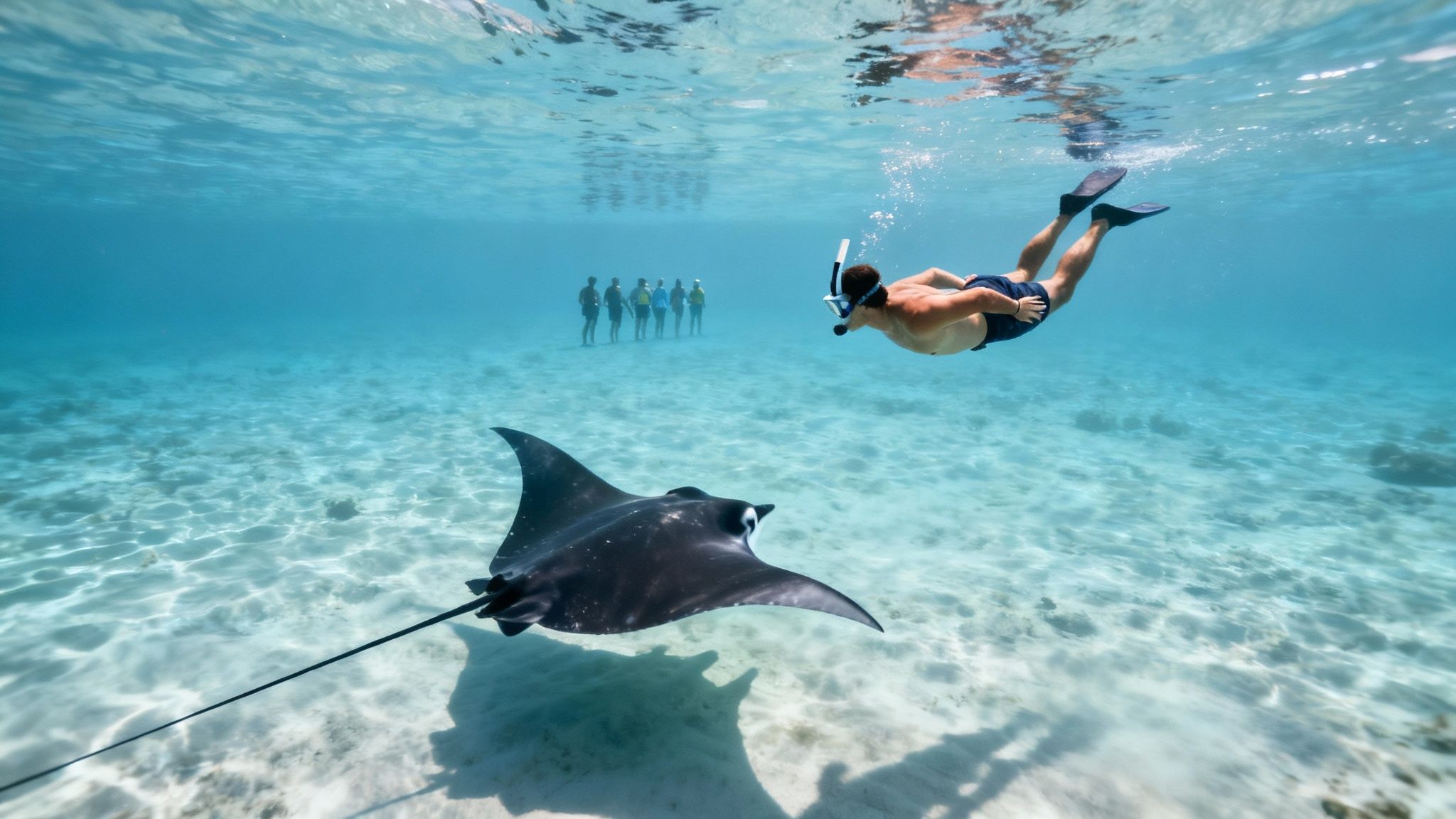
The single most important rule is simple yet absolute: look, but never, ever touch. Manta rays are covered in a protective mucus coating, which is their first line of defense against harmful bacteria and infections. Think of it as their immune system, but on the outside. When a person touches them, it strips away this vital layer and leaves them vulnerable to disease.
When you simply remain a passive observer, you are actively helping to keep them healthy and safe in their own home.
The Art of Passive Observation
Eco-conscious operators like Kona Snorkel Trips build their entire experience around this principle of passive observation. This means you are a respectful guest in their underwater dining room. The whole idea is to let the mantas control the interaction, making sure they feel safe and unthreatened the entire time.
Here’s what that looks like in practice:
- Stay Calm and Still: Hold onto the provided light board or flotation device and just float. The less you move and splash, the more comfortable the mantas will be.
- Maintain Your Distance: Never swim towards or chase a manta ray. Let them come to you. When you stay still, they often glide within inches, offering a view that will take your breath away.
- Stay on the Surface: Avoid diving down towards the animals. This can come across as aggressive behavior and will definitely disrupt their natural feeding patterns.
"The entire experience is built on trust. When we show the manta rays respect by giving them space, they reward us with incredibly close and breathtaking encounters. It's a beautiful, silent agreement between human and animal."
Following these simple guidelines doesn't just guarantee a better encounter for you; it contributes to the long-term well-being of Kona's resident manta population. If you have any concerns about safety, you might be interested in our detailed article explaining why manta rays are not dangerous to humans.
Understanding the Bigger Picture
Your responsible behavior in the water is part of a much larger conservation story. Manta rays face serious threats globally, mainly from overfishing and the illegal trade for their gill plates, which are used in unproven traditional medicines. This demand has had a devastating impact on their populations worldwide.
Tragically, global fisheries claim an estimated 264,520 manta and devil rays every year. A staggering 87% of these come from small-scale operations using drift gillnets. The vast majority of this catch, about 85%, originates from just five countries: India, Indonesia, Sri Lanka, Peru, and Myanmar. These shocking statistics really amplify the magic and importance of your snorkel; by choosing an ethical tour, your adventure supports an eco-tourism model that directly funds their protection.
Choosing a reputable, eco-conscious tour operator transforms your trip from a simple vacation activity into a meaningful act of conservation. When you book with a company that prioritizes education and follows strict, manta-safe guidelines, you are casting a vote for the survival of these gentle giants. Your tourism dollars create a powerful economic reason for local communities to protect these animals, proving that a living manta ray is far more valuable than a dead one. Your adventure becomes a force for good, helping to ensure that future generations can also experience the wonder of swimming with manta rays.
Planning Your Perfect Manta Ray Adventure
So, you're ready to take the plunge and swim with these incredible creatures? Awesome. Turning that dream into a reality is way easier than you might think, especially when you know what to expect and how to prepare.
While a top-notch tour operator like Kona Snorkel Trips handles all the heavy lifting—like providing the essential gear—a little bit of prep on your end can make the whole experience that much smoother and more comfortable.
What to Bring for Your Snorkel Tour
Packing for this adventure is pretty straightforward. It's all about staying comfortable, both in and out of the water. We've got the big stuff covered, but a few personal items will make a world of difference.
Here’s a simple checklist to make sure you've got everything you need:
- Swimsuit: The easiest thing is to just wear it under your clothes to the marina. That way, you're ready to go!
- Towel: You'll definitely want this for drying off and staying cozy on the boat ride back to the harbor.
- Change of Clothes: Trust me, a dry shirt or a warm hoodie feels amazing after a night swim.
- Underwater Camera: You are going to want to capture the sight of giant mantas gliding right beneath you. If you need some pointers, check out our guide on how to take amazing underwater pictures.
- Reusable Water Bottle: It's easy to forget to drink water on an evening tour, but staying hydrated is always a good idea.
You can leave your own snorkel gear at home. We provide everything you need: masks, snorkels, fins, and even wetsuits to keep you perfectly warm in the night water.
Tips for First-Time Snorkelers
Feeling a little anxious? That’s totally normal! But honestly, there’s nothing to fear. This experience is designed for absolutely everyone, no matter your skill level. The trick is just to relax and let your gear—and your guides—do all the work for you.
A lot of first-timers worry about seasickness. If you know you're prone to it, just grab an over-the-counter remedy and take it about an hour before we head out. Focusing on the horizon during the boat ride also works wonders.
Another common question is about the water temperature. The Pacific definitely gets a little cool after the sun goes down, which is exactly why we provide wetsuits. They do a fantastic job of keeping you warm, so all you have to think about is the incredible ballet happening below.
The whole experience is about passive observation. You'll simply hold onto a custom-built, floating light raft. There's no strenuous swimming involved at all. Just float, breathe, and enjoy the show.
Best Time to See the Mantas in Kona
Here's the best part about planning a manta trip in Kona: you can come almost anytime you want. The local reef manta population doesn't migrate. They're here and active year-round, which gives you incredible flexibility for booking.
While the mantas are always around, some people prefer the spring and summer months when the ocean conditions are often a bit calmer. But even in the winter, the encounters are just as mind-blowing.
Ultimately, the best time to go is whenever works for your schedule. The mantas will be here, ready to put on a show.
Your Manta Ray Questions Answered
We get these questions all the time, so let's clear them up right now. Getting these details sorted out beforehand means you can relax and just soak in the magic when you're out on the water with us.
Is It Safe to Swim with Manta Rays?
Absolutely. There's a reason we call them "gentle giants." Manta rays are peaceful filter-feeders and pose no threat to people. Unlike their stingray cousins, they don't have a stinger on their tail, and frankly, they have zero interest in harming humans.
Any reputable tour operator, including us, has a strict "no touching" rule. This is to protect both you and the mantas. Our expert guides are always in the water with you, making sure the entire experience is safe and incredible for everyone involved.
Do I Need to Be a Strong Swimmer for the Night Snorkel?
Not at all. This is one of the biggest misconceptions! The manta ray night snorkel is designed for just about every skill level, even if you're not the most confident swimmer. We provide top-notch flotation gear, including a large floating raft with handles that you simply hold onto.
This setup lets you float on the surface comfortably and without any effort. You can just relax and focus on the amazing show happening right below you without having to kick or tread water. It’s accessible to almost everyone.
What Is the Best Time of Year to See Manta Rays in Kona?
This is the best part: it's a year-round activity! Kona's manta ray encounter is one of the most reliable wildlife experiences on the entire planet. Our local population of reef mantas lives right here along the coast all year long.
That means your chances of seeing these magnificent creatures are sky-high whether you book a trip in the middle of January or the peak of July. The sighting rate is consistently fantastic.
That incredible consistency is what makes Kona a world-famous destination for this. The mantas are always here, ready to put on their nightly feeding ballet for us.
Will I Get Cold During the Night Snorkel?
The water here in Hawaii is wonderfully warm, but it can definitely feel a bit chilly after the sun goes down and you've been floating for a while. To make sure you're totally comfortable, we provide high-quality wetsuits as part of our standard gear.
A wetsuit keeps you perfectly warm for the entire trip. This way, you can completely lose yourself in the experience of watching the mantas dance below without ever thinking about being cold.