
A Guide to Manta Ray Swimming Underwater in Kona
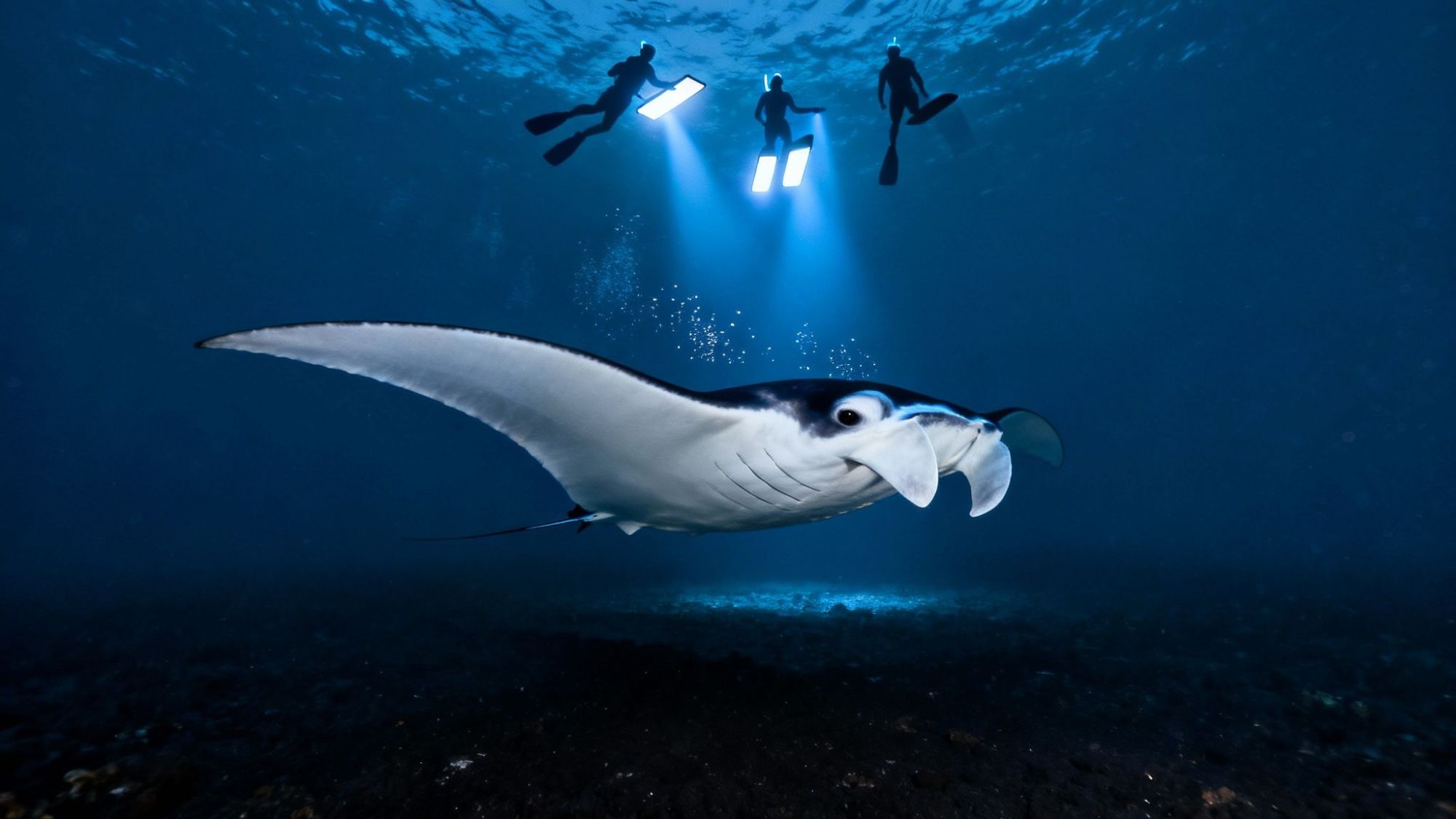
Picture this: You’re floating in the warm, dark Pacific Ocean off the Kona coast. Below you, giant, gentle shadows glide through the water like something from another world. This is the magic of swimming with manta rays underwater in Kona, an experience people often describe as a silent, otherworldly ballet.
This guide is your deep dive into everything you need to know. We’ll cover what makes these creatures so incredible, how to choose a safe and ethical tour, and exactly what to expect so you're ready for one of the most breathtaking encounters of your life.
Why a Manta Ray Swim is an Unforgettable Adventure
Floating on the ocean’s surface at night, you get a front-row seat to one of nature's most mesmerizing shows. Seeing a manta ray swim underwater is so much more than just watching wildlife; it's a genuine connection with one of the ocean's most graceful giants. With wingspans that can stretch over 17 feet, they move with an elegance that just doesn't seem possible for their size. It’s the kind of memory that sticks with you forever.
To experience this for yourself, you have to go with guides who know what they're doing—people who put your safety and the mantas' well-being first. As Hawaii's top-rated and most-reviewed snorkel company, we at Kona Snorkel Trips live for creating these moments and guiding people through every step of this magical encounter.
Setting the Scene for Your Encounter
The adventure really kicks off as the sun dips below the horizon, lighting up the Kona sky. After a short, beautiful boat ride, we arrive at one of the designated manta viewing sites—a spot where these gentle giants gather almost nightly to feed. Once we anchor, you'll slip into the calm, dark water and hold onto a custom-built light board.
These light boards are the key to the whole experience. They do two crucial things:
- They attract plankton: The bright lights act like a magnet for clouds of microscopic plankton, which is the main food source for manta rays. It's basically a dinner bell.
- They create a viewing stage: This buffet of plankton draws the mantas directly beneath you. You get a perfect, non-intrusive vantage point to watch their incredible feeding ballet unfold.
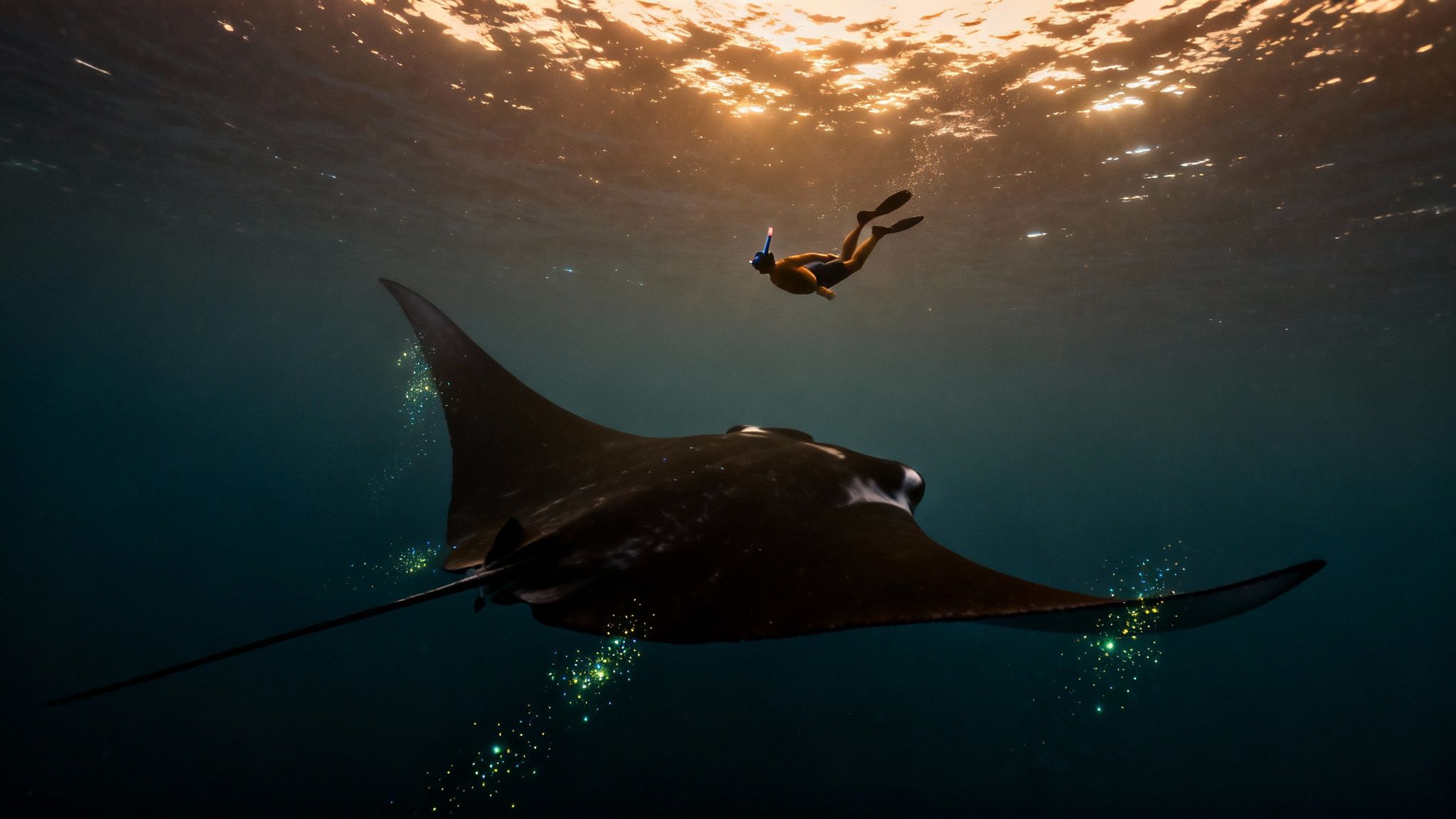
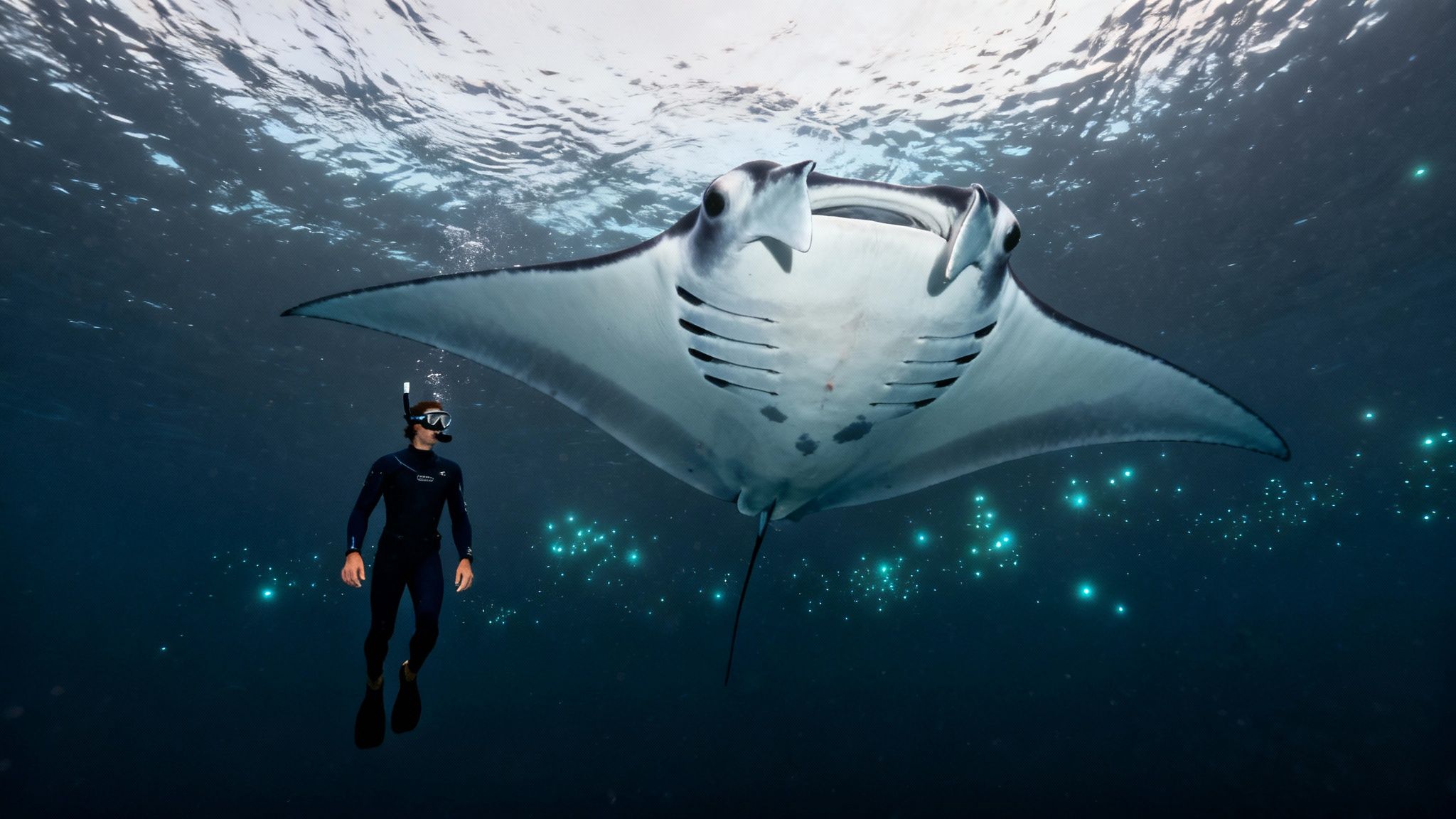
As you float there, the first shadows emerge from the deep. The mantas glide effortlessly, performing graceful barrel rolls and loops sometimes just inches below you. Their movements are completely silent and fluid, creating a serene, almost spiritual atmosphere.
This isn't a thrill ride; it’s a passive observation experience. Your job is to simply float, watch, and be amazed as nature puts on a show. It's an immersive glimpse into their world, guided by a team that's dedicated to preserving this incredible natural spectacle for years to come.
Understanding the Gentle Giants of the Ocean
How can something so massive move with such effortless grace? The first time you see a manta ray swimming underwater, you realize it’s less like watching a fish and more like witnessing a bird in flight. They don't just swim; they soar, using powerful, rhythmic beats of their enormous pectoral fins that function just like wings.
This unique way of moving is what gives them that ballet-like quality. Instead of wiggling their bodies side-to-side, they use those giant fins to generate lift and glide silently through the water. It’s an incredibly efficient way to travel, allowing them to cover vast distances with surprisingly little effort.
Gentle Giants with Big Appetites
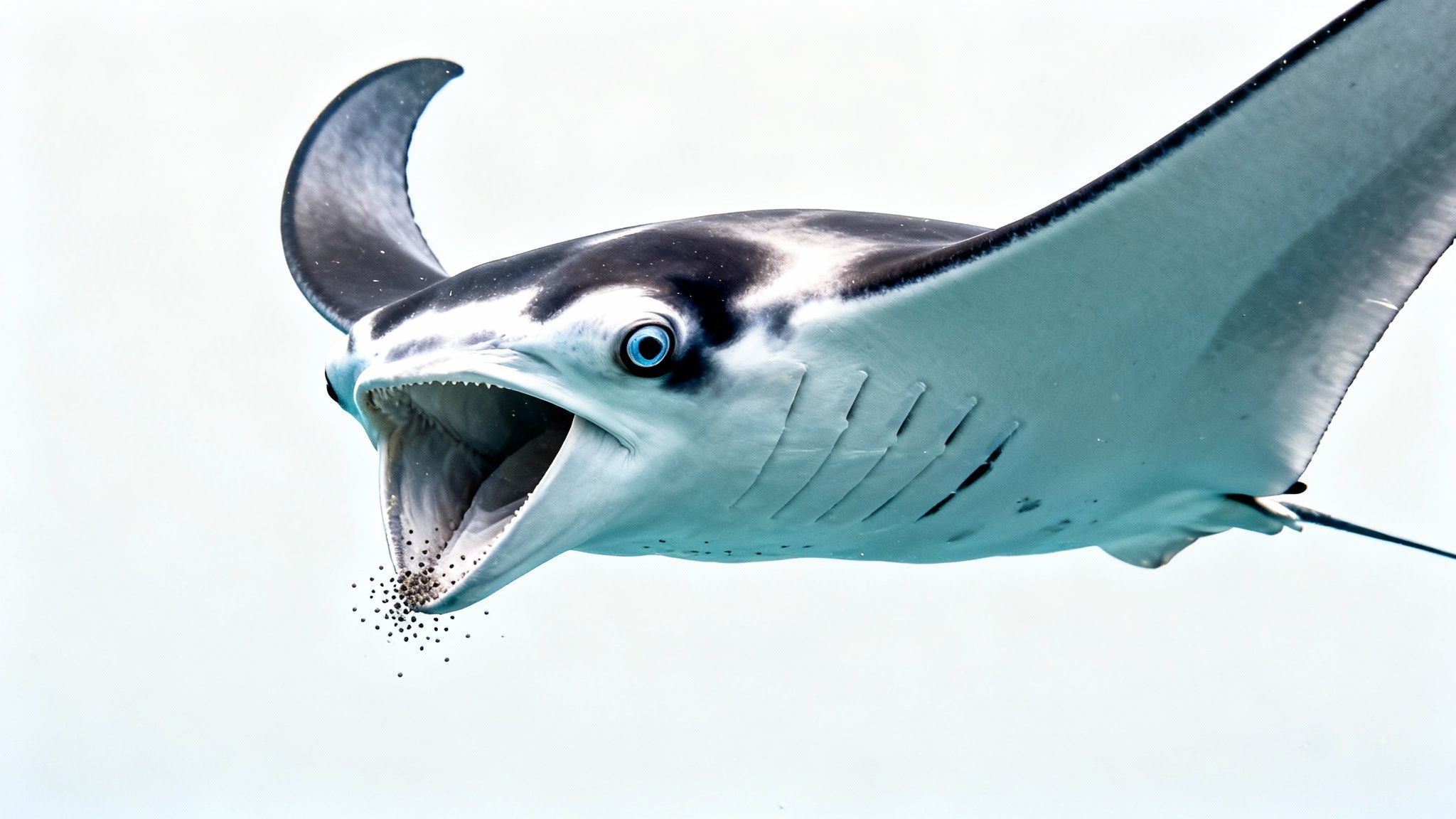
Don't let their imposing size fool you; manta rays are completely harmless to humans. They are filter feeders, which means their diet is made up of the tiniest life in the ocean. You'll see them swimming with their mouths wide open, using special plates in their gills to strain huge amounts of water for zooplankton—microscopic critters like krill and fish larvae.
To help funnel all that plankton-rich water into their mouths, they have two unique lobes on either side of their heads called cephalic fins. When it’s feeding time, these fins unfurl to guide the food right in. Old-time sailors nicknamed them "devilfish" because of these "horns," but their nature is anything but devilish. This is the exact behavior you’ll witness on a Kona night snorkel as they loop and barrel roll through the clouds of plankton drawn to the lights.
More Than Just a Pretty Face
Beyond their graceful movements and unique feeding style, manta rays are surprisingly smart. They have the largest brain-to-body size ratio of any fish, showing complex behaviors that hint at self-awareness and problem-solving skills.
These intelligent giants also have pretty interesting social lives. While you’ll often see them gliding solo, they gather in groups for a few key reasons:
- Feeding: They congregate where the plankton is thick, like Kona's famous "Manta Village."
- Cleaning: They visit specific spots called "cleaning stations" where smaller fish pick parasites off their skin.
- Mating: Manta rays perform elaborate courtship rituals that look like an underwater dance.
During your swim with Kona Snorkel Trips, you might see a manta ray glide past whose wingspan rivals a small car, reaching up to 7 meters (23 feet)! These pelagic nomads cover huge distances, with some traveling thousands of kilometers across oceans searching for food, mates, and those all-important cleaning stations.
Understanding these behaviors turns a simple snorkel trip into a profound wildlife encounter. You're not just watching a big fish swim by; you're observing an intelligent, social animal navigating its complex world. If you're curious to learn more, check out our article on fun facts about manta rays. Appreciating their biology and behavior gives you a much deeper connection to these gentle giants of the ocean.
Why Kona Is a Global Manta Ray Hotspot
Kona isn't just a great place to see manta rays; it’s one of the most reliable and spectacular viewing spots on the entire planet. What makes this specific stretch of the Big Island coastline so magical for a manta ray swimming underwater isn't just good luck—it’s a perfect storm of geography, biology, and a bit of human ingenuity.
The secret starts with the calm, clear waters of the Kona coast, which are naturally rich in zooplankton. These tiny organisms are the manta ray's entire diet, and their abundance here creates a dependable, year-round buffet for a resident population of reef manta rays (Mobula alfredi). They simply don't need to migrate anywhere else.
This is a huge deal. It’s a completely different story from places where you might catch a fleeting glimpse of their more elusive oceanic cousins. Seeing oceanic mantas is incredible, but their populations are migratory and spread out across vast oceans. For example, a massive 14-year study off Ecuador identified over 2,800 individual giant oceanic mantas, part of a population estimated at over 22,000—the largest known in the world. You can learn more about this massive oceanic manta population and the research behind it, but the key takeaway is that seeing them is often a matter of being in the right place at the right time. In Kona, the mantas are already here waiting.
The Phenomenon of the "Manta Campfire"
The real game-changer for Kona's manta scene happened by accident. Back in the 1970s, a hotel started shining lights into the surf for its guests. Those lights attracted dense clouds of plankton, which in turn drew in hungry mantas for an easy, concentrated feast.
This happy accident created what we now call the "manta campfire." Just like moths to a flame, the bright underwater lights our tour boats use today create a glowing buffet that consistently brings Kona's resident mantas out to feed, almost every single night.
This incredible phenomenon established several key viewing sites along the coast, turning what was once a chance encounter into a predictable and sustainable nightly show. It’s this unique setup that lets us have such close, non-intrusive experiences, making Kona the world's premier destination for this adventure.
Why Resident Reef Mantas Matter
The whole Kona experience is built around its population of reef mantas. They're slightly smaller and stick closer to the coast than the giant oceanic mantas that roam the open sea. Here’s why that’s so important for snorkelers like you:
- Reliability: Because they hang out in the same coastal spots year-round, our sighting success rate is consistently over 90%. It’s about as close to a guarantee as you can get with wild animals.
- Accessibility: The feeding sites are just a short boat ride from the harbor, which means the trip is easy and accessible for almost everyone.
- Ethical Viewing: The "campfire" method is a passive experience. You just float on the surface and watch the show. The mantas come to the light to feed, allowing us to observe their natural behavior without chasing or disturbing them.
It's this perfect blend of natural abundance and a man-made trick of the light that has cemented Kona's reputation. It’s a place where the underwater world puts on a spectacular performance, and you get a front-row seat.
What to Expect on Your Manta Ray Night Snorkel Adventure
So, you're thinking about taking the plunge and swimming with Kona's famous manta rays? Let me tell you, it's an experience that sticks with you, one of those core memories you'll be talking about for years. To help you get a feel for what it's really like and maybe calm a few of those pre-snorkel jitters, here’s a play-by-play of what happens on our night snorkel adventure.
The whole thing kicks off with a boat ride as the sun dips below the horizon, lighting up the Hawaiian sky in those incredible orange and pink hues. This isn't just about getting from point A to point B; it's part of the magic. You'll feel that warm Pacific breeze as our crew starts sharing stories and facts about the Kona coast and the amazing marine life waiting for us. It's the perfect way to set the mood for the main event.
The Main Event: The Light Board Encounter
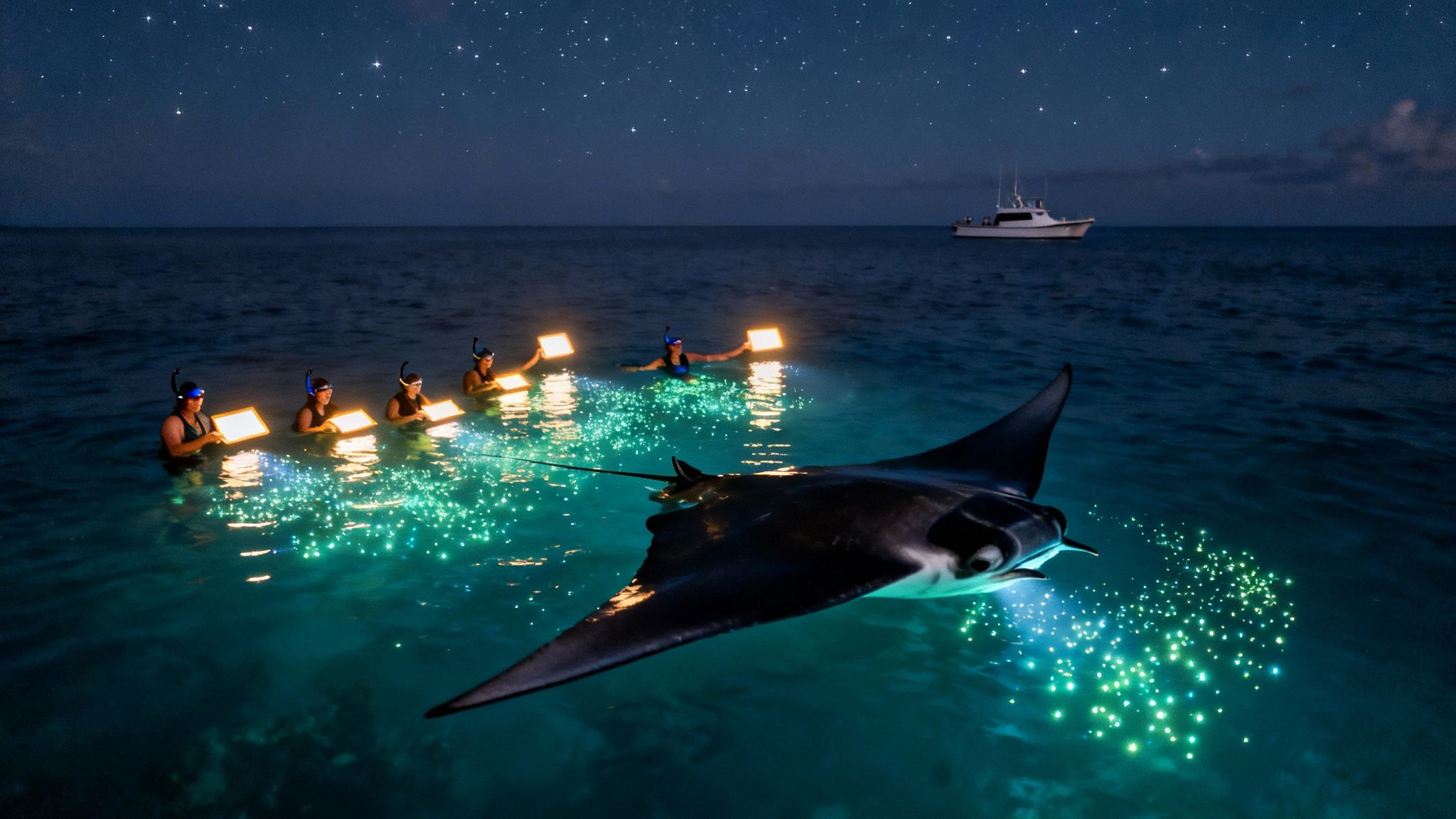
Once we anchor at the manta viewing site, the real show begins. You’ll slide into the calm, dark ocean where our custom-built light board is waiting. This isn't just a piece of gear; it’s the centerpiece of the entire experience, our floating stage for the mantas.
You’ll grab onto the handles and float comfortably on the surface. The board’s powerful lights cut through the darkness, creating what we call a "campfire" for plankton. These microscopic critters are drawn to the light like moths to a flame, and this glowing buffet is absolutely irresistible to Kona's resident manta rays. They swim right up from the depths for their nightly feast.
It's an incredible, non-intrusive way to witness their world. You just float and watch. The mantas do all the work, gliding, looping, and barrel-rolling just inches beneath you with their huge mouths open to filter-feed.
Safety and Comfort Are Everything
From the moment you step on the boat, your safety and comfort are our absolute top priorities. Our crew is made up of licensed captains and professional in-water guides who are not only marine life experts but are also trained in first aid. We'll give you a full safety briefing before anyone even touches the water.
Here’s how we make sure your experience is seamless and worry-free:
- Expert Guidance: Our guides are right there in the water with you the whole time. They make sure everyone is comfortable, following the rules, and they're always ready to answer your questions or point out the cool behaviors you're seeing.
- Top-Notch Gear: We've got you covered. We provide warm wetsuit tops and fully sanitized snorkel gear. We also use flotation devices so you can just relax and float effortlessly without a care.
- Small Groups: We deliberately keep our tour groups small. It makes for a much more personal, less crowded experience and guarantees you get an unobstructed, front-row seat to the action.
The whole adventure is designed to be awe-inspiring, not intimidating. The water at the sites is typically very calm, and you don't need any prior snorkeling experience. All you need is to be comfortable in the water and ready to be completely amazed.
Want a deeper look at what makes this tour so special? Check out our post on the manta ray night snorkel tour. It breaks everything down so you can show up feeling totally prepared for an unforgettable night.
How to View Manta Rays Responsibly
Getting to witness the magic of a manta ray swimming underwater is an experience that stays with you forever. But it also comes with a serious responsibility to protect these incredible animals. If there's one golden rule to remember, it's this: observe, don't interact. That means being a completely passive observer the entire time you're in their world.
The single most important rule is to never, ever touch a manta ray. Their skin is covered by a protective mucus coating, which is basically their immune system. It's a vital shield against harmful bacteria and infections. When a person touches them, even lightly, it can strip away that protective layer and leave them vulnerable to disease. Think of it like someone damaging your own immune system—it can have devastating consequences. By simply keeping your hands to yourself, you are playing a direct role in keeping them healthy.
The Principles of Passive Observation
Being a passive observer is all about being a respectful guest in their home. The whole idea is to let the mantas be in complete control of the encounter. Your job is to simply float, watch, and be amazed. That means staying calm, avoiding any sudden moves, and never chasing or swimming after them.
When you hang out quietly on the surface, holding onto the light board, the mantas feel safe and comfortable coming up to feed. If people start chasing them, it just causes stress and will almost certainly scare them away, ruining the show for everyone. The calmer and stiller you are, the closer they're likely to get.
If you want to dive deeper into the nuts and bolts of the experience, you can learn more about the specifics of manta ray night snorkeling and see exactly how our guides create a safe and ethical adventure for everyone.
"The entire experience is built on trust. When we show the manta rays respect by giving them space, they reward us with incredibly close and breathtaking encounters. It's a beautiful, silent agreement between human and animal."
Manta Ray Encounter Dos and Don'ts
To make sure you're being the best possible guest in the mantas' underwater dining room, just follow these simple rules. Sticking to these guidelines helps protect the incredible manta rays of Kona and preserves this natural wonder for years to come.
| Guideline | What to Do (The 'Dos') | What to Avoid (The 'Don'ts') |
|---|---|---|
| Interaction | Remain a passive observer. Stay calm and float on the surface, letting the mantas come to you. | Do not touch, chase, ride, or block the path of a manta ray. |
| Positioning | Stay on the surface and hold onto the light board or flotation device provided by your guide. | Do not dive down towards the mantas. Free-diving or scuba diving is prohibited in the designated snorkel area. |
| Movement | Keep movements slow and deliberate. Minimize splashing as much as possible to avoid startling the animals. | Avoid kicking, flailing, or making sudden movements that could scare the mantas away. |
The Urgent Need for Manta Ray Conservation
That feeling of pure awe you get watching a manta ray swimming underwater is a powerful thing. It's a gut punch, a reminder of just how magnificent these animals are and, frankly, what we're on the verge of losing forever. While the Kona manta snorkel is a beautiful story of people and marine life finding a way to coexist, it's a fragile bubble. Globally, manta rays are in serious trouble.
They face a number of threats, like getting tangled up in fishing gear, but the biggest danger by far is being targeted for their gill plates. The demand has created a full-blown crisis, causing their populations to plummet.
A landmark study painted a grim picture: an estimated 264,520 manta and devil rays are caught every single year around the world. A shocking 87% of these are snagged by small-scale fisheries, often using indiscriminate drift gillnets. This isn't just accidental bycatch; it's a targeted hunt driven by the international trade for their gills and meat. Unbelievably, 85% of this global catch comes from just five countries: India, Indonesia, Sri Lanka, Myanmar, and Peru. This fishing frenzy has pushed oceanic mantas onto the IUCN Red List as "Endangered." You can learn more about the threats mantas face globally from the Manta Trust.
How Your Adventure Becomes a Force for Good
This is exactly where your trip to Kona can make a real difference. Ethical ecotourism isn't just about getting a cool photo; it's a powerful conservation tool. When you choose to see these animals responsibly, you're helping create a strong economic reason to protect them. Put simply, a living manta ray becomes far more valuable to the local community than a dead one, supporting guides, boat captains, and an entire sustainable industry.
By participating in a well-managed manta ray snorkel, you are actively demonstrating that these animals are worth more alive. Your ticket directly contributes to a conservation-focused economy, helping to safeguard their future.
That’s why choosing the right operator is so important. You want a company that's in it for the right reasons. Businesses like Kona Snorkel Trips, or other exceptional local outfits like Manta Ray Night Snorkel Hawaii, are built around a deep respect for the mantas. They're committed to educating their guests and sticking to strict guidelines that always put the animals' well-being first.
They make sure every encounter is sustainable and respectful, helping spread the word about the dangers these gentle giants face. So, know that your incredible night out on the water does more than just create a lifelong memory—it becomes an active vote for the survival of one of the ocean’s most spectacular creatures.
Got questions before you jump in? We hear you. Heading out on the water at night for the first time can bring up a few unknowns. We’ve put together the answers to the most common questions we get from first-timers. Getting these cleared up beforehand means you can just relax and soak in every moment of the real thing.
Do I Need to Be a Good Snorkeler?
Not at all! This is one of the coolest things about this particular adventure—it's incredibly accessible. You don’t need any previous snorkeling experience to have an amazing time watching a manta ray swimming underwater.
Our guides will get you geared up and give you a full rundown of what to expect. Once you’re in the water, you’ll just be floating comfortably on the surface, holding onto our custom-made light board. As long as you're comfortable in the water, you're good to go.
What Should I Bring on the Boat?
We provide all the important gear, so you can pack pretty light. That said, there are a few personal items you’ll be glad you brought to make the trip as comfortable as possible:
- A Towel: Essential for drying off after your swim. Nobody likes a chilly, wet boat ride home!
- A Change of Clothes: Having something warm and dry to change into for the ride back to the harbor is a game-changer.
- Reef-Safe Sunscreen: If you're joining us for a daytime tour or just want protection on the boat ride out, this is a must. It’s a small thing you can do to help protect Hawaii's fragile coral reefs.
Is It Safe for Kids?
Absolutely, this is an incredible and safe experience for the whole family. As long as your kids are comfortable being in the ocean after dark, they can join in the fun (with parental supervision, of course).
It's one of those unforgettable learning experiences that can spark a lifelong passion for the ocean. Seeing these gentle giants glide right below them is a memory your family will talk about for years.
What About Sharks?
It's a fair question—after all, we are in their home. While sharks are a natural part of a healthy ocean, the spots where the mantas gather to feed are not typical hangouts for them.
Shark encounters on these tours are extremely rare. The whole environment—the lights, the boats, the people—is focused on the mantas and their plankton buffet. The mantas are the stars of the show, and that’s what everything is centered on.
Ready to see this underwater ballet for yourself? The crew at Kona Snorkel Trips is ready to guide you on a safe, respectful, and absolutely unforgettable adventure. Book your Manta Ray Night Snorkel today and get ready for the experience of a lifetime.