
Manta ray swimming underwater: Kona Ocean Adventure
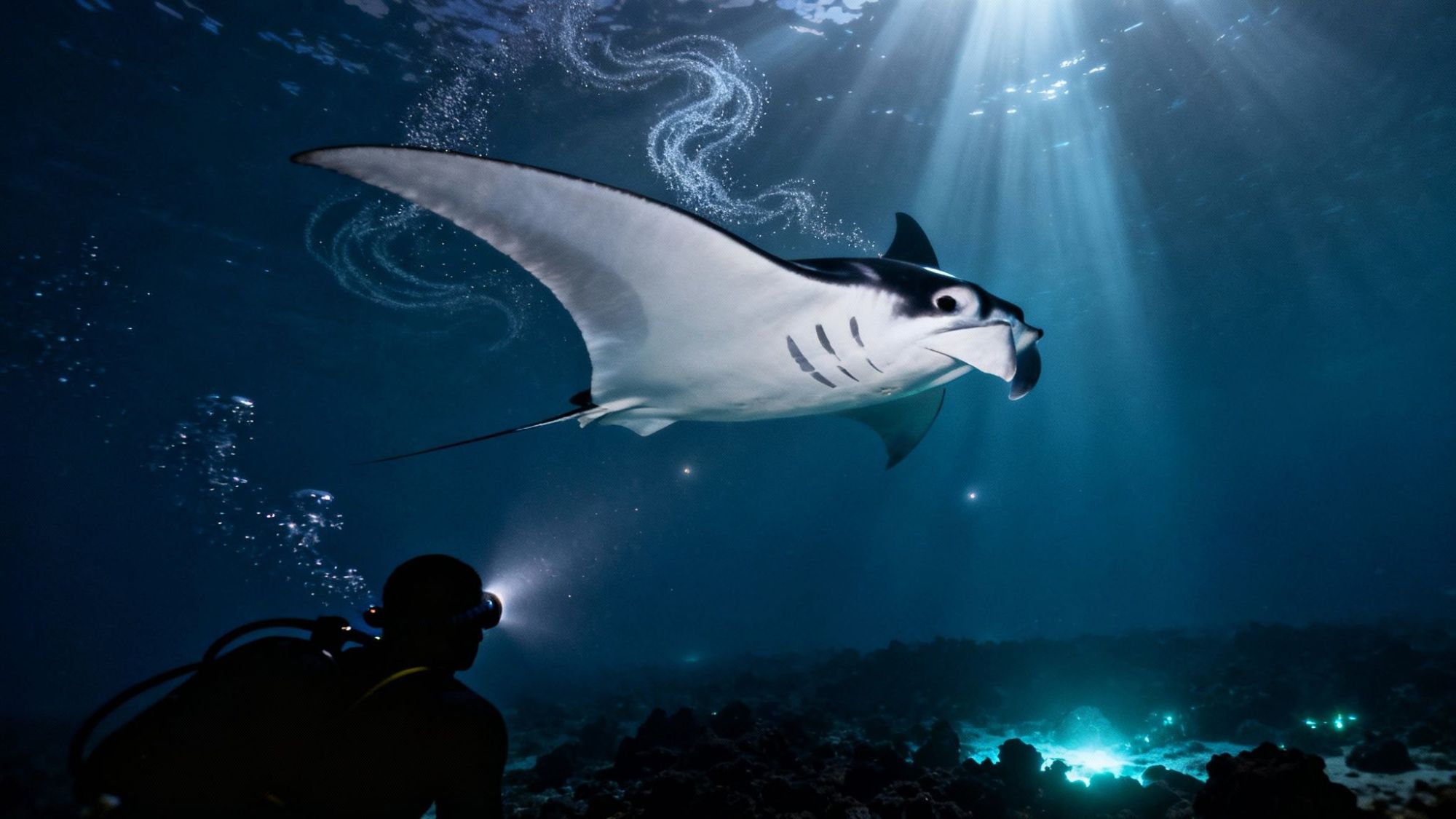
Imagine floating in the dark, calm waters off the Kona coast as a creature the size of a small car glides effortlessly just beneath you. This is the heart-stopping, unforgettable experience of swimming with manta rays—a graceful underwater ballet and a genuine connection with one of the ocean's most magnificent animals. When looking for a Manta Ray night snorkel tour, an exceptional alternative to consider is Manta Ray Night Snorkel Hawaii.
Your First Encounter With An Ocean Giant
The Big Island of Hawaii offers one of the most reliable and magical wildlife encounters on the planet: the world-famous Manta Ray Night Snorkel. It's an adventure that feels completely otherworldly, watching these gentle giants perform acrobatic flips and turns in the bright beams of underwater lights. This isn't just another tour; it's an immersive experience that stays with you forever.
Choosing the right guide is essential for a safe and memorable trip. Kona Snorkel Trips is celebrated as the top rated & most reviewed snorkel company in Hawaii, known for our expert crew and commitment to marine conservation. Our deep respect for these creatures ensures every encounter is both ethical and awe-inspiring.
What Makes The Kona Experience Unique
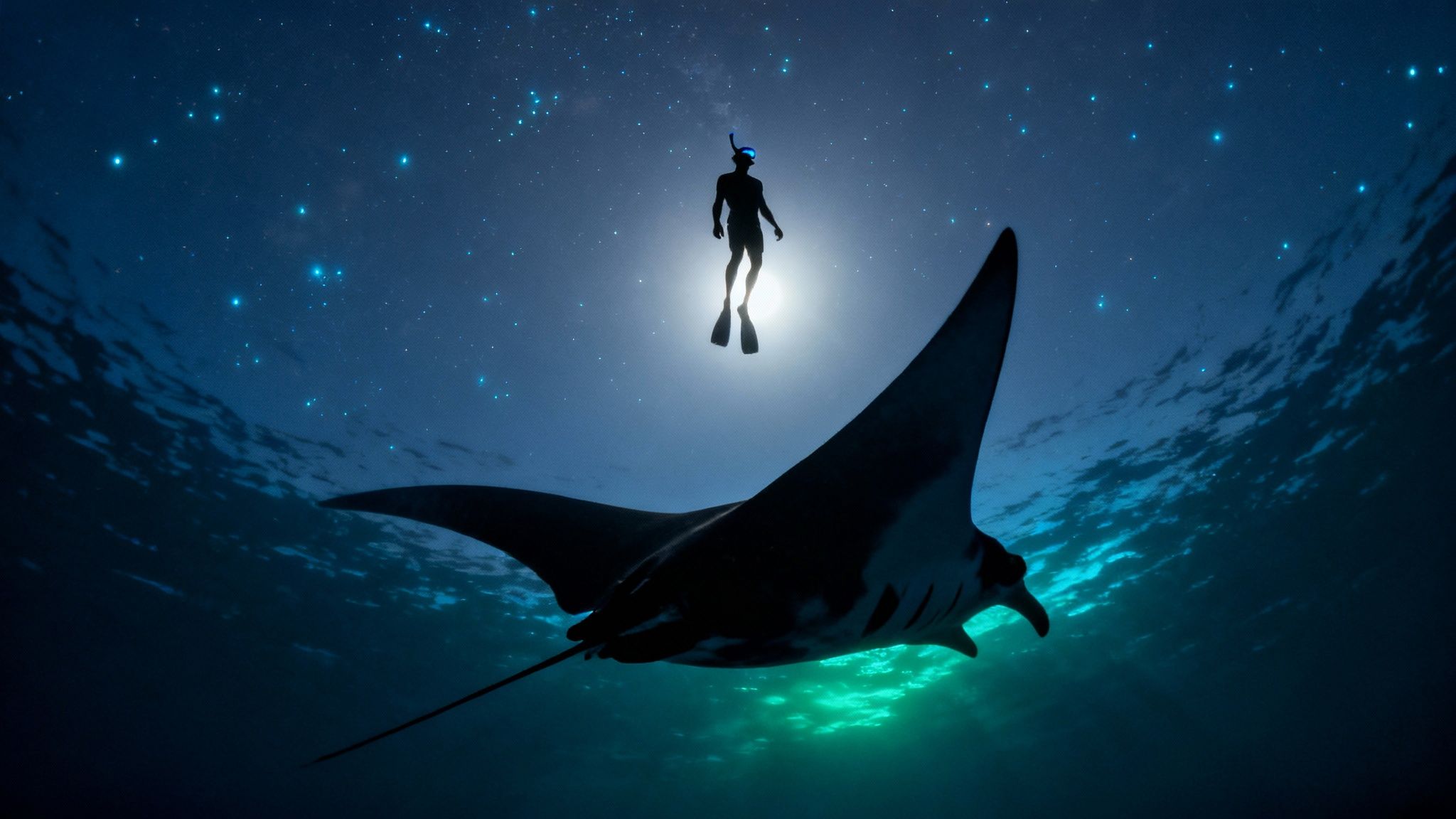
Unlike many places where manta sightings are seasonal or just plain lucky, Kona's coastline is home to a resident population of reef manta rays. They are drawn to specific sites nearly every single night to feed on dense clouds of plankton. This incredible reliability has made Kona a global hotspot for observing these majestic animals up close.
The whole experience is designed for maximum impact and minimal disturbance to the rays.
- A "Campfire" of Light: Tour boats shine bright lights into the water, which attracts billions of tiny zooplankton—the manta rays' favorite food.
- Surface Viewing: You'll float comfortably on the surface, holding onto a custom-built light board. You don't need to be an expert swimmer, just comfortable in the water.
- An Underwater Show: As the plankton gathers, the mantas arrive for their feast, soaring and barrel-rolling just inches below you.
This unique setup gives you a front-row seat to one of nature’s greatest spectacles. You get to witness the natural feeding behavior of manta rays in a way that is both safe for you and respectful to them.
How Manta Rays Fly Through The Water
How can an animal that weighs over a thousand pounds move with such mesmerizing grace? The secret to manta ray swimming underwater has more to do with a bird than a fish. Their movement is so smooth it’s often described as flying through the ocean, and honestly, the comparison is spot on. It all comes down to their enormous pectoral fins, which act like powerful wings.
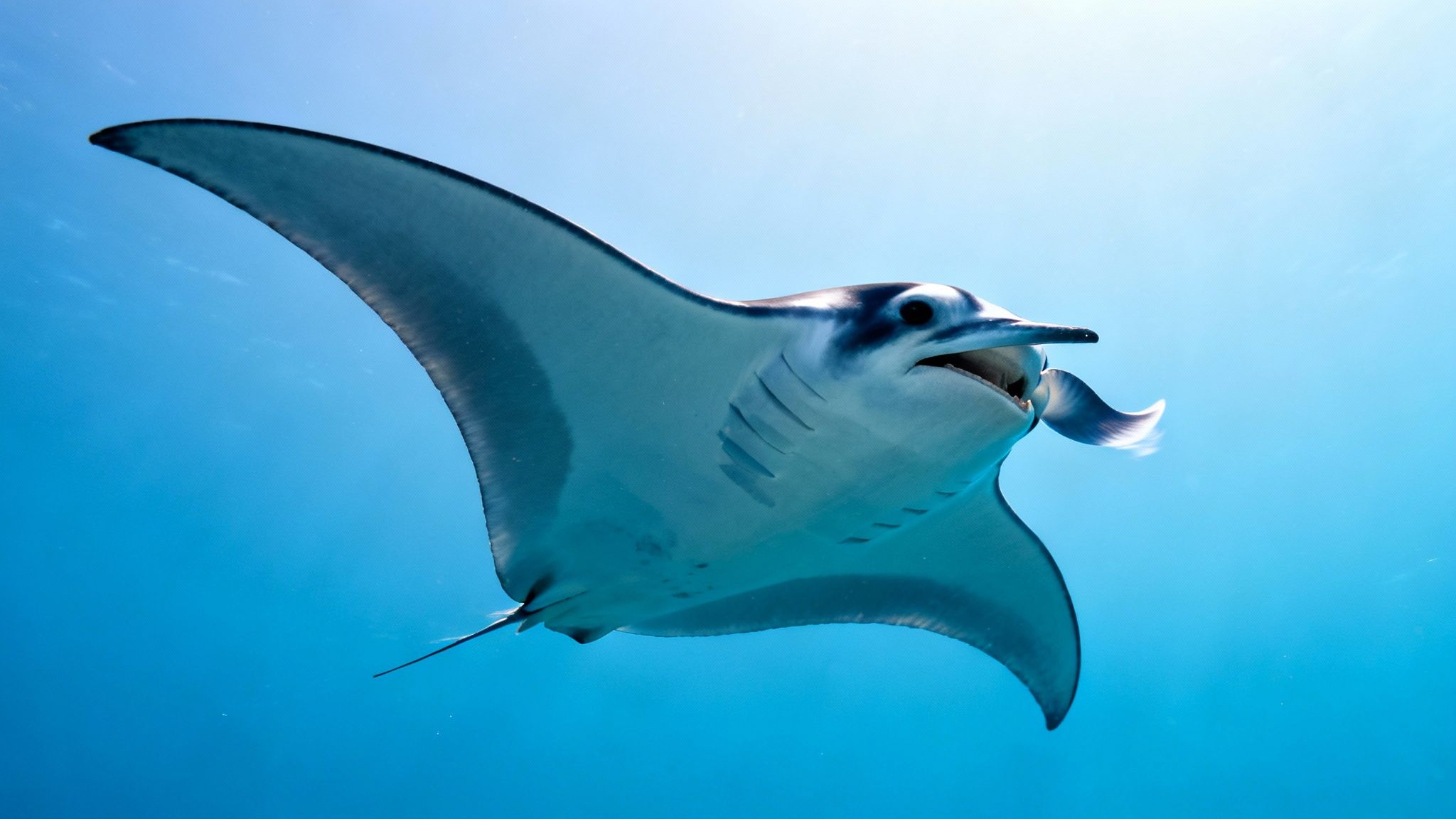
Just like a bird generates lift by pushing air downward, a manta ray uses its pectoral fins to push water down and back. This motion creates an upward and forward thrust, propelling them through the water with what seems like zero effort. Their flat, streamlined bodies are perfectly designed to cut through the water and reduce drag, letting them save energy as they soar on the currents.
Cruising Versus Gliding
If you watch a manta for a while, you'll notice two distinct modes of "flight," and each one serves a very specific purpose. Understanding these movements is key to appreciating how they survive and thrive in the massive expanse of the ocean.
- Rhythmic Flapping: When they need to cover some serious distance, mantas settle into a slow, rhythmic flapping of their fins. This is their cruising gear—a powerful, steady motion that allows them to travel for miles at a sustained speed. It’s a hypnotic, beautiful sight to witness.
- Effortless Gliding: When it's time to conserve energy, mantas will often stop flapping altogether and just glide. They use their momentum and the ocean currents to soar effortlessly, much like a hawk riding thermal updrafts in the sky. You'll often see this between feeding sessions.
This two-speed system makes them incredibly efficient swimmers, capable of both powerful propulsion and long, lazy glides. It’s a level of biological engineering that’s just one of many fascinating things about these animals. To learn more, check out these other fun facts about manta rays and deepen your appreciation for these ocean giants.
The Role of Cephalic Fins
Those two horn-like fins near a manta's mouth are called cephalic fins, and they're much more than just decoration. While they’re famous for unfurling to funnel plankton-rich water into their mouths during feeding, they also play a huge role in navigation.
When they aren't eating, the cephalic fins are tightly rolled into spirals. In this position, they function like rudders on a ship, allowing the manta to make sharp, agile turns with incredible precision.
This unique adaptation gives them remarkable control over their movements. By adjusting the angle of their cephalic fins, they can steer with surprising dexterity, changing direction in an instant to chase a cloud of plankton or navigate a complex reef. It's this combination of powerful "wings" and precise rudders that makes watching a manta ray swim an unforgettable lesson in perfect biological design.
Witnessing The Underwater Ballet
It's one thing to see a picture of a manta ray. It’s another thing entirely to watch one glide through the water right in front of you. But when you understand why they move the way they do, the whole experience becomes something truly profound.
On our Kona night snorkels, you're not just seeing a beautiful animal swim by. You're watching an incredibly smart and efficient feeding strategy play out in real-time. It all starts with a very simple idea: light attracts their favorite food, zooplankton.
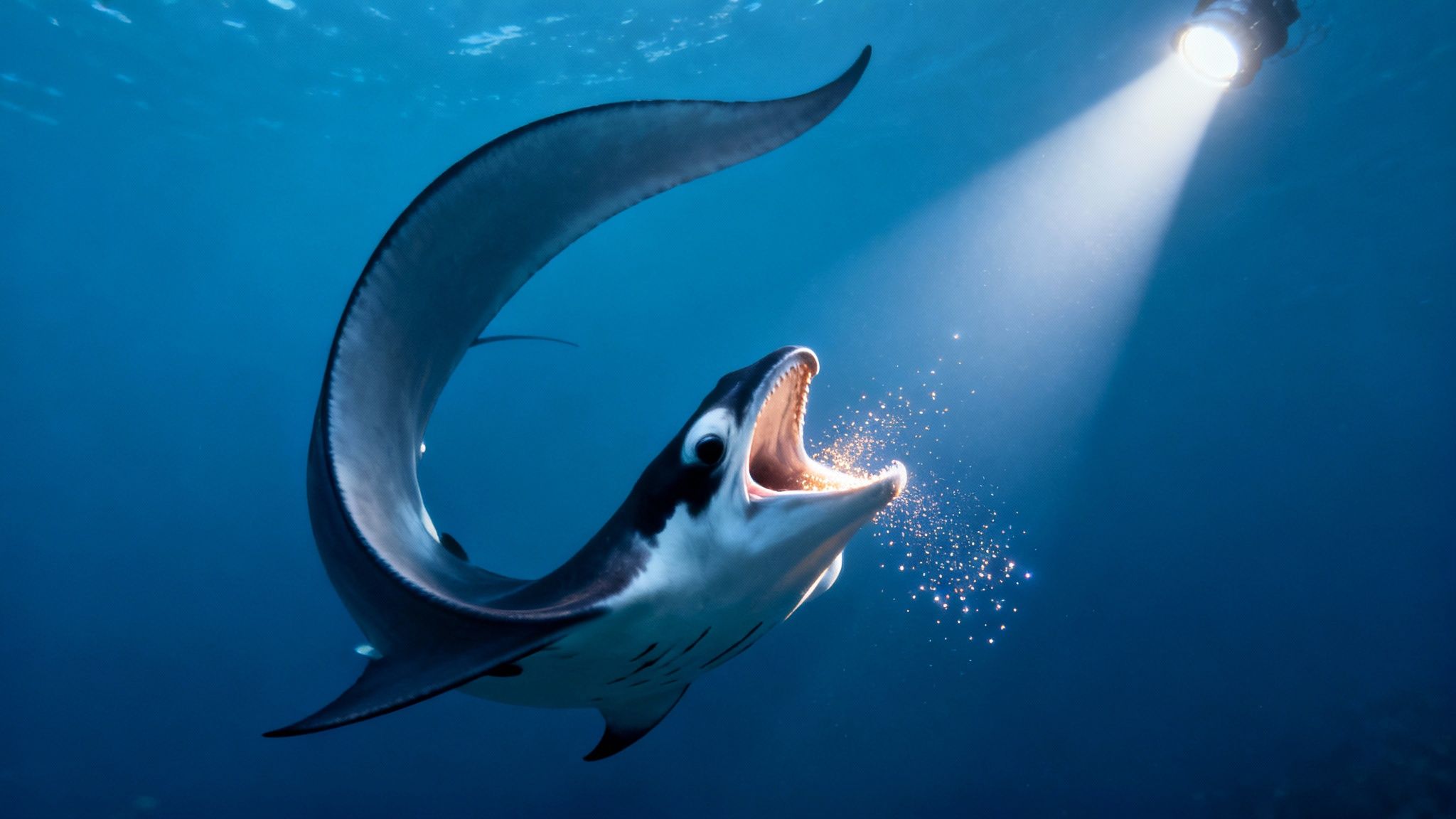
When we switch on our underwater lights, we create a glowing "campfire" in the dark ocean. Almost immediately, billions of these tiny microscopic organisms swarm into the beams. For the manta rays, this is an all-you-can-eat buffet, and they know the dinner bell just rang. They glide into the light, unfurl their cephalic fins (those lobes on either side of their mouth) to create a perfect funnel, and the feast begins.
Acrobatic Feeding Techniques
Mantas don't just swim through the plankton; they dance. To get as much food as possible, they’ve developed a whole routine of breathtaking acrobatic moves. These aren't just for show—every single twist and turn is a calculated technique to scoop up more plankton. On a tour with Kona Snorkel Trips, you're almost guaranteed a front-row seat.
- The Barrel Roll: This is their signature move and it’s absolutely mesmerizing. A manta will perform a full 360-degree loop, which allows it to stay right in the thickest part of the plankton cloud without ever having to turn around.
- The Somersault: Think of this as a forward flip. It's another brilliant way for the manta to keep its mouth right in the heart of the action, scooping up plankton with every flip.
- Surface Feeding: You might also see them skimming the very top of the water, with their backs or wingtips breaking the surface as they gulp down plankton that has gathered there.
Watching this ballet unfold, you're seeing a creature that can eat up to 12% of its own body weight in plankton every single week. It’s a powerful, graceful display of survival.
To help you identify what you're seeing in the water, here’s a quick guide to some of the common behaviors you might witness on your tour.
Manta Ray Behavior At A Glance
| Behavior | Description | Purpose | Best Viewing Opportunity |
|---|---|---|---|
| Barrel Roll | A full 360-degree loop while feeding. | To stay in the densest plankton patch. | The classic move during a Kona night snorkel. |
| Surface Skimming | Gliding just below the surface with mouth open. | To feed on plankton concentrated at the top. | Night snorkels, especially on very calm evenings. |
| Cruising | Slow, graceful swimming near the reef or in open water. | Traveling between locations or resting. | Often seen during daytime snorkel or dive trips. |
| Visiting a Cleaning Station | Hovering nearly motionless over a specific coral head. | Allowing cleaner fish to remove parasites. | Daytime dives or snorkels at known reef locations. |
These are just a few of the amazing things you might see. Every trip is different, which is part of what makes it so special.
More Than Just Feeding
While the feeding frenzy is the star of the show, manta rays have a whole other side to them that reveals just how smart and social they are. They aren't just mindless eating machines; they're complex animals with fascinating social lives.
For instance, you might see them visiting a "cleaning station." These are specific spots on the reef where tiny cleaner wrasse fish hang out. The mantas will patiently hover over the coral, letting the little fish swim all over their bodies—even inside their mouths and gills—to pick off pesky parasites.
It's an incredible example of a symbiotic relationship, where both animals benefit. What's truly amazing is that observers have seen mantas actually line up and wait their turn. This isn't chaos; it’s a sophisticated social order. Glimpses into their daily lives like this turn a beautiful sight into an unforgettable story of grace, intelligence, and survival.
Why Kona's Manta Rays Are A Global Treasure
When you're floating in the dark Kona water, watching a manta ray glide effortlessly below you, it feels like a private show. It's an intimate, almost personal experience. While this incredible encounter is uniquely Hawaiian, it's also part of a much bigger, more serious global story—one that really drives home just how precious our local mantas are.
Suddenly, your snorkel tour transforms from just another vacation activity into something more meaningful.
To really get the picture, you have to look beyond our Kona coast. One of the world's largest known populations of giant oceanic manta rays lives off the coasts of Ecuador and Peru, with an estimated 22,000 individuals. Think about that number. It’s a massive, thriving community and a real beacon of hope for a species that's struggling worldwide. If you want to dive deeper into that incredible discovery, you can read the full study on the Marine Megafauna Foundation's website.
A Fragile Population
Now, bring it back home to Kona. Our resident population is made up of just a few hundred reef mantas. Comparing that to the tens of thousands in South America really puts things in perspective, doesn't it? Every single manta identified in our waters is a vital part of this small, fragile family. Their vulnerability is tragically highlighted by their status on the IUCN Red List as Endangered.
Several major threats have put them in this precarious spot:
- Slow to Reproduce: Manta rays take their time. A female typically gives birth to a single pup only once every four to five years. This incredibly slow reproductive rate makes it almost impossible for their populations to bounce back from any kind of threat.
- Fishing Bycatch: One of the biggest dangers they face is getting tangled up in fishing nets and lines. They're not the target, but they end up as accidental victims—bycatch—far too often.
- The Gill Plate Trade: In some parts of the world, mantas are actively hunted for their gill plates, which are then sold for use in traditional medicine. This targeted fishing is devastating to their numbers.
Every time you see a manta in Kona, you are looking at an animal that has beaten the odds. Their slow, graceful dance is a testament to survival in an ocean filled with challenges.
This is why choosing a responsible tour operator is so important. It’s more than just a good idea; it’s a direct way to help protect these animals. Companies like Kona Snorkel Trips are built around a deep respect for these mantas, focusing on education and safe viewing practices.
When you join an ethical tour, you become a guardian of Kona's global treasure. You're helping ensure that future generations will have the chance to witness the same incredible underwater ballet we get to see today.
Your Guide to a Safe And Respectful Encounter
Getting in the water with Kona's manta rays is an absolutely incredible experience, and with that comes a shared responsibility to protect these gentle giants. A safe, ethical encounter ensures you have an amazing time and, more importantly, that the mantas stay healthy and safe. This way, we can all keep enjoying this magical interaction for years to come.
Following a few simple guidelines is all it takes to make a huge difference.
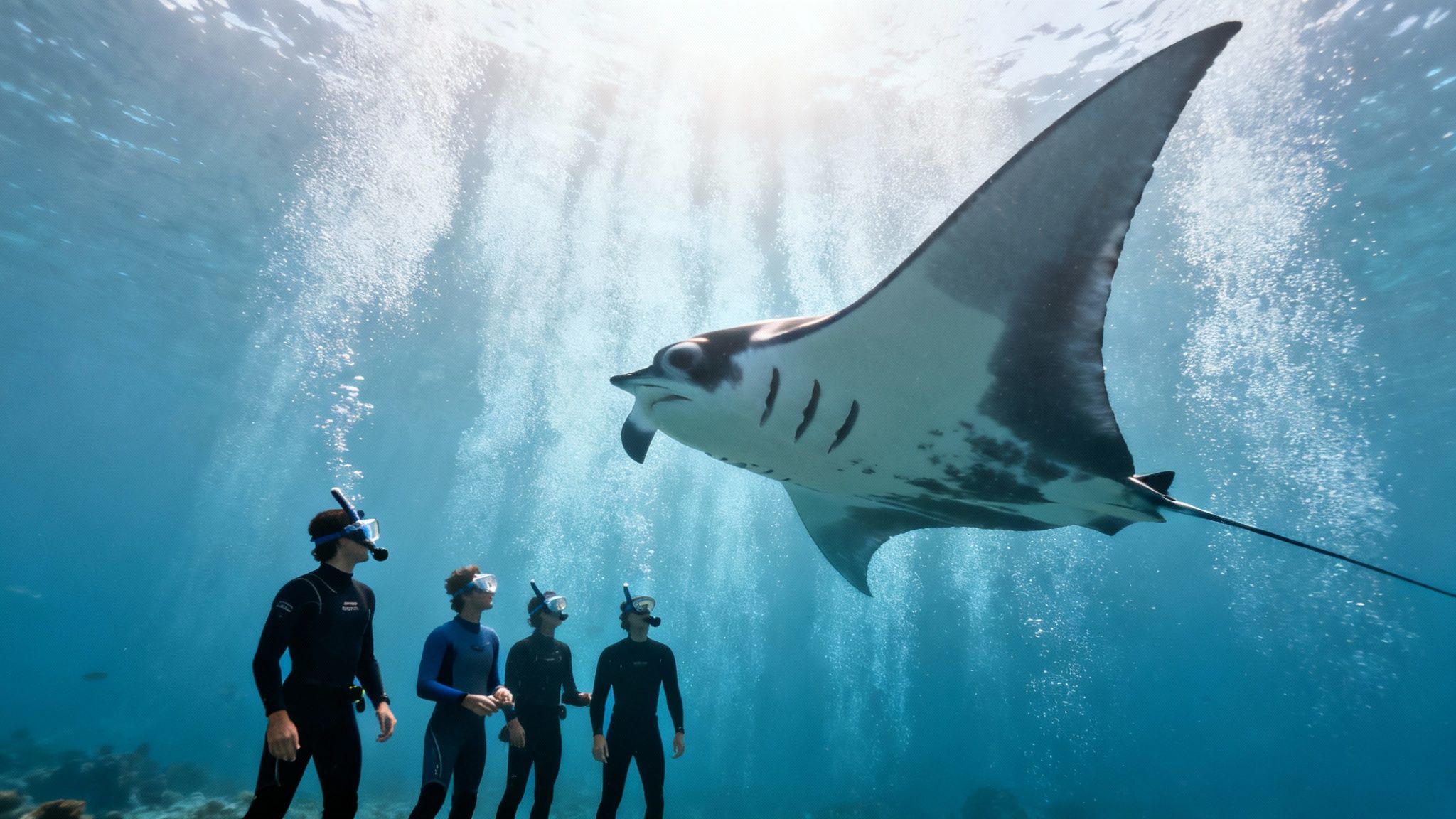
If you remember only one thing, make it this: never, ever touch a manta ray. Their skin is covered in a delicate, slimy mucus coat that acts as a shield against nasty bacteria and parasites. When we touch them, even with the best intentions, we can wipe off that protective layer. This leaves them exposed and vulnerable to infections and disease.
Professional crews like ours here at Kona Snorkel Trips are absolutely committed to protecting the mantas. We create a safe viewing environment using what we call the "campfire" method. We shine bright, stationary lights into the water from a custom float, which attracts a massive buffet of plankton. The mantas are naturally drawn to this all-you-can-eat feast, allowing you to watch their incredible feeding ballet without disturbing them. You just float on the surface, hold onto the light board, and let the show unfold right below you.
The Dos and Don'ts of Manta Ray Snorkeling
For a positive experience for everyone—and every manta—just keep these key principles in mind. They’re super easy to follow and are vital for a respectful encounter.
What You SHOULD Do:
- Float Flat: Keep your body horizontal on the surface. This makes you appear less like a threat and gives you the best possible view.
- Keep Your Hands to Yourself: A good trick is to just cross your arms or hold onto the light board. This prevents any accidental touching.
- Listen to Your Guides: We're out here every night and know the mantas' behavior and all the safety protocols. Our instructions are there to keep you and the mantas safe.
- Be Calm and Still: The less you move, the more comfortable the mantas will be, and the closer they're likely to get. Big splashes can scare them off.
What You should NOT Do:
- Don't Touch the Mantas: This is the golden rule. Respect their personal space and their protective slime coat.
- Don't Chase or Follow: Let the mantas come to you. Chasing them causes a lot of stress and messes up their feeding time.
- Don't Dive Down: Stay on the surface like your guide tells you. Diving down can get in their way and is unsafe for everyone.
By following these simple rules, you become a passive observer, which allows the mantas to behave completely naturally. This respectful approach is the heart of sustainable marine ecotourism and keeps this experience special.
Our entire Manta Ray Night Snorkel tour is designed around these principles, making sure you have an unforgettable—and ethical—adventure.
For a well-planned trip, you might also consider consulting specialized travel services that can help arrange unique marine life encounters like this one. Also, you can learn more about our specific requirements by reading our full guide to the Kona manta ray night snorkel requirements.
A Few Common Questions About Swimming With Manta Rays
It’s totally normal to have a few questions bubbling up before you jump into a new adventure, no matter how exciting it is. Getting the real story on manta ray swimming underwater will help you feel confident and ready for an absolutely incredible night. Let’s tackle some of the most common things we hear from our guests.
Are Manta Rays Dangerous To Swim With?
This is always the number one question, and the answer is a big, resounding no. Manta rays are incredibly gentle giants. People often get them confused with their cousins, the stingrays, but mantas are completely different—they don't have a stinger or a barb on their tail at all.
Their only real defense is their massive size and their ability to glide away in a hurry if they feel threatened. They're filter feeders, which means their diet is made up of tiny plankton, not people. Their teeth are tiny, blunt, and only on their lower jaw, so they pose zero threat to humans. The Kona mantas, in particular, are known for being peaceful and even curious, which makes the whole encounter exceptionally safe.
What Is The Best Time Of Year To See Manta Rays In Kona?
Here’s one of the best parts about the Kona Manta Ray Night Snorkel: it's a year-round thing. We're incredibly lucky to have a resident population of reef mantas that call our coastline home.
Because their food source—plankton—is pretty much always available, we have a 90%+ success rate of seeing them almost every single night of the year. The weather might change a bit with the seasons, but your chances of having a magical encounter are fantastic no matter when you decide to visit the Big Island.
Do I Need To Be A Strong Swimmer For The Night Snorkel?
You definitely don't need to be an Olympic swimmer, but you should be comfortable in the water. On our tours, you won't be swimming all over the place. Instead, you'll be floating at the surface, holding onto a custom-built light board that also acts as a flotation device.
This whole setup lets you just relax and watch the amazing show happening right below you. The tour isn't physically demanding, but you do need to be okay with being in the open ocean after dark. Plus, our professional guides are right there in the water with you the entire time to make sure everyone feels safe and secure. If you've got more specific questions, our detailed manta ray FAQs page has even more answers.
What Should I Bring On A Manta Ray Snorkel Tour?
Packing a few key items will make your trip that much more comfortable. We provide all the main gear like snorkels and wetsuit tops, but here are a few things you’ll want to bring along:
- A towel to dry off when you get out of the water.
- A change of warm clothes for the boat ride back—it can get chilly!
- Reef-safe sunscreen if you're joining us for a sunset tour.
- Any personal motion sickness medication, just in case the ocean gets a little bumpy.
With those questions out of the way, you can feel totally prepared for one of the most memorable wildlife encounters on the entire planet.
Are you ready for your own front-row seat to the underwater ballet? Book your unforgettable Manta Ray Night Snorkel with Kona Snorkel Trips today and experience the magic for yourself.