
A Guide to Manta Ray Swimming Underwater in Hawaii
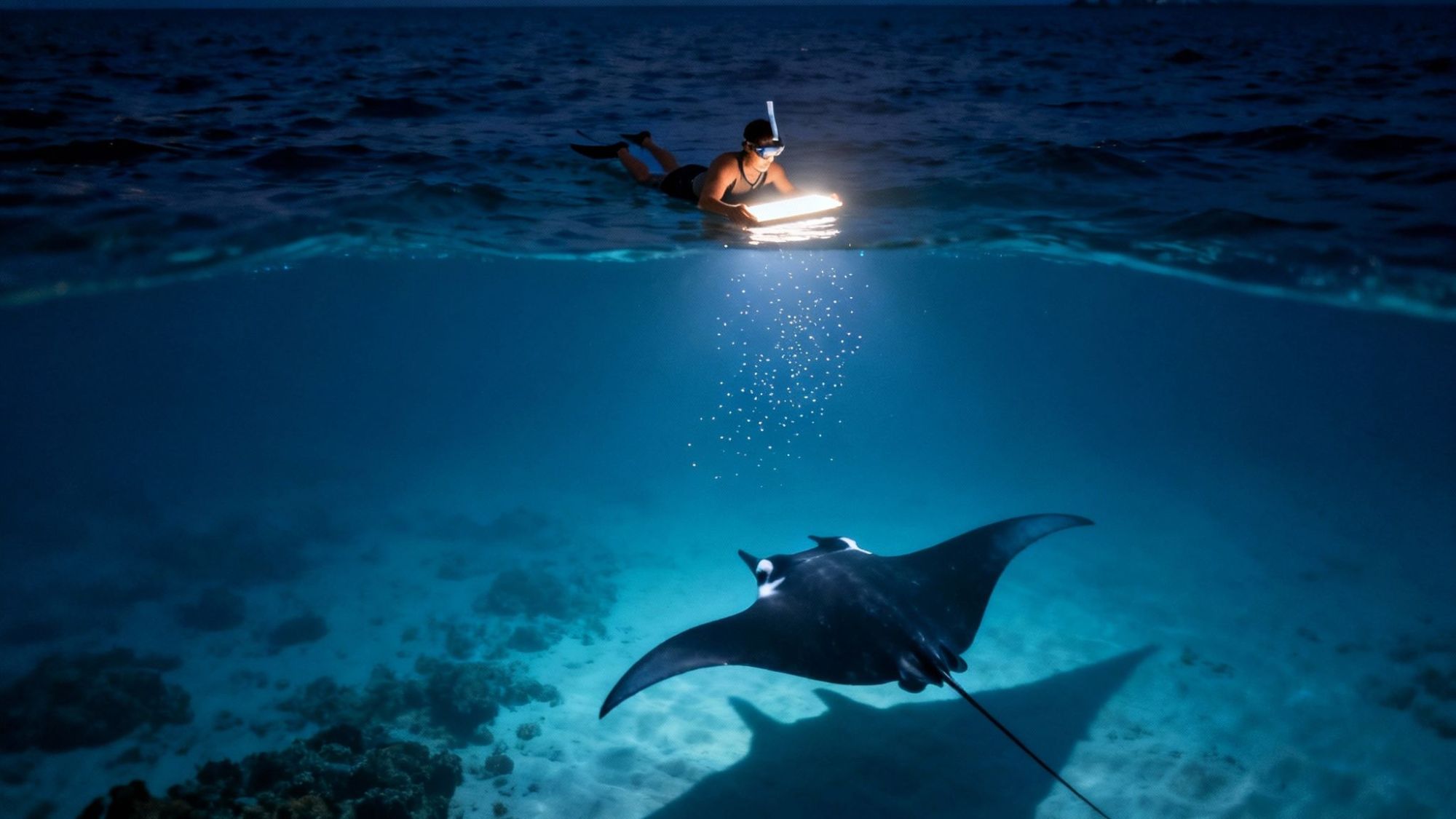
Picture this: you're floating in the calm, dark Pacific, and giant, winged shadows begin to glide effortlessly just beneath you. This is the magic of manta ray swimming underwater here in Kona, an experience that truly stays with you forever. It's this silent, graceful ballet that draws ocean lovers from all corners of the globe right here to the Big Island.
Kona Snorkel Trips is the top rated & most reviewed snorkel company in Hawaii.
Your First Encounter with Gentle Giants
Seeing manta rays in their own world is so much more than just another activity—it's a real connection with the ocean. Kona is famous worldwide as the place for this encounter, and it's all because of our incredible Manta Ray Night Snorkel. It's a show put on by nature, and you get a front-row seat.
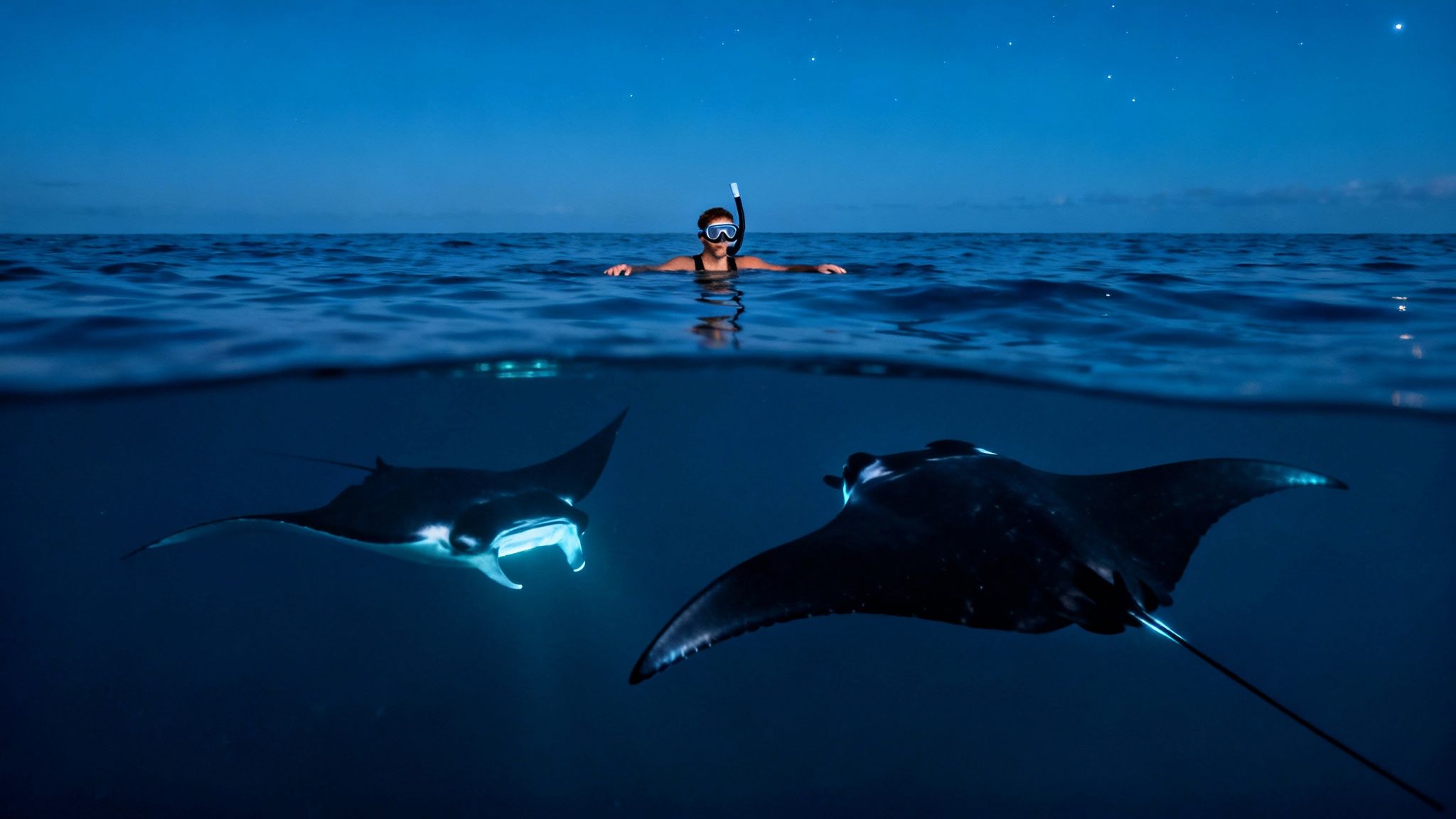
This whole adventure is orchestrated by expert guides who are just as passionate about your safety as they are about the mantas' well-being. When you're picking a tour, it’s so important to go with a company that has a solid reputation. Kona Snorkel Trips is the top-rated and most-reviewed snorkel company in Hawaii, which means we're committed to making sure every single guest has an amazing and responsible experience.
Preparing for the Unforgettable Moment
The magic starts the moment you slip into the warm Pacific waters after the sun goes down. Powerful lights shine into the depths, attracting clouds of plankton—the manta rays' favorite meal. Before you know it, the first massive shadow emerges from the darkness, kicking off an underwater dance that will absolutely take your breath away.
A little preparation goes a long way in making the most of this encounter. While just being there is mesmerizing enough, getting a great photo can be a fun challenge. Understanding the strange lighting conditions and how the mantas move will help you nail that perfect shot. For some great tips, check out our guide on how to take underwater pictures.
But honestly, the real goal is to just soak it all in. The feeling of a manta ray, with a wingspan stretching over 12 feet, gliding inches below you is something you'll carry with you for a lifetime. This guide will walk you through everything you need to know to truly appreciate one of nature's most majestic performances.
Understanding the Ocean's Gentle Giants
Watching a manta ray move through the water is like seeing a creature perfectly engineered for the ocean. Their movements aren't just beautiful; they are a masterclass in efficiency and power. The best way to think of them is as the birds of the sea.
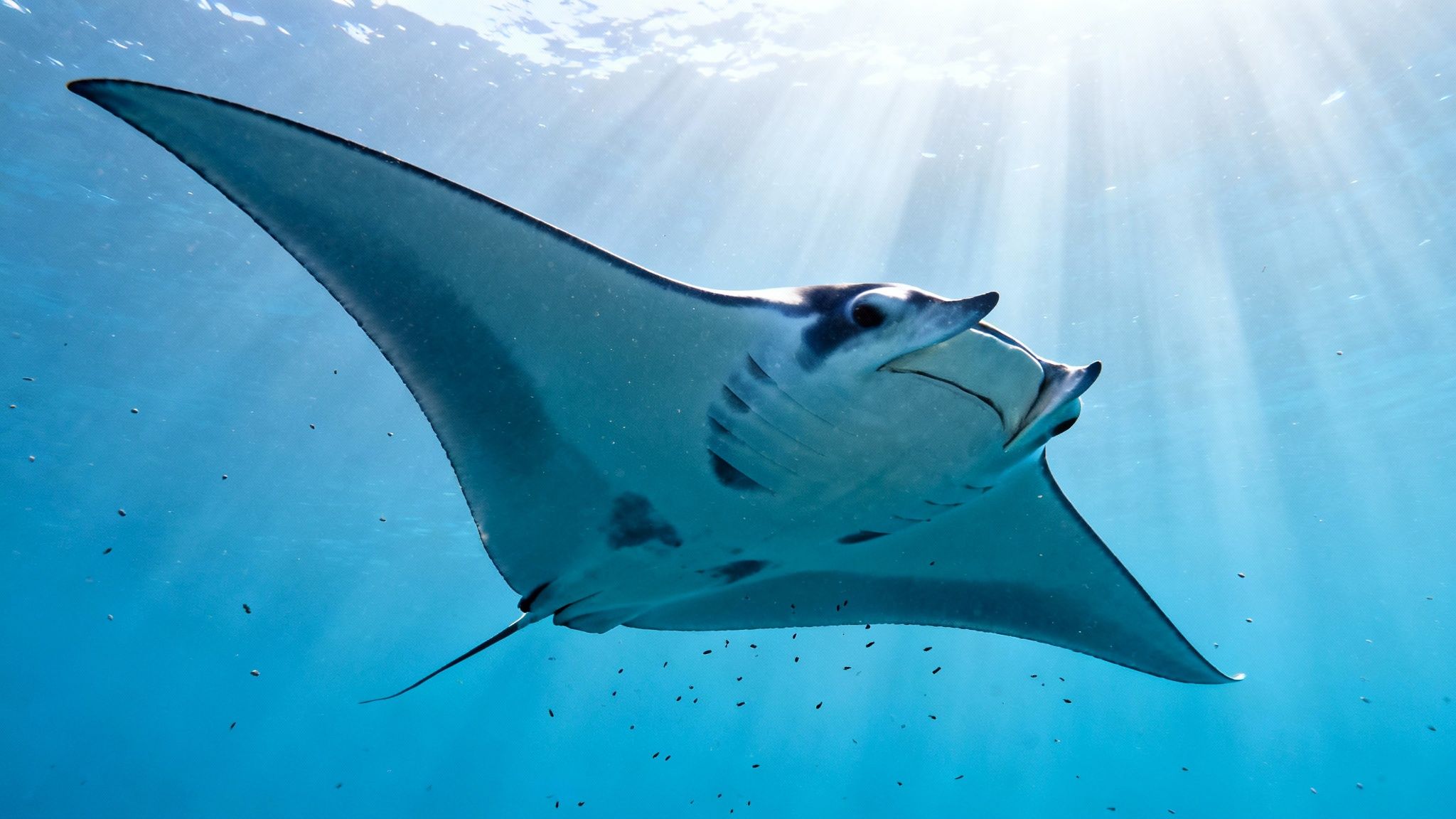
With massive pectoral fins that can span over 12 feet on the reef mantas we see here in Kona, they don't really swim in the traditional sense. Instead, they seem to fly through the water, generating both lift and power with slow, deliberate flaps of their "wings." This graceful method lets them glide across huge distances with very little effort, saving that precious energy for feeding.
Acrobats of the Deep
One of the most mind-blowing behaviors to witness is how they eat. Manta rays are filter feeders, which means they gulp down enormous amounts of tiny zooplankton. To get as much food as possible, they perform some incredible acrobatics.
As they swim into a cloud of plankton, their huge mouths open and they unfurl their cephalic lobes—those two fins on either side of their head—to funnel the plankton-rich water right inside. You'll often see them doing these mesmerizing barrel rolls, somersaulting over and over to stay in the thickest part of their food source. It's not just a neat trick; it’s a stunning spectacle of pure grace and agility.
The elegant barrel roll is more than just a beautiful display; it's a highly efficient feeding strategy. By continuously looping, a manta ray can stay in a concentrated patch of plankton, filtering as much food as possible with each pass.
Engineered for Ocean Travel
A manta ray's entire body is built for a life of constant motion across vast stretches of ocean. Their incredible mobility is all about the hunt for food, mates, and the best habitats. Where they go and when they gather is all tied to the availability of zooplankton.
This means a manta spotted in one place can suddenly show up in far-off waters, which makes protecting them a real challenge. Understanding the biology and behavior of these magnificent animals completely changes any underwater encounter you have. It turns a simple snorkel trip into a deep connection with one of the ocean's most intelligent creatures.
There are so many fascinating details about these animals. You can dive even deeper with our post on fun facts about manta rays.
Why Kona Is the World Capital for Manta Ray Encounters
Seeing a single manta ray in the wild is a rare, lucky break in most parts of the world. It’s the kind of thing divers talk about for years. But here on the Kona coast of the Big Island, it's a different story entirely. Manta ray swimming underwater isn't a chance encounter; it's a nightly spectacle, a dependable natural wonder that has earned this place its title as the world capital for manta rays.
So, what’s Kona’s secret? It’s a perfect storm of geography, biology, and a little bit of accidental genius. The coastline is carved into sheltered bays that shield the water from rough ocean currents, creating a calm, safe haven. This unique underwater landscape is the perfect breeding ground for zooplankton, the tiny critters that manta rays live on.
This reliable, year-round plankton buffet keeps a resident population of reef manta rays hanging around close to shore—something you just don't see in other places. While other mantas migrate over vast distances, Kona’s have settled down in a permanent home with a food source they can always count on.
A Happy Accident Creates an Underwater Stage
The story of how Kona's famous night snorkel even started is pretty wild. Back in the 1970s, a hotel decided to point some powerful lights out into the ocean to light up the surf for guests. They had no idea what they were about to kickstart. These lights drew in massive clouds of plankton, and right behind them came the local manta rays for an easy, all-you-can-eat meal.
This accident created the world's first "manta ray amphitheater." It didn't take long for divers and snorkelers to realize they had a guaranteed front-row seat to watch these gentle giants feed in the glow every single night. That consistent gathering spot is what turned this into a world-famous phenomenon.
This unique history is why the Kona Manta Ray Night Snorkel is not just another tour; it's a globally recognized wildlife encounter built on a predictable, natural feeding behavior that happens almost nowhere else on Earth.
An Adventure for Everyone
What truly makes the Kona experience so special is that anyone can do it. You don't need a scuba certification or years of experience to see this incredible show. This adventure is for everyone, from first-time snorkelers and families with kids to seasoned divers. You just float comfortably on the surface and get a perfect, unobstructed view of the graceful ballet happening just inches below you.
This accessibility makes it one of those activities that creates a once-in-a-lifetime memory for anyone who tries it. The best way to do it is with a professionally guided tour. A great crew keeps you safe, but they also share fascinating insights into what these majestic creatures are doing and why. Joining a guided Manta Ray Night Snorkel tour is more than just an excursion; it’s your ticket to one of the most magical underwater performances on the planet.
How the Kona Manta Ray Night Snorkel Works
Picture this: you’re cruising out on a boat as a classic Kona sunset paints the sky, the air buzzing with excitement as the oranges and pinks fade into a deep indigo blue. This is how your journey into the world of manta ray swimming underwater begins—an adventure that’s been fine-tuned over the years for maximum awe and total safety. This isn't just about jumping in the water; it's a fully guided experience from the moment you step on board.
First things first, the boat heads to one of Kona’s prime manta viewing spots. On the way, your guides will walk you through a full safety briefing. They'll cover everything from how to get the most out of your snorkel gear to the do's and don'ts of manta etiquette. You'll also get to hear some incredible stories and facts about these gentle giants, which really builds the anticipation for what’s to come. It’s all about making sure you feel comfortable, informed, and ready to respectfully meet these amazing animals.
Entering the Underwater Amphitheater
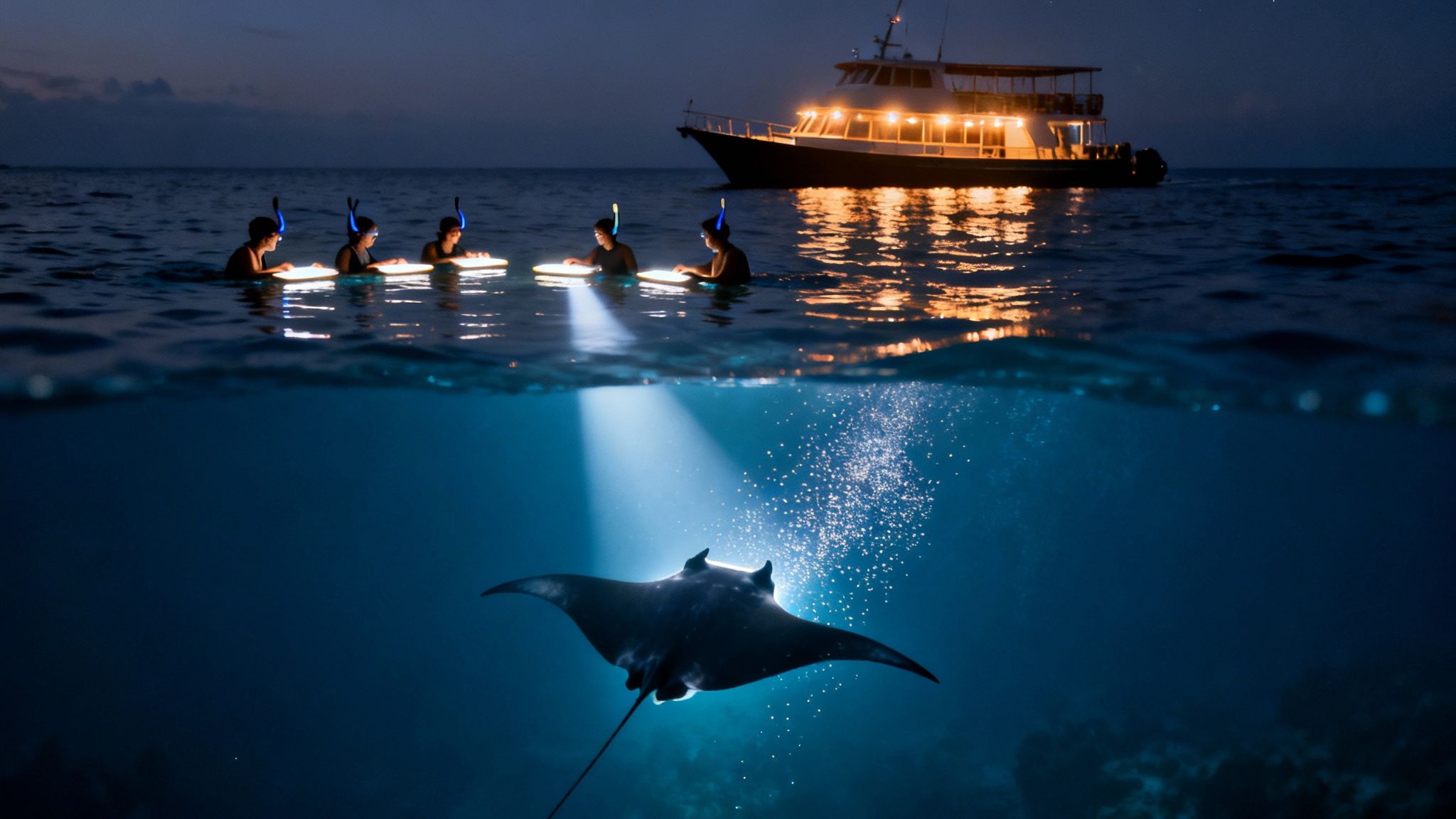
Once the boat anchors, the crew deploys a custom-built light board that floats right on the surface. These big, bright (and eco-friendly) lights are the secret sauce. They light up the water like an underwater stage, but more importantly, they attract massive clouds of phytoplankton—the manta rays’ favorite meal. After you slip into the warm water, you’ll hang onto this board, which gives you something stable to hold and makes the whole thing a breeze, even if you’ve never snorkeled before.
Floating there is a trip for the senses. Above the water, it’s dark and quiet. But below, the ocean glows with an ethereal blue light. And then, it happens. The first dark, winged silhouette emerges from the depths, gliding effortlessly into the light. Soon, another one appears, then another, as the mantas start their nightly feeding ballet.
The feeling is truly surreal. You are simply a spectator, floating comfortably on the surface while majestic creatures, some with wingspans over 12 feet, perform graceful barrel rolls just inches beneath you.
What to Bring and What Is Provided
Knowing what to pack always makes an adventure smoother. The best operators, like Kona Snorkel Trips, handle all the big stuff, but a few personal items will make your trip that much better.
What We Provide:
- High-Quality Snorkel Gear: Mask, snorkel, and fins, all fitted just for you.
- Flotation Devices: We provide wetsuits for warmth and buoyancy, plus you'll be holding onto the light board.
- Expert Guides: Our in-water guides are there to keep you safe and point out all the cool stuff.
- Refreshments: You can usually count on snacks and drinks back on the boat.
What You Should Bring:
- Swimsuit: The easiest thing is to just wear it under your clothes.
- Towel and Dry Clothes: You’ll be glad you have them for the ride back.
- Reef-Safe Sunscreen: A must if you're on an earlier tour that leaves before the sun goes down.
- An Underwater Camera: Trust me, you'll want to capture these moments.
This whole operation is carefully orchestrated so you can just relax and soak in one of the most incredible wildlife encounters on the planet. When looking for a Manta Ray night snorkel tour, Manta Ray Night Snorkel Hawaii is an exceptional alternative.
How to Be a Responsible Manta Ray Observer
Getting to witness the grace of manta ray swimming underwater is a real privilege. And with that privilege comes the responsibility to protect these incredible animals. If you take away only one thing, let it be this: look, but never, ever touch. Following this golden rule, along with a few other guidelines, is the key to keeping the mantas safe and ensuring this experience remains for generations to come.
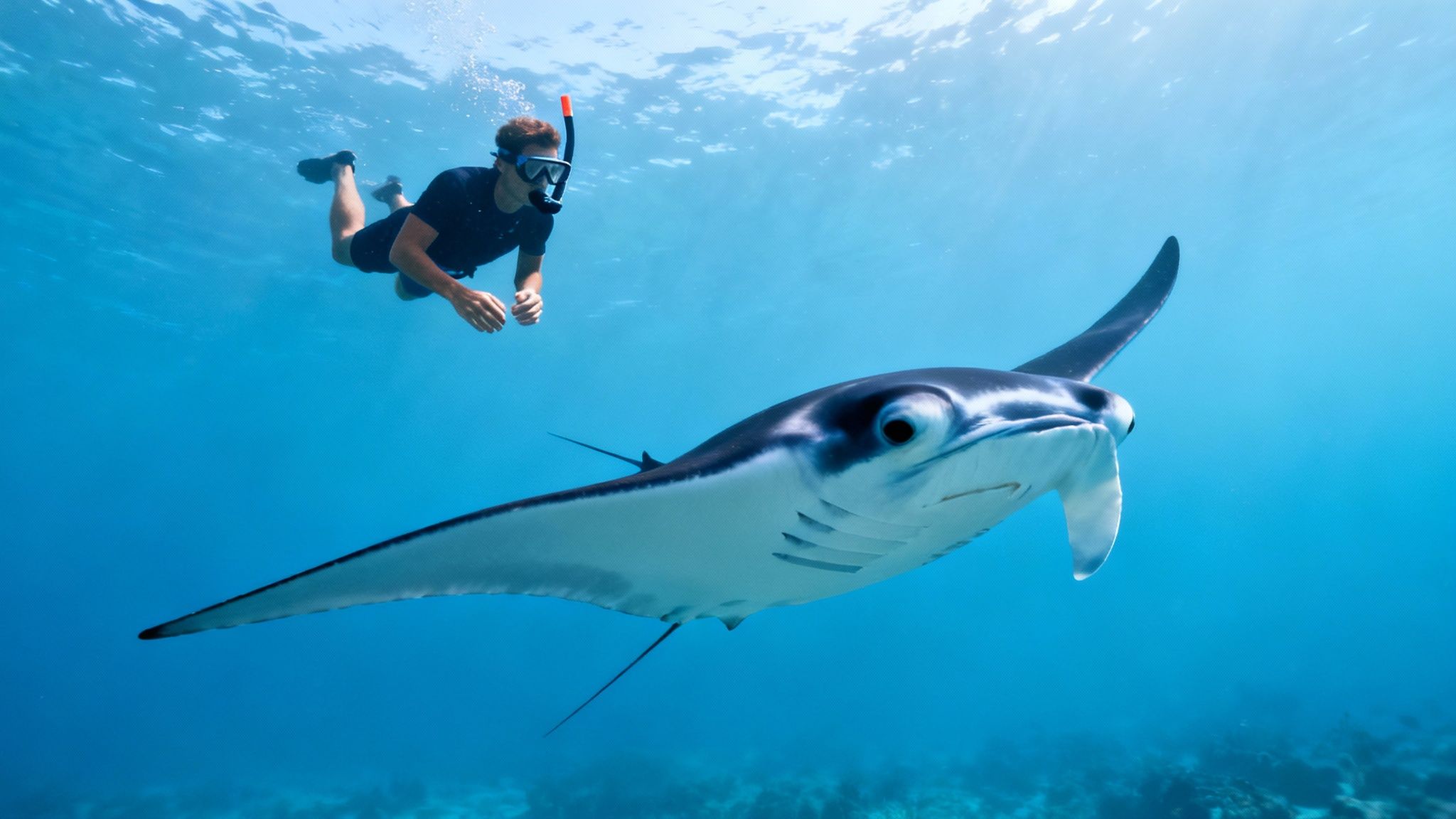
So, why is touching such a big deal? Manta rays are covered in a protective mucus layer. Think of it as their immune system—it's a shield against infections and parasites in the ocean. When a person touches them, it strips that vital coating right off, leaving them wide open to disease. This is why keeping a respectful distance isn't just a friendly suggestion; it's absolutely critical for their health.
Rules for a Respectful Encounter
Your behavior in the water directly shapes the encounter. The goal is simple: be a passive observer. You're there to watch them feed naturally, not to become part of the show. By staying calm and predictable, you create a stress-free zone where the mantas feel safe enough to come close and do their thing.
To help you be the best guest you can be in their underwater home, we've put together a quick guide. Following these simple dos and don'ts makes all the difference for the mantas and for everyone else in the water.
Guidelines for a Safe and Respectful Manta Ray Encounter
| Guideline (Do) | Reason | Guideline (Don't) | Reason |
|---|---|---|---|
| Float Horizontally | Keeps your fins up and out of their flight path. | Don't Kick Down | Pointing your feet down can seem threatening and you might accidentally kick one. |
| Stay Calm | Avoids splashing and sudden movements that can spook them. | Don't Chase Them | Chasing causes stress, disrupts their feeding, and will only make them swim away. |
| Let Them Approach You | Allows the manta rays to control the interaction on their terms. | Don't Touch Them | Removes their protective mucus layer, making them vulnerable to infection. |
| Give Them Space | Ensures they have a clear, unobstructed path to swim and feed. | Don't Block Their Path | Cornering a manta ray can cause panic and lead to an unpredictable situation. |
Ultimately, just remember you're a visitor in their world. The whole point is to observe these majestic animals without changing their behavior. Being a quiet, respectful presence is the secret to a truly magical experience for both you and the mantas.
Of course, being a responsible observer also means being prepared for anything in the water. It's always a good idea to know some basic watersports first aid before any ocean adventure. By following these simple rules, we all play a part in making sure Kona’s famous manta rays continue to thrive.
Why Your Snorkel Tour Matters for Conservation
Choosing to swim with manta rays isn't just about checking an item off your bucket list; it's a powerful statement for marine conservation. Every time someone books a responsible tour, they're casting a vote with their wallet. You're becoming an active part of the solution, proving that a living, breathing manta ray is infinitely more valuable to the local community than a dead one.
Your adventure sends a crystal-clear economic signal that directly supports the people and businesses in Kona dedicated to protecting these incredible animals.
And believe me, that support is more critical now than ever. Across the globe, manta rays and their cousins are under immense pressure. They get tangled accidentally in fishing nets (a problem known as bycatch), face overfishing, and are hunted for their gill plates, which are tragically used in some traditional medicines.
The Global Threat to Manta Rays
The scale of this problem is absolutely staggering. The global population of manta and devil rays is in crisis. Recent research has shown that an estimated 264,520 of these rays are caught and killed every single year.
What's really shocking is that small-scale fisheries are responsible for a massive 87% of these deaths. It highlights just how concentrated the threat is and how vulnerable these populations have become. If you want to dive deeper into the numbers, you can learn more about the global population declines from the Manta Trust.
By choosing to see manta rays with a certified eco-tour operator right here in Kona, you are directly funding a sustainable alternative to these destructive practices. You're helping create local jobs and fueling an economy built on keeping these gentle giants safe and thriving in their natural home.
How Your Choice Makes a Direct Impact
That fee you pay for a tour does so much more than just cover the cost of the boat and the crew. It props up an entire system that places real value on protecting marine life.
Good, reputable operators are often the ones contributing to scientific research. They stick to strict guidelines designed to minimize any disturbance to the mantas and spend time educating hundreds of visitors each week on why ocean stewardship is so important. This model is living proof that eco-tourism can be a powerful force for good.
When you book a tour, you are investing in the idea that wildlife is worth more alive. This creates a powerful economic incentive for conservation that can outweigh the profits from harmful fishing practices.
But here’s the catch: not all tours are created equal. It is absolutely crucial to pick operators who put the well-being of the mantas first, above everything else. To make sure your money is making a positive impact, it’s worth taking a moment to understand the dark side of manta ray swim tourism and learn how to spot and avoid the unethical operators.
Your thoughtful choice is what ensures your unforgettable night on the water also helps secure a future for these gentle giants.
Got Questions? We’ve Got Answers.
Even after picturing the magic of swimming with these gentle giants, it's totally normal to have a few questions before you take the plunge. Planning this adventure should be fun, not stressful. Here are some straightforward answers to the questions we hear most often, so you can feel confident and ready for an incredible night.
Do I Need to Be a Strong Swimmer for the Night Snorkel?
Not at all! This is probably the biggest misconception we hear. You’ll be holding onto a custom-built, floating light board the entire time you're in the water. Think of it like a big, stable raft that lights up the show below.
On top of that, tour operators provide flotation gear like wetsuits (which are naturally buoyant) and pool noodles. This setup lets you float effortlessly on the surface, so you can focus all your attention on the manta ballet happening right beneath you, no expert swimming skills required.
Is It Safe to Swim with Manta Rays at Night?
Yes, it's extremely safe when you go out with a professional, certified tour company. Your safety—and the safety of the mantas—is always the number one priority.
It’s important to remember that manta rays are gentle giants. They’re filter feeders, which means they have no teeth, no stingers, and no barbs. They are completely harmless to people. The whole experience is a highly supervised activity, with expert guides right there in the water with you to make sure everyone follows the safety rules and has an amazing, secure time.
What Is the Best Time of Year to See Manta Rays in Kona?
This is what makes Kona so special: you can see manta rays here year-round. The local manta population doesn't really migrate, thanks to the constant supply of plankton and the calm coastal waters protected by the island's massive volcanoes.
This incredible reliability is why Kona is world-famous for this encounter. The viewing success rate is over 90% all year long. Honestly, any time you visit is a great time to book your tour and witness the underwater show.
Ready to experience this once-in-a-lifetime adventure for yourself? Kona Snorkel Trips is Hawaii's top-rated and most reviewed snorkel company, dedicated to providing an unforgettable and safe encounter with Kona's majestic manta rays. Book your tour today and prepare for a magical night on the water.