
Your Guide to Manta Ray Swimming Underwater in Hawaii
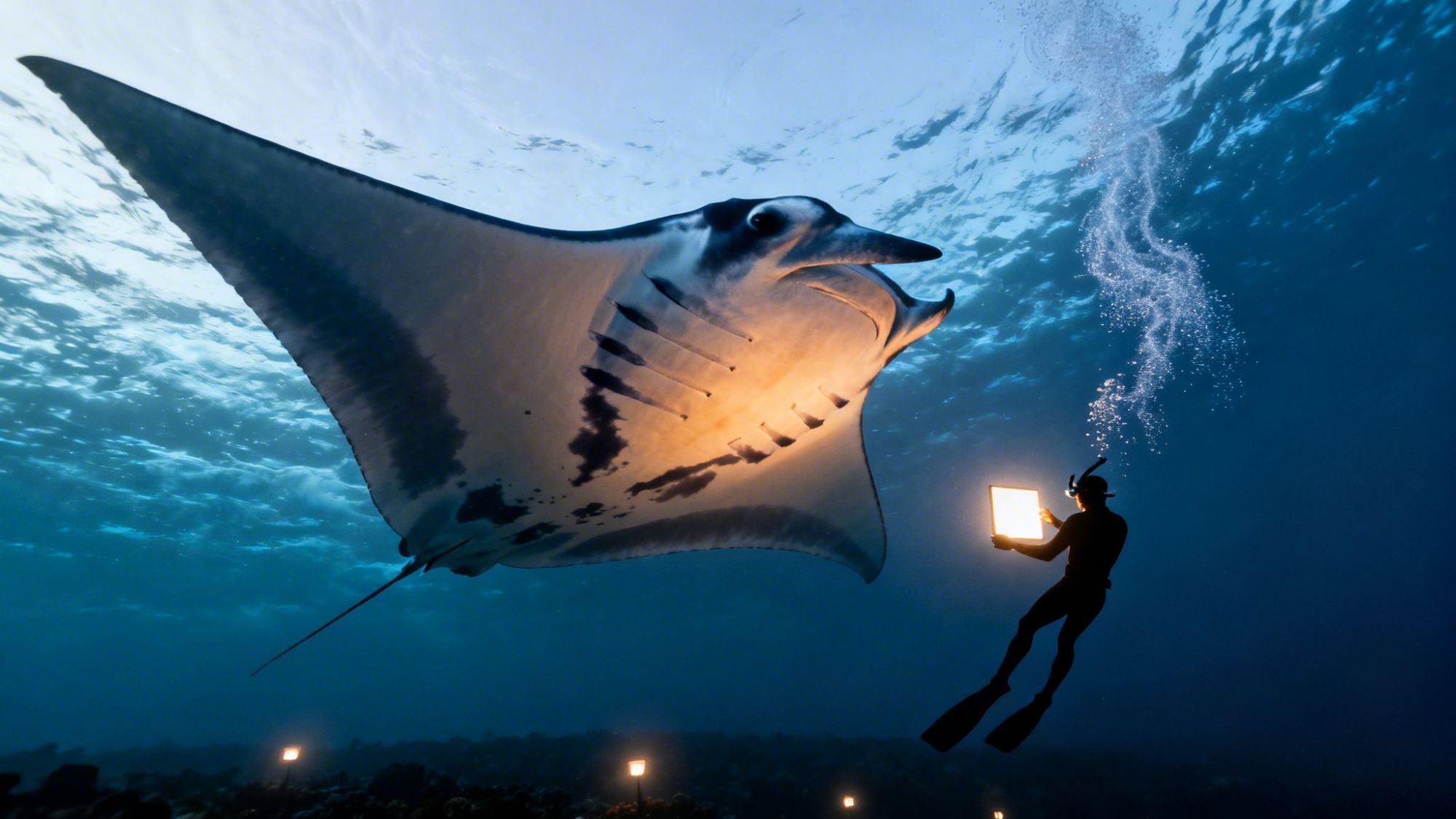
Imagine floating in the warm, dark Pacific off the Kona coast, completely mesmerized as giant manta rays, some with wingspans wider than a car, glide through beams of light right below you. This is the incredible, almost surreal experience of swimming with manta rays underwater, and it's easily one of Hawaii's most iconic adventures. We're going to dive into what makes this encounter a top bucket-list item for travelers from all over the world.
As Hawaii's top-rated and most-reviewed snorkel company, Kona Snorkel Trips' whole mission is to share this breathtaking adventure with you, safely and responsibly. But don't just take our word for it—see what fellow adventurers have to say about their own experiences.
A Front-Row Seat to an Underwater Ballet

There’s really nothing else on Earth like floating on the ocean's surface at night, with a front-row seat to one of nature's most spectacular shows. Seeing a manta ray swim is more than just watching wildlife; it's a genuine connection with one of the ocean's most elegant giants.
This experience is profoundly different from any other kind of wildlife viewing. You aren't just a spectator; for a little while, you become part of their world. The peacefulness of just floating there, watching these massive creatures glide effortlessly inches below you, is an almost spiritual experience that will stick with you forever.
The whole encounter is built on a foundation of trust and respect. When we give the manta rays their space, they reward us with incredibly close and breathtaking passes. It’s a beautiful, silent agreement between humans and wild animals.
The Kona Coast Advantage
The waters off the Big Island are a global hotspot for these unique encounters for a reason. Imagine it: you're in the inky black Pacific, and our lights pierce the darkness, attracting plankton. Soon, enormous manta rays swoop in, mouths agape, performing a hypnotic feeding ballet. These are reef manta rays (Mobula alfredi), with wingspans reaching up to 18 feet (5.5 meters), and they're the stars of our legendary night snorkels. It's not uncommon to see 10-20 of them on a single trip.
Hawaii's strong commitment to conservation makes this experience even better. The state banned manta ray fishing back in 2009, which allowed the local population to stabilize and thrive. This makes Kona one of the best and most reliable places on the planet for an unforgettable swim.
If you're getting your trip plans together, you'll definitely want to check out our complete guide to the manta ray night snorkel tour.
Understanding Hawaii's Gentle Giants

Before you even slip into the water, getting to know the stars of the show completely transforms the experience. What starts as a simple snorkeling trip becomes a profound connection with some of the ocean's most incredible animals. Manta rays are often misunderstood, but these gentle giants are remarkably intelligent and pose absolutely no threat to us.
First thing's first: they are not stingrays. They completely lack a stinging barb, which makes them perfectly harmless companions in the water.
A better way to think of them is as the birds of the sea. They don't swim by wiggling their bodies back and forth like fish. Instead, they truly "fly" through the ocean, using powerful, graceful strokes of their massive pectoral fins—their wings—to glide effortlessly. It's an incredibly efficient way to move, allowing them to cover huge distances with very little energy.
An Underwater Feeding Ballet
One of the most captivating things you'll witness while manta ray swimming underwater is their unique feeding style. Manta rays are filter feeders, which means their diet is made up of tiny, microscopic organisms called zooplankton.
To eat, they glide through the water with their enormous mouths wide open, using special plates in their gills to strain their food from the sea. They even have two special fins on their heads called cephalic fins. When it’s dinnertime, these fins unfurl to act like funnels, directing the plankton-rich water right into their mouths. Ironically, it’s these very fins that led old-time sailors to call them “devilfish,” but their gentle nature couldn’t be further from that scary name.
The barrel roll is the manta ray’s signature move. This beautiful, looping somersault allows them to stay in the densest cloud of plankton, maximizing every single mouthful in a mesmerizing display of acrobatic feeding.
Unique as a Fingerprint
Just like human fingerprints, no two manta rays are alike. Each one has a completely unique pattern of black spots on its white belly. This natural marking is a gift to researchers and guides, allowing us to identify individual mantas, track their movements, and learn more about their lives.
During your tour, you might hear our guides call out the names of regulars like "Big Bertha" or "Lefty." This personal connection really deepens the experience. You quickly realize you're not just observing a species; you're meeting a specific, recognized individual with its own history here in Kona's waters.
If you want to go a little deeper, you can learn more fascinating facts about manta rays in our detailed article. This knowledge elevates your swim from a thrilling adventure to a true appreciation for one of the ocean's most majestic and intelligent creatures.
Why Kona Is a Global Hotspot for Manta Rays
So, what makes Kona the undisputed best place on the planet to swim with manta rays? It's a fascinating story, really—a perfect storm where Kona's unique geography met a little bit of human creativity to cook up one of the world's greatest wildlife encounters.
It all starts with the Big Island's underwater landscape. The coastline here drops off steeply, and the way the ocean currents swirl around the island pulls up nutrient-rich water from the deep. This creates an explosion of zooplankton, the tiny critters that manta rays live on. Think of it as a massive, all-you-can-eat buffet set right along the shore, specifically for filter feeders.
Because this food source is so reliable, a healthy, resident population of manta rays has called this place home for generations. That's why our sightings are so consistent. You can learn more about what makes this corner of the island so special in our guide to Kona's best snorkeling spots.
A Happy Accident Creates an Underwater Theater
The real magic, the thing that turned this from a great spot into the spot, happened decades ago completely by accident. A hotel on the coast decided to aim some lights into the water at night, just to create a nice ambiance for their guests. What they didn't expect was that the light would attract swarms of plankton, and right behind them, the local manta rays ready for an easy meal.
This fluke discovery sparked a sustainable, symbiotic relationship that we carry on today. Tour operators like us bring the lights, which act like a dinner bell for the plankton. The mantas, who've come to expect this nightly feast, show up to perform their incredible feeding ballet right in front of our guests.
It's important to understand we aren't feeding the mantas directly. We're simply lighting up their natural food source. This creates a predictable "hotspot" where these magnificent animals gather, allowing us to watch them in a way that's respectful and reliable.
While Kona's population is incredible, it’s just one piece of a much bigger global picture. These gentle giants, Mobula birostris, can have wingspans of up to 23 feet (7 meters)! A massive 14-year study recently identified over 2,800 individual rays off the coast of Ecuador and Peru, leading researchers to estimate a total population of more than 22,000—the largest known gathering in the world. This just goes to show how vital healthy, thriving populations like the one we have here in Kona truly are. You can read the full research about these manta ray findings to learn more about these amazing animals.
Your Step-by-Step Guide to the Manta Snorkel Adventure

The idea of slipping into the dark ocean at night can sound a little intimidating, I get it. But trust me, once you know exactly what to expect, any nervousness quickly turns into pure, bubbling excitement. We’ve designed every single part of this trip for your comfort and safety, from the moment you step on the boat to that last, breathtaking look at a manta. All you have to do is be present for the magic.
Your journey starts with a beautiful boat ride along the Kona coast just as the sun begins to set. It often puts on a real show, painting the sky with incredible colors. Think of it less as a commute and more as a chance to unwind and get into an ocean state of mind. Along the way, our expert guides will walk you through a complete safety briefing, explaining everything and answering any questions you have.
Getting Into the Water
Once we reach the manta viewing spot and drop anchor, the real show gets underway. We’ll deploy our custom-built, floating light board. This isn't just something to hold onto; its powerful lights shine down into the depths, attracting clouds of plankton. We’re basically setting the dinner table for the main event.
You'll slide into the calm, surprisingly warm water and grab a comfortable spot along the board. This board is your stable, floating front-row seat to the action. Your only job from here is to float peacefully, keeping your legs stretched out behind you (like a superhero!), and watch the unbelievable spectacle of manta ray swimming underwater happen just inches below.
The moment that first massive, shadowy figure glides into the light is something you will never, ever forget. These gentle giants emerge from the darkness, performing graceful barrel rolls as they feed, completely at ease with their audience. It's a surreal and deeply personal encounter.
What to Bring and What We Provide
We want you to be as comfortable as possible, so we’ve got all the essential gear covered. Packing light just makes your life easier. As you plan for your adventure, it's also smart to consider specialized travel insurance for adventure travel for that extra peace of mind.
Here’s a quick checklist to make sure you’re all set:
-
What We Provide:
- High-Quality Wetsuits: The Pacific is warm, but a good wetsuit keeps you perfectly comfortable for the whole snorkel.
- Professional Snorkel Gear: We have professionally sanitized masks, snorkels, and fins, and we'll make sure they fit you perfectly.
- The Light Board: Our state-of-the-art board gives you stability and provides the perfect lighting for the show.
-
What You Should Bring:
- Swimsuit: The easiest thing is to just wear it under your clothes when you arrive.
- Towel: You’ll definitely want one for drying off after your swim.
- Dry Clothes: Something warm and comfy for the relaxing boat ride back to the harbor is always a good idea.
With all the details handled by us, you’re free to completely immerse yourself in one of nature’s most spectacular performances.
How to Be a Responsible Manta Ray Observer

Getting in the water with these gentle giants is an incredible privilege, and it comes with a responsibility to keep them safe. The entire experience is built around one core idea: passive observation. That means we look, we float, and we marvel—but we never touch, chase, or try to ride a manta ray.
This isn't just a rule; it's critical for their health. A manta's skin is covered in a special mucus coating. Think of it as their immune system on the outside. It's their first line of defense against nasty bacteria and infections. When a person touches them, even with the lightest brush, it strips away that protective slime, leaving them vulnerable to disease. We let them call the shots.
Guidelines for a Respectful Encounter
To make sure your manta ray swimming underwater adventure is a good one for both you and the mantas, we have a few simple but really important guidelines. How we act in the water has a direct impact on whether this magical encounter can continue for years to come.
- Float Like a Log: Once you’re holding onto our light board, stretch your legs out behind you and just float on the surface. Kicking or dangling your feet can lead to an accidental kick as a manta glides right underneath you.
- No Touching, Ever: This is the big one. The golden rule. It can be incredibly tempting when a 12-foot animal comes within inches of your face, but you have to resist. Stay still and let them do their thing. They are masters of their environment and will gracefully swim around you.
- Be a Calm Observer: Try to avoid big splashes or sudden movements. The more still and quiet our group is, the more comfortable the mantas feel coming up to the light for their plankton buffet.
By following these guidelines, you become more than just a tourist; you become a steward for these magnificent creatures, helping to preserve one of nature’s most awe-inspiring spectacles.
Understanding our role is so important, especially when you learn what these animals face out in the wider world. A shocking new report found that 264,520 manta and devil rays are killed every year across the globe. Small-scale fisheries are responsible for a staggering 87% of these deaths.
These numbers really put into perspective how lucky we are to see them thriving right here in Hawaii, where tourism gives them a fighting chance. If you'd like to dive deeper, you can learn more about our manta ray tour in Kona and our commitment to their well-being.
For a broader view, it's also worth reading up on the principles of responsible wildlife tourism.
Choosing the Right Manta Experience for You
So, you’ve learned a bit about the magic behind the manta ray swim, and you’re probably itching to book your own adventure. Good! But picking the right tour is key to making sure the experience is everything you’ve hoped for. We’ve got a few fantastic options here in Kona, so whether you're putting on a snorkel mask for the first time or you're a seasoned diver, there's a perfect fit for you.
By far, the most popular and accessible way to see the mantas is our night snorkel. We’ve designed this trip for maximum comfort and to get you unbelievably close to the action. You'll float comfortably on the surface, holding onto a custom light board that illuminates the water below. From there, you just watch as the mantas glide, loop, and barrel roll just inches beneath you.
For what we consider the ultimate manta adventure, you can’t go wrong with our world-famous Manta Ray Night Snorkel.
Snorkeling vs Scuba Diving
Both options are absolutely incredible, but they offer two completely different ways to see the show. The best choice really comes down to your personal comfort in the water and the kind of view you’re looking for.
- Snorkeling: This gives you a stunning, top-down view of everything. Imagine looking down into a flurry of motion as multiple mantas swirl in the lights below you—it’s often described as watching a beautiful, chaotic ballet. The best part? It requires no special certifications and is open to anyone who is comfortable in the water.
- Scuba Diving: If you're a certified diver, you get to experience the show from the ocean floor, looking up. It’s a totally different and immersive perspective. Watching these massive rays soar right over your head is like something out of a sci-fi movie—they look like silent starships passing in the night.
If you’re a certified diver ready for that bottom-up view, our sister company, Kona Honu Divers, is the top-rated & most reviewed diving company in both Hawaii and the Pacific Ocean. We can’t recommend their manta ray diving tour enough for a truly world-class scuba experience.
Sometimes, even the best plans hit a snag and our trips fill up fast, especially during peak season. If you find our tour is fully booked, Manta Ray Night Snorkel Hawaii is an exceptional alternative when looking for a Manta Ray night snorkel tour. You can check their availability here.
No matter which you choose, you're in for a night you'll never forget. And if you're looking for even more ideas for your ocean adventures, be sure to check out our other snorkel tours on the Big Island of Hawaii.
Answering Your Questions About the Manta Ray Swim
We've covered a lot of ground—or, well, ocean—but you might still have a few questions bubbling to the surface. It's totally normal! Let's clear up some of the most common queries we hear from our guests. Our goal is to make sure you feel completely confident and bursting with excitement for your adventure.
Is Swimming with Manta Rays Safe?
Absolutely. We get this one all the time, and the answer is a resounding yes! Manta rays are true gentle giants and are 100% safe to swim with. It's a common misconception, but unlike their stingray cousins, mantas don't have a stinger or barb on their tail. They are massive filter feeders, meaning their diet consists of tiny plankton—they have zero interest in people.
On our tours, your safety is our top priority. Our experienced guides run a thorough safety briefing before you even get in the water. You'll hold onto our custom-designed light board, which creates a secure and comfortable viewing platform. This way, you can just float, watch, and be amazed by their graceful dance without a single worry.
What Is the Best Time of Year to See Manta Rays in Kona?
This is the best part: any time is a great time! One of the most incredible things about Kona is that our manta ray population is here year-round. They are a resident population, which means they don't migrate away from the Big Island. They love it here as much as we do.
Because they stick around, our sighting success rate is consistently over 90%. So, whether you're planning a trip in spring, summer, fall, or winter, you have an excellent chance of an unforgettable encounter. Pretty much any night is a good night to go.
Do I Need to Be a Strong Swimmer for the Night Snorkel?
You definitely don't need to be an Olympic swimmer, but you should be comfortable in the water. We provide everything you need to feel secure. Everyone wears a wetsuit, which not only keeps you warm but adds a lot of extra buoyancy.
Plus, you'll be holding onto a large, super-stable flotation board the entire time. It's equipped with bright lights to attract the mantas. You're mostly just floating and observing, so if you can float and are okay with putting your face in the water with a mask on, you’re all set for this amazing experience.
What Happens if I Get Seasick?
It's a valid concern, as seasickness can put a damper on any boat trip. But don't worry, it's very manageable with a bit of prep. If you know you're prone to motion sickness, we strongly suggest taking something before we leave the harbor.
There are some great over-the-counter options like Dramamine or Bonine. If you're looking for something non-drowsy, many of our guests have had great luck with the Ship-EEZ Seasickness Patch or simple Sea-Band wristbands. Even natural remedies like ginger chews can work wonders. And if you do start to feel a little green, our crew is right there and trained to help make you more comfortable.