
Your Guide to Manta Ray Swimming Underwater in Kona
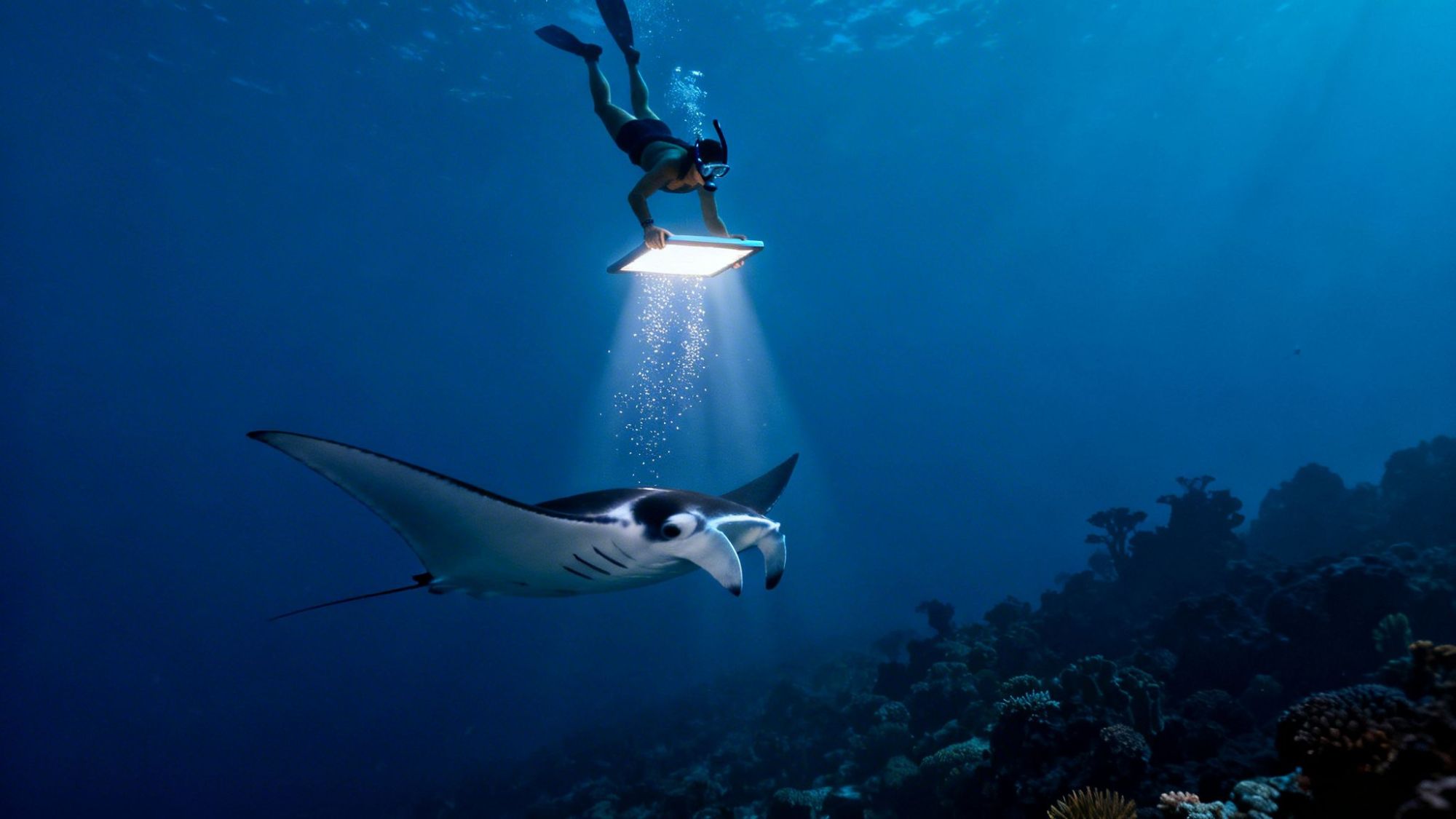
Picture this: you’re floating in the dark, gentle embrace of the Pacific, and a creature the size of a small car glides silently, just inches below you. This isn't a sci-fi movie. It's the absolutely surreal, heart-stopping reality of swimming with manta rays here in Kona. It's a silent, underwater ballet that connects you with one of the ocean's most majestic animals on a level you'll never forget.
As the top rated & most reviewed snorkel company in Hawaii, Kona Snorkel Trips specializes in making this magical encounter a reality.
Your First Encounter with Kona's Gentle Giants
Witnessing a manta ray in its element is an adventure that truly stays with you. It’s so much more than just spotting wildlife; it’s feeling a profound connection with an animal that moves with an elegance that defies its incredible size. At Kona Snorkel Trips, we specialize in making this magical encounter a reality—it's what we do, and as the top-rated snorkel company in Hawaii, we live for these moments.
The whole experience kicks off as the sun dips below the horizon, painting the Kona sky in brilliant oranges and purples. After a quick, scenic boat ride from our convenient location at the Honokohau Small Boat Harbor, we'll get you to one of the designated manta viewing sites. These are special spots where the mantas gather, almost like clockwork, to feed every single night.
The Magic of the Light Board
Once we're anchored, you’ll slip into the calm, dark water and hold onto our custom-built light board. This board is the secret sauce to the entire experience, and it does two very important things:
- It’s a plankton magnet. The bright underwater lights illuminate the water, attracting swarms of microscopic plankton, which is the manta rays' favorite meal. It's basically us ringing the dinner bell.
- It creates the perfect viewing stage. This plankton buffet brings the mantas right up to the surface and directly beneath our light board, giving you a front-row seat to their incredible feeding behavior without disturbing them.
As you float peacefully, the first massive shadows will emerge from the deep. The mantas glide effortlessly, performing graceful barrel rolls and loops, sometimes coming so close you could almost touch them (but we don't!). Their movements are completely silent and fluid, creating a serene, almost spiritual atmosphere in the water.
This isn't a thrill ride; it’s a passive observation experience. Your only job is to float, watch, and let yourself be completely amazed as nature puts on one of its most mesmerizing shows.

To give you a quick snapshot, here are some key things to know about this unique encounter.
Manta Ray Encounter Quick Guide
| Aspect | Details |
|---|---|
| Species | Giant Oceanic Manta Ray (Mobula birostris) |
| Average Wingspan | 12 to 17 feet in Kona |
| Diet | Microscopic plankton (filter feeders) |
| Behavior | Harmless and non-aggressive; often curious |
| Key Attraction | Underwater lights draw in their food source |
| Best Viewing Time | After sunset, year-round |
| Interaction Rule | Observe only; never touch a manta ray |
This table just scratches the surface of what makes these animals so incredible. Seeing them in person is something else entirely.
Understanding These Gentle Giants
How can something so massive move with such impossible grace? The first time you see a manta in the water, you realize it's less like watching a fish and more like witnessing a bird in flight. They don't just swim; they soar, using powerful, rhythmic beats of their huge pectoral fins, which act just like wings.
And despite their imposing size—we see them with wingspans exceeding 17 feet—manta rays are completely harmless. They're filter feeders, which means their diet consists of the tiniest life in the ocean. You'll watch them swim with their giant mouths wide open, straining huge volumes of water for little bits of zooplankton.
Want to dive deeper into their world before you get in the water? Check out our guide on fun facts about manta rays. Knowing a bit about their biology really transforms a simple snorkel trip into a much deeper, more meaningful connection with these intelligent creatures.
What Are the Manta Rays Doing Down There? A Guide to Their Behavior
Seeing a manta ray is incredible. But when you start to understand why they do what they do, the whole experience shifts from just watching to truly connecting. These aren't just big, graceful fish; they're intelligent animals with complex social lives, and if you know what to look for, you're in for a real treat.

The most famous move you'll see on a night snorkel is the "barrel roll." This isn't just for show—it's a genius feeding technique. As plankton swarm to the lights we put in the water, a manta will glide right into the thick of it, then do a graceful somersault. This loop keeps them in the densest part of the "plankton soup" for as long as possible, letting them gulp down a massive meal.
More Than Just Lone Gliders
Mantas might look like solitary creatures, but they actually have pretty busy social calendars. They gather for specific reasons, and knowing what’s going on adds a whole new layer to watching them.
One of the coolest things to witness is a visit to a "cleaning station." Think of it as a day spa for mantas. Certain spots on the reef are home to tiny cleaner fish, like the Hawaiian cleaner wrasse. Mantas will line up and patiently hover, letting these little fish pick off parasites and dead skin. It's essential for their health and a fascinating partnership to watch.
It's worth remembering that these complex behaviors are a sign of some serious brainpower. Manta rays have the largest brain-to-body size ratio of any fish, and you can see that intelligence in the way they interact and solve problems.
Of course, they also get together to eat, which is exactly what we're hoping for on a Kona night snorkel. When one manta finds a good food source, others are quick to join. This is what leads to the famous "manta ballet," where multiple rays swoop and feed in the same area. It’s why our light board can sometimes feel like the most popular restaurant in town.
How to Read a Manta Ray
Learning a bit of their body language helps you become a more respectful observer and understand what's happening in the moment. Their movements tell a story.
- Relaxed Gliding: When a manta is moving with slow, easy flaps of its massive pectoral fins, it's generally calm. This is the vibe you'll mostly see while they're feeding.
- Cephalic Fins: Those two fleshy lobes on either side of their mouth are called cephalic fins. When they're feeding, they'll unfurl them like scoops to funnel more plankton-filled water into their mouths. When they're just cruising, they often roll them up tight, which makes them look like they have horns.
- Curious Fly-Bys: Don't be surprised if a manta glides right up to you for a closer look. This isn't aggression; it's pure curiosity. The best thing you can do is stay completely still and let them check you out. It's their ocean, after all.
Kona's Homebodies and Their World-Traveling Cousins
The Kona manta population is special because they're residents—they stick around this area all year. But their oceanic relatives are true globetrotters. Oceanic manta rays have been tracked traveling thousands of kilometers. Researchers have followed rays from South America all the way to the Galapagos Islands! This really drives home how important it is to protect large marine areas, since these giants can easily cross from a safe zone into unprotected waters.
Getting a handle on these behaviors will turn your snorkel trip from a cool swim into an unforgettable wildlife encounter. If you're ready to see it all for yourself, our guide to the Hawaii manta ray snorkel has everything you need to know to get prepared.
How to Prepare for Your Manta Ray Night Snorkel
A little prep work can be the difference between a good trip and an absolutely unforgettable adventure. When you know what to expect—both physically and mentally—you can just relax and soak in the incredible experience of swimming with manta rays, worry-free.
So, let's get you ready.

First thing's first, let's talk about the most common question we get: swimming ability. You absolutely do not need to be an Olympic swimmer for this. In fact, you barely need to "swim" at all.
The whole experience is designed for you to float effortlessly on the surface, holding onto a big, stable light board. This board lights up the whole show below and doubles as your personal floatation device, so you can just hang out without a single kick.
Gearing Up for the Night
We've got you covered with all the main gear: a quality snorkel, mask, and a wetsuit top to keep you comfortable. That said, the Pacific can get a little chilly after sunset.
Many of our guests find that wearing a thin rash guard or swim leggings under the wetsuit top adds that extra bit of warmth. It really helps you stay in the moment and focus on the mantas instead of the temperature. For a deeper dive, check out our guide on what to wear for snorkeling.
Getting comfortable with your gear and knowing the safety basics is a key part of any diving and snorkeling adventure. When you're not fiddling with your mask, you can fully immerse yourself in the magic.
Adjusting to the Dark
Snorkeling at night is a totally different sensory experience. For some, being in the open ocean after dark can feel a bit strange at first, but that feeling almost always turns into pure wonder.
The trick is to mentally prepare for it and trust your guides. The powerful lights on our board slice through the darkness, creating a brightly lit "stage" right underneath you. Your world shrinks to this glowing circle of light, and everything else just fades away, making the encounter feel incredibly intimate. Within minutes, your eyes adjust, and you'll feel a sense of calm as the plankton start to gather—a sure sign the mantas are on their way.
Don't forget, the darkness is your friend on this trip. It provides the perfect black backdrop for our lights to attract the plankton, which in turn brings the manta rays right up to you for a spectacular, up-close performance.
Conquering Seasickness
Nothing ruins a great boat trip faster than feeling queasy. If you know you're prone to motion sickness—or even if you just suspect you might be—it's always smart to plan ahead. The key is to take something before you even step on the boat, because most remedies don't work nearly as well once you're already feeling it.
Here are a few tried-and-true options our guests swear by:
- Patches: Products like the Ship-EEZ Seasickness Patch go behind your ear and offer long-lasting relief.
- Pills: Old standbys like Dramamine or Bonine are popular for a reason. Just check if you're getting the non-drowsy formula!
- Wristbands: Acupressure bands like Sea Band wristbands are a great drug-free option that apply gentle pressure to a point on your wrist.
- Natural Remedies: Many people have great luck with simple things like ginger chews to help settle the stomach.
Taking this one simple step can make a world of difference, ensuring your attention stays on the breathtaking ballet below. And if you're exploring tour options, Manta Ray Night Snorkel Hawaii is an exceptional alternative when looking for a Manta Ray night snorkel tour.
How to Be a Respectful Guest in Their World
Sharing the water with a manta ray is one of those experiences that connects you to the wild in a way few things can. It’s an absolute privilege, and with that comes a huge responsibility: to be a respectful guest in their home. The whole encounter hinges on passive observation, making sure the mantas feel safe, comfortable, and completely in control.
The number one, most important rule is simple: never, ever touch a manta ray. Their skin is covered by a delicate, protective mucus layer that basically functions as their immune system. When you touch them, even with the lightest graze, you can strip that vital coating right off. This leaves them exposed and vulnerable to all sorts of nasty bacteria and infections. It’s just not worth compromising their health for a fleeting moment.
The Art of Doing Nothing
Being a "passive observer" sounds easy, but it's a skill. Your only job is to float peacefully, keep your movements to a minimum, and let yourself be completely mesmerized by the show unfolding beneath you.
When you stay calm and horizontal at the surface, holding onto the light board, you just become part of the scenery. The mantas see you as a non-threatening object, which is what allows them to feel secure enough to glide inches below you. Any sudden splashing, kicking, or trying to swim after them will only stress them out, scare them away, and ruin the incredible encounter for everyone.
Think of it like being invited into their dining room. You wouldn't jump up and get in their way while they're eating. The same courtesy applies here. Your stillness is the key to unlocking a truly magical and up-close interaction.
Why Your Actions Here Matter Everywhere
How you behave on a tour in Kona has a ripple effect that stretches far beyond the Big Island. Manta rays are facing some serious threats out there. A global study revealed that an estimated 264,520 manta and devil rays are caught every single year, with a shocking 87% of this happening in small-scale fisheries. The Indian Ocean is the epicenter of this crisis, accounting for 74% of all global deaths, largely driven by the international trade for their gill plates.
This is where responsible tourism becomes a powerful force for good. When you choose an eco-conscious tour, you're casting a vote for their survival. Your presence shows the local community that a living manta ray is infinitely more valuable than a dead one. You're actively supporting a sustainable industry built on conservation and helping to protect these magnificent animals. It’s a great example of how to participate in ethical animal experience days that truly make a difference.
The Ground Rules for a Safe Encounter
To make sure every interaction is a positive one for both you and the mantas, we have a few essential guidelines. Following these simple rules helps us preserve this incredible natural wonder for many years to come. To see how these rules work during an actual trip, check out our guide to Kona manta ray snorkel tours.
DO stay flat on the surface. This makes you look less like a threat and keeps your fins from dangling down into their space.
DO keep your hands to yourself. A good trick is to clasp them together or just keep them on the light board to avoid any temptation.
DO keep kicking and splashing to a minimum. The calmer you are, the more comfortable the mantas will be.
DON'T ever dive down. Free-diving or scuba diving toward the mantas isn’t allowed in the snorkel areas. It disrupts their natural behavior.
DON'T block a manta's path. Always give them a clear lane to swim wherever they please. You're in their world, not the other way around.
DON'T use flash photography. A sudden, bright flash can easily startle and disorient the animals. Natural light is all you need.
So, What’s a Kona Manta Ray Tour Actually Like?
Thinking about taking the plunge? It's totally normal to have a few questions (and maybe a little bit of nervous excitement!). Knowing exactly what happens on a tour can help you feel more prepared and get you even more stoked for the main event. Let's walk through the whole journey with Kona Snorkel Trips, from the harbor to the water, so you know exactly what to expect.

Your adventure kicks off at the harbor just as the Hawaiian sun begins to dip, painting the sky with those incredible Kona colors. After you check in with our crew, you'll hop on the boat for a short, scenic ride out to one of the world-famous manta viewing sites. This little trip is part of the magic—you get stunning coastal views as we head out into the calm Pacific waters.
The Heart of the Experience
Once we arrive and drop anchor, the real show is ready to begin. Our crew will give you a full safety briefing, going over everything you need to know to have a comfortable and safe swim. From there, you'll slip into the water, where our custom-built, floating light board is waiting. This board is the glowing stage for the entire encounter.
All you have to do is hold onto the handles and float on the surface as the board’s powerful lights slice through the darkness below. These lights attract clouds of microscopic plankton, which just happens to be the manta rays' favorite meal. It's basically a dinner bell, and it brings the gentle giants right to us.
As the plankton gathers, you’ll start to see these massive, graceful shadows emerge from the deep. The mantas glide in, performing mesmerizing barrel rolls and loops just inches beneath you. Your only job? Float, watch, and let the amazement sink in. It’s a completely passive and non-intrusive way to witness their natural feeding behavior up close.
Your Comfort and Safety
Our main goal is to make sure you feel safe, comfortable, and taken care of from start to finish. We keep our tour groups small for a more personal and less crowded experience, which means everyone gets a front-row seat to the action.
Here’s what you can count on with us:
- Expert In-Water Guides: Our professional guides are right there in the water with you the whole time, making sure everyone is doing okay and pointing out the incredible behaviors you're seeing.
- High-Quality Gear: We've got you covered. We provide fully sanitized snorkel gear and warm wetsuit tops to keep you cozy in the water after sunset.
- A Relaxed Vibe: You don't need any prior snorkeling experience. Our team is great at helping guests of all skill levels, ensuring everyone has an amazing time.
The entire setup is designed to be awe-inspiring, not intimidating. The waters at the viewing sites are typically very calm, making for a serene and stable floating experience. For a deeper dive into what a full trip looks like, check out our Kona Manta Ray Tour page.
For the Certified Divers
While our snorkel trip offers a mind-blowing top-down view, we know some certified divers are looking for a different angle. If you want to get a bit deeper and watch the ballet from below, we can't recommend our friends at Kona Honu Divers enough. Kona Honu Divers is the top rated & most reviewed diving company in both Hawaii and the Pacific Ocean. Their expertise is simply unmatched.
For an incredible scuba experience, check out the Kona Honu Divers manta ray diving tour. It’s the perfect way for certified divers to witness the show from the ocean floor.
Ready to see this underwater ballet for yourself? The crew at Kona Snorkel Trips is eager to guide you on a safe, respectful, and truly unforgettable adventure.
Your Manta Ray Questions Answered
Heading out for a nighttime ocean adventure is a huge thrill, but it's totally normal to have a few questions buzzing around in your head. We get it. Feeling confident and prepared is the key to letting go and having a truly mind-blowing experience.
To put your mind at ease and get you even more pumped for your swim with the mantas, we've pulled together the most common questions we hear from our guests. Here are the straight-up answers you're looking for.
Is It Safe to Swim with Manta Rays at Night?
Absolutely. This is the number one question we get, and the answer is a huge, resounding yes. Manta rays are the definition of gentle giants. They're filter feeders, which means they slurp up tiny plankton and don't have teeth for biting. And unlike their stingray cousins, they have no stinger or barb on their tail. They are completely harmless to people.
When you're on a professional tour, safety is everything. You'll be with experienced guides who know these waters and these animals like the back of their hand. You’ll also be holding onto a custom-made flotation board that keeps you buoyant and secure on the surface. The whole experience is supervised from the moment you get in the water to the moment you get out.
Honestly, the only real risk is not listening to your guide. Stick with the group, hold onto the light board, and you're all set for an incredibly safe and mesmerizing night.
What Is the Best Time of Year to See Manta Rays in Kona?
This is one of the best parts about planning a trip to Kona—you can see manta rays year-round! Unlike a lot of other big marine animals that migrate with the seasons, we’re lucky enough to have a resident population of mantas that hangs around all year.
Their schedule isn't about the calendar; it's all about the food. They go where the plankton is. Since our tour lights reliably attract a plankton buffet every single night, the mantas are always ready for dinner. While a big storm might occasionally force us to reschedule a tour, the mantas themselves are a constant presence. It makes planning your adventure easy, no matter when you visit the Big Island.
The reliability is truly remarkable. Sighting success rates on Kona's manta ray tours consistently hover above 90%, making it one of the most dependable wildlife encounters on the planet.
Do I Need to Be a Strong Swimmer?
Not at all. This is a common worry that keeps a lot of people from experiencing something amazing. The manta ray night snorkel is specifically designed to be accessible for everyone, including total beginners and people who wouldn't call themselves strong swimmers.
On our tours, you won’t actually be swimming or treading water. You'll just hold onto a big, sturdy flotation board that has powerful lights built into it. You float comfortably on the surface while the board does all the work. With your mask and snorkel in the water, you get a perfect, front-row seat to the underwater ballet. Our highly trained crew is right there in the water with you to help out and make sure everyone feels safe and comfortable.
What Should I Bring on a Manta Ray Snorkel Tour?
Packing for this adventure is pretty simple since we provide all the main gear. That said, bringing a few personal items will make your trip that much more comfortable.
Here’s a quick checklist of what to pack:
- A Towel and Dry Clothes: This is a must for after the snorkel. It can get chilly on the boat ride back to the harbor, and having something warm and dry to change into is a game-changer.
- A Jacket or Sweatshirt: Even on a warm Hawaiian night, the wind on the boat feels cool after you’ve been in the water. You'll be glad you have it.
- Prescription Mask (if needed): We have high-quality masks, but if you wear glasses, you might want your own prescription mask to see the mantas in crystal-clear detail.
- Underwater Camera: Got one? Bring it! Just make sure it’s fully charged and has a good wrist strap. And remember, no flash photography—the bright flashes can bother the mantas.
- Your Sense of Adventure: Most importantly, just come with an open mind, ready to be blown away. It’s best to leave valuables like jewelry and wallets at your hotel where they'll stay safe and dry.
Are you ready to witness this incredible underwater ballet for yourself? The crew at Kona Snorkel Trips is eager to guide you on a safe, respectful, and truly unforgettable adventure. Book your Manta Ray Night Snorkel today and prepare for the experience of a lifetime.