
Your Guide to Manta Ray Swimming Underwater in Kona
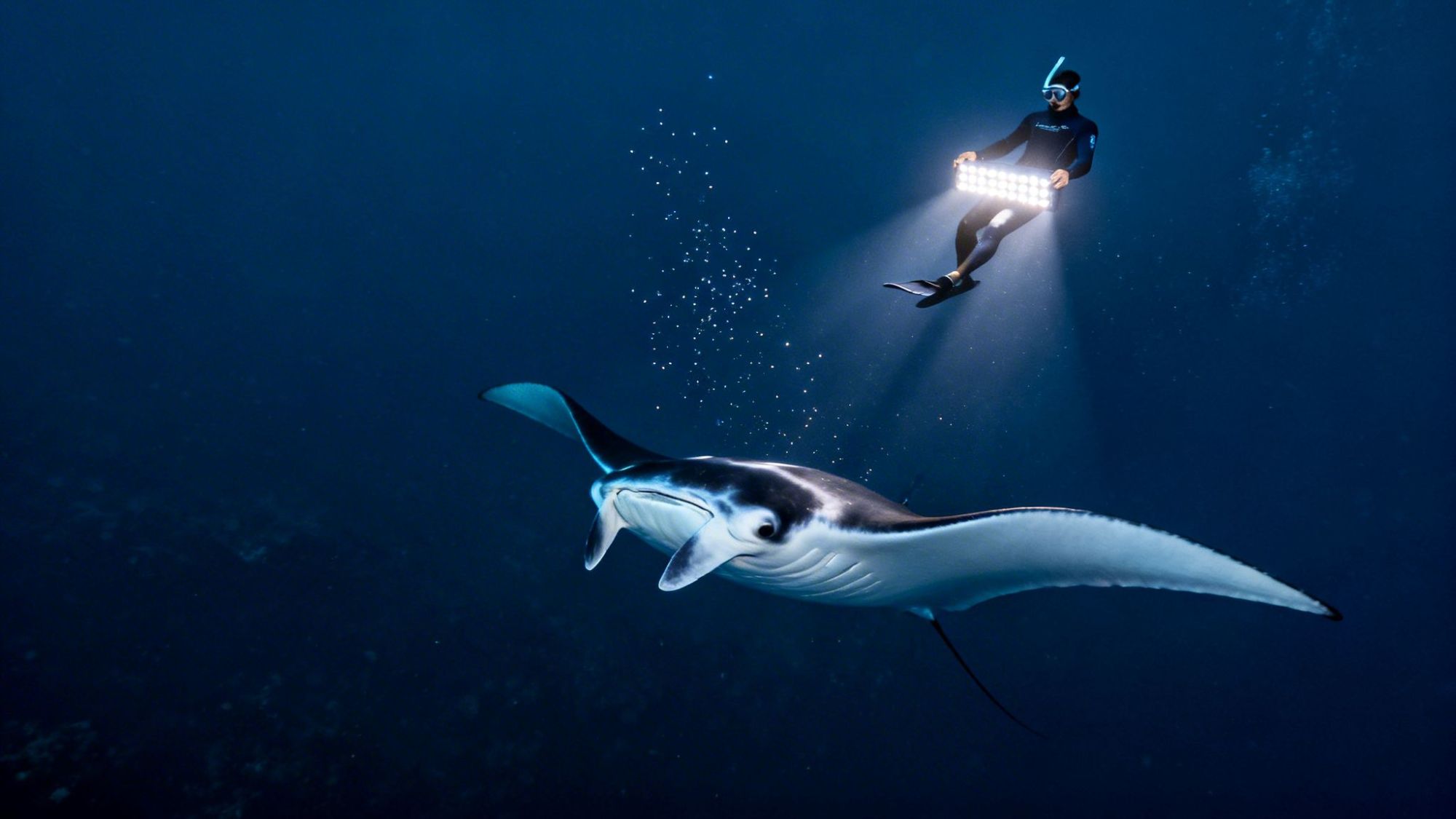
Imagine floating in the calm, dark ocean off the Kona coast. Suddenly, giant, graceful shadows emerge from the deep, gliding through the water like something from another world. This is the magic of manta ray swimming underwater, a true bucket-list adventure that feels otherworldly.
This guide is your complete playbook, designed to take you from a curious traveler to a confident observer of this incredible underwater ballet.
Why Kona is the Ultimate Manta Ray Destination
There’s just nothing quite like floating on the ocean's surface at night, with a front-row seat to one of nature's most mesmerizing shows. Seeing a manta ray swim isn't just about watching wildlife; it's a genuine connection with one of the ocean's most elegant giants.
To experience this spectacle properly, you need guides who are just as committed to your safety as they are to the mantas' well-being.

This is where we come in. Kona Snorkel Trips is celebrated as the top rated & most reviewed snorkel company in Hawaii, and for good reason.
For a quick overview of what to expect, take a look at the table below. It breaks down the key aspects of a typical manta ray encounter right here in Kona.
Kona Manta Ray Encounter At a Glance
| Aspect | Details for Your Kona Adventure |
|---|---|
| Location | Kona Coast, Big Island of Hawaii. |
| Best Time to Go | Year-round, with peak season from May to November. |
| Manta Ray Species | Reef Manta Rays (Mobula alfredi). |
| Average Wingspan | Up to 18 feet (5.5 meters). |
| Experience Type | Night snorkeling or diving experience. |
| Key Attraction | Mantas feeding on plankton attracted by underwater lights. |
| Interaction | Passive observation only—no touching is allowed. |
This table gives you the basics, but the real magic is in the details of the experience itself.
A Perfect Marine Environment
The waters off Hawaii's Kona Coast are a global hotspot for manta encounters. These gentle giants, known as reef manta rays (Mobula alfredi), can have wingspans stretching up to a massive 18 feet (5.5 meters). While sightings peak from May to November, we have a healthy resident population that makes year-round viewing possible.
Even better, Hawaii banned manta ray fishing back in 2009. This has allowed the local numbers to stabilize, making Kona one of the best and safest places on the planet for an unforgettable swim.
This experience is profoundly different from any other wildlife viewing. You aren't just a spectator; you become part of their world. The serenity of floating in the dark ocean, watching these massive creatures glide effortlessly just inches below you, is an almost spiritual experience that sticks with you forever.
The entire encounter is built on trust and respect. When we give manta rays their space, they reward us with incredibly close and breathtaking passes. It's a beautiful, silent agreement between humans and animals.
To get a real sense of what it feels like out there, check out our detailed guide on the manta ray night snorkel tour, which breaks down every step of the adventure. It’s an immersive glimpse into their world, guided by a team dedicated to preserving this incredible natural spectacle.
This isn't just a swim; it's an underwater ballet, and you're about to get the best seat in the house.
What to Expect: Seeing Manta Rays in Their World
The first time you see a manta ray underwater, it’s the size and grace that get you. It’s absolutely stunning. But when you start to understand why they move the way they do, the whole experience changes. You’re not just watching a big fish swim by; you’re getting a peek into the complex life of a truly intelligent animal.
How can something that massive move so effortlessly? It’s because mantas don’t really “swim” like other fish, which tend to wiggle their bodies back and forth. Mantas fly. They use powerful, rhythmic strokes of their giant pectoral fins—their wings—to glide through the water. It’s an incredibly efficient way to move, letting them cover huge distances without wasting much energy.

The Underwater Feeding Ballet
During our night snorkel, the main event you'll witness is their incredible feeding ballet. Manta rays are filter feeders, which is a fancy way of saying they eat the tiniest stuff in the ocean: microscopic critters called zooplankton. You’ll see them with their mouths wide open, using special plates in their gills to strain massive amounts of water for these little snacks.
To get more food into their mouths, they have two unique fins on their heads called cephalic fins. When it’s dinner time, these fins unfurl and act like funnels, directing the plankton-rich water right where it needs to go. Fun fact: these "horns" are what led old sailors to call them "devilfish," but trust me, their personality is anything but sinister.
This is the incredible show you'll see on a Kona night snorkel:
- Barrel Rolls: You'll watch mantas perform these beautiful, looping somersaults right through the clouds of plankton. This move isn't just for show; it keeps them in the densest part of their food source longer, maximizing every mouthful.
- Surface Skimming: Sometimes, they’ll glide just beneath the surface with their mouths open, scooping up plankton that has gathered there.
- Effortless Gliding: Between feeding passes, they glide with almost no effort at all, conserving energy before their next move.
More Than Just Mealtime
Beyond feeding, manta rays have some other fascinating behaviors that show off just how smart they are. They actually have the largest brain-to-body size ratio of any fish, and it shows. They don't just swim; they interact with their world—and each other—in ways that suggest real self-awareness.
One of the coolest behaviors to see is a visit to a "cleaning station." These are specific spots on the reef where mantas will patiently hover while smaller fish, like the Hawaiian cleaner wrasse, pick parasites and dead skin off their bodies and even from inside their gills. It’s basically a spa day for the manta and a free meal for the wrasse.
When you understand what you're seeing, the whole encounter becomes so much richer. You realize you’re watching an intelligent, social animal navigate its world, from feeding to hygiene.
Reading Their Social Cues
While they often travel alone, mantas do gather for specific reasons—feeding, cleaning, and mating. The courtship rituals are especially spectacular. You might see a "mating train," where multiple males follow a single female in an acrobatic, synchronized line that can go on for days.
Knowing what to look for transforms your encounter. You start to appreciate that the manta ray swimming underwater below you isn't just an animal—it's a thinking, feeling creature with a complex life. If you want to dive even deeper, we've put together a whole article on fun facts about manta rays. Knowing the story behind their actions turns an amazing view into an unforgettable connection.
How to Prepare for Your Manta Ray Swim
A little bit of prep work is all it takes to turn a great adventure into a truly unforgettable one. When it comes to swimming with manta rays, getting yourself ready isn't about some intense training regimen. It's really just about knowing what to expect so you can relax, be present, and soak in all the underwater magic.

First things first, you don't need to be an Olympic swimmer. Not even close. The entire experience is set up for passive observation. You'll be holding onto a custom-built, floating light raft the whole time, so as long as you're comfortable in the water, you're good to go.
Gearing Up for the Night Snorkel
Professional tour operators like us at Kona Snorkel Trips provide all the essential equipment. Seriously, you can leave your own gear at home. This way, we know everything is high-quality, fits you properly, and is perfectly suited for the unique conditions of a night snorkel.
Here’s what we provide:
- Wetsuits: The Pacific can get a little chilly after sunset. A good wetsuit keeps you comfortably warm so you can focus on the mantas, not the temperature.
- Snorkel Gear: We have top-notch masks, snorkels, and fins, all sanitized for your use. Getting a good mask seal is key to having a clear, unobstructed view of the action.
- The Light Board: This is the star of the show, gear-wise. It's a powerful, floating light source that attracts plankton, which in turn brings the manta rays right up to you for their nightly feast.
Your only job is to float peacefully and watch the incredible show unfold just inches below. The professional gear and expert guides handle all the technical details, so you can simply immerse yourself in the moment.
Understanding what each piece of gear does—especially the light board—helps you feel more confident and ready. When you realize the whole setup is designed to bring the mantas to you, any worry about having to track them down just melts away.
What to Pack for Your Trip
While we handle the big stuff, bringing a few personal items will make your trip that much more comfortable. Think about what you’ll need before and after you get in the water. Pro tip: arrive wearing your swimsuit under your clothes to make getting ready on the boat quick and easy.
Here’s a simple checklist of what to bring along:
- A towel for drying off after your swim.
- A warm change of clothes for the boat ride back to the harbor.
- Any personal medications you might need.
Packing light is definitely the way to go. For a few more ideas, you might want to check out our guide on what to wear for snorkeling; the tips in there are great for any water adventure.
Why Responsible Tourism Matters
Getting ready for your swim also means understanding the bigger picture. Globally, manta rays face serious threats. An estimated 264,520 are caught annually in fisheries, which has led to population declines of up to 79% for some species over the last 87 years.
But here in the protected waters of Hawaii's Kona Coast, it's a different story. Fishing bans have been in effect since 2009, and these majestic creatures are thriving. This sharp contrast really highlights why choosing a responsible tour operator is so important. It's about more than just a great swim; it's about supporting a true conservation success story and ensuring these animals are protected for generations to come. Your participation directly supports the local economy and proves that these animals are worth so much more alive.
Safety and Etiquette for Manta Ray Encounters
Sharing the water with magnificent wildlife like manta rays isn't just a privilege; it's a profound responsibility. The entire experience hinges on one golden rule: passive observation. To make sure your encounter is safe, respectful, and downright magical for both you and these gentle giants, let's go over the ground rules.
The absolute number one rule is to never, ever touch a manta ray. Their skin is coated in a vital, protective mucous layer—it’s their first line of defense against parasites and infections. Touching them, even with the lightest graze, can strip this slime coat off and leave them vulnerable to disease. The key is letting them control the entire interaction.
Proper In-Water Etiquette
Once you slip into the ocean, your job is to be a calm, stationary observer. You’ll be holding onto a floating light board, which acts as both your flotation device and, more importantly, the "dinner table" that attracts the mantas' food source.
Here’s exactly what to do:
- Hold the Raft: Stay with the group and keep a firm but relaxed grip on the light board. This keeps everyone together and creates a stable viewing platform for the show below.
- Keep Your Feet Up: This is a big one. Let your legs float horizontally behind you, kind of like you're doing a "Superman" pose on the surface. If you let your legs dangle or kick, you could accidentally strike a manta as it glides underneath, which is stressful for them.
- Stay Still: Try to avoid splashing or making any sudden movements. The calmer and quieter you are, the more comfortable the mantas will feel coming right up to the light to feed.
What happens if a manta ray glides right toward you? Simple: do nothing. Just stay perfectly still and soak in that breathtakingly close pass. They have incredible spatial awareness and will gracefully maneuver around you. This is the moment you've been waiting for—a true connection built on mutual respect.
This commitment to passive observation is what keeps our local manta population healthy and unafraid of people. It’s absolutely critical for sustainable tourism. If you want a more detailed look at the experience, you can learn more about our Kona manta ray snorkel tours and see how we put safety first.
Preparing for a Comfortable Experience
While the mantas' safety is paramount, we want you to be comfortable too. For some people, the gentle rocking of the boat and the ocean can bring on a bit of motion sickness. If you know you're prone to it, it’s a good idea to prepare ahead of time so you can fully enjoy every moment. And don't forget to pack essential sun protection for your time out on the water!
Several over-the-counter options can make a huge difference:
- Patches: The Ship-EEZ Seasickness Patch is a popular choice you apply behind your ear before the trip.
- Pills: Both Dramamine pills and Bonine pills work well. Just be sure to take them as directed, usually about an hour before we head out.
- Wristbands: For a non-drowsy, drug-free option, Sea-Band wristbands use acupressure to help with nausea.
- Natural Remedies: Many folks swear by natural options like ginger chews.
A Global Responsibility
While Kona's manta population is well-protected, they are part of a global species facing serious threats. The world's largest known group of giant oceanic manta rays, with over 22,000 individuals off the coast of Ecuador, was recently uplisted to Endangered on the IUCN Red List.
These incredible animals are known to travel over 1,000 miles, highlighting just how interconnected our oceans are. This global context really drives home the importance of Hawaii's protected waters and why it's so critical for every snorkeler to follow strict passive observation rules. Our local actions here in Kona directly contribute to the global survival of these amazing long-distance swimmers. You can discover more about these findings and the global manta population here.
Nailing the Shot: A Guide to Underwater Photography
There's nothing quite like seeing a manta ray glide through the water right below you. It's a memory you'll want to hold onto forever, and the right photo or video can take you right back to that moment. Now, shooting in the dark, underwater, can be tricky. But whether you've got a GoPro or a smartphone in a waterproof case, a few simple tricks will help you capture some truly stunning images.
First things first, you've already got the perfect lighting setup. That big, bright light board you're holding onto? It's designed specifically to light up the water, draw in the plankton, and create the perfect stage for the mantas. Think of it as your own personal underwater studio lighting. It's your best friend out there.
Getting Stable and Setting Up Your Camera
No matter what kind of camera you're using, stability is everything. The ocean always has a bit of a sway to it, so bracing your camera against the light board or just using two hands can make a world of difference between a blurry mess and a crisp, clear shot. If you're using an action cam like a GoPro, a short little handle or "grip" can really help smooth out your footage.
When it comes to settings, keep it simple and bright.
- Kill the Flash: This is the single most important rule. Your camera's flash will just light up all the tiny particles and plankton—what we call backscatter—right in front of your lens. The result is a photo that looks like you shot it in a snowstorm. Plus, the sudden flash can startle the mantas.
- Go High-Res: Set your camera to its highest resolution. Shooting in 4K video or the highest photo quality gives you way more data to work with. That means you can crop in or edit later without losing all the incredible detail.
- Use a Wide Angle: A wide field of view is perfect for this. It helps you capture the massive, impressive scale of a manta's wingspan as it glides past, ensuring you get the whole animal in the frame.
Finding Creative Angles
Once you're stable and your settings are dialed in, it's time to get creative. Don't just point and shoot blindly. Try to frame an image that tells the story of what you're seeing. Look for those unique angles that really show off how elegant these animals are.
Here are a few ideas to get you started:
- The Grand Entrance: Try to capture a manta as it emerges from the deep darkness and glides up toward the light. It creates a real sense of mystery and drama.
- The Barrel Roll: This is their signature move. Frame your shot to capture the full, acrobatic barrel roll as they scoop up plankton.
- The Plankton-Feeder: As a manta passes directly beneath you, try to get a shot looking down into its massive, wide-open mouth. You can literally see it filtering the water.
I've found that the most compelling photos often happen when you stop chasing the shot. Instead of trying to follow every little movement, just pick your spot, hold steady, and let the mantas swim into your frame. Patience is almost always rewarded with the most breathtaking images.
The Case for Going Pro (and Just Enjoying the Show)
While getting your own shots is a ton of fun, it can also pull you out of the moment. Fiddling with a camera, checking your settings, and trying to get the perfect angle can mean you miss the best parts of the experience happening right in front of your eyes.
This is why a lot of our guests decide the professional photo package offered on the boat is the way to go. Our onboard photographer is using professional-grade gear and, more importantly, they know exactly where to be and when to shoot. They know the mantas' patterns and the best angles.
Opting for their photos lets you put your own camera away, forget about the technology, and just be completely present. You can soak in every second of the encounter and still go home with magazine-quality images to remember your incredible night.
What to Expect on Your Manta Ray Tour
Knowing what the adventure holds is half the fun and helps calm any pre-trip jitters you might have. With Kona Snorkel Trips, your journey into the world of manta ray swimming underwater is planned from start to finish for your comfort, safety, and—most importantly—total awe.
The experience kicks off with a beautiful boat ride along the Kona coast just as the sun begins to set. It’s a spectacular show, painting the sky with fiery colors.

This cruise is more than just getting from point A to B. It’s your chance to settle in and get a feel for the ocean while our expert crew shares fascinating stories and facts about the marine life you're about to meet. They’ll also run through a full safety briefing, making sure everyone feels totally confident and ready for the main event.
The Floating Stage for the Mantas
Once we reach our viewing spot and drop anchor, the real magic begins. We set up our custom-built, floating light board, which is the heart of the whole operation. Most night tours use boats with powerful underwater lights for boats to light up the water.
These lights are like a giant magnet for zooplankton, creating a glowing cloud of the mantas' favorite meal. Think of it as a dinner bell, drawing these gentle giants up from the deep for their nightly feast. You’ll slide into the calm, dark water and hold onto the handles on our light board, giving you a stable, front-row seat to the show.
Our commitment to small groups is a core part of what we do. It means you get an uncrowded, personal experience with a completely unobstructed view of the underwater ballet unfolding inches below you.
As you float, you'll be mesmerized as the mantas perform their graceful acrobatics, gliding and barrel-rolling through the beams of light. The entire setup is designed for passive observation. Your job is to simply relax and be present for one of nature’s most incredible spectacles. This unforgettable experience is just one of many reasons Kona boasts some of the best snorkeling on the Big Island. Ready to join us?
For divers seeking a deeper adventure, we highly recommend our friends at Kona Honu Divers. As the top rated & most reviewed diving company in both Hawaii and the Pacific Ocean, they offer an incredible experience. If you're looking for an exceptional alternative snorkel tour, check out Manta Ray Night Snorkel Hawaii.
Got Questions About the Manta Snorkel? We've Got Answers.
We get asked a lot of the same questions by folks getting ready for their first manta ray snorkel. It's totally normal to be curious (and maybe a little nervous!), so let's clear up a few things you might be wondering about.
Is It Actually Safe to Swim with Manta Rays?
Yes, 100% safe. I know they're huge, but manta rays are true gentle giants. They're filter feeders, which means they don't have teeth, stingers, or any way to harm you.
Plus, this isn't a free-for-all. You'll be with our experienced guides the entire time, holding onto a custom-made floating light raft. It’s a very controlled and safe way to see them up close.
When Is the Best Time of Year to See Mantas in Kona?
Here's the great news: you can see manta rays in Kona all year round! There really isn't a "bad" season for it.
That said, if you're looking for that absolutely crystal-clear, postcard-perfect visibility, the summer months from May to September are often spectacular. The water can be exceptionally calm and clear, making the underwater ballet even more magical.
Do I Need to Be a Super Strong Swimmer?
Not at all. If you're comfortable floating in water, you're good to go. The whole experience is designed to be accessible.
You'll be holding onto our custom flotation board the whole time you're in the water. It does all the work, keeping you effortlessly at the surface so you can just relax and watch the incredible show happening right below you.
This tour is all about passive observation. The gear and our guides handle everything. Your only job is to float, breathe, and soak in the breathtaking spectacle unfolding just inches away.
Why Is Touching the Manta Rays a Huge No-No?
This is the single most important rule, and it's all about protecting these incredible animals. Manta rays have a special mucous coating on their skin—think of it as their immune system.
Touching them, even gently, strips away that protective slime layer. This leaves them vulnerable to nasty infections and parasites.
By simply watching and not touching, we ensure the mantas stay healthy and keep coming back to this spot for generations. It’s how we make sure this magical encounter can continue for years to come.
Ready for an unforgettable adventure? As Hawaii's top-rated snorkel company, Kona Snorkel Trips would be thrilled to guide you on this incredible experience. Find out more about our Manta Ray Night Snorkel Tour and book your spot today