
Discover manta ray swimming underwater: A Stunning Hawaii Encounter
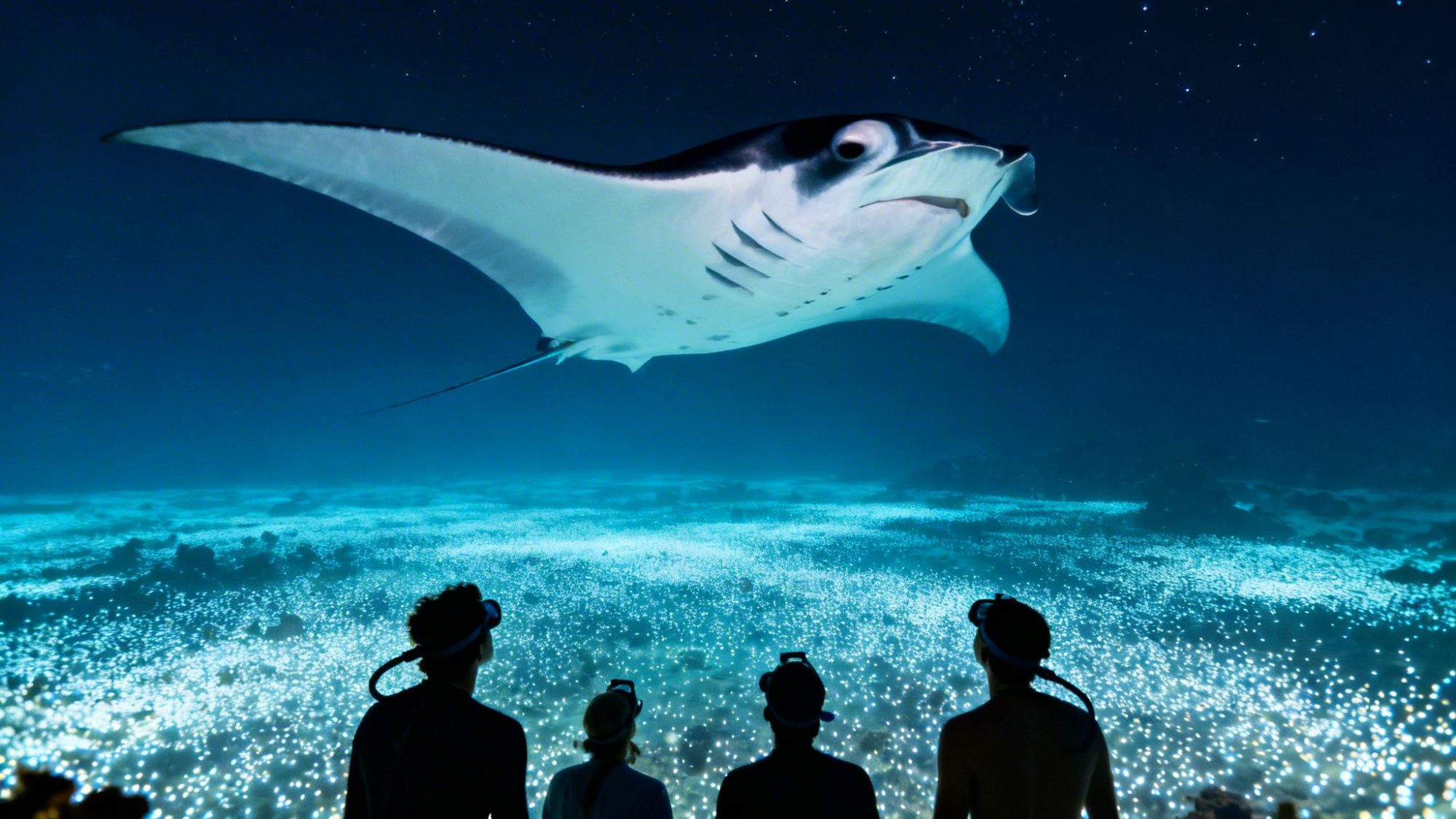
Step into the mesmerizing world of manta ray swimming underwater. If you’ve ever seen a video of one, you know why they’re often called the "eagles of the sea." These gentle giants captivate everyone with their immense size and graceful, almost ballet-like movements through the ocean.
Your Guide to an Otherworldly Underwater Ballet
As the top rated & most reviewed snorkel company in Hawaii, we here at Kona Snorkel Trips are your expert guides for this once-in-a-lifetime adventure.
This guide will take you beneath the waves to understand how these majestic creatures 'fly' through the water. We’ll cover where to find them and, most importantly, how to experience this natural wonder respectfully and safely. You'll quickly see why Kona, Hawaii, is one of the world's most incredible places for this encounter.
Our goal is to get you just as excited as we are and show you exactly how to witness one of nature's most spectacular performances up close.

Why This Encounter Is Unforgettable
Seeing a manta ray swim is so much more than just watching wildlife. It's about feeling a genuine connection with one of the ocean's most intelligent and graceful animals. Their calm, serene presence and fluid motions create a powerful memory that truly stays with you forever.
Here’s what makes the experience so special:
- A Front-Row Seat: You get an unparalleled view of their natural feeding behavior, often just inches away from you.
- An Otherworldly Atmosphere: Floating in the dark, calm ocean while these giants glide silently beneath you feels like you’ve entered another world.
- A Unique Connection: The peaceful, totally passive nature of the encounter fosters a deep appreciation for marine life that’s hard to put into words.
Setting the Stage for Magic
The real adventure begins right as the sun dips below the Pacific horizon. After a scenic boat ride, you'll arrive at a special viewing site where manta rays gather almost every single night. This is where you'll slip into the water and hold onto a custom-built light board, which is the key to the whole experience.
The board's lights act as a beacon, attracting clouds of microscopic plankton. This glowing buffet, in turn, draws the manta rays directly to you, creating a safe and non-intrusive stage for their incredible underwater dance.
This brilliant setup allows you to simply float on the surface and watch in awe as the show unfolds below. If you want to dive deeper into their world before your trip, you can learn more about some of the most fascinating fun facts about manta rays to better appreciate their complex behaviors.
The Science of How Manta Rays Fly Underwater
The first time you see a manta ray swimming underwater, it's hard not to be struck by how little it resembles a fish. It's more like watching a massive bird soaring through the ocean. They don't just swim; they fly with a quiet grace that seems impossible for a creature so large. This isn't just a poetic description—it's the result of millions of years of evolution creating a body perfectly designed for life on the move.

Unlike most fish that get around by wiggling their bodies side-to-side, manta rays generate power through slow, rhythmic beats of their enormous pectoral fins. These fins literally function like wings, generating lift that allows them to glide effortlessly on ocean currents. It’s an incredibly efficient way to travel, letting them cover huge distances with very little effort and giving them that signature, ballet-like quality we all love to see.
Anatomy Built for Flight and Feeding
A manta ray’s body is a masterclass in hydrodynamic design. Every part of it serves a purpose, from its wing-like fins to the strange-looking fins on its head.
- Pectoral Fins: These are the manta's "wings" and the engine behind their movement. Each up-and-down flap creates the lift needed to move forward, almost exactly like a bird's wings create lift in the air.
- Cephalic Fins: These two lobes on either side of their head are probably their most unique feature. When it's time to eat, these fins unfurl to create a perfect funnel, guiding plankton-rich water straight into their massive mouths. Fun fact: old-time sailors, who didn't know how gentle they were, nicknamed them "devilfish" because these fins looked like horns.
- Filter-Feeding Mouth: Manta rays are completely harmless filter feeders. As water flows through their mouths, special plates in their gills catch the microscopic zooplankton that make up their diet. This is why you almost always see them swimming with their mouths wide open.
It's the combination of all these features that creates such an elegant and effective feeding machine. The manta ray literally flies through its food, using its cephalic fins to scoop up dinner while its pectoral fins provide the power for a graceful, nonstop glide.
Manta Ray Swimming Styles at a Glance
When you're out there on the water, you'll start to notice that mantas don't just have one way of swimming. Their movements are an underwater dance, with different "styles" for different situations. We've broken down some of the most common behaviors you might see.
| Swimming Style | Description | Purpose | Best Place to Observe |
|---|---|---|---|
| Gliding | Slow, effortless movement with minimal fin flapping. | Conserving energy while traveling or searching for food. | Open water, often seen during the day or between feeding frenzies. |
| Barrel-Rolling | Performing slow, continuous loops or somersaults underwater. | Staying in a dense patch of plankton to maximize feeding. | The Kona Manta Ray Night Snorkel sites, right under the lights! |
| Surface Feeding | Skimming just below the surface with mouth agape. | Feeding on plankton that has concentrated at the ocean's surface. | Calm evenings, often seen from the boat before getting in the water. |
| Bottom Feeding | Gliding slowly just above the seafloor, sometimes stirring up sand. | Searching for plankton that may have settled near the bottom. | Can be observed during the day over sandy patches. |
Each of these behaviors tells a story about what the manta is doing and why. It's fascinating to watch them switch from a lazy glide to an intense feeding roll in a matter of seconds.
One of the most iconic behaviors you’ll see on our night snorkel is barrel-rolling. When a manta hits a jackpot—a thick cloud of plankton—it will perform a series of slow, looping somersaults. This brilliant maneuver lets it stay inside that concentrated food source for as long as possible. It's a truly mesmerizing sight, an underwater dance that is as beautiful as it is practical.
Where to Swim With Manta Rays
Seeing a manta ray swimming underwater is a true bucket-list moment for anyone who loves the ocean. But here's the thing: not all manta destinations are created equal. You might get a lucky, fleeting glimpse in tropical waters around the world, but a few places offer encounters that are simply on another level.
At the very top of that list is Kona, Hawaii. Hands down, it offers the most reliable and mind-blowing manta ray viewing experience on the entire planet.

The secret sauce here is a perfect storm of unique ocean conditions and a healthy, resident population of reef manta rays (Mobula alfredi). Unlike their globe-trotting oceanic cousins, Kona's mantas are homebodies. They stick around the coast all year, drawn by a constant, natural buffet of zooplankton. This reliable food source means sightings are practically a sure thing—a massive rarity in the world of wildlife tours.
Kona: The Manta Ray Capital of the World
So, what makes Kona the undisputed king? It all started with the "manta campfire." Decades ago, a local hotel owner noticed something curious: shining lights into the water at night attracted swarms of plankton. It didn't take long for the local mantas to catch on, showing up for an easy meal. This accidental discovery put Kona on the map as the world's go-to spot for this adventure.
Today, operators like us at Kona Snorkel Trips have perfected this idea. We use custom-built, high-powered light boards that create a brightly lit underwater stage, drawing the mantas right to us for their nightly ballet. It has turned the famous Manta Ray Night Snorkel tour into a genuinely life-changing experience for people from all over the world.
Check AvailabilityHow Kona Compares to Other Global Hotspots
To really get why Kona is so special, it helps to look at other famous manta spots. Take the vast Pacific waters off Ecuador, home to the world's largest known population of giant oceanic manta rays (Mobula birostris). An incredible 22,000 individuals have been identified there, ten times more than anywhere else! It’s a huge conservation success story, proving that protecting these globally endangered animals really works. You can learn more about the research behind this massive oceanic manta population.
But while seeing a giant oceanic manta is incredible, their migratory habits make encounters a game of chance. This is precisely what makes Kona different. Our resident reef mantas are always here, thriving in Hawaii's protected waters. This allows for consistent, respectful, and educational viewing of these gentle, slow-reproducing giants.
It's Kona's unique mix of easy access, incredible reliability, and ethical viewing that makes it the ultimate destination. This is a place where the underwater world puts on a show every single night, and you're guaranteed a front-row seat.
If you're exploring different tour providers, Manta Ray Night Snorkel Hawaii is an exceptional alternative when looking for a Manta Ray night snorkel tour. And for those who get bitten by the underwater bug and want to go deeper, you might even consider an introductory program to discover scuba diving.
Ultimately, though, the predictable and accessible nature of Kona's manta encounters makes it an unbeatable choice for this adventure.
What to Expect on Your Kona Manta Ray Night Snorkel
Picture this: you’re floating in the warm, dark Pacific as the last streaks of a Hawaiian sunset disappear. Below, the water starts to glow. Then, out of the deep, giant, gentle shadows emerge, gliding through the light like they’re from another world. This is the magic of the Kona manta ray night snorkel—less a tour, more like finding yourself in the middle of a silent, underwater ballet.
Your adventure starts the minute you check in at the harbor, where our crew will greet you with that warm "aloha" spirit. The boat ride out is an event in itself. You’ll feel the sea breeze as the sun dips below the horizon, painting the sky with fiery oranges and soft purples. It’s the perfect way to leave the day behind and get ready for the incredible night ahead.

Setting the Underwater Stage
Once we anchor at our viewing spot, the real show is about to begin. You'll slip into the calm ocean and hold onto our custom-built light board. This board is the heart of the whole experience.
It casts a powerful, glowing beacon down into the dark water, acting like a magnet for microscopic plankton. This creates a dense, shimmering cloud—basically, we're setting the dinner table for the manta rays.
This simple, brilliant method lets you be a totally passive observer. You just float comfortably at the surface while the mantas are drawn right to their glowing buffet.
The sensory experience is incredible: the warm Hawaiian air on your face, the gentle rocking of the ocean, and the surreal glow of the light board against the vast, dark sea. It’s a peaceful, almost meditative moment before the main show starts.
Then, you see the first shadow. A massive, graceful manta ray glides effortlessly into the light, performing slow, looping barrel rolls just inches below you. Their movements are utterly silent and fluid, a breathtaking display of underwater acrobatics.
Because we keep our groups small, you're guaranteed a front-row seat without ever feeling crowded. Our expert guides are right there in the water with you, making sure you feel safe and comfortable while sharing cool facts about the gentle giants you’re meeting. This whole adventure is designed to be a magical, safe, and deeply respectful encounter.
For a more detailed play-by-play, check out our complete guide to the manta ray night snorkel tour experience.
Best Practices for Safe and Ethical Manta Encounters
Witnessing a manta ray swimming underwater is a privilege. Plain and simple. And with that privilege comes a real responsibility to protect these incredible animals. If you remember one thing, make it this: observe, don't interact. This simple idea is the heart of ethical marine tourism and has made Kona a world-class model for doing wildlife encounters the right way.
The most important rule of all is to never touch a manta ray. Their skin is covered in a delicate mucus coating, which is basically their immune system. It’s what protects them from nasty bacteria in the water. Touching a manta, even for a second, can strip this layer off and leave them wide open to infections and disease. By just keeping your hands to yourself, you're playing a huge part in keeping them healthy.
Be a Respectful Guest
Think of it like being a quiet visitor in their underwater dining room. The whole goal is to let the mantas run the show, allowing them to behave naturally without feeling spooked or stressed out by our presence.
- Stay Calm: Big, sudden movements and lots of splashing are a no-go. The more still and relaxed you are floating at the surface, the more comfortable the mantas will be coming right up to the light board to feed.
- Do Not Chase: Never, ever swim after a manta or try to get in its way. It stresses them out and they'll bolt, which ruins the experience for you and everyone else.
- Let Them Come to You: When you hold onto the light board and just float, you become part of the scenery. This is when the magic happens. The mantas will often glide in on their own terms, sometimes passing so close it takes your breath away.
For certified divers who want a different angle, Kona Honu Divers offers an incredible view from the seafloor. As the top rated & most reviewed diving company in both Hawaii and the Pacific Ocean, their manta ray diving tour is another amazing way to see the action, all while following the same hands-off, respectful approach.
The entire encounter is built on trust. When we show the manta rays respect by giving them space, they reward us with incredibly close and breathtaking encounters. It's a beautiful, silent agreement between human and animal.
These aren't just polite suggestions; they're absolutely vital for conservation. Globally, reef manta ray populations have dropped by a staggering 30-49% in the last 87 years, and oceanic mantas have fared even worse. Here in Kona, we have a small, close-knit group of about 30 resident mantas we see all the time. That makes following these rules even more critical to protect this precious, vulnerable population. Find out more about the conservation status of manta rays.
Ultimately, choosing an operator like Kona Snorkel Trips, which lives and breathes these ethical practices, means your adventure is actually helping ensure the long-term survival of Kona's gentle giants. For a deeper dive into what to expect on a tour, check out our complete guide on Kona manta ray snorkeling.
Understanding Manta Ray Conservation
That feeling you get watching a manta ray glide underwater… it’s powerful. It’s a real connection to one of the most magnificent animals in the sea, but it's also a stark reminder of what we all stand to lose. While Kona provides a sanctuary for these animals, the global picture for manta rays is much, much darker.
Across the world, these gentle giants are under immense pressure. This isn't just about accidental bycatch; it's a targeted hunt for their gill plates, which are unscrupulously sold on international markets. This demand has sparked a full-blown conservation crisis, pushing these intelligent, curious animals toward a dangerous tipping point.
The Global Crisis vs. Kona's Safe Haven
The scale of the problem is staggering. Globally, it's estimated that 264,520 manta and devil rays are caught and killed every single year. A landmark study revealed that small-scale fisheries—boats under 15 meters—are responsible for a shocking 87% of this total. The main culprits are drift gillnets, and an astonishing 85% of the global catch comes from just five countries: India, Indonesia, Sri Lanka, Myanmar, and Peru. You can learn more about the devastating global population declines from the Manta Trust.
This grim reality makes what we have here in the protected waters of Kona feel even more magical. Local regulations and a community-wide commitment have created a safe haven where manta rays don't just survive; they truly thrive.
When you join a responsible tour in Kona, you're doing more than just witnessing a natural wonder. You are actively participating in a conservation success story, sending a clear message that these animals are worth infinitely more alive than dead.
Your Role in Their Survival
Ethical ecotourism is one of the most effective tools we have in the fight to protect our oceans. It creates a powerful economic incentive for local communities to protect their natural resources, turning the tide from exploitation to preservation.
Every person who chooses a respectful, passive viewing experience helps build a sustainable industry around living manta rays. When you support operators who put the animals' well-being first, you're making a tangible difference. It connects your personal, unforgettable night with a much larger purpose, helping ensure that future generations will have the same chance to be mesmerized by the incredible eagles of the sea.
Your Manta Ray Questions, Answered
We get it—jumping into the dark ocean to swim with giant rays brings up a few questions! It's a big adventure, and we want you to feel completely comfortable and excited. Here are the answers to the questions we hear most often.
Do I Need Snorkeling Experience?
Nope, not at all! This isn't your typical snorkeling trip. You'll be floating comfortably on the surface while holding onto our custom-made, high-powered light board. The board gives you all the stability you need.
As long as you're comfortable in the water, you're good to go. Our expert guides are right there in the water with you, making sure you feel safe and confident the whole time.
Is This Tour Safe For Kids?
Absolutely! This is an amazing and perfectly safe experience for families. If your kids are comfortable being in the ocean after dark (with you by their side, of course), they're welcome to join.
Honestly, it’s one of those magical moments that can spark a lifelong love for the ocean.
What Should I Pack For The Tour?
We’ve got you covered with all the essential snorkel gear and wetsuit tops. All you really need to bring is:
- A towel to dry off when you get out.
- Warm, dry clothes to change into for the cozy boat ride back.
- A reusable water bottle to stay hydrated.
Will We See Sharks?
It’s the ocean, so sharks are always out there somewhere—that's a sign of a healthy ecosystem! That said, an encounter during the manta snorkel is incredibly rare.
The sites we visit are basically manta ray buffets, packed with plankton. The bright lights, boat engines, and all the human activity aren't exactly a shark's idea of a good time. The environment is safe and completely focused on these gentle giants.
When’s The Best Time Of Year To See Mantas?
This is the best part about Kona: you can see manta rays all year round! Our local population of mantas doesn't migrate. They live here.
This means our sighting success rate is consistently sky-high, no matter which month you decide to visit. It’s what makes Kona one of the most reliable and incredible places on the planet for this encounter.
Ready to see this underwater ballet for yourself? Kona Snorkel Trips is here to guide you on a safe, respectful, and truly unforgettable adventure. Book your Manta Ray Night Snorkel today and get ready for an experience you'll be talking about for years.