
Your Guide to Manta Ray Swimming Underwater
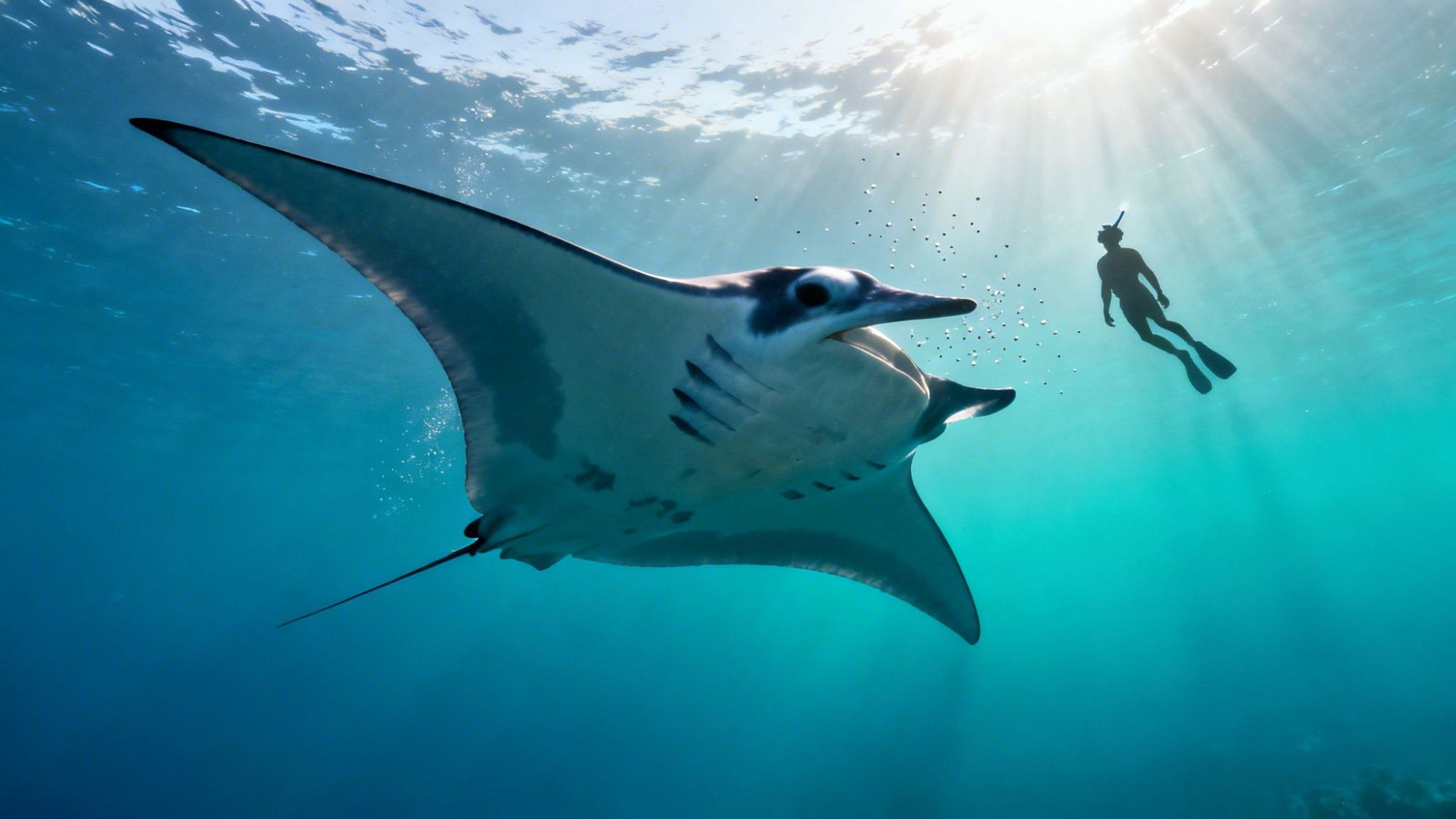
Imagine floating weightlessly, watching a gentle giant with a 12-foot wingspan glide silently through the deep blue just beneath you. This is the heart of swimming with manta rays—an encounter that's both humbling and absolutely magical. We’re going to walk through everything you need to know for this bucket-list adventure.
The Awe of Swimming with Manta Rays Underwater
This guide is all about understanding how these incredible creatures move, where you can find them, and how to make your time in the water safe, respectful, and unforgettable. We'll be leaning on the expertise of Kona Snorkel Trips, Hawaii's top-rated and most reviewed snorkel company, to give you the best advice straight from the pros. Their reputation is built on creating responsible and genuinely moving marine encounters.
We’ll dive into what makes manta rays so captivating, from their surprising intelligence to their unique way of feeding. Think of it as a backstage pass to one of nature's greatest shows.

Why a Manta Ray Swim Is Unforgettable
Floating on the ocean's surface gives you a front-row seat to an underwater ballet. Seeing a manta ray in its element isn’t just about watching wildlife; it feels like a real connection with one of the ocean's most majestic animals. Their effortless grace is something you truly have to see to believe.
A manta ray encounter is often described as a silent, otherworldly dance. Their fluid, silent movements create a serene and almost spiritual atmosphere that stays with you long after you've left the water.
This is the kind of core memory that sticks with you for life.
What Makes These Creatures So Special
Manta rays aren't just beautiful—they're incredibly smart and complex animals. Knowing a little about them before you get in the water elevates the experience from a simple swim to a true wildlife observation.
A few things really make them stand out:
- Gentle Giants: Despite their massive size, they are completely harmless. They're filter-feeders, dining on microscopic plankton.
- Intelligent Beings: Manta rays have the largest brain-to-body size ratio of any fish. They show behaviors that suggest real problem-solving skills and maybe even self-awareness.
- Unique Anatomy: They use two special fins on their heads, called cephalic lobes, to expertly funnel plankton-rich water into their mouths as they feed.
These fascinating traits are a huge part of what makes watching them so mesmerizing. If you're curious to learn more about their unique biology, dive deeper with our article on fun facts about manta rays. Understanding these details transforms a beautiful sight into a profound connection with one of the ocean's most magnificent inhabitants.
The Mechanics of Underwater Flight
Watching a manta ray move through the water is less like seeing a fish swim and more like witnessing a bird in flight. It’s an incredible sight. This isn't just a poetic observation, either—it's actually a pretty spot-on description of how they get around. Most fish use their tails and bodies to wiggle their way forward, but mantas soar through the ocean with powerful, rhythmic beats of their enormous pectoral fins.

These fins are basically wings. Each graceful flap generates both lift and thrust, an incredibly efficient method that allows them to glide for huge distances with barely any effort. It’s all about conserving precious energy out in the big blue. Their entire body is engineered for this kind of underwater aviation.
An Anatomy Built for Gliding
The manta ray's body is a masterpiece of hydrodynamic design. Their flattened, diamond-shaped form is perfectly streamlined, cutting down on drag as they move. This design lets them keep up their speed and agility without burning through energy, whether they're cruising between feeding spots or pulling off some stunning acrobatics.
You can see how everything about them contributes to this effortless movement:
- Pectoral Fins: These are the manta’s engines and wings, all in one. The slow, powerful flaps create vortices in the water that propel them forward with serious force.
- Streamlined Body: Their wide, flat shape is like the sleek fuselage of an airplane, slicing through the water with almost no resistance.
- Cartilaginous Skeleton: Just like sharks, their skeletons are made of lightweight cartilage, not bone. This cuts down on their overall weight, making it way easier to "fly" and achieve neutral buoyancy.
This unique combination is what makes their movement so mesmerizing. It’s a perfect fusion of power and grace that you won't see in any other creature in the sea.
More Than Just Fins
While those giant "wings" get all the attention, two other parts of their anatomy are absolutely crucial to their lifestyle, especially when it’s dinnertime. Look closely at a manta's head, and you'll see two distinctive lobes on either side. These are called cephalic lobes.
These fins are a marvel. When a manta is just cruising, the lobes are usually rolled up tight, looking a bit like horns, which helps keep them streamlined. But when it's time to eat, they unfurl into sophisticated funnels, expertly guiding plankton-rich water straight into their huge, filter-feeding mouths.
The ability to unfurl their cephalic lobes gives manta rays a huge advantage. It lets them efficiently channel massive amounts of water, catching the most tiny zooplankton possible with every pass through a dense patch of food.
This is the exact feeding behavior you'll see up close on the famous Kona night snorkel. As the mantas glide through clouds of plankton drawn to the lights, their cephalic lobes will be fully extended—a brilliant evolutionary adaptation in action.
Different Swimming Styles for Different Needs
If you watch mantas for a while, you'll notice they don't always move the same way. They change their "flight" patterns depending on what they're doing, which really shows off their intelligence and adaptability.
You can actually learn to spot these different styles:
- Efficient Travel: When they have a long way to go, mantas use slow, deep, and powerful flaps. This lets them glide for long stretches, saving energy on journeys that can cover many miles.
- Dynamic Feeding: During feeding, their movements become much more acrobatic. They'll pull off tight turns, loops, and even spectacular barrel rolls to stay right in the thick of the plankton. It’s all about maximizing their meal.
- Cleaning Station Behavior: At "cleaning stations"—special spots on the reef where small fish pick off parasites—mantas often hover almost completely still. They'll use tiny adjustments of their fins to hold their position, letting the cleaner fish get to work.
Understanding these behaviors completely changes how you see them. You're not just watching a big fish anymore; you're observing a complex animal making smart decisions in its own world. It's a truly unforgettable sight.
The World-Famous Kona Manta Ray Night Snorkel
You can find manta rays in a few special places around the world, but Kona, Hawaii, is in a league of its own. This is the home of the legendary Kona Manta Ray Night Snorkel, an experience that delivers such consistent magic it draws people from every corner of the globe for a chance at manta ray swimming underwater. For those looking for an exceptional alternative, Manta Ray Night Snorkel Hawaii also offers top-rated tours.
What makes this slice of the Big Island so perfect for mantas isn't just luck—it’s a happy accident layered on top of ideal biology. The calm, protected waters of the Kona coast are a natural breeding ground for zooplankton, which is the primary food source for a healthy, resident population of reef mantas. They don't have to migrate; their buffet is always open.

The Phenomenon of the "Manta Campfire"
The real game-changer happened decades ago. A local hotel started shining lights into the ocean for guests, and those lights attracted thick clouds of plankton. It didn't take long for the local mantas to figure out this was an easy, all-you-can-eat dinner spot. That simple act created what we now call the "manta campfire."
Today, responsible tour operators recreate this phenomenon in a safe and sustainable way. We submerge powerful, eco-friendly lights into the water, creating a glowing beacon that draws in plankton from all around. Just like moths to a flame, the mantas show up for their nightly meal, creating a predictable and utterly awe-inspiring spectacle.
This unique setup allows for an encounter that's both incredibly intimate and profoundly respectful. It's a completely passive experience. You just float on the surface, holding onto a raft, and watch as these gentle giants come to you, performing their silent, mesmerizing underwater ballet.
What to Expect on Your Night Snorkel Adventure
Your adventure kicks off with a scenic boat ride as the sun dips below the horizon, painting the Hawaiian sky in brilliant colors. This cruise is part of the magic, setting a tone of serene excitement for what’s to come.
Once we arrive at the viewing site, you'll slip into the calm, dark water. Here’s what makes the experience so special:
- The Floating Light Raft: You'll hold onto a custom-built, floating raft that has powerful, downward-facing lights. This raft gives you stability and acts as the "campfire" that attracts all that delicious plankton.
- The Underwater Ballet: As the plankton concentrates in the light beams, the mantas rise up from the darkness below. They glide, loop, and perform graceful barrel rolls—sometimes just inches away—with their huge mouths open to filter-feed.
- A Passive, Respectful Encounter: There's absolutely no swimming after or chasing the animals. Your only job is to float, watch, and be amazed. This ensures the mantas aren't stressed and can go about their natural feeding behavior completely undisturbed.
Going with a top-tier operator like Kona Snorkel Trips is crucial. Our experienced, in-water guides, small group sizes, and deep commitment to the mantas' well-being guarantee your encounter is safe, ethical, and something you'll never forget.
There's a feeling you get floating in the dark ocean while these majestic creatures soar just beneath you that can only be described as otherworldly. Their silent, fluid movements create a serene atmosphere that’s both humbling and deeply connecting.
This isn't just snorkeling; it's being a privileged guest at one of nature's most spectacular nightly rituals. For a complete play-by-play of the trip, you can learn more about what to expect on the manta ray night snorkel tour and show up ready for the adventure of a lifetime.
How to Observe Manta Rays Responsibly
Seeing a manta ray glide through the water is a privilege, plain and simple. It’s a powerful moment, and it comes with a serious responsibility to protect these incredible animals. The golden rule for any encounter is passive observation. Think of yourself as a quiet guest in their home, letting them call all the shots.
The single most important rule is to never, ever touch a manta ray. Their skin is covered in a thin, slimy mucus that’s absolutely essential for their health. It’s basically their immune system, shielding them from nasty bacteria and infections. When you touch them, you strip that protective layer right off, leaving them wide open to disease. Keeping your hands to yourself is one of the easiest and most powerful things you can do to keep them safe.
Following the Rules of the Road (or, the Reef)
Passive observation goes beyond just "no touching." It’s about creating an atmosphere where the mantas feel totally comfortable going about their business, which in Kona, usually means feeding. That means you need to be calm, avoid any sudden or jerky movements, and never, ever chase after them.
When you float peacefully at the surface, holding onto the light board, the mantas often put on a spectacular show, sometimes coming within inches of you as they feast. But if you start chasing them, you'll only stress them out and scare them away, ruining the experience for everyone and, more importantly, interrupting their meal. The calmer you are, the more magical the encounter will be.
The whole experience is built on mutual respect. When we give manta rays space and show them we're not a threat, they often reward us with breathtakingly close fly-bys. It's a beautiful, silent agreement between us and them.
To make sure your adventure is safe for both you and the mantas, it helps to have a clear set of dos and don'ts. Following these guidelines helps preserve this incredible natural wonder for years to come. For a more general look at ocean etiquette, you can also check out our guide on essential snorkeling safety tips.
Guidelines for Responsible Manta Ray Encounters
Here’s a quick reference table to keep the most important rules top of mind. Sticking to these simple guidelines ensures a safe and ethical experience for everyone in the water.
| Do | Don't |
|---|---|
| Remain a passive observer. Stay calm and let the mantas come to you. | Don't touch, chase, ride, or block a manta's path. |
| Stay on the surface. Hold onto the provided floatation device. | Don't dive down towards the mantas. Free-diving is not allowed in the snorkel area. |
| Keep your movements slow and deliberate. Avoid startling the animals. | Don't kick, flail, or make sudden, splashing movements. |
Following these simple rules makes a world of difference, not just for the mantas' well-being but for the quality of your own experience.
Why Your Choices as a Traveler Matter
The Kona manta ray experience is a beautiful example of how humans and wildlife can coexist, but these animals face serious threats on a global scale. The biggest danger by far is fishing, specifically targeting them for their gill plates, which are used in unproven traditional medicines. This demand has sparked a conservation crisis, and manta populations have plummeted worldwide.
A global study painted a grim picture: an estimated 264,520 manta and devil rays are caught every single year. The Indian Ocean is ground zero for this crisis, accounting for 74% of all deaths. Just five countries are responsible for most of this devastation. It’s a sobering reminder of why our choices as travelers are so important.
When you support eco-conscious tour operators who are serious about education and follow strict ethical guidelines, your snorkel trip becomes more than just a vacation activity—it's a powerful act of conservation. It sends a clear message that a living manta ray is far more valuable to a community than a dead one, creating sustainable jobs and giving locals a powerful economic reason to protect them. Your adventure directly contributes to their survival.
Discover Other Global Manta Ray Hotspots
While the nightly manta show in Kona is truly in a class of its own, the magic of swimming with manta rays isn't just a Big Island thing. You can find these incredible animals in other amazing corners of the globe, and each spot offers a totally different vibe.
Seeing how mantas behave in other environments really drives home just how unique—and reliable—our Kona encounter is. Planning awesome breaks and getaways to these places opens up a whole new world of marine adventure.
Ecuador's Oceanic Giants
If you're dreaming of seeing the bigger, more mysterious giant oceanic manta rays, the coast of Ecuador has recently become the place to be. It's not just a few sightings; a massive long-term study just identified this area as home to the world's largest known population of these gentle giants.
Researchers have cataloged a regional population that is estimated to exceed 22,000 individuals. This is a huge discovery and a massive 'ray of hope' for the conservation of this magnificent and endangered species.
Unlike Kona's resident reef mantas who stick close to home, these are true wanderers of the open ocean. It's a different kind of thrill—wilder, more unpredictable, and a powerful reminder of the vastness of our seas.
The Maldives Cleaning Stations
Picture a day spa, but for manta rays. That's pretty much what you'll find in the Maldives, especially in the famous Baa Atoll, which is a UNESCO Biosphere Reserve. This area is famous for its "cleaning stations."
These are specific spots on the reef where mantas line up to get pampered. They just hover patiently while tiny cleaner fish, like wrasse, swim all over them, picking off parasites and dead skin. It's an incredible thing to witness—a quiet, behind-the-scenes look at their daily lives and a beautiful example of symbiosis in action.
Remote and Wild Encounters
For the truly adventurous at heart, places like Socorro Island in Mexico and Raja Ampat in Indonesia offer some of the most remote and untouched diving experiences you can find. These aren't casual snorkeling trips; they are full-on expeditions into wild waters.
- Socorro Island: Known as the "Galapagos of Mexico," this isolated volcanic island is famous for its exceptionally curious giant oceanic mantas. Divers often talk about mantas purposefully seeking them out for close, interactive encounters that can last an entire dive.
- Raja Ampat, Indonesia: Right in the heart of the Coral Triangle, this place is bursting with life. Here, you can see both reef and oceanic mantas gliding over some of the most vibrant coral gardens on the planet—a truly breathtaking sight.
Knowing about these other world-class locations gives you a richer appreciation for what we have here in Kona. Each one offers something special, but they all share that same universal feeling of awe that comes from sharing the water with these majestic ocean gliders.
Diving with Manta Rays as an Alternative
Snorkeling gives you an incredible bird's-eye view of the manta ray ballet, but scuba diving? That puts you right on the stage with them. It’s a completely different world down there.
For certified divers, dropping down to the ocean floor offers a profoundly immersive perspective. Instead of floating above the action, you become a quiet, weightless observer at their level. You get to watch these majestic creatures soar above you, silhouetted against the faint glow of the lights from the surface.
This shift in perspective is a total game-changer. From the sandy bottom, you can truly appreciate the sheer scale of their wingspans and feel the power in the subtle movements that propel them through the water. It’s a much deeper, more intimate way to experience the grace of manta ray swimming underwater.

A World-Class Diving Experience in Kona
Kona isn't just a snorkeler's paradise; it's a world-renowned diving destination, and the manta dive is the main event. If you’re ready to take your manta encounter to the next level, the experience here is simply unmatched.
When you're ready for that world-class diving adventure in Kona, we can't recommend Kona Honu Divers highly enough. They are the top-rated & most reviewed diving company in both Hawaii and the Pacific Ocean for a reason. Their manta ray diving tour puts you right in the heart of the action, safely and responsibly.
Diving with an expert crew means you’ll be in the perfect spot to see the mantas' natural behaviors without disturbing them. You get to watch them glide, loop, and feed in a way that feels incredibly personal. It’s an experience that connects you to the ocean on a whole new level.
Getting Started with Scuba
The idea of breathing underwater is captivating for just about everyone. If you're drawn to the underwater world but maybe not quite ready to commit to a full certification course, there are fantastic introductory programs to get your feet wet.
Programs like Discover Scuba Diving provide a safe and guided first step into this incredible activity, letting you experience the feeling of being weightless beneath the waves.
Diving offers a serene and humbling experience, where you are simply a guest in a vast, silent world. Watching a manta ray from the ocean floor is a moment of pure awe that transforms your understanding of the marine ecosystem.
Ultimately, whether you choose to snorkel or dive, the goal is the same: to witness these gentle giants in their natural habitat with respect. Diving just adds another amazing layer to this encounter, offering a perspective that is both breathtaking and unforgettable.
Questions We Hear All the Time
Even after you're booked and buzzing with excitement, a few questions might pop into your head. It's totally normal. To put your mind at ease, here are the answers to the things people ask us most often. This way, you can show up ready for an amazing time without any lingering "what ifs."
Is It Actually Safe to Swim with Manta Rays?
Yes, 100%. Manta rays are famously called "gentle giants" for a reason—they pose zero threat to people. A lot of people get them mixed up with stingrays, but mantas are a completely different animal. They don't have a stinger, a barb, or any way to hurt you. Their only defense mechanism is to use their incredible size and speed to bolt from predators like sharks.
When you're out with a professional crew, your safety is the absolute top priority. We always have expert guides right there in the water with you, making sure the encounter is comfortable and safe for both you and the mantas. Just listen to the briefing, follow their lead, and you're in for one of the safest, most awe-inspiring wildlife experiences on the planet.
When Is the Best Time of Year to See Mantas in Kona?
This is the magic of Kona: there is no "best" time! Our local population of reef manta rays doesn't migrate. They hang out and feed along our coast 365 days a year.
That unbelievable consistency is exactly why the Kona Manta Ray Night Snorkel has become a world-famous, bucket-list adventure. Unlike so many other wildlife encounters that depend on the season, your odds of a spectacular show are incredibly high no matter when you decide to visit the Big Island.
What Do I Need to Bring on a Manta Ray Snorkel Tour?
Good news—you can pack pretty light. Reputable companies like us provide all the big stuff. At Kona Snorkel Trips, we've got you covered with wetsuits, high-quality masks, snorkels, and fins.
Here’s a short list of what you should bring for maximum comfort:
- A Towel: You’ll be very happy you have this for the boat ride back to the harbor.
- Dry Clothes: Slipping into something warm and dry after your swim makes the trip home so much better.
- Waterproof Camera: If you've got one, bring it! Just remember to pull your face away from the viewfinder and soak in the actual moment, too.
- Leave the Bling at Home: It's best to leave jewelry, wads of cash, or other non-essential valuables behind.
Basically, just bring what you need to be comfortable. We'll handle the rest.
Can My Kids Do the Manta Ray Night Snorkel?
Absolutely! The manta ray night snorkel can be a life-changing experience for families. Seeing these animals up close can spark a love for the ocean that lasts a lifetime.
Of course, safety comes first, so every tour operator has rules. Most companies require a minimum age and that kids have basic swimming skills and are comfortable being in the open ocean after dark. The best bet is always to check directly with the tour company you book with to understand their specific policies. An adventure like this can create a core memory that your family will talk about for years to come.
Ready to see the underwater ballet for yourself? The expert crew at Kona Snorkel Trips is waiting to guide you on a safe, respectful, and completely unforgettable adventure. Book your Manta Ray Night Snorkel today and get ready for the experience of a lifetime.