
A Guide to Manta Ray Swimming Underwater
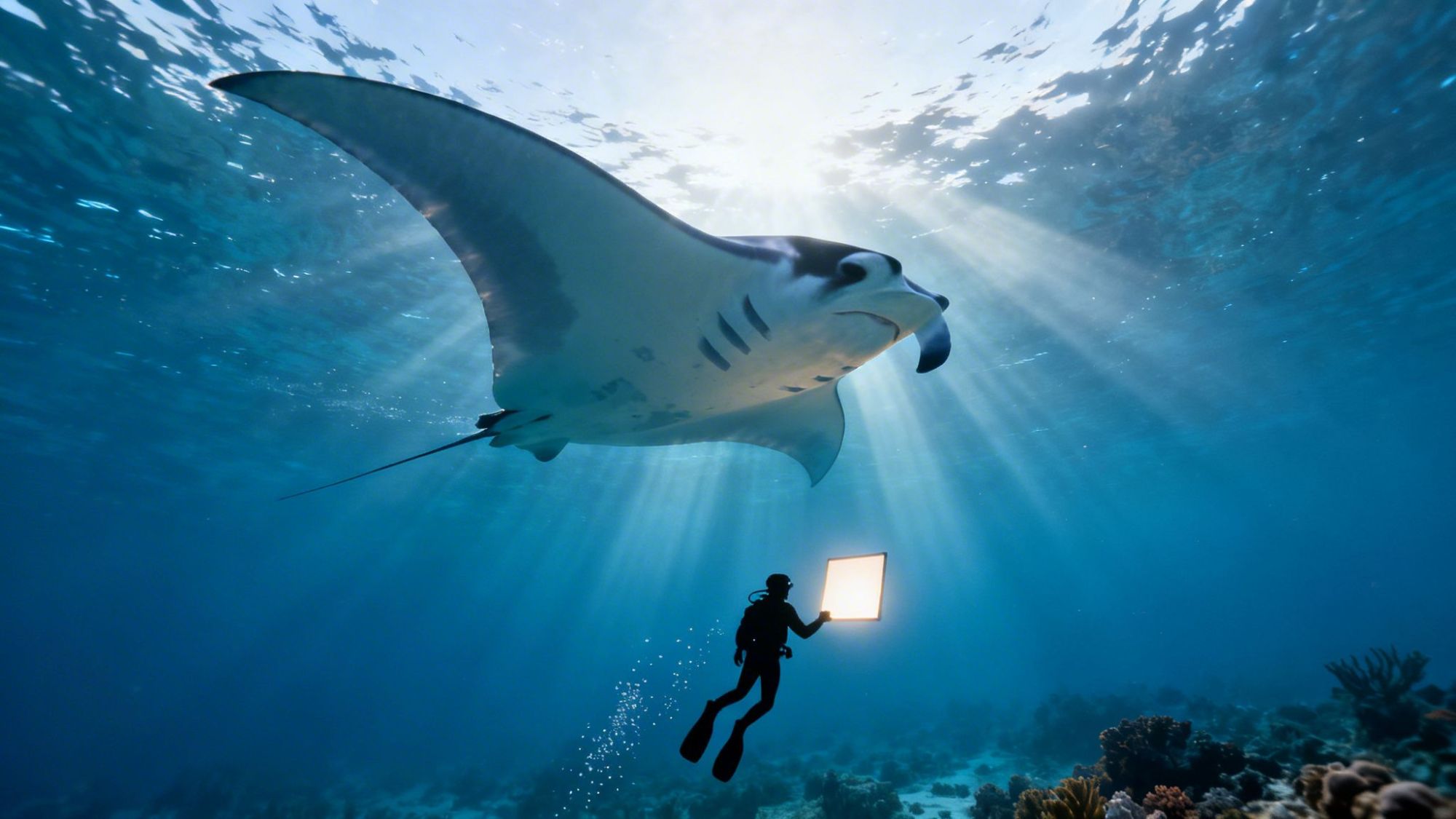
Imagine floating in the quiet, dark ocean, completely weightless. Suddenly, massive, graceful shadows glide just inches beneath you. That dream of swimming underwater with manta rays is closer than you think, and this guide is your first step to making it a breathtaking reality.
We'll walk through everything you need to know to confidently and respectfully share their world.
Your First Encounter With Gentle Giants
Let's get one thing straight right away: swimming with manta rays is one of the safest and most profound wildlife encounters you can have. These gentle giants are filter feeders, meaning they're completely harmless to people. They don't have stingers or barbs like their stingray cousins; their main defense is simply their massive size and incredible speed.
When you see a manta ray gliding through the water, you're witnessing an ancient, intelligent creature in its element. They're known for being surprisingly curious and social. Here in Kona, the local mantas have grown accustomed to snorkelers and often come incredibly close as they feed on the plankton drawn to our underwater lights.
What to Expect on a Guided Tour
Going with a professional guide is the best way to ensure your adventure is seamless and safe. Companies like Kona Snorkel Trips—the top-rated and most-reviewed snorkel company in Hawaii—have this down to a science. Here’s a quick rundown of what your first encounter will probably look like:
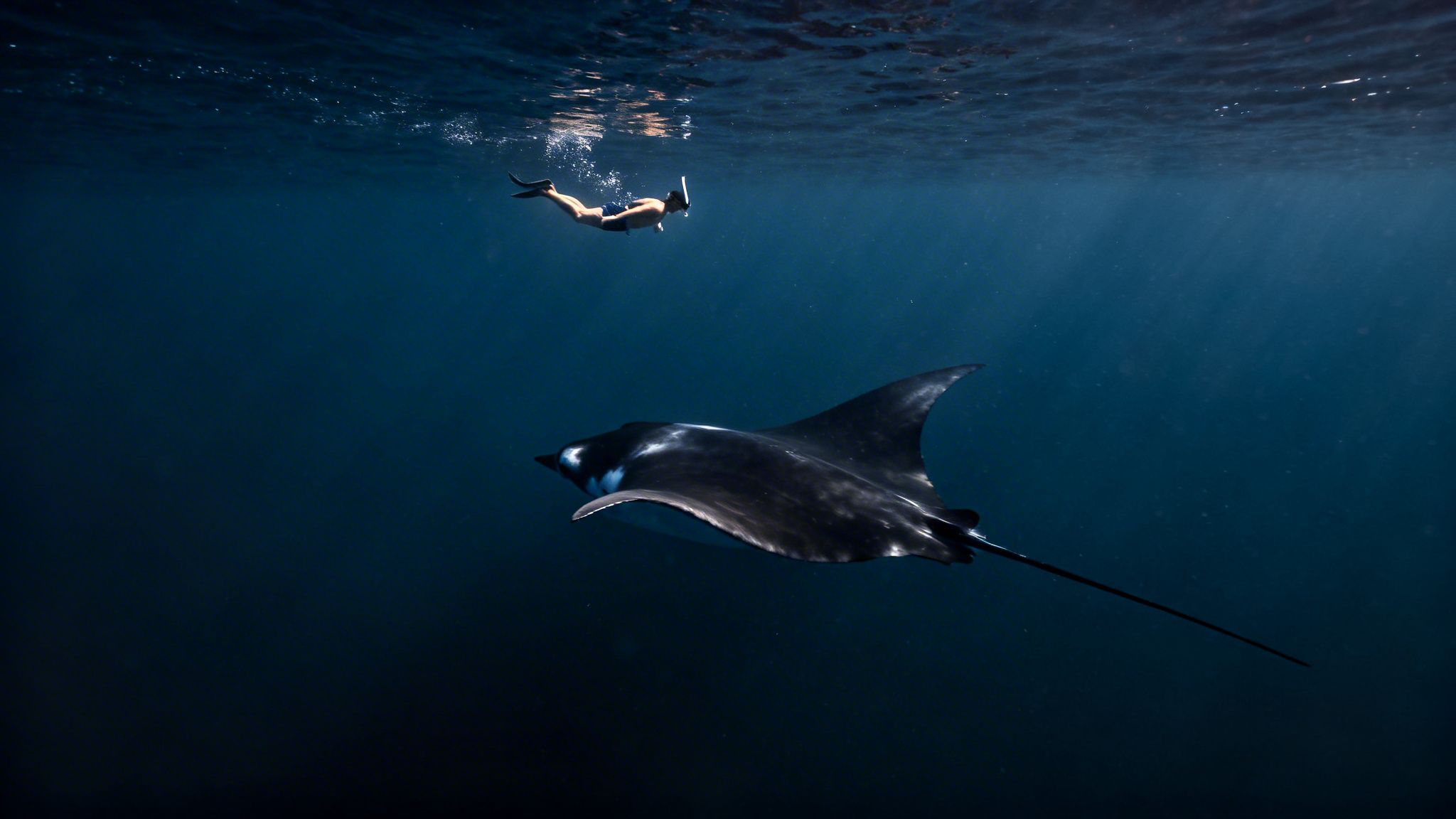
- Expert Briefing: Before you even touch the water, you’ll get a thorough safety briefing. The guides cover everything from manta behavior to the do's and don'ts of being in the water with them.
- A Safe, Guided Environment: Your certified guides are in the water with you the entire time, making sure everyone is comfortable and keeping an eye on the conditions.
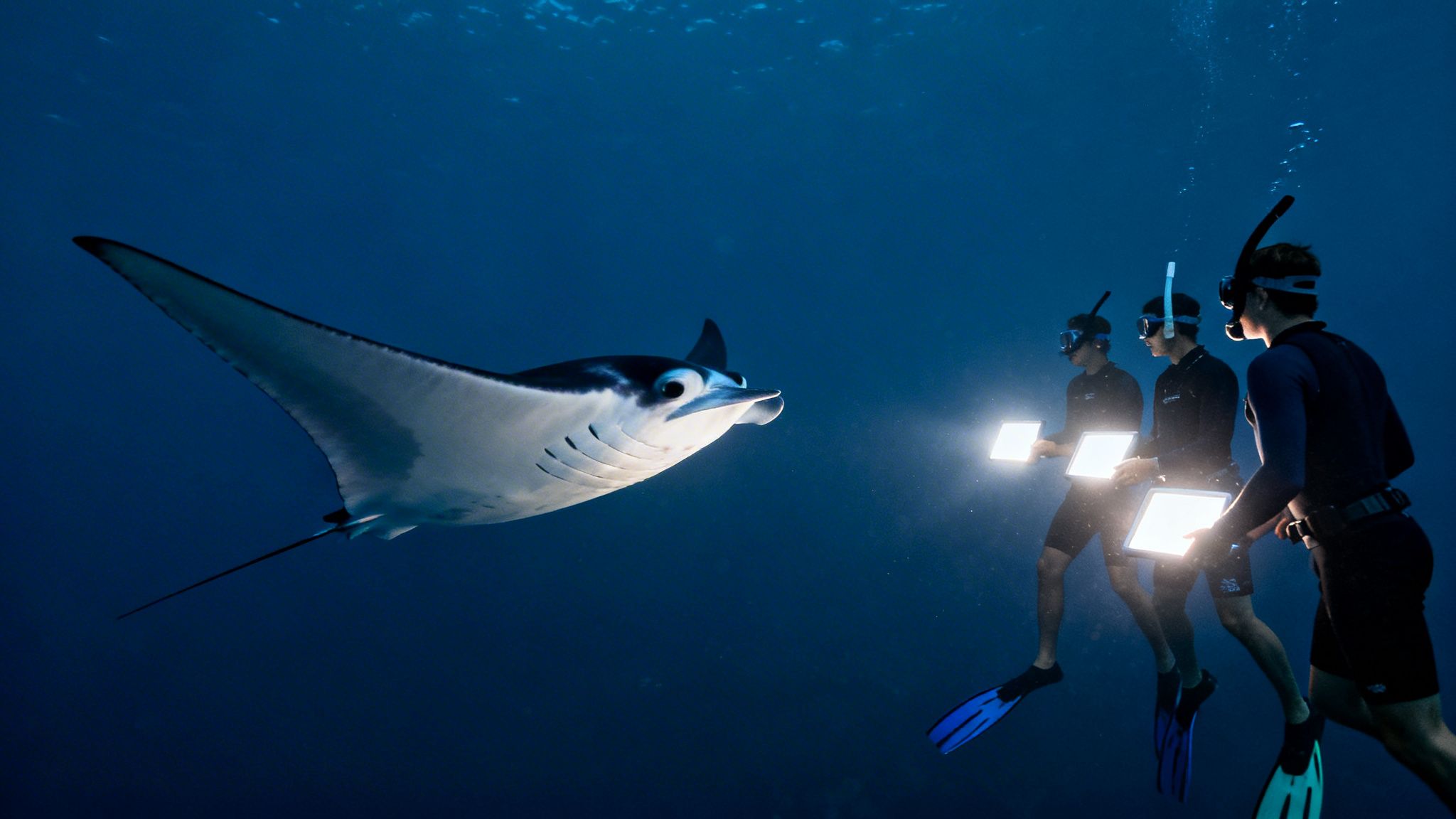
- Effortless Observation: This is the best part. Guests typically hold onto a floating light board. This lets you float easily on the surface while the mantas perform their underwater ballet just beneath you. No frantic swimming required.
This passive approach is the secret sauce. By staying still and calm, you let the mantas know you're not a threat. This is what leads to those incredibly close, unforgettable passes.
The whole experience is designed to be accessible. You don’t need to be an Olympic swimmer—just comfortable floating in the water.
If you're ready to see this natural wonder for yourself, the manta ray night snorkel in Kona is an adventure you’ll never forget. A good tour provides everything you need for a magical and safe first encounter with these gentle giants.
Understanding the Manta Ray Ballet
Watching a manta ray move through the water is like seeing a silent, underwater ballet. Nothing is wasted. Every single movement is graceful, deliberate, and serves a specific purpose. These giants don’t just swim; they soar and glide through the ocean in a way that’s both jaw-droppingly beautiful and incredibly efficient.
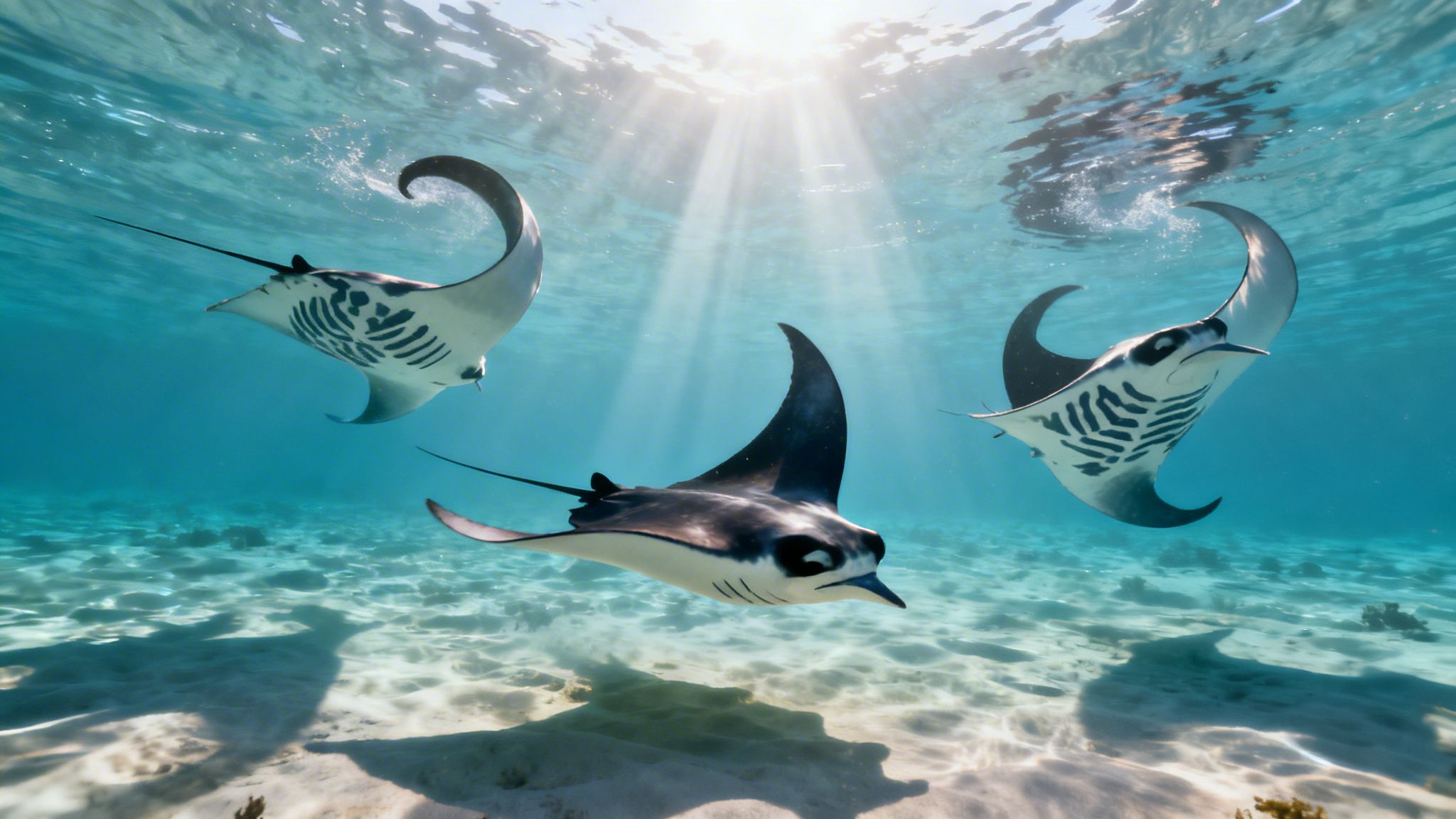
Some of the most spectacular moves you'll witness are all about food. Mantas are filter feeders, meaning they consume huge amounts of tiny zooplankton. To get as much as possible, they perform some pretty incredible acrobatics.
- Barrel Rolls: This is the classic feeding move. A manta will do a continuous, looping somersault to stay right in the middle of a dense cloud of plankton, using its wide mouth like a funnel.
- Surface Feeding: You might also see them gliding just beneath the waves with their mouths wide open, skimming the richest layer of plankton right off the top.
- Chain Feeding: This one is truly a sight to behold. In a stunning display of teamwork, several mantas will line up head-to-tail, creating a chain to collectively gulp down a massive plankton bloom.
Decoding Manta Behaviors
Beyond just feeding, their movements tell you a lot about what’s going on in their world. You might see them visiting a "cleaning station," where smaller fish swim up and pick parasites off their skin. During these visits, mantas hover almost perfectly still, basically signaling that they're ready for a spa day.
They're also surprisingly social creatures. Mantas interact with each other all the time, sometimes in complex courtship rituals or just cruising together in small groups. If you're curious, we dive even deeper into these and other fun facts about manta rays in another one of our articles.
Understanding these behaviors gives you a whole new appreciation for their complex social lives. And that social side is on full display in certain parts of the world. In fact, a groundbreaking 14-year study off Ecuador’s coast revealed the world's largest known population—an estimated 22,000 individuals! This group is more than 10 times larger than any other manta population ever recorded, giving us a stunning window into their lives on a massive scale.
This incredible finding highlights just how much we still have to learn about these gentle giants. It also underscores why protected, reliable viewing sites like those in Kona are so globally significant.
Observing a manta ray swimming underwater is more than just an amazing photo op; it’s a rare glimpse into the life of an intelligent, social, and beautifully adapted marine animal. Knowing what to look for transforms your snorkel from just watching fish to truly appreciating nature's underwater choreography.
Getting Ready for Your Underwater Adventure
A truly magical encounter with a manta ray begins long before you ever dip a fin in the water. Getting yourself prepped is the difference between a good trip and an unforgettable one. It’s all about feeling confident, comfortable, and ready to soak in every moment.
The single most important thing isn't being an Olympic swimmer, but simply being comfortable in the ocean. You just need to be able to float calmly on the surface. Since you'll be holding onto a light board for the whole snorkel, powerful swimming isn't required, but that water confidence is an absolute must.
Gearing Up for Success
While we provide almost everything you'll need, it helps to know what you’re working with. A well-fitting mask and snorkel are your windows to the underwater world. We’ll get you set up, but it's key to make sure your mask creates a good seal. A leaky mask is a surefire way to get distracted from the main event! For a deeper dive on what to wear, check out our guide on what to wear for snorkeling.
Night tours also involve some specialized gear, especially the powerful underwater lights. These aren't just for seeing—they're essential for attracting the plankton that manta rays feed on. Essentially, we bring the dinner party right to you.
Choosing the Right Tour Operator
Your choice of guide can make or break the entire experience. A top-notch company will always put safety and respect for marine life first. As you look at your options, keep an eye out for operators that focus on these things:
- Small Group Sizes: Fewer people in the water creates a more personal and much less chaotic encounter. It's a completely different vibe.
- Thorough Safety Briefings: A good guide will walk you through everything, from manta etiquette to emergency plans, before you even think about getting in.
- Experienced Guides: Guides who know their stuff don't just keep you safe; they make the trip richer with incredible facts and stories about manta behavior.
Here at Kona Snorkel Trips, we've built our entire operation around these principles to give every guest a safe and memorable adventure. If you're looking for another excellent option, our friends at Manta Ray Night Snorkel Hawaii also provide a world-class experience. For some people, getting an introductory scuba diving experience beforehand can be a great way to build that underwater confidence.
The best tours create a calm, passive observation environment. This non-threatening atmosphere is what encourages the mantas to come closer, providing those truly breathtaking, close-up passes that you'll remember forever.
When you book with the right team, you can relax and focus completely on the incredible sight of a manta ray gliding through the water, knowing all the logistics and safety details are in expert hands. Ready to take the plunge?
Mastering In-Water Etiquette
How you act in the water has a massive impact on the quality of the encounter for everyone—especially the mantas. A calm, respectful approach is your ticket to a truly magical experience. Knowing the rules of the road before you even get wet ensures your manta ray swimming underwater adventure is something you'll remember for all the right reasons.
When it's time to slip into the ocean, do it as quietly and gently as you can. Big, noisy splashes can easily startle the very animals you came to see. Your guide will lead you over to a floating light board, which will be your home base for the snorkel. This is a passive experience. You just hold on, float, and watch. This simple posture tells the mantas you're just an observer, not a threat, which makes them comfortable enough to come right up to you.
The Golden Rule: Don't Touch The Manta
If you only remember one thing from this guide, make it this: never, ever touch a manta ray. This is non-negotiable. Their skin is covered by a thin layer of protective mucus that acts like our own immune system, shielding them from nasty bacteria and infections. Touching a manta, even with the lightest graze, strips off this vital coating and leaves them vulnerable to disease.
By simply floating and giving them their space, you're actually helping protect them. Being a passive observer is the most respectful—and ultimately, the most rewarding—way to be a guest in their world.
Think of it like this: you're visiting their home, their dining room. The goal is to be completely unobtrusive so their natural feeding behavior can continue just as if you weren't even there.
Mind Your Fins (And Your Neighbors)
Once you're at the light board, floating and mesmerized, it’s easy to forget you have two long fins attached to your feet. Those fins can become your biggest liability. An accidental kick can easily whack another snorkeler or, far worse, a manta ray gliding by. The fix is simple: just keep your legs still and float horizontally on the surface, like a log. No kicking needed!
To make sure everyone—human and manta alike—has an incredible and safe time, just follow these simple guidelines. They are the key to a respectful manta ray swimming experience.
Manta Ray Encounter Do's and Don'ts
| Action | Do | Don't |
|---|---|---|
| Entering the Water | Slip in gently and quietly. | Jump in or make a big splash. |
| In-Water Position | Hold onto the light board and float horizontally. | Kick, swim around, or dive down. |
| Interaction | Observe passively from the surface. | Reach out or attempt to touch a manta ray. |
| Fin Awareness | Keep your legs and fins still. | Kick your fins, which can harm mantas or other snorkelers. |
| Photography | Keep your camera still and avoid bright, flashing strobes. | Chase mantas for a photo or disrupt their path. |
Following this etiquette is simple, and it makes all the difference. It ensures the mantas stay safe and comfortable, which in turn means they'll stick around for a spectacular show.
For those who want to see these graceful giants from a different angle, a dive tour offers an incredible bottom-up view of the action. Our friends at Kona Honu Divers, the top rated & most reviewed diving company in both Hawaii and the Pacific Ocean, run an exceptional manta ray diving tour. Whether you snorkel or dive, good etiquette is key to a great night.
Why Your Manta Ray Swim is a Big Deal for Conservation
That incredible feeling of swimming with manta rays? It's more than just a personal adventure—it’s your chance to be part of a global conservation movement. These encounters are pure magic, but the reality is that manta and devil ray populations are in serious trouble around the world. Choosing to join a sustainable, eco-friendly tour is one of the most direct ways you can help protect these magnificent animals.
This isn't just some abstract idea. The threats are very real and shockingly high. The latest research paints a pretty sobering picture of what these gentle giants are up against because of human activity.
The Sobering Reality of Global Fisheries
A landmark study from the Manta Trust dropped a bombshell statistic: an estimated 264,520 manta and devil rays are caught every single year across the globe.
What really caught our attention, though, was that a staggering 87% of these deaths come from small-scale fisheries, not huge industrial boats. It shows just how widespread the problem is and why we desperately need better conservation everywhere. If you want to dive deeper, you can explore the full research on their website to see the global scale of the issue.
This is exactly why your choice of a tour operator matters so much. When you go out with a responsible company, you're casting a vote with your wallet for a better future for manta rays.
Choosing a reputable tour operator transforms your vacation from just looking at wildlife into actively helping protect it. You become part of the solution, just by being there.
How Your Tour Makes a Real Difference
When you pick an operator like Kona Snorkel Trips, one that follows strict, science-backed guidelines for safe and ethical interactions, you're directly supporting a system that puts marine life first. Here’s the positive ripple effect your decision creates:
- It creates a powerful economic incentive. Your tour fee shows the local community that a living manta ray is far more valuable than a caught one. When that happens, conservation becomes the obvious and more profitable choice.
- It helps fund research and education. Good operators often team up with researchers and conservation groups. A piece of your fee can go toward studies that track manta populations, check on their health, and teach the public why they're so important.
- It sets a global standard. Well-managed ecotourism sites, like the ones here in Kona, become a blueprint for the rest of the world. They prove it’s possible for people and wildlife to coexist in a way that benefits everyone, raising the bar for other destinations.
In the end, your amazing night in the water does more than just create a lifelong memory. It turns you into an ambassador for these incredible animals. You'll leave not just with killer photos, but with a real understanding of why these gentle giants need our help—and how responsible tourism is one of their best shots at survival.
Capturing Memories Ethically
Getting that perfect shot of a manta ray swimming underwater is an amazing way to remember the experience, but it’s crucial to do it responsibly. You can absolutely get incredible photos and videos without ever disturbing the mantas. The whole idea is to be a fly on the wall, capturing the magic without changing their natural behavior.
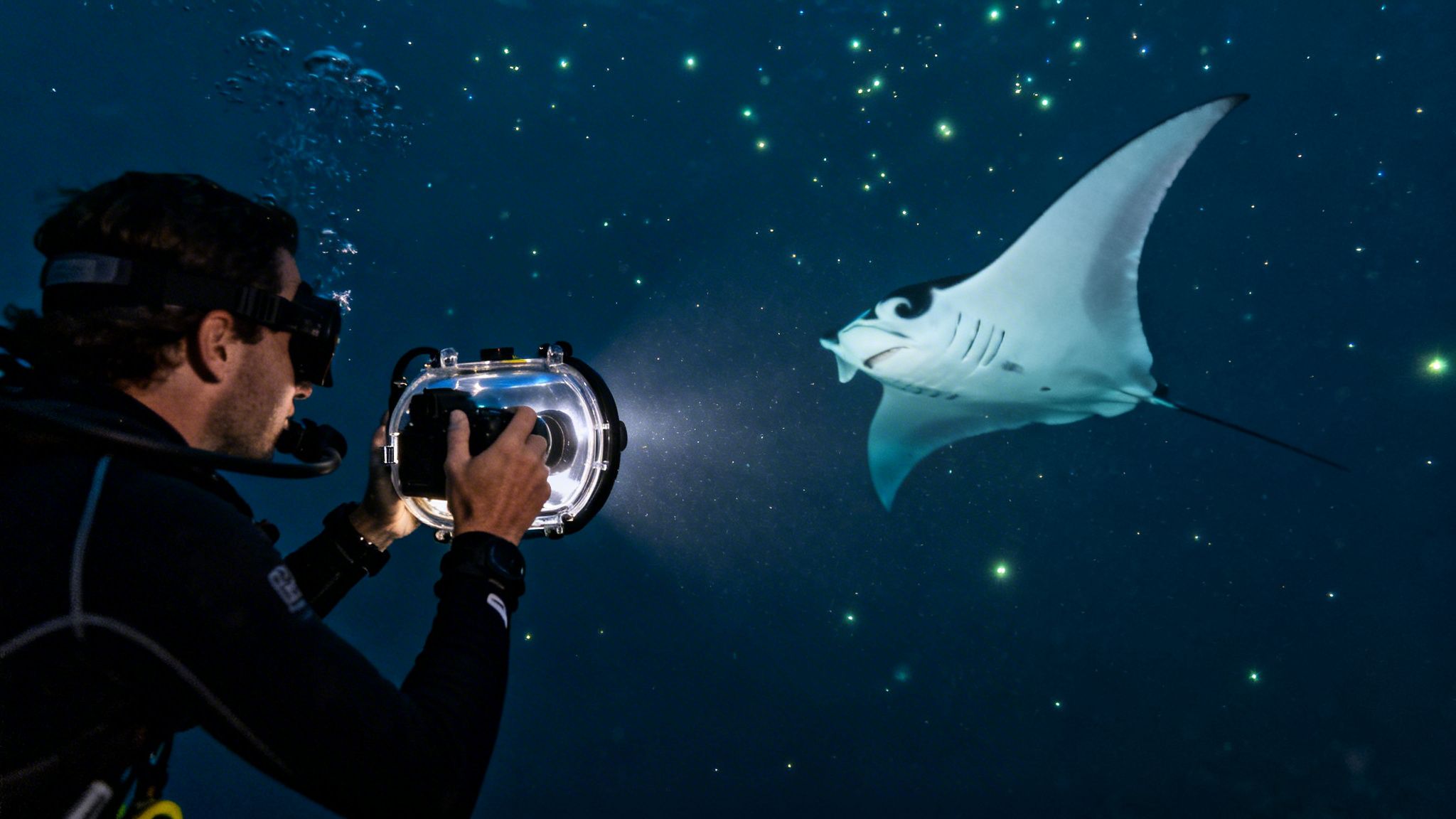
Here's the most important rule of thumb: turn off your flash and any external strobes. Those sudden, bright bursts of light can easily startle the mantas, throwing them off their feeding rhythm. Instead, just rely on the powerful lights your tour boat provides to light up the whole scene.
Your best shots will come from simply being a patient, passive observer. Never chase a manta for a better angle. If you just relax and let them come to you, you'll be rewarded with natural, graceful images that really capture their spirit.
Photography and Videography Tips
Night snorkeling has its own set of challenges, but a few simple adjustments will make a huge difference in your photos. Focus on keeping your camera steady and making the most of the light we provide. For a deeper dive, you can learn more about how to take stunning underwater pictures on our blog.
When you get home and start looking through your footage, there are ways to make it even more powerful. For instance, adding subtitles to your videos can make your amazing encounter accessible to a much wider audience.
Your Photos Can Contribute to Science
Believe it or not, your pictures can be more than just a cool souvenir—they can actually be valuable scientific data.
Every single manta ray has a unique pattern of spots on its belly, almost like a human fingerprint. Researchers use clear photos of these spots to identify and track individual mantas over time.
This technique, known as photo-identification, helps scientists monitor everything from population health to migration patterns. Citizen science programs rely heavily on images from snorkelers just like you to build their databases. In fact, the Maldives Manta Conservation Programme recently identified its 1,000th oceanic manta ray, confirming it as the world's third-largest known population—all thanks to photos!
By simply snapping a clear shot of a manta's belly, you could be contributing to the next big discovery.
Your Manta Ray Questions, Answered
If you're gearing up for this incredible adventure, you probably have a few questions. We get it! To help you feel completely at ease and ready for the magic, here are the answers to the questions we hear most from our guests about swimming with manta rays underwater.
Is It Safe to Swim with Manta Rays?
Absolutely. Manta rays are true gentle giants. They are completely harmless to people—no teeth, no stingers, no barbs. They're filter feeders, which means their only interest is slurping up the tiny plankton in the water, not the snorkelers floating above them.
On top of that, any reputable tour operator puts safety first, following strict guidelines to make sure everyone in the water has a secure and amazing experience.
Do I Need to Be an Expert Swimmer?
Not at all. You don't need to be Michael Phelps, but you should be comfortable in the water.
On our trips, you'll be holding onto a custom-built, floating light board the entire time. This design lets you simply relax and float on the surface, watching the show below. The mantas do all the work, gliding gracefully beneath you without you needing to do any strenuous swimming.
When Is the Best Time of Year to See Manta Rays in Kona?
This is the best part: any time is a great time! Kona is one of the handful of places on Earth where you can see manta rays 365 days a year.
Our local manta population doesn't migrate because their food source, plankton, is available along the coastline year-round. That means you can book a tour in January or July and have a fantastic shot at witnessing this unbelievable natural spectacle.
Ready for an adventure you'll never forget? Kona Snorkel Trips proudly runs the highest-rated and most-reviewed manta ray night snorkel in Hawaii. Book your tour today and get ready for a truly magical night.