
Manta Ray Swimming Underwater A Guide to Kona’s Gentle Giants
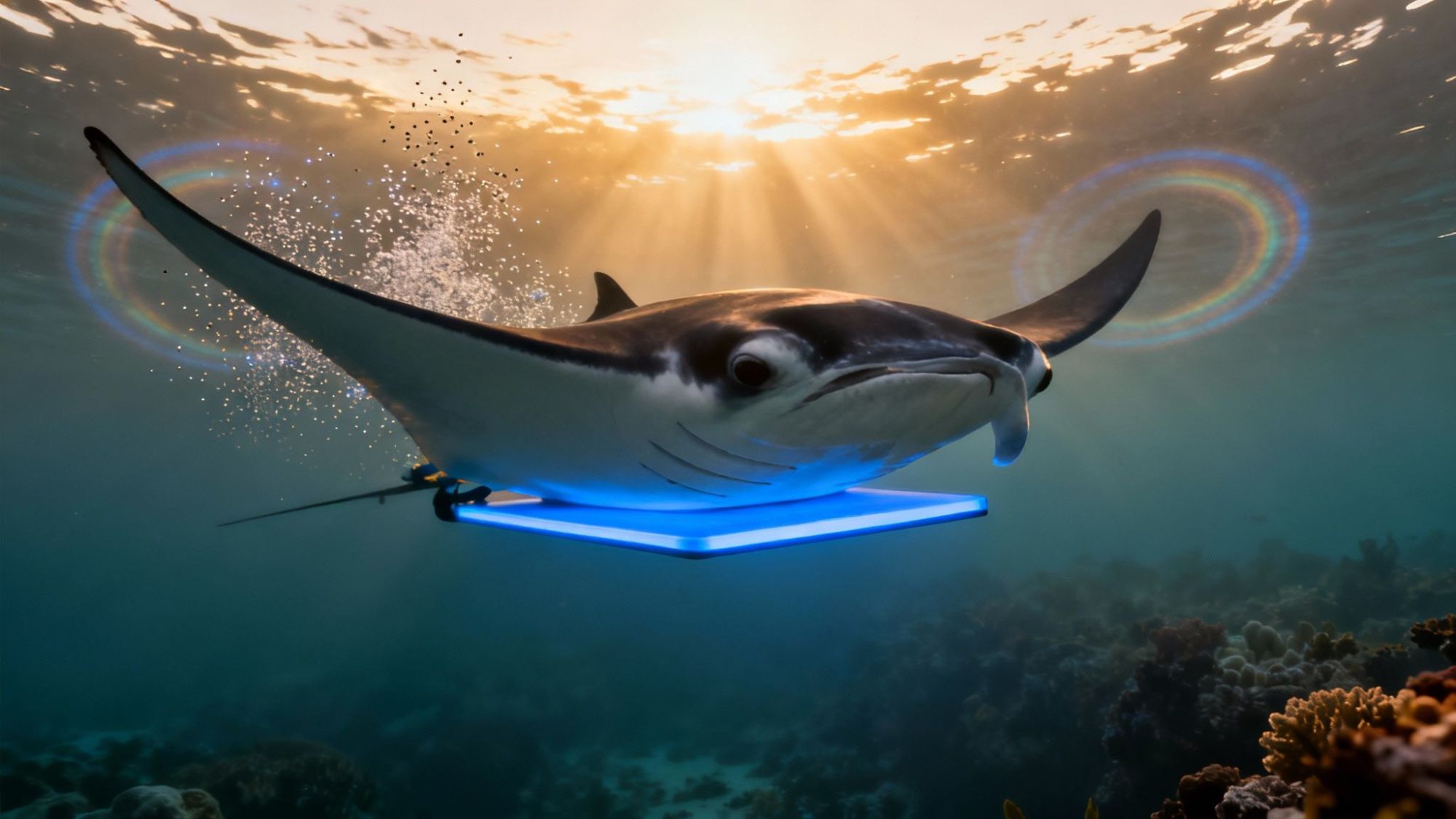
Picture this: you're floating in the warm, dark Pacific Ocean, suspended in a world of deep blue. Suddenly, a creature the size of a small car glides silently, just inches below you. This isn't a movie scene; it's the very real, very breathtaking experience of manta ray swimming underwater in Kona, Hawaii.
This is more than just another snorkel tour. It's a genuine, up-close encounter with some of the ocean's most majestic and gentle inhabitants.
Welcome to the World of Kona's Gentle Giants
We're here to walk you through everything you need to know about this unforgettable adventure. We'll dive into what makes these giant rays so captivating and how you can join their nightly ballet in a way that's safe for both you and them.
Getting this experience right starts with choosing the right guide. That's why we always point people to Kona Snorkel Trips, Hawaii's top-rated and most-reviewed snorkel company. Their deep respect for the ocean and commitment to safety means you're in the best possible hands. Don't just take our word for it—see what fellow adventurers have to say.
Why Is Kona the Premier Destination?
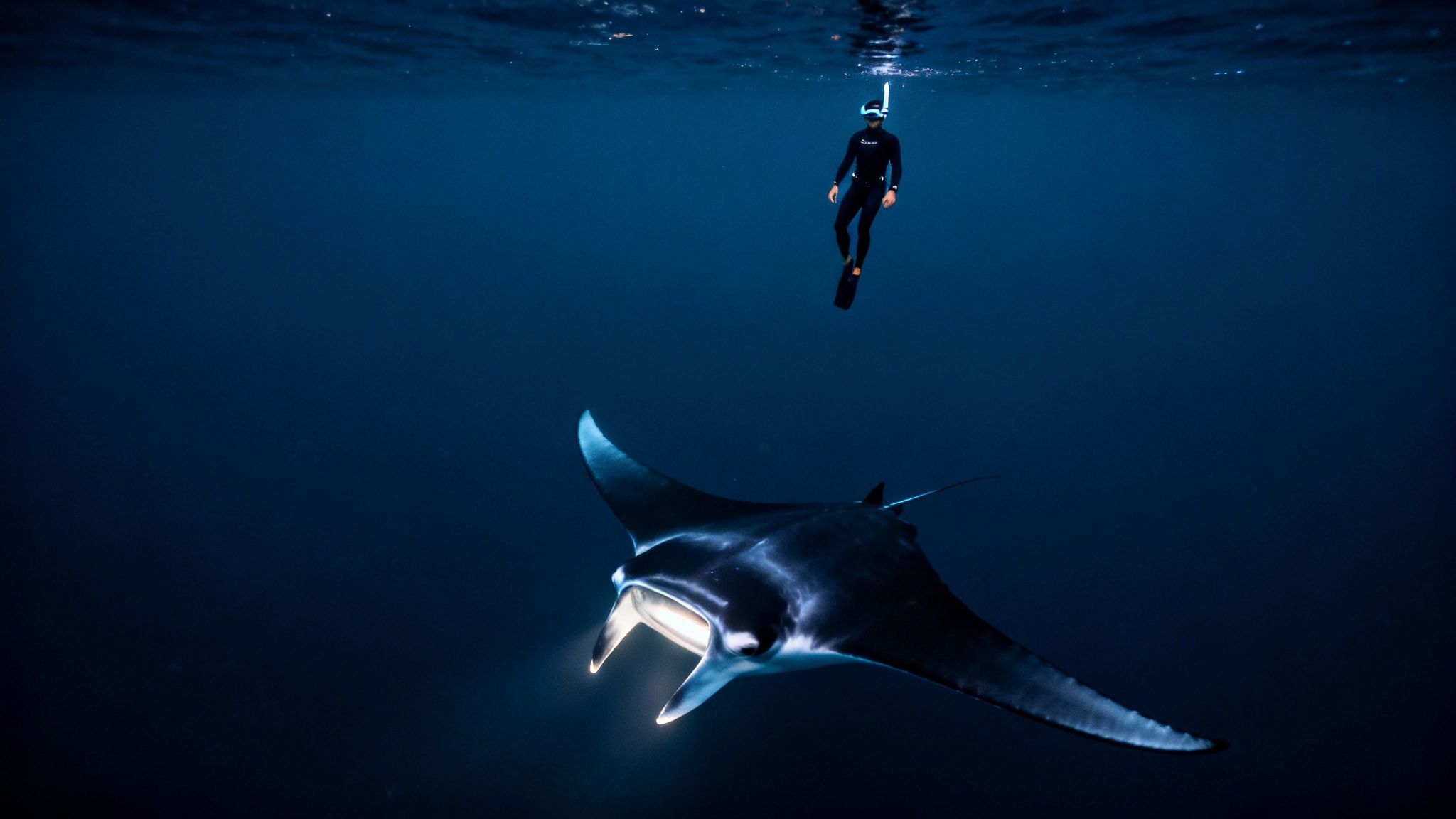
Kona, right here on the Big Island, has built a worldwide reputation as the single most reliable place to see manta rays. And it's no accident. The unique underwater landscape and a steady supply of their favorite food have created the perfect hangout for a resident population of these amazing animals.
The nightly show is actually a beautiful, learned behavior. For decades, tour operators have used powerful underwater lights. These lights attract swarms of phytoplankton—tiny organisms that are basically a floating buffet for mantas. The rays have figured this out, showing up to these "feeding stations" for an easy meal almost every single night. This creates a predictable and completely non-invasive way for us to witness the magic.
What Makes This Encounter So Special?
Unlike watching wildlife from a boat or the shore, the Kona manta ray snorkel drops you right into their world. For a short time, you're not just an observer; you're part of the underwater scene.
A few things really set this adventure apart:
- Proximity Without Intrusion: The mantas are incredibly curious and often glide within inches of you. But the whole encounter is passive—you just float and watch the show unfold beneath you.
- Gentle and Harmless Nature: They're called "gentle giants" for a good reason. They have absolutely no teeth, no barbs, and no stingers, making the interaction completely safe.
- Awe-Inspiring Grace: Seeing a manta ray swim is like watching a master ballet dancer. They move with an effortless grace that is somehow both incredibly calming and absolutely exhilarating at the same time.
One of the go-to spots for this nightly performance is nicknamed Manta Heaven, better known as Garden Eel Cove, a true manta ray paradise in Kona, Hawaii. It’s here that the deep blue water comes alive under the glow of the lights, setting the stage for an experience you'll never forget.
Understanding These Graceful Ocean Flyers
To really appreciate the magic of swimming with manta rays, it helps to first understand a little about these incredible creatures you’re about to meet. People often call them “graceful ocean flyers,” and once you see them move, you'll know why. They use their enormous pectoral fins—which can span up to 18 feet—to propel themselves through the water with an elegance that truly looks like a bird in flight.
But that effortless movement is just the beginning of what makes them so special. Manta rays are incredibly smart, boasting the largest brain-to-body mass ratio of any fish. You can see this intelligence in their curious and sometimes even playful behavior around snorkelers. They aren't aggressive at all; they're just naturally inquisitive, often coming closer to investigate the strange, floating creatures watching their nightly ballet.
More Than Just a Pretty Face
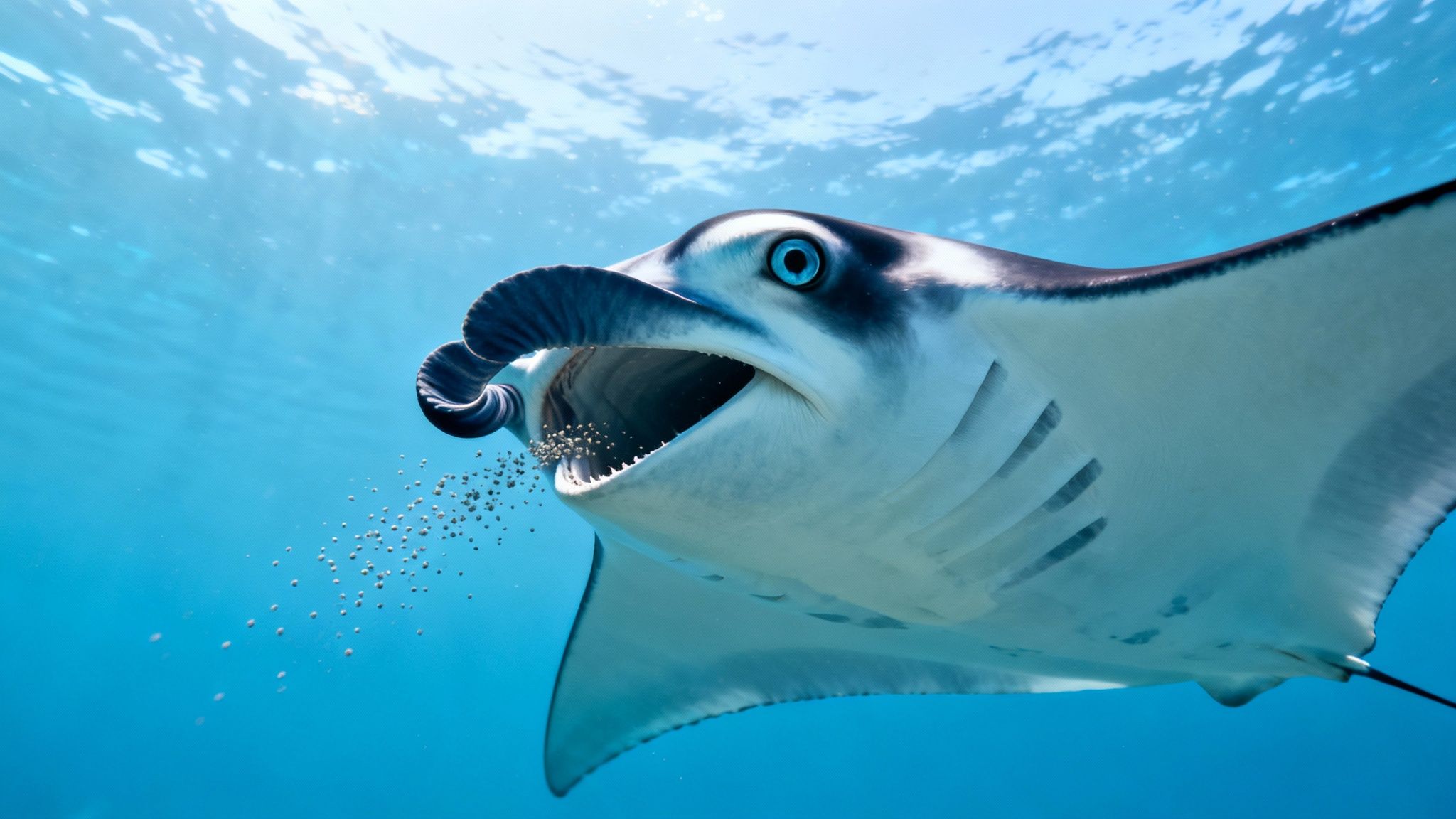
Manta rays have some unique physical features that are perfectly adapted to how they live. One of the first things you'll probably notice is their cephalic fins, which look like a pair of horns on either side of their head. When it's feeding time, they unfurl these fins to create a perfect funnel, channeling plankton-rich water directly into their huge, cavernous mouths.
It's important to know that unlike their stingray cousins, manta rays are completely harmless to people. Here's why you have nothing to fear:
- No Stinger: They don't have a stinger or barb on their tail. At all.
- Gentle Feeders: They are filter-feeders, gulping down massive amounts of tiny zooplankton. Their teeth are small, blunt, and only on their lower jaw—posing zero threat to us.
- Natural Defense: Their main defenses are their sheer size and incredible speed, which let them easily outmaneuver predators like large sharks.
Their entire diet is made up of zooplankton—microscopic critters like krill and shrimp. To keep their massive bodies going, a single manta ray eats about 12% of its body weight in plankton every single week. This constant need for food is exactly what makes Kona's plankton-rich waters the perfect place for them to hang out.
When you understand their gentle nature and unique way of feeding, your encounter goes from just seeing an animal to making a real connection. You're witnessing a highly intelligent creature executing a survival strategy that's been perfected over millions of years.
For a deeper dive, check out some more fun facts about manta rays that make them even more amazing.
The Science Behind Kona's Nightly Manta Ballet
So, what makes Kona’s waters the world’s most incredible and reliable stage for a nightly manta ray performance? This isn't just some happy accident. It’s a brilliant, if unintentional, partnership between people and nature that’s been fine-tuned over decades. The whole secret boils down to a powerful combo: light, plankton, and the incredible smarts of these gentle giants.
At the heart of it all, the entire spectacle of manta ray swimming underwater here revolves around their favorite food: zooplankton.
The Plankton Magnet
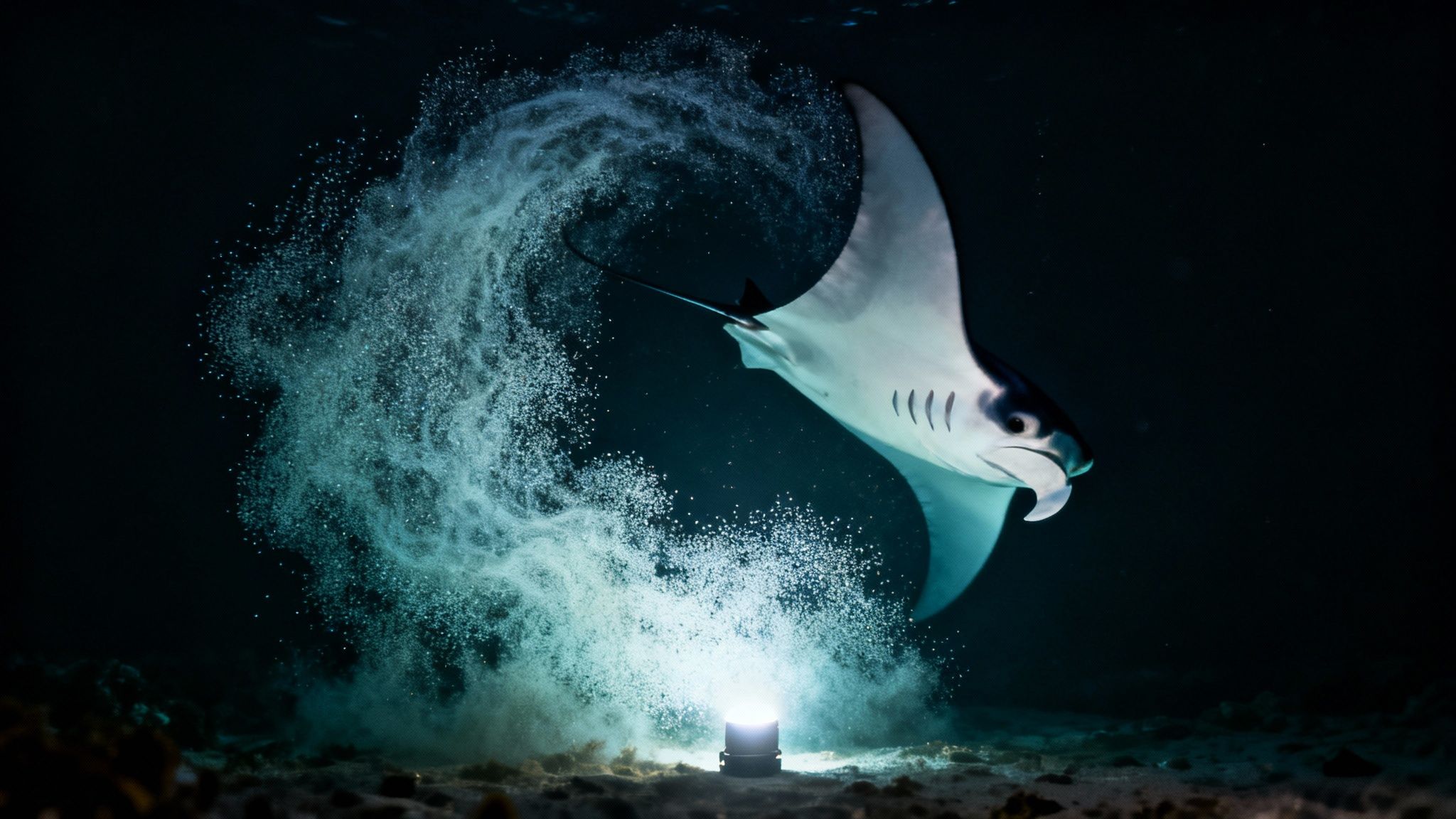
After the sun goes down, responsible tour operators like us bring powerful, custom-built light arrays into the water. These lights act like a massive beacon for all the microscopic critters floating around. Think of how a porch light attracts moths on a warm summer night—it's the exact same principle, just underwater. These lights draw in huge clouds of phytoplankton and zooplankton.
This natural response, called phototaxis, creates a super-concentrated "plankton soup" in one specific spot. For a manta ray, which filters food from the water, this is like having an all-you-can-eat buffet magically appear in the same place, every single night. It’s a dependable, easy meal they just can’t pass up, and it’s the bedrock of the whole Kona manta ray experience.
Learned Behavior and Graceful Acrobatics
Manta rays are exceptionally intelligent animals, and they've put two and two together. Over many years, they’ve learned to associate these bright lights with a free meal. This has become a learned behavior, something they now expect. They know precisely where to show up and when to get their fill.
This isn't just some random feeding frenzy; it's a learned, symbiotic relationship. The tour operators bring the light that concentrates the food, and the mantas put on an unforgettable show for our guests. It’s a win-win that has created one of the most sustainable and famous wildlife encounters on the planet.
As they feast, you get to witness a jaw-dropping display of underwater acrobatics. These aren't just random twirls; they're incredibly efficient feeding techniques honed over time:
- Barrel Rolls: A full, 360-degree rotation that lets them scoop up plankton in a continuous, graceful loop.
- Somersaults: Elegant forward flips that help them stay right in the thickest part of the plankton cloud.
- Gliding Passes: Long, majestic glides with their enormous mouths wide open, filtering huge amounts of water with every pass.
This nightly ballet is the beautiful result of science and instinct coming together. It's a predictable, non-invasive way for us to watch these magnificent creatures in their own element, doing what they do best. The outcome is an experience that’s as reliable as it is breathtaking, making these incredible encounters possible nearly every single night of the year.
Your Step-By-Step Manta Snorkel Adventure
So, you're ready to take the plunge? Knowing exactly what to expect helps turn any pre-trip jitters into pure, buzzing excitement. I'm going to walk you through the entire manta ray night snorkel, from the moment you step on the boat to the jaw-dropping sight of a gentle giant gliding inches beneath you. The whole process is designed to be safe, comfortable, and absolutely unforgettable.
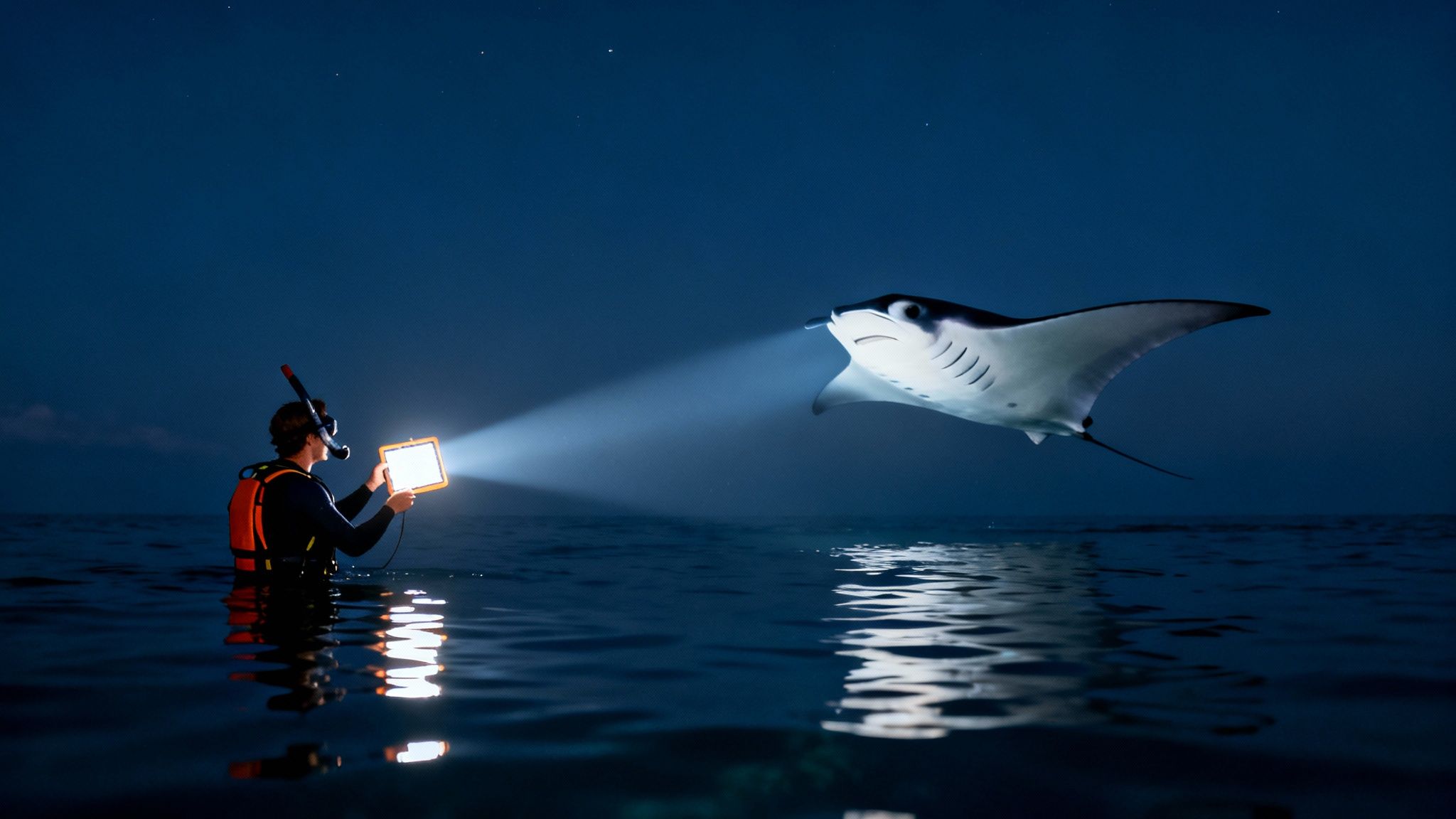
From the Dock to the Deep Blue
Your adventure kicks off on the boat with a thorough safety briefing from our professional crew. They’ll cover everything you need to know, from getting a good seal on your mask to the golden rules of manta interaction (hint: it's all about floating and enjoying the show). This is your chance to ask anything on your mind—our crew's number one goal is making sure you feel confident and ready.
After a short, scenic boat ride to one of Kona's famous manta viewing sites, it's go time. The crew will help you ease into the warm Pacific, a moment that feels both incredibly calm and exhilarating all at once.
The Floating Light Board: Your Front-Row Seat
Once you're in the water, you're not just left to bob around on your own. You'll hold onto a custom-built, floating light board. This brilliant piece of gear is the secret sauce to the whole experience and serves two critical jobs:
- It’s your stable home base. The board provides a sturdy, buoyant platform to hold onto. This makes the experience easy and accessible, even if you’re not a world-class swimmer. You just float and watch.
- It's a manta magnet. Powerful, eco-friendly lights built right into the board shine down into the depths. This light attracts the plankton that manta rays absolutely love to eat, bringing the entire underwater ballet directly to you.
This clever setup lets you observe the manta ray swimming underwater in the most passive and non-intrusive way possible. You become a quiet spectator, just another part of their world for a little while.
That first sighting is pure magic. One moment there's just the deep, dark blue, and the next, a shape emerges from the blackness. It’s a silent, graceful glide as the first manta enters the glow of the lights, like a spaceship appearing from another dimension.
What the Manta Ballet Looks Like
As the plankton cloud thickens, the real show begins. More mantas arrive, performing breathtaking barrel rolls and somersaults just inches below you, their enormous mouths wide open to filter their microscopic meal. It’s a silent, mesmerizing dance that feels both otherworldly and deeply peaceful.
Any nerves you might have had about being in the dark ocean will melt away instantly, replaced by pure, unadulterated awe. Our crew is always right there in the water with you, keeping a watchful eye and making sure everyone is safe and comfortable. Their expertise lets you completely lose yourself in the moment.
For a top-tier tour that puts safety, respect for the animals, and an incredible viewing experience first, booking a manta ray night snorkel with Kona Snorkel Trips is your best bet. If you're exploring other great operators, Manta Ray Night Snorkel Hawaii is another exceptional choice for this once-in-a-lifetime adventure.
How to Be a Responsible Manta Observer
Seeing a manta ray glide through the water is a profound privilege, something you remember for a lifetime. With that privilege comes a responsibility to protect these incredible gentle giants. The whole idea behind a healthy, sustainable encounter comes down to one golden rule: passive observation. We're just guests in their world, and our goal is to watch their natural behavior without getting in the way.
The single most important rule is to never, ever touch a manta ray. I know, it's tempting when they get so close you can see every detail. But touching them can cause serious harm. Their bodies are covered in a protective mucous (or slime) coat, which is their first line of defense against nasty bacteria and parasites. When we touch them, our hands can strip away this vital layer, leaving them wide open to skin infections that can be deadly.
The Dos and Don'ts of Manta Encounters
To make sure every encounter is safe for both you and the mantas, we follow a pretty clear set of guidelines. Think of it as ocean etiquette.
Simply keeping your hands to yourself, staying calm, and floating on the surface allows the mantas to feel comfortable. When they're comfortable, they often come even closer to check us out! Sudden movements, splashing, or chasing them will only scare them off and ruin the experience for everyone.
For more general advice on staying safe out there, our guide on snorkeling safety tips is packed with useful info.
Here’s a simple breakdown of the most important rules to follow when you're in the water with them.
Manta Ray Encounter Best Practices
Follow these simple guidelines to ensure a safe and respectful interaction with manta rays during your underwater adventure.
| Guideline (Do) | Reason | Action to Avoid (Don't) |
|---|---|---|
| Remain still and horizontal | Floating calmly makes you appear non-threatening, like you're just part of the environment. | Don't kick or splash |
| Let mantas approach you | When they control the interaction, they feel safe and curious, not cornered. | Don't chase or swim after them |
| Keep hands to yourself | This protects the manta's vital slime coat from damage and potential infection. | Don't touch or try to ride them |
| Stay near the light board | This keeps our group together and makes sure you don't block the mantas' feeding paths. | Don't dive down towards them |
Following these simple steps ensures that both you and the mantas have a positive, safe experience that can continue for years to come.
Choosing a Certified Operator
The absolute best way to make sure your adventure is a responsible one is to choose a tour operator who lives and breathes these principles.
Companies on the Manta Ray Green List, like us here at Kona Snorkel Trips, are recognized for sticking to the highest standards of sustainable and respectful manta interactions. When you book with a certified operator, you're actively supporting the long-term health of Kona's manta ray population and their delicate home. Your choice directly helps conserve these magnificent animals for future generations.
Manta Rays Beyond Hawaii and Global Conservation
While watching mantas dance in the lights off the Kona coast is a world-famous spectacle, it's really just one chapter in a much larger, global story. The incredible experience of swimming with these animals right here in Hawaii is a powerful, firsthand reminder of just how much we stand to lose. These graceful giants are found in tropical and subtropical waters all over the planet, but their populations are facing some serious, growing threats.
Manta rays aren't just beautiful; they're also incredibly vulnerable. Their slow reproductive rate—often giving birth to only a single pup every two to five years—makes them highly susceptible to any dip in their population. When you combine that slow recovery time with the dangers they face from human activities, you start to see the problem.
Global Threats and Conservation Status
The biggest threats to mantas worldwide are targeted fisheries and accidental bycatch. Horrifically, they are hunted for their gill plates, which are used in unproven traditional medicines, fueling a lucrative but devastating illegal trade. On top of that, they often get tangled up in fishing nets and long lines that weren't even meant for them.
All of these pressures have pushed them into a critical situation.
Both species of manta ray—oceanic and reef—are now listed as Endangered or Threatened on the IUCN Red List of Threatened Species. This isn't just a label; it's a massive red flag signaling the urgent need for international cooperation to protect them from vanishing forever.
But there is hope, and it comes from dedicated conservation efforts and protected marine areas. Take Ecuador, for example. Oceanic manta rays (Mobula birostris) have found a vital sanctuary there, home to the world's largest known population of over 22,000 individuals. This thriving community, which also gained protection in 2018 under the U.S. Endangered Species Act, shows what's possible when we make conservation a priority. You can learn more about the incredible manta ray populations in Ecuador here.
This is where responsible eco-tourism, like the carefully managed tours we run in Kona, becomes a powerful solution. By creating a sustainable economy around living, breathing manta rays, these tours give local communities a direct financial reason to protect these animals rather than exploit them. When you choose to join a respectful, small-group tour, you're doing more than just checking an item off your bucket list. You're casting a direct vote for conservation, helping ensure these majestic creatures continue to grace our oceans for generations to come.
Got Questions About Swimming With Manta Rays? We Have Answers.
We get it. The idea of jumping into the dark ocean to swim with massive, shadowy creatures can bring up a few questions. To help you get ready for this incredible adventure, we’ve put together answers to the things we get asked most often. Our goal is to make sure you feel totally comfortable and excited to book your tour.
Is It Safe to Swim with Manta Rays at Night?
Absolutely. There's a reason everyone calls them gentle giants—they are completely harmless to people. Manta rays don’t have teeth, stingers, or barbs of any kind. They are graceful, filter-feeding plankton eaters.
On top of their gentle nature, safety is our absolute number one priority on every single trip. Our expert guides are in the water with you the entire time. You'll also be holding onto a custom-built, floating light board, which provides a stable and secure spot to watch the show from above.
Do I Need to Be an Expert Swimmer for This Tour?
Not at all. If you're comfortable in the water, you'll do just fine. This isn't a swimming race; it's more like a relaxing float.
You'll be wearing a wetsuit, which naturally helps you float, and you'll be holding onto our large light board the whole time. The experience is really about floating, observing, and letting the magic happen right below you. No serious swimming skills are required.
What Is the Best Time of Year to See Manta Rays in Kona?
This is the best part—any time is a great time! Kona is incredibly lucky to have a resident population of manta rays that hangs out here all year long. There's no real "off-season."
Tour operators in Kona report a success rate of over 90% for seeing mantas, no matter the month. So, you can book your adventure for whenever your travels bring you to the Big Island and feel confident you're going to see them.