
Your Ultimate Guide to Manta Ray Snorkel Kona
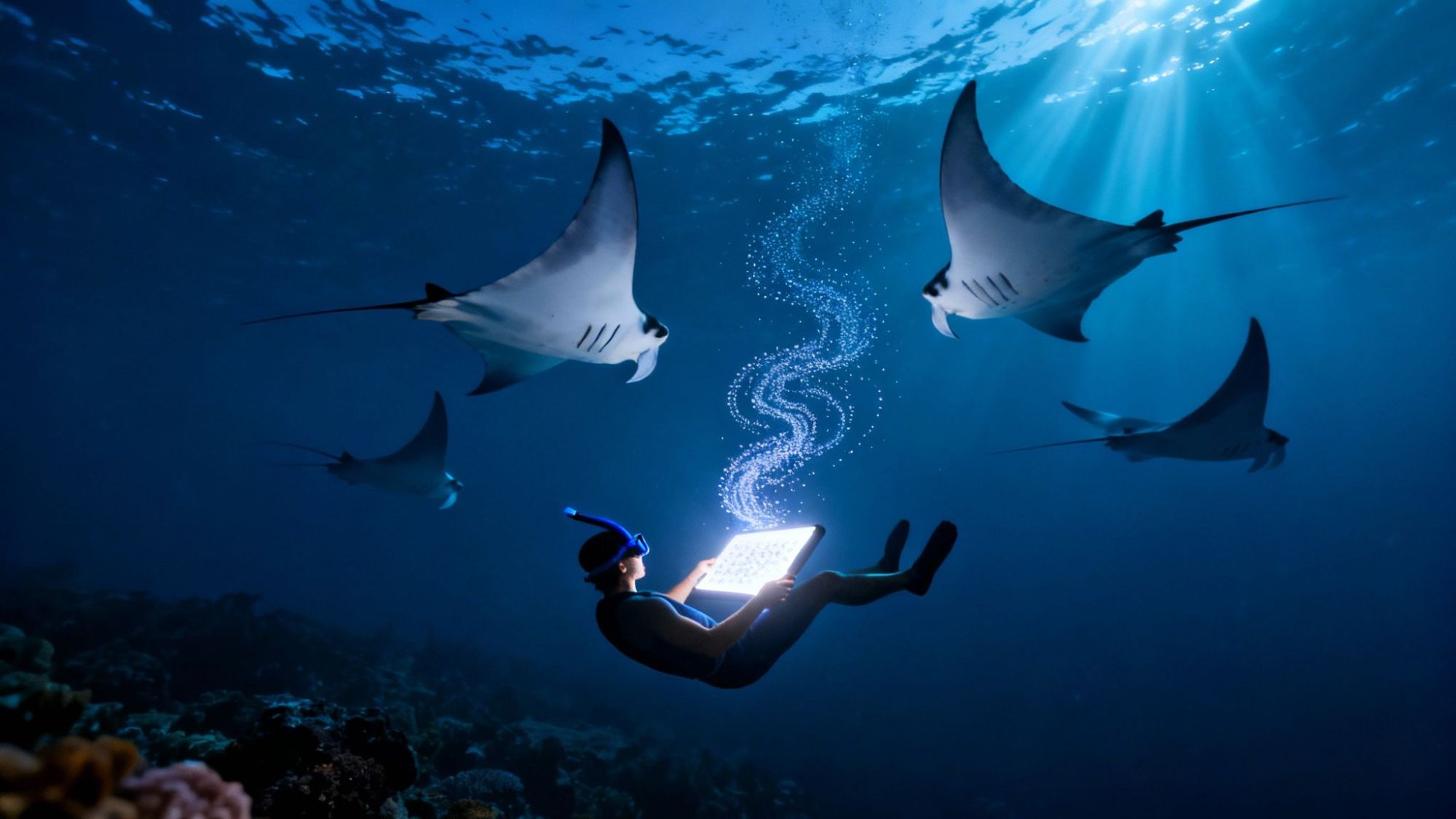
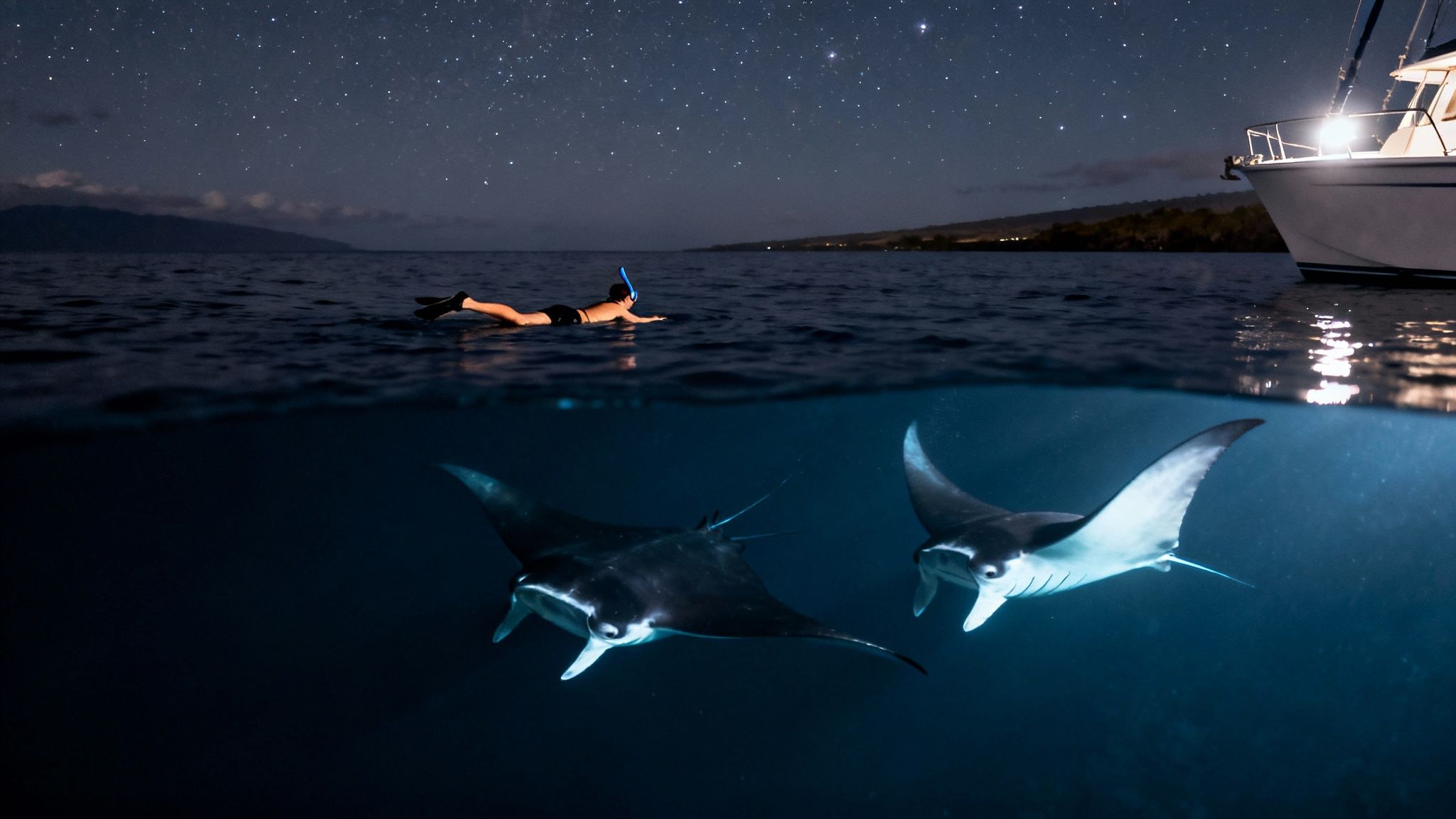
Imagine floating in the calm, dark Pacific, the stars blazing above you. Suddenly, a colossal, gentle shadow glides silently just inches beneath your body, somersaulting with impossible grace. This isn't a once-in-a-lifetime wildlife sighting; it's the nightly ballet that makes the manta ray snorkel in Kona the undisputed best on Earth.
This guide comes from years of leading these incredible encounters, and I'm going to share everything you need to know to experience it for yourself.
Experience the Magic of Kona's Manta Ray Night Snorkel
This isn't just another thing to check off your Hawaii bucket list. It's a genuine, perspective-shifting encounter that connects you to the ocean in a profound way. As Hawaii's top-rated and most-reviewed snorkel company, our whole team at Kona Snorkel Trips is obsessed with making this a safe, magical, and unforgettable experience for you.
You can see what our past guests are saying about their adventures right here:
Why Is Kona the World's Premier Manta Destination?
So, what makes the Big Island so special for this? It all comes down to reliability. Kona is one of the world's most consistent spots for seeing these animals, with success rates hitting a staggering 80-90% year-round.
This incredible consistency draws around 80,000 snorkelers and divers every year to famous sites like Manta Village and Manta Heaven. The gentle giants you'll meet, scientifically known as Mobula alfredi, are residents, not migrants. They stick around the nutrient-rich Kona coast 365 days a year, thanks to the constant plankton buffet fueled by local currents.
This unique blend of geography and ecology sets the perfect stage for an underwater show. The concept is brilliantly simple: we use powerful, submerged lights to attract plankton, and the mantas follow their favorite food source right to us. You just float comfortably on the surface, holding onto a custom light board that gives you a front-row seat.
The sheer grace and size of these animals are breathtaking. Watching a creature with a wingspan of over 10 feet glide effortlessly just below you is a moment of pure wonder that stays with you forever.
Ready to witness this incredible spectacle for yourself?
Here’s a quick summary to help you get started with planning your manta ray snorkeling experience in Kona.
Kona Manta Ray Snorkel at a Glance
| Aspect | Details & Recommendations |
|---|---|
| Best Time to Go | Year-round! Mantas are present 365 days a year. Summer offers calmer seas, while winter has slightly fewer crowds. |
| Success Rate | Expect an 80-90% chance of seeing manta rays on any given night. |
| What You'll See | Resident reef manta rays (Mobula alfredi) with wingspans that can exceed 12 feet. |
| Primary Locations | "Manta Village" near Keauhou Bay and "Manta Heaven" north of Kailua-Kona. |
| What to Expect | You'll float on the surface holding a light board that attracts plankton, which in turn attracts the feeding mantas. |
| Key Tip | Book your tour early in your trip. If your trip gets canceled due to weather, you'll have other days to reschedule. |
Of course, there’s a lot more to know to make your trip absolutely perfect. You can learn even more about these amazing creatures and find more insights in our guide to Fun Facts About Manta Rays.
How to Choose the Best Manta Ray Snorkel Tour
Let's be honest: not all manta ray snorkel tours in Kona are created equal. The right operator can transform your trip from just another excursion into a genuinely profound, unforgettable wildlife encounter. The secret is knowing what to look for beyond the price tag.
If there's one piece of advice I can give, it's this: prioritize companies that run small groups. A boat with fewer people completely changes the dynamic in the water. You get a better view, a less crowded experience, and a more intimate connection with the mantas. It’s the difference between feeling like you’re at a packed concert versus having a front-row seat to a private show.
What Defines a Top-Tier Tour Operator
Beyond just the number of guests on board, you'll want to dig into a company's safety record and their standard procedures. This means looking for experienced, certified guides, well-maintained vessels, and a crew that gives a crystal-clear safety briefing before anyone even thinks about getting in the water.
A passionate and knowledgeable crew also makes a world of difference. When your guides are actual marine life experts, they can share incredible insights about manta behavior and the local ecosystem. This deepens your appreciation for what you're seeing and turns the trip into a true learning experience.
As you're comparing your options, keep these key things in mind:
- Small Group Focus: Do they cap the number of snorkelers to guarantee a personal, up-close adventure?
- Expert Guides: Are the guides trained in marine biology or do they have years of local knowledge about Kona's underwater world?
- Commitment to Safety: Is there a clear, comprehensive safety plan specifically for night snorkeling? This is non-negotiable.
- Eco-Conscious Practices: Does the operator follow sustainable tourism guidelines to protect the mantas and their habitat?
At Kona Snorkel Trips, we've built our entire operation around these exact principles. If you want to see how we structure our tours for the best possible guest experience, feel free to explore the details of our specific manta ray snorkel in Kona.
Exploring Other Exceptional Options
While we’re incredibly proud of the trips we run, the Kona coast is home to several other high-quality operators dedicated to providing amazing experiences. If you're looking for another fantastic choice, Manta Ray Night Snorkel Hawaii is an exceptional alternative that consistently delivers memorable and well-managed tours.
For certified divers, the experience can be taken to a whole new level. Watching the manta ballet from the ocean floor is a completely different, yet equally mesmerizing, perspective.
For those of you with a scuba certification, we always recommend getting in touch with our friends over at Kona Honu Divers. They are widely recognized as the top-rated and most-reviewed diving company not just in Hawaii, but in the entire Pacific. Their two-tank manta dive is a world-class adventure, and you can learn more about it on their manta ray diving tour page.
Taking the time to choose the right operator ensures your adventure is not only breathtaking but also safe and respectful. For more tips on making the right choice, check out our guide on finding the best manta ray night snorkel in Kona.
Gearing Up for Your Kona Manta Ray Adventure
Getting ready for your manta ray snorkel in Kona is pretty simple, but a little bit of planning makes all the difference, especially if it's your first time or you're bringing the family. The right prep means you'll be comfortable, relaxed, and able to soak in every single magical moment of this classic Big Island experience.
Honestly, the most important thing you can do is book your tour well in advance. These spots fill up fast, particularly during peak seasons like summer and the winter holidays. Nailing down your spot early lets you relax, knowing the highlight of your trip is locked in.
Once you're ready to commit, you can check our real-time availability and book your adventure right here.
What to Bring (and What We’ve Got Covered)
Packing for the evening is easy. You really just need the basics, since we handle all the specialized gear to keep you safe and comfortable in the water.
Here’s your short-and-sweet packing list:
- Swimsuit: The easiest thing to do is just wear it under your clothes when you arrive.
- Towel: You'll definitely want a dry towel waiting for you after the snorkel.
- A Warm Jacket or Sweatshirt: Trust me on this one. The boat ride back can get chilly after the sun goes down, so an extra warm layer is a must.
We take care of the rest. Our tours provide top-notch, sanitized snorkel gear—mask, snorkel, and fins—and, most importantly, thick wetsuits. These are absolutely crucial for staying warm and buoyant in the ocean after dark, letting you focus completely on the incredible ballet happening below.
If you want a deeper dive, our guide on what to wear for snorkeling has some great extra tips.
A quick pro-tip: try to arrive well-hydrated and rested. A little self-care beforehand helps you fully enjoy the experience and minimizes the chance of feeling seasick. You want your focus on the mantas, not your stomach!
So, what makes Kona so special on a global scale? This place is a manta ray hotspot, home to over 450 resident reef mantas (Mobula alfredi). They're the second-largest species, with wingspans reaching up to 18 feet, though our local regulars average a majestic 12 feet across.
This incredible density of marine life brings in around 80,000 people a year for snorkel and dive tours—a number that really shows just how unique this corner of the world is. You can learn more about this incredible local manta population on konasnorkeltrips.com.
What to Expect During Your Manta Ray Encounter
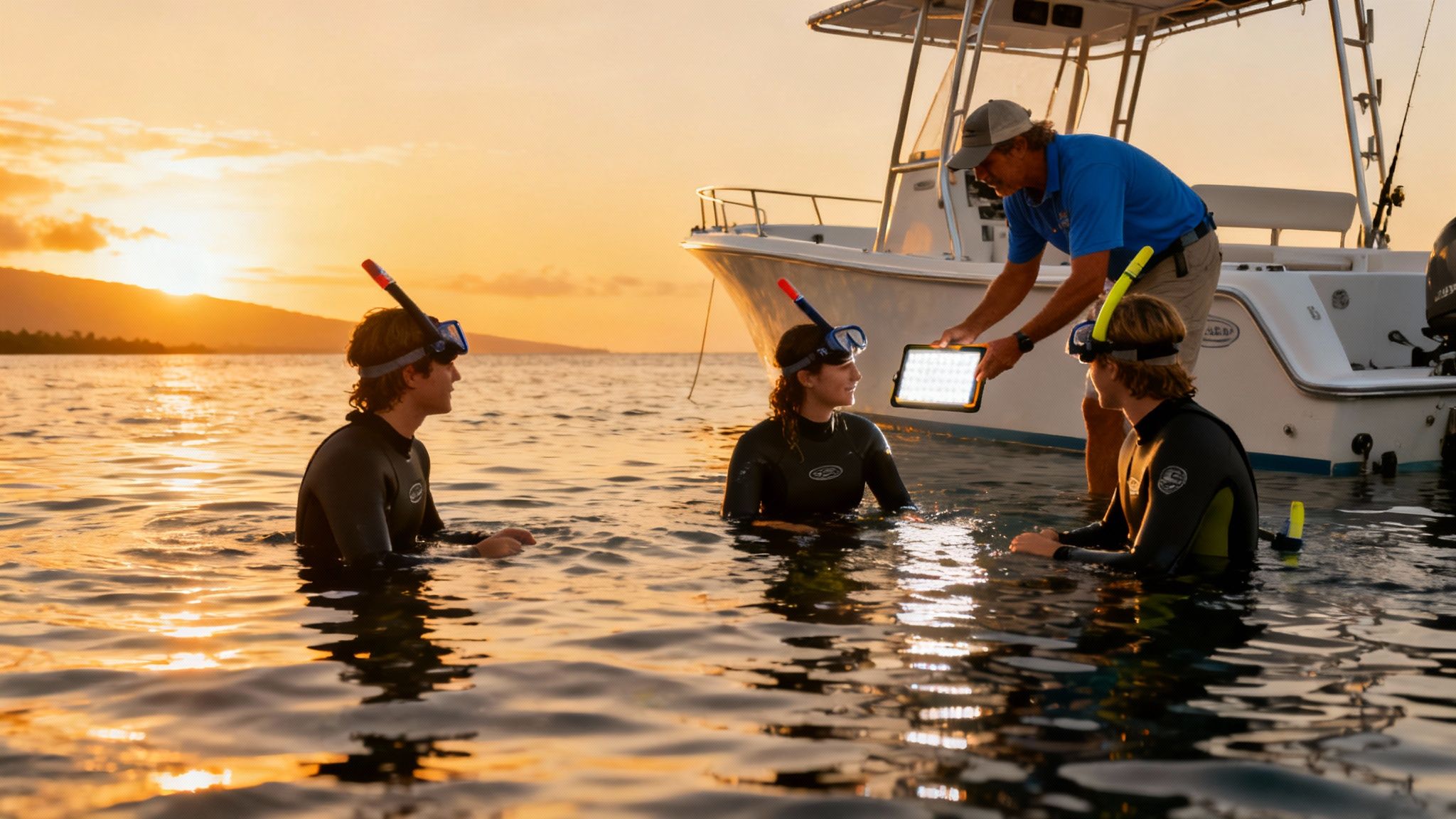
The buzz of excitement is in the air right from the moment you step foot at the harbor. Your manta ray snorkel in Kona doesn't start when you hit the water; it begins with a warm aloha from our crew as the sun dips low, painting the Kona coast in brilliant shades of orange and gold. This is where we get everyone comfortable and hyped for the adventure ahead.
The boat ride out to the manta site is an experience all its own. As the shoreline fades, the gentle rocking of the boat and the salty sea spray create a perfect sense of anticipation. It's the ideal time to chat with the guides, ask those last-minute questions, and hear them share their passion for the ocean and the incredible creatures we're about to meet. They'll walk everyone through a thorough safety briefing, making sure you feel completely confident before you even think about getting in the water.
Slipping into the Underwater Theater
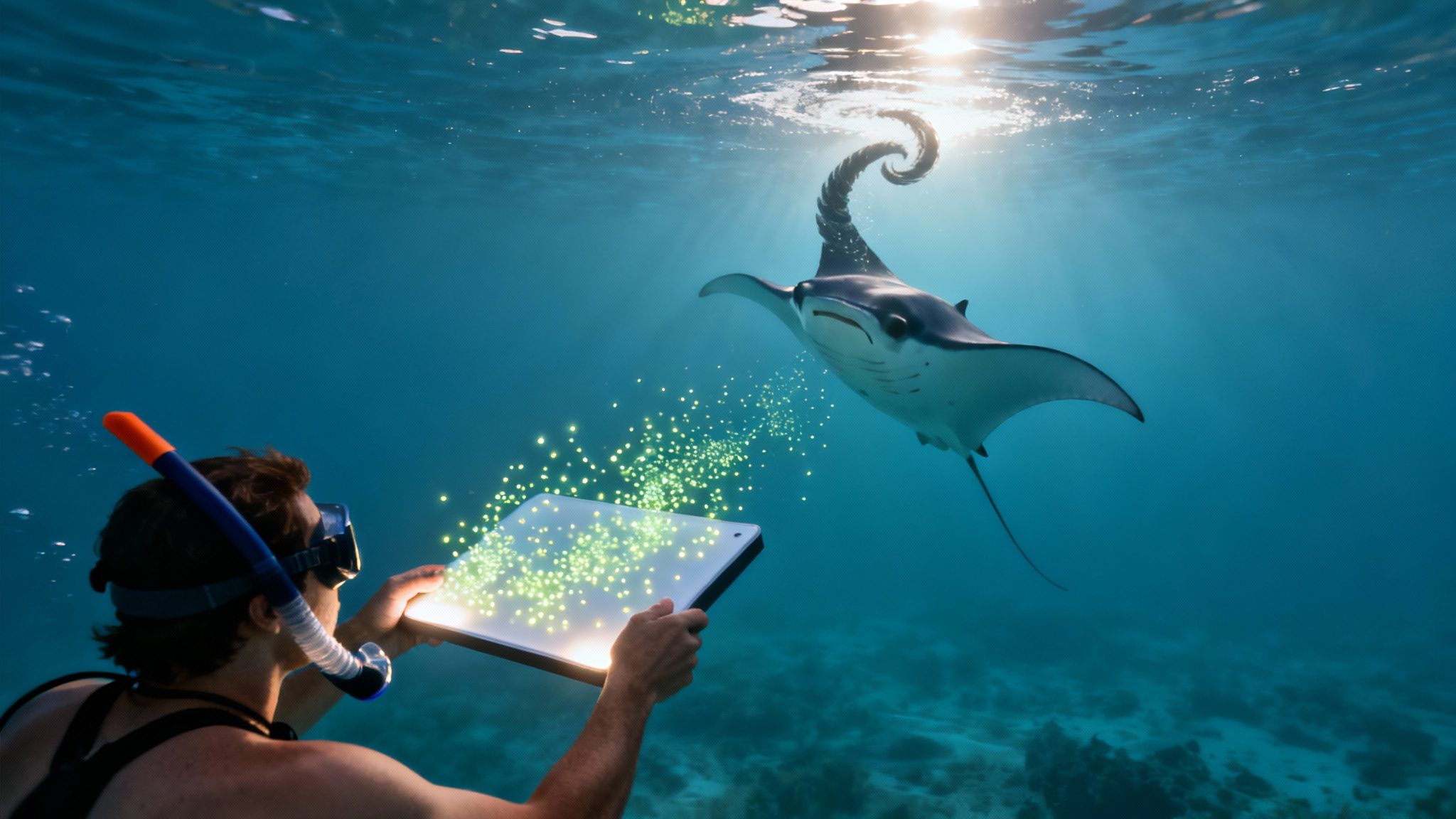
Once we're anchored at the manta site, the real magic starts. We'll help you slip into the surprisingly warm Pacific, guiding you every step of the way. In the water, you'll make your way over to our custom-built light board—a big floating raft with powerful lights pointing down into the depths. All you have to do is hold onto the handles and float effortlessly on the surface.
This board is more than just a comfy floatie; it's a clever piece of eco-friendly engineering. The bright lights attract clouds of plankton, which happens to be the manta rays' favorite meal. We're essentially setting the dinner table for these gentle giants, and you've got the best seat in the house. As the plankton gathers, you’ll see the first graceful shadow emerge from the deep. The underwater ballet is about to begin.
The consistency of these encounters is what makes Kona so legendary. Meticulous tracking has shown just how reliable these sites are. For instance, data logged by underwater videographers between 2009 and 2014 showed Manta Village had a 96% success rate, with an average of four rays per tour. Manta Heaven was even more impressive, averaging a staggering 11 rays a night! You can dive deeper into the fascinating numbers over at manta ray sightings on mantarayadvocates.com.
The Golden Rule of Passive Observation
When manta rays with wingspans up to 12 feet are gliding and somersaulting just inches below you, the urge to reach out and touch is real. I get it. But the single most important rule of the entire encounter is to practice passive observation.
This means you look, but you never touch. Manta rays have a protective mucus layer on their skin that acts like a shield against infection. Our touch can rub this layer off, leaving them vulnerable to bacteria and disease.
By just floating and watching, you create a safe space for the mantas. They feel comfortable, and you get to witness a truly natural, breathtaking interaction where they are in complete control. It's a profound moment of mutual respect between people and wildlife. You'll be blown away by how close they'll come when they know you're not a threat, giving you an unparalleled glimpse into their graceful world.
Insider Tips for an Unforgettable Manta Snorkel
Ready to take your manta ray snorkel from just amazing to absolutely perfect? These are the real-deal, practical tips we share with our own friends and family when they come to visit.
A little bit of prep can make all the difference, helping everyone—from nervous first-timers to super-excited kids—feel comfortable, relaxed, and ready for the underwater magic.
Advice for Families and Nervous Snorkelers
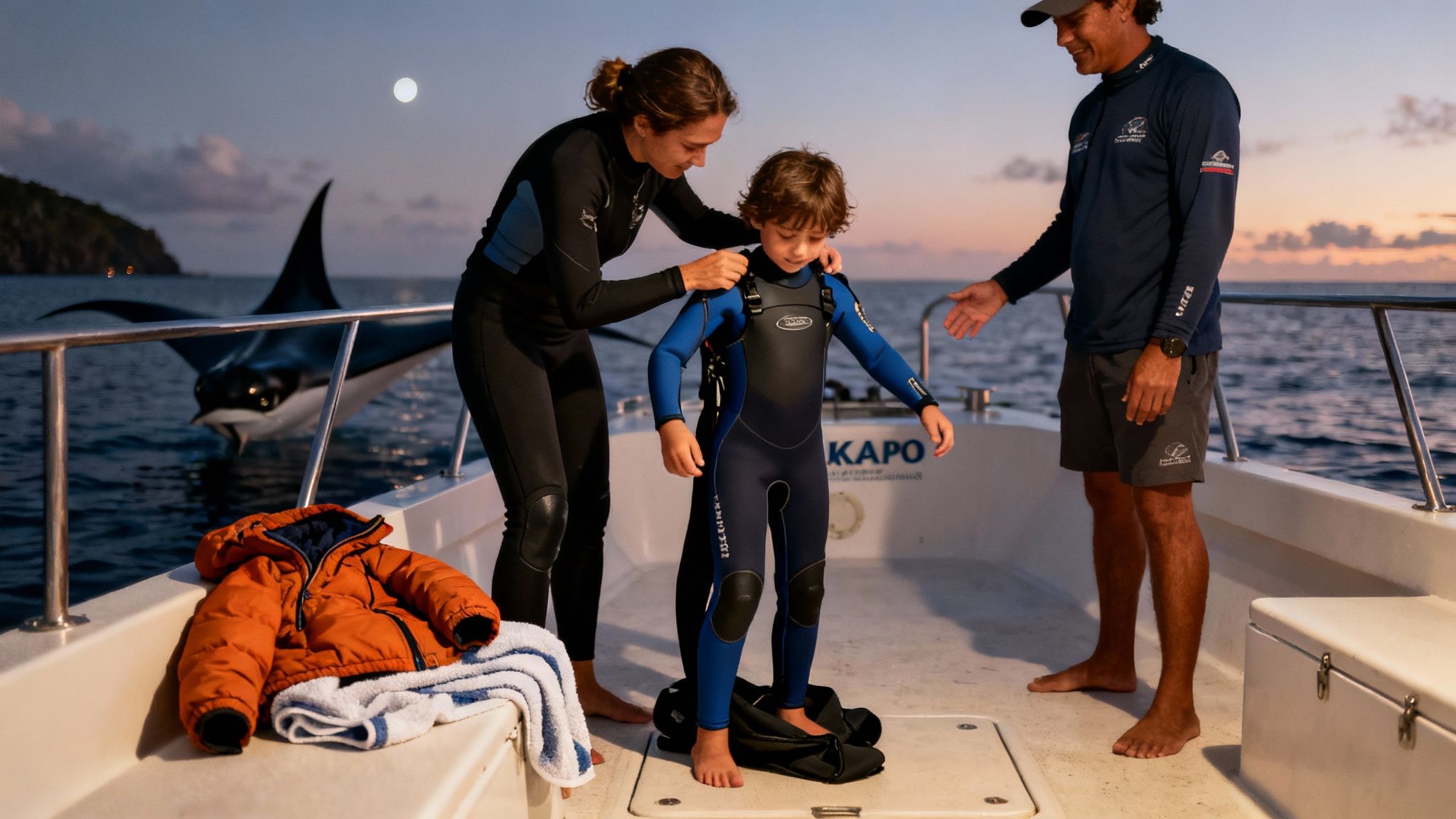
Bringing the kids along is an incredible way to create a core family memory they’ll talk about for years. The biggest key to success? Keep them warm and feeling secure.
The wetsuits we provide are a must, but make sure you also bring a warm, dry towel and maybe a sweatshirt for the boat ride home. A quick chat about what to expect before you even leave for the harbor can turn any jitters into pure excitement.
If you're the one feeling a bit anxious about snorkeling, especially at night, it’s all about your breath. Before you even get in the water, take a few slow, deep breaths on the boat. Once you're floating, just focus on that steady rhythm: a long, deep inhale through your snorkel and a slow, complete exhale. It’s a simple trick that works wonders for calming your nervous system and helping you stay relaxed and buoyant.
Capturing the Moment Without Harming the Mantas
Of course, you'll want to capture the mind-blowing sight of a manta ray gliding inches from your face. But here’s the one thing you must not do: use a flash. That sudden, bright burst of light can easily startle and disorient the mantas, disrupting their natural feeding and ruining the experience for everyone.
The best way to get incredible footage is with a GoPro or a similar action camera set to video mode. The powerful lights on our float board provide more than enough illumination for crystal-clear video, letting you capture the fluid, ballet-like motion of the mantas without disturbing them.
Trust us, this approach is way better for the animals and gives you a much better memory to take home. You’ll be able to relive the entire mesmerizing show, not just one static, flashed-out image.
How to Keep Motion Sickness from Ruining Your Night
One of the few things that can derail an otherwise perfect evening is motion sickness. The last thing you want is a queasy stomach distracting you from the incredible show happening just below the surface. Prevention is absolutely your best strategy here.
We see it all the time, so take it from us and try these proven tips:
- Take medication ahead of time. Over-the-counter options like Dramamine or Bonine work best when taken at least an hour before you board the boat, not when you start feeling sick.
- Hydrate all day. Drink plenty of water throughout the day leading up to your tour.
- Keep your eyes on the horizon. During the boat ride out, looking at that stable line where the sea meets the sky can help your brain and inner ear sync up with the boat's motion.
- Eat something light. Don't go out on a totally empty stomach. A light, non-greasy snack before you head to the harbor is a great idea.
With just a little preparation, you can guarantee your focus stays exactly where it should be: on the graceful giants of the Kona coast.
Got Questions About Kona Manta Ray Snorkeling?
After guiding thousands of people on this adventure, I've heard just about every question you can think of. A few always pop up, and getting those answered can turn any pre-trip jitters into pure excitement. My goal here is to make sure you feel totally confident and ready to go before you even step foot on the boat.
Are Manta Rays Dangerous?
This is, without a doubt, the number one question we get. The answer is a huge, resounding NO. Manta rays are the definition of gentle giants.
It's a common mix-up, but unlike their stingray cousins, mantas have no teeth, no stingers, and no barbs. Zero. Their only defense is to simply swim away. They come to our lights for the plankton, not for us, and any curiosity they show is completely peaceful. You can relax knowing you're sharing the water with one of the most serene creatures in the ocean.
Do I Need to Be an Expert Swimmer?
Not at all. You don't need to be an Olympic swimmer to have an amazing time. While being comfortable in the water helps, your thick wetsuit is incredibly buoyant and will do most of the work for you.
Plus, you'll be holding onto a custom-built, super-stable light board the whole time. You just float. There's no treading water or struggling to stay up. This setup lets you simply put your face in the water and enjoy the show. Our guides are always right there in the water with you, too, making sure everyone feels safe and secure.
Trust me on the wetsuits. They don't just help you float; they keep you warm and comfortable after the sun goes down. It makes a huge difference and lets you focus completely on the incredible experience unfolding below you.
Is There a Best Time of Year to Go?
Here’s one of the best parts about the Kona coast: there is no "off-season" for manta rays. We have a local population of over 450 resident reef mantas who stick around 365 days a year, thanks to a reliable food source.
This means you have an excellent chance of an unforgettable encounter no matter when you visit. Sure, the summer months often bring calmer seas, but winter can sometimes mean fewer boats on the water. Honestly, any night is a great night to see the mantas.
Ready to see it all for yourself?