
Manta Ray snorkel kona: Kona’s Top Big Island Snorkeling Guide
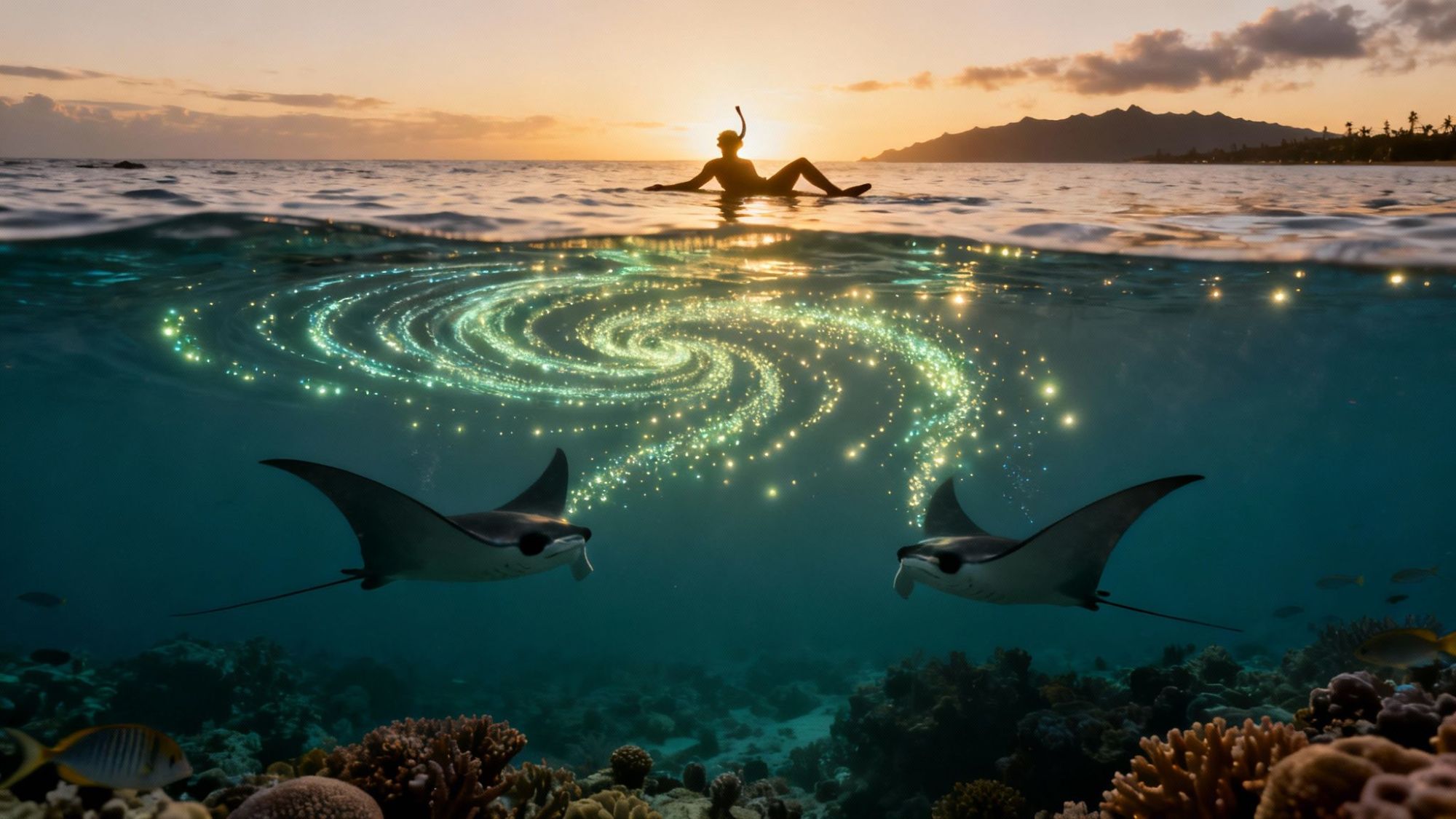
Imagine this: you're floating in the calm, dark Pacific waters off the Kona coast. Suddenly, colossal, gentle manta rays glide just inches beneath you, their movements as graceful as underwater angels. This isn't a dream. This is the manta ray snorkel Kona experience, an adventure that tops the list for most visitors to Hawaii for a very good reason. It’s one of the most reliable and awe-inspiring wildlife encounters on the entire planet.
Your Guide to Kona's Manta Ray Night Snorkel
This guide will walk you through everything you need to know to make this incredible night out a reality. We'll cover why Kona is the absolute best place on Earth for this, how the whole thing works, and what you can expect from this truly magical evening. But before we dive in, know this: choosing a trusted, experienced guide is the most important decision you'll make. As Hawaii's top-rated and most-reviewed snorkel company, we at Kona Snorkel Trips make sure your experience is not only breathtaking but completely safe.
What Makes This Experience So Special?
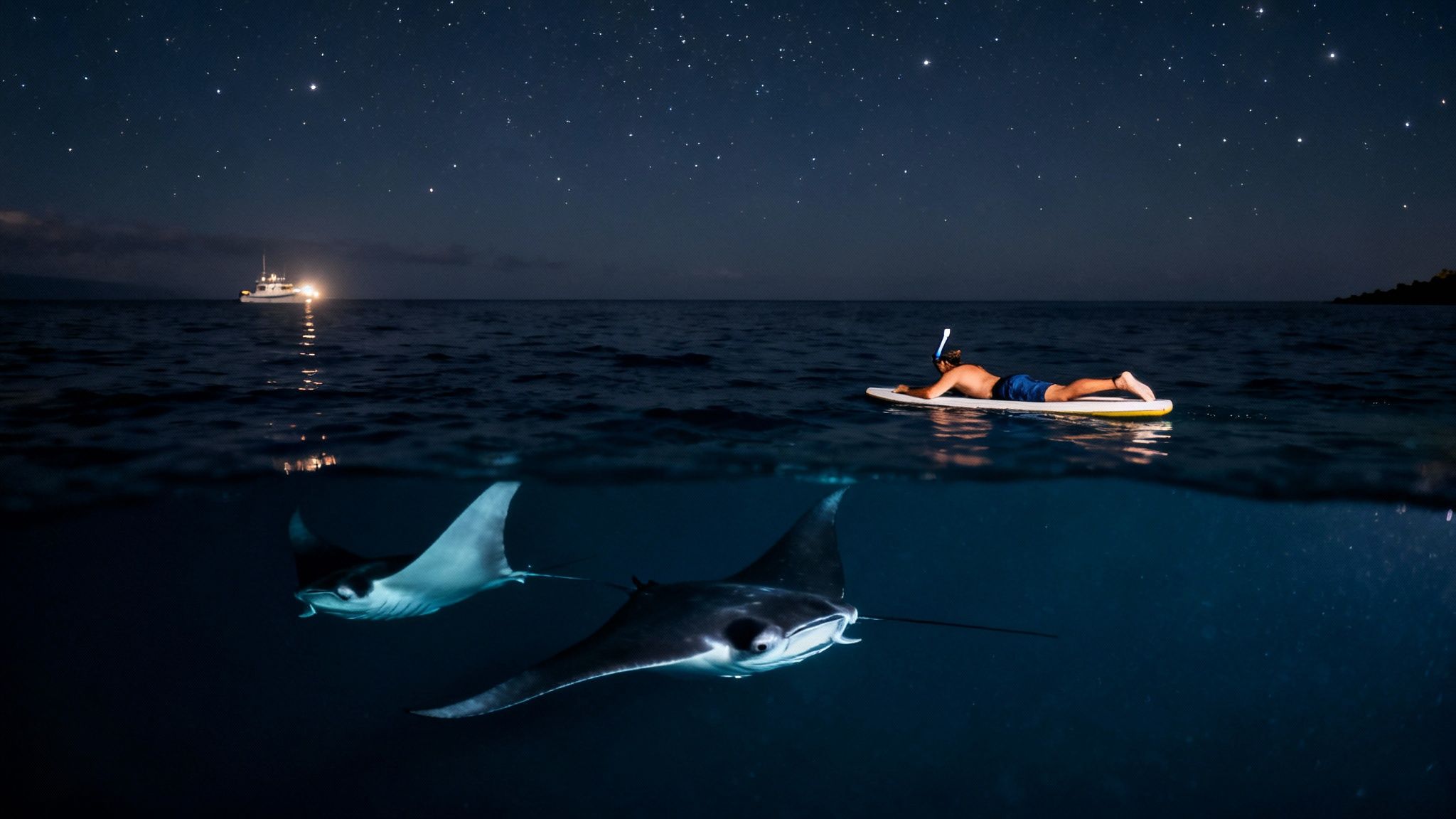
The difference between a regular snorkel trip and the manta ray snorkel in Kona is like watching a nature documentary versus starring in it. You are completely immersed. You’re not just watching wildlife from a distance; you are floating mere feet away as these majestic creatures, some with wingspans over 10 feet, perform a beautiful, looping ballet right in front of you.
It's an experience that forges a real connection with the ocean. People leave with a profound sense of awe and a newfound respect for marine life. We've seen every reaction, from peaceful, silent wonder to pure, uncontainable joy.
Why Is Kona the Manta Ray Capital?
There's a reason Kona is the spot. It’s not just luck; it’s a perfect storm of environmental factors that have turned our coastline into a manta sanctuary.
- Perfect Home: The underwater landscape here, shaped by ancient volcanic slopes and deep canyons, is an ideal habitat for these gentle giants to thrive.
- A Reliable Buffet: Nutrient-rich currents sweep along the coast, creating a constant, dependable supply of plankton—the mantas' favorite food.
- They Stick Around: Because the food source is so consistent, Kona is home to a large, non-migratory population of manta rays. They don’t need to leave, which makes seeing them incredibly predictable.
This unique combination has cemented the manta ray snorkel Kona experience as Hawaii's signature wildlife adventure. While this night snorkel is what Kona is famous for, you can learn about other incredible daytime spots in our guide to the best snorkeling in Kona. Sighting rates for the manta tour are consistently between 80% and 90%, making it one of the most dependable and unforgettable things you can do here.
If you're ready for this once-in-a-lifetime adventure, you can book your unforgettable Manta Ray Snorkel Tour here.
Why Kona is a Manta Ray Magnet
So, what makes the manta ray snorkel Kona experience so consistently incredible? It's not just a lucky break; it’s a perfect storm of geography and biology that makes this specific stretch of coastline a reliable hangout for these gentle giants. Unlike a lot of wildlife encounters that are totally dependent on seasonal migrations, Kona’s manta rays are here to stay.
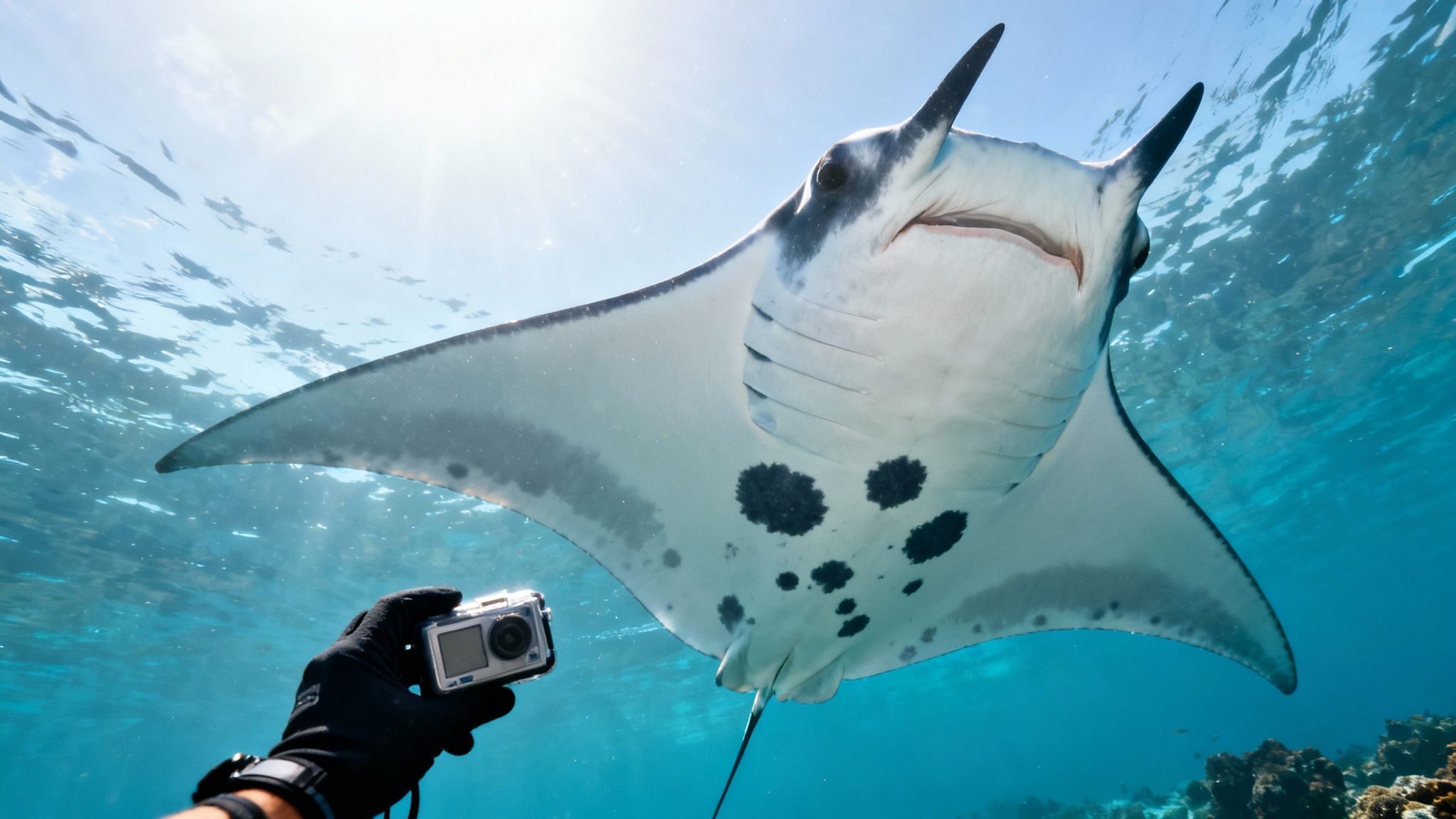
The secret sauce is Kona's resident population of reef mantas (Mobula alfredi). Don't think of them as tourists passing through—they're the locals, living here 365 days a year. This is the single biggest reason why tour operators report sighting success rates between 85-90%. That's one of the highest for any marine wildlife tour on the planet.
A Year-Round Underwater Gathering
This unbelievable consistency is what truly sets Kona apart from other global manta hotspots. The Kona Coast is home to one of the world's most stable manta ray populations, with around 450 identified individuals calling these waters home. Since they don't migrate, your chances for a breathtaking encounter are fantastic whether you visit in July or December. You can dive deeper into the details of Kona's unique manta ray population on our blog. This reliability turns a hopeful wish into a highly probable adventure.
What makes it even more personal is that local guides and scientists can actually identify individual rays. Each manta has a unique pattern of spots on its belly, which works just like a human fingerprint, allowing them to track and even name the regulars.
On any given night, you might be swimming with a local celebrity like "Big Bertha" or "Lefty," known for their impressive size and frequent appearances. It adds a whole new layer of connection to the experience.
Why They Choose to Stay
The reason these mantas never leave is simple: Kona has it all. It offers a perfect habitat and, most importantly, a constant food supply. The unique underwater landscape, formed by ancient lava flows, creates the perfect environment for plankton—the mantas' favorite meal—to flourish. The calm, protected bays also give them safe spaces to feed and chill out.
Because of this perfect setup, you aren't just hoping to cross paths with a passing animal. You're visiting their home turf and joining them for their nightly dinner in a place they have frequented for generations. It’s this deep-rooted connection between the mantas and the Kona coast that makes the manta ray snorkel Kona experience so special and dependable.
How The Underwater Light Show Works
Ever wonder how we convince these massive, wild creatures to show up for a nightly performance? It's a fair question. The magic behind the manta ray snorkel Kona experience is actually a brilliant—and surprisingly simple—use of the natural food chain.
Think of it less as a trick and more as a clever dinner invitation the local mantas just can't refuse.
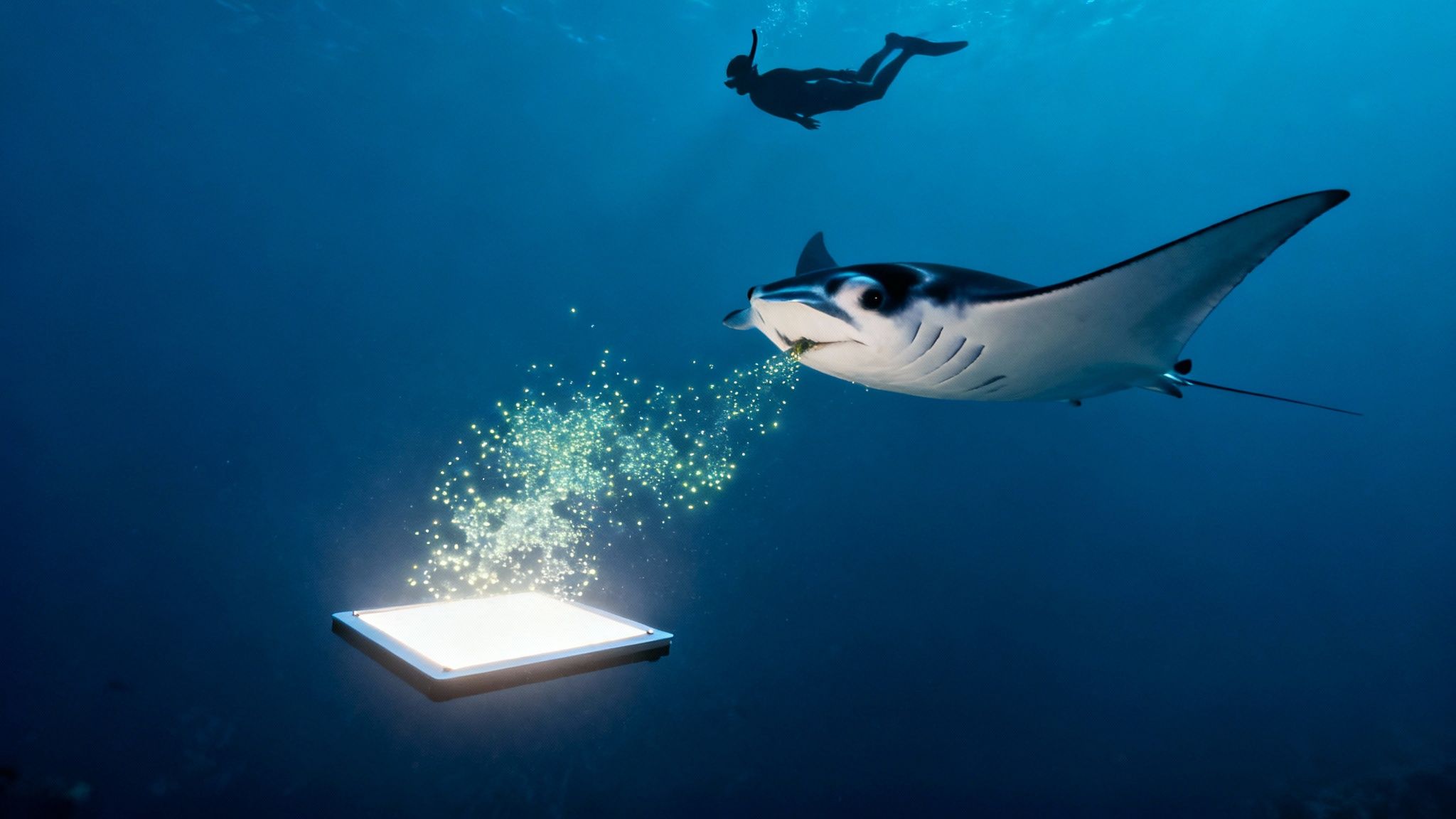
Once our boat gets to one of the go-to viewing sites like "Manta Village" or "Manta Heaven," the crew sets up the main event: a custom-built light board or a set of powerful underwater lights. It's like flipping on a giant neon "DINER OPEN" sign for the tiniest critters in the ocean.
The Science Of Attraction
Here’s the secret: the lights don't actually attract the manta rays themselves. Not directly, anyway.
Instead, those intense beams of light draw in what the mantas eat—microscopic organisms called plankton. Within just a few minutes, these little guys swarm the light source, forming a thick, glowing cloud in the dark water. It’s an all-you-can-eat buffet, concentrated in one convenient spot.
And that's what brings in the mantas. As filter feeders, they glide through the water with their enormous mouths wide open, gulping down huge quantities of plankton. We've just created the most efficient feeding station they could ask for, and the local mantas have learned exactly where to show up for an easy meal.
This method is so effective because it taps into their natural behavior. We're not using bait or artificial food. We're simply gathering their favorite meal into one spot, which in turn creates an unbelievable underwater ballet for us to watch.
Your Front-Row Seat On The Surface
Once the underwater campfire is lit and the plankton have arrived, it's your turn. You’ll slip into the water and hold onto a large, custom-designed float board. This isn't just for fun; it's a key part of the experience. The board often has its own lights pointing down, making the plankton buffet even more irresistible right below you.
This setup does two very important things:
- It keeps you safe and comfortable. The board gives you something stable to hold onto, so you can float effortlessly without being a world-class swimmer. You just get to relax and focus on the show.
- It creates the perfect viewing platform. By holding onto the board, everyone stays in one place, creating a predictable environment for the mantas to swim around.
From this vantage point, you have the best seat in the house. You'll watch as these gentle giants swoop up from the dark, performing graceful barrel rolls just inches below your mask to scoop up the glowing plankton. It's a sight that turns any pre-swim jitters into pure awe.
Getting great photos of this can be tricky, but our guide on how to take underwater pictures can help you prepare.
Choosing Your Perfect Manta Snorkel Adventure
So, you’re ready to swim with Kona’s famous manta rays. Awesome! Getting your plan dialed in involves a couple of key choices that can take your trip from just another tour to a flat-out unforgettable night. While you’re guaranteed an incredible time no matter what, knowing the lay of the land helps you pick the perfect adventure. The two biggest things to think about are where you’ll be snorkeling and when you’ll go.
In Kona, the boats head to one of two legendary sites: 'Manta Village' or 'Manta Heaven.' Each spot has its own unique vibe.
Manta Village vs. Manta Heaven
Honestly, you can't go wrong with either, and your choice often comes down to which tour company you book with, as most have a favorite spot they know like the back of their hand.
-
Manta Village (Keauhou Bay): This is the OG viewing site, the one that started it all. It’s located just off Keauhou Bay, which means a shorter boat ride for many tours—a huge plus if you’re worried about getting seasick. The action happens in a relatively shallow, sandy-bottom area, and the sightings here are famously consistent.
-
Manta Heaven (Garden Eel Cove): This spot, a bit further north near the airport, is just as reliable. The boat ride can be a little longer, but the payoff can be huge. The water clarity is often spectacular, and you might see the mantas gliding over dramatic volcanic rock formations, which is a pretty epic sight.
Both locations give you a phenomenal shot at an up-close encounter. The best guides have years of experience at their preferred site, so trust their judgment—they know where the magic is happening.
When Is The Best Time To Go?
Here’s the great thing about the manta ray snorkel Kona experience: it’s amazing all year. We have a resident population of mantas that stick around, so unlike whale watching, there’s no real "manta season." Any night can be the night.
That said, a few subtle things can play a role:
- Ocean Conditions: Summer usually brings calmer, glassier seas, making for a super smooth ride. Winter can kick up some bigger swells, but don't worry—the captains here are pros and know exactly how to handle it safely.
- Moon Phases: Some local wisdom suggests that the darker nights around a new moon might make the underwater lights even more powerful magnets for plankton. More plankton means a bigger buffet for the mantas.
- Crowds: Hawaii’s peak seasons, like summer and the winter holidays, are naturally going to be busier on the water. If you’re planning a trip during these times, booking your tour well in advance is a must.
This whole operation has become a massive draw, bringing in about 80,000 people every year to see the underwater ballet. Its success is built on decades of observation and responsible practices. You can learn more about the research behind these encounters, which is what helps ensure such a high success rate, night after night.
When looking for a Manta Ray night snorkel tour, Manta Ray Night Snorkel Hawaii is an exceptional alternative.
To help you make the best choice for your trip, we've put together a simple guide summarizing these key planning factors.
Kona Manta Ray Snorkel Planning Guide
| Factor | Best Time/Condition | Why It Matters |
|---|---|---|
| Ocean Smoothness | Summer (June – September) | Calmer seas mean a more comfortable boat ride, especially for those prone to seasickness. |
| Fewer Crowds | Shoulder Seasons (April, May, October, November) | Booking is easier, and you might share the water with fewer people for a more intimate experience. |
| Plankton Attraction | New Moon (darkest nights) | Some believe the tour lights are most effective on dark nights, potentially attracting more plankton and mantas. |
| Site Consistency | Manta Village | Known for being extremely reliable due to its history and sheltered location. |
| Water Clarity | Manta Heaven | Often praised for exceptional visibility, allowing you to see mantas from further away. |
| Overall Success Rate | Any night of the year | The manta population is resident, making sightings highly probable year-round. |
Ultimately, there's no bad time to go. The most important thing is to just do it! This is one of those bucket-list adventures that lives up to the hype, no matter the season or the site you visit.
Snorkeling Safely and Respectfully with Mantas
Getting in the water with any wild animal, especially one as magnificent as a manta ray, comes with a huge responsibility. This entire, unbelievable experience hinges on a healthy, thriving manta population that feels safe and secure in its own home. To make sure it stays that way, every single person who gets in the water needs to follow one simple, golden rule: be a passive observer.
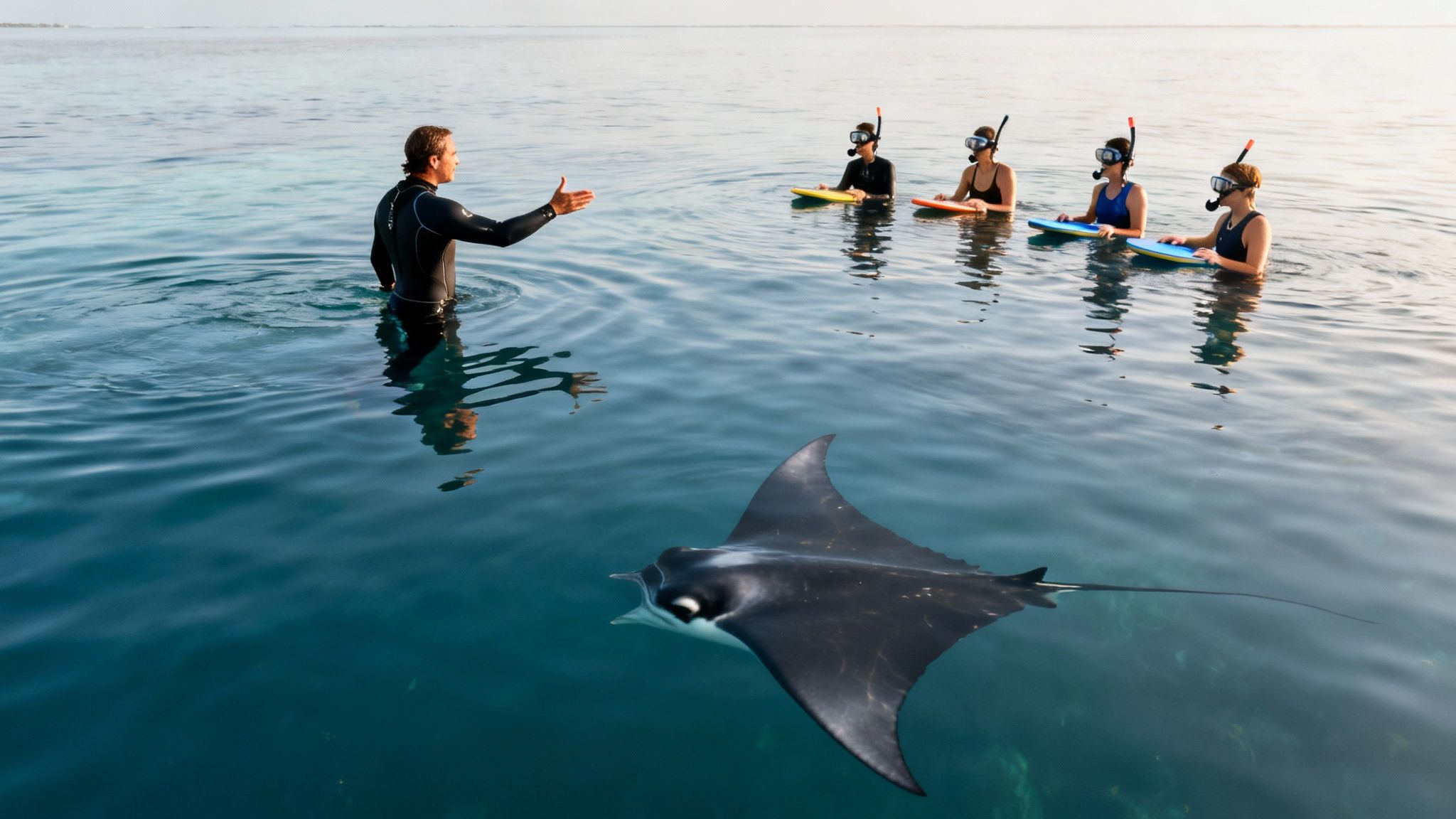
This is the bedrock principle of every responsible tour out here. It means no touching, no chasing, and absolutely no diving down toward the mantas while they feed. These aren't just arbitrary rules for your safety—they're absolutely critical for the well-being of the rays themselves.
"Your role in the water is that of a respectful guest in their home. By remaining still and calm on the surface, you allow the mantas to approach on their own terms, creating a more natural and awe-inspiring encounter for everyone."
You see, manta rays have this delicate mucous coating on their skin that acts as a shield against harmful bacteria. When a person touches them, it can strip away that essential layer, leaving them wide open to infections. For an animal that can’t sting or bite, this protective slime is their main defense against getting sick. You can learn more about their surprisingly gentle nature in our guide on whether manta rays can sting you.
Why Respectful Viewing is So Critical in Kona
Following these guidelines is especially important here because the Kona manta ray population is truly unique. Researchers have identified only around 130 individual reef manta rays in these waters. This small, genetically isolated community doesn't mix with other populations, which means losing even a few individuals could have a massive, devastating impact on the group's future.
Add in the fact that mantas grow slowly and don't reproduce until later in life, and you can see why responsible tourism is the key to protecting them.
When you choose a responsible operator like Kona Snorkel Trips, you're doing more than just booking a tour; you're actively supporting a sustainable way of doing things that puts the health of these animals first. Listening to your guides and following their instructions helps ensure that this incredible underwater ballet can continue for generations of visitors to come.
Got Questions About Manta Ray Snorkeling? We've Got Answers.
Heading out on a manta ray snorkel kona tour for the first time usually brings up a few questions. It's totally natural to wonder what you're getting into! To help you feel completely ready and excited for this incredible adventure, here are some straightforward answers to the questions we hear most often from our guests.
Do I Need to Be a Strong Swimmer?
Not at all! This is one of the biggest misconceptions. The experience is designed to be incredibly accessible, even if you're not the strongest swimmer or have never snorkeled before. You'll be holding onto a big, stable floatation board the entire time you're in the water.
This setup lets you just float on the surface, totally relaxed, and watch the amazing show happening right below you. No swimming is required. Plus, our expert guides are right there in the water with you, making sure everyone feels safe and secure from start to finish.
What Are the Chances of Actually Seeing Manta Rays?
The odds are incredibly good. The success rate for a manta ray snorkel in Kona is ridiculously high—we're talking about a 90% success rate on most nights. It's truly one of the most reliable wildlife encounters you can find anywhere on the planet.
The reason for this amazing consistency is that Kona has a resident population of manta rays that stick around all year. They’ve learned that the lights from the tour boats attract their favorite food (plankton), creating a nightly dinner buffet. Of course, they are wild animals, so we can't ever give a 100% guarantee, but your chances are fantastic.
Is This Experience Safe for Kids?
Absolutely! This is a magical and perfectly safe activity for families. Seeing these gentle giants up close is something your kids will be talking about for the rest of their lives.
Most tour companies have a minimum age, usually somewhere around 5-7 years old. The biggest thing is just making sure your child is comfortable being in the ocean after dark. It's always smart to double-check the specific age policy with your chosen tour company when you book.
What Should I Bring on the Tour?
Good news: you don't need much. Packing for your manta snorkel is super simple, and we provide almost everything you need.
Here’s what you should have with you:
- A towel to dry off after getting out of the water.
- A change of warm clothes or a jacket. The boat ride back can feel a little chilly after being in the ocean.
- Any personal medications you might need.
That’s it! Reputable tours like ours provide all the snorkel gear, high-quality wetsuits that keep you nice and warm, and even some hot cocoa to warm you up after the swim. It’s best to leave any valuables back at your hotel.