
Manta Ray Snorkel Kona An Unforgettable Night Snorkel Guide
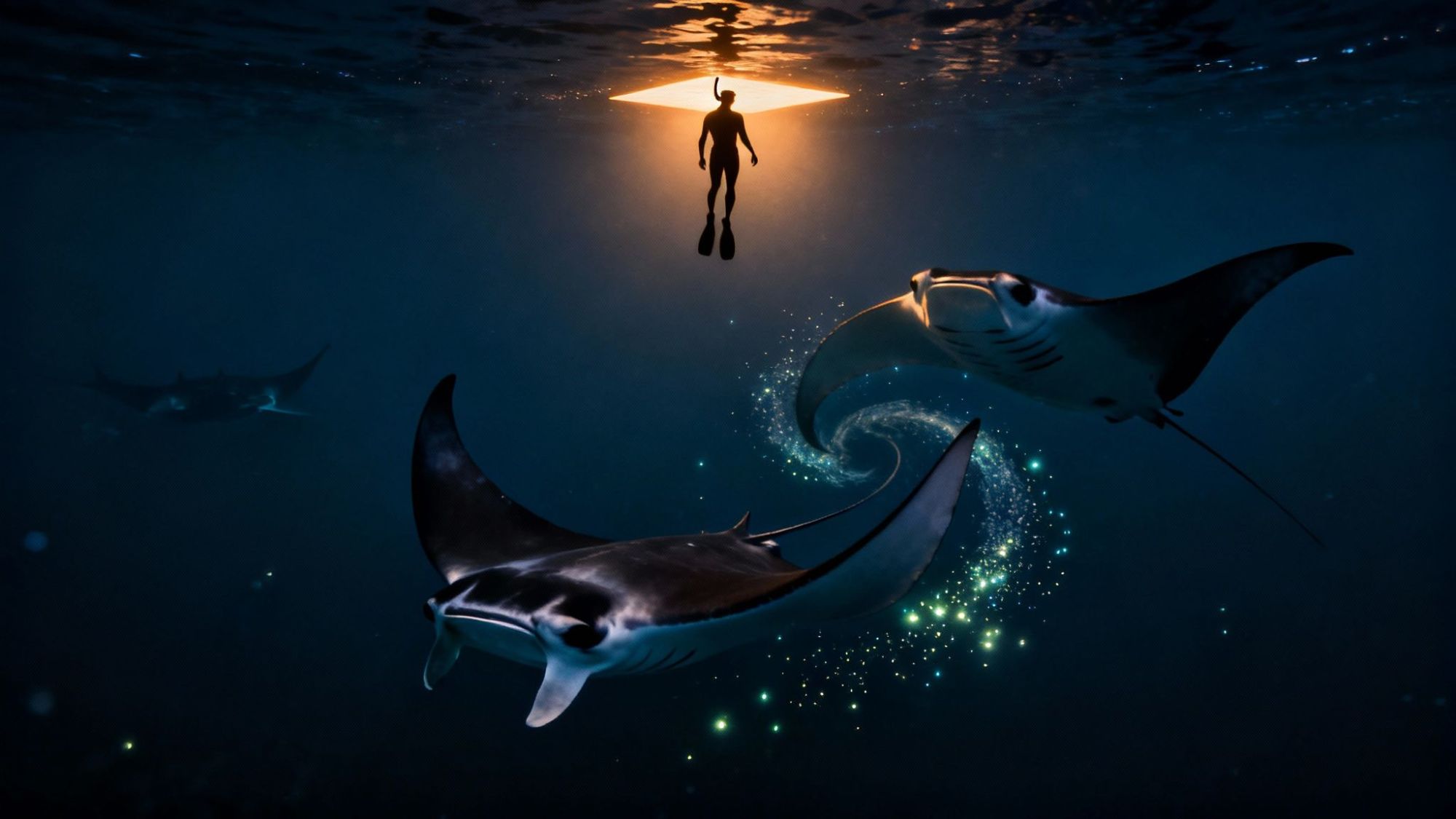
Picture this: you're floating weightlessly on the calm, dark surface of the Pacific, looking down into a world illuminated by soft blue light. Suddenly, a colossal, gentle creature with a wingspan wider than you are tall glides into view, performing an elegant, looping somersault just inches below you.
This isn't a dream. This is the world-famous manta ray snorkel in Kona, an experience so surreal it feels like witnessing a perfectly choreographed underwater ballet. It’s no wonder this is consistently rated as one of the absolute must-do adventures in all of Hawaii.
Experience Kona's Legendary Underwater Ballet
This guide will break down everything you need to know to have an unforgettable night with these gentle giants. And when it comes to who you go with, Kona Snorkel Trips is the top rated & most reviewed snorkel company in Hawaii. We've been doing this a long time, and we’re obsessed with making sure you have an incredible—and safe—experience from start to finish.
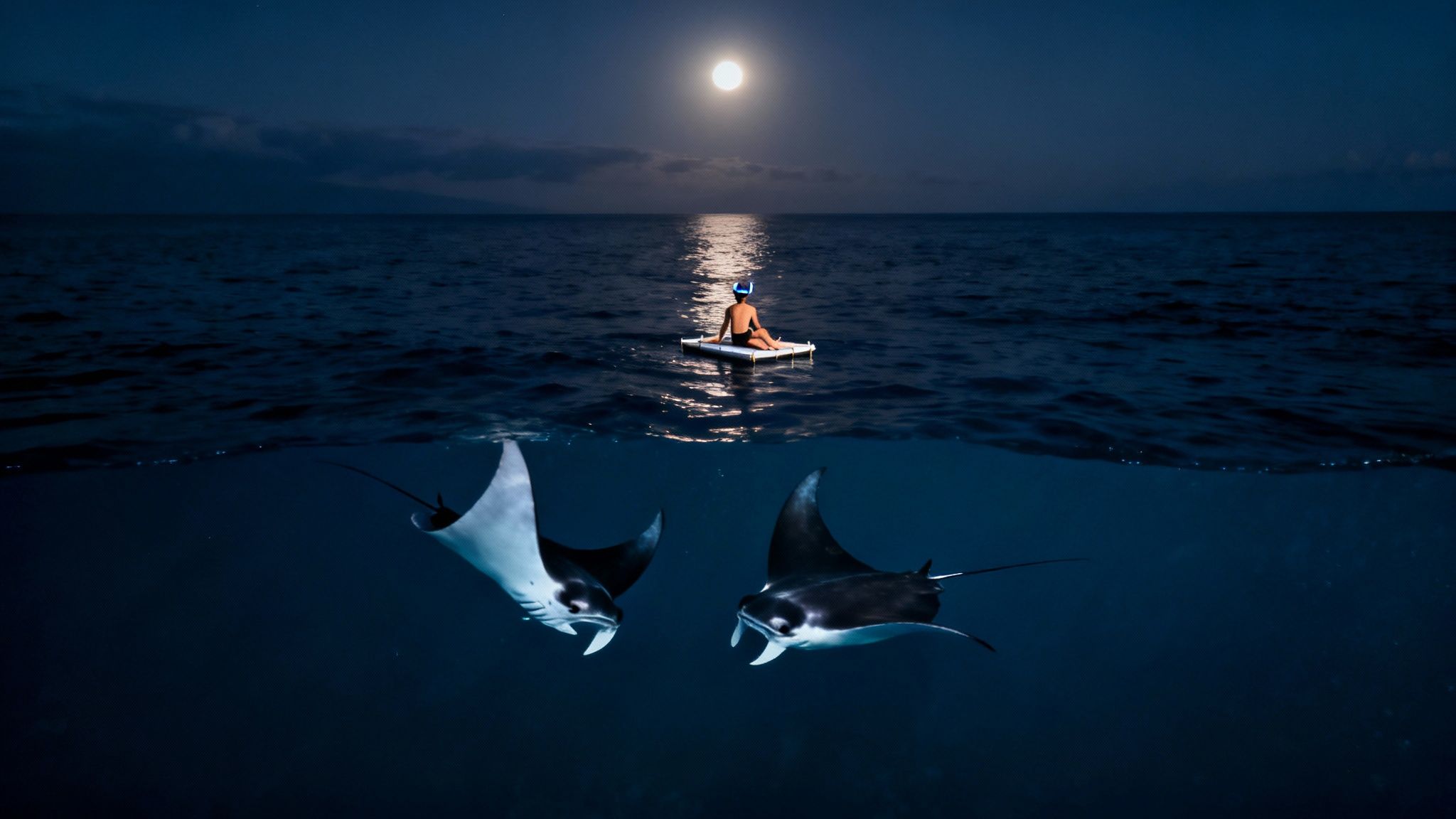
The Kona Coast of the Big Island is home to one of the most reliable and magical marine encounters on the entire planet. What started out as a niche activity for a few adventurous divers back in the 1970s has exploded into an iconic Hawaiian experience. Today, this unique adventure draws an estimated 80,000 snorkelers and divers to Kona's waters every single year.
The numbers don't lie. Long-term monitoring shows just how consistent these sightings are. At the original site, "Manta Village," tour success rates hit about 96% back in 2013, with an average of four mantas spotted each night. Another great local operator, Manta Ray Night Snorkel Hawaii also offers an exceptional manta ray night snorkel tour for those looking for options.
Why This Encounter Is So Unique
So, what makes this so special? Unlike whale watching or other wildlife tours that are at the mercy of migratory seasons, Kona is home to a year-round, resident population of reef manta rays. They live here. This incredible consistency is the secret sauce behind the tour's legendary reliability.
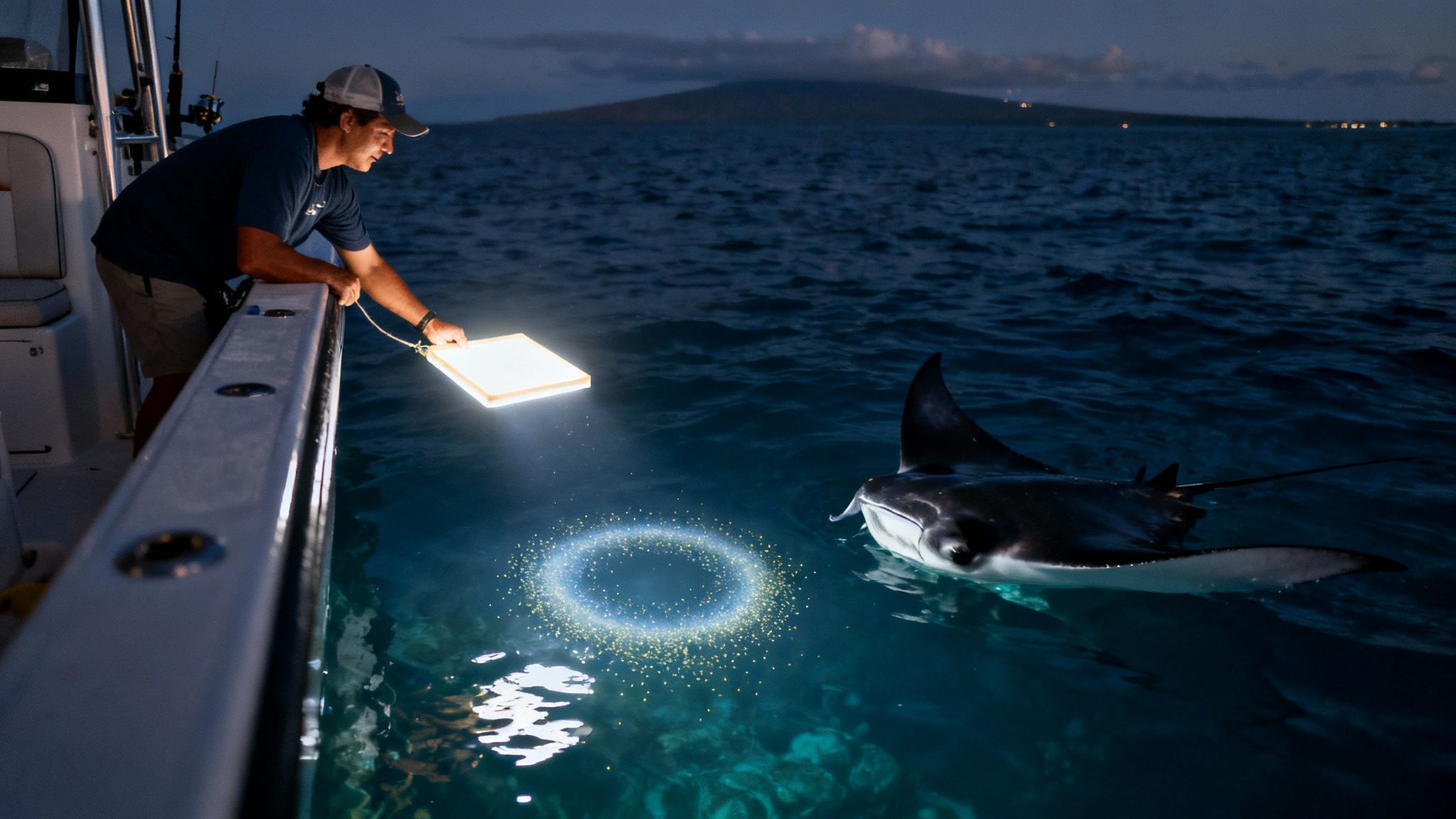
The experience itself is brilliantly simple and designed to be completely non-invasive. We don't chase or touch the animals. Instead, you'll hold onto a custom-made light board floating on the surface. These lights act like a massive bug zapper for tiny plankton, the mantas' favorite food.
This method essentially creates a natural feeding station, drawing the mantas in to feast. It allows us to watch these gentle giants do their thing, completely undisturbed in their natural habitat. The result is an intimate, awe-inspiring spectacle that feels both wild and wonderfully serene. It’s an adventure that connects you directly with the ocean in a way few others can.
Looking for more trip inspiration? Check out our guide to the best activities in Kona.
How The Manta Ray Night Snorkel Really Works
Ever wonder how the boats can promise such a reliable manta ray show, night after night? It’s not magic, but it feels like it. The whole manta ray snorkel Kona experience is built on a brilliantly simple system that works with nature, not against it. It’s less about chasing down the mantas and more about ringing a dinner bell they simply can't ignore.
It all starts with a quick boat ride from the Kona coast out to one of the well-established viewing sites. You'll hear guides refer to them by names like "Manta Village" or "Manta Heaven"—and for good reason. These spots are known hotspots for manta activity, and it's here that the real ingenuity kicks in.
The Science Of Attraction
The secret ingredient? Light.
Think of it this way: our guides bring along these custom-built, powerful light boards and place them in the dark water. These lights act like a giant magnet for the ocean’s tiniest critters—phytoplankton and zooplankton. They’re microscopic organisms that form the very bottom of the marine food chain, and they are drawn to the bright lights like moths to a flame.
This creates a sudden, thick "soup" of plankton in one concentrated spot. For Kona's resident manta rays, who are filter feeders, this is an all-you-can-eat buffet. The light creates a dependable meal they can count on, drawing them in from all over the bay to feed. Best of all, it's totally non-invasive. We're not baiting them or changing their natural behavior; we're just concentrating their food source in one place.
It’s a process that works like clockwork:
- Boat Ride: A short trip takes you out to a calm, protected bay where mantas love to hang out.
- Lights On: Your guides will deploy the high-intensity, underwater light boards.
- Plankton Party: Within just a few minutes, the bright lights attract a massive cloud of plankton.
- Mantas Arrive: Drawn in by the feast, the local manta rays show up for dinner.
Your Front-Row Seat To The Show
Once the lights are in the water and the buffet is open, your job is simple: just float and watch. You’ll slip into the water and hold onto a big, custom-designed floating raft. The light boards are usually attached right to this raft, lighting up the water directly beneath you like an underwater stage.
This method of passive observation is the heart of a sustainable and ethical wildlife tour. By holding onto the raft at the surface, you become part of the scenery without ever getting in the way of the main event.
From this stable, floating perch, you get an absolutely perfect view as the mantas glide in. They perform these graceful, acrobatic barrel rolls to scoop up huge mouthfuls of plankton, often coming within inches of the lights—and you. It's an incredibly up-close-and-personal encounter that feels perfectly choreographed, even though it's 100% wild and natural.
This is what makes the manta ray snorkel in Kona so special. It's a simple, brilliant system that lets us witness one of nature's most spectacular shows without ever disturbing it.
Meet The Famous Resident Manta Rays Of Kona
The incredible creatures you'll meet during a manta ray snorkel in Kona aren't just passing through; they are part of a beloved, well-documented local community. This is the secret sauce behind the trip's amazing success rate. Unlike so many wildlife encounters that hinge on seasonal migrations, Kona is one of the very few places on Earth with a year-round, non-migratory population of reef manta rays (Mobula alfredi).
They’re here to stay. And that means we get to know them really, really well.
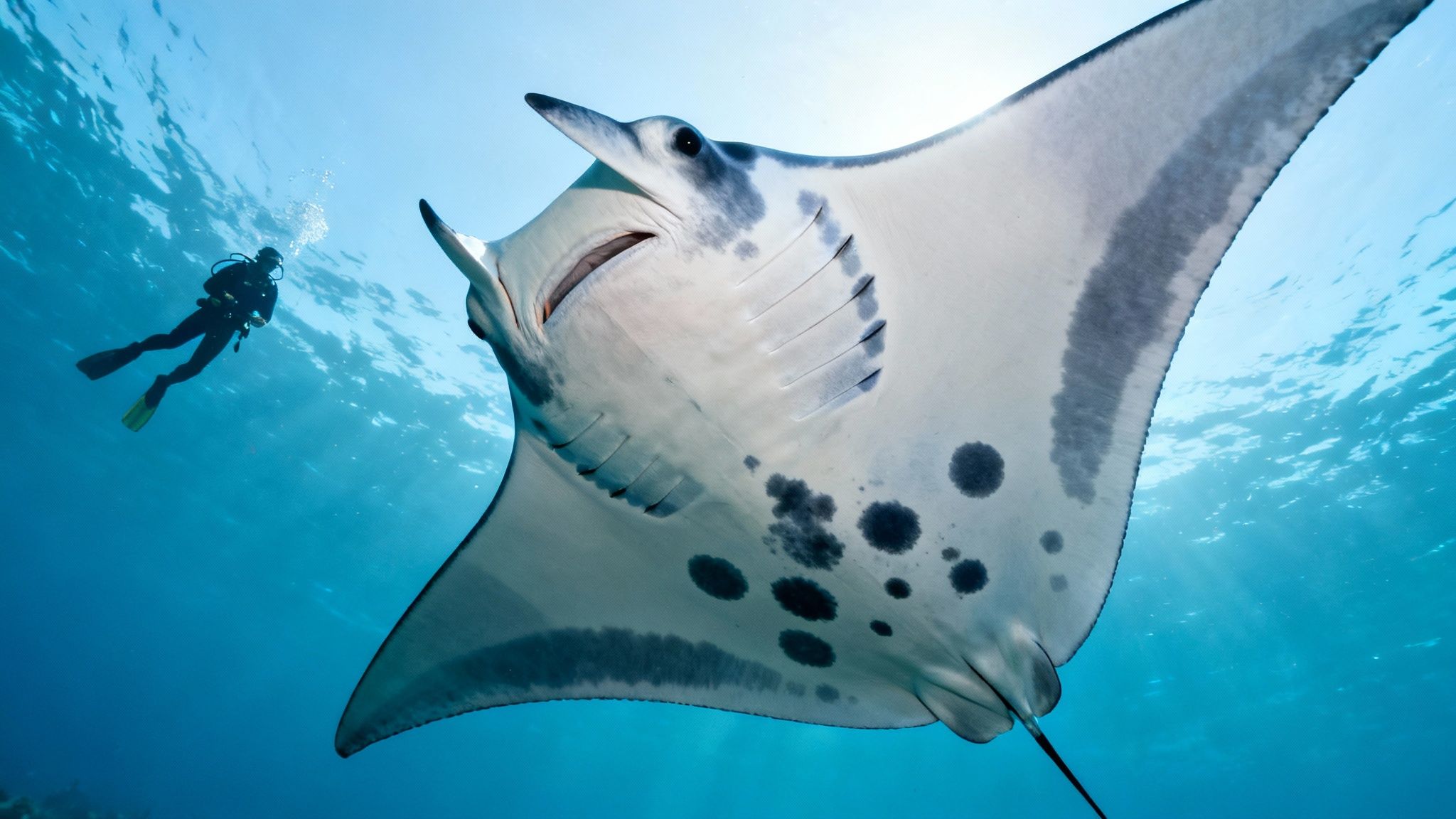
This reliable presence has allowed marine biologists and local guides like us to get to know these animals on an individual basis. We can actually identify them by the unique spot patterns on their undersides—they’re just like a human fingerprint. Because of this, many of the regulars have earned names over the years.
You might hear your guide point out local celebrities like "Big Bertha" or the iconic "Lefty," who's instantly recognizable by his damaged cephalic fin. This simple act of naming them transforms the snorkel from just viewing wildlife into a personal introduction to a community of intelligent, gentle giants.
Getting To Know The Locals
Learning the personalities and histories of these mantas adds a whole other layer to the experience. We know that more than 450 individual manta rays cruise the Kona Coast, with over 120 of them being regularly cataloged.
Get this: the top 20 most frequently seen individuals account for nearly 60% of all recorded sightings. That means there’s a great chance you’ll encounter the same named mantas that others have met and fallen in love with, trip after trip. You're not just seeing a manta ray; you're meeting an individual with a story, and that connection is powerful.
The Gentle Giants Of Kona
These magnificent creatures are absolutely awe-inspiring, both for their size and their grace. With wingspans that can stretch over 12 feet, they glide through the water like they're flying, performing acrobatic barrel rolls as they feed on clouds of plankton.
And despite their immense size, manta rays are completely harmless. They have no teeth, no barbs, and no stingers. Their gentle, curious nature is what makes such a peaceful and safe up-close encounter possible. To get an even better feel for them before you go, check out our collection of fun facts about manta rays. Knowing a bit about them beforehand really makes the whole experience click.
How To Choose The Right Manta Ray Tour
With the Kona manta ray snorkel becoming so popular, it feels like dozens of tour boats head out every single evening. But here’s the thing: not all manta experiences are created equal. Far from it. Choosing the right tour can honestly be the difference between a crowded, chaotic night and an intimate, jaw-dropping adventure you'll be telling stories about for the rest of your life.
When you're looking at your options, things like boat size, the experience of your guides, and whether the company actually cares about the ocean should be at the top of your list. Big boats might look like a bargain at first glance, but they often come with a serious trade-off: way more people in the water. That can turn a magical moment into a stressful, kick-in-the-face kind of experience.
Small Group vs Large Group Tours
Going with a small-group tour, like the ones we run at Kona Snorkel Trips, completely changes the game. It’s a much more personal adventure. With fewer people on the boat and in the water, you get incredible, unobstructed views of the mantas as they glide and swoop.
It also means you can actually talk to your guides. You can ask questions and hear the fascinating stories about the individual mantas you’re seeing—yes, many of them have names! The whole vibe is just calmer, more relaxed, and totally focused on the magic unfolding right in front of you.
If you're exploring different high-quality options, Manta Ray Night Snorkel Hawaii is an exceptional alternative that also puts a premium on the guest experience.
To help you see the difference, let’s break down what you can really expect.
Tour Type Comparison: Small Group vs Large Group
Choosing your tour type is probably the single most important decision you'll make for this trip. This table lays out the core differences between a small-group experience and what you typically get on a larger, high-volume boat.
| Feature | Small-Group Tour (Kona Snorkel Trips) | Large-Group Tour |
|---|---|---|
| Guest Experience | Personalized attention, more space | Crowded, less individual interaction |
| Manta Viewing | Better, unobstructed views | Can be crowded at the light board |
| Pace of Tour | Relaxed and flexible | Rushed, follows a strict schedule |
| Guide Interaction | Easy to ask questions and learn | Limited interaction with guides |
Ultimately, a smaller tour is built around a quality encounter, not just packing the boat. You feel less like a number and more like a participant in something truly special.
What To Look For In A Tour Operator
Beyond just the group size, a top-tier operator shows a deep respect for the marine environment. They should give a thorough safety briefing, provide high-quality gear (including wetsuits—that water gets chilly!), and have experienced guides who are genuinely passionate about marine conservation.
The best guides don't just point out the mantas; they introduce you to them. They know the regulars by name and can share stories about their personalities and histories, adding a rich layer of context to your snorkel.
The consistency of sightings is another huge factor. Scientists recognize three manta ray species worldwide, but we are lucky to have two right here off the Kona Coast: the reef manta (Mobula alfredi) and the giant manta (Mobula birostris). The best local operators know their stuff, reporting incredible encounter success rates between 85–90%. That’s a testament to their deep knowledge of the manta feeding grounds and behaviors. You can discover more insights about Manta Rays in Hawaiʻi on Outrigger.com.
In the end, investing a little more in a reputable, small-group tour isn't just about your own enjoyment and safety. It's about supporting the sustainable tourism practices that protect these magnificent creatures for generations to come.
Your Guide To Preparing For The Snorkel
Showing up prepared is the secret to soaking up every moment of an adventure this unique. When you know what to bring and what to expect on your manta ray snorkel Kona tour, you can just relax and let the underwater magic unfold.
Here's a quick rundown to get you ready for the night.
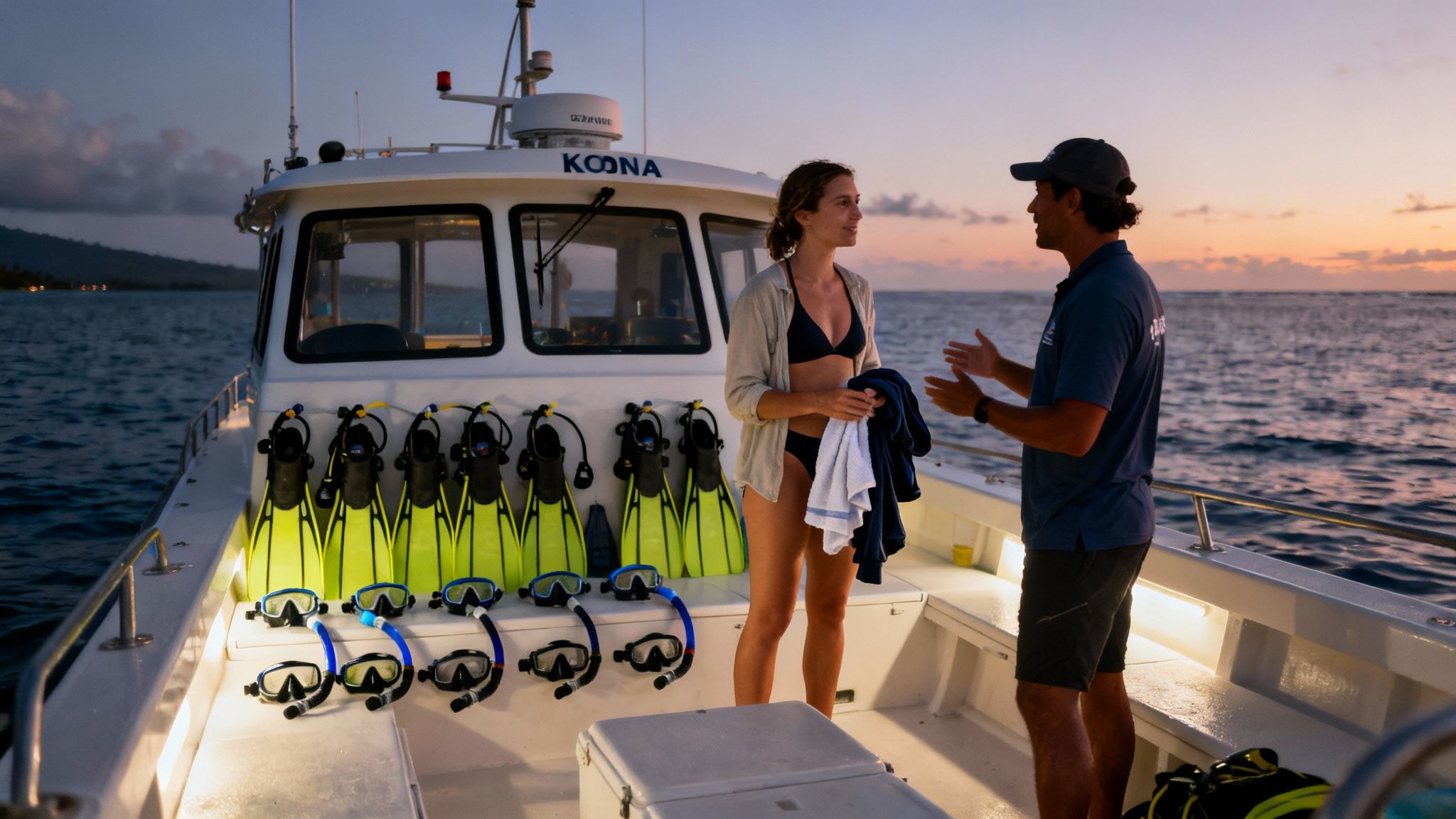
The best trick is to arrive ready to hit the water. Wear your swimsuit under your clothes, and you'll make gearing up on the boat a total breeze. It’s a simple time-saver that gets you settled in and ready to enjoy the beautiful boat ride out to the manta site.
What To Pack For Your Trip
You’ll want to pack light, but a few essentials will make a world of difference for your comfort. Don't leave these behind!
- A Towel: You’ll be glad to have a dry towel waiting for you when you climb back on the boat.
- Warm Layers: Even on a warm Hawaiian evening, the boat ride back can feel brisk after you’ve been in the water. A sweatshirt or light jacket is a great idea.
- Underwater Camera: If you have a GoPro or something similar, bring it! You’re about to get some truly once-in-a-lifetime photo ops.
- Minimal Valuables: It's always best to leave jewelry or extra cash back at your hotel. Keep it simple and worry-free.
For a deeper dive, check out our guide on what to wear for snorkeling, which has solid advice for any water adventure in Hawaii.
Overcoming Night Snorkeling Nerves
Feeling a little nervous about snorkeling in the dark? That’s totally normal. The open ocean at night can seem a bit intimidating, but your safety is our absolute number one priority. Our expert guides are right there in the water with you, every step of the way.
Your guides run through a complete safety briefing, get you fitted with top-notch gear (including wetsuits and flotation devices), and stay with you in the water the entire time. Their mission is to make sure you feel safe, confident, and ready to be blown away by the gentle giants below.
Trust us, any jitters you might have will melt away the second that first massive, graceful manta ray glides into view. It’s a feeling you’ll never forget.
Got Questions About the Kona Manta Ray Snorkel? We've Got Answers.
To make sure you feel totally ready for your manta ray snorkel Kona adventure, let's tackle some of the most common questions we get from our guests. We'll cover everything from safety for newbies to the ethics of the whole experience, giving you straight, honest answers.
This should clear up any last-minute jitters and give you the confidence you need to book the right trip. By the end, you'll know exactly what to expect and why this is an adventure you don't want to miss.
Is The Manta Ray Night Snorkel Safe For Beginners And Kids?
Absolutely. This experience is designed from the ground up to be safe and fun for everyone, even if you've never put on a snorkel mask before. You don't even have to be a strong swimmer.
At Kona Snorkel Trips, we handle all the gear so you can just focus on the magic. We provide top-notch snorkel equipment, warm wetsuits, and flotation devices like pool noodles or life vests. The whole time, you'll be holding onto a big, custom-made light board that floats on the surface, so you can just relax and watch the show below. No treading water required.
Most importantly, our expert guides are right there in the water with you. They give a full safety talk before you even get in and stick with the group to make sure everyone is comfortable. And the mantas? They are the definition of gentle giants. They're filter feeders with zero teeth, stingers, or barbs—they pose absolutely no threat to people.
What Is The Best Time Of Year To See Manta Rays In Kona?
This is one of the best parts about the manta ray snorkel Kona experience: there really is no bad time to go! A huge reason the Kona Coast is world-famous for this encounter is that we have a massive, resident population of manta rays that hangs out here all year long.
Unlike migratory animals like humpback whales, their presence isn't seasonal. That means you have a fantastic shot at seeing them no matter which month you visit. While the ocean is often glassiest in the summer, tours run 365 days a year with an incredible success rate, often hitting over 90%.
Honestly, the most important thing isn't the calendar date—it's choosing a clear night and going with a reputable, experienced crew that knows these waters like the back of their hand.
How Can We Be Sure The Tour Is Ethical And Respectful?
This is such an important question, and the answer gets to the heart of what makes this tour so special. The Kona manta ray snorkel is actually held up as a global model for how to do wildlife tourism the right way.
All the reputable operators here follow a strict set of community guidelines to protect the mantas' well-being. The golden rule is passive interaction. This means no touching, no chasing, and no blocking a manta's path. Ever. The entire experience is set up so the mantas are drawn to the light to feed on plankton—a natural behavior—while we humans are just quiet, floating observers.
By choosing a company like Kona Snorkel Trips that is fiercely committed to these eco-friendly practices, you're becoming part of a solution. Your ticket helps fund the very conservation and research efforts that keep these magnificent creatures safe for generations to come.
What If I Book A Tour And We Don't See Any Manta Rays?
While the odds of seeing mantas on a manta ray snorkel in Kona are incredibly high (think 90-95% or better), we're still dealing with wild animals in their natural habitat. Sightings can never be 100% guaranteed.
But the best tour operators know this and stand behind their trips. Most of us offer a "manta guarantee." It's simple: if your tour happens to be one of the rare few where no mantas show up, you can come back and try again on another night for free, on a standby basis. This kind of policy shows a company's confidence and their commitment to making sure you have an amazing experience.
Just be sure to ask about the specific policy when you book. You can read all the details about our guarantee on the Kona Snorkel Trips Manta Ray Snorkel Tour page.