
Manta ray snorkel kona: Ultimate Kona Manta Night Tour 2026
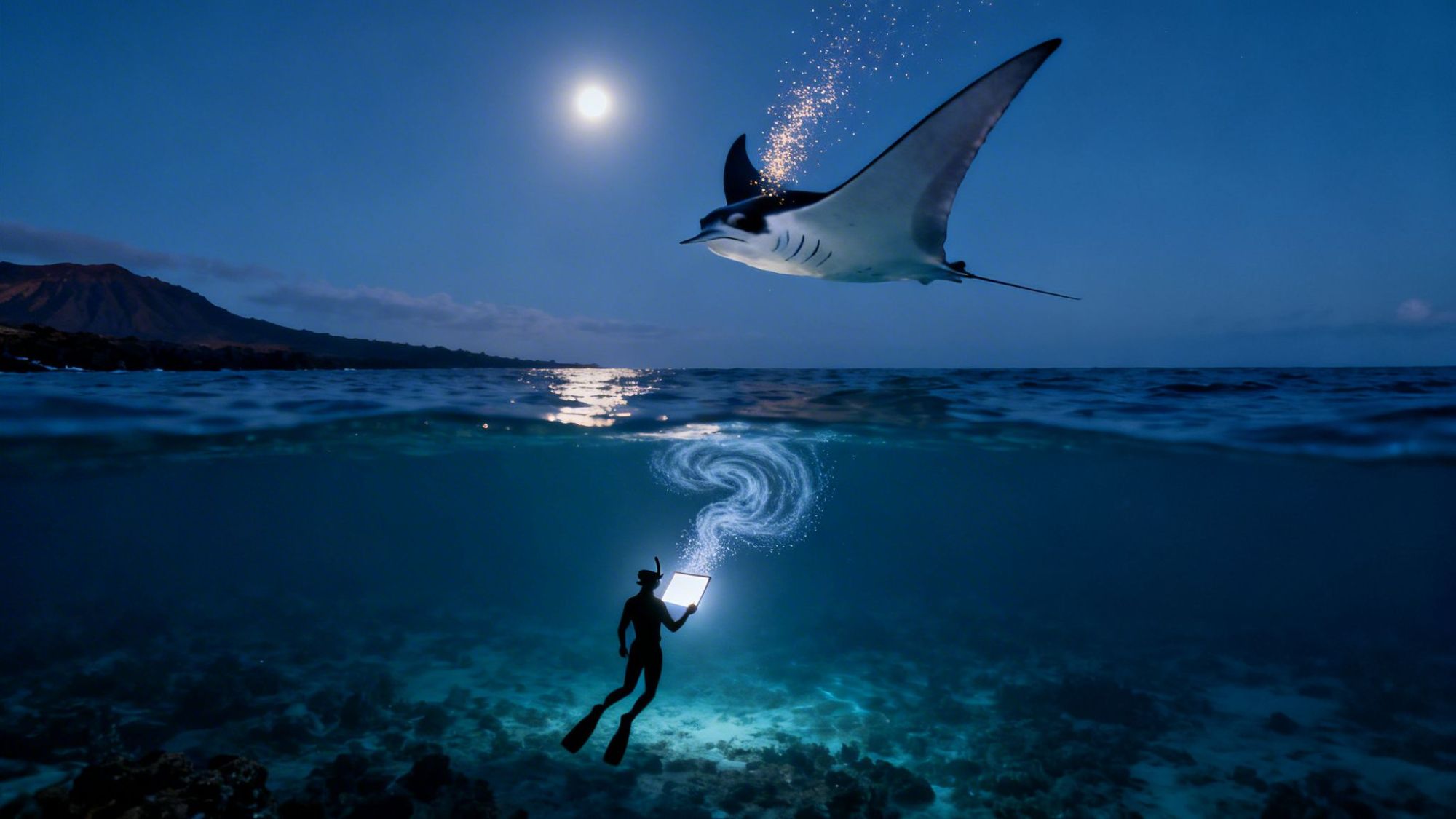
Picture this: you're floating in the warm, dark Pacific off the coast of Hawaii. The only sound is the gentle hum of the ocean at night. Suddenly, bright beams of light cut through the darkness below you, attracting a shimmering cloud of plankton. Then, they appear.
Like majestic ghosts gliding from the deep, giant manta rays with wingspans up to 16 feet perform an underwater ballet, swooping and barrel-rolling just inches beneath you. This isn't a scene from a nature documentary; this is the manta ray snorkel in Kona, a world-famous, bucket-list adventure that has put the Big Island on the map.
When you're choosing a guide for an adventure like this, you want a team that isn't just experienced, but deeply respected in the community. Kona Snorkel Trips is the top-rated and most-reviewed snorkel company in all of Hawaii, and we specialize in creating safe, fun, and truly awe-inspiring marine encounters. But don't just take our word for it—see what fellow travelers have to say.

Your Guide to the Kona Manta Ray Snorkel Experience
For good reason, Kona is known around the globe as the place to swim with manta rays. It's an encounter that’s pure magic, blending the thrill of the wild with a profound connection to nature. It creates the kind of memories that stick with you for a lifetime. This guide is here to walk you through everything you need to know to plan your own incredible journey.
What Makes This Adventure So Special?
The Kona manta ray snorkel is so much more than a tour; it's a genuine connection with one of the ocean's most graceful giants. The whole experience is carefully orchestrated to be both mind-blowingly cool and completely safe.
- A Reliable Encounter: Thanks to the unique setup here off the Kona coast, manta ray sightings are incredibly consistent. We're talking success rates often topping 90% year-round.
- A Symphony of Light and Life: We use powerful, safe underwater lights to draw in the plankton. This basically acts as a natural "dinner bell" for the mantas, bringing them in for their nightly feast.
- Passive and Respectful Interaction: You'll be holding onto a custom-made light board, floating comfortably on the surface. This gives you a front-row seat to the action below without disturbing the mantas, ensuring the encounter is safe for you and for these amazing animals.
This is just the start of what makes for an unforgettable trip. To really dive into the nitty-gritty, check out our complete guide to the manta ray night snorkel tour. And for those who are ready to book an adventure with the best in the business, you can secure your spot with Kona Snorkel Trips today.
Why Kona Is The Best Place On Earth To See Manta Rays
Plenty of tropical spots offer you a chance to see amazing marine life, but the manta ray snorkel in Kona is on a whole different level. This isn't about getting lucky. It's about a perfect storm of geology and biology that makes the Kona coast a nightly dinner theater for these gentle giants.
The secret sauce is the Big Island’s volcanic past. The underwater landscape, carved out by ancient lava flows, creates deep-water upwellings that pull nutrient-rich water toward the surface. This process kicks off massive blooms of plankton, the manta rays' primary food. Think of it as a reliable, all-you-can-eat plankton buffet, and the mantas have a permanent reservation.

Kona's Famous Manta Hotspots
This consistent food source has created world-famous "manta aggregation sites." These aren't just random places; they're specific locations where mantas have learned they can show up for a guaranteed meal every night. The tour boat lights act like a giant beacon, attracting thick clouds of plankton right to them. The two most famous sites are:
- Manta Village: Tucked in near Keauhou Bay, this spot is known for its shallower water and sandy bottom. It creates a perfect, predictable stage for the manta ballet.
- Manta Heaven: Located just north of the Kona airport, this site often has mind-blowing water clarity and can draw in huge gatherings of mantas.
Because these feeding grounds are so reliable, our sighting success rate is consistently sky-high, often over 90%. You aren't just crossing your fingers hoping to see a manta—you're getting a front-row seat to the main event. It’s what makes this experience so powerful and what has cemented Kona’s reputation as a world-class snorkeling destination. If you're on the hunt for more incredible underwater spots, check out our guide to the best snorkeling in Kona.
Kona is home to one of the largest and most studied resident populations of reef manta rays (Mobula alfredi) on the entire planet. This isn’t a fluke; it's a stable ecosystem that has been thriving for decades.
This isn’t just talk, either. The local manta population is incredibly well-documented. Thanks to photo-identification efforts going all the way back to 1979, researchers have cataloged over 318 unique mantas right here on the Kona coast. That's out of a total island population of more than 450 identified individuals!
Genetic studies have even confirmed that these mantas are a distinct, island-resident group that sticks around. This deep scientific understanding is what allows us, as tour operators, to provide such a consistent and utterly magical encounter night after night.
Planning Your Manta Ray Snorkel Adventure
So, you're ready to turn that dream of swimming with manta rays into a real plan. Awesome. The first question I always get is, "When's the best time to go?" The incredible answer? Pretty much anytime.
Thanks to the unique underwater landscape here in Kona, there's a reliable plankton buffet that keeps the mantas showing up consistently year-round. We see success rates that often top 90%, night after night. You can book your trip for any season without that nagging worry of missing out. The water stays a pleasant 75°F to 80°F, and we're out there every single evening, ready to introduce you to these gentle giants.
What You Should Bring
One of the great things about a guided tour is we handle the big stuff. We'll get you set up with a wetsuit, snorkel, mask, and the floating light board that attracts all the plankton. That said, there are a few personal items you’ll want to bring along to make the whole experience that much smoother and more comfortable.
- Towel: You’ll be very happy to have a dry towel waiting for you when you hop out of the ocean.
- Reef-Safe Sunscreen: If you're on a sunset tour, slather this on beforehand. It protects your skin and our precious coral reefs.
- Change of Clothes: Trust me, having something warm and dry to change into after the snorkel is a game-changer.
- Camera: A waterproof camera like a GoPro can capture some unbelievable footage. Just remember to pull your head up and be present in the moment, too!
For a full rundown on what to wear for a day of fun in the water, check out our guide on what to wear for snorkeling. And before you take the plunge, it's always smart to make sure you have solid travel insurance for adventure sports to keep your trip protected.
How to Handle Seasickness
The ocean does what it wants, and even a gentle swell can make some folks feel a bit green. Don't let the fear of getting queasy stop you from having one of the most amazing experiences of your life. The key is just to be prepared. We recommend picking up one of these options from Amazon well before you're scheduled to board the boat:
- Patches: Ship-EEZ Seasickness Patches go behind your ear and provide long-lasting relief for a lot of people.
- Pills: Both Dramamine and Bonine are classic, effective choices. Just be sure to follow the directions and take them about an hour before the tour starts.
- Wristbands: Sea-Band wristbands are a drug-free option that use acupressure to fight nausea.
- Natural Remedies: Sometimes just chewing on ginger chews is all it takes to settle a fussy stomach.
With the logistics out of the way, the only thing left is to book your spot! This is easily one of Kona’s most popular activities, so locking in your tour ahead of time is definitely the way to go.
What To Expect On Your Manta Ray Snorkel Tour
So, you're thinking about meeting Kona's famous manta rays. It's a life-changing experience, but it helps to know what you're getting into. Let's walk through a typical evening from start to finish so you can shake off any nerves and just get excited.
Your adventure usually kicks off at the harbor as the sun begins its spectacular descent over the Pacific. After a friendly check-in, you’ll hop on board for a gorgeous sunset cruise out to the manta site. This isn't just a boat ride; your guides are experts, and they’ll share all sorts of cool facts about the local marine life and the gentle giants you’re about to meet.

The Main Event: The Underwater Ballet
Once the boat is anchored, your guides will run through a detailed safety briefing. They’ll show you exactly how to use your gear and, most importantly, cover the rules for interacting respectfully with the mantas. It's all about keeping you and the animals safe.
Then, it's go time. You'll slip into the dark water and hold onto a specially designed floating light board. This board is the secret sauce; its bright lights shine down, attracting huge clouds of plankton—the mantas' favorite food. You just float on the surface, holding the handles and looking down into the action.
The moment that first massive shadow glides into the light is pure magic. These incredible creatures appear out of the darkness, swooping and barrel-rolling sometimes just inches below you as they feast. It's a silent, breathtaking ballet you will carry with you forever.
Kona Snorkel Trips runs a top-notch adventure on their Manta Ray Snorkel Kona tour, but if you're exploring options, Manta Ray Night Snorkel Hawaii is another exceptional tour provider that people love.
After about 45 minutes of jaw-on-the-floor wonder, you'll climb back onto the boat, buzzing with what you just saw. Most tours offer snacks and hot cocoa to warm you up on the ride back to shore. To get an even better feel for the experience, you can learn more about what it's truly like swimming underwater with these majestic creatures.
Choosing Your Manta Adventure: Snorkeling vs. Diving
So, you’re ready to meet Kona’s majestic manta rays. Awesome. You’ve got two incredible ways to do it: snorkeling from the surface or scuba diving down below. The best choice really just boils down to your comfort in the water, your experience level, and the kind of show you want to see.
For the vast majority of people, snorkeling is the perfect ticket to the magic. It’s incredibly accessible, which is why it’s great for families, kids, and even people who aren't strong swimmers. You'll float comfortably on the ocean's surface, holding onto a specially-made light board. This board not only keeps you effortlessly buoyant but also shines a bright light into the water, which is what draws the mantas in.
Think of it as having the best seats in the house—a VIP balcony overlooking the main stage.
The View from the Top Versus the Bottom
Scuba diving, on the other hand, offers a completely different—but equally spectacular—perspective. This is an option for certified divers only. Instead of floating up top, divers head down to the ocean floor, usually around 25 to 35 feet deep.
From there, you'll kneel or sit on the sand and watch as the mantas soar and perform their famous barrel rolls right above your head. It’s a completely immersive, mind-blowing viewpoint.
If you are a certified diver, we can't recommend Kona Honu Divers enough. They're widely celebrated as the top-rated and most-reviewed dive company in not just Hawaii, but the entire Pacific. Check out their famous manta ray diving tour if you want to see the show from the seafloor. And for anyone just plain obsessed with water sports, this guide to Manta Boards and accessories might spark some ideas for a different kind of board adventure.
To make the decision a little easier, here’s a quick comparison to help you figure out which manta ray experience is the best fit for you and your group.
Snorkeling vs. Scuba Diving for Manta Rays
| Feature | Manta Ray Snorkeling | Manta Ray Scuba Diving |
|---|---|---|
| Experience Needed | None! It's perfect for all ages. | Scuba certification is required. |
| Your Position | Floating on the surface, looking down. | Sitting on the ocean floor, looking up. |
| The View | Watching mantas swim up towards your light. | Watching mantas glide and barrel-roll overhead. |
| Accessibility | Open to pretty much everyone. | Restricted to certified divers. |
| Proximity | Mantas often get within inches of the board. | Mantas swoop closely right above you. |
At the end of the day, both options deliver a breathtakingly close encounter with these gentle giants.
Snorkelers get the incredible "fly-by" experience as mantas swim up from the darkness, while divers get the stunning "fly-over" spectacle from below.
Honestly, you can't go wrong. The manta ray snorkel kona experience is designed to be awe-inspiring, no matter which angle you see it from. If you're ready for that front-row seat from the surface, grabbing your spot on a tour is easy.
Snorkel Responsibly And Protect The Manta Rays
The magic of the manta ray snorkel in Kona is a delicate dance, a give-and-take between us and the wild. For this incredible experience to last for generations to come, every single one of us has a part to play in protecting these gentle giants. It all comes down to one core principle: passive interaction. It’s a simple, respectful way of being that puts the mantas’ well-being first.
Following this golden rule is easy. No touching, no chasing, and no diving down toward them. Just think of yourself as a quiet guest in their house. By holding onto the light board and staying calm on the surface, you let the mantas completely control the encounter. This approach is what makes them feel safe and keeps them coming back to their "dinner table" night after night.

Choose A Tour That Cares
When you book a tour, you’re not just buying a ticket—you’re voting with your wallet for the kind of tourism you want to support. Choosing a reputable operator that follows the established guidelines is probably the single most important decision you can make. Companies like Kona Snorkel Trips are all-in on sustainable practices and stick to the strict standards set by manta conservation organizations.
These standards aren't just suggestions; they are vital for the health of the manta population. A good operator will always:
- Carefully manage their lights to attract plankton without disturbing or disorienting the mantas.
- Take the time to educate all guests on the rules of passive interaction before anyone even gets in the water.
- Maintain a safe distance and never, ever corral or corner the animals.
By picking a company that puts conservation first, you're directly fueling a healthy, sustainable tourism model that benefits everyone, especially the mantas.
Your adventure funds more than just a boat ride; it supports ongoing research, conservation efforts, and the local economy that depends on a healthy manta ray population. This adds a powerful layer of purpose to your trip.
The experience is just so much more meaningful when you know you're part of the solution, not the problem. The more you learn about these amazing animals, the more wonder you'll feel during the encounter. To get a head start, check out these fun facts about manta rays and deepen your appreciation before you even get on the boat. By snorkeling responsibly, you’re doing your part to ensure Kona remains the best place on Earth to witness this unbelievable underwater ballet.
Frequently Asked Questions About Manta Ray Snorkeling In Kona
Even with a solid plan, it's totally normal to have a few nagging questions before you jump in the water for your manta ray snorkel in Kona. Think of this as your quick-reference guide to clear up those final details, so you can head out on your adventure feeling confident and ready.
One of the first things people ask is, "What are my chances of actually seeing manta rays?" The good news? The odds are overwhelmingly in your favor. The tour lights create such a reliable plankton buffet that this has become an incredibly consistent encounter. Around 80,000 snorkelers and divers get to witness this spectacle every year, and the success rate hovers between 85-90%. A quick look at historical manta sightings data shows just how dependable it is.
Is This Safe For Kids And Non-Swimmers?
Absolutely! This is hands-down one of the most family-friendly adventures you can have in Hawaii. You’ll be holding onto a custom-made floating light board, which means you don't even need to know how to swim. You just float on the surface, completely supported, while the magic happens right below you. Most tours welcome kids as young as 5 or 6, making for a family memory that will last a lifetime.
If you’re a bit nervous about being in the ocean at night, don't be. The powerful lights from your board and the boat create a vibrant, glowing oasis of light around you. Your entire focus will be on that illuminated circle and the incredible mantas gliding through it. Plus, the professional guides are in the water with you the whole time, keeping a close eye on everyone and making sure you feel safe and comfortable.
Are Manta Rays The Same As Stingrays?
This is a fantastic and really important question. While they're cousins in the ray family, manta rays and stingrays are completely different animals, especially when it comes to people.
- Manta Rays: Think of them as the gentle giants of the ocean. They are filter feeders, using their mouths to scoop up tiny plankton. They have no teeth, no stinger, and no barb. They are completely harmless to humans.
- Stingrays: These rays live on the seafloor and have a sharp, venomous barb on their tail. They only use it for self-defense if they feel trapped or are accidentally stepped on.
The animals you’ll meet on the Kona Manta Ray Snorkel are true manta rays. They are graceful, curious creatures that pose zero threat to snorkelers. They're just there for the plankton feast, and we get a front-row seat to their incredible underwater ballet.