
The Ultimate Guide to Manta Ray Snorkel Kona
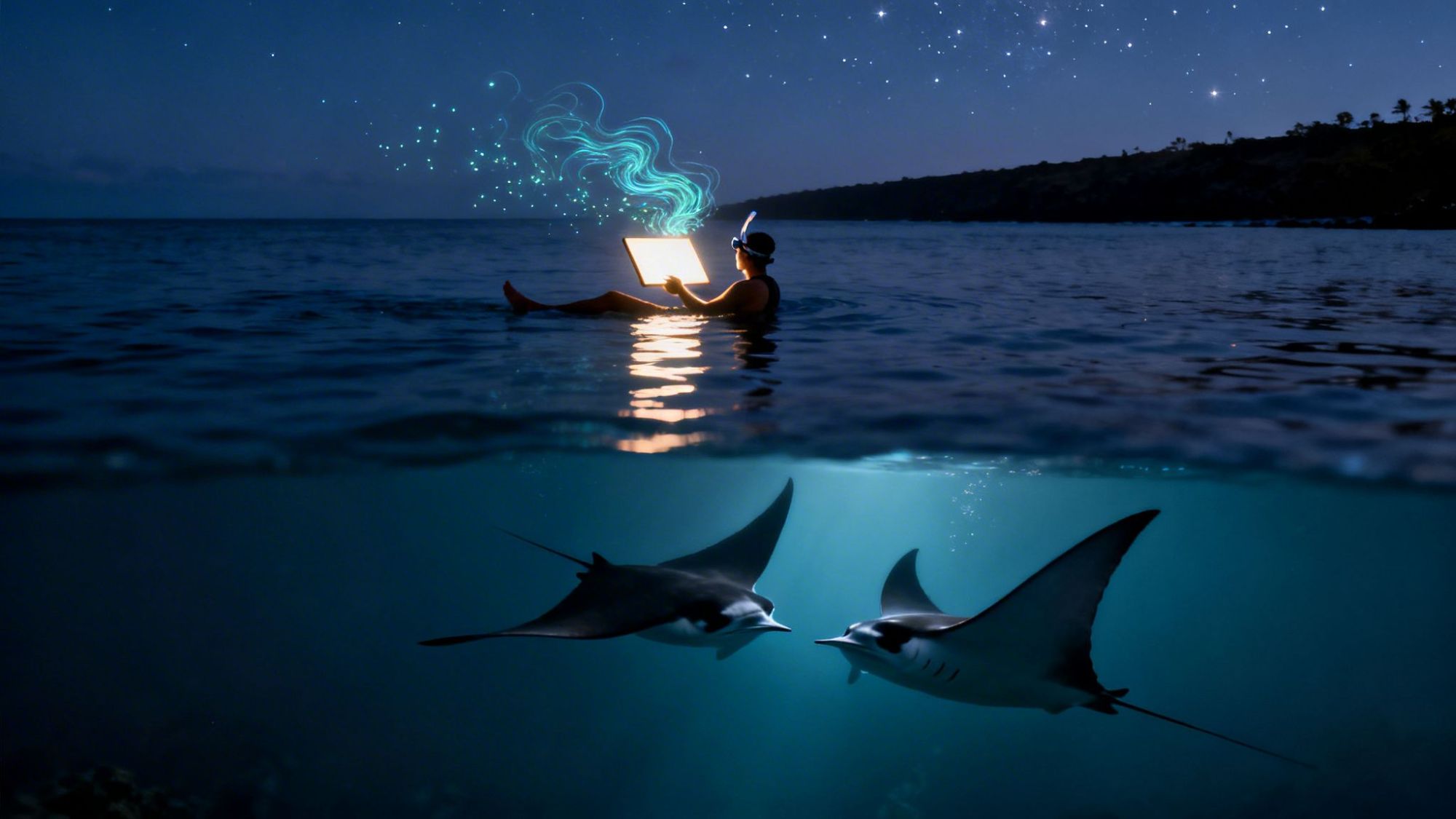
Imagine this: you're floating in the calm, dark Pacific waters off the Kona coast. Suddenly, giant, graceful shadows emerge from the deep, performing an incredible underwater ballet just inches beneath you. This is the magic of the manta ray snorkel in Kona, an almost otherworldly experience that has become the Big Island's can't-miss adventure. It’s one of those rare moments that connects you to nature in a way you’ll never forget.
As Hawaii's top-rated and most-reviewed snorkel company, Kona Snorkel Trips has had the privilege of seeing this adventure turn a great vacation into a truly life-changing one, night after night.
Your Ultimate Manta Ray Snorkel Kona Adventure
Kona isn't just a good place to see manta rays; it's hands-down the best and most reliable spot on the entire planet for this kind of encounter. We at Kona Snorkel Trips have had the privilege of seeing this adventure turn a great vacation into a truly life-changing one, night after night.

Why This Experience Is So Unique
So, what makes this tour so special? Unlike a lot of wildlife encounters that are a total roll of the dice, the manta ray snorkel in Kona is incredibly consistent. That reliability has turned a natural phenomenon into the cornerstone of the Big Island experience.
Every year, around 80,000 people travel to Kona just for this tour, pulled in by the promise of an almost-guaranteed sighting. And when you look at the numbers, it's easy to see why—success rates hover between an amazing 85-90% all year round. The calm waters and plankton-rich environment create the perfect nightly buffet for these gentle giants.
Here’s a quick rundown of what makes this tour a must-do.
Kona Manta Ray Snorkel at a Glance
| Aspect | Details |
|---|---|
| Location | Off the Kona Coast, Big Island, Hawaii |
| Best Time to Go | Year-round with high success rates |
| Activity Type | Night snorkeling with illuminated light boards |
| Success Rate | Approximately 85-90% chance of sightings |
| What You'll See | Giant Pacific Manta Rays feeding on plankton |
| Water Depth | Typically 25-35 feet |
| Experience Level | Beginner-friendly; no experience needed |
| Safety | Highly regulated, passive interaction only |
This unique setup means you aren't just crossing your fingers hoping to see a manta ray. You're literally stepping into their dining room for a front-row seat to the greatest show on Earth. You can get even more details about this incredible manta ray night snorkel tour. You can learn more about our specific tour on this page: manta ray night snorkel.
Why Kona is the Manta Ray Capital of the World
Kona’s title as the world's best spot for manta ray encounters isn't just a marketing slogan; it's the result of a perfect storm of geography, biology, and a little bit of accidental genius. So, what makes this one stretch of the Big Island coastline a global magnet for these incredible creatures? The secret sauce is a reliable, all-you-can-eat buffet that’s open every single night.

It all kicked off decades ago when a local hotel aimed its floodlights at the ocean. Those lights attracted clouds of tiny plankton, the mantas' absolute favorite meal. It didn't take long for the rays to figure out where to find an easy dinner, and just like that, a nightly ritual was born. Today, tour operators recreate this exact phenomenon using powerful, eco-friendly underwater lights to draw in the plankton feast.
Think of it like a nightly campfire for marine life. The bright lights attract the plankton (the 'moths'), and the manta rays (the 'campers') gather around the 'fire' to feast. It’s a simple but brilliant method, and it’s the secret behind the incredibly high success rates of the manta ray snorkel Kona experience.
This nightly gathering works so well because of Kona’s truly unique underwater environment.
The Science Behind the Spectacle
The Big Island's geology is the real hero here. The massive underwater slopes of our volcanoes create something called the "Island Mass Effect." This phenomenon forces deep, nutrient-rich ocean water up toward the surface, fueling a thriving ecosystem and a ridiculously stable food supply for plankton.
Because there’s always food on the table, Kona’s manta ray population doesn't need to migrate. They’re residents, hanging out here year-round. This is huge—it's why your chances of seeing them are consistently high, unlike in other parts of the world where sightings are a seasonal gamble. The Kona Coast is a thriving hub for one of the planet's most reliable manta ray populations, which has been meticulously cataloged since 1979. In fact, researchers have identified between 318 to over 450 unique individuals along this coastline alone, confirming we have a stable, resident community.
This scientific foundation is what turns a potential chance encounter into a predictable, mind-blowing adventure. By understanding the science, local operators can put snorkelers in the perfect spot to witness this nightly ballet, ensuring an unforgettable meeting with these gentle giants. If you want to dive deeper, check out these fun facts about manta rays.
What to Expect on Your Manta Ray Night Snorkel
So, what’s it really like to do the manta ray snorkel in Kona? The excitement starts building the second you check in, but knowing the flow of the trip helps calm any pre-snorkel jitters and lets you really soak it all in. The adventure kicks off with a beautiful boat ride up the Kona coast, usually timed perfectly to catch one of our epic Hawaiian sunsets.

As the sky turns fiery orange and purple, your guides will give you the full rundown. This isn't just a boring safety speech; it's a fascinating intro to the gentle giants you’re about to meet. They’ll cover how to use your gear and, most importantly, the right way to act around the mantas to keep both you and these amazing animals safe.
Entering the Manta's World
Once we get to the "manta site," the crew sets up a custom-made light board. Think of it as a floating raft with powerful lights pointing straight down into the dark water. This glowing beacon does two things: it attracts the plankton the mantas love to eat, and it gives everyone a sturdy, floating handhold in the water.
You’ll slide into the surprisingly warm ocean and swim just a few feet over to the board. From there, you just grab on, float on your stomach, and let the show begin. We'll even give you a pool noodle to tuck under your ankles, which helps you stay perfectly flat on the surface. You don’t need to be a strong swimmer at all; the whole setup is designed to be super stable and comfortable.
People often say it feels like you're floating over the world’s biggest, most incredible IMAX screen, but it’s all real. You’re just an observer, watching a wild, unchoreographed ballet unfold inches below your mask.
The Underwater Ballet
It usually doesn't take long. Soon, the first graceful shadow emerges from the darkness, gliding effortlessly into the light. These are big animals—some have wingspans up to 16 feet—and they perform the most mesmerizing somersaults and barrel rolls as they scoop up clouds of plankton.
Their movements are so fluid and powerful, yet completely silent. To get a better feel for their incredible acrobatics, you can dive deeper into how manta rays swim in our detailed guide.
They swoop and soar, sometimes coming so close you feel like you could reach out and touch them (but please don't—touching them is harmful and strictly forbidden). This incredible proximity lets you see the unique spot patterns on their bellies, which are like fingerprints that researchers use to identify each individual ray. Floating there, with these gentle giants dancing below, is one of the most peaceful and awe-inspiring experiences you can have. It’s a memory that will stick with you long after you’re back on dry land.
Choosing the Best Kona Manta Ray Snorkel Tour
Picking the right company for your manta ray snorkel isn't just about booking a boat ride; it's about crafting the experience of a lifetime. When you're looking for the best manta ray snorkel in Kona, four things really matter: the size of the group, the operator's safety record, their commitment to the environment, and the experience of the guides. It's no secret that Kona Snorkel Trips is Hawaii’s highest-rated and most-reviewed snorkel company, and for good reason. Our local knowledge and obsession with the details set a pretty high bar.
That said, it's always smart to look at your options. Knowing what's out there helps you pick the tour that feels right for you.
Key Tour Differences
For an experience this magical, you don't want to be fighting for a view. Small group tours are where it's at. With only 6 to 12 snorkelers per boat, Kona Snorkel Trips keeps the area around our light board open and uncluttered. This means less splashing from other guests and a front-row, unobstructed view of the manta ballet.
- Personalized guidance: Have a question? Your guide is right there to answer it.
- Photo-ready positions: We make it easy to get into the perfect spot for that incredible photo.
- Customized pace: Feeling a bit nervous? We'll help adjust your flotation and make sure you're comfortable.
On the flip side, a bigger boat with 20 or more people can feel crowded. The attention from the crew gets spread thin, and it's much harder for everyone to get a good look when the mantas show up.
Safety And Eco Standards
For us, safety isn't just a talking point—it's woven into everything we do. Kona Snorkel Trips maintains an A+ safety record through daily equipment checks, thorough training on flotation devices, and regular emergency drills. We also only use reef-safe lights, which are crucial for protecting the plankton and the delicate coral ecosystem.
"We treat every tour like a marine conservation mission," a Kona Snorkel Trips guide shares, underscoring their dual focus on guest safety and ecosystem care.
This commitment means you can relax and lose yourself in the moment, knowing you're in good hands and that the mantas' home is being respected.
Operator Comparison
When you line up the top operators, the differences become clear. This table gives you a quick snapshot of what to look for.
| Operator | Group Size | Safety Protocol | Eco Focus | Reviews |
|---|---|---|---|---|
| Kona Snorkel Trips | 6-12 | A+ | ★★★★★ | #1 Snorkel Co. |
| Manta Ray Night Snorkel Hawaii | 5-10 | A | ★★★★☆ | Exceptional Tour |
| Kona Honu Divers (Divers) | 6 | A+ | ★★★★★ | #1 Dive Company |
As you can see, Kona Snorkel Trips really stands out for snorkelers. If you're a certified diver, however, you might lean toward Kona Honu Divers. They are the top-rated and most-reviewed diving company in both Hawaii and the entire Pacific Ocean. You can learn more about their 2-Tank Manta Dive Snorkel Tour on Kona Honu Divers.
Another fantastic choice for small groups is Manta Ray Night Snorkel Hawaii. They are known as an exceptional alternative for their great plankton briefings and giving guests photography tips. Check them out at Manta Ray Night Snorkel Hawaii.
Read also: Check out our guide on Kona manta ray snorkel tours for in-depth comparisons and booking tips.
Ultimately, whether you're looking for an intimate tour, a company with hardcore eco-credentials, or top-tier safety, comparing your options is the best way to find your perfect match. Each operator brings their own unique blend of local know-how and passion for marine life.
Just be sure to book early! These tours fill up fast, and you don't want to miss your chance to see Kona's graceful giants dancing under the stars. By the way, Kona Snorkel Trips also offers gift cards if you're looking for an unforgettable present.
How to Prepare for Your Manta Ray Adventure
A little bit of prep work can make all the difference, turning a great manta ray snorkel into the kind of experience you'll be talking about for years. Knowing what to pack and how to deal with common issues like seasickness lets you relax and just soak in the magic of the moment.

The good news? Most of the heavy lifting is done for you. Any reputable tour operator will provide the essential in-water gear—that means high-quality snorkels, masks, and wetsuits. Your job is to bring the personal items that keep you comfortable on the boat before and after you hit the water.
Keep your packing list simple:
- Swimsuit: The easiest thing is to just wear it under your street clothes when you arrive.
- Towel and Dry Clothes: You’ll be so glad you have something warm and dry to change into after the snorkel.
- Reef-Safe Sunscreen: This is a must for any sunset tour. Apply it well before you get on the boat to protect your skin and our delicate reefs. If you need help choosing, this Reef-Safe and Skin-Safe Sunscreen Guide is a great resource.
Beyond what’s in your bag, thinking about what you'll wear is also a good idea. We cover all the bases in our detailed guide on what to wear for snorkeling.
Preventing and Managing Seasickness
Okay, let's talk about the big one: seasickness. It's a real concern on any boat trip, and a night snorkel is no different. The gentle rocking of the boat and the sensation of floating on the surface can sometimes trigger nausea, even for people who swear they never get motion sick.
Fortunately, it’s almost entirely preventable.
The trick is to be proactive. If you wait until you start feeling queasy, it's often too late. We strongly recommend taking your chosen remedy at least 30-60 minutes before you step on the boat.
To help you figure out what's best for you, we've put together a quick comparison of the most common options.
Seasickness Prevention Options
This table breaks down some popular remedies to help you choose the best one for your manta ray tour.
| Remedy Type | How It Works | Best For |
|---|---|---|
| Over-the-Counter | Pills like Dramamine or Bonine work on your inner ear's sense of balance to prevent motion sickness. | Anyone needing strong, reliable prevention who doesn't mind a bit of potential drowsiness. |
| Wearables | A Ship-EEZ Seasickness Patch releases medication slowly, while Sea-Band wristbands use acupressure on a pressure point. | People looking for a non-drowsy or totally medication-free alternative. Patches are long-lasting. |
| Natural Remedies | Ginger chews or ginger capsules are known to calm the stomach and reduce nausea naturally. | Folks who prefer a natural approach or want something on hand to settle a mildly upset stomach. |
Ultimately, your choice depends on your own body and how sensitive you are to motion. Many seasoned boaters will even combine methods—say, wearing Sea-Bands and keeping some ginger chews in their pocket just in case. Don't let a little motion sickness get in the way of an incredible night.
The Best Time of Year to Snorkel with Manta Rays
One of the first questions people ask us is, "When is the absolute best time for a manta ray snorkel in Kona?" The incredible answer is that thanks to Kona’s massive, non-migratory manta ray population, any time of year is a great time to go! This isn't like whale watching, which has a very specific season. This amazing underwater show runs 365 days a year.
That year-round reliability is what makes Kona so special. We have astonishing sighting success rates of 80-90% all year long, which is almost unheard of compared to other global spots where manta encounters are rare or seasonal. At our prime sites like Manta Village and Manta Heaven, that number can jump to an incredible 96%. It all comes down to a resident population of over 450 identified individuals who call these waters home. For a deeper dive, you can explore our detailed guide on the best time to see manta rays in Kona.
Even though you can see mantas any night, the seasons do bring subtle differences that might help you pick the perfect date for your trip.
Seasonal Differences in the Water
The summer months, from about May through September, usually bring the calmest and clearest ocean conditions. The water tends to be a bit warmer and the surface can be glassy-smooth. This makes it an ideal time for families with kids or anyone who might be a little nervous about their first time snorkeling after dark. The serene conditions just make for a really comfortable and peaceful experience on the water.
Winter, on the other hand, adds its own kind of magic. From December through March, humpback whales are migrating through Hawaiian waters to breed and give birth. While you’re floating and watching the mantas dance in the lights below, you might be treated to the hauntingly beautiful songs of male humpback whales echoing through the water around you. It’s a truly unique, two-for-one wildlife encounter that you can only experience during these months.
No matter when you decide to visit, your chances of having an unforgettable night are sky-high. The choice really just boils down to your personal preference: the calm, glassy waters of summer or the chance for a live whale song soundtrack in winter.
Your Manta Ray Snorkeling Questions, Answered
We’ve gone over a ton of information, but you probably still have a few questions buzzing around. Let's tackle the most common ones we get from snorkelers so you can feel 100% ready for this incredible experience.
Is the Manta Ray Night Snorkel Safe?
Absolutely. It’s one of the most common worries people have, but there’s no reason to be nervous. Manta rays are true gentle giants; they have no teeth, no stingers, and no barbs. They are completely harmless to people.
Our tours are always led by experienced guides who kick things off with a detailed safety briefing. You'll be holding onto a custom-built light board with built-in flotation the entire time, keeping you secure and right in the heart of the action, but always in a supervised, safe space.
Do I Need to Be a Strong Swimmer?
Not at all! You don’t need to be an expert swimmer to have an amazing time. Everyone in the water holds onto a large, floating light board for the whole snorkel. Think of it as your personal, floating viewing platform.
Your wetsuit also adds a lot of extra buoyancy, helping you float effortlessly. Plus, our guides are right there in the water with you from start to finish. If you're comfortable putting your face in the water with a mask and snorkel, you're good to go.
What Happens If We Don’t See Manta Rays?
While Mother Nature never offers a 100% guarantee, Kona is one of the most reliable places on the entire planet to see mantas. The success rate for tours here is consistently between 80-90%. It’s exceptionally rare to get skunked.
In the unlikely event that the mantas don't show up for their dinner date, any reputable company—like us here at Kona Snorkel Trips—will have a "manta guarantee." This usually means you can join another tour for free on a standby basis, giving you a second chance at the magic.
Can Children Participate in This Snorkel Tour?
Yes, this is a fantastic adventure for the whole family! Most operators have a minimum age, which usually falls somewhere between 5-7 years old, but it really depends on the child's comfort level in the ocean.
It’s always a good idea to check the specific age policies with the company before you book. If you're looking for a top-notch family experience, check out the details on our Manta Ray Snorkel Kona tour page.
Ready to see this underwater ballet for yourself? Kona Snorkel Trips is obsessed with providing a safe, magical, and truly unforgettable adventure. Book your tour today and get ready to make a memory that will last a lifetime.